
Ultrasound and Disaster Triage DAN OBRIEN MD FAAEM
Ultrasound and Disaster Triage DAN O’BRIEN, MD FAAEM, FACEP ASSOCIATE PROFESSOR EMERGENCY MEDICINE UNIVERSITY OF LOUISVILLE SCHOOL OF MEDICINE FIRE SURGEON, LOUISVILLE DIVISION OF FIRE SWAT PHYSICIAN, LOUISVILLE METRO POLICE SWAT TEAM

DIsclosure I have no conflicts of interest nor any commercial interests in any of the services or devices mentioned in this presentation
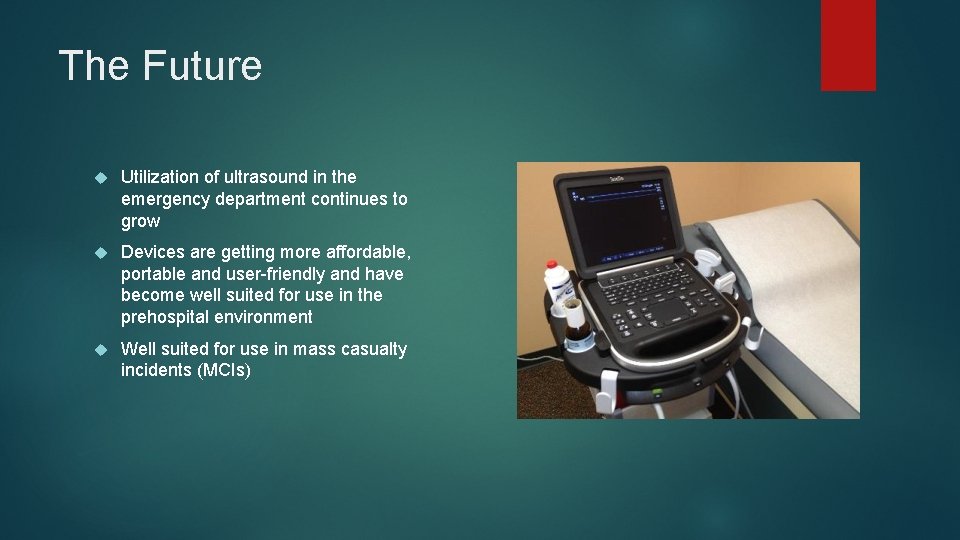
The Future Utilization of ultrasound in the emergency department continues to grow Devices are getting more affordable, portable and user-friendly and have become well suited for use in the prehospital environment Well suited for use in mass casualty incidents (MCIs)
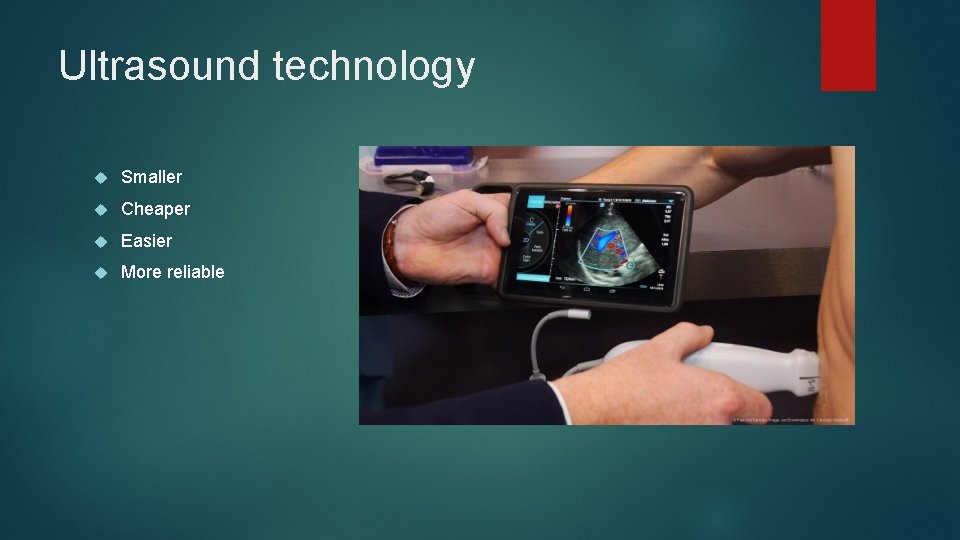
Ultrasound technology Smaller Cheaper Easier More reliable
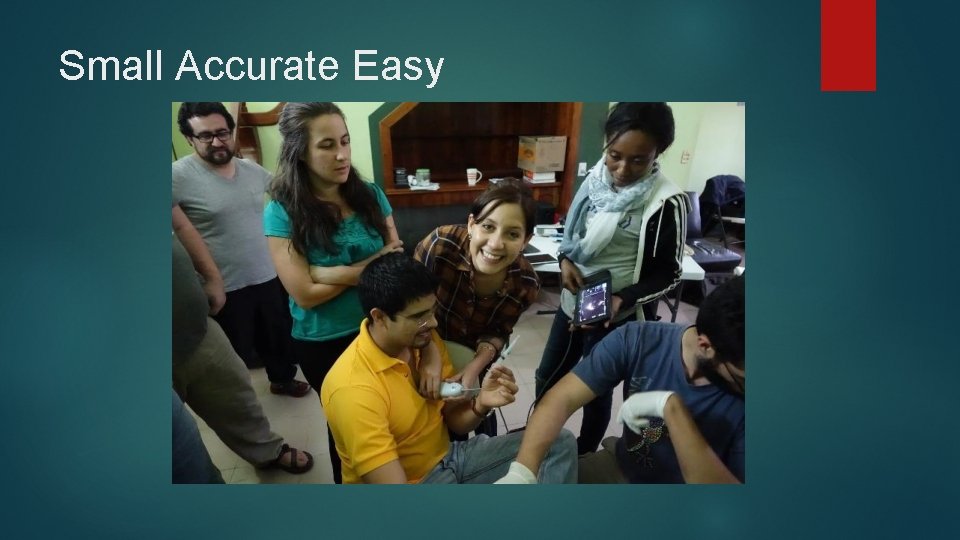
Small Accurate Easy
Chiapas Mexico
Ultrasound FAST is now a key component for the evaluation of trauma Quickly identify intraperitoneal blood Pneumothorax/hemothorax Sensitivity > 90% Specificity 100% Can detect long bone fractures Can assess etiology of hemodynamic instability
Locations International Space Station Air medical transport Front-line combat teams Mass casualty incidents Sarkisian AE, et al. Sonographic screening of mass casualties for abdominal and renal injuries following the 1988 Armenian earthquake. J Trauma. 1991; 31(2): 247– 50.
Triage Ethical Justification This is one of the few places where a "utilitarian rule" governs medicine: the greater good of the greater number rather than the particular good of the patient at hand. This rule is justified only because of the clear necessity of general public welfare in a crisis. A. Jonsen and K. Edwards, “Resource Allocation” in Ethics in Medicine, Univ. of Washington School of Medicine, http: //eduserv. hscer. washington. edu/bioethics/topics/resall. html
Primary Disaster Triage Goal: to sort patients based on probable needs for immediate care and to recognize futility. Assumptions: Medical needs outstrip immediately available resources Additional resources will become available with time

Primary Triage based on physiology How well the patient is able to utilize their own resources to deal with their injuries Which conditions will benefit the most from the expenditure of limited resources
Secondary Disaster Triage Goal: to best match patients’ current and anticipated needs with available resources. Incorporates: A reassessment of physiology An assessment of physical injuries Initial treatment and assessment of patient response Further knowledge of resource availability
Secondary Disaster Triage Goal is to distinguish between: Victims needing life-saving treatment that can only be provided in a hospital setting. Victims needing life-saving treatment initially available on scene. Victims with moderate non-life-threatening injuries, at risk for delayed complications. Victims with minor injuries.
Tertiary Triage Goal: to optimize individual outcome Incorporates: Sophisticated assessment and treatment Further assessment of available medical resources Determination of best venue for definitive care
Scoring Systems SMART Triage Tape Triage Sieve Care Flight Triage Basic Disaster Life Support Mass Triage Sacco SALT Triage* START Triage
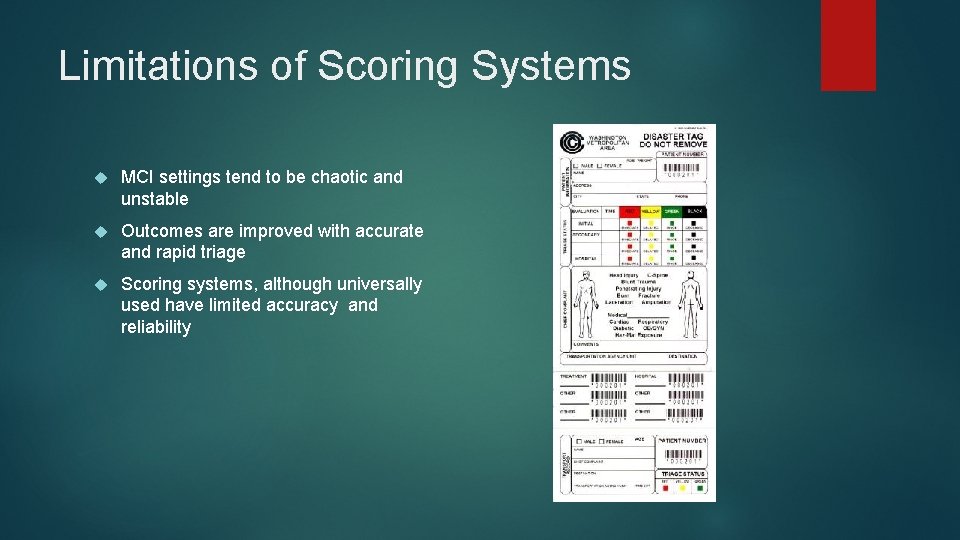
Limitations of Scoring Systems MCI settings tend to be chaotic and unstable Outcomes are improved with accurate and rapid triage Scoring systems, although universally used have limited accuracy and reliability
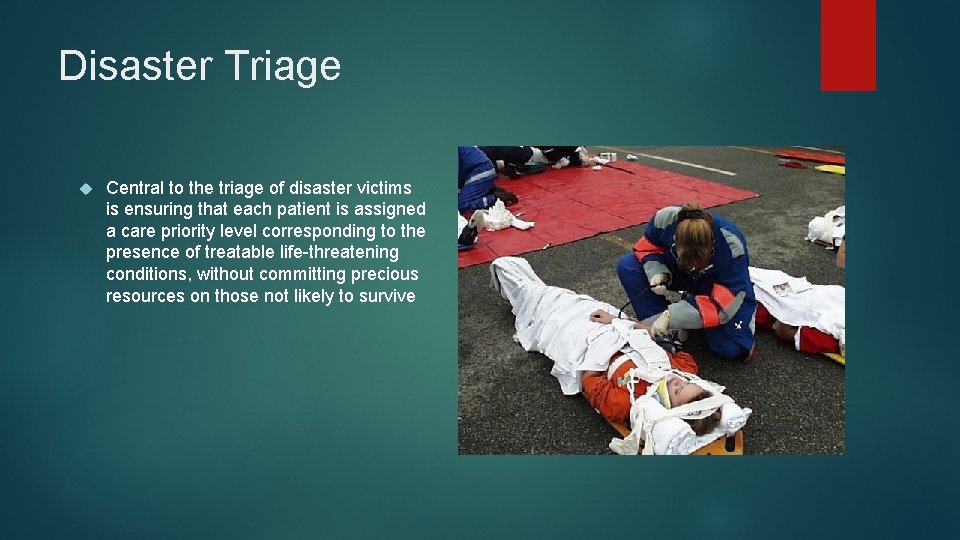
Disaster Triage Central to the triage of disaster victims is ensuring that each patient is assigned a care priority level corresponding to the presence of treatable life-threatening conditions, without committing precious resources on those not likely to survive
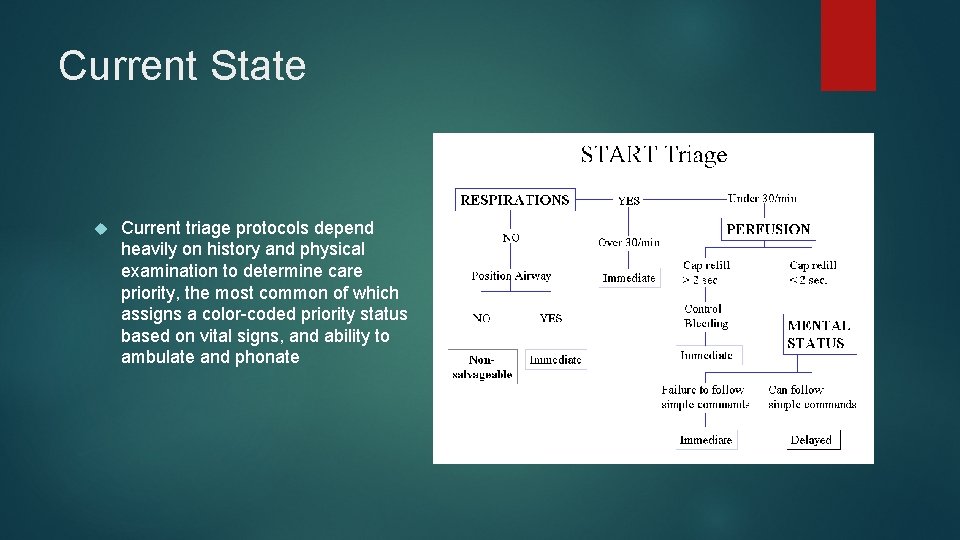
Current State Current triage protocols depend heavily on history and physical examination to determine care priority, the most common of which assigns a color-coded priority status based on vital signs, and ability to ambulate and phonate
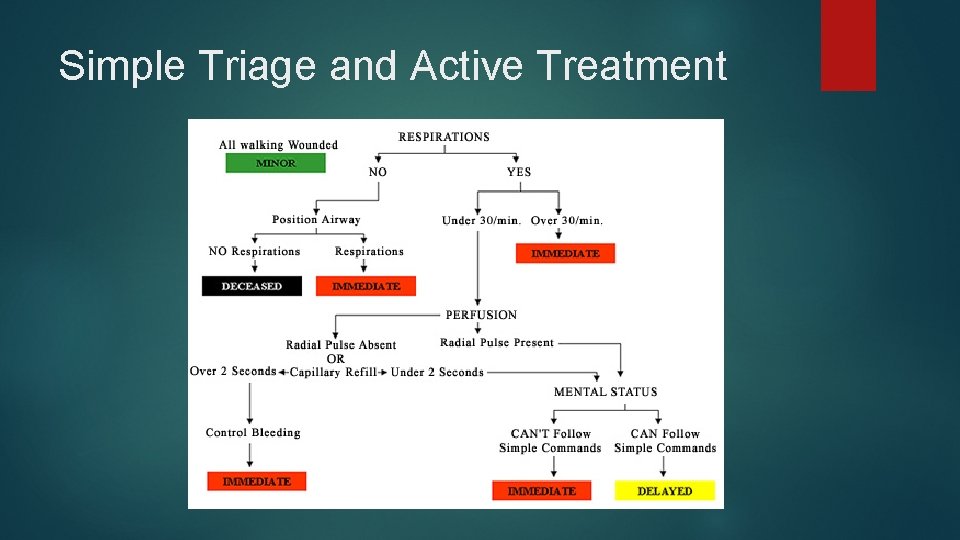
Simple Triage and Active Treatment
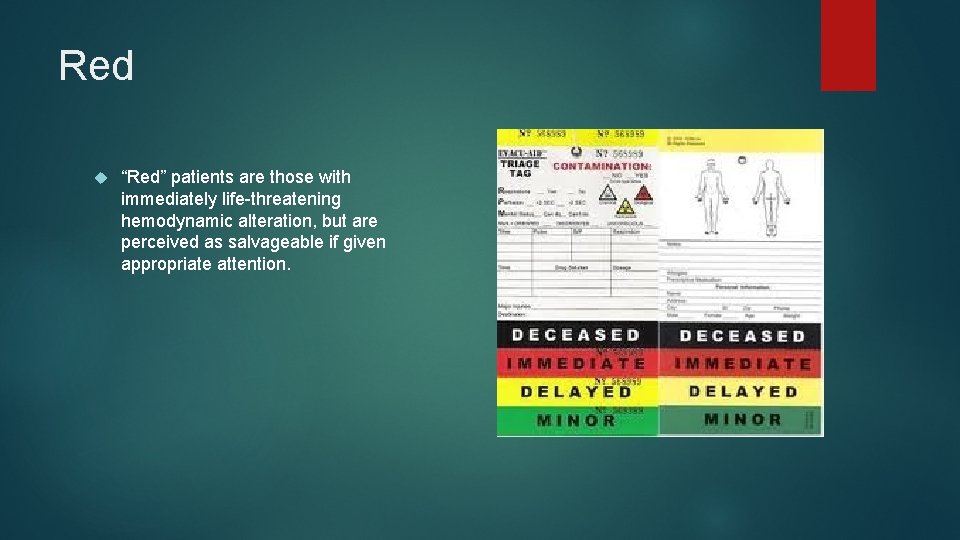
Red “Red” patients are those with immediately life-threatening hemodynamic alteration, but are perceived as salvageable if given appropriate attention.
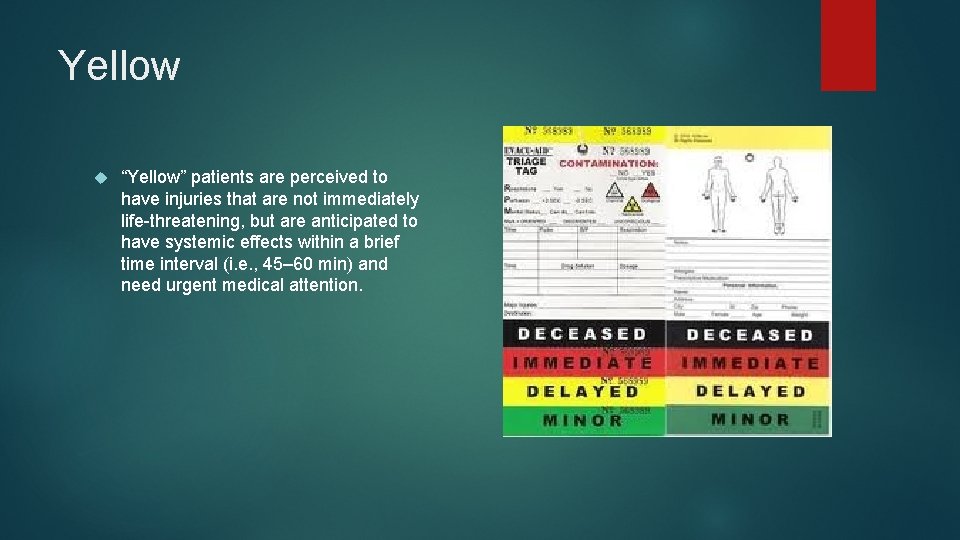
Yellow “Yellow” patients are perceived to have injuries that are not immediately life-threatening, but are anticipated to have systemic effects within a brief time interval (i. e. , 45– 60 min) and need urgent medical attention.
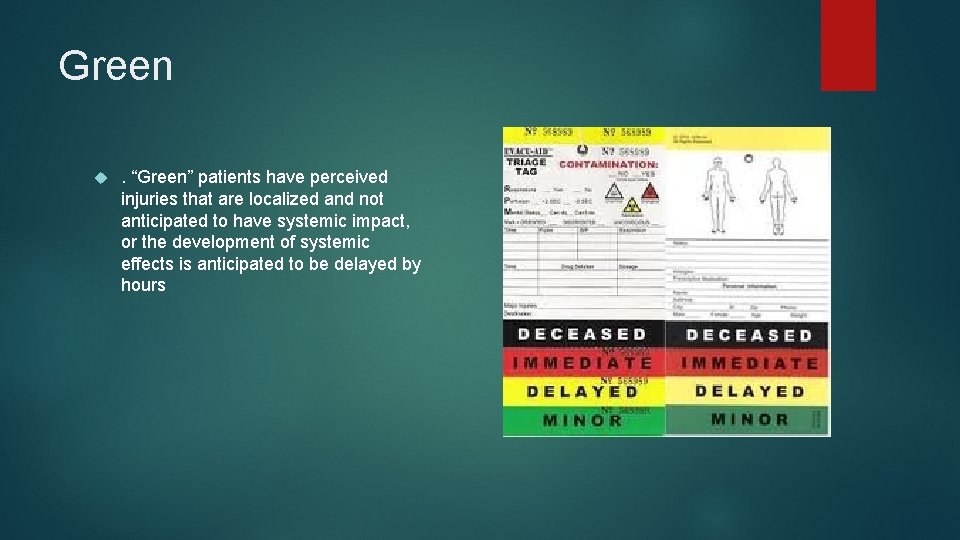
Green . “Green” patients have perceived injuries that are localized and not anticipated to have systemic impact, or the development of systemic effects is anticipated to be delayed by hours
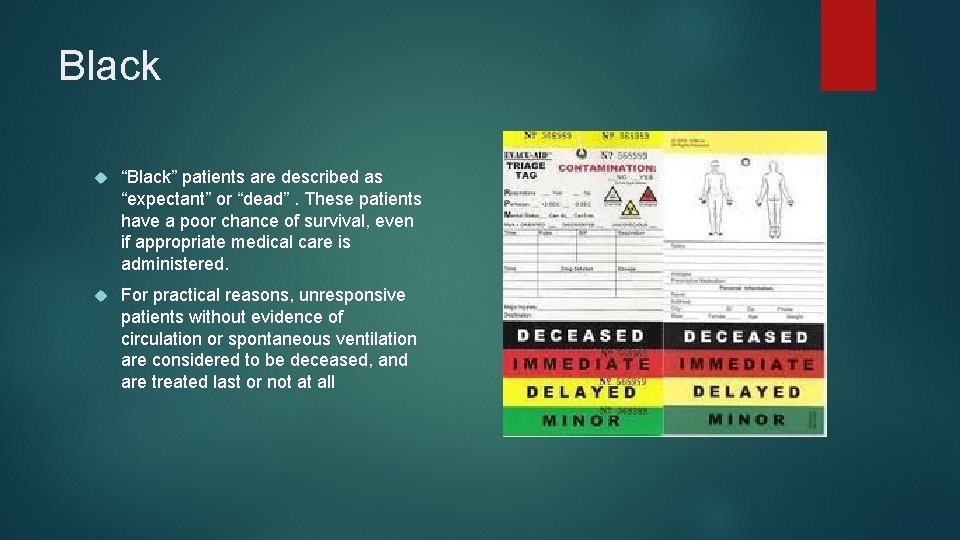
Black “Black” patients are described as “expectant” or “dead”. These patients have a poor chance of survival, even if appropriate medical care is administered. For practical reasons, unresponsive patients without evidence of circulation or spontaneous ventilation are considered to be deceased, and are treated last or not at all
Limitations Overtriage The provision of resources to patients which eventually are determined to have minor issues that may not require the amount of effort originally allocated Undertriage The patient does not receive the care required to prevent physiologic deterioration or death and is usually due to the failure to recognize lifethreatening medical problems or injuries
Assessment of Triage Instruments MCIs are by definition inherently difficult to study Real world estimates; Overtriage: 7 -12% Undertirage: 4 -15% Simulations: Overtriage: 16% Undertriage: 24% Overall accuracy of triage approximately 61% Limited by repeated triage assessment
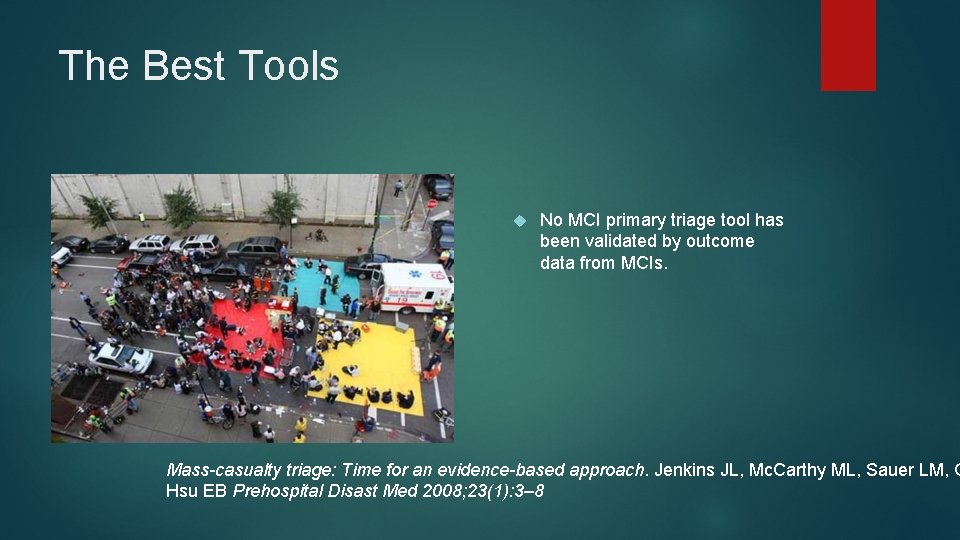
The Best Tools No MCI primary triage tool has been validated by outcome data from MCIs. Mass-casualty triage: Time for an evidence-based approach. Jenkins JL, Mc. Carthy ML, Sauer LM, G Hsu EB Prehospital Disast Med 2008; 23(1): 3– 8
Israeli Model Little to no triage done on-scene “Save and run” philosophy Very hazardous scenes Reds to closest hospital Nearest hospital becomes triage center? Uses physicians as triage officers Accuracy of physician triage called into question Metropolitan Israeli hospitals may be more uniformly capable of caring for trauma victims than in many areas of the US
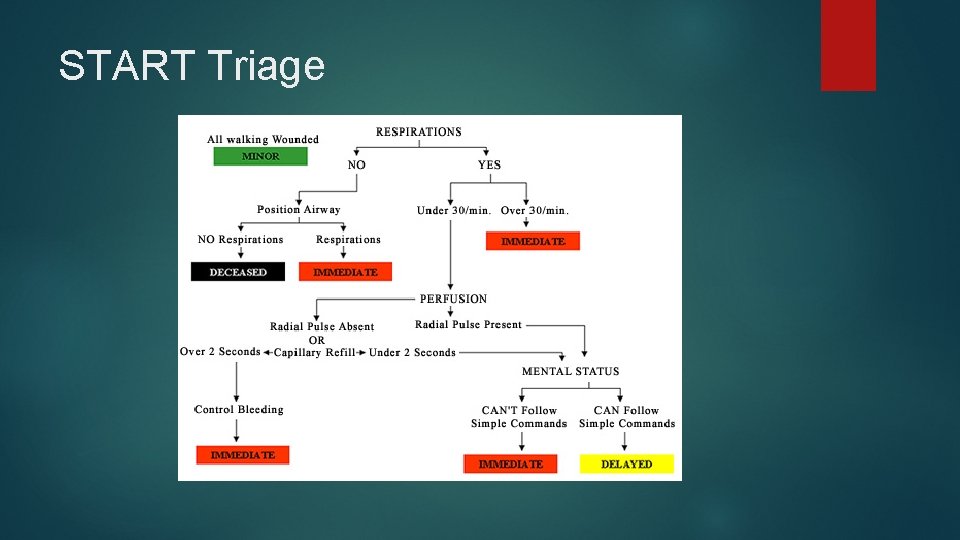
START Triage
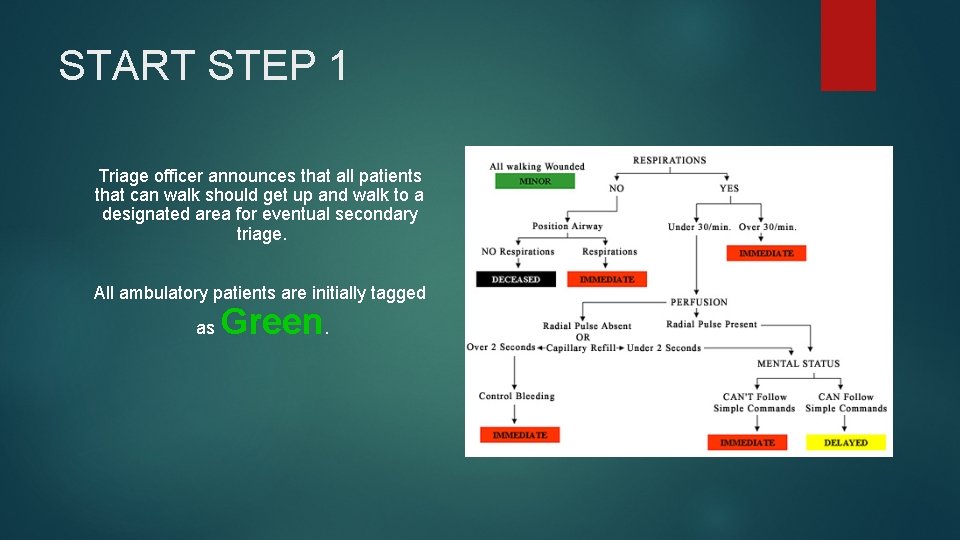
START STEP 1 Triage officer announces that all patients that can walk should get up and walk to a designated area for eventual secondary triage. All ambulatory patients are initially tagged as Green.
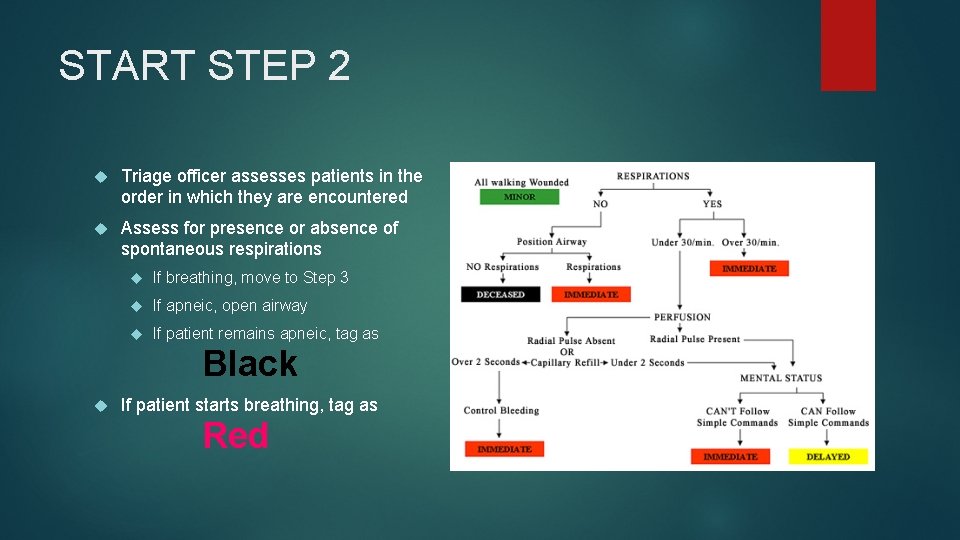
START STEP 2 Triage officer assesses patients in the order in which they are encountered Assess for presence or absence of spontaneous respirations If breathing, move to Step 3 If apneic, open airway If patient remains apneic, tag as Black If patient starts breathing, tag as Red
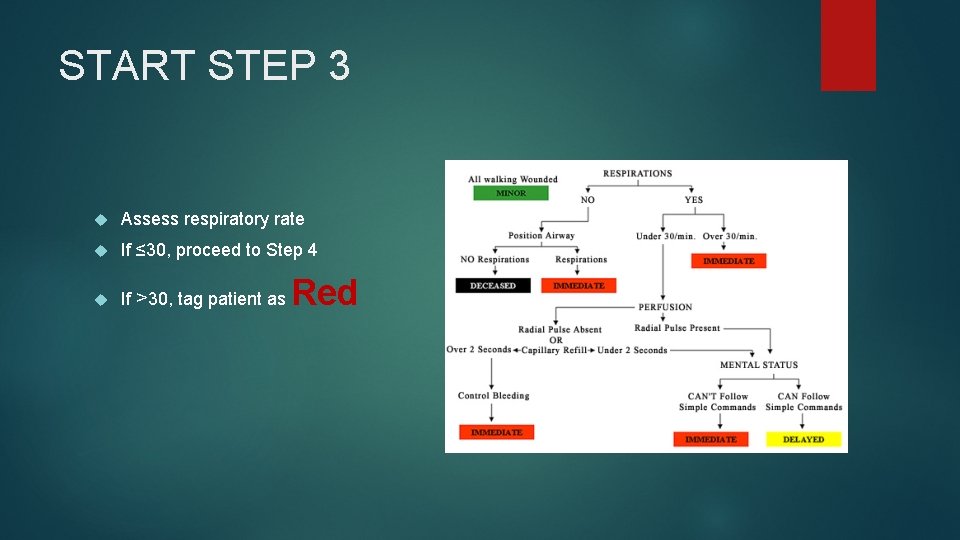
START STEP 3 Assess respiratory rate If ≤ 30, proceed to Step 4 If >30, tag patient as Red
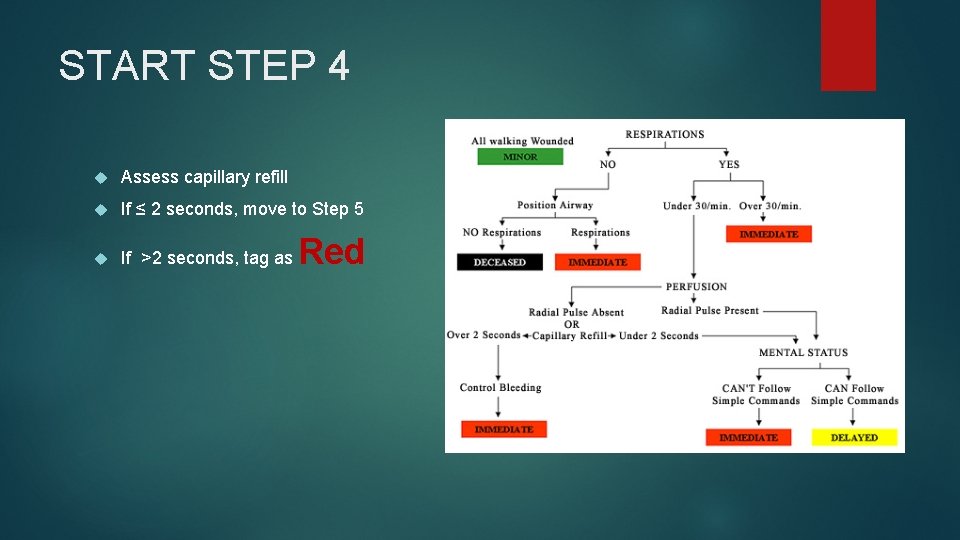
START STEP 4 Assess capillary refill If ≤ 2 seconds, move to Step 5 If >2 seconds, tag as Red
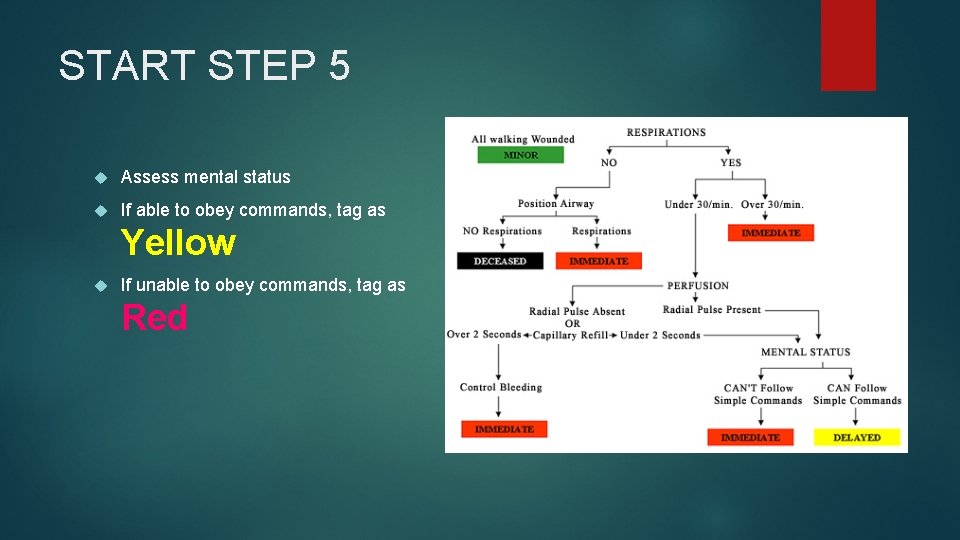
START STEP 5 Assess mental status If able to obey commands, tag as Yellow If unable to obey commands, tag as Red

START SHORTCUT R P M 30 2 Can do
Ultrasound Triage in Civilian MCI Mazur SM, Rippey J. Transport and use of point-of-care ultrasound by a disaster medical assistance team. Prehosp Disaster Med. 2009; 24(2): 140– 4. Shorter M, Macias DJ. Portable handheld ultrasound in austere environments: use in the Haiti disaster. Prehosp Disaster Med. 2012; 27(2): 172– 7. Ma OJ, Norvell JG, Subramanian S. Ultrasound applications in mass casualties and extreme environments. Crit Care Med. 2007; 35(5 Suppl): S 275– 9. Zhang S, et al. Utility of point-of-care ultrasound in acute management triage of earthquake injury. Am J Emerg Med. 2014; 32(1): 92– 5.
Thirty Years Ago Sarkisian AE, et al. Sonographic screening of mass casualties for abdominal and renal injuries following the 1988 Armenian earthquake. J Trauma. 1991; 31(2): 247– 50. Demonstratated during the 1998 Armenian earthquake that the average time spent on a single patient with ultrasound was 4 min; there were no falsepositive examinations with few (1 %) false negatives
Zhang S, et al. Utility of point-of-care ultrasound in acute management triage of earthquake injury. Am J Emerg Med. 2014; 32(1): 92– 5. Ultrasound use following the Wenchuan earthquake disaster in 2008 reported sensitivity of 91. 9 % and specificity of 96. 6 % for the diagnosis of abdominal injuries
Ultrasound Triage in Military MCI Kolkebeck T, Mehta S. The focused assessment of sonography for trauma (FAST) exam in a forward-deployed combat emergency department: a prospective observational study. Ann Emerg Med. 2006; 48(4): S 87. Data from ultrasound use during the Iraq conflict demonstrate a high sensitivity and specificity in identifying injuries sustained from both blunt and penetrating trauma, as confirmed by later computed tomography (CT) scans
Fracture Detection Vasios WN, et al. Fracture detection in a combat theater: four cases comparing ultrasound to conventional radiography. J Spec Oper Med. 2010; 10(2): 11– 5.
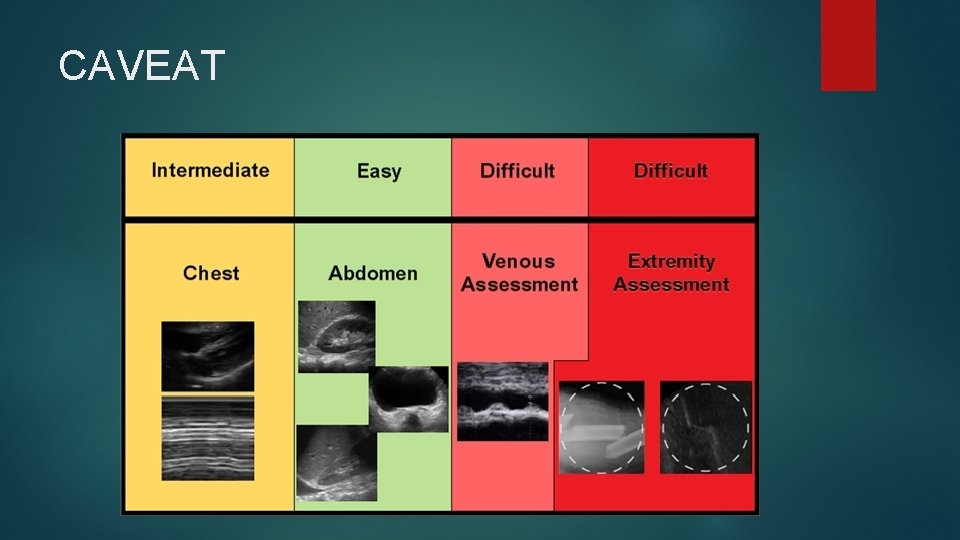
CAVEAT Protocol The CAVEAT Protocol is a suggested complement to existing triage schemes. Perform the CAVEAT in the following order to identify most immediately life -threatening pathology first. Chest Abdomen Central venous assessment Extremities
CHEST Evaluate pleura to identify pneumothorax. Addition of views of the bilateral costophrenic angles to identify hemothorax added to FAST exam
ABDOMEN FAST exam including bilateral costophrenic angles

CENTRAL Venous The central venous status is assessed, looking mainly for the degree of observable collapsibility. Research shows that visual estimation of venous collapsibility provides results comparable to those of caliper-based calculations
EXTREMITIES The extremities are imaged, with attention paid to the areas of tenderness, deformity or abnormality on physical examination. The extremity exam need not be performed at the same time as the chest and abdominal images, and can be deferred based on the sonographer’s skill, urgency of the situation, and resources available at the time of evaluation
CAVEAT
Limitations The CAVEAT examination is not designed to identify injuries of the retroperitoneum, intracranial, or pelvic areas. It is not intended to provide specific anatomic detail. Other injuries that may be missed include those of the great vessels or hollow viscus, if the injury does not result in hemoperitoneum. Other limitations of the CAVEAT examination include the training of the sonographer and interpreter of the images

The Future…. . .
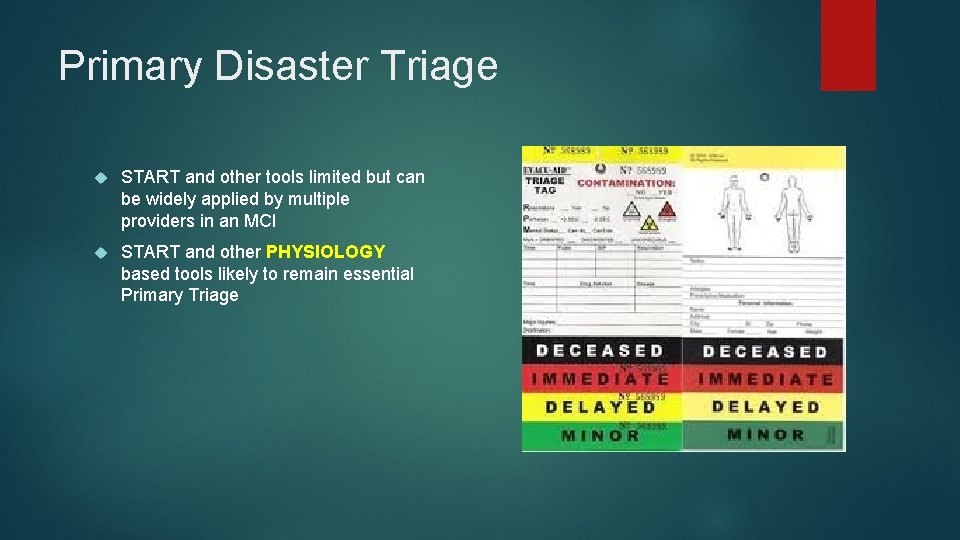
Primary Disaster Triage START and other tools limited but can be widely applied by multiple providers in an MCI START and other PHYSIOLOGY based tools likely to remain essential Primary Triage
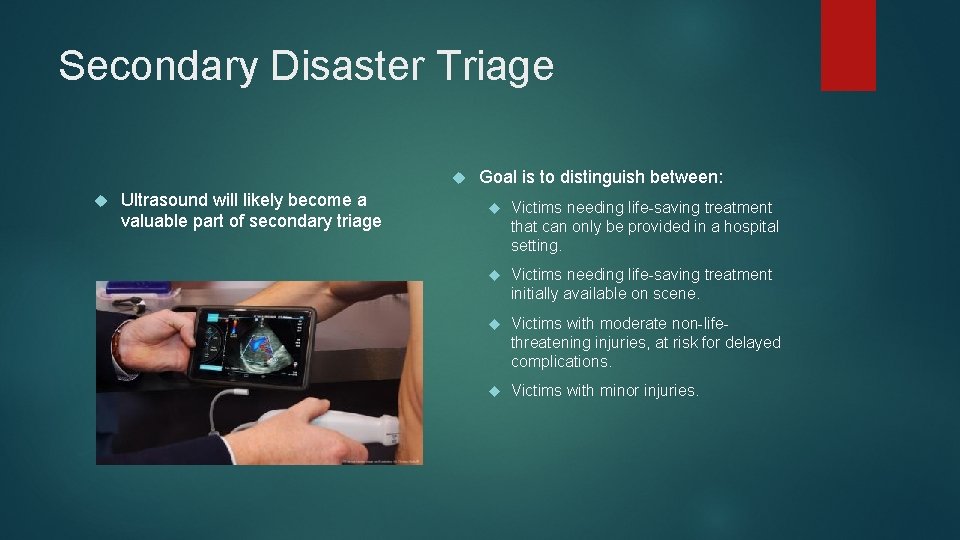
Secondary Disaster Triage Ultrasound will likely become a valuable part of secondary triage Goal is to distinguish between: Victims needing life-saving treatment that can only be provided in a hospital setting. Victims needing life-saving treatment initially available on scene. Victims with moderate non-lifethreatening injuries, at risk for delayed complications. Victims with minor injuries.
Conclusion In particular, sonography has been found capable of rapidly and accurately diagnosing life-threatening injuries including intraperitoneal hemorrhage, hemopericardium, hemothorax, pneumothorax, and states of hypovolemia due to significant blood loss. Practitioners skilled in the use of ultrasound can use the CAVEAT exam to rapidly assess injured patients. Each of the components of the CAVEAT exam has been independently validated and, when combined, can serve as a useful tool in the rapid assessment of injured patients.

The Future is…. NOW! Thank you!
- Slides: 51