
Ullmans Spatial Interaction Model AP Geography Travel patterns
- Slides: 12
Ullman’s Spatial Interaction Model AP Geography
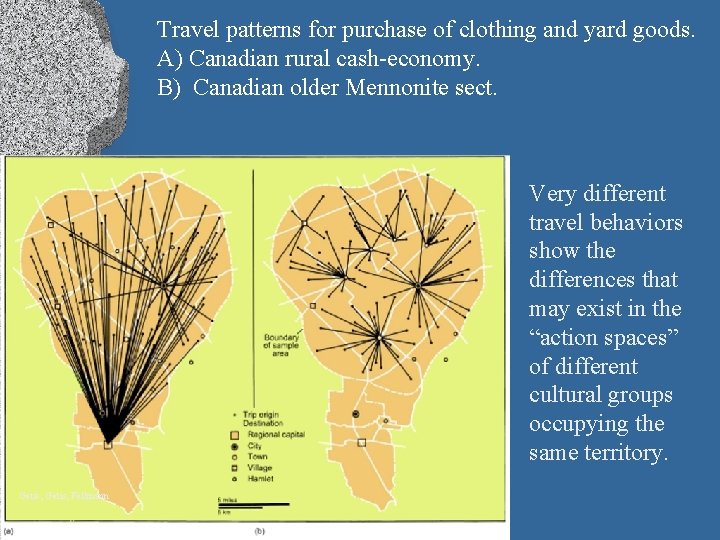
Travel patterns for purchase of clothing and yard goods. A) Canadian rural cash-economy. B) Canadian older Mennonite sect. Very different travel behaviors show the differences that may exist in the “action spaces” of different cultural groups occupying the same territory. Getis, Fellmann
Getis, Geits, Fellmann Chicago Travel Patterns: shows 96% of all trips. What factors influence & create these patterns of interaction?
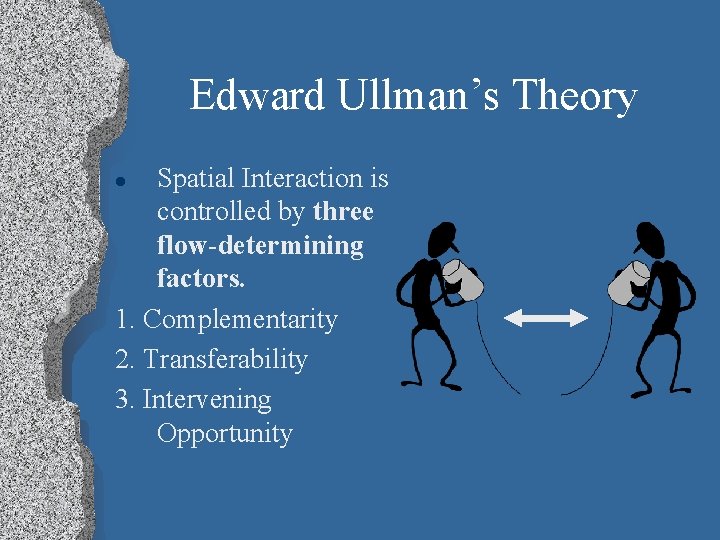
Edward Ullman’s Theory Spatial Interaction is controlled by three flow-determining factors. 1. Complementarity 2. Transferability 3. Intervening Opportunity l
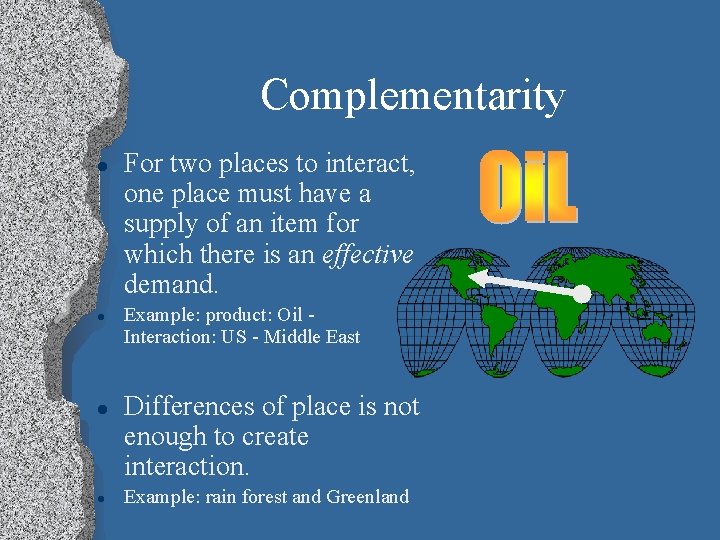
Complementarity l l For two places to interact, one place must have a supply of an item for which there is an effective demand. Example: product: Oil Interaction: US - Middle East Differences of place is not enough to create interaction. Example: rain forest and Greenland
What is Effective Demand? l l l Desire for the item (demand) Purchasing Power $$$ Means to transport the product - rail, road, internet, ship etc.
Transferability l l l Refers to mobility of a commodity Spatial interaction occurs only when acceptable costs of an exchange are met. Costs include both Time and Money
Transferability Function of Three Conditions. l l l Characteristics and value of product. The distance measured in time and money. The ability of the commodity to bear the costs of movement. – Both physical and economic. – If the time and money costs are too great interaction does not occur. – Buyer seeks substitute or goes without product.
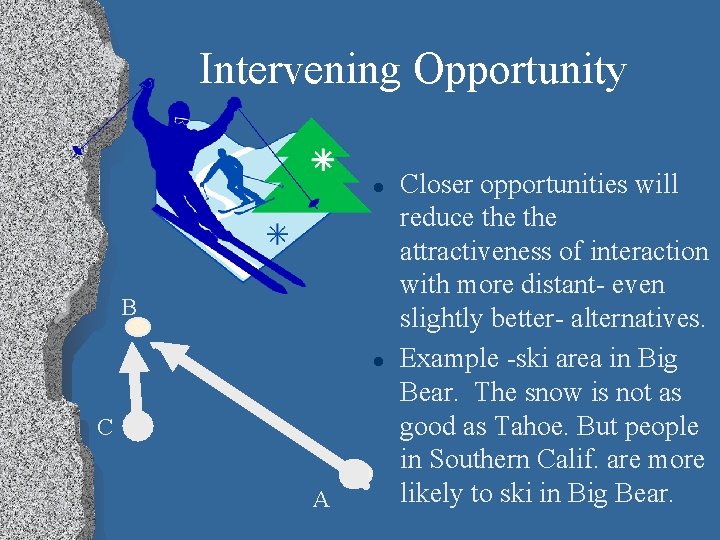
Intervening Opportunity l B l C A Closer opportunities will reduce the attractiveness of interaction with more distant- even slightly better- alternatives. Example -ski area in Big Bear. The snow is not as good as Tahoe. But people in Southern Calif. are more likely to ski in Big Bear.
Measuring Spatial Interactions Key Concepts and Theories
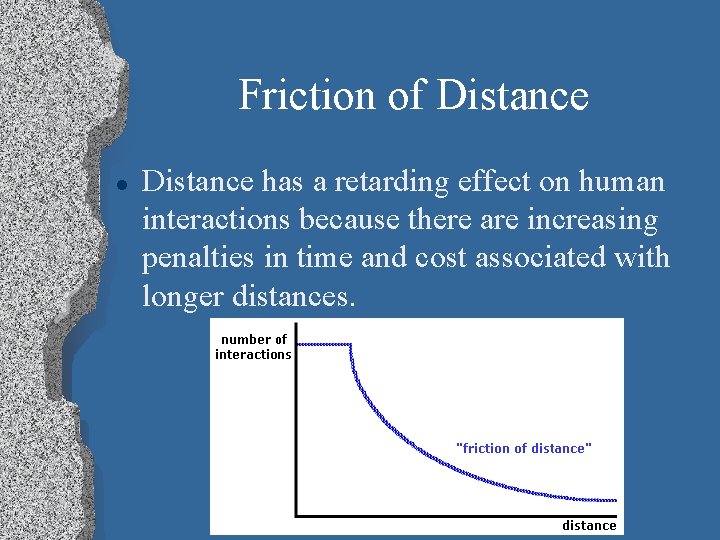
Friction of Distance l Distance has a retarding effect on human interactions because there are increasing penalties in time and cost associated with longer distances.
Space-Time Compression l l l How do we measure relative distance - miles, time, cost? How is this different than absolute distance? What effects has information technology had on relative distance? Discuss - impacts on daily lives, cultural change, migration. Draw graphic to illustrate Space-Time Compression