
UKCC LEVEL 2 COACHING RUGBY LEAGUE MOVEMENT SKILLS
UKCC LEVEL 2 COACHING RUGBY LEAGUE MOVEMENT SKILLS 1
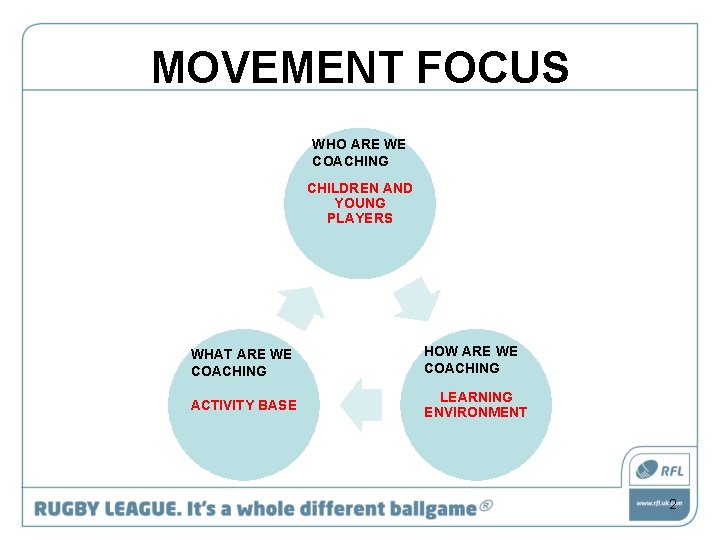
MOVEMENT FOCUS WHO ARE WE COACHING CHILDREN AND YOUNG PLAYERS WHAT ARE WE COACHING HOW ARE WE COACHING ACTIVITY BASE LEARNING ENVIRONMENT 2
CHILDREN AND YOUNG PLAYERS • Up to age 11 young people have been developing fundamental skills in isolation (running, throwing, catching) • From 11 young people begin to learn how to use their movement as functional skills 3
ACTIVITY BASE • STABILITY v Dynamic and static balance • OBJECT CONTROL v How player performs core skills & control of their opponent • LOCOMOTION v Any type of movement 4
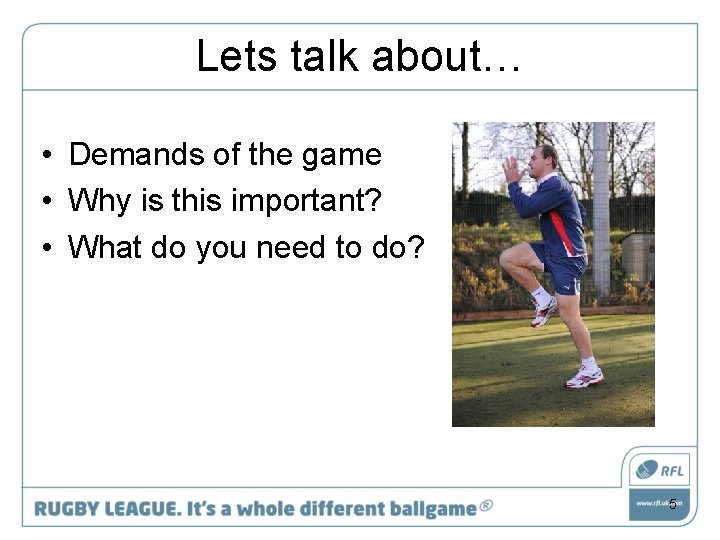
Lets talk about… • Demands of the game • Why is this important? • What do you need to do? 5
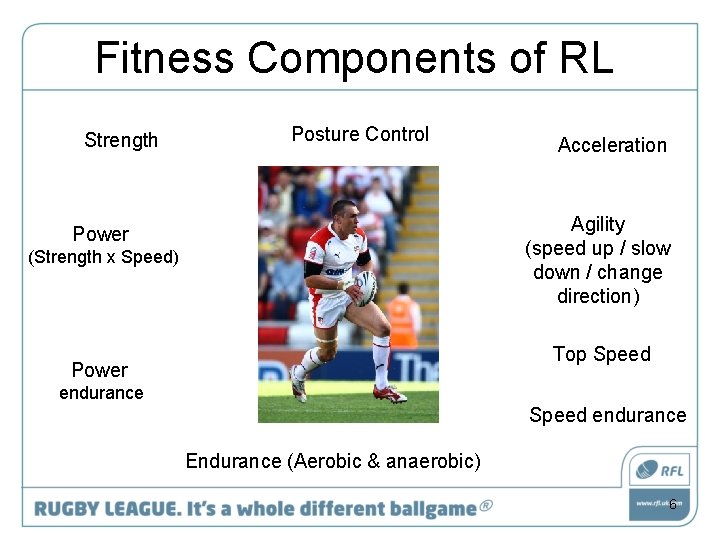
Fitness Components of RL Strength Posture Control Acceleration Agility (speed up / slow down / change direction) Power (Strength x Speed) Top Speed Power endurance Speed endurance Endurance (Aerobic & anaerobic) 6
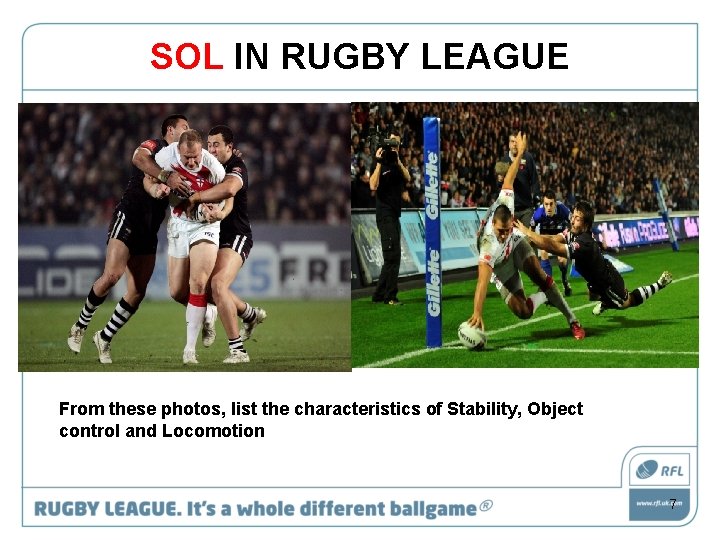
SOL IN RUGBY LEAGUE From these photos, list the characteristics of Stability, Object control and Locomotion 7
APPLICATION IN YOUR COACHING • What core skills are depicted in the photos? • What sport specific movements have enabled these core skills to be carried out? • How might you develop these movement skills in your players? • Refer to Movement Cards 1, 3, 8 8
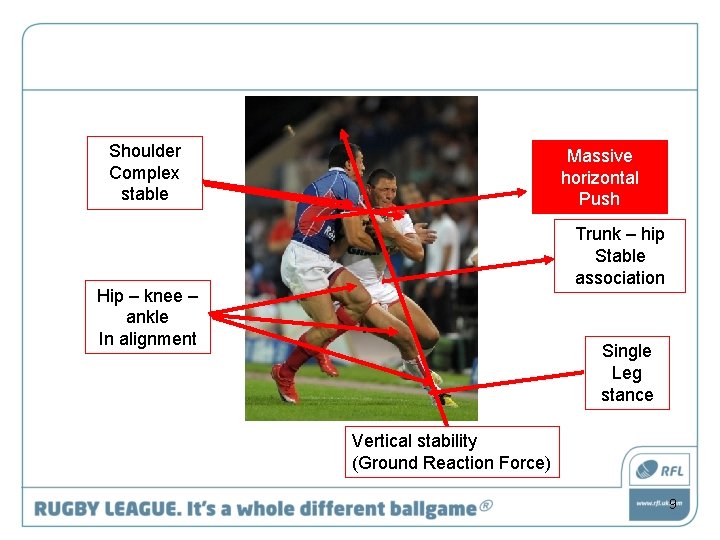
Shoulder Complex stable Massive horizontal Push Trunk – hip Stable association Hip – knee – ankle In alignment Single Leg stance Vertical stability (Ground Reaction Force) 9
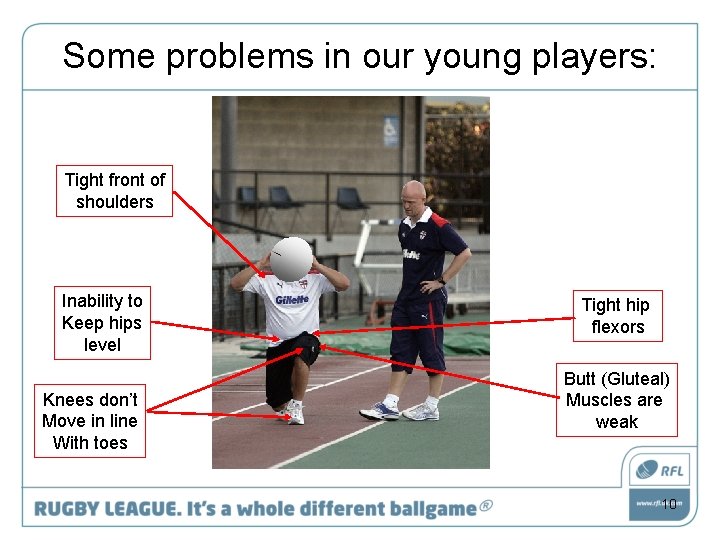
Some problems in our young players: Tight front of shoulders Inability to Keep hips level Knees don’t Move in line With toes Tight hip flexors Butt (Gluteal) Muscles are weak 10
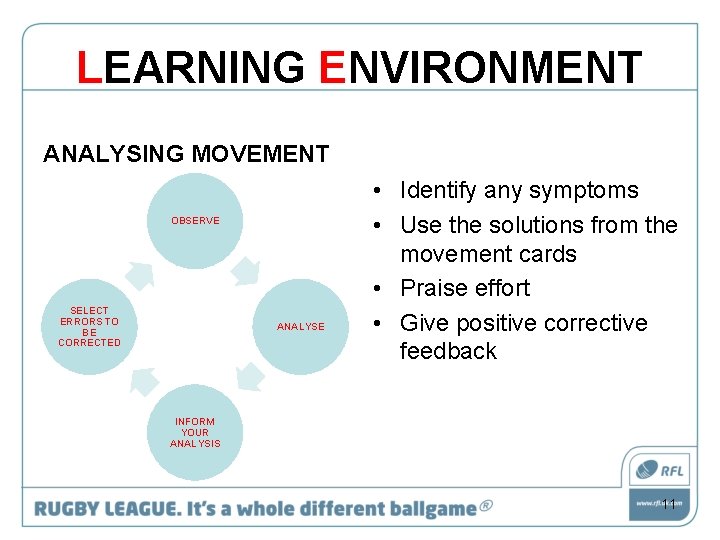
LEARNING ENVIRONMENT ANALYSING MOVEMENT OBSERVE SELECT ERRORS TO BE CORRECTED ANALYSE • Identify any symptoms • Use the solutions from the movement cards • Praise effort • Give positive corrective feedback INFORM YOUR ANALYSIS 11
- Slides: 11