
UIL Extemporaneous Speaking UIL INFORMATIVE UIL PERSUASIVE TFA

- Slides: 21
UIL Extemporaneous Speaking UIL INFORMATIVE UIL PERSUASIVE TFA DOMESTIC TFA FOREIGN
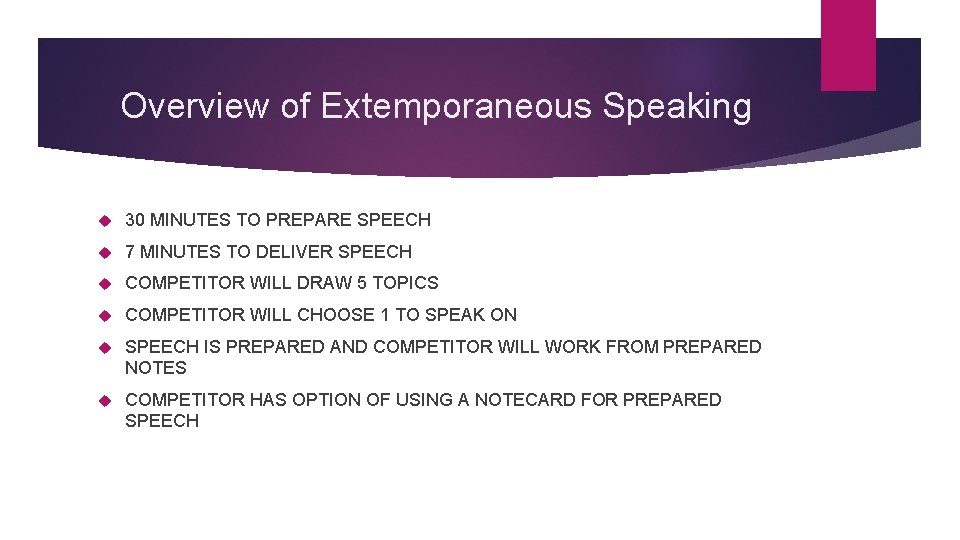
Overview of Extemporaneous Speaking 30 MINUTES TO PREPARE SPEECH 7 MINUTES TO DELIVER SPEECH COMPETITOR WILL DRAW 5 TOPICS COMPETITOR WILL CHOOSE 1 TO SPEAK ON SPEECH IS PREPARED AND COMPETITOR WILL WORK FROM PREPARED NOTES COMPETITOR HAS OPTION OF USING A NOTECARD FOR PREPARED SPEECH
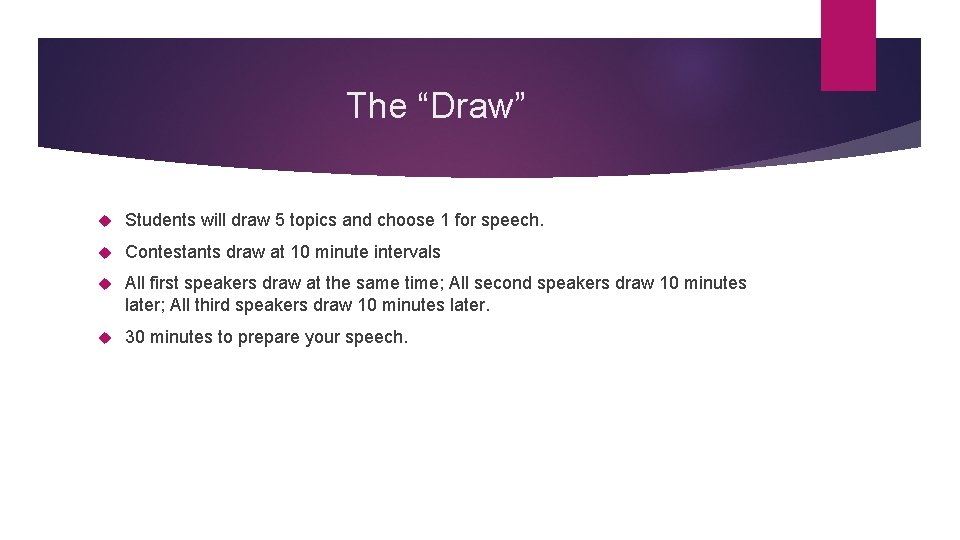
The “Draw” Students will draw 5 topics and choose 1 for speech. Contestants draw at 10 minute intervals All first speakers draw at the same time; All second speakers draw 10 minutes later; All third speakers draw 10 minutes later. 30 minutes to prepare your speech.
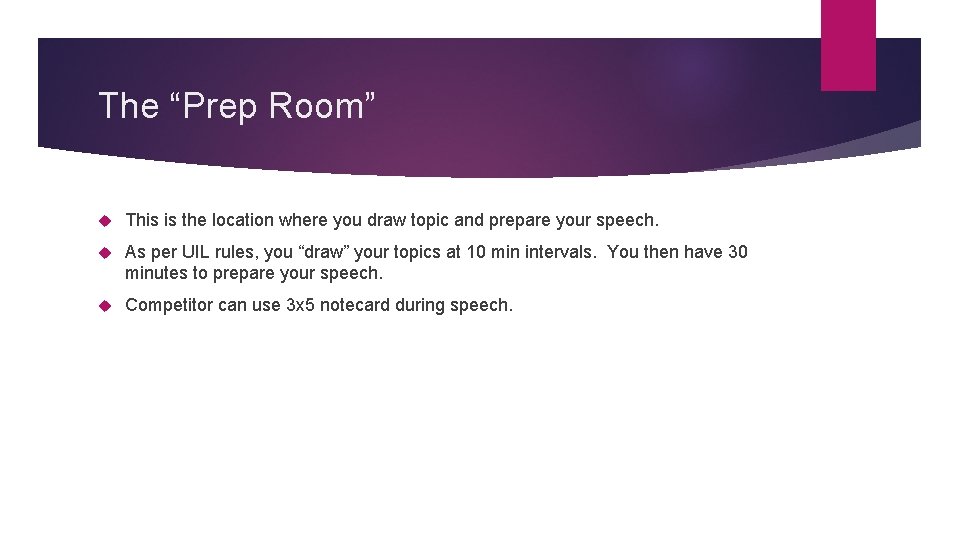
The “Prep Room” This is the location where you draw topic and prepare your speech. As per UIL rules, you “draw” your topics at 10 min intervals. You then have 30 minutes to prepare your speech. Competitor can use 3 x 5 notecard during speech.
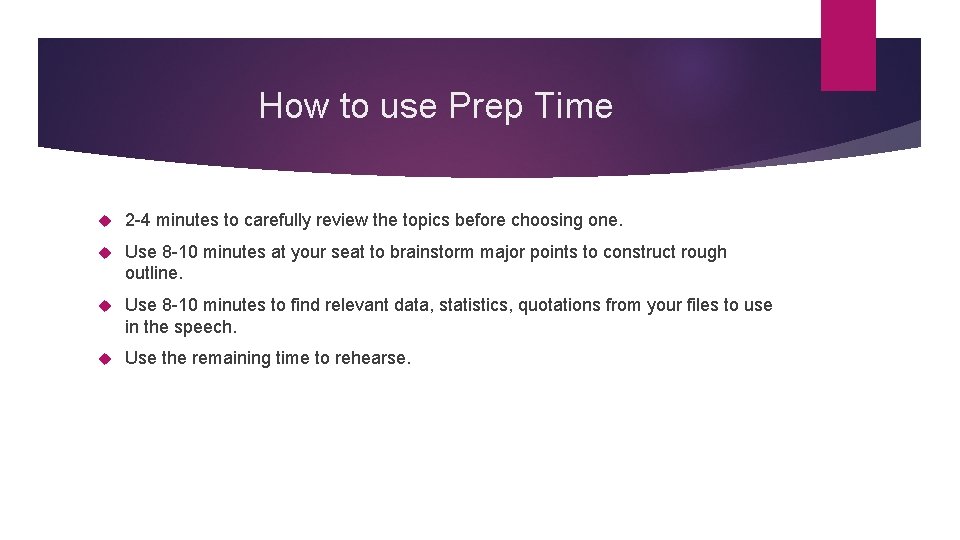
How to use Prep Time 2 -4 minutes to carefully review the topics before choosing one. Use 8 -10 minutes at your seat to brainstorm major points to construct rough outline. Use 8 -10 minutes to find relevant data, statistics, quotations from your files to use in the speech. Use the remaining time to rehearse.
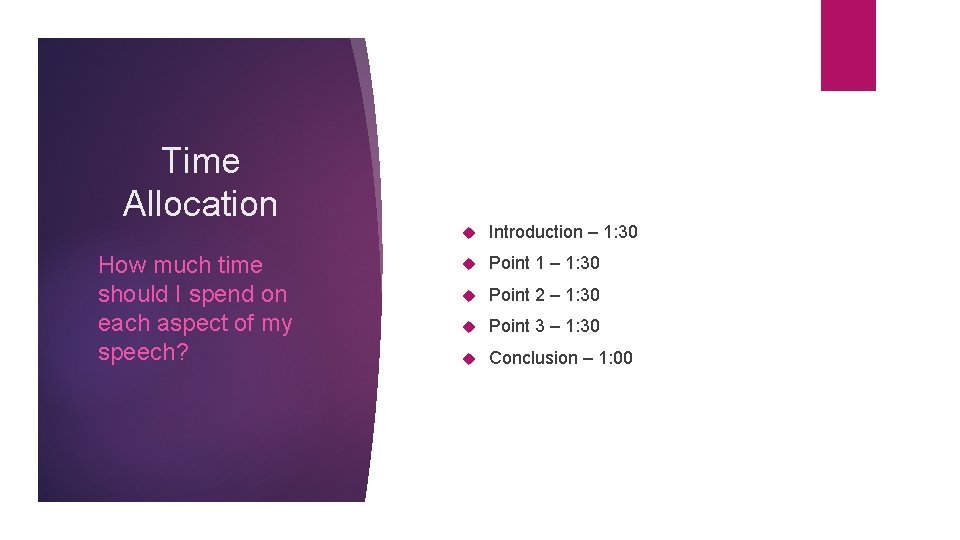
Time Allocation How much time should I spend on each aspect of my speech? Introduction – 1: 30 Point 1 – 1: 30 Point 2 – 1: 30 Point 3 – 1: 30 Conclusion – 1: 00
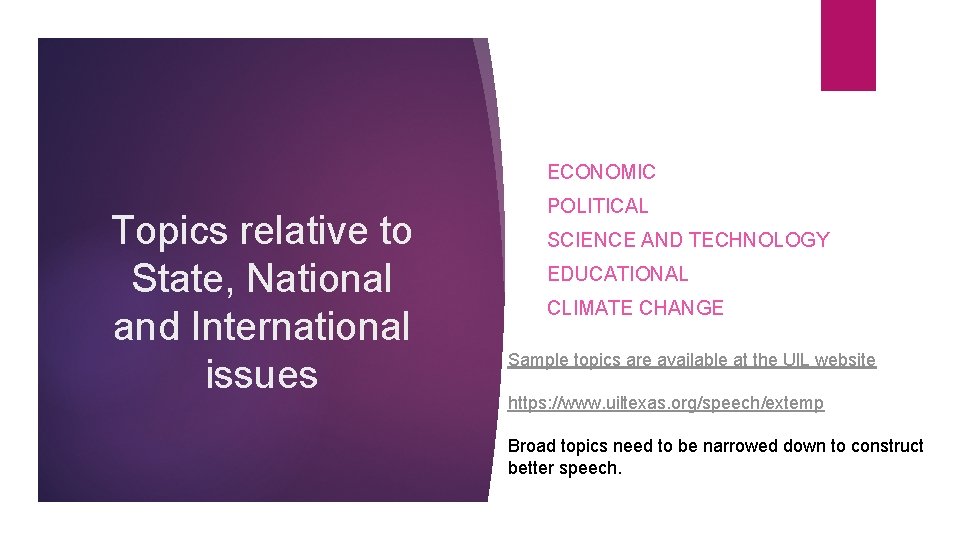
ECONOMIC Topics relative to State, National and International issues POLITICAL SCIENCE AND TECHNOLOGY EDUCATIONAL CLIMATE CHANGE Sample topics are available at the UIL website https: //www. uiltexas. org/speech/extemp Broad topics need to be narrowed down to construct better speech.
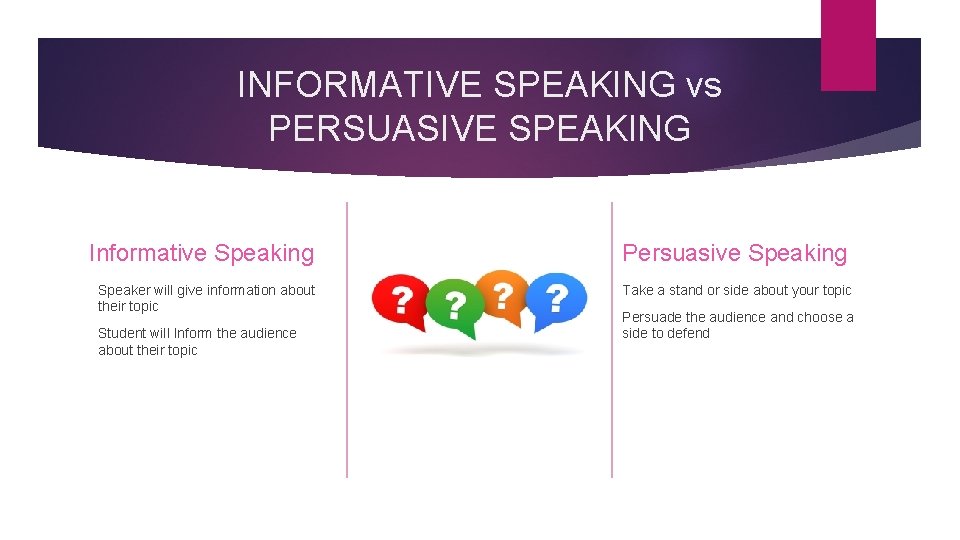
INFORMATIVE SPEAKING vs PERSUASIVE SPEAKING Informative Speaking Speaker will give information about their topic Student will Inform the audience about their topic Persuasive Speaking Take a stand or side about your topic Persuade the audience and choose a side to defend
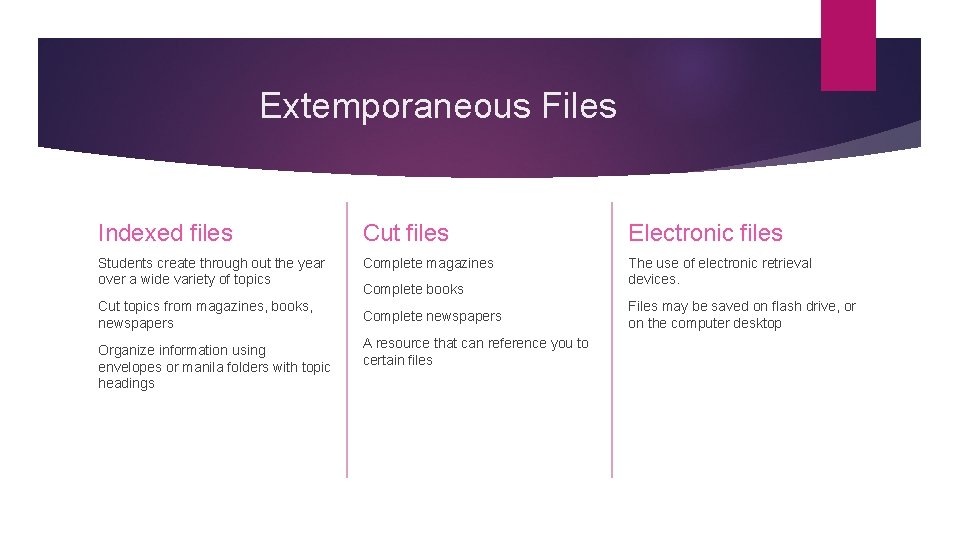
Extemporaneous Files Indexed files Cut files Electronic files Students create through out the year over a wide variety of topics Complete magazines The use of electronic retrieval devices. Cut topics from magazines, books, newspapers Organize information using envelopes or manila folders with topic headings Complete books Complete newspapers A resource that can reference you to certain files Files may be saved on flash drive, or on the computer desktop
Where do I get my sources? Extemp Web Resources https: //www. uiltexas. org/speech/extemp-webresources
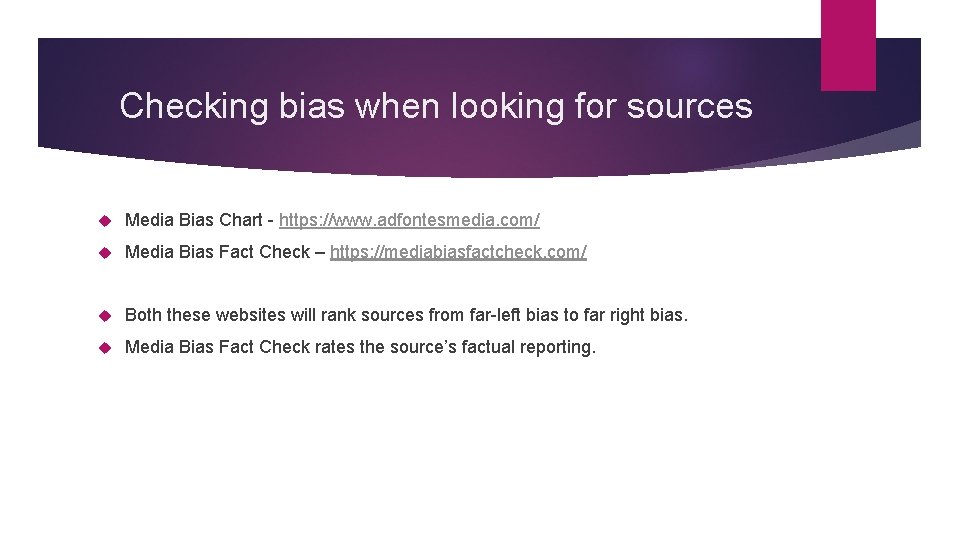
Checking bias when looking for sources Media Bias Chart - https: //www. adfontesmedia. com/ Media Bias Fact Check – https: //mediabiasfactcheck. com/ Both these websites will rank sources from far-left bias to far right bias. Media Bias Fact Check rates the source’s factual reporting.
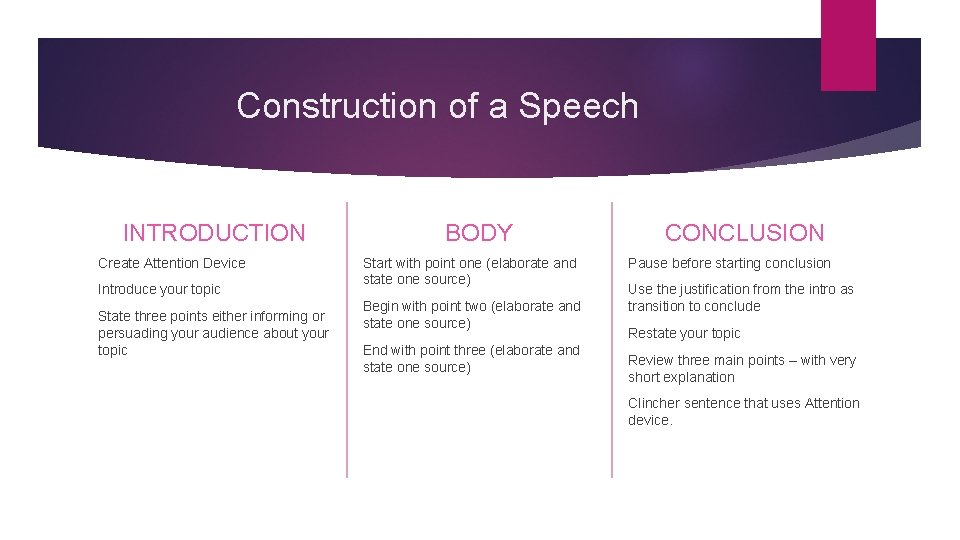
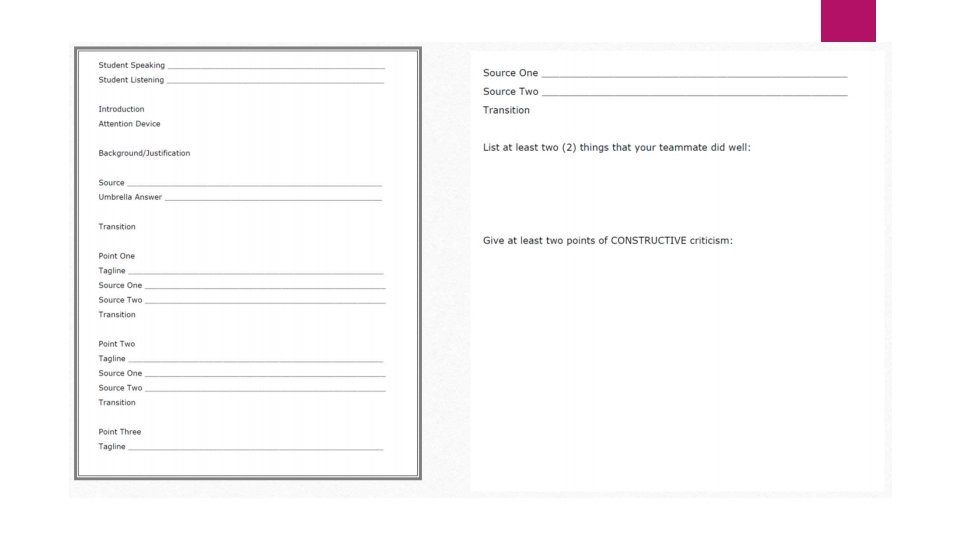
Construction of a Speech INTRODUCTION Create Attention Device Introduce your topic State three points either informing or persuading your audience about your topic BODY Start with point one (elaborate and state one source) Begin with point two (elaborate and state one source) End with point three (elaborate and state one source) CONCLUSION Pause before starting conclusion Use the justification from the intro as transition to conclude Restate your topic Review three main points – with very short explanation Clincher sentence that uses Attention device.
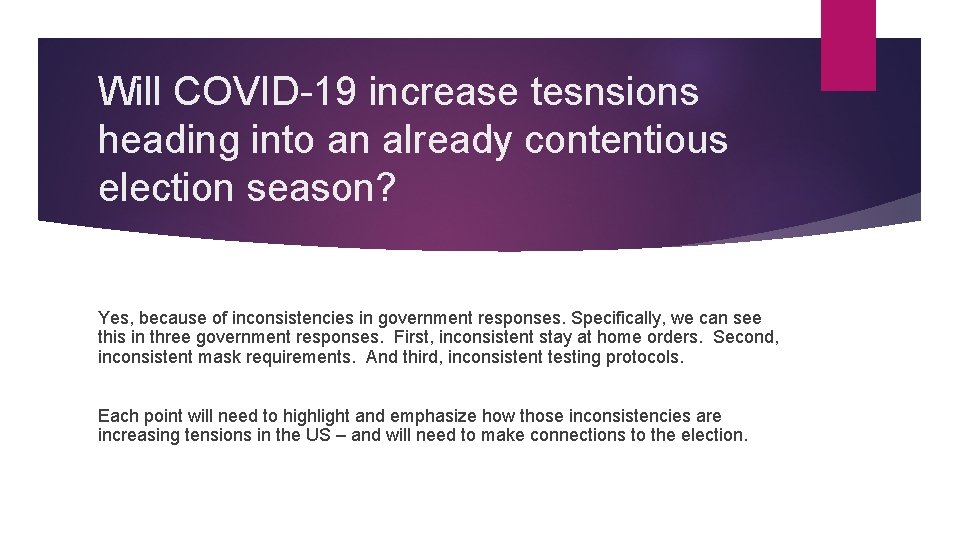
Will COVID-19 increase tesnsions heading into an already contentious election season? Yes, because of inconsistencies in government responses. Specifically, we can see this in three government responses. First, inconsistent stay at home orders. Second, inconsistent mask requirements. And third, inconsistent testing protocols. Each point will need to highlight and emphasize how those inconsistencies are increasing tensions in the US – and will need to make connections to the election.
Attention Device What is an attention device? https: //www. youtube. com/watch? v=nb-q. SIUms. Og Avoid canned attention devices Personal stories/anecdotes/historical stories Quotes Ask hypothetical questions Beginning the speech ”Abraham Lincoln once said…” ”Perhaps there is no one better to talk about division in our country than our 16 th president, Abraham Lincoln, who said, ’A house divided against itself cannot stand. . ’”
Gestures Minimal – practice natural gestures Palm down Both hands Gestures above the waist Watch for repetative gestures (PRACTICE) Eye contact Dealing with problem gestures DO NOT let them put their hands in their pockets or behind their backs Hands down, fingers on their side
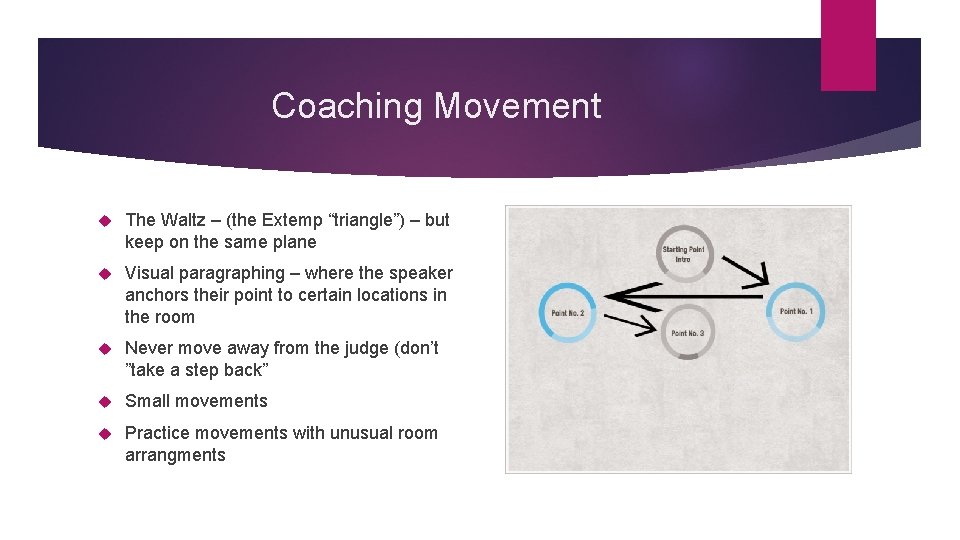
Coaching Movement The Waltz – (the Extemp “triangle”) – but keep on the same plane Visual paragraphing – where the speaker anchors their point to certain locations in the room Never move away from the judge (don’t ”take a step back” Small movements Practice movements with unusual room arrangments
Creating Extemp Team Step One Step Two Step Three Set expectations early Understand the early problems Creating a Team Debate students make great extempers Know student conflicts The problem: Extemp is seen as an “individual” event Create a team handbook Practice requirements Grade requirements Dress code How to sign up for tournaments Consequences for drops Behavior standards and consequences for misbehavior Students will dislike the event, DO NOT LET THEM GIVE UP Make “filing” a group job Create student captains or mentors Students listen and critique each other Students watch one another at tournaments Students hold each other accountable for attending practice and tournaments
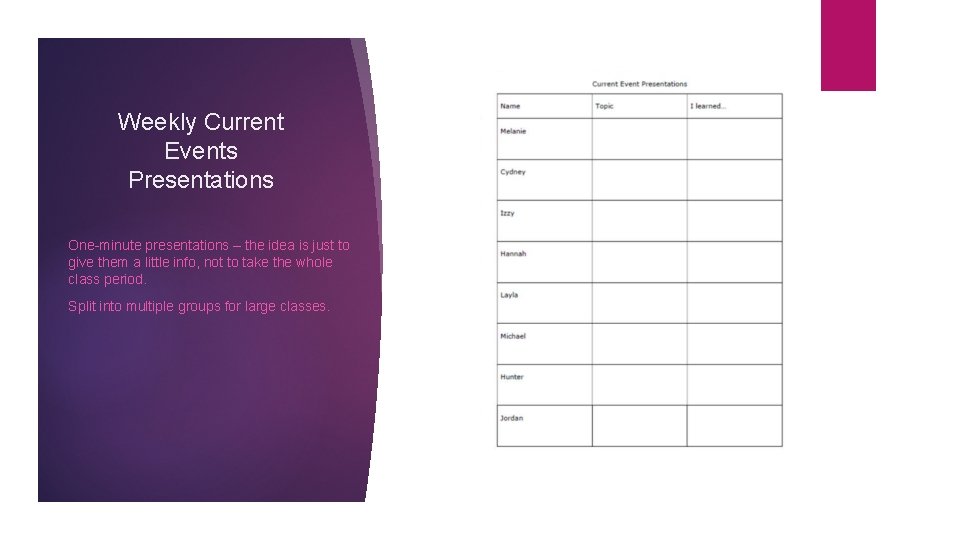
Weekly Current Events Presentations One-minute presentations – the idea is just to give them a little info, not to take the whole class period. Split into multiple groups for large classes.
Virtual Tournaments and Extemporaneous Speaking Placement of computer Lighting Distractions in the room Ceiling fans Mirrors Busy background
Questions? Sergio Sauceda sergio. sauceda@psjaisd. us PSJA Southwest Early College High School 9563542241