
UDAI working together works EFFECTIVE TEACHING STRATEGIES FOR
- Slides: 39
UDAI working together works EFFECTIVE TEACHING STRATEGIES FOR CHILDREN WITH AUTISM SPECTRUM DISORDER
PRE-WRITING UDAI working together works
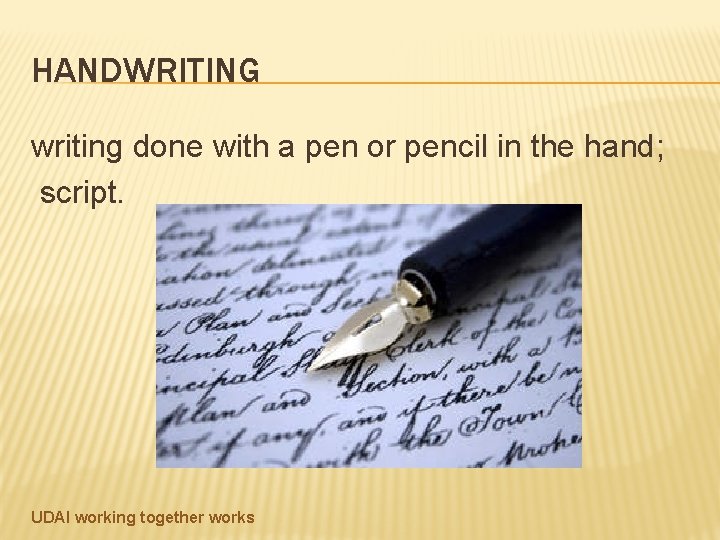
HANDWRITING writing done with a pen or pencil in the hand; script. UDAI working together works
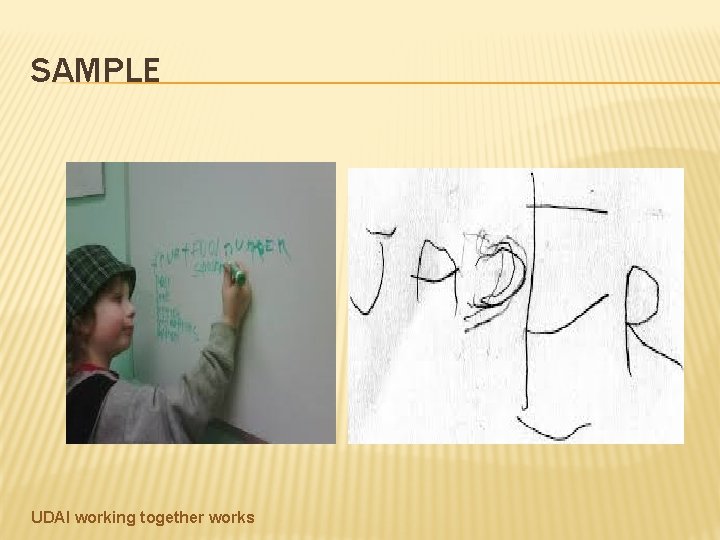
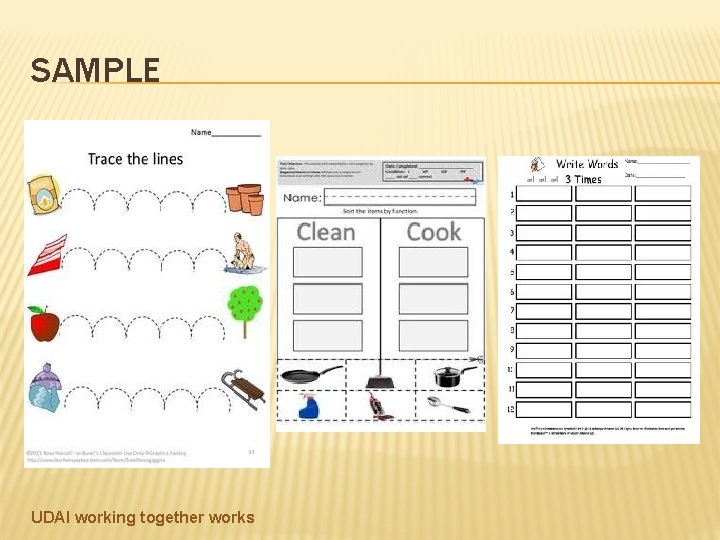
SAMPLE UDAI working together works
DEVELOPING HANDWRITING SKILLS FOR INDIVIDUALS WITH ASD There a number of reasons why individuals with Autistic Spectrum Disorder (ASD) may find handwriting difficult. � Poor Motor Skills � Sensory Difficulties UDAI working together works
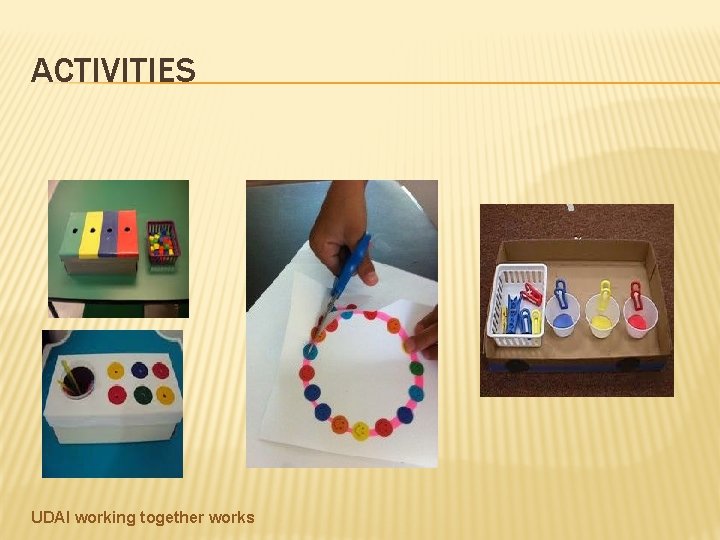
FINE MOTOR ACTIVITIES Clay, therapy putty, play-doh, bread dough, modeling foam : � Try hiding small objects (beads, pennies, beans) inside and then try pulling them out � Use a rolling pin to flatten it out, then use cookie cutters to make shapes. � Interlocking construction toys Mega Blocks are large sized Legos and are best for preschool age children. � Pop beads: large size � UDAI working together works
FINE MOTOR Water play with spray bottles: � Sponges: squeezing to wring out the water is great for strengthening hands and forearms. . � Clothespin games: Use the pads of the thumb and index finger to open the clothespin rather than pinching it open against the side of the index finger � Place clothespins along the top of a container and then on top of each other to construct a design. � Pick up small objects with the clothespin: cotton balls, pompoms, crumbled paper, beads, pegs, UDAI working together works �
FINE MOTOR Hole puncher: � Grip style hole punchers (pictured at left) are easier for children to use, rather than the small punchers that require a strong pinch to operate. � Squeeze toys and materials � Foam balls, animals and shapes � Rubber "pinky" balls � Craft activities that require using bottles to squeeze: glue, glitter glue, puffy paint, fabric paint, etc � UDAI working together works
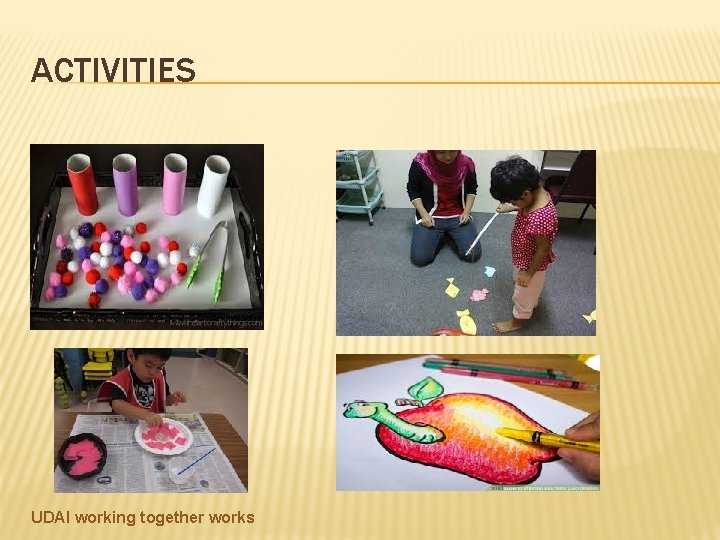
FINE MOTOR � Pinch strengthening Tongs, tweezers, connected chop sticks, strawberry hullers: use these to pick up small objects for sorting, such as beads, marbles, beans, pompoms and cotton balls. � Push a toothpick point into a Styrofoam tray or plate, or in aluminum foil placed over craft foam or corkboard to make a picture. UDAI working together works
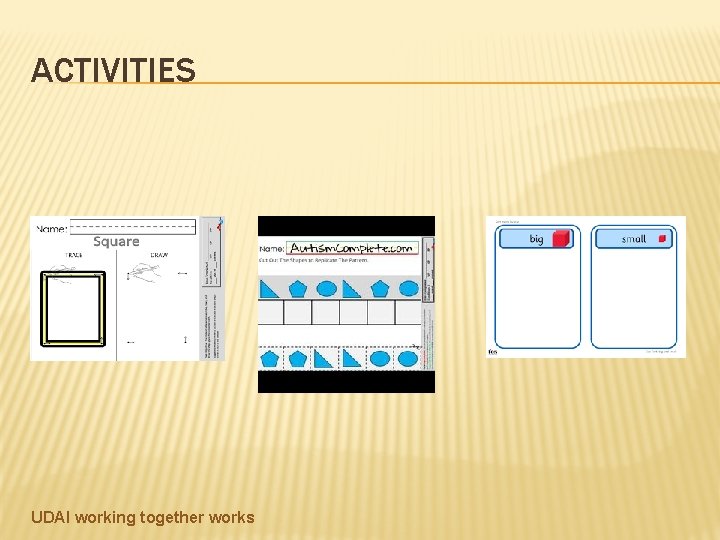
EYE HAND CORDINATION Children begin drawing by scribbling randomly. � To teach strokes, it makes sense to draw them within context. For example, for vertical lines draw a picture of a picket fence minus the pickets. � Drawing within a large space, such as on a wall chalkboard, dry erase board. � Draw shapes within square boxes for using the attributes of a square as landmarks. UDAI working together works
EYE HAND CORDINATION Make shapes with sticks (toothpicks, popsicle sticks, Wikki Stix, etc. ) for child to trace beside � Trace over shapes and simple pictures with tracing paper � Draw around stencils of shapes and simple objects Connect-the-Dots activities � Mazes: trace the way out first with your finger, then with a pencil or crayon � Coloring books: children over age 4 should be encouraged to color inside the lines � UDAI working together works
ACTIVITIES UDAI working together works
ACTIVITIES UDAI working together works
ACTIVITIES UDAI working together works
PROCESSING SENSORY INFORMATION Responses to sensory stimulus can cause stress and anxiety as individuals attempt to interpret their environments � As individuals attempt to process sensory information their ability to concentrate and stay focused may become impaired. � Individuals may well appear off task as they attempt to screen out information and sensory input others may not be aware of � UDAI working together works
PROCESSING SENSORY INFORMATION Often individuals with ASD have difficulty processing information that is presented too rapidly, producing overload and shut down of their ability to understand respond, including following conversations and instructions. � It is important to give individuals with ASD a little extra time to respond (this is known as latency), in order for them to process information. � Individuals with ASD are often better visual learners � Processing sensory information might also be inconsistent, reactions may vary and responses UDAI working together works are often unpredictable. �
PROCESSING SENSORY INFORMATION � Individuals with ASD might be either hyper or hypo sensitive to light, sound, crowds and other external stimulation. Many individuals with ASD do have some level of fine and gross motor difficulty. This often manifests itself in poor handwriting and difficulty with athletic co-ordination. UDAI working together works
IMPROVING LEARNING FOR INDIVIDUALS WITH ASD: Often it is important to use an eclectic approach as no one particular approach has been proven to work best with all individuals. � Consistency is important, this does not mean rigidity and control but being systematic with dependable environments. � Individualized learning, where Individual Education Plans (IEPs) set out clear, achievable targets. � Providing frequent „short rest breaks‟ in which the individual can engage in self directed activities � UDAI working together works
IMPROVING LEARNING FOR INDIVIDUALS WITH ASD: Providing short sensory-input breaks where the individual may require additional drinks, snacks or other heightened reinforcers. � Try always to point out things the individual should be doing rather than making reference to those things they should not be doing. � Try to limit sensory overload by allowing individuals opportunity to begin before or after other individuals on specific tasks to reduce levels of anxiety and allow transition from previous tasks. � UDAI working together works
IMPROVING LEARNING FOR INDIVIDUALS WITH ASD: Providing time restraints can sometimes provide individuals with a clear indication of tasks, use of sand timers, „finish‟ bags or boxes also help the individual to organize their thoughts within a session. This needs to be Treated with caution, some individuals might respond by focusing on the timer to the detriment of the task, whilst other individuals exhibit more levels of anxiety and prefer open-ended time activities � Use the individual's strengths � Use of simple relaxation techniques to reduce anxiety UDAI working together works �
USE OF MOTIVATORS AND REWARDS TO IMPROVE LEARNING FOR INDIVIDUALS WITH ASD Displayed and celebrated examples of individual's own work � Individuals are often best motivated by using things that are of special interest in them or by incorporating special routines. � UDAI working together works
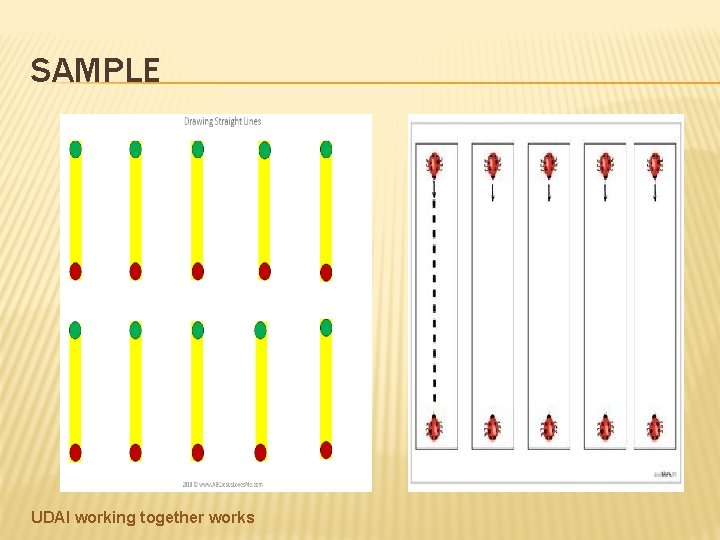
HANDWRITING HINTS: Start to write on a green dot end on a red � Copy over yellow writing � Use layered carbon papers to improve pencil pressure to write the „hidden message‟ UDAI working together works
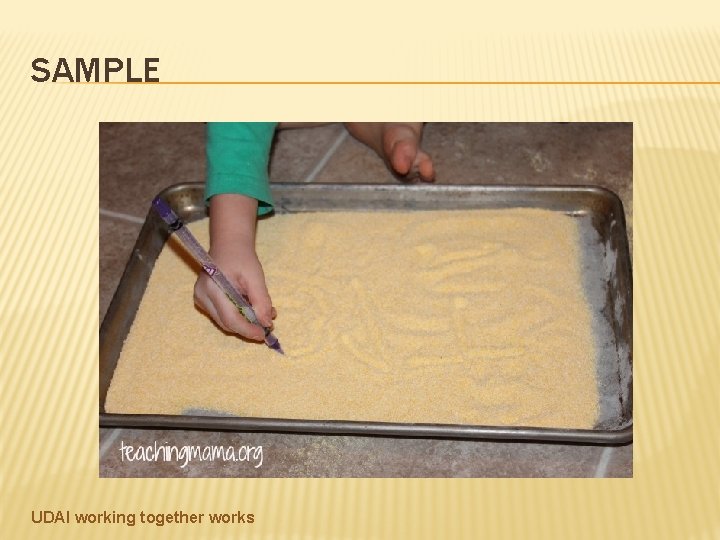
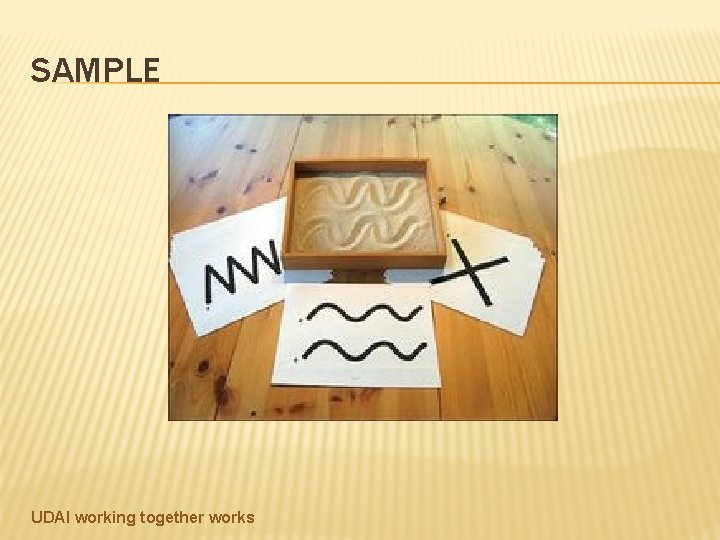
ACTIVITIES TO PROMOTE HANDWRITING Practicing scribbling activities � Drawing vertical strokes on paper with crayons � Coloring inside pictures on the same paper � Is involved in playing with things and observing things that make circular movements � Cutting and sticking activities to promote fine motor skills, following cutting pathways � Sticking pictures and symbols to support writing – encourage simple � UDAI working together works
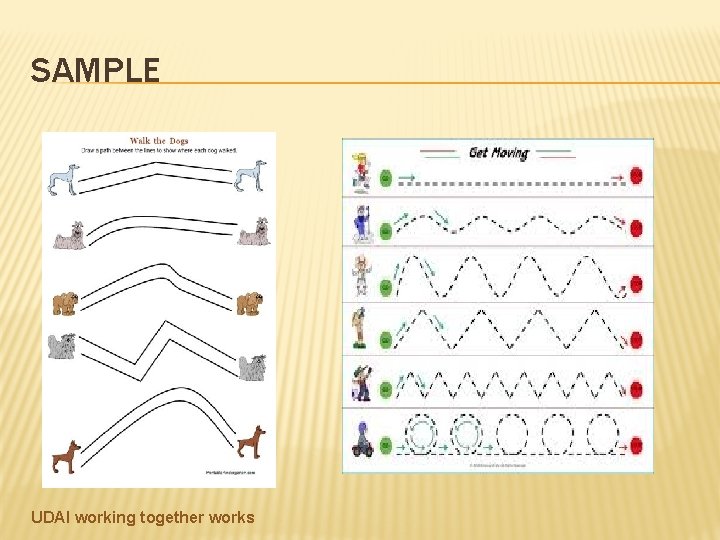
ACTIVITIES TO PROMOTE HANDWRITING sequencing activities using fingers, crayons and other writing materials to make circular marks in sand, on paper, on white boards and so on can place small objects in a line � Practices drawing using a variety of mediums, horizontal lines “Pathways”, “Tracking” exercises writing left to right, straight lines round and Round, zigzag, beginnings of letter shapes � Use of child friendly fonts � Coloring inside pictures � UDAI working together works
ACTIVITIES TO PROMOTE HANDWRITING Dough work to strengthen muscles and improve fine motor control � Picking up small objects and transferring them to a pot or container to improve pincer grip, i. e. picking up dried peas, pasta, small beads and putting them in yoghurt pots � Play finger games and rhymes with an adult or peer � Can copy simple rhythmic sounds by using the fingers to drum out beats on tables and instruments � Paper tearing and crumpling to pile small bricks into a tower using both hands to encourage fine motor control and across the body movements � UDAI working together works
ACTIVITIES TO PROMOTE HANDWRITING Exploring different materials and surfaces and building up a profile of likes and dislikes, rough, smooth attributes etc � Turning pages in books and reading materials of different thicknesses, card and board books, thick paper books, magazines, comics and newspapers � Holding a range of objects of different sizes and shapes in hands � UDAI working together works
ACTIVITIES TO PROMOTE HANDWRITING Writing and following shapes in the air � Encouraging children to make marks on paper using a variety of mediums � Describe meaning to marks – answers questions such as “tell me what you have written? ” � Coloring inside large outline / picture / shapes � Peg boards � UDAI working together works
ACTIVITIES TO PROMOTE HANDWRITING Writes simple key words (supported by key word list / searchlights) � Attempts to use writing for different purposes, for instance, captions on wall displays, simple lists, thank you letters and so on Modifying worksheets, reorganizing to prevent sensory overload or to provide bigger print to enable individuals with fine motor difficulties access to materials � Access to adaptive technologies � UDAI working together works
SAMPLE UDAI working together works
SAMPLE UDAI working together works
SAMPLE UDAI working together works
SAMPLE UDAI working together works
SAMPLE UDAI working together works
MILESTONES 0 -1 YEARS � During this first year of life, skills such head control, rolling, coming to sit, learning to crawl. � Reaching toward objects and touching them. � Putting things in their mouths . � Transferring objects between hands. � To grasp with all fingers together, � finger (pincer grasp). � Throw a ball and other objects. UDAI working together works
MILESTONES 1 to 2 year As balance improves, most are able to pick up toys from a standing position � Paint with whole arm movements � Put rings on a peg � Scribble with all types of media � finger paint: also use other media such as shaving cream and pudding � Turn knobs � Ball play with small and large balls � UDAI working together works
MILESTONES 2 -3 YEARS � Turn pages one by one. � Hold crayon with thumb and fingers instead of fist, use broken crayons to encourage this. � Trace over vertical and horizontal lines and circles in a top to bottom direction � Tear paper and make collage pictures. � Snip edges of paper or around paper plates with scissors, try cutting along a short line. � Roll, pound, squeeze, and pull clay or putty. UDAI working together works
MILESTONES 3 -4 YEARS � Drive pegs into holes � Draw crosses and circles in a top to bottom direction put lines together to draw people � Manipulate clay by making balls, snakes, etc. construction toys � toy tools such as hammer and nails, screwdriver, nuts and bolts � lacing board � imitate drawing vertical and horizontal lines, circles and crosses UDAI working together works
MILESTONES 4 TO 5 YEARS � Use scissors to cut out circles, triangles and square shapes. � Copy crosses, squares and X's in a top to bottom direction. � Draw people, animals and objects � Use coloring books to color within the lines of the picture � Print a few capital letters � Practice writing first name UDAI working together works
THANK YOU UDAI working together works