
UCSF Educational Skills Workshop Challenges in Clinical Teaching
- Slides: 18
UCSF Educational Skills Workshop Challenges in Clinical Teaching http: //tiny. ucsf. edu/UCSFCCT Faculty Developer Team: Andi Marmor, MD, MSEd Renee Kinman, MD, Ph. D, MS Arianne Teherani, Ph. D Ivance Pugoy, MD Charlotte Wills, MD Serena Yang, MD
Creative Commons License Attribution-Non. Commercial-Share Alike 3. 0 Unported You are free: • to Share — to copy, distribute and transmit the work • to Remix — to adapt the work Under the following conditions: • Attribution. You must give the original authors credit (but not in any way that suggests that they endorse you or your use of the work). • Noncommercial. You may not use this work for commercial purposes. • Share Alike. If you alter, transform, or build upon this work, you may distribute the resulting work only under a license identical to this one. See http: //creativecommons. org/licenses/by-nc-sa/3. 0/ for full license. 2 12/4/2020
Session Structure § Identify teaching challenges § Review the One Minute Preceptor as a teaching tool § Work through scenarios in small groups § Share ideas in large group § Summarize and wrap-up 3 12/4/2020
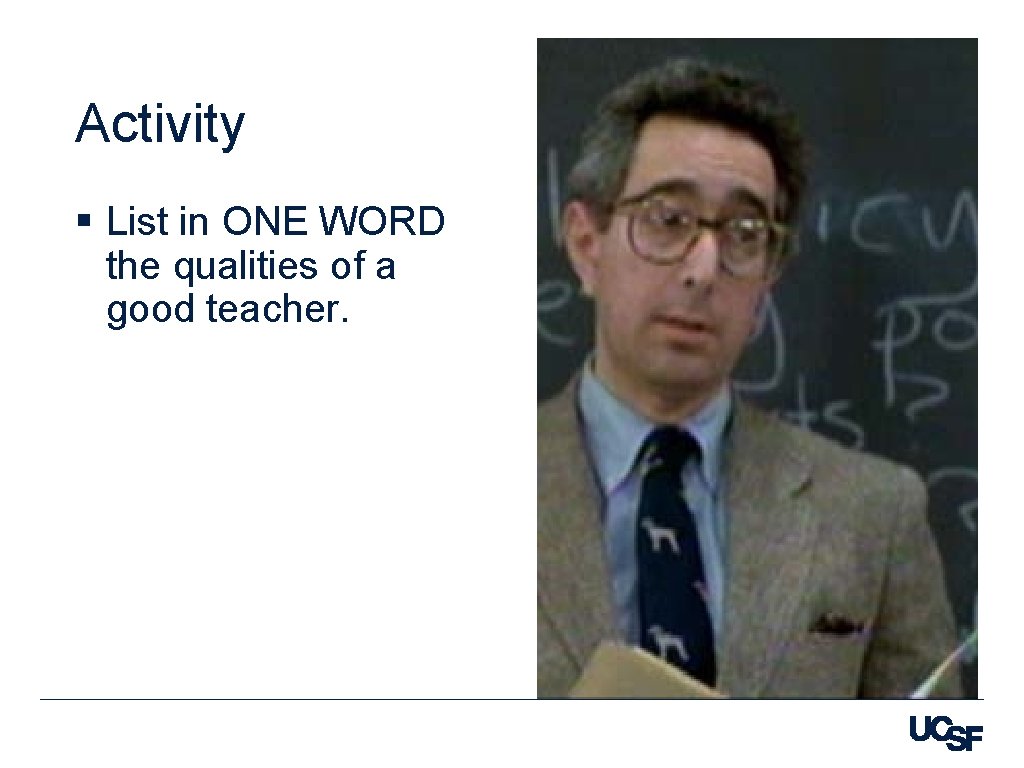
Activity § List in ONE WORD the qualities of a good teacher.
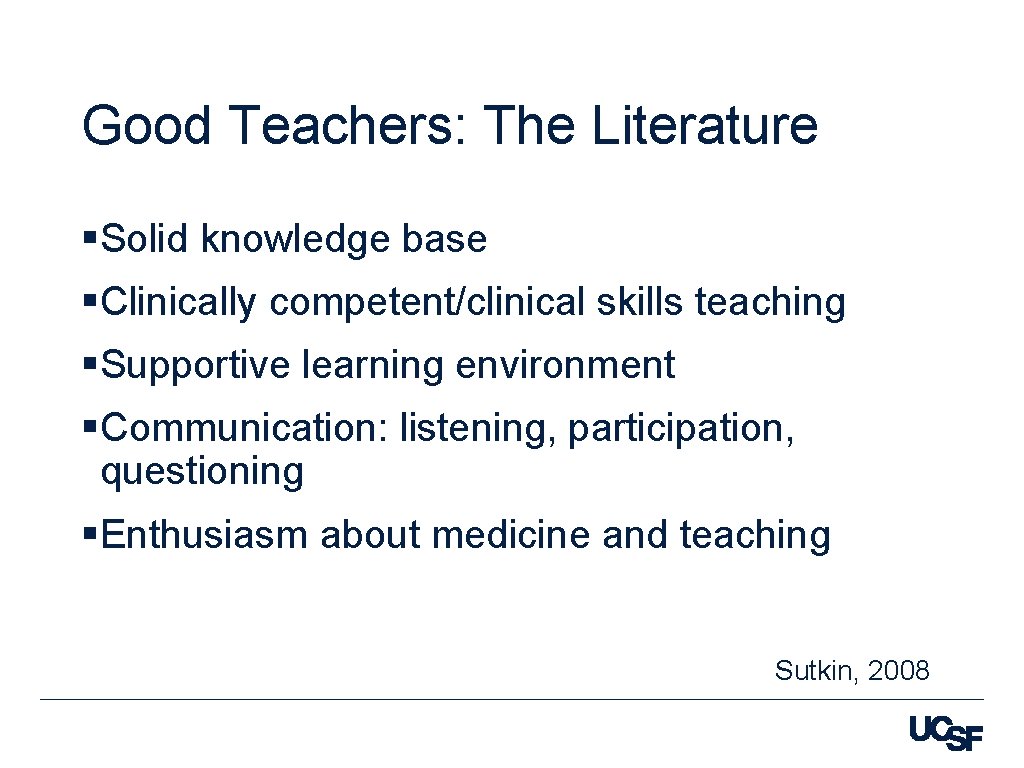
Good Teachers: The Literature §Solid knowledge base §Clinically competent/clinical skills teaching §Supportive learning environment §Communication: listening, participation, questioning §Enthusiasm about medicine and teaching Sutkin, 2008
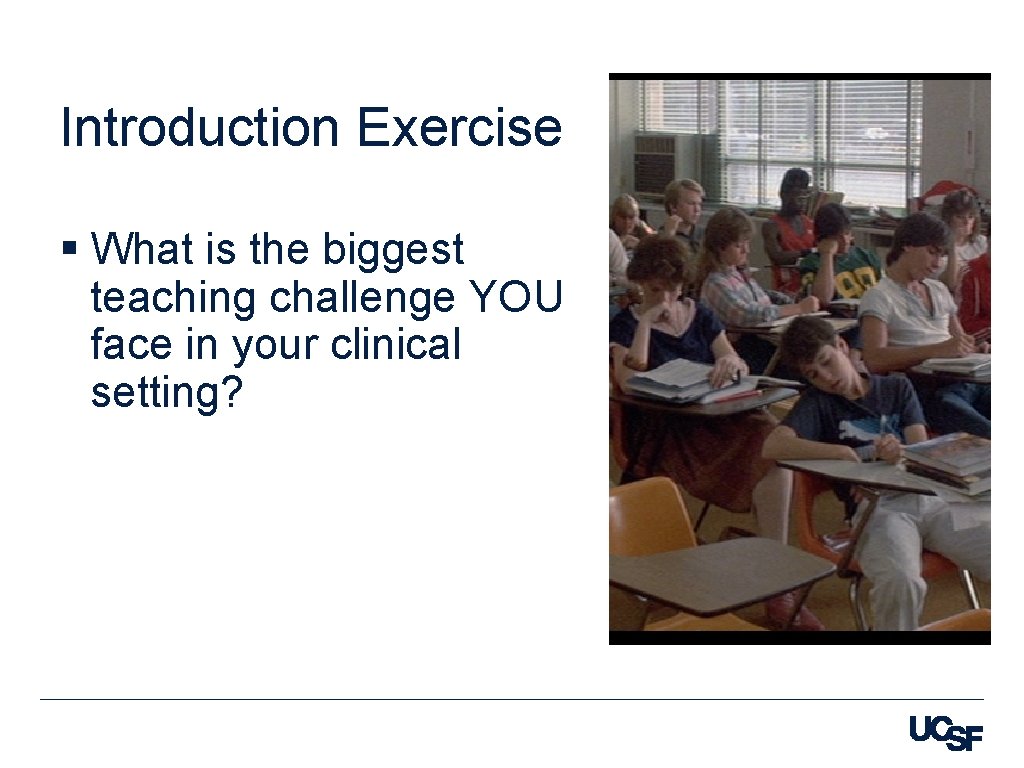
Introduction Exercise § What is the biggest teaching challenge YOU face in your clinical setting?
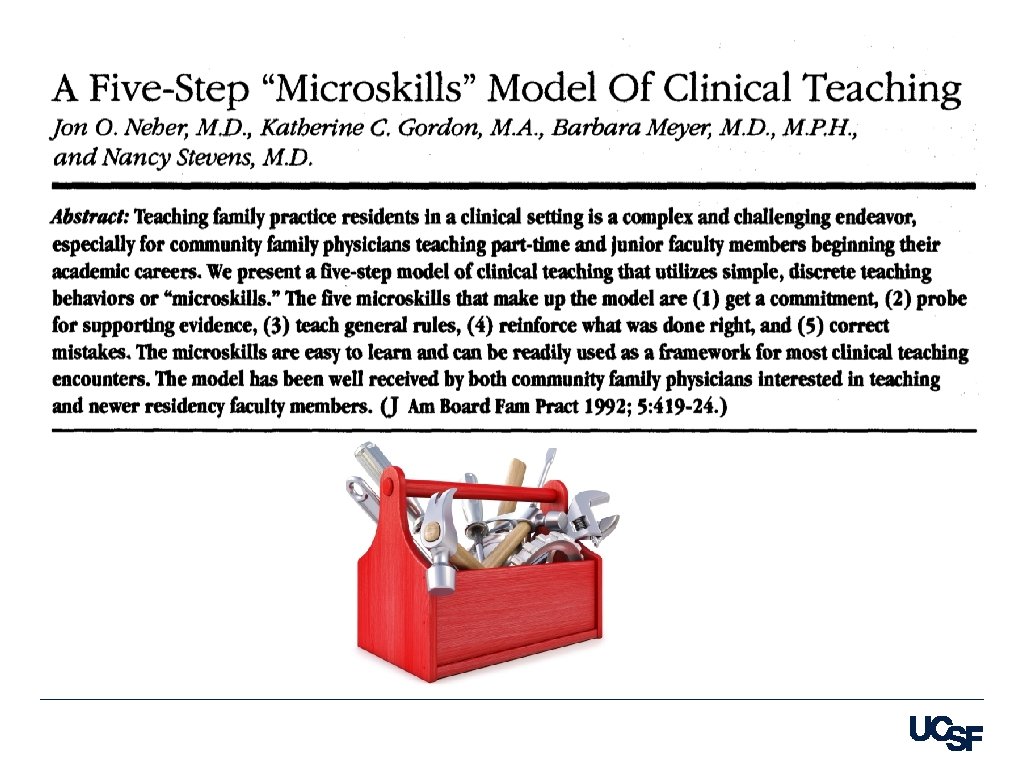
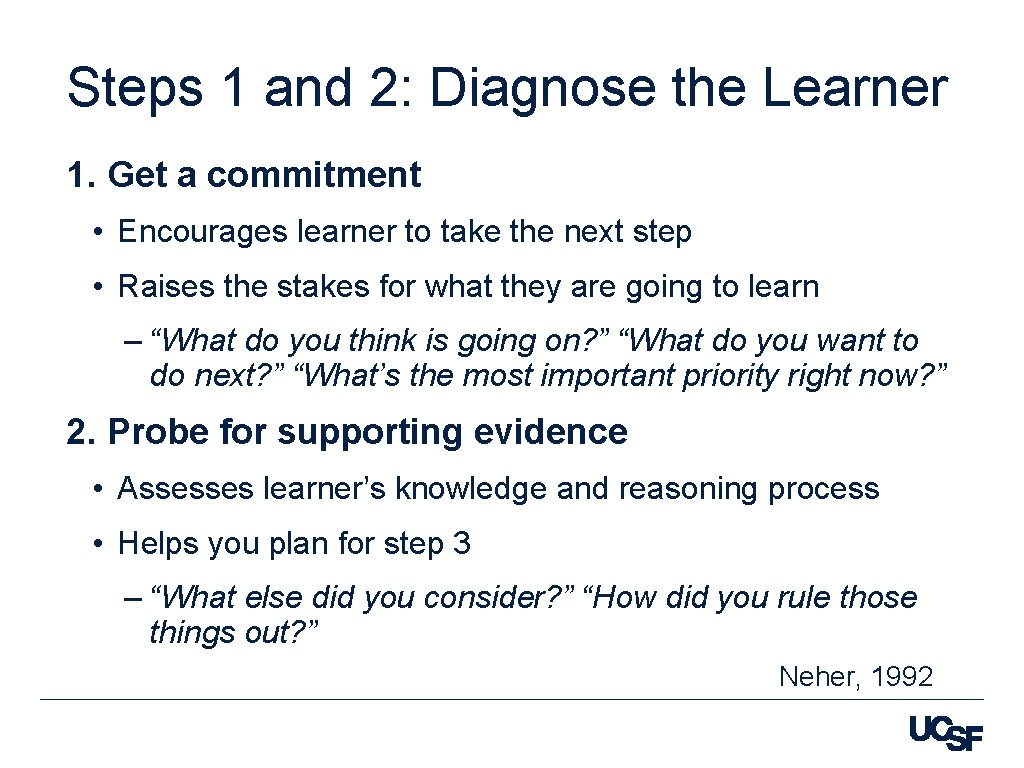
Steps 1 and 2: Diagnose the Learner 1. Get a commitment • Encourages learner to take the next step • Raises the stakes for what they are going to learn ‒ “What do you think is going on? ” “What do you want to do next? ” “What’s the most important priority right now? ” 2. Probe for supporting evidence • Assesses learner’s knowledge and reasoning process • Helps you plan for step 3 ‒ “What else did you consider? ” “How did you rule those things out? ” Neher, 1992
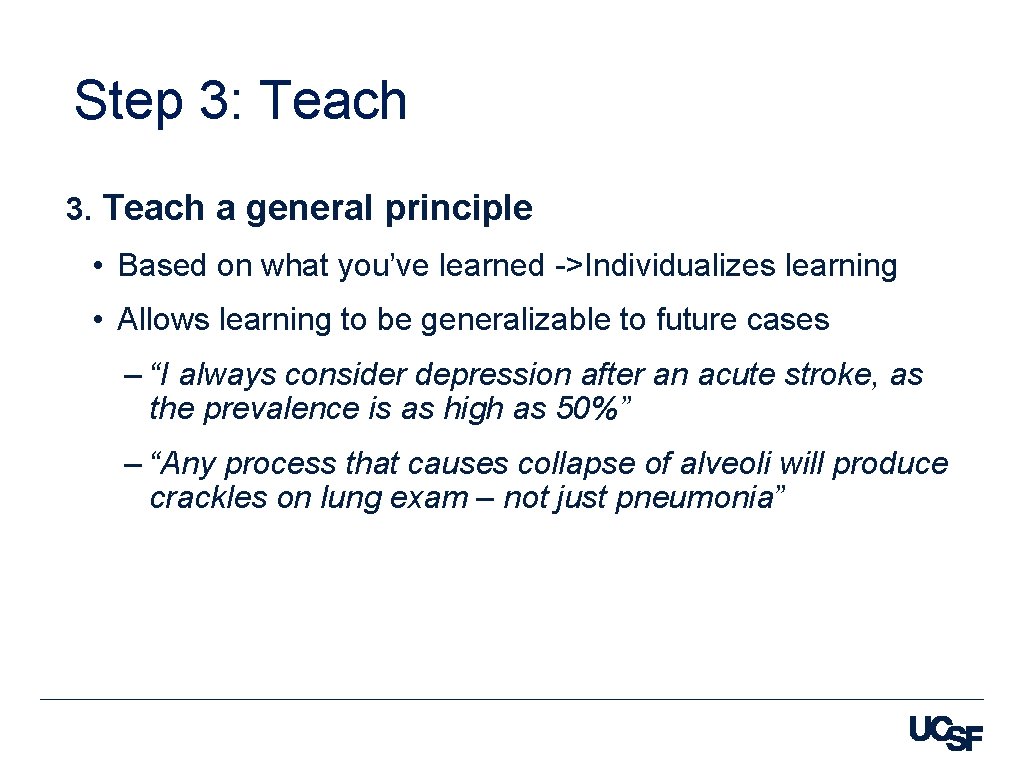
Step 3: Teach 3. Teach a general principle • Based on what you’ve learned ->Individualizes learning • Allows learning to be generalizable to future cases ‒ “I always consider depression after an acute stroke, as the prevalence is as high as 50%” ‒ “Any process that causes collapse of alveoli will produce crackles on lung exam – not just pneumonia”
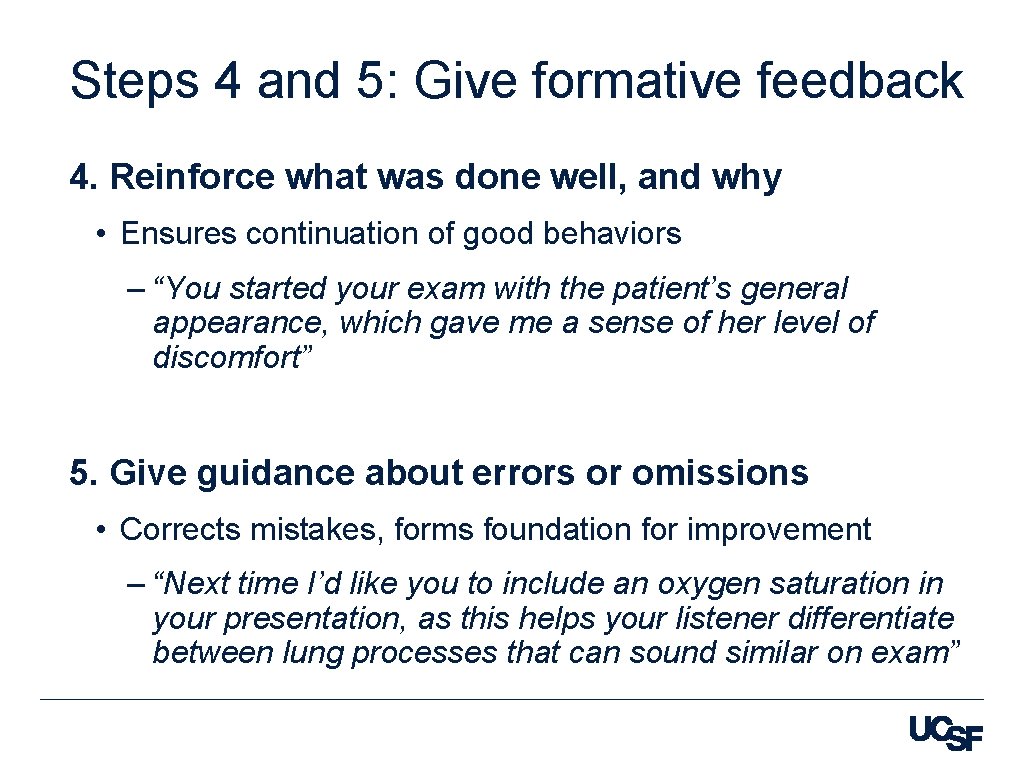
Steps 4 and 5: Give formative feedback 4. Reinforce what was done well, and why • Ensures continuation of good behaviors ‒ “You started your exam with the patient’s general appearance, which gave me a sense of her level of discomfort” 5. Give guidance about errors or omissions • Corrects mistakes, forms foundation for improvement ‒ “Next time I’d like you to include an oxygen saturation in your presentation, as this helps your listener differentiate between lung processes that can sound similar on exam”
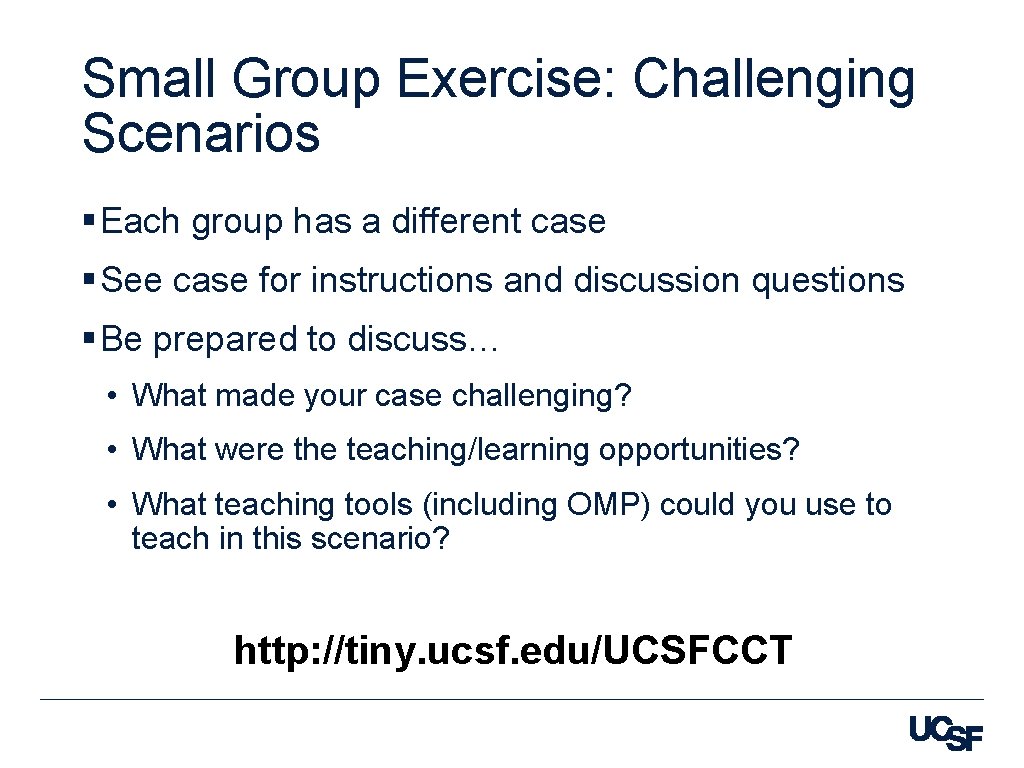
Small Group Exercise: Challenging Scenarios § Each group has a different case § See case for instructions and discussion questions § Be prepared to discuss… • What made your case challenging? • What were the teaching/learning opportunities? • What teaching tools (including OMP) could you use to teach in this scenario? http: //tiny. ucsf. edu/UCSFCCT
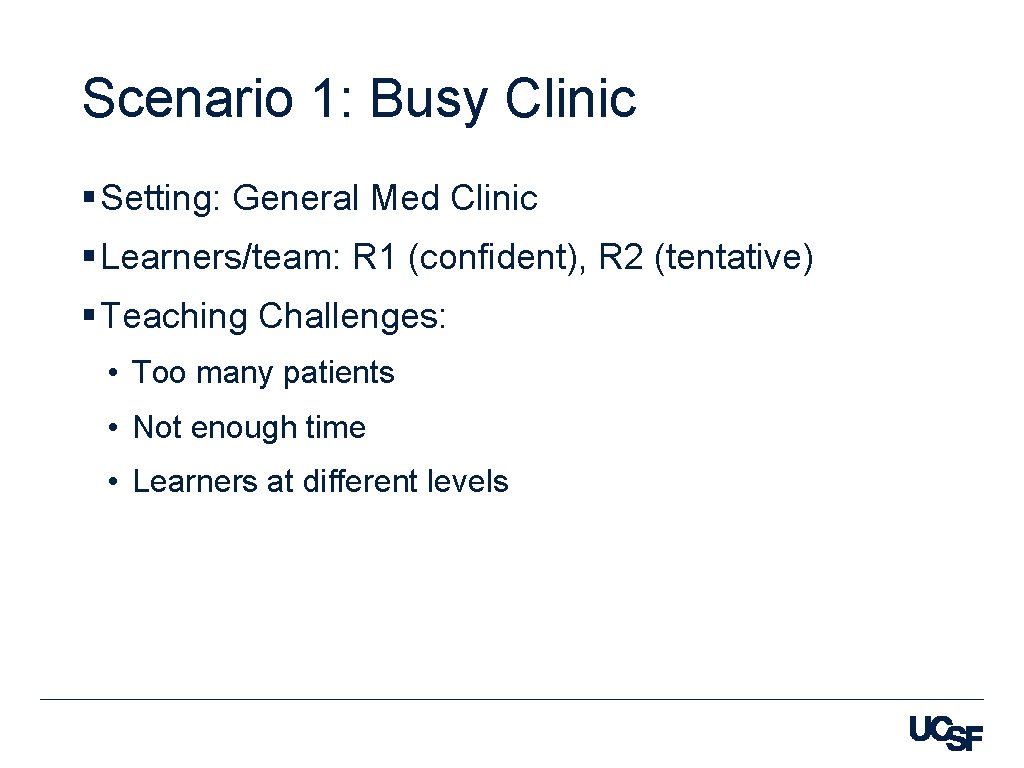
Scenario 1: Busy Clinic § Setting: General Med Clinic § Learners/team: R 1 (confident), R 2 (tentative) § Teaching Challenges: • Too many patients • Not enough time • Learners at different levels
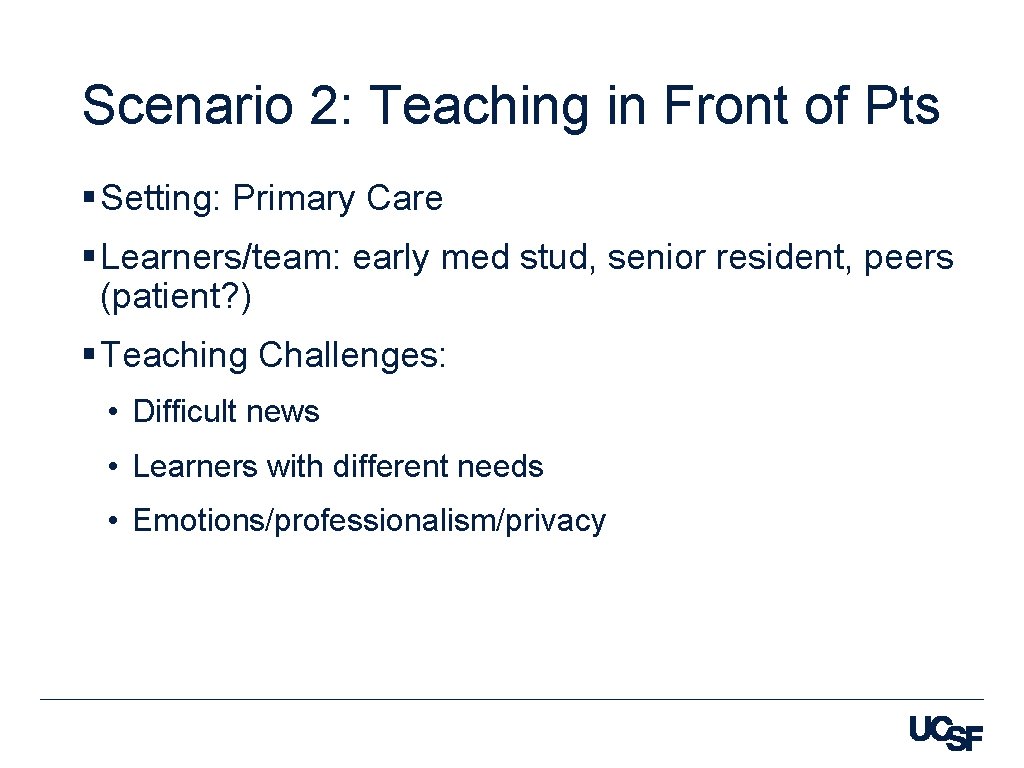
Scenario 2: Teaching in Front of Pts § Setting: Primary Care § Learners/team: early med stud, senior resident, peers (patient? ) § Teaching Challenges: • Difficult news • Learners with different needs • Emotions/professionalism/privacy
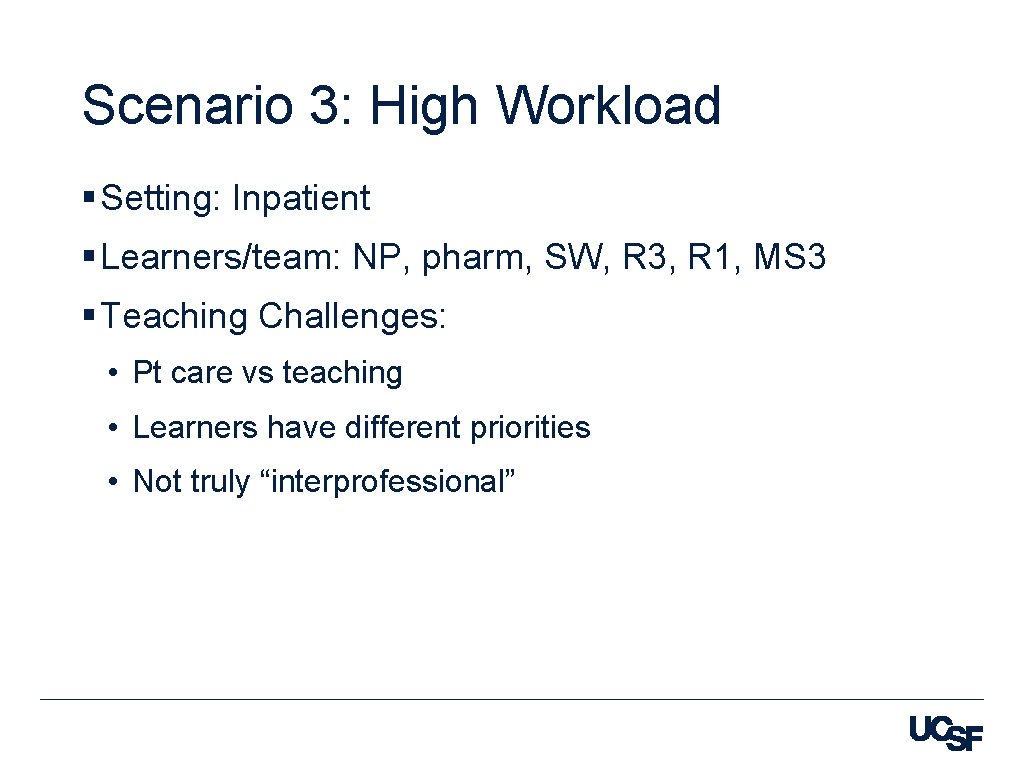
Scenario 3: High Workload § Setting: Inpatient § Learners/team: NP, pharm, SW, R 3, R 1, MS 3 § Teaching Challenges: • Pt care vs teaching • Learners have different priorities • Not truly “interprofessional”
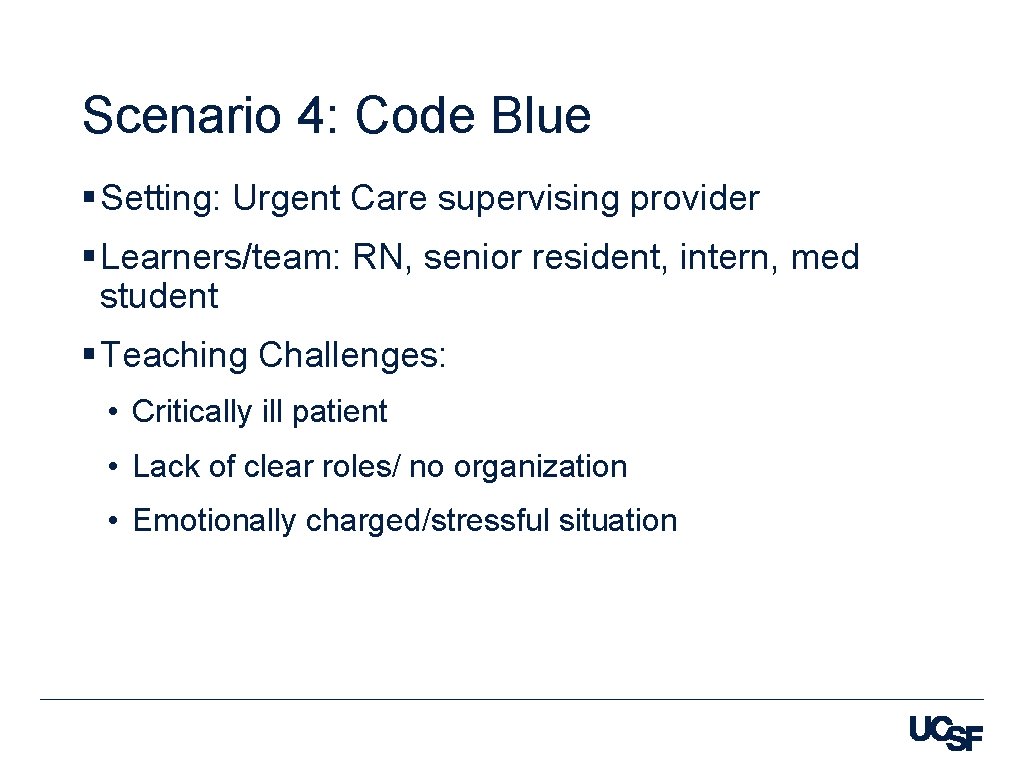
Scenario 4: Code Blue § Setting: Urgent Care supervising provider § Learners/team: RN, senior resident, intern, med student § Teaching Challenges: • Critically ill patient • Lack of clear roles/ no organization • Emotionally charged/stressful situation
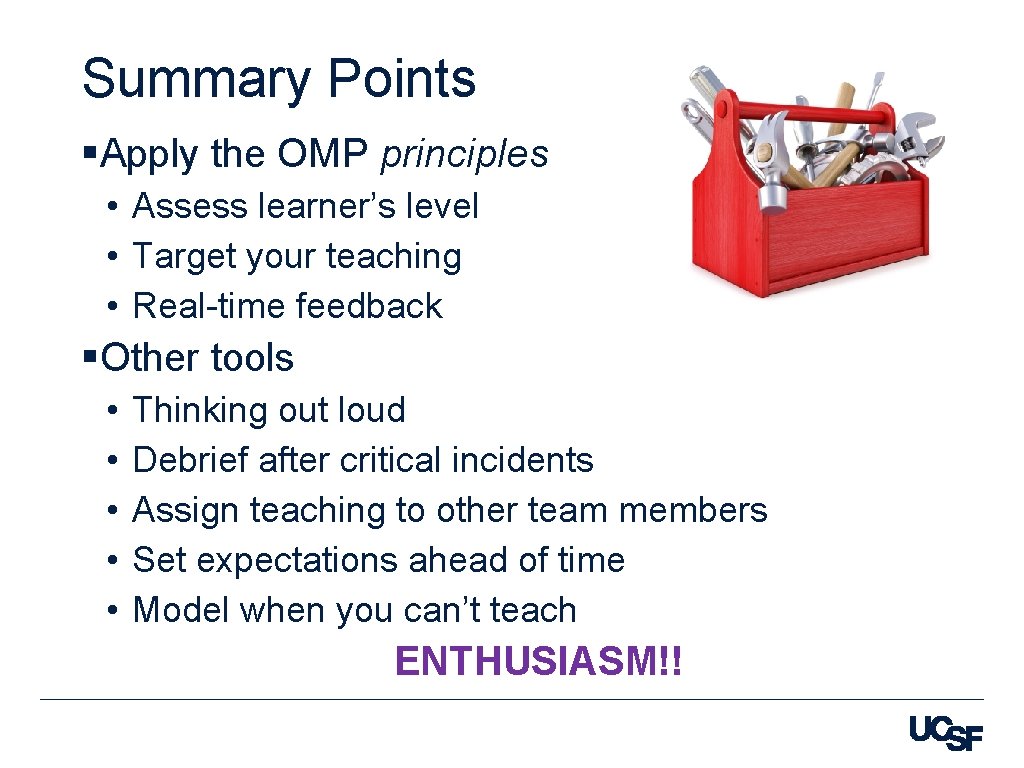
Summary Points §Apply the OMP principles • Assess learner’s level • Target your teaching • Real-time feedback §Other tools • • • Thinking out loud Debrief after critical incidents Assign teaching to other team members Set expectations ahead of time Model when you can’t teach ENTHUSIASM!!
Evaluation and Action Plan § Link to workshop dashboard: http: //tiny. ucsf. edu/UCSFCCT 17 12/4/2020
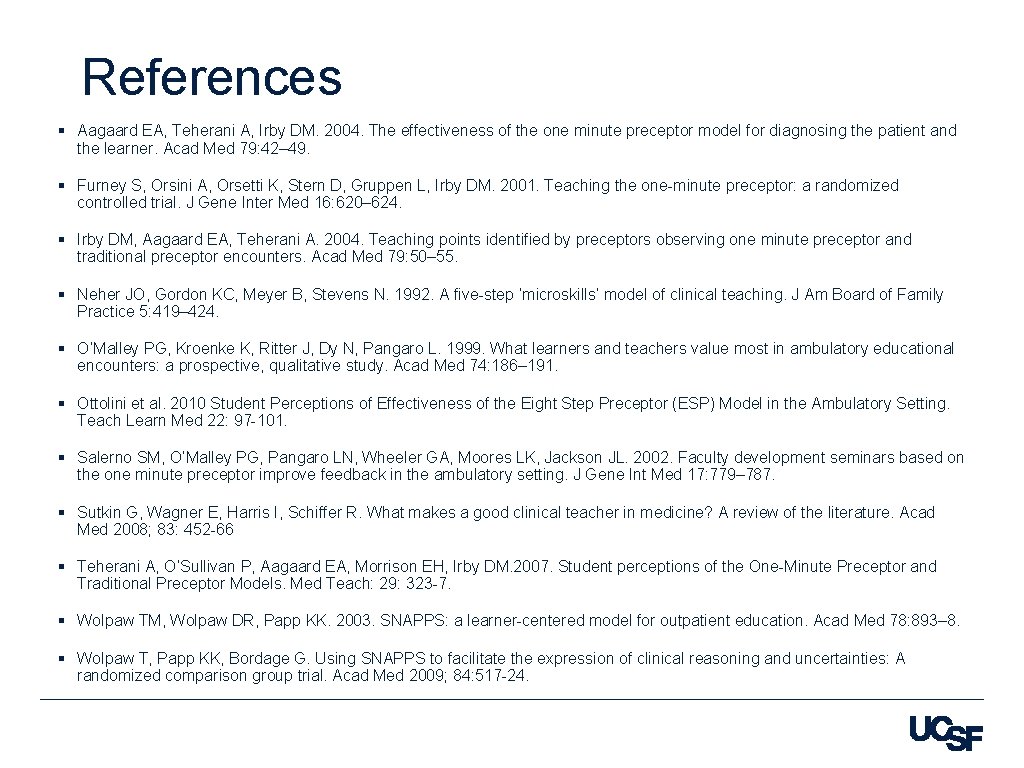
References § Aagaard EA, Teherani A, Irby DM. 2004. The effectiveness of the one minute preceptor model for diagnosing the patient and the learner. Acad Med 79: 42– 49. § Furney S, Orsini A, Orsetti K, Stern D, Gruppen L, Irby DM. 2001. Teaching the one-minute preceptor: a randomized controlled trial. J Gene Inter Med 16: 620– 624. § Irby DM, Aagaard EA, Teherani A. 2004. Teaching points identified by preceptors observing one minute preceptor and traditional preceptor encounters. Acad Med 79: 50– 55. § Neher JO, Gordon KC, Meyer B, Stevens N. 1992. A five-step ‘microskills’ model of clinical teaching. J Am Board of Family Practice 5: 419– 424. § O’Malley PG, Kroenke K, Ritter J, Dy N, Pangaro L. 1999. What learners and teachers value most in ambulatory educational encounters: a prospective, qualitative study. Acad Med 74: 186– 191. § Ottolini et al. 2010 Student Perceptions of Effectiveness of the Eight Step Preceptor (ESP) Model in the Ambulatory Setting. Teach Learn Med 22: 97 -101. § Salerno SM, O’Malley PG, Pangaro LN, Wheeler GA, Moores LK, Jackson JL. 2002. Faculty development seminars based on the one minute preceptor improve feedback in the ambulatory setting. J Gene Int Med 17: 779– 787. § Sutkin G, Wagner E, Harris I, Schiffer R. What makes a good clinical teacher in medicine? A review of the literature. Acad Med 2008; 83: 452 -66 § Teherani A, O’Sullivan P, Aagaard EA, Morrison EH, Irby DM. 2007. Student perceptions of the One-Minute Preceptor and Traditional Preceptor Models. Med Teach: 29: 323 -7. § Wolpaw TM, Wolpaw DR, Papp KK. 2003. SNAPPS: a learner-centered model for outpatient education. Acad Med 78: 893– 8. § Wolpaw T, Papp KK, Bordage G. Using SNAPPS to facilitate the expression of clinical reasoning and uncertainties: A randomized comparison group trial. Acad Med 2009; 84: 517 -24.