
Ubiquitous Domestic and Tangible Computing A new way
Ubiquitous, Domestic and Tangible Computing A new way of thinking Saul Greenberg University of Calgary CPSC 701. 81
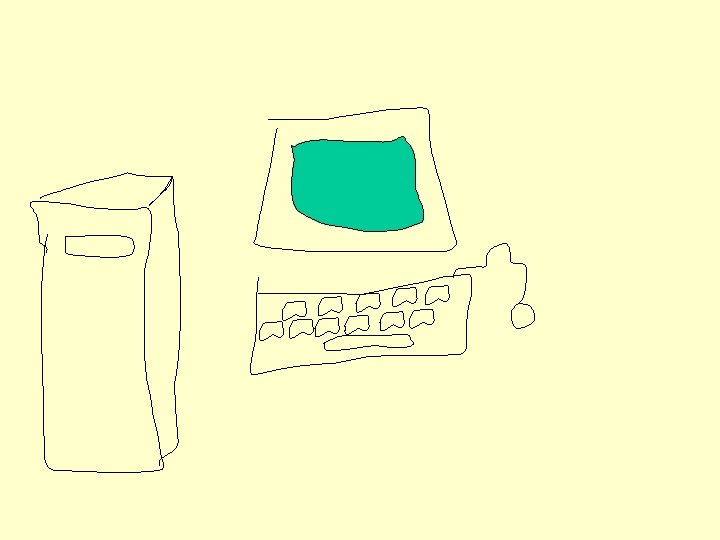
Draw a computer
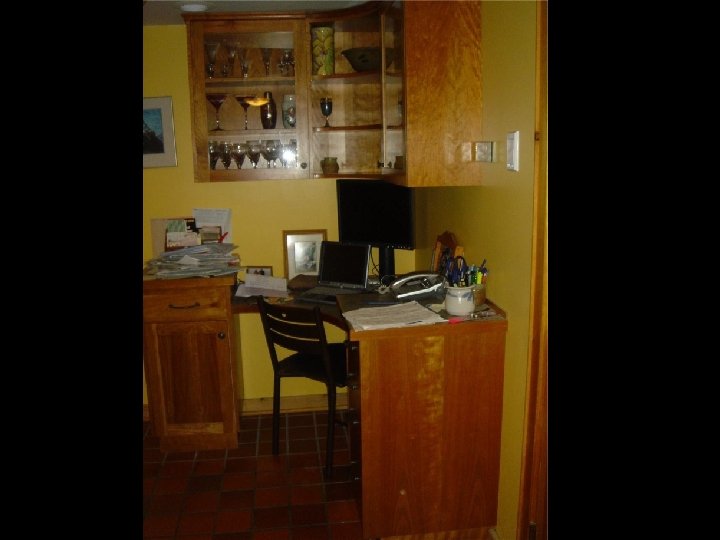

We can do better
But we need to revisit how we think about computers
Course contents Core concepts • what is ubiquitous, tangible and domestic computing? Human and social factors of domestic environments • their interplay with ubiquitous computing Case studies • how ubiquitous computing is realized in various domains
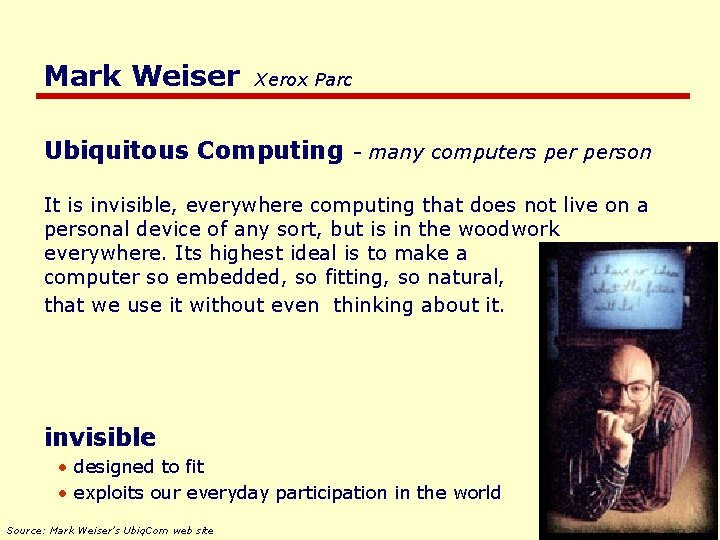
Mark Weiser Xerox Parc Ubiquitous Computing - many computers person It is invisible, everywhere computing that does not live on a personal device of any sort, but is in the woodwork everywhere. Its highest ideal is to make a computer so embedded, so fitting, so natural, that we use it without even thinking about it. invisible • designed to fit • exploits our everyday participation in the world Source: Mark Weiser’s Ubiq. Com web site
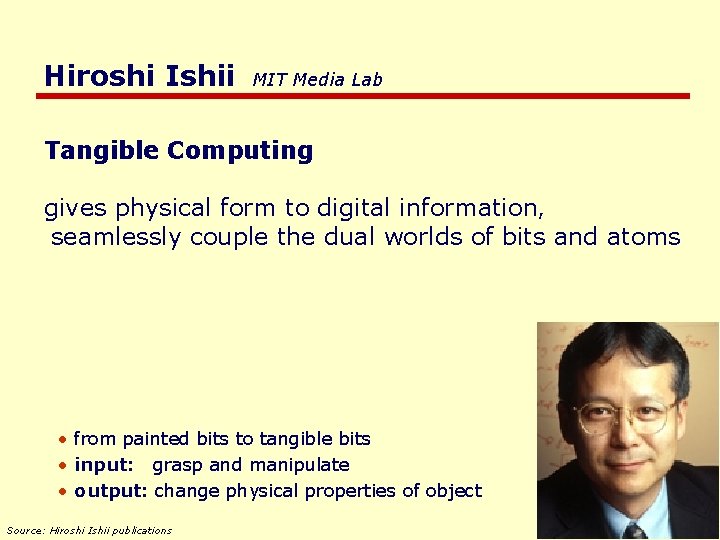
Hiroshi Ishii MIT Media Lab Tangible Computing gives physical form to digital information, seamlessly couple the dual worlds of bits and atoms • from painted bits to tangible bits • input: grasp and manipulate • output: change physical properties of object Source: Hiroshi Ishii publications
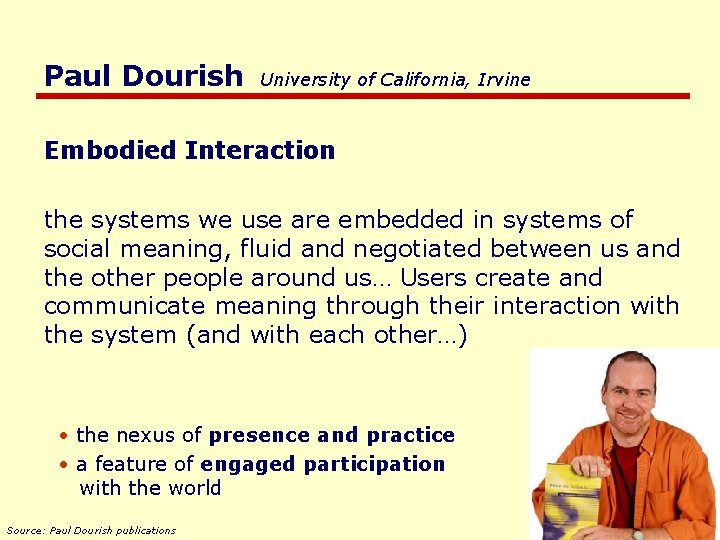
Paul Dourish University of California, Irvine Embodied Interaction the systems we use are embedded in systems of social meaning, fluid and negotiated between us and the other people around us… Users create and communicate meaning through their interaction with the system (and with each other…) • the nexus of presence and practice • a feature of engaged participation with the world Source: Paul Dourish publications
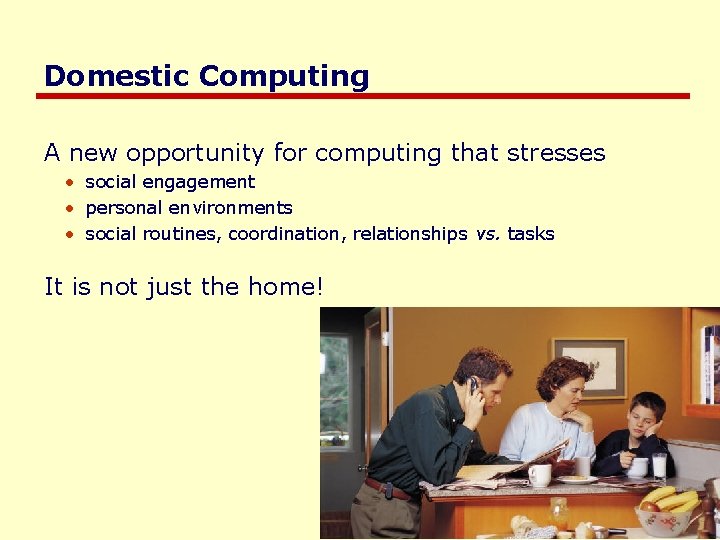
Domestic Computing A new opportunity for computing that stresses • social engagement • personal environments • social routines, coordination, relationships vs. tasks It is not just the home!
New disciplines and genres of computing • • • • ubiquitous computing pervasive computing context-aware computing mixed / augmented reality attentive user interfaces wearable computing sensor networks information appliances tangible user interfaces alternative input and output devices cooperative buildings smart homes smart furniture / clothes consumer robotics …
For Wednesday Read the three Weiser papers On the blog • Write a short summary of your thoughts about Wesier’s work • Take and post some digital photos showing: o existing examples of ubiquitous computing o possible good and places for ubiquitous computers • Write a short commentary about these photos
- Slides: 13