
UBC Department of Urologic Sciences Lecture Series Scrotal
UBC Department of Urologic Sciences Lecture Series Scrotal Masses
Disclaimer: • This is a lot of information to cover and we are unlikely to cover it all today • These slides are to be utilized for your reference to guide your self study
MCC Objectives http: //mcc. ca/examinations/objectives-overview/ For LMCC Part 1 Objectives applicable to this lecture: – Scrotal Mass (90 -0) – Scrotal Pain (91 -0)
Objectives Scrotal Mass: 1. Given a patient with a scrotal mass: 1. 2. 3. To list and interpret key clinical findings To list and interpret critical investigations Construct an initial management plan • • • Hydrocele Varicocele Hematocele / hematoma Testis malignancy Inflammatory / Infectious Causal Conditions: 2. Recognize testicular torsion
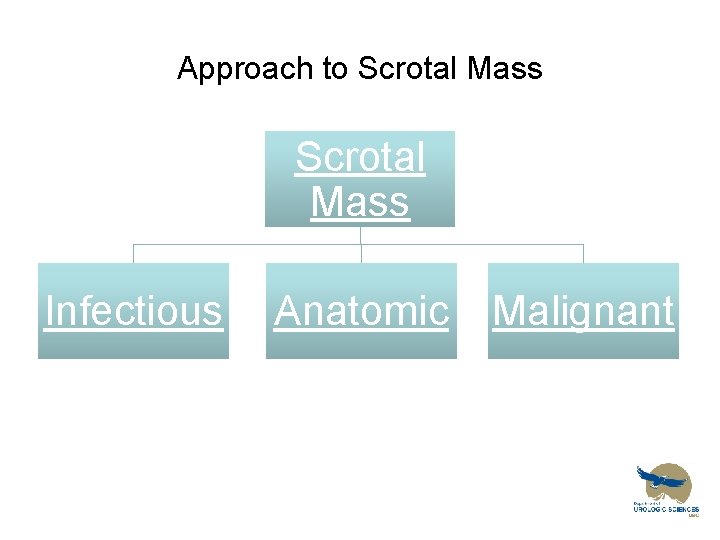
Approach to Scrotal Mass Infectious Anatomic Malignant
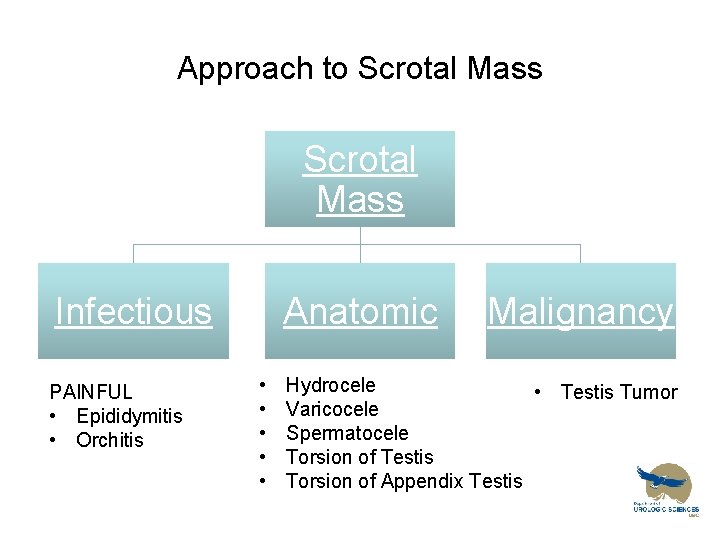
Approach to Scrotal Mass Infectious PAINFUL • Epididymitis • Orchitis Anatomic • • • Malignancy Hydrocele • Testis Tumor Varicocele Spermatocele Torsion of Testis Torsion of Appendix Testis
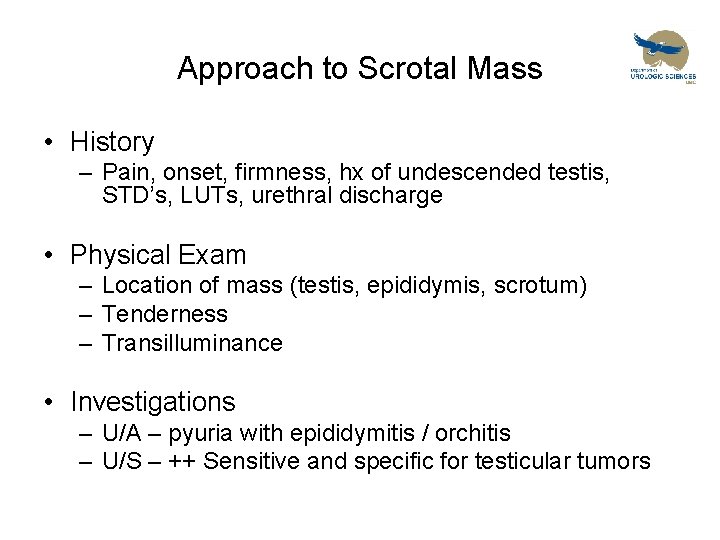
Approach to Scrotal Mass • History – Pain, onset, firmness, hx of undescended testis, STD’s, LUTs, urethral discharge • Physical Exam – Location of mass (testis, epididymis, scrotum) – Tenderness – Transilluminance • Investigations – U/A – pyuria with epididymitis / orchitis – U/S – ++ Sensitive and specific for testicular tumors
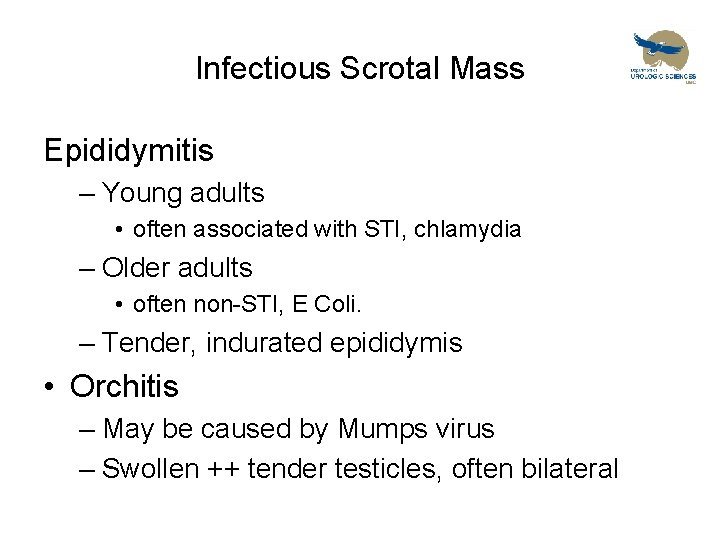
Infectious Scrotal Mass Epididymitis – Young adults • often associated with STI, chlamydia – Older adults • often non-STI, E Coli. – Tender, indurated epididymis • Orchitis – May be caused by Mumps virus – Swollen ++ tender testicles, often bilateral
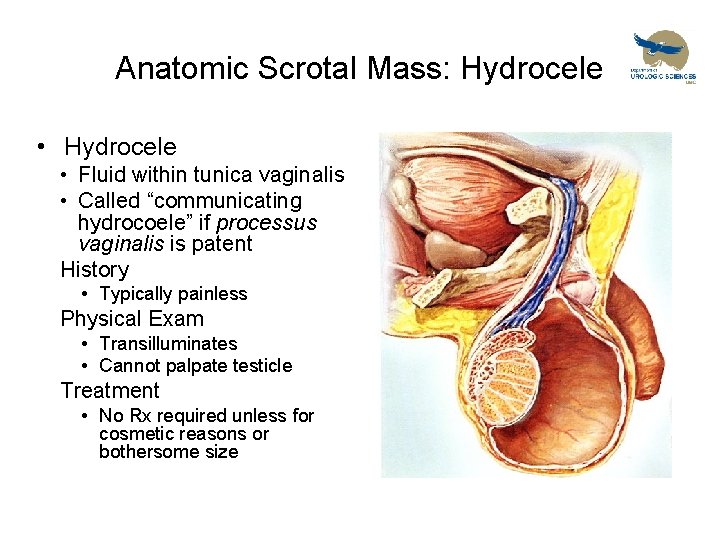
Anatomic Scrotal Mass: Hydrocele • Fluid within tunica vaginalis • Called “communicating hydrocoele” if processus vaginalis is patent History • Typically painless Physical Exam • Transilluminates • Cannot palpate testicle Treatment • No Rx required unless for cosmetic reasons or bothersome size
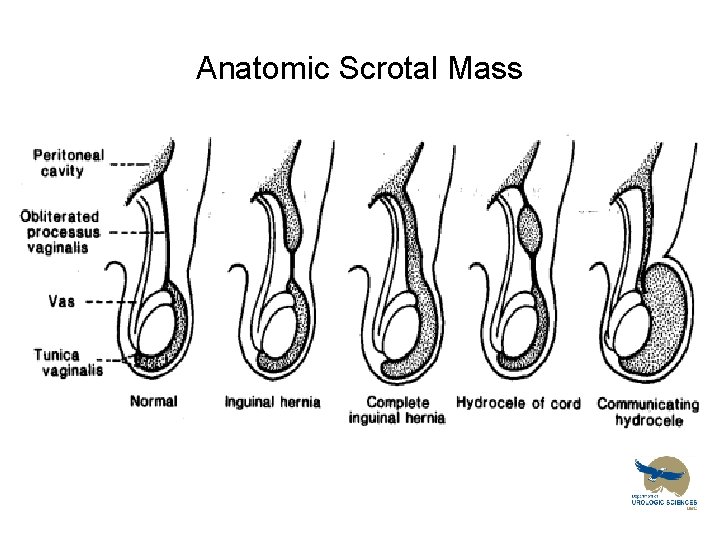
Anatomic Scrotal Mass
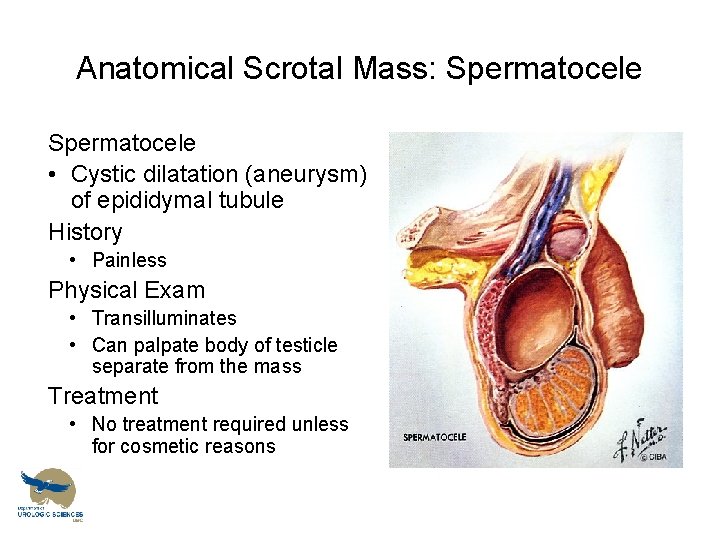
Anatomical Scrotal Mass: Spermatocele • Cystic dilatation (aneurysm) of epididymal tubule History • Painless Physical Exam • Transilluminates • Can palpate body of testicle separate from the mass Treatment • No treatment required unless for cosmetic reasons
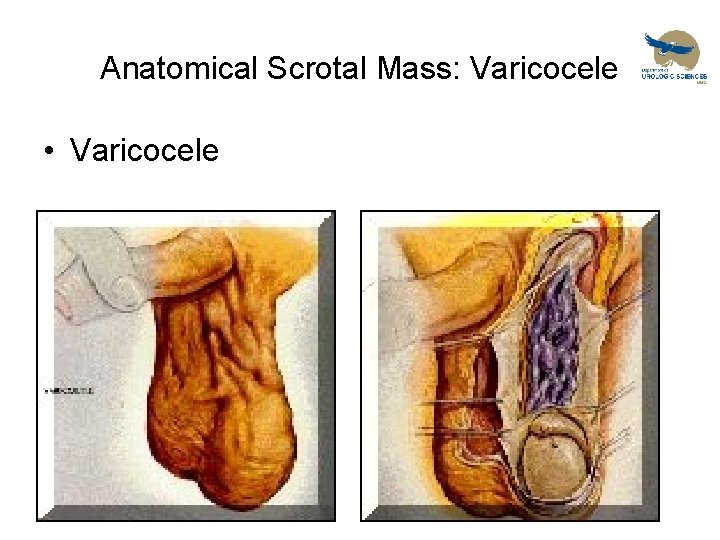
Anatomical Scrotal Mass: Varicocele • Varicocele
Anatomical Scrotal Mass: Varicocele • Varicocele – Varicosities of pampiniform plexus • 90% on left side; seen in 15% of male population • Associated with male factor infertility but most men with varicocoeles can expect normal fertility History • Typically asymptomatic, cosmetically “bag of worms” • Increases in size with valsalva or standing position Physical Exam • Bag of Spaghetti in scrotum palpating cord Treatment • Surgical or angiographic sclerosis – Results in improvement in semen parameters (number, motility, morphology) in 70% to 90% of cases
Anatomical: The Acute Scrotum • Testicular torsion – Surgical Emergency!! – Only definitive Diagnosis is Surgical Scrotal Exploration – Typically in 12 -18 yr olds – 6 hr window prior to irreversible testicular ischemia – Associated with ‘Bell Clapper Deformity” – Detort – “like opening a book”
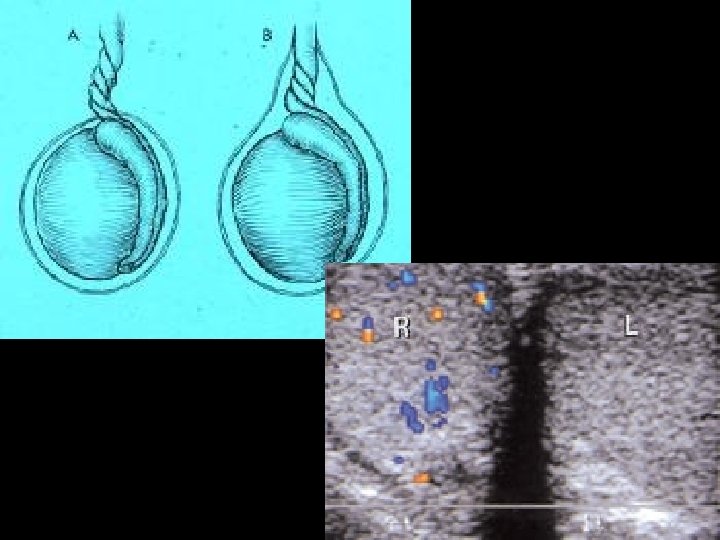
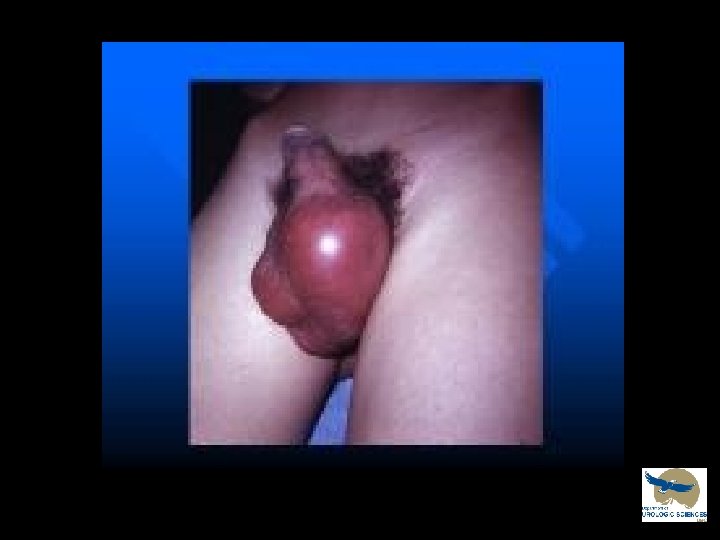
Anatomic Scrotal Mass: The Acute Scrotum • Testicular Torsion Physical Exam • High riding, horizontal testicle • Absent cremasteric reflex • Prehn Sign: relief of pain when supporting the scrotum – suggests epidiymitis Investigations • U/A – R/O pyuria (epidiymitis) • Doppler U/S only if diagnosis unclear Treatment • Surgical detorsion and orchidopexy
Acute Scrotum • Epididymitis – Infection of the epididymis • <35 yrs of age – Chlamydia, gonorrhea • >35 yrs of age – E. Coli History • Pain, Swelling testicle +/- dysuria +/- fever Physical Exam • Indurated, swollen and acutely painful epididymis, +/- erythema Investigations • CBC • U/A • +/- Doppler US of testis Treatment • Antibiotics x 4 weeks + NSAIDS, and Ice PRN

Epididymitis
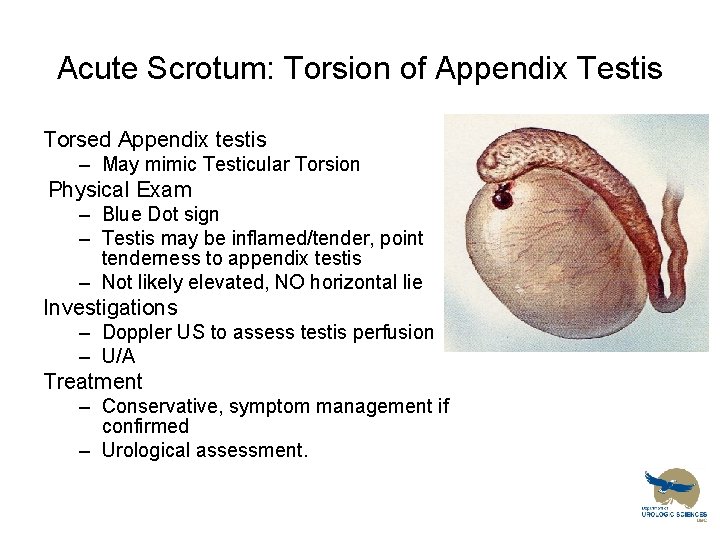
Acute Scrotum: Torsion of Appendix Testis Torsed Appendix testis – May mimic Testicular Torsion Physical Exam – Blue Dot sign – Testis may be inflamed/tender, point tenderness to appendix testis – Not likely elevated, NO horizontal lie Investigations – Doppler US to assess testis perfusion – U/A Treatment – Conservative, symptom management if confirmed – Urological assessment.
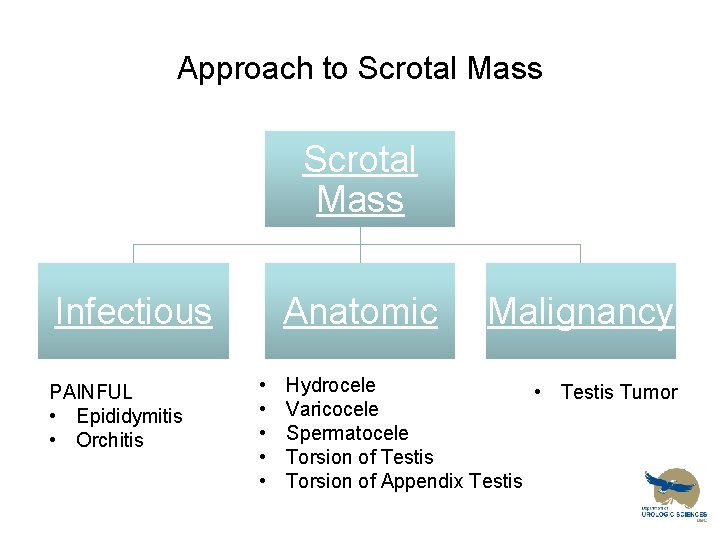
Approach to Scrotal Mass Infectious PAINFUL • Epididymitis • Orchitis Anatomic • • • Malignancy Hydrocele • Testis Tumor Varicocele Spermatocele Torsion of Testis Torsion of Appendix Testis
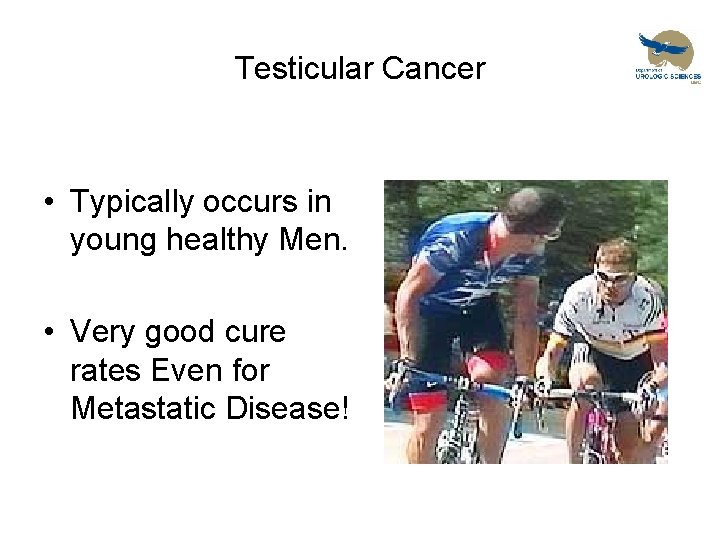
Testicular Cancer • Typically occurs in young healthy Men. • Very good cure rates Even for Metastatic Disease!
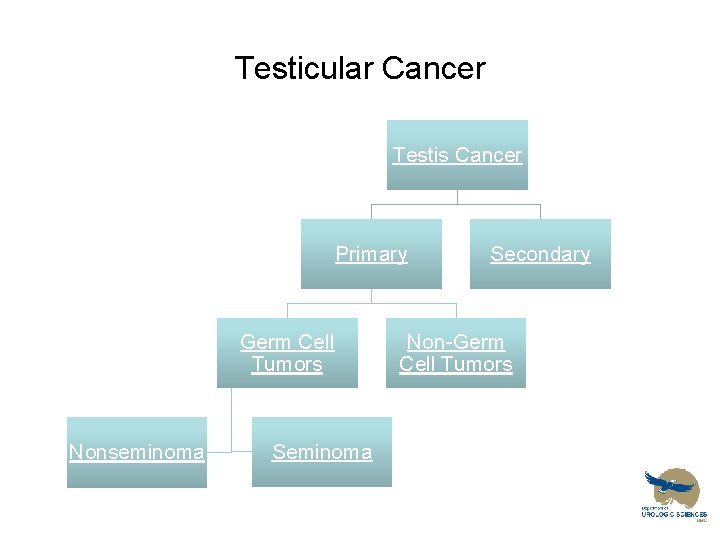
Testicular Cancer Testis Cancer Primary Germ Cell Tumors Nonseminoma Secondary Non-Germ Cell Tumors
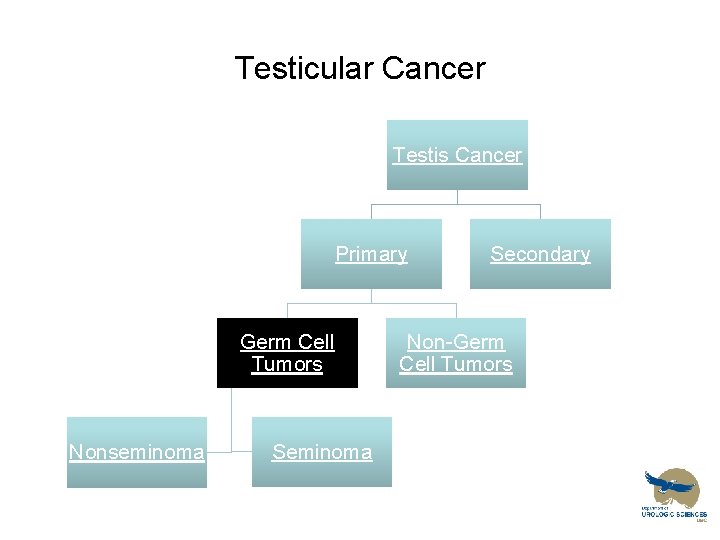
Testicular Cancer Testis Cancer Primary Germ Cell Tumors Nonseminoma Secondary Non-Germ Cell Tumors
Germ Cell Testicular Cancer • Seminoma • Non-Seminoma – Embryonal Carcinoma – Teratocarcinoma (Teratoma +Embryonal Carcinoma) – Choriocarcinoma – Yolk Sac Tumour (typically infants)
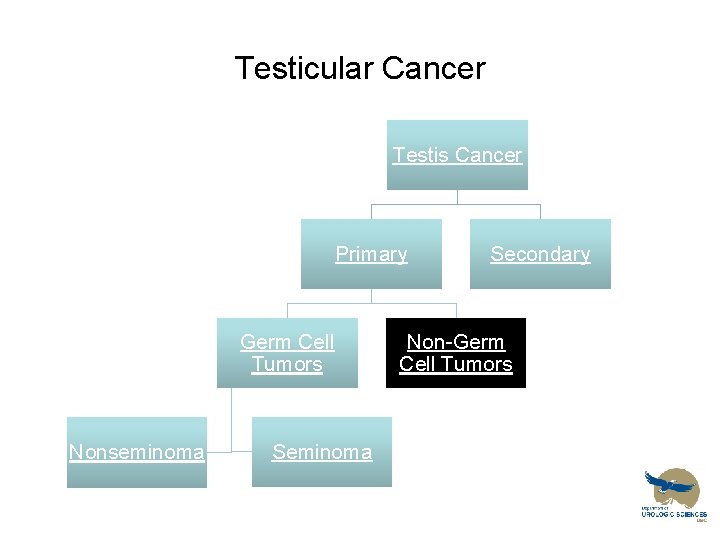
Testicular Cancer Testis Cancer Primary Germ Cell Tumors Nonseminoma Secondary Non-Germ Cell Tumors
Non-Germ Cell Testicular Cancer • Leydig Cell Tumor • Sertoli Cell Tumor
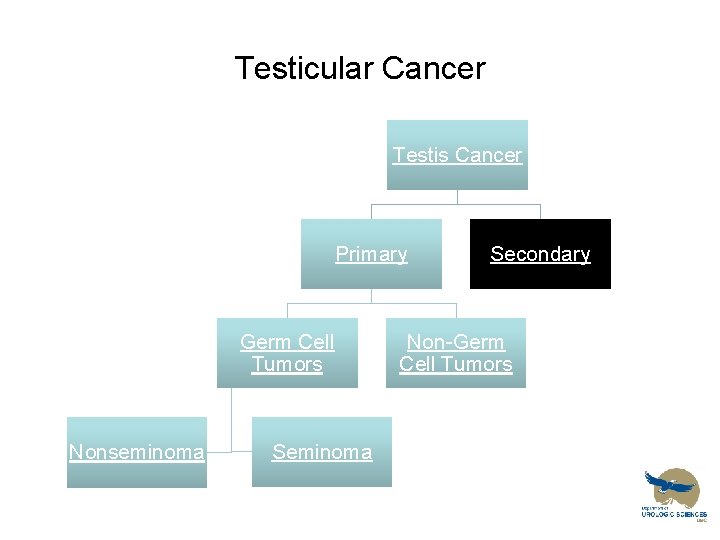
Testicular Cancer Testis Cancer Primary Germ Cell Tumors Nonseminoma Secondary Non-Germ Cell Tumors
Secondary Testicular Cancer • Lymphoma • Leukemia
Testicular Cancer • Presentation – Typically painless intratesticular mass discovered on self examination – Age 15 -35 • Albeit some tumor subytpes cluster in infancy and some at later age (60’s)
Testicular Cancer • Investigations – Labs • B-HCG – Produced by choriocarcinoma & in some Seminomas • Alpha-fetoprotein – Produced by Yolk Sac, Embryonal Carcinoma & Teratocarcinoma • LDH – Correlates with tumor volume – Imaging • • Scrotal U/S CT Abdo and Pelvis: assess for retroperitoneal mets CXR +/- CT Head
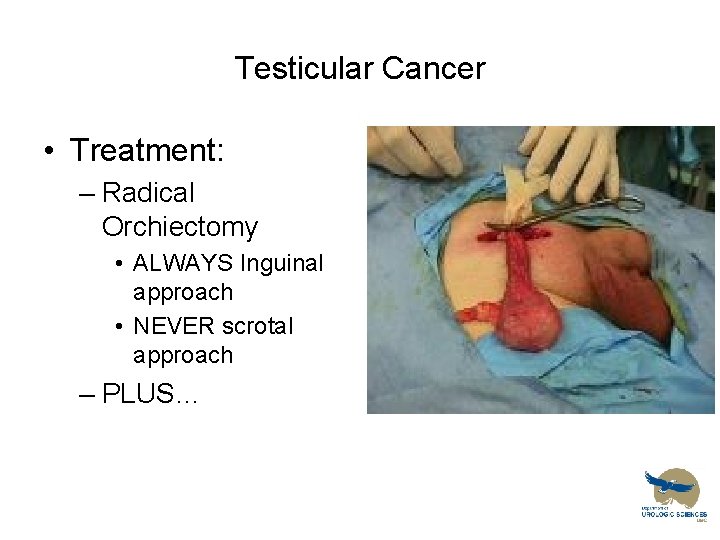
Testicular Cancer • Treatment: – Radical Orchiectomy • ALWAYS Inguinal approach • NEVER scrotal approach – PLUS…
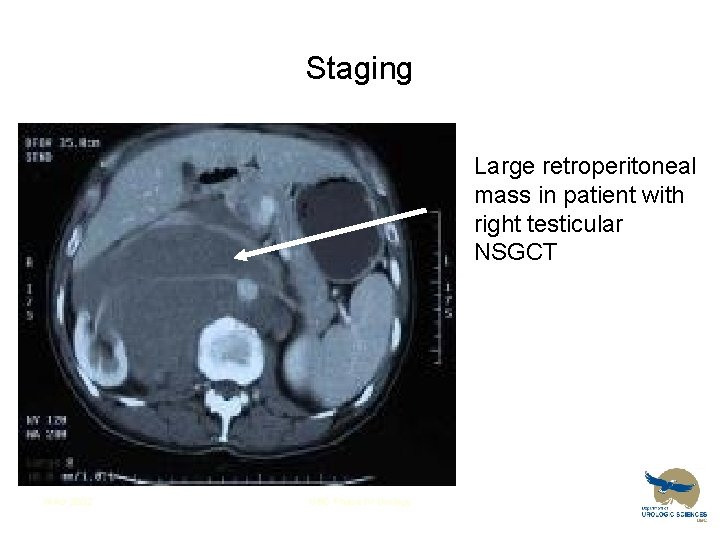
Staging Large retroperitoneal mass in patient with right testicular NSGCT WAG 2002 UBC Phase IV Urology
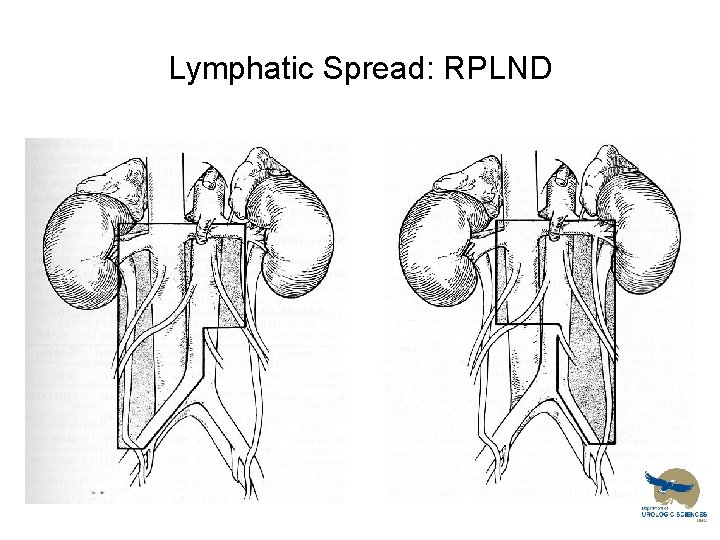
Lymphatic Spread: RPLND
Question #1 • 4 causes of scrotal masses or swellings that are painless • 3 causes of acutely painful testicle WAG 2002 UBC Phase IV Urology
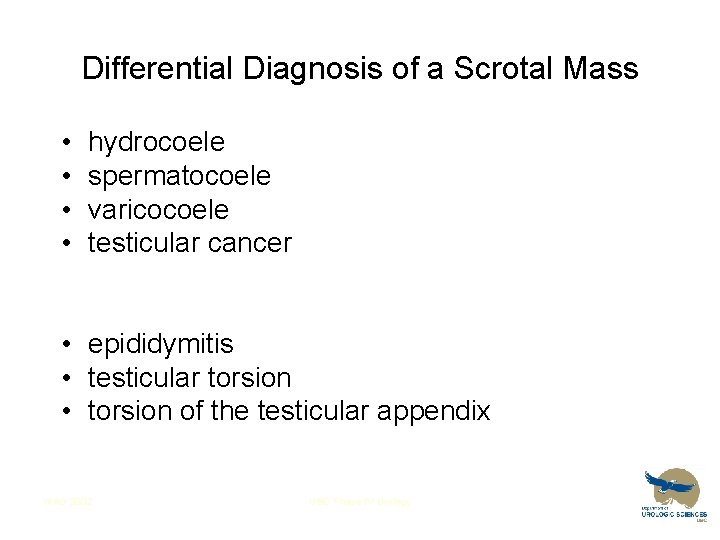
Differential Diagnosis of a Scrotal Mass • • hydrocoele spermatocoele varicocoele testicular cancer • epididymitis • testicular torsion • torsion of the testicular appendix WAG 2002 UBC Phase IV Urology
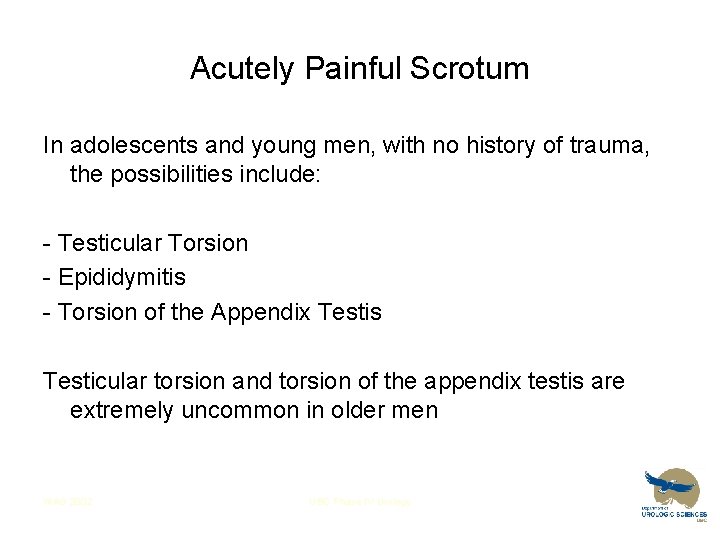
Acutely Painful Scrotum In adolescents and young men, with no history of trauma, the possibilities include: - Testicular Torsion - Epididymitis - Torsion of the Appendix Testis Testicular torsion and torsion of the appendix testis are extremely uncommon in older men WAG 2002 UBC Phase IV Urology
Question #2 Lance Armstrong has noticed a “swelling” in his remaining testicle. What features on history or physical exam suggest a testicular cancer? WAG 2002 UBC Phase IV Urology
Testicular cancer • Age 15 – 35 yrs • History of cryptorchidism or previous testicular cancer • Painless • Does not transilluminate • Feels hard and irregular • Constitutional symptoms (weight loss) WAG 2002 UBC Phase IV Urology
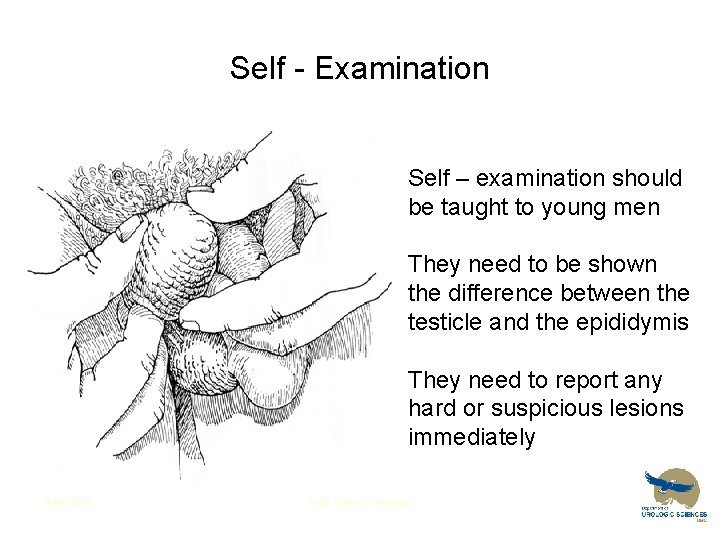
Self - Examination Self – examination should be taught to young men They need to be shown the difference between the testicle and the epididymis They need to report any hard or suspicious lesions immediately WAG 2002 UBC Phase IV Urology
- Slides: 40