
U S LEGAL SYSTEM Criminal Justice Process TYPES
- Slides: 21
U. S. LEGAL SYSTEM Criminal Justice Process
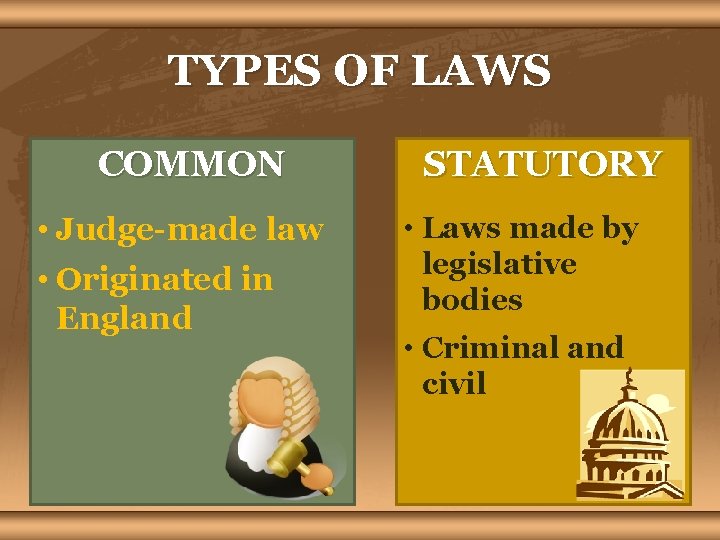
TYPES OF LAWS COMMON • Judge-made law • Originated in England STATUTORY • Laws made by legislative bodies • Criminal and civil
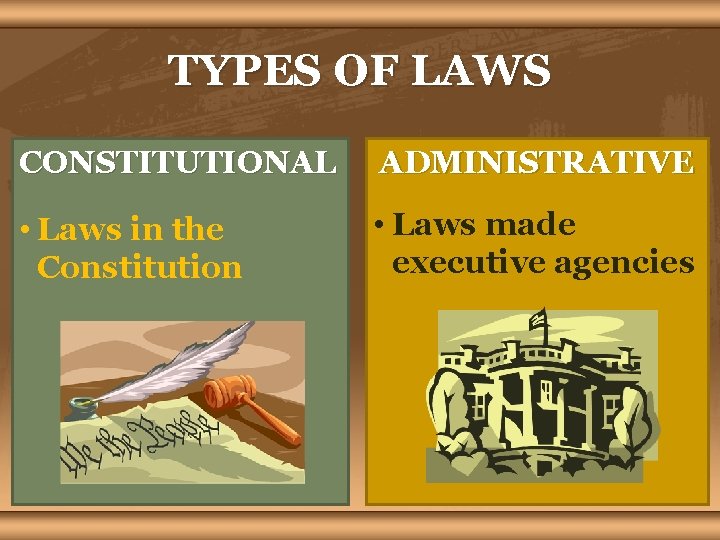
TYPES OF LAWS CONSTITUTIONAL ADMINISTRATIVE • Laws in the Constitution • Laws made executive agencies
Criminal & Civil TYPES OF STATUTORY LAWS
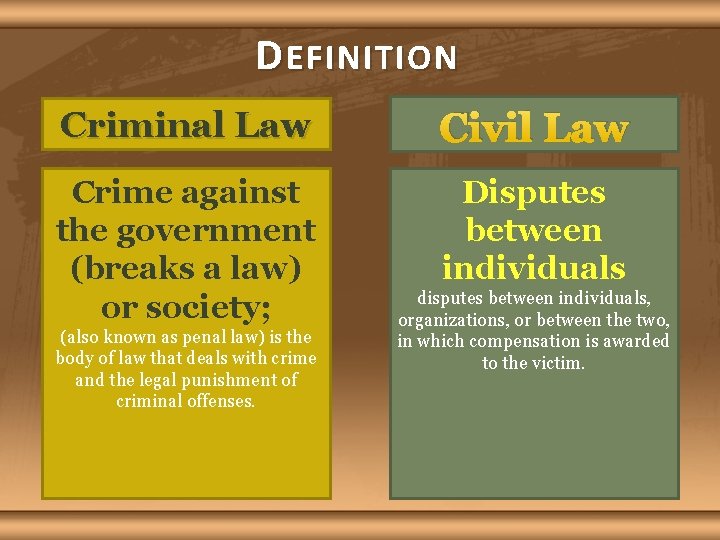
D EFINITION Criminal Law Civil Law Crime against the government (breaks a law) or society; Disputes between individuals (also known as penal law) is the body of law that deals with crime and the legal punishment of criminal offenses. disputes between individuals, organizations, or between the two, in which compensation is awarded to the victim.
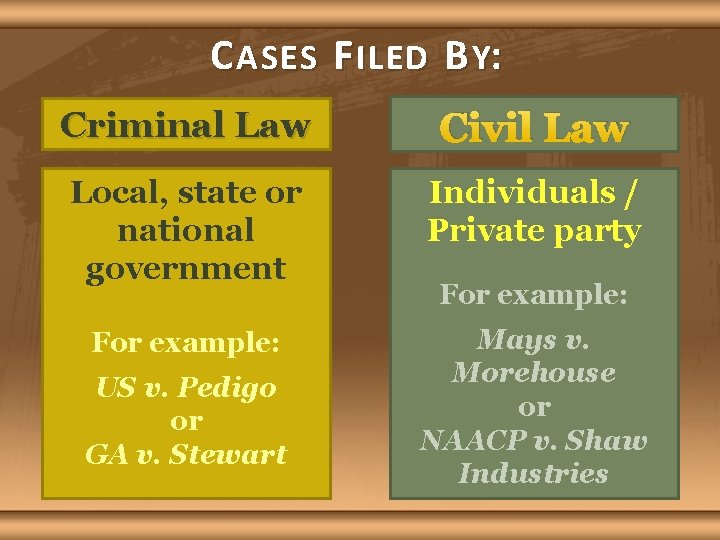
C ASES F ILED B Y: Criminal Law Civil Law Local, state or national government Individuals / Private party For example: Mays v. Morehouse or NAACP v. Shaw Industries US v. Pedigo or GA v. Stewart For example:
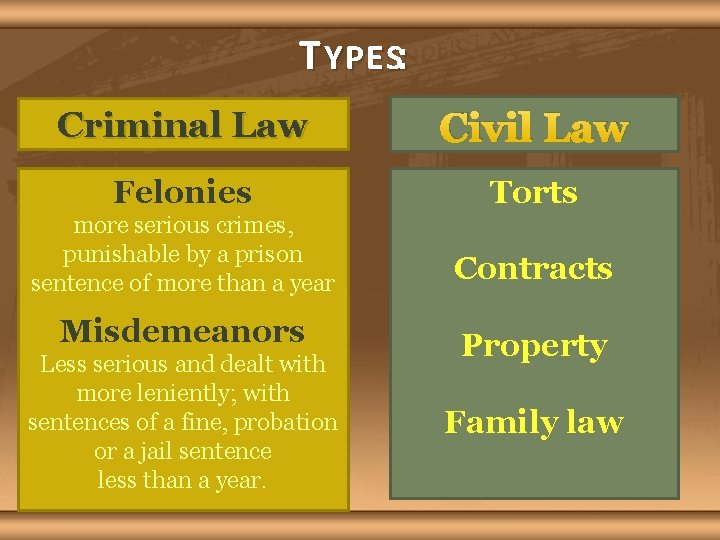
T YPES: Criminal Law Civil Law Felonies Torts more serious crimes, punishable by a prison sentence of more than a year Contracts Misdemeanors Less serious and dealt with more leniently; with sentences of a fine, probation or a jail sentence less than a year. Property Family law
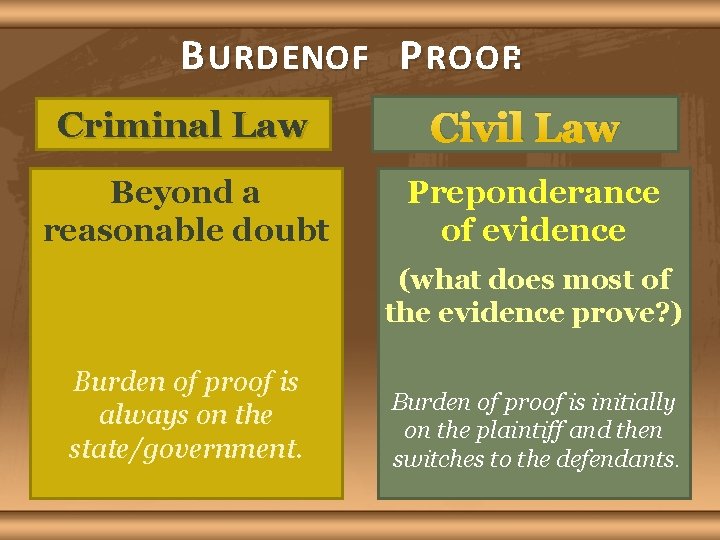
B URDENOF P ROOF: Criminal Law Civil Law Beyond a reasonable doubt Preponderance of evidence (what does most of the evidence prove? ) Burden of proof is always on the state/government. Burden of proof is initially on the plaintiff and then switches to the defendants.
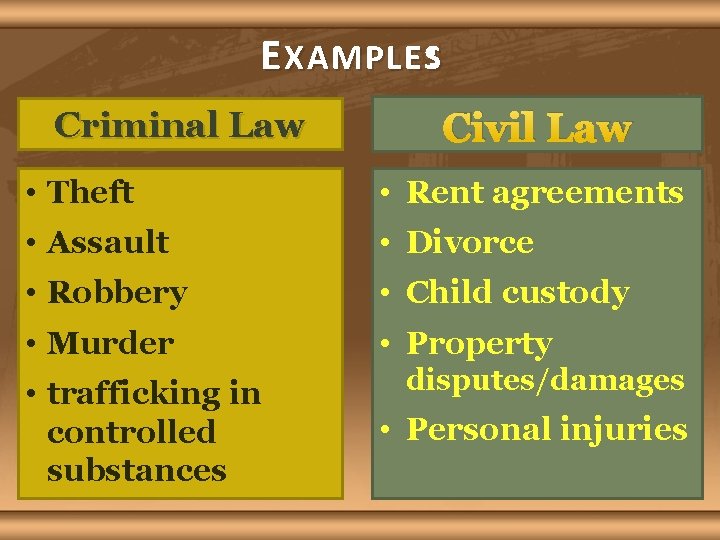
E XAMPLES: Criminal Law Civil Law • Theft • Rent agreements • Assault • Divorce • Robbery • Child custody • Murder • Property • trafficking in controlled substances disputes/damages • Personal injuries
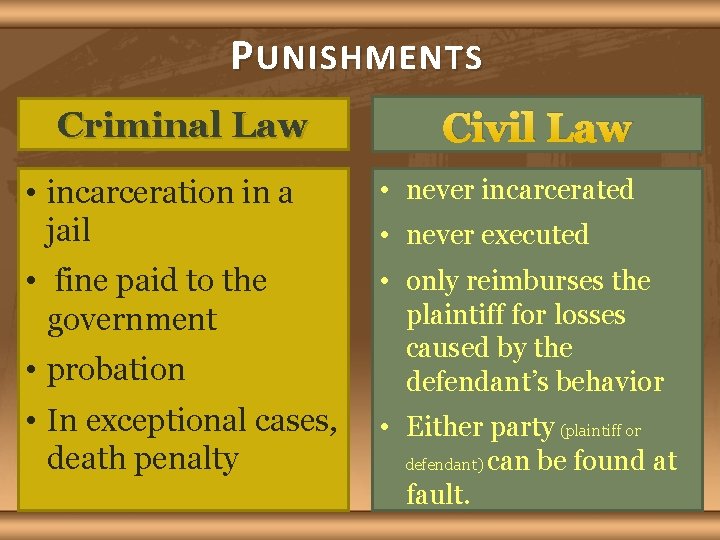
P UNISHMENTS Criminal Law Civil Law • incarceration in a jail • never incarcerated • fine paid to the government • only reimburses the plaintiff for losses caused by the defendant’s behavior • probation • In exceptional cases, death penalty • never executed • Either party (plaintiff or defendant) can be found at fault.
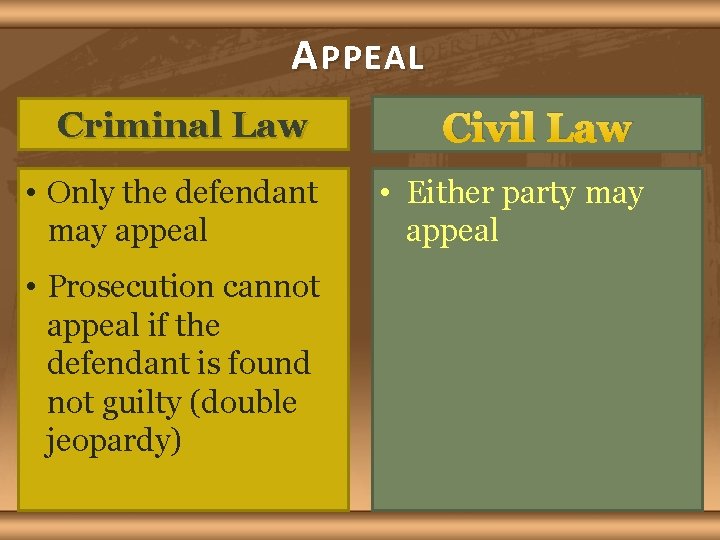
A PPEAL Criminal Law • Only the defendant may appeal • Prosecution cannot appeal if the defendant is found not guilty (double jeopardy) Civil Law • Either party may appeal
What is CRIME? • Brainstorm with a Neighbor • Come up with your definition and be prepared to share it with the class
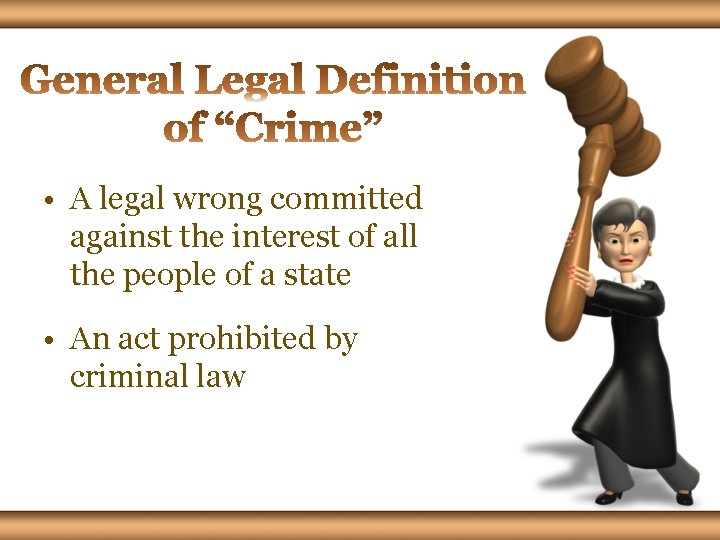
• A legal wrong committed against the interest of all the people of a state • An act prohibited by criminal law
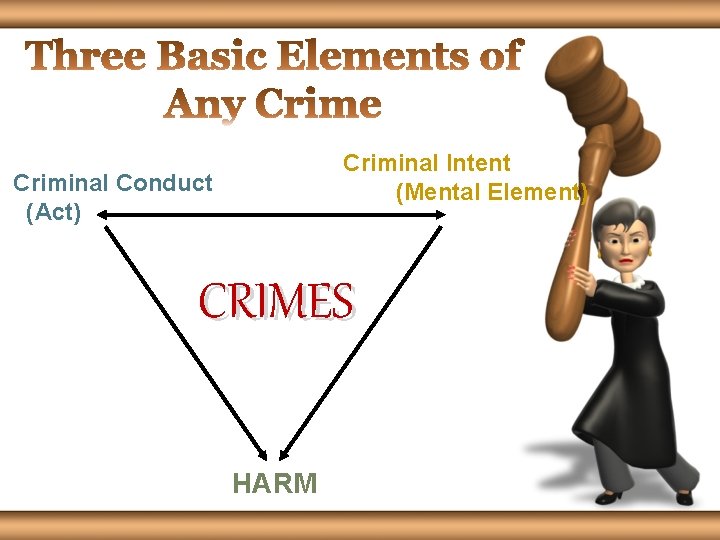
Criminal Intent (Mental Element) Criminal Conduct (Act) CRIMES HARM
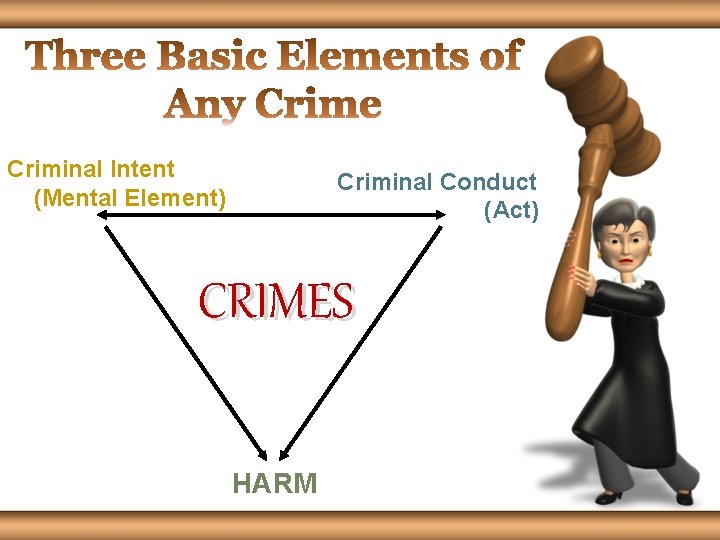
Criminal Intent (Mental Element) Criminal Conduct (Act) CRIMES HARM
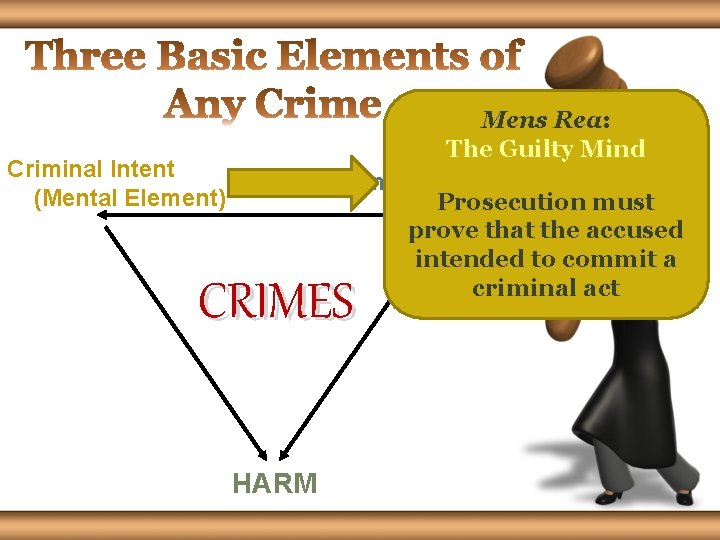
Mens Rea: The Guilty Mind Criminal Conduct Prosecution must (Act) prove that the accused intended to commit a criminal act Criminal Intent (Mental Element) CRIMES HARM
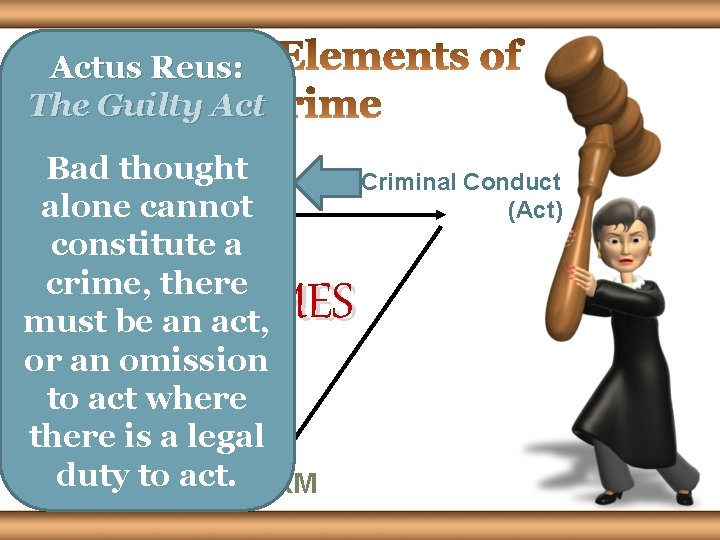
Actus Reus: The Guilty Act Criminal Bad. Intent thought (Mental alone. Element) cannot constitute a crime, there must be an act, or an omission to act where there is a legal duty to act. HARM CRIMES Criminal Conduct (Act)
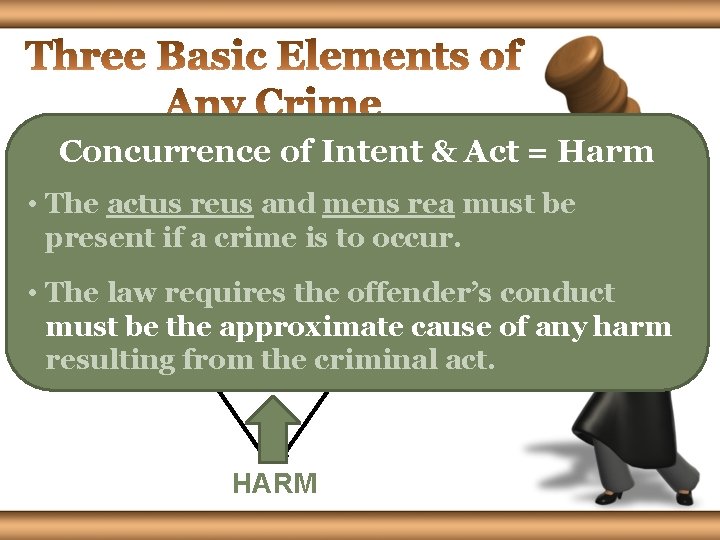
Concurrence of Intent & Act = Harm Criminal Intent Criminal Conduct Element) • (Mental The actus reus and mens rea must be (Act) present if a crime is to occur. CRIMES • The law requires the offender’s conduct must be the approximate cause of any harm resulting from the criminal act. HARM
Why Punish Criminals? • Brainstorm with a Neighbor • Come up with your answer and be prepared to share it with the class
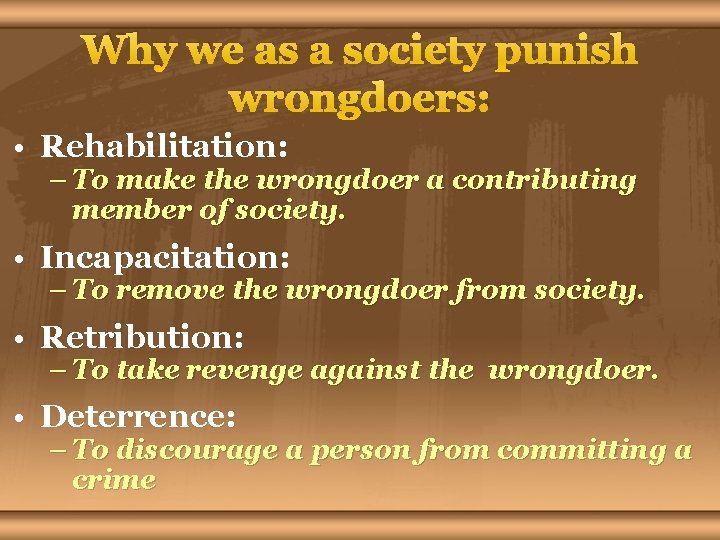
Why we as a society punish wrongdoers: • Rehabilitation: – To make the wrongdoer a contributing member of society. • Incapacitation: – To remove the wrongdoer from society. • Retribution: – To take revenge against the wrongdoer. • Deterrence: – To discourage a person from committing a crime
Basic Principle of the U. S. Legal System • Presumption of Innocence – Anyone charged with a criminal offense is presumed to be innocent till proven guilty – The prosecution must prove guilt; the defense does not need to establish innocence.