
U S Involvement and Escalation The Vietnam War
- Slides: 26
U. S. Involvement and Escalation The Vietnam War
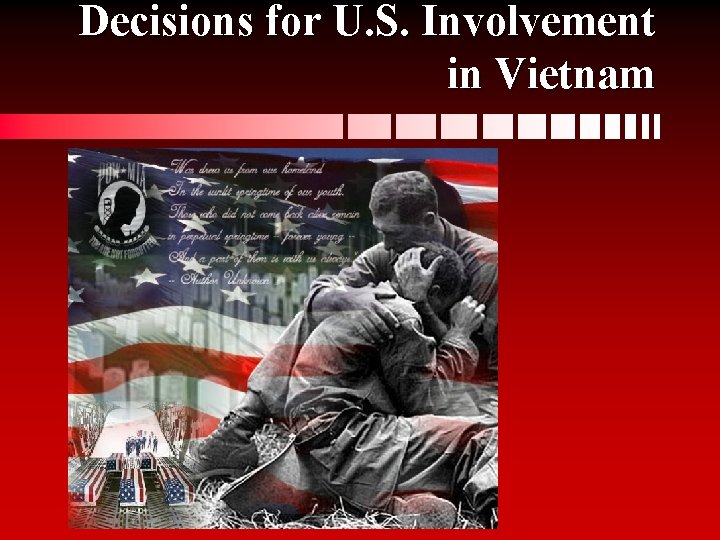
Decisions for U. S. Involvement in Vietnam
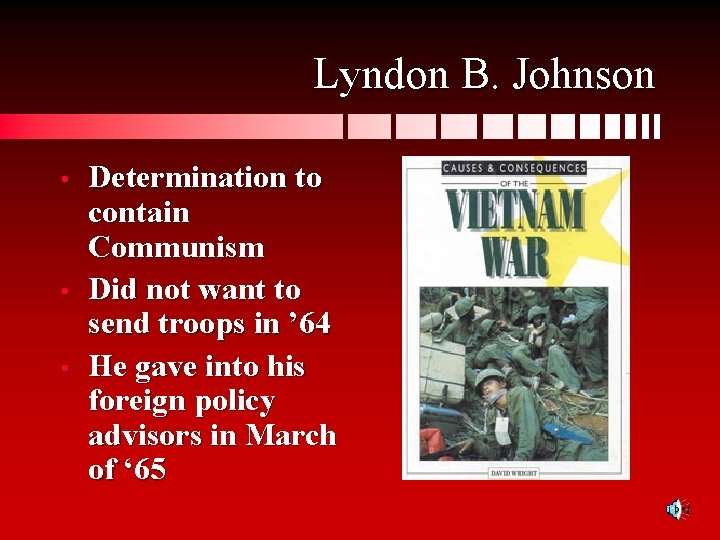
Lyndon B. Johnson • • • Determination to contain Communism Did not want to send troops in ’ 64 He gave into his foreign policy advisors in March of ‘ 65
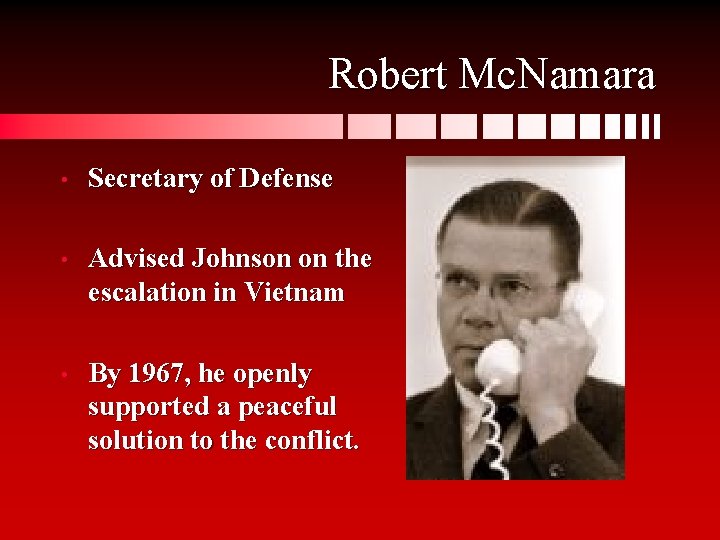
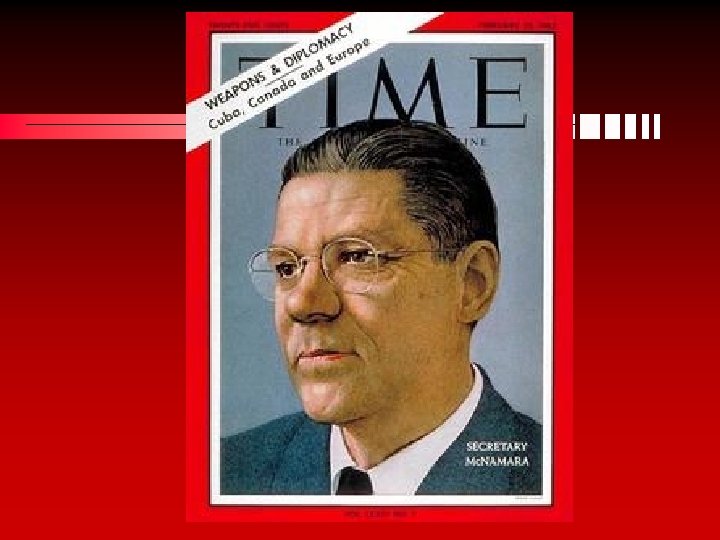
Robert Mc. Namara • Secretary of Defense • Advised Johnson on the escalation in Vietnam • By 1967, he openly supported a peaceful solution to the conflict.
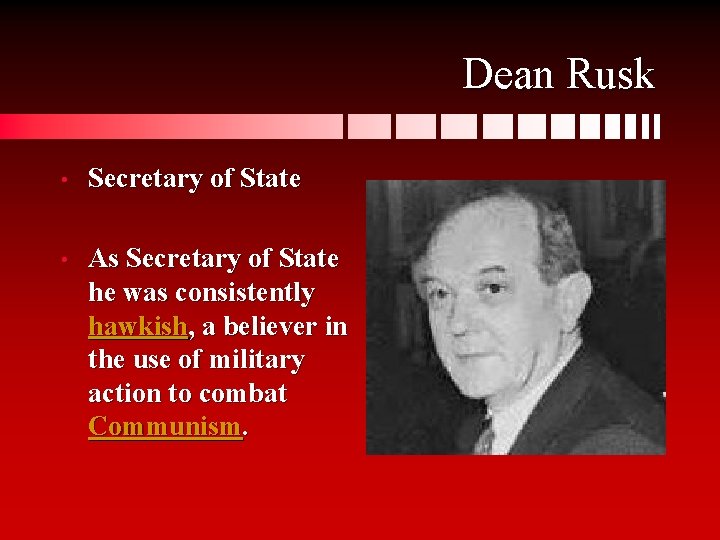
Dean Rusk • Secretary of State • As Secretary of State he was consistently hawkish, a believer in the use of military action to combat Communism.
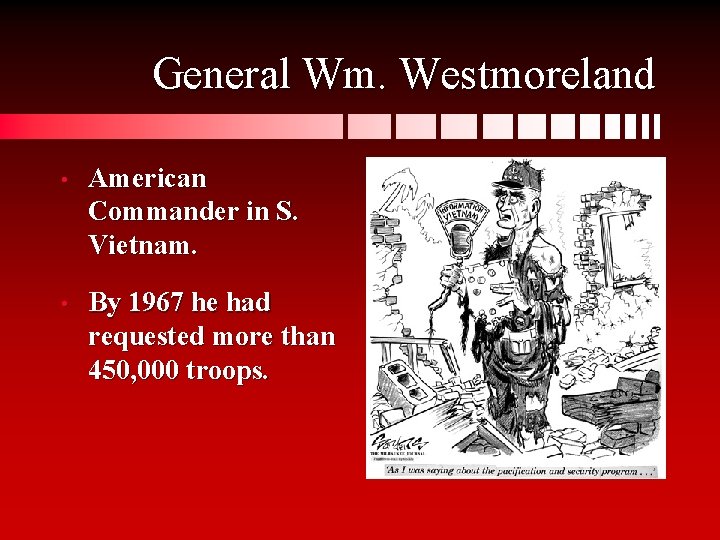
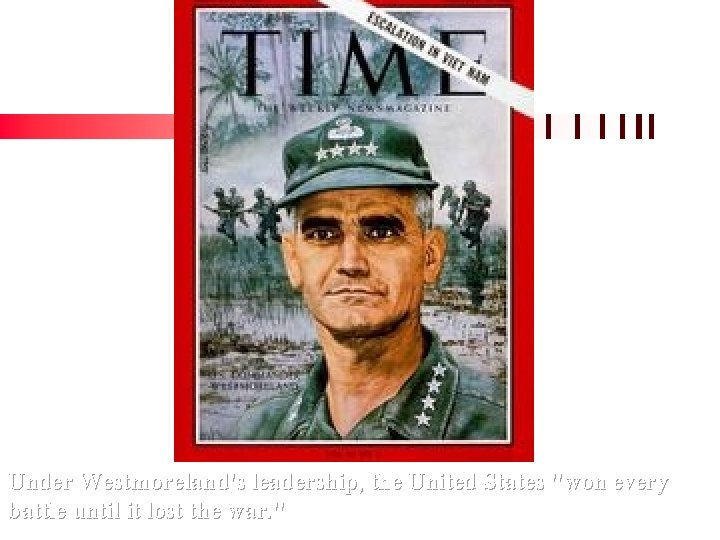
General Wm. Westmoreland • American Commander in S. Vietnam. • By 1967 he had requested more than 450, 000 troops.
Under Westmoreland's leadership, the United States "won every battle until it lost the war. "
Westmoreland was convinced that the Vietnamese communists could be destroyed by fighting a war of attrition that, theoretically, would render the Viet Cong and the North Vietnamese unable to fight. His war strategy was marked by heavy use of artillery, airpower and attempts to engage the communists in large-unit battles.
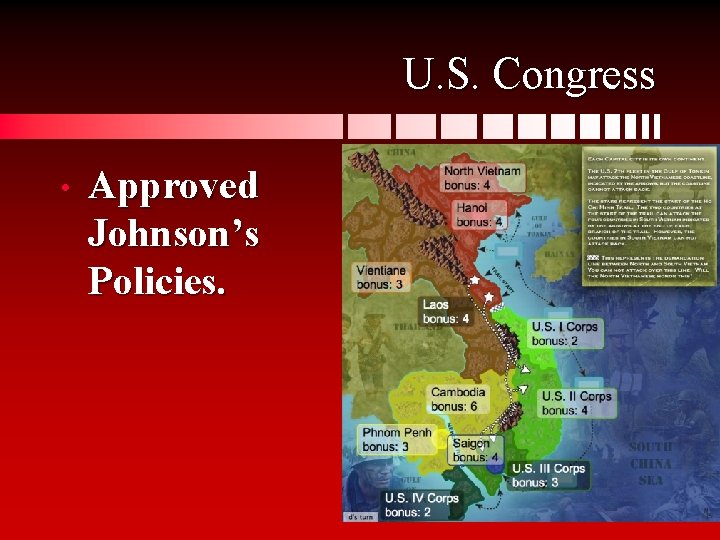
U. S. Congress • Approved Johnson’s Policies.
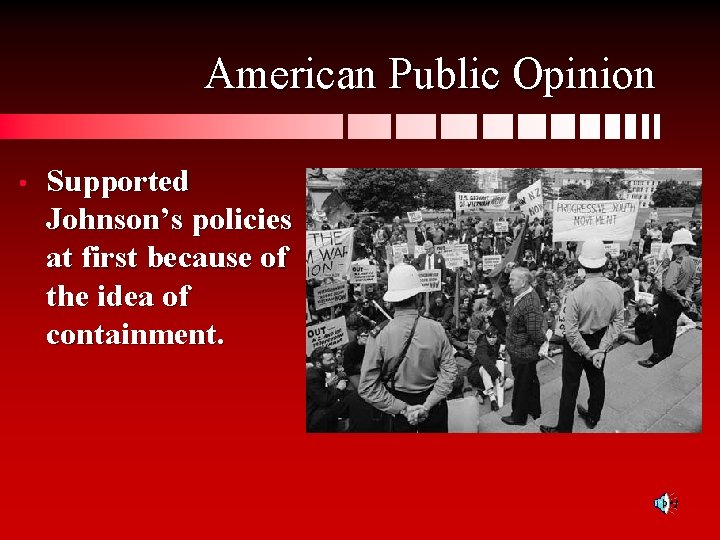
American Public Opinion • Supported Johnson’s policies at first because of the idea of containment.
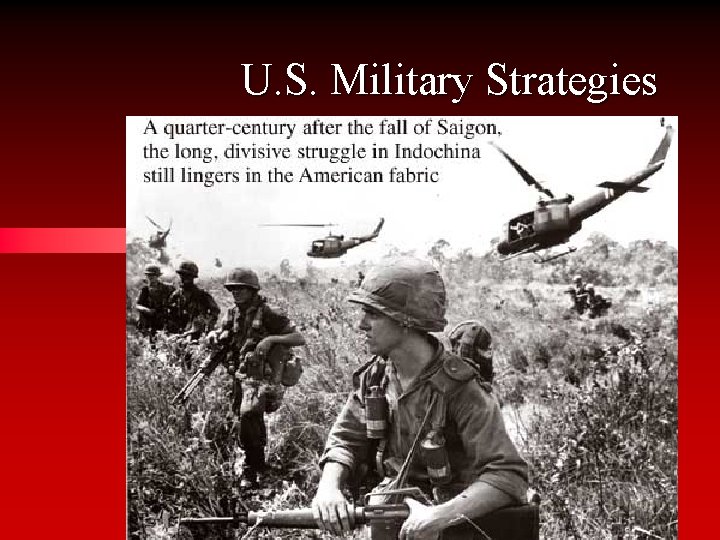
U. S. Military Strategies
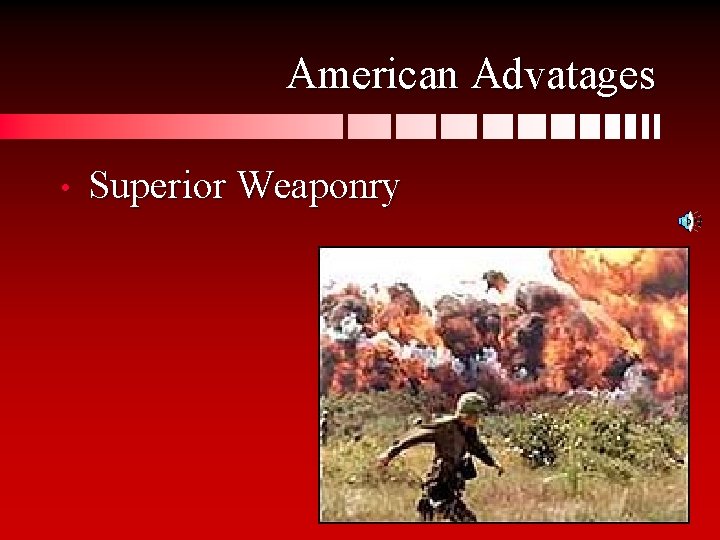
American Advatages • Superior Weaponry
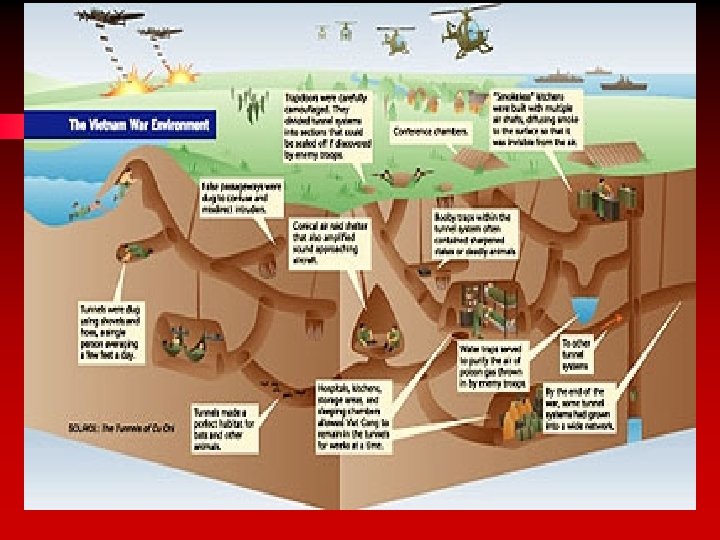
Vietcong Advantages Knowledge of the Jungle Terrain. • Ability to blend in with civilians • The willingness to pay ANY price for victory. •
American Strategies • Bombings • The use of Napalm and Agent Orange • Prevention of the Vietcong from winning the support of S. Vietnam’s rural population. • The use of search-and-destroy missions
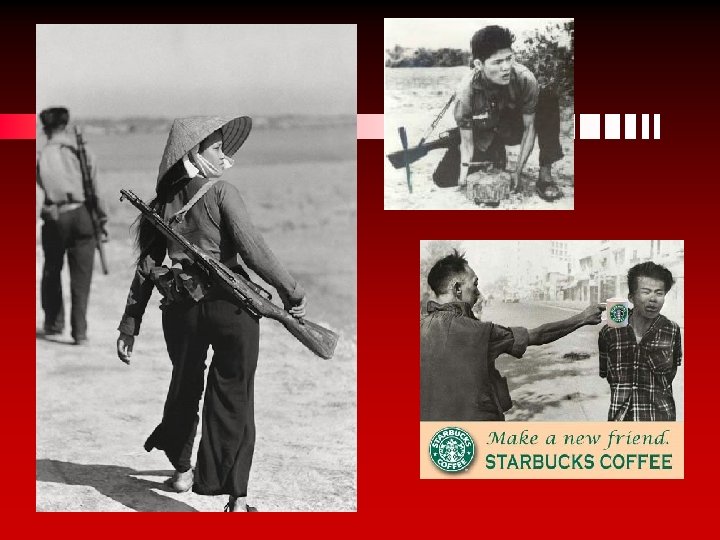
Strategies of the Vietcong • • Hit-and-Run ambushes Booby Traps and Land Mines Surprise Attacks Guerrilla Warfare
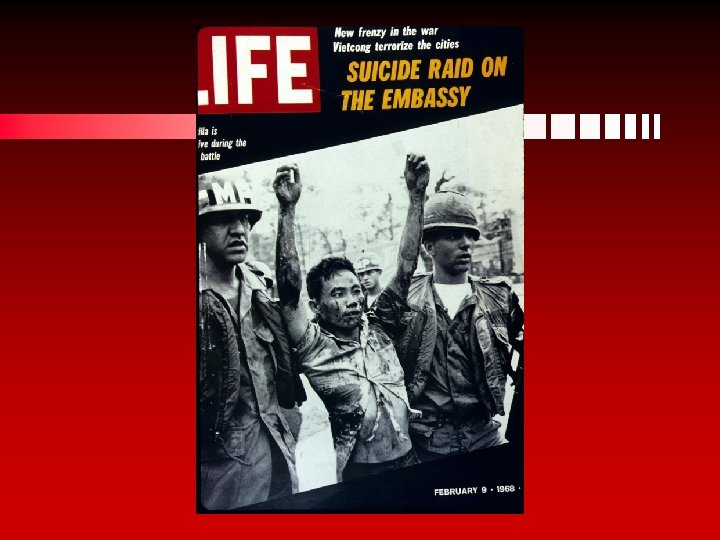
Public Support begins to faultier as a “credibility gap” grows The roles of key factors that played a part in changing public support of the war.
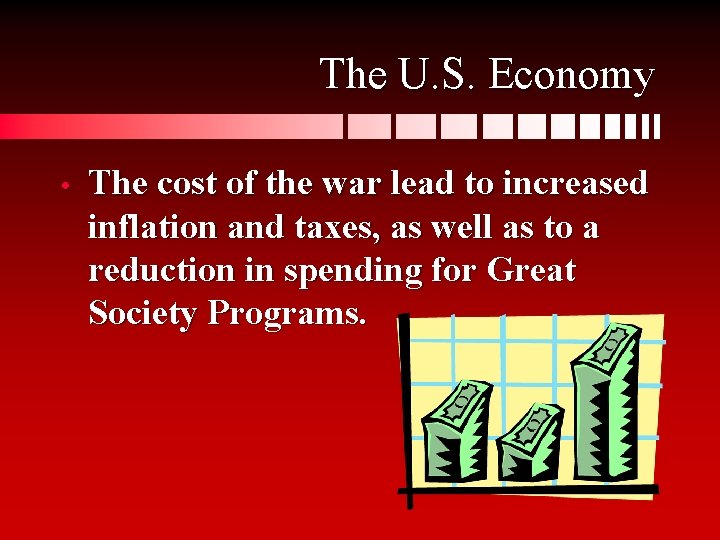
The U. S. Economy • The cost of the war lead to increased inflation and taxes, as well as to a reduction in spending for Great Society Programs.
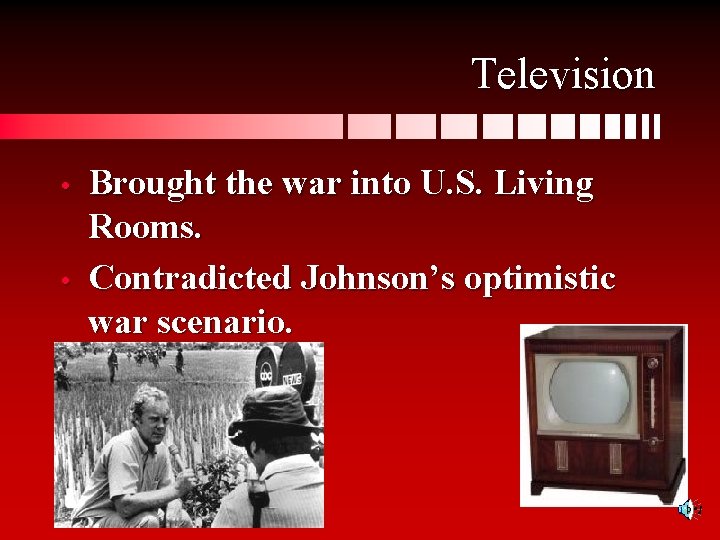
Television • • Brought the war into U. S. Living Rooms. Contradicted Johnson’s optimistic war scenario.
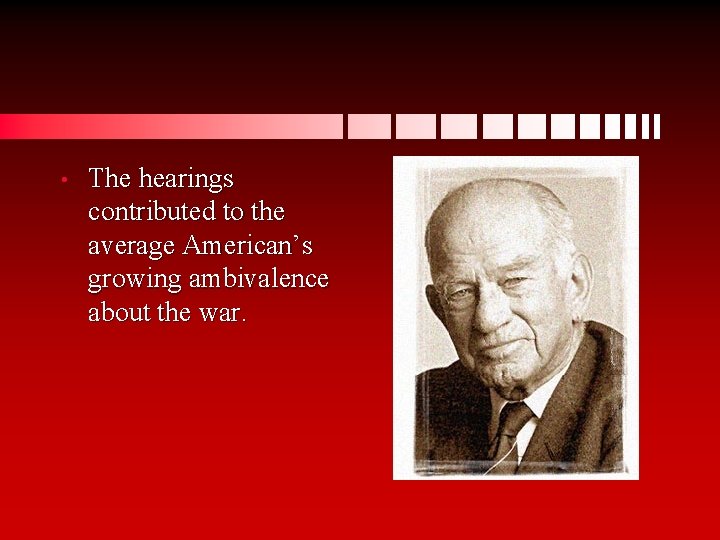
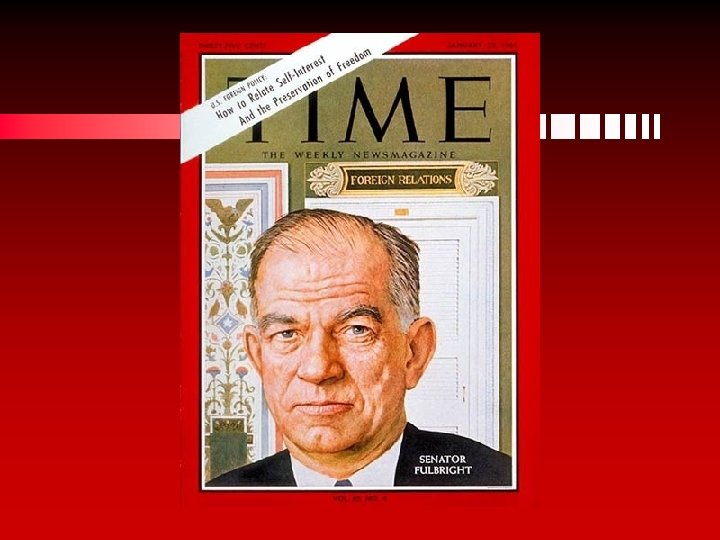
The Fulbright Hearings • The Fulbright Hearings were U. S. Senate hearings in 1971 relating to the Vietnam War. By April 1971, with at least seven pending legislative proposals concerning the war, the Senate Foreign Relations Committee, chaired by Democratic Senator J. William Fulbright of Arkansas began to hear testimony. The 22 hearings, titled "Legislative Proposals Relating to the War in Southeast Asia", were held on eleven different days between April 20, 1971 and May 27, 1971. The hearings included testimony and debate from several members of Congress, as well as from representatives of interested pro-war and anti-war organizations.
• The hearings contributed to the average American’s growing ambivalence about the war.