
U S History Objective 2 04 continued 3
U. S. History Objective 2. 04 – continued #3
2. 04 l Assess political events, issues, and personalities that contributed to sectionalism and nationalism.
Jackson in office l Administration l Kitchen Cabinet l Jackson didn’t really have an advisory group… because he rarely listened to them l Instead he made decisions based on council with friends and his Secretary of State Martin Van Buren
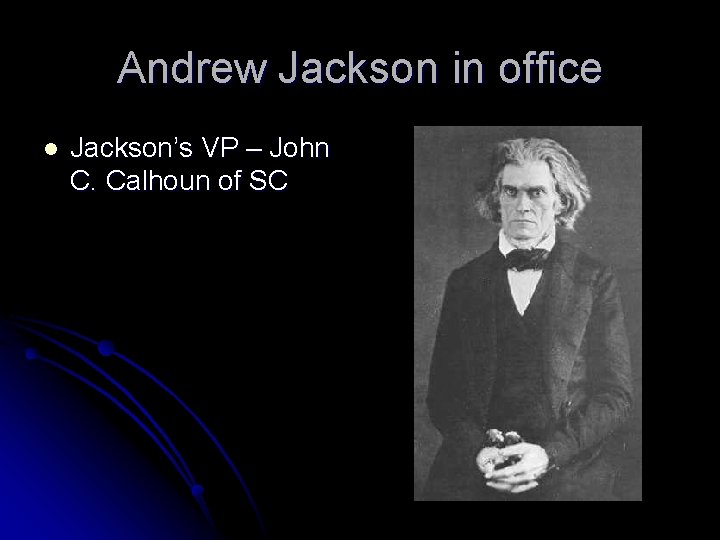
Andrew Jackson in office l Jackson’s VP – John C. Calhoun of SC
Tariff Issue l Congress raised the tariff of 1816 in 1824 and 1828 – helped New England compete w/ Great Britain l Great Britain – After War of 1812, floods market w/ cheap goods l Calhoun calls the Tariff of 1828 the Tariff of Abominations

Nullification l Calhoun devises a theory of “nullification” l l l Questioned the legality of some federal laws Each state had right to nullify (reject) any law that it deemed unconstitutional KY and VA Resolutions
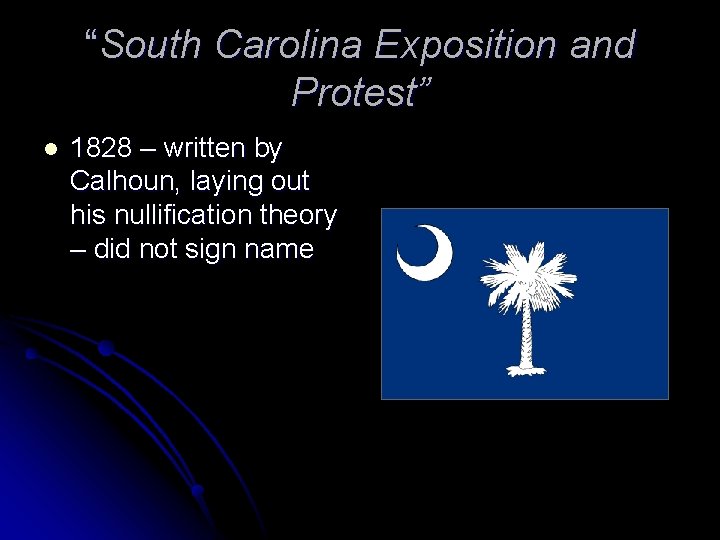
“South Carolina Exposition and Protest” l 1828 – written by Calhoun, laying out his nullification theory – did not sign name
SC rebels SC declared tariff laws of 1828 and 1832 “null and void” l Threatened to seced from the Union l Jackson furious l
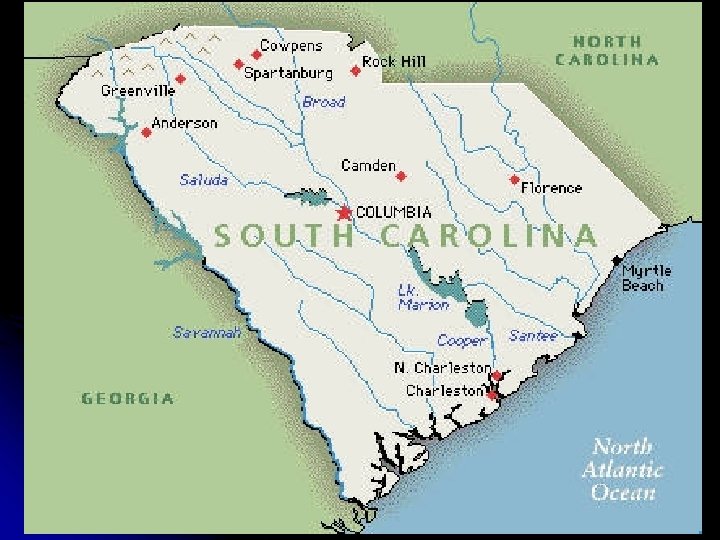
“Our Union: It must be preserved Calhoun resigns as VP l Jackson gets Congress to pass the Force Bill (1833) – allows use of army and navy against SC to collect customs duties l
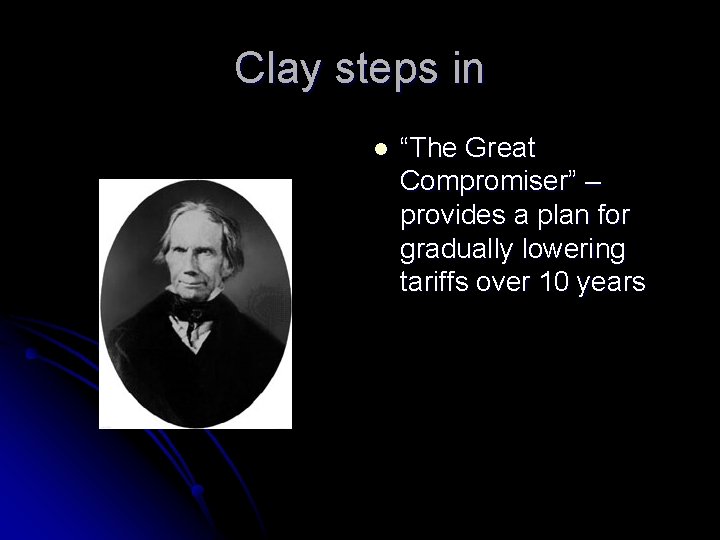
Clay steps in l “The Great Compromiser” – provides a plan for gradually lowering tariffs over 10 years
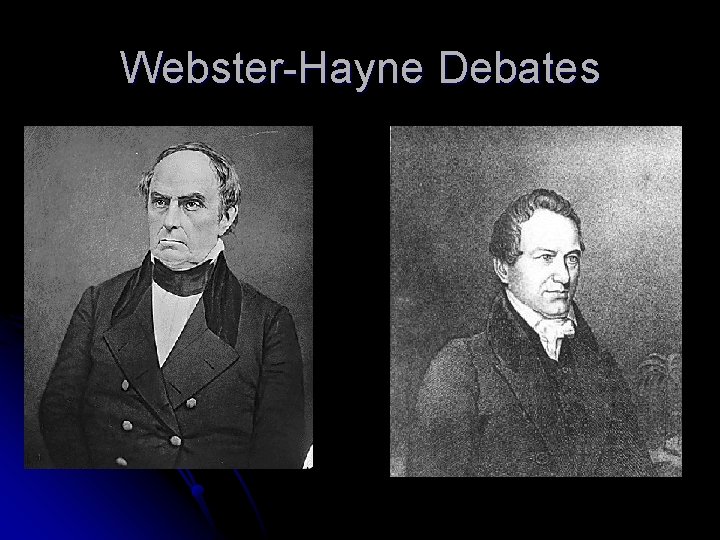
Webster-Hayne Debates
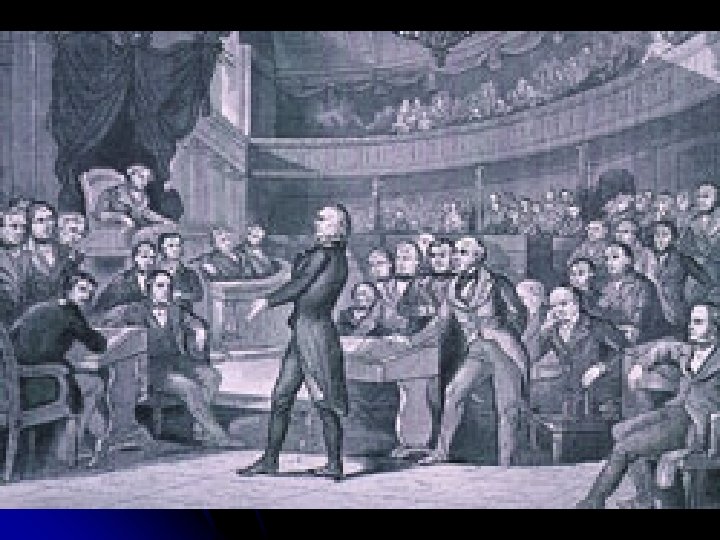
Clash over states’ rights Webster – Mass. l Hayne – SC l January 1830 – debate tariff issue l l Webster nationalist l Hayne – condemns tariff l Sectionalism?
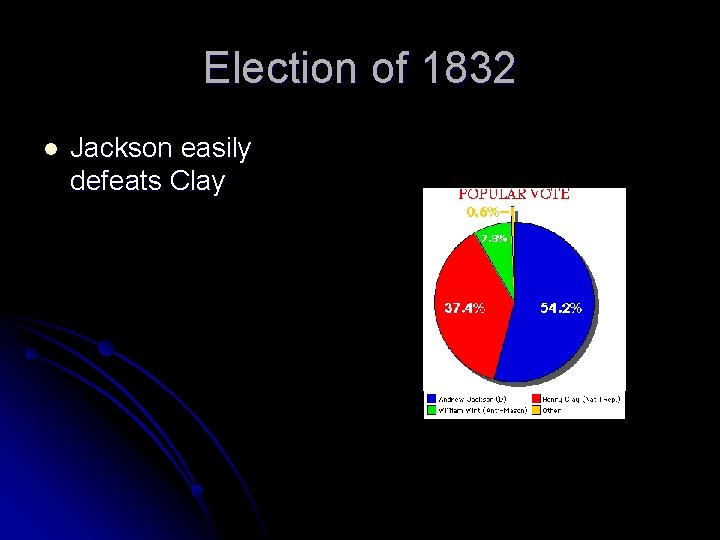
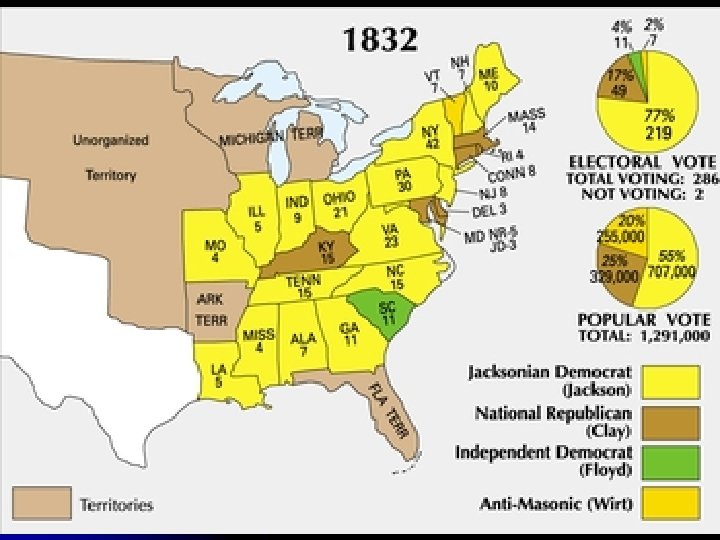
Election of 1832 l Jackson easily defeats Clay
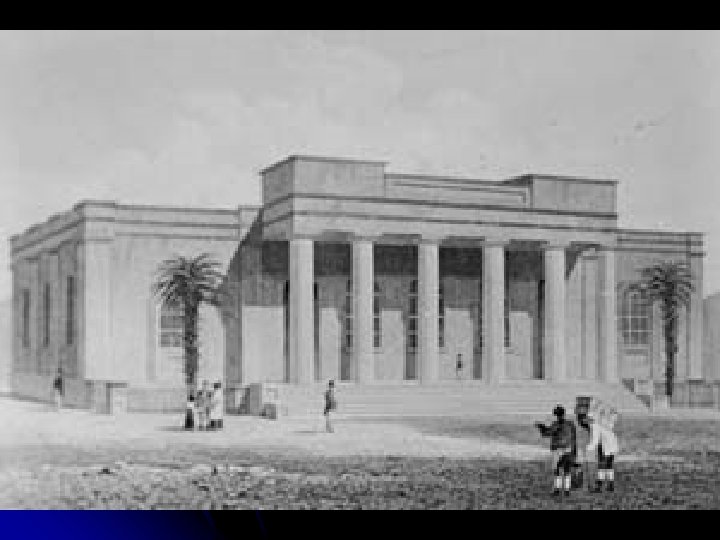
Jackson’s next issue: 2 nd Bank of the United States l Jacksonians – against “privileged” institutions l. A privileged few making money at taxpayers’ expense l Nicholas Biddle – extended low-interest loans to Congressmen l Jackson vetoes the Bank’s recharter in 1832
Clay and Webster want campaign issue Clay and Webster wanted to recharter bank before 1836 (when original ran out) to make it a campaign issue (Knew Jackson’s actions would harm the nation) l Jackson’s Sec. of Treasury begins putting gov’t funds in “pet banks” – loyal to the Democratic Party l l Wildcat banks- unstable state banks who distributed worthless currency
A Dying Bank l Biddle tries to save BUS by calling in loans l Buying the loans that the state banks bought but couldn’t pay l BUS eventually dies
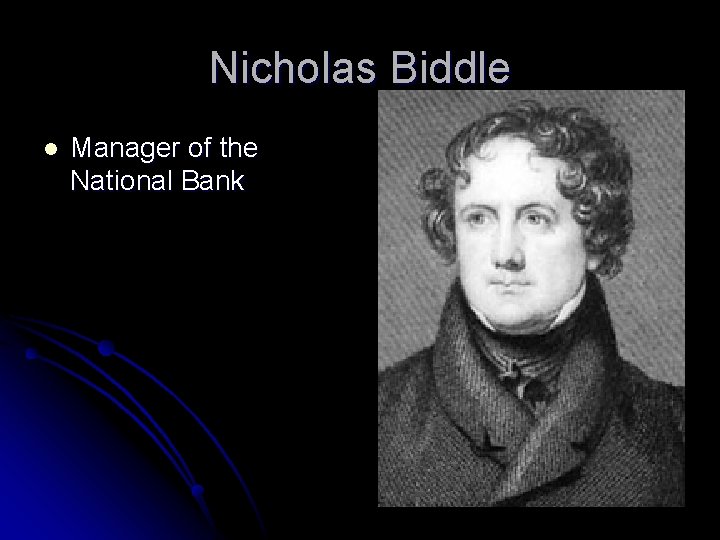
Nicholas Biddle l Manager of the National Bank
Whigs
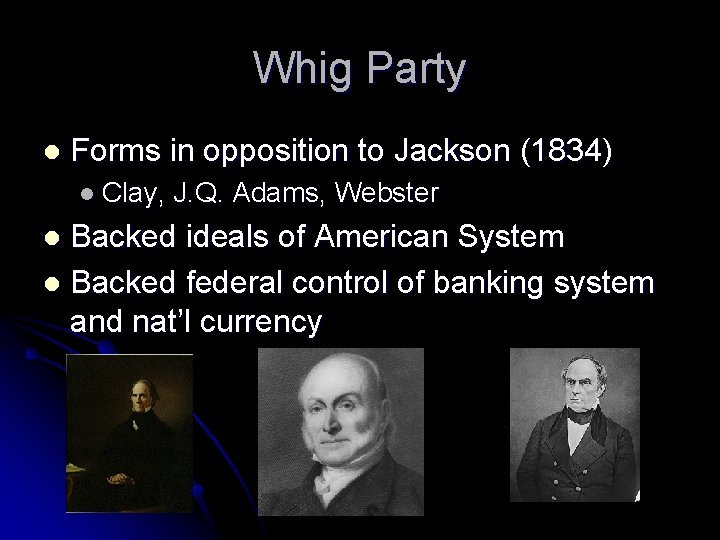
Whig Party l Forms in opposition to Jackson (1834) l Clay, J. Q. Adams, Webster Backed ideals of American System l Backed federal control of banking system and nat’l currency l
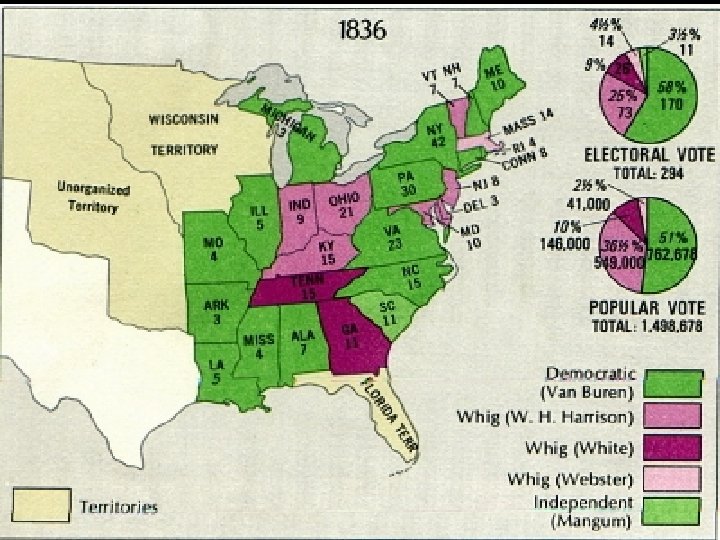
Divided Whigs in 1836 l Whigs run 3 regional candidates against Martin Van Buren, Jackson’s successor
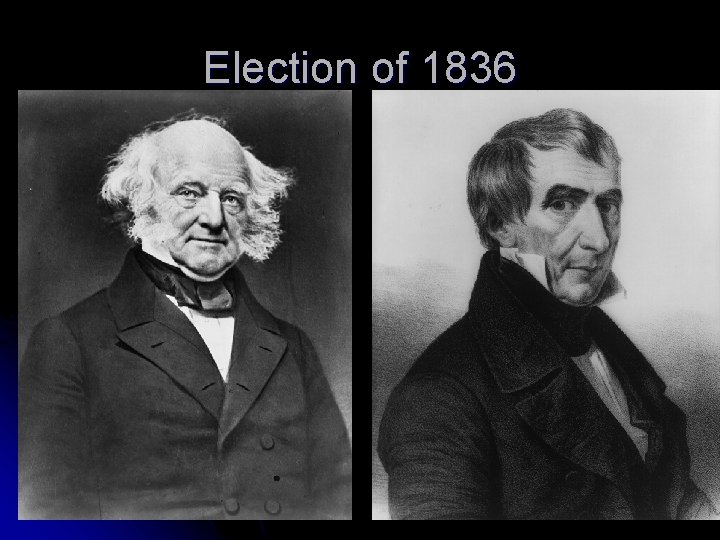
Election of 1836
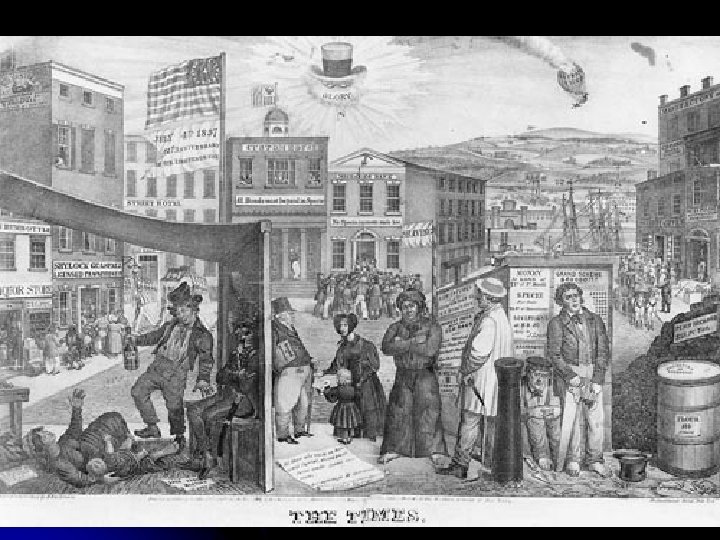
Panic of 1837 Many of Jackson’s pet banks were unstable, “wildcat” banks l Issued more currency than they could redeem l People used these to purchase gov’t land l
Panic of 1837 (continued) l Bank closings and collapse of credit system bankrupted many people, 1/3 of population out of work
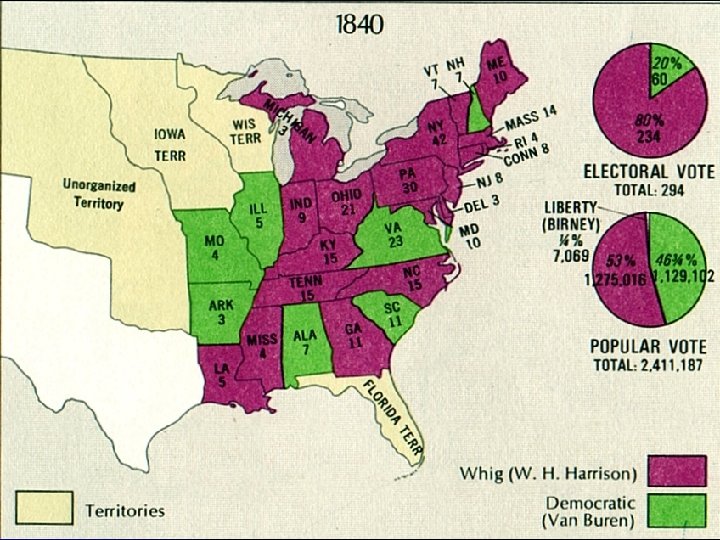
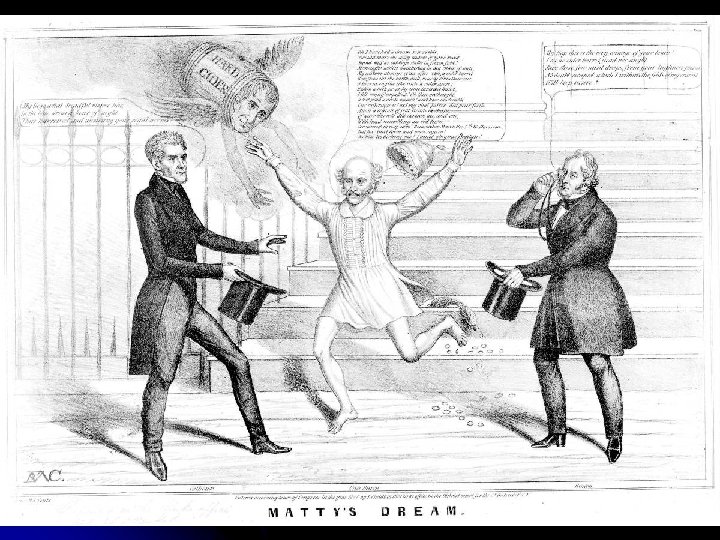
Election of 1840 Harrison (Whig) portrayed as a hero l Van Buren portrayed as aristocrat l

Harrison dies l “Old Tippecanoe” dies 1 month after his inauguration
- Slides: 35