
U S Emergency Management Past Present and Future
- Slides: 22
U. S. Emergency Management: Past, Present, and Future Claire B. Rubin President Claire B. Rubin & Associates, LLC Disaster Research and Consulting P. O. Box 2208 Arlington, VA 22202 www. clairerubin. com www. disasterbookstore. com 1
Why Study History? ODTAA context document and learn from our own experiences know what worked surprises 2
Historical Writing 3
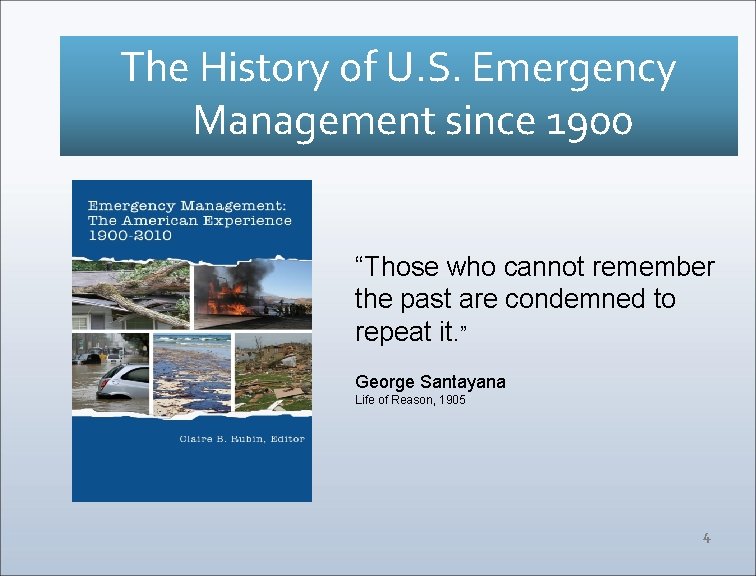
The History of U. S. Emergency Management since 1900 “Those who cannot remember the past are condemned to repeat it. ” George Santayana Life of Reason, 1905 4
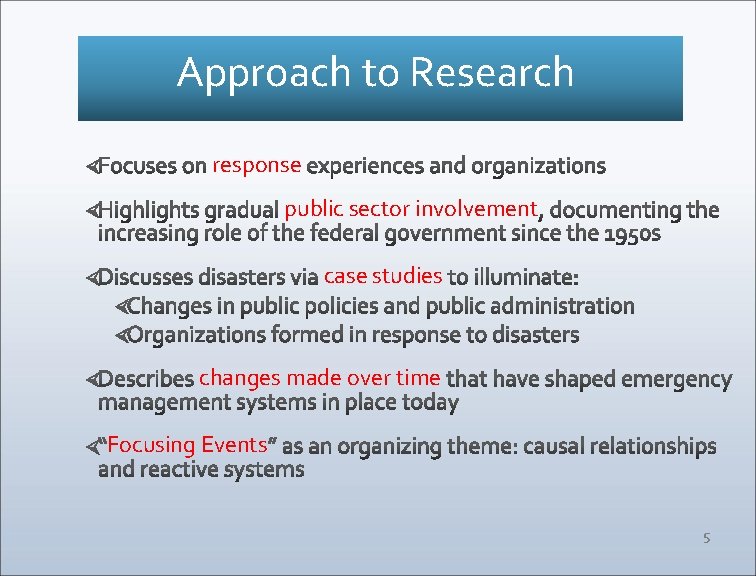
Approach to Research response public sector involvement case studies changes made over time Focusing Events 5
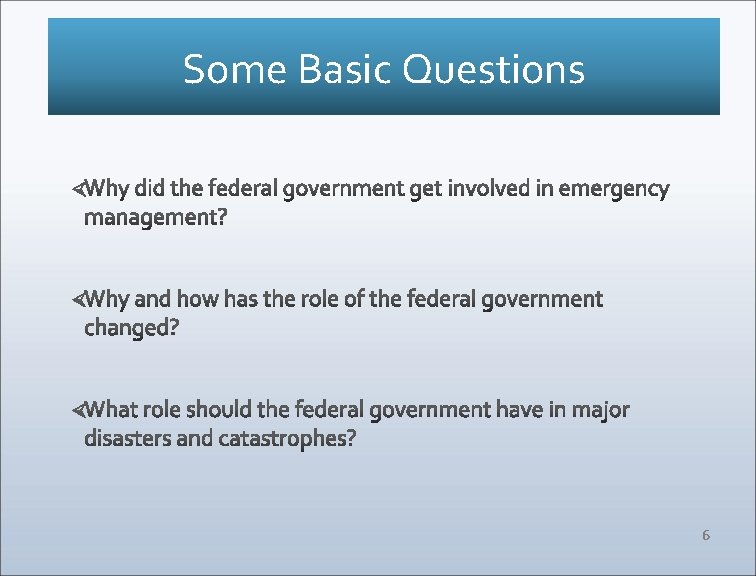
Some Basic Questions 6
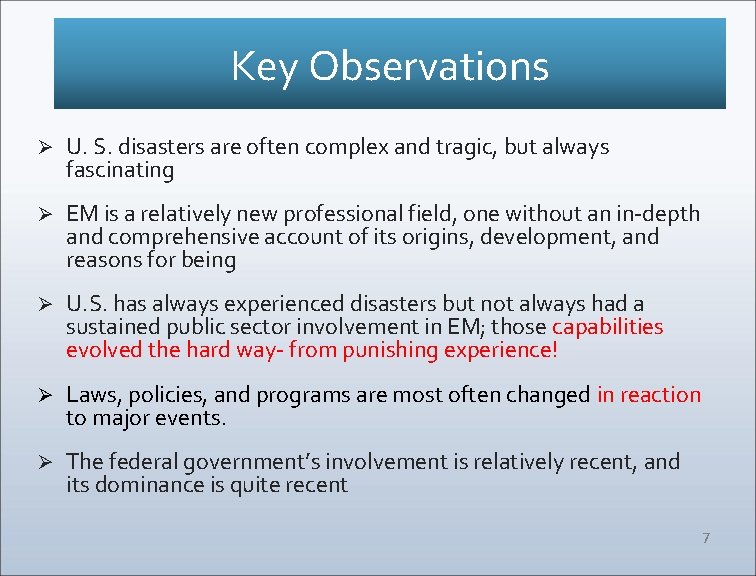
Key Observations Ø U. S. disasters are often complex and tragic, but always fascinating Ø EM is a relatively new professional field, one without an in-depth and comprehensive account of its origins, development, and reasons for being Ø U. S. has always experienced disasters but not always had a sustained public sector involvement in EM; those capabilities evolved the hard way- from punishing experience! Ø Laws, policies, and programs are most often changed in reaction to major events. Ø The federal government’s involvement is relatively recent, and its dominance is quite recent 7
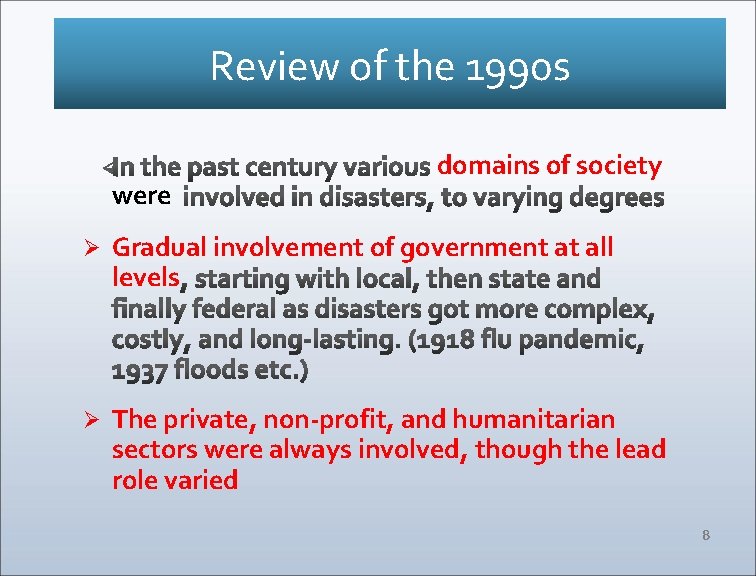
Review of the 1990 s were domains of society Ø Gradual involvement of government at all levels Ø The private, non-profit, and humanitarian sectors were always involved, though the lead role varied 8
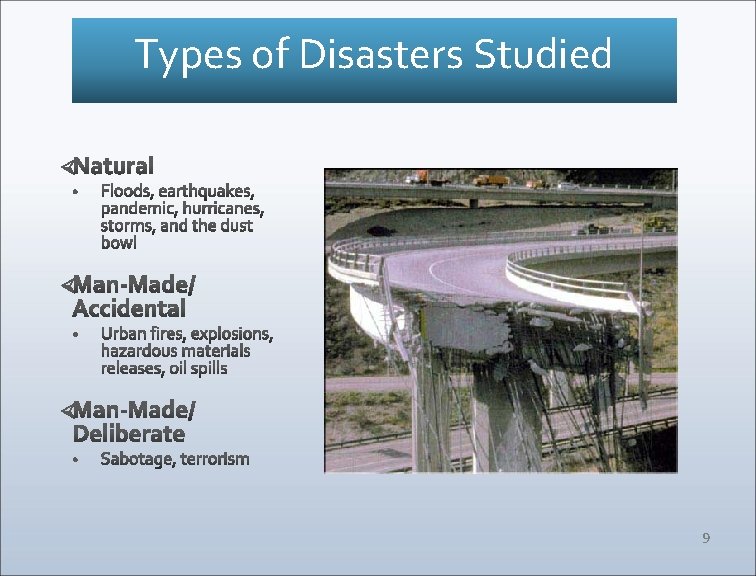
Types of Disasters Studied 9
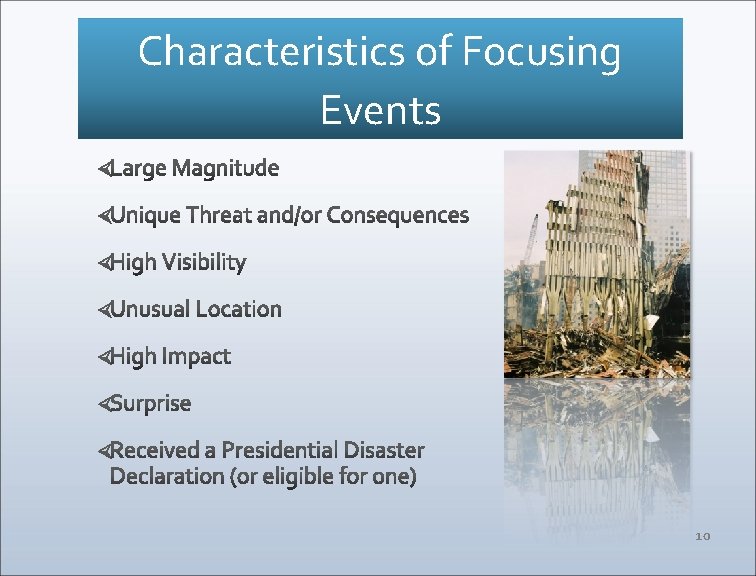
Characteristics of Focusing Events 10
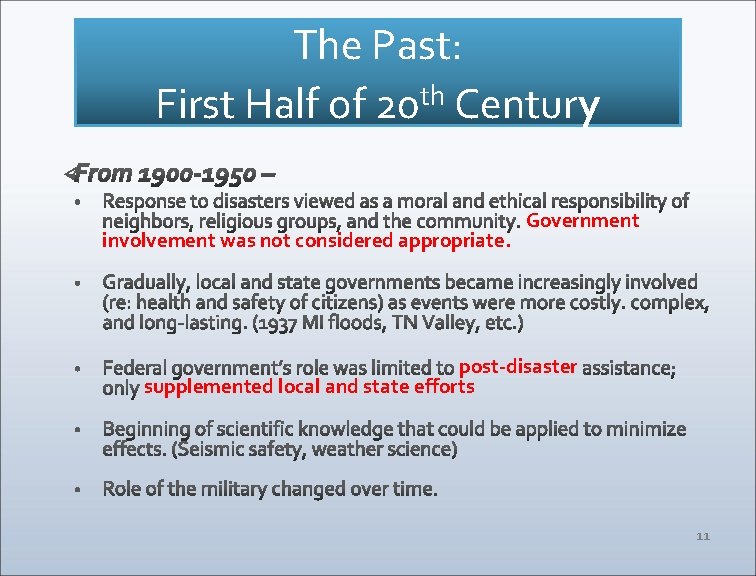
The Past: First Half of 20 th Century involvement was not considered appropriate. Government post-disaster supplemented local and state efforts 11
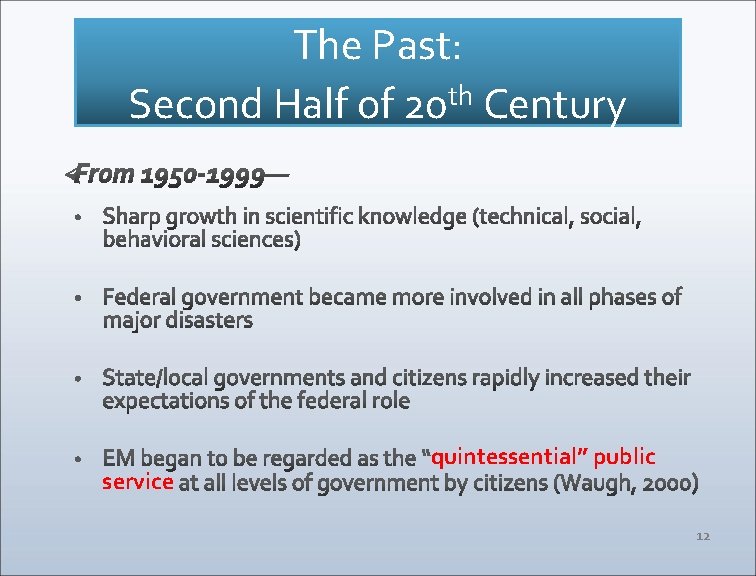
The Past: Second Half of 20 th Century service quintessential” public 12
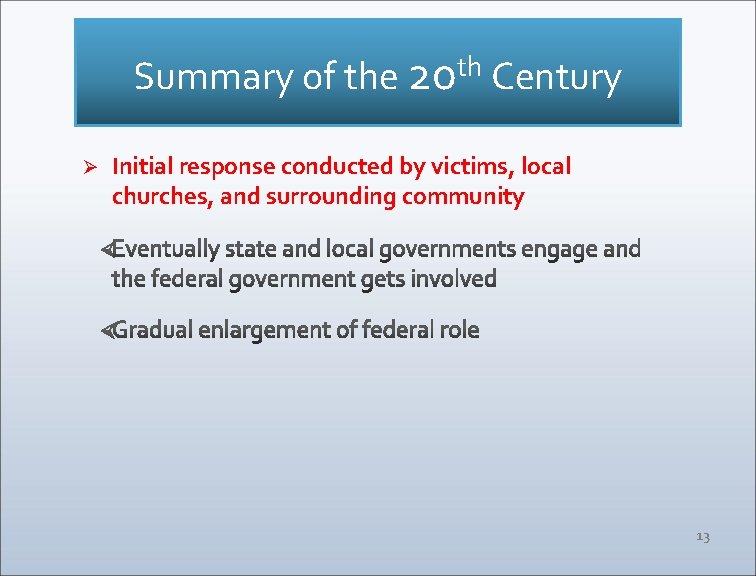
Summary of the 20 Century th Ø Initial response conducted by victims, local churches, and surrounding community 13
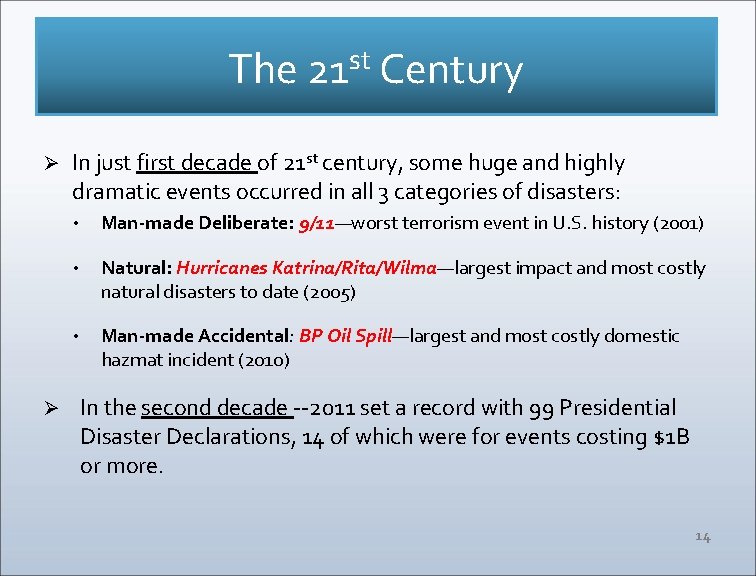
The 21 st Century Ø Ø In just first decade of 21 st century, some huge and highly dramatic events occurred in all 3 categories of disasters: • Man-made Deliberate: 9/11—worst terrorism event in U. S. history (2001) • Natural: Hurricanes Katrina/Rita/Wilma—largest impact and most costly natural disasters to date (2005) • Man-made Accidental: BP Oil Spill—largest and most costly domestic hazmat incident (2010) In the second decade --2011 set a record with 99 Presidential Disaster Declarations, 14 of which were for events costing $1 B or more. 14
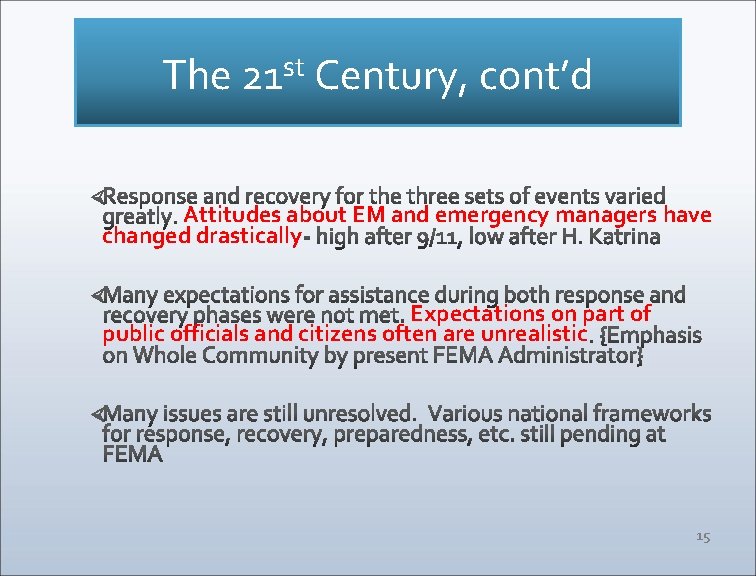
The st 21 Century, cont’d Attitudes about EM and emergency managers have changed drastically Expectations on part of public officials and citizens often are unrealistic 15
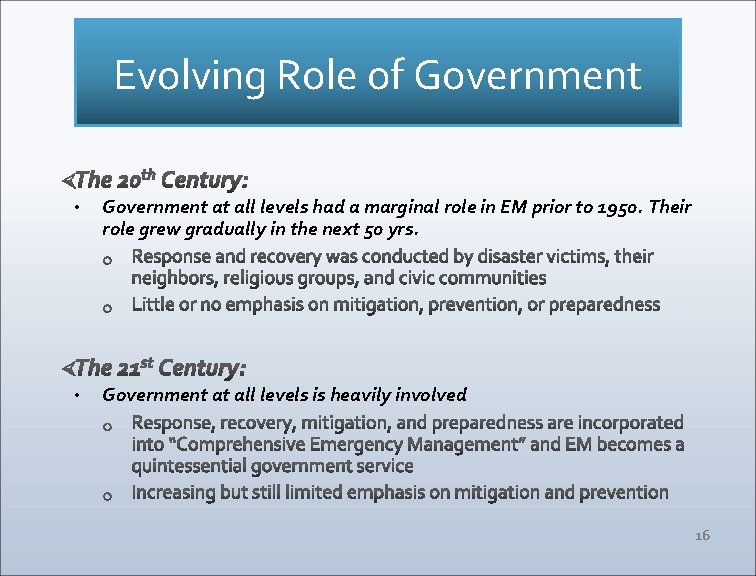
Evolving Role of Government • Government at all levels had a marginal role in EM prior to 1950. Their role grew gradually in the next 50 yrs. • Government at all levels is heavily involved 16
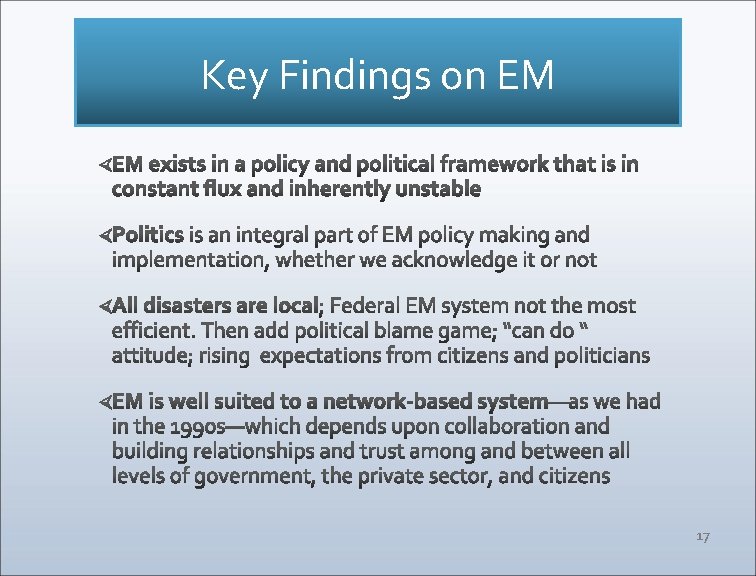
Key Findings on EM 17
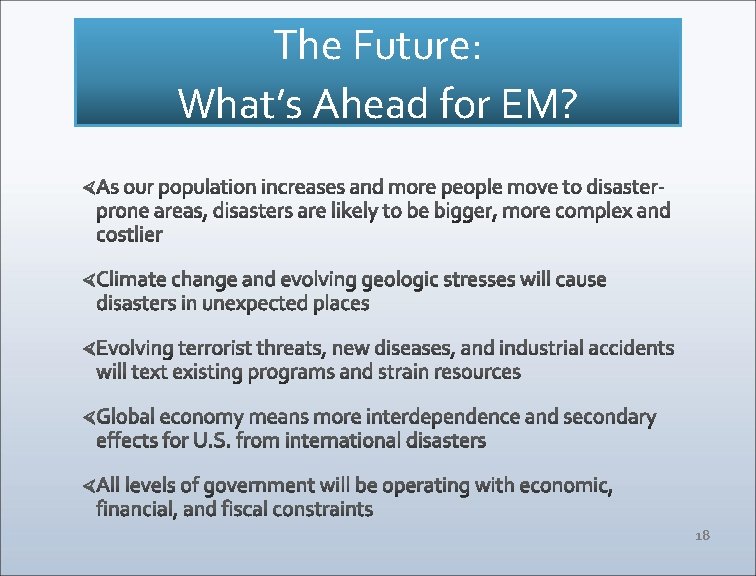
The Future: What’s Ahead for EM? 18
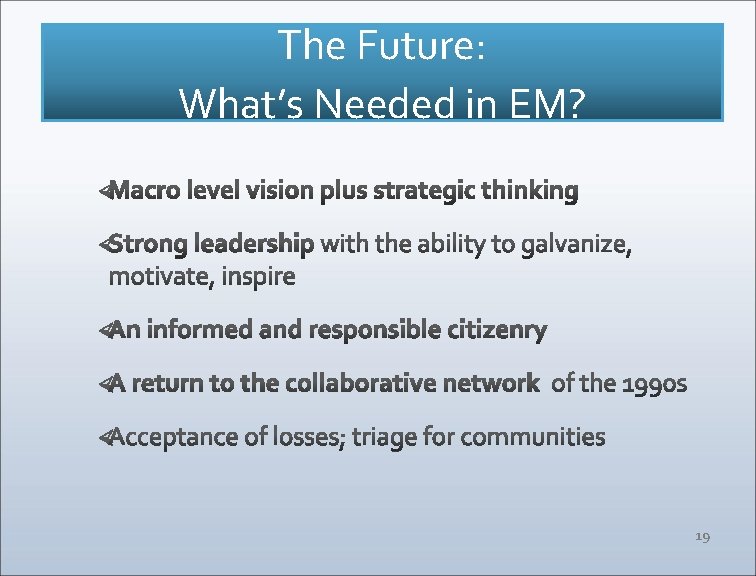
The Future: What’s Needed in EM? 19
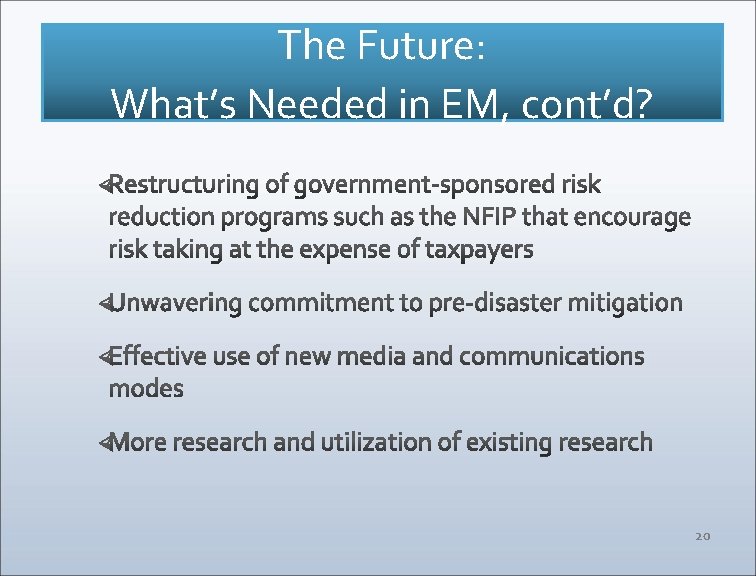
The Future: What’s Needed in EM, cont’d? 20
FEMA’s Strategic Foresight Initiative http: //www. fema. gov/library/view. Record. do? id=4995 http: //www. emforum. org/SFI/120126 SFIbrief. pdf 21
Speaker Information cbrubin@gmail. com Ø www. clairerubin. com Ø www. disaster-timeline. com Ø http: //www. disasterbookstore. com Ø http: //recoverydiva. com Ø http: //disasterrecoveryresources. net 22