
U S Army Corps of Engineers Regulatory Branch
U. S. Army Corps of Engineers Regulatory Branch Permitting and MVN MCM Overview
U. S. Army Corps of Engineers DEPARTMENT OF THE ARMY REGULATORY AUTHORITY THE U. S. ARMY CORPS OF ENGINEERS REGULATORY AUTHORITY IS BASED UPON 1. 2. SECTION 10 OF THE RIVERS AND HARBORS ACT OF 1899 (RHA) AND SECTION 404 OF THE CLEAN WATER ACT (CWA).
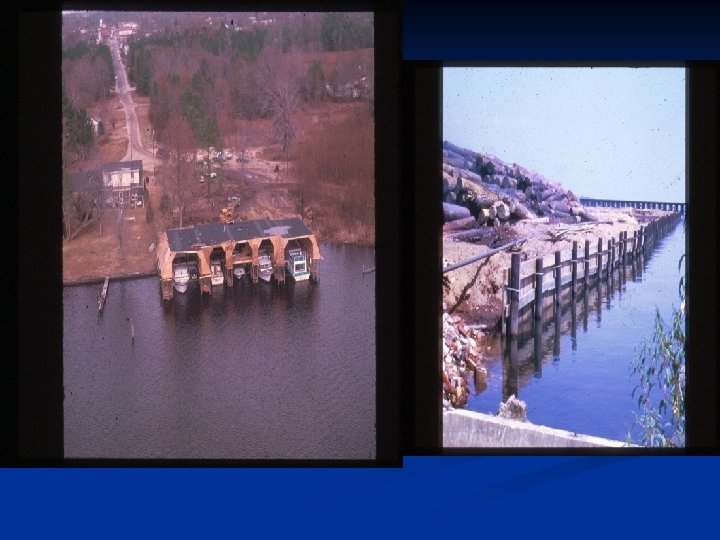
SECTION 10 OF THE RIVERS AND HARBORS ACT OF 1899 U. S. Army Corps of Engineers AUTHORIZES THE SECRETARY OF THE ARMY TO REGULATE ALL ACTIVITIES AND STRUCTURES IN NAVIGABLE WATERS OF THE UNITED STATES, INCLUDING CONSTRUCTION, EXCAVATION, OR DEPOSITION OF MATERIALS IN, OVER, OR UNDER SUCH WATERS, OR ANY WORK WHICH WOULD AFFECT THE COURSE, LOCATION, CONDITION, OR CAPACITY OF THOSE WATERS.
U. S. Army Corps of Engineers
U. S. Army Corps of Engineers SECTION 404 OF THE CLEAN WATER ACT (CWA) AUTHORIZES THE SECRETARY OF THE ARMY, ACTING THROUGH THE CHIEF OF ENGINEERS, TO ISSUE PERMITS, AFTER NOTICE AND OPPORTUNITY FOR PUBLIC HEARING, FOR THE DISCHARGE OF DREDGED OR FILL MATERIAL INTO WATERS OF THE UNITED STATES AT SPECIFIC DISPOSAL SITES.
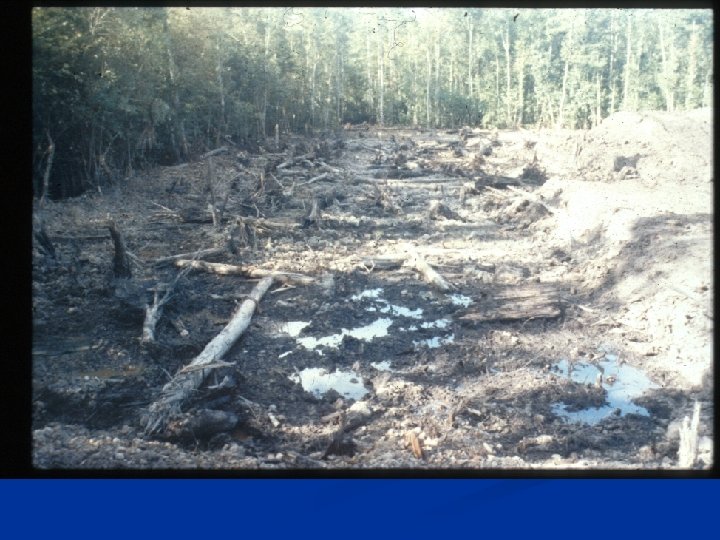
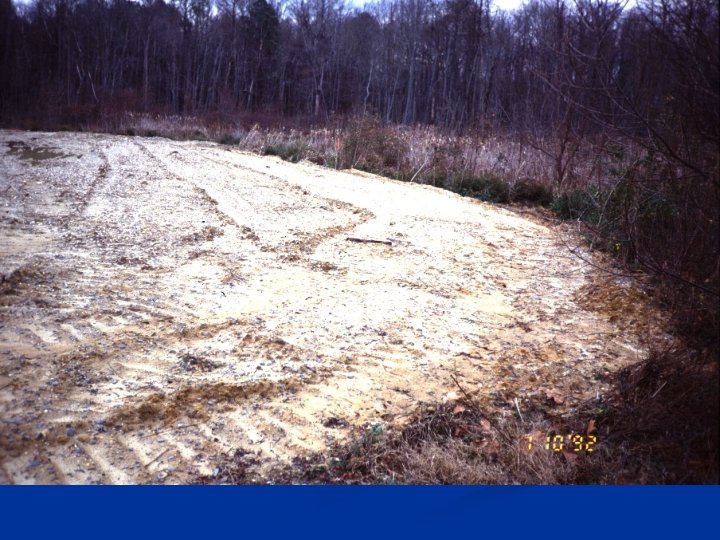
U. S. Army Corps of Engineers Jurisdiction – Section 404 Clean Water Act l Definitions: l Fill Material – any material that has the effect of replacing an aquatic area with dry land or of changing the bottom elevation of a waterbody or wetland; includes rock, soil, dirt or similar materials. l Discharge of Fill Material – the addition of fill material into waters of the U. S.
U. S. Army Corps of Engineers
U. S. Army Corps of Engineers
U. S. Army Corps of Engineers THE CORPS JURISDICTIONAL LIMITS n n THE LIMITS OF THE CORPS REGULATORY JURISDICTION ARE DEFINED AS: NAVIGABLE WATERS OF THE U. S. UNDER SECTION 10 OF THE RHA. WATERS OF THE U. S. UNDER SECTION 404 OF THE CWA.
U. S. Army Corps of Engineers NAVIGABLE WATERS OF THE US INCLUDE: 1. ALL WATERS WHICH ARE CURRENTLY USED, OR WERE USED IN THE PAST, OR MAY BE SUSCEPTIBLE TO USE IN INTERSTATE OR FOREIGN COMMERCE, 2. ALL WATERS SUBJECT TO THE EBB AND FLOW OF THE TIDE.
U. S. Army Corps of Engineers WATERS OF THE US INCLUDE: ALL NAVIGABLE WATERS, INTERSTATE WATERS, TRIBUTARIES TO NAVIGABLE AND INTERSTATE WATERS, WETLANDS AND OTHER SPECIAL AQUATIC SITES, AND TERRITORIAL SEAS.
U. S. Army Corps of Engineers Department of the Army Permitting -Determine Jurisdiction -Define Project -Determine Work Type and Resource Impacts -Determine Type of Permit
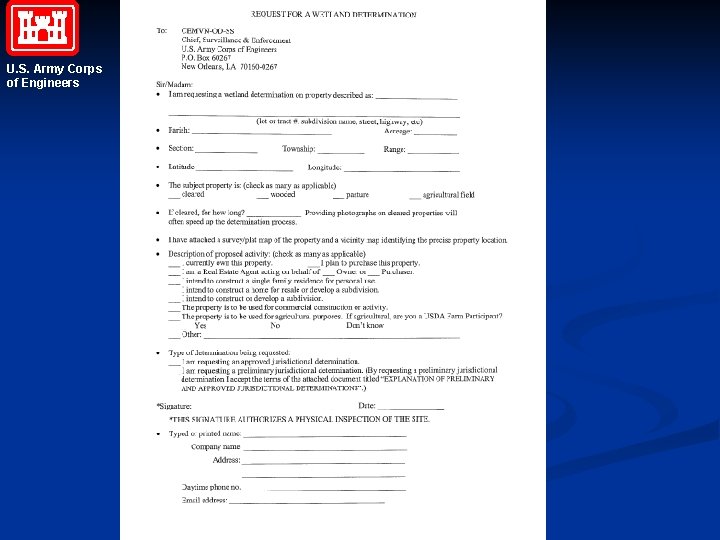
U. S. Army Corps of Engineers Jurisdictional Determinations n n n Only the Corps of Engineers can make an official determination of waters of the US Biologists at the Corps use technical manuals, guidance documents, and court decisions to make official determinations, majority of which for wetlands 1987 Wetlands Delineation Manual Court Decisions (Rapanos and Carabell, SWANCC) 2008 Regional Supplement to Wetland Delineation Manual
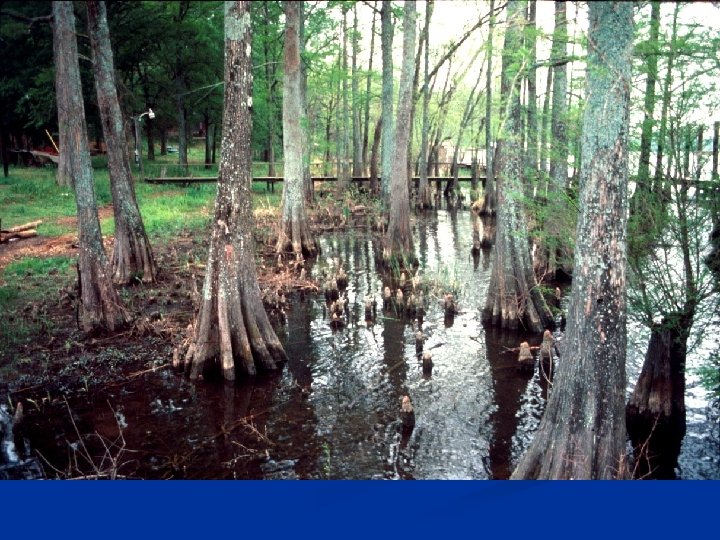
U. S. Army Corps of Engineers Regulatory Definition of Wetlands “Wetlands” are defined as: those areas that are inundated or saturated by surface or ground water at a frequency and duration sufficient to support, and that under normal circumstances do support, a prevalence of vegetation typically adapted for life in saturated soil conditions. - - 33 CFR 328. 3(b)
U. S. Army Corps of Engineers Three Diagnostic Characteristics of Wetlands Hydrophytic Vegetation n Wetland Hydrology n Hydric Soils n
U. S. Army Corps of Engineers

U. S. Army Corps of Engineers
U. S. Army Corps of Engineers n Jurisdictional Determinations http: //www. mvn. usace. army. mil/ops/regula tory/request_form. doc
U. S. Army Corps of Engineers
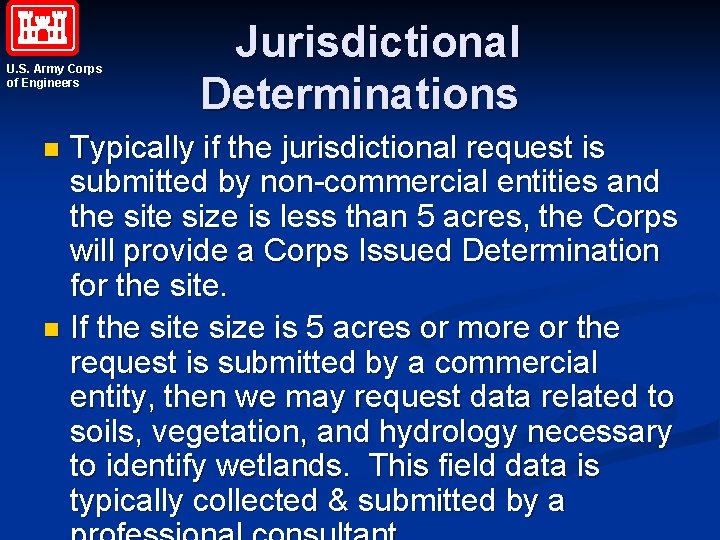
U. S. Army Corps of Engineers Jurisdictional Determinations Typically if the jurisdictional request is submitted by non-commercial entities and the site size is less than 5 acres, the Corps will provide a Corps Issued Determination for the site. n If the site size is 5 acres or more or the request is submitted by a commercial entity, then we may request data related to soils, vegetation, and hydrology necessary to identify wetlands. This field data is typically collected & submitted by a n
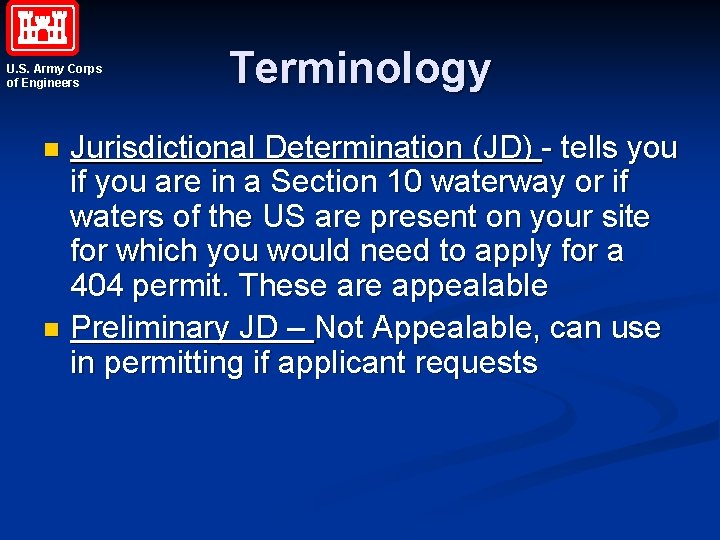
U. S. Army Corps of Engineers Terminology Jurisdictional Determination (JD) - tells you if you are in a Section 10 waterway or if waters of the US are present on your site for which you would need to apply for a 404 permit. These are appealable n Preliminary JD – Not Appealable, can use in permitting if applicant requests n
U. S. Army Corps of Engineers JD Time Frames A Corps issued determination (or delineation) is good for 5 years. According to the most current information the New Orleans District is completing 60% of our determinations within 90 days or less. *It is recommended to receive an approved JD prior to submittal of an application
U. S. Army Corps of Engineers PERMIT APPLICATION Department of the Army Permit Application - ENG Form 4345 n A vicinity map, a plan view and a cross section of the proposed work. n Joint Corps/Coastal Zone Application – Modified ENG Form 4345 n Applications received are forwarded to the appropriate Section chiefs n
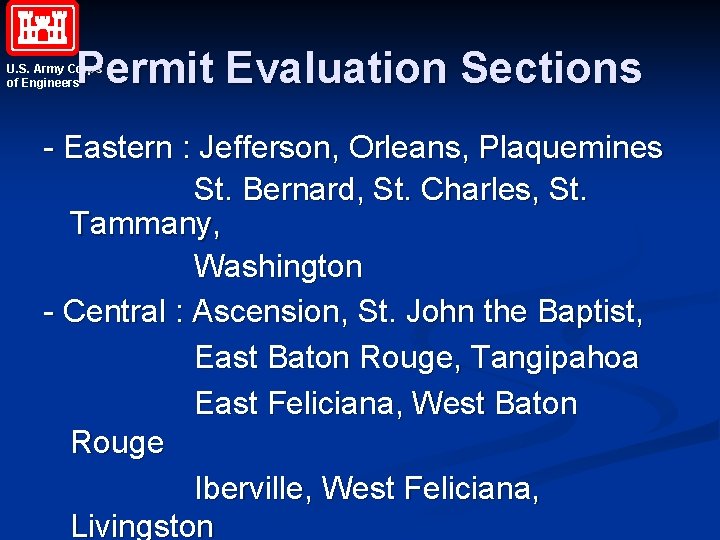
Permit Evaluation Sections U. S. Army Corps of Engineers - Eastern : Jefferson, Orleans, Plaquemines St. Bernard, St. Charles, St. Tammany, Washington - Central : Ascension, St. John the Baptist, East Baton Rouge, Tangipahoa East Feliciana, West Baton Rouge Iberville, West Feliciana, Livingston
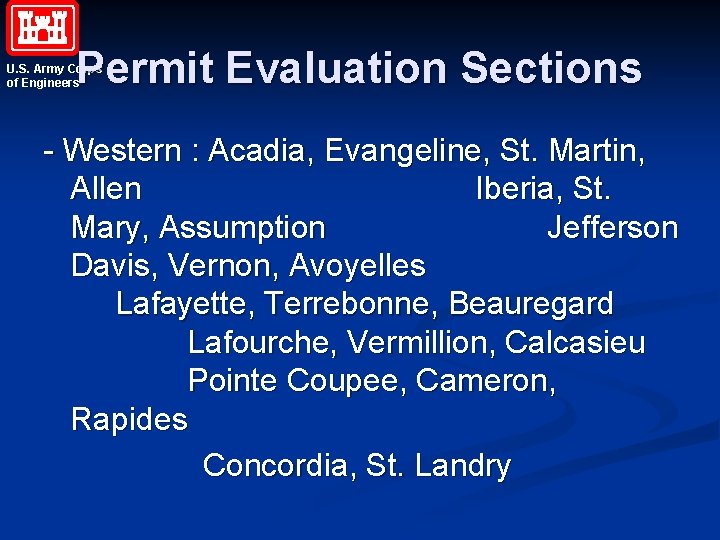
Permit Evaluation Sections U. S. Army Corps of Engineers - Western : Acadia, Evangeline, St. Martin, Allen Iberia, St. Mary, Assumption Jefferson Davis, Vernon, Avoyelles Lafayette, Terrebonne, Beauregard Lafourche, Vermillion, Calcasieu Pointe Coupee, Cameron, Rapides Concordia, St. Landry
U. S. Army Corps of Engineers Evaluation Section The Section chiefs will make a preliminary determination on regulatory authority (CWA or RHA) and a cursory determination of permit type that may be applicable n Section chiefs then assign the application to one of the project managers within the section n The project managers will validate regulatory authority and qualified permit n
U. S. Army Corps of Engineers TYPES OF PERMITS NATIONWIDE (NWP) REGIONAL/STATE PROGRAM GENERAL PERMITS (PGP) LETTER OF PERMISSION (LOP) INDIVIDUAL
U. S. Army Corps of Engineers n NATIONWIDE PERMITS Nationwide Permits are a type of general permit issued by the Chief of Engineers, and designed to regulate with little, if any, delay or paperwork certain activities with minimal impacts
U. S. Army Corps of Engineers Examples of Nationwide Permits NWP 3 – Maintenance of Existing Structures n NWP 12 – Utility Line Activities n NWP 27 – Aquatic Habitat Restoration n n http: //www. mvn. usace. army. mil/ops/regulatory/NWP_Table. ht m
U. S. Army Corps of Engineers Regional General Permits are issued by the Corps District for certain similar activities that have minor impacts n The New Orleans District has 27 Regional General Permits n
U. S. Army Corps of Engineers New Orleans District RGPs NOD-2 Trenasse Maintenance n NOD-3 Foundation Pads for Drilling Barges in Open Water n NOD-29 Small Boat Slips and Appurtenances n n http: //www. mvn. usace. army. mil/ops/regulatory/genperm. htm
U. S. Army Corps of Engineers PROGRAMMATIC PERMIT Programmatic permits are a type of general permit founded on an existing state, local or other Federal agency program and designed to avoid duplication of that program. For the New Orleans District, PGPs in the Coastal Zone
U. S. Army Corps of Engineers Department of the Army Individual Permits Activities which do not comply with any of the abbreviated procedures must be evaluated under individual permitting procedures.
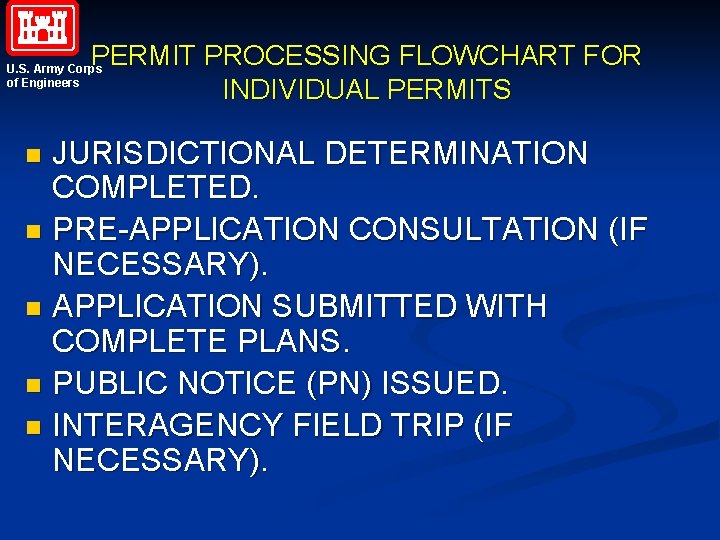
PERMIT PROCESSING FLOWCHART FOR INDIVIDUAL PERMITS U. S. Army Corps of Engineers JURISDICTIONAL DETERMINATION COMPLETED. n PRE-APPLICATION CONSULTATION (IF NECESSARY). n APPLICATION SUBMITTED WITH COMPLETE PLANS. n PUBLIC NOTICE (PN) ISSUED. n INTERAGENCY FIELD TRIP (IF NECESSARY). n
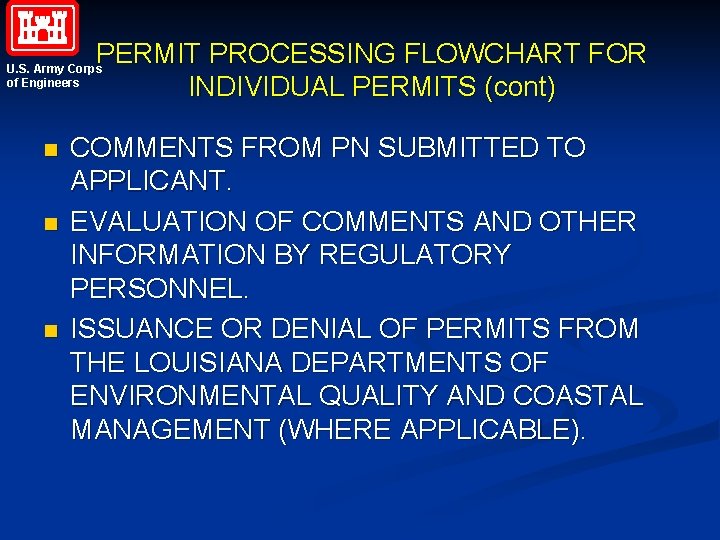
PERMIT PROCESSING FLOWCHART FOR INDIVIDUAL PERMITS (cont) U. S. Army Corps of Engineers n n n COMMENTS FROM PN SUBMITTED TO APPLICANT. EVALUATION OF COMMENTS AND OTHER INFORMATION BY REGULATORY PERSONNEL. ISSUANCE OR DENIAL OF PERMITS FROM THE LOUISIANA DEPARTMENTS OF ENVIRONMENTAL QUALITY AND COASTAL MANAGEMENT (WHERE APPLICABLE).
U. S. Army Corps of Engineers PUBLIC NOTICE A public notice will be issued for 15/20 days to allow the public, Federal and State agencies and other concerned parties an opportunity to comment on the proposed project. n All public notices are now on the internet n
U. S. Army Corps of Engineers PERMIT EVALUATION n Review the project with regard to public interest factors listed in 33 CFR 320. 4. These factors are: n Conservation, economics, aesthetics, general environmental concerns, wetlands, historic properties, fish and wildlife values, flood hazards, floodplain values, land use, navigation, shore erosion and accretion, recreation, water supply and conservation, water quality, energy needs, safety, food and fiber production, mineral needs, considerations of property ownership, and in general, the needs and welfare of the people
U. S. Army Corps of Engineers EVALUATION …Cont. We will also consider: n Relative extent of public and private need of the project. n Practicability of using alternative sites and methods. n Extent and permanence of the anticipated beneficial and/or detrimental effects of the proposed work.
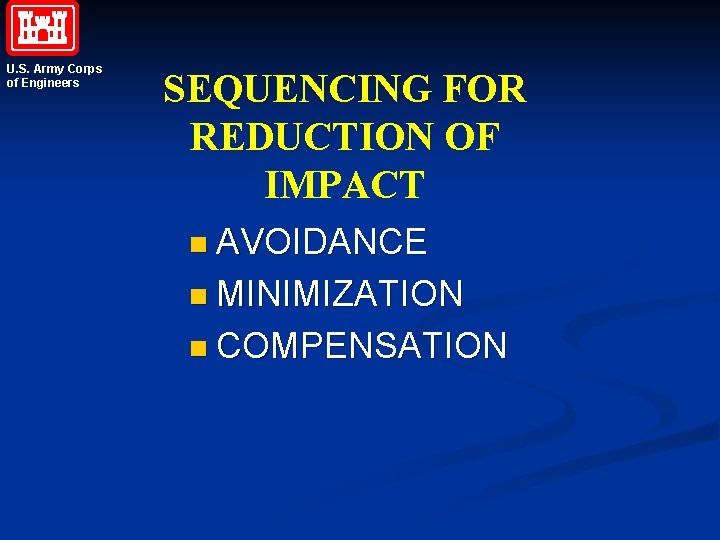
U. S. Army Corps of Engineers SEQUENCING FOR REDUCTION OF IMPACT n AVOIDANCE n MINIMIZATION n COMPENSATION
U. S. Army Corps of Engineers COMPENSATORY MITIGATION Establishment n Re-establishment n Rehabilitation n Enhancement n Preservation n
COMPENSATORY MITIGATION U. S. Army Corps of Engineers APPROACHES n CONSOLIDATED MITIGATION BANKS n IN-LIEU FEE n n PERMITTEE RESPONSIBLE n DESIGNED TO MITIGATE A SPECIFIC , USUALLY SINGLE, IMPACT
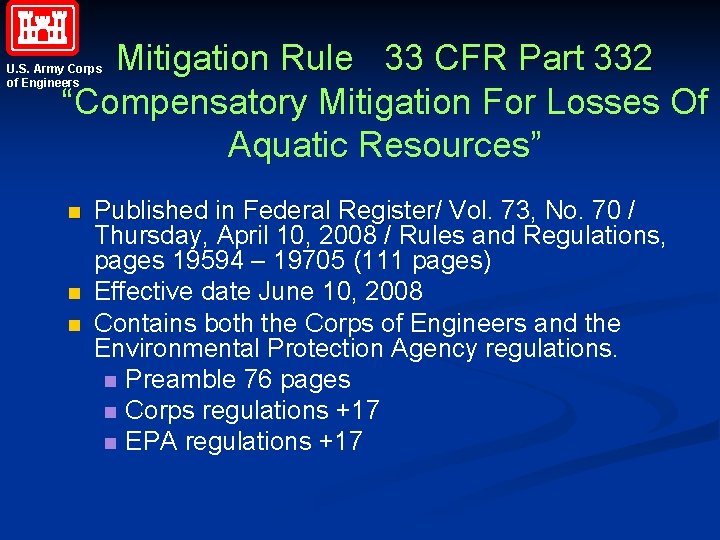
Mitigation Rule 33 CFR Part 332 “Compensatory Mitigation For Losses Of Aquatic Resources” U. S. Army Corps of Engineers n n n Published in Federal Register/ Vol. 73, No. 70 / Published in Federal Register Thursday, April 10, 2008 / Rules and Regulations, pages 19594 – 19705 (111 pages) Effective date June 10, 2008 Contains both the Corps of Engineers and the Environmental Protection Agency regulations. n Preamble 76 pages n Corps regulations +17 n EPA regulations +17
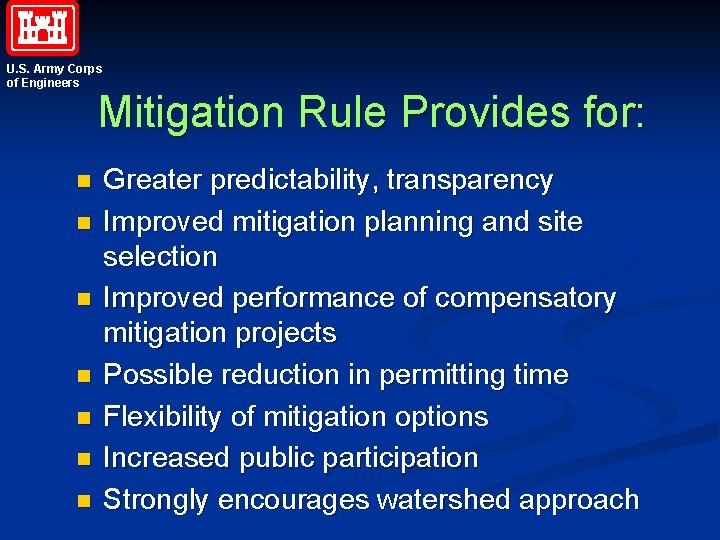
U. S. Army Corps of Engineers Mitigation Rule Provides for: n n n n Greater predictability, transparency Improved mitigation planning and site selection Improved performance of compensatory mitigation projects Possible reduction in permitting time Flexibility of mitigation options Increased public participation Strongly encourages watershed approach
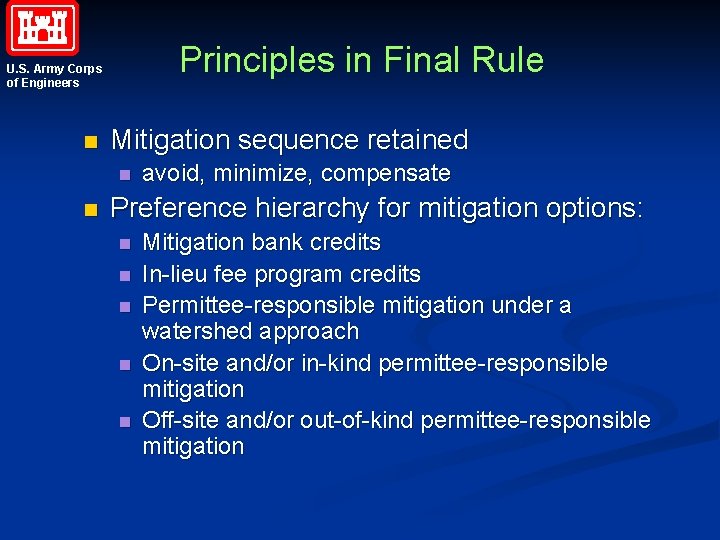
Principles in Final Rule U. S. Army Corps of Engineers n Mitigation sequence retained n n avoid, minimize, compensate Preference hierarchy for mitigation options: n n n Mitigation bank credits In-lieu fee program credits Permittee-responsible mitigation under a watershed approach On-site and/or in-kind permittee-responsible mitigation Off-site and/or out-of-kind permittee-responsible mitigation
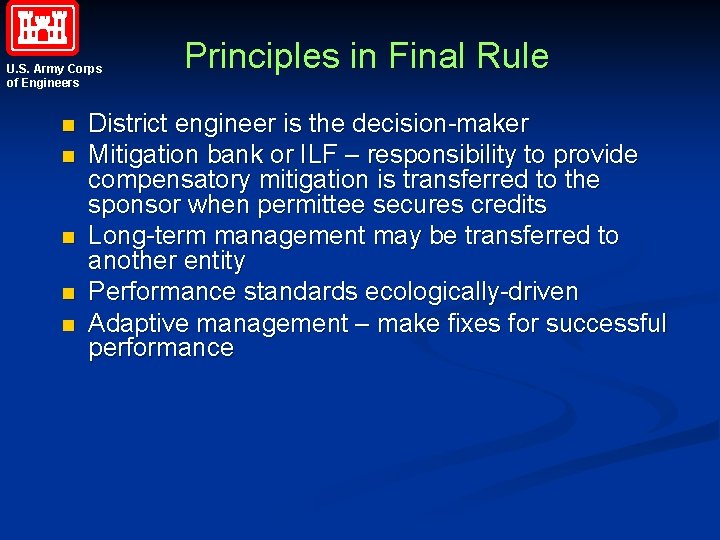
U. S. Army Corps of Engineers n n n Principles in Final Rule District engineer is the decision-maker Mitigation bank or ILF – responsibility to provide compensatory mitigation is transferred to the sponsor when permittee secures credits Long-term management may be transferred to another entity Performance standards ecologically-driven Adaptive management – make fixes for successful performance
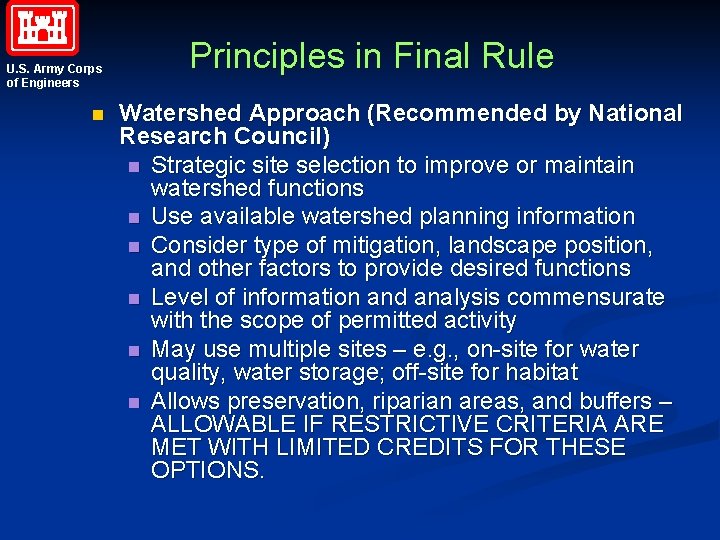
U. S. Army Corps of Engineers n Principles in Final Rule Watershed Approach (Recommended by National Research Council) n Strategic site selection to improve or maintain watershed functions n Use available watershed planning information n Consider type of mitigation, landscape position, and other factors to provide desired functions n Level of information and analysis commensurate with the scope of permitted activity n May use multiple sites – e. g. , on-site for water quality, water storage; off-site for habitat n Allows preservation, riparian areas, and buffers – ALLOWABLE IF RESTRICTIVE CRITERIA ARE MET WITH LIMITED CREDITS FOR THESE OPTIONS.
U. S. Army Corps of Engineers § § MVN MCM 2012 Corps of Engineers, New Orleans District’s Modified Charleston Method (MVN MCM) Assessment model used to calculate adverse impacts to wetlands MVN MCM is based on evaluation criteria weighted by their importance and selections within each factor. A variation of existing methodology, Charleston Method, which is a mitigation assessment technique.
U. S. Army Corps of Engineers MVN MCM 2012 Based on methodology developed by the Charleston District included in their Standard Operating Procedure issued September 19, 2002. n Modified to account for n regional wetland type differences, n CEMVN’s “Mitigation Standard Operating Procedures”, and n 33 CFR Part 332, “Compensatory Mitigation for Losses of Aquatic Resources”. n
U. S. Army Corps of Engineers • • • Applicability to Regulated Community Allows applicants/agents to estimate compensatory mitigation requirements for various project scenarios (avoidance and minimization). Provides a reliable tool for developers and planners to use in comparing mitigation options. Provides a single model applicable to all wetland types. Allows mixing of banking and permittee-responsible mitigation. Has a credit calculation and accounting method applicable to all mitigation types (e. g. restoration, enhancement, preservation and creation). Simplifies mixing of appropriate mitigation locations and types.
U. S. Army Corps of Engineers n MVN MCM 2012 CEMVN prepared an MVN MCM Guidebook containing: n n n Definitions of terms used in the model Discussions of the use of each worksheet Definitions for each factor and option associated with that worksheet, and Examples using each worksheet. A copy of the MVN MCM Workbook and Guidebook can be obtained at RIBITS website, under Assessment Tools link for the New Orleans District (RIBITS link to follow)
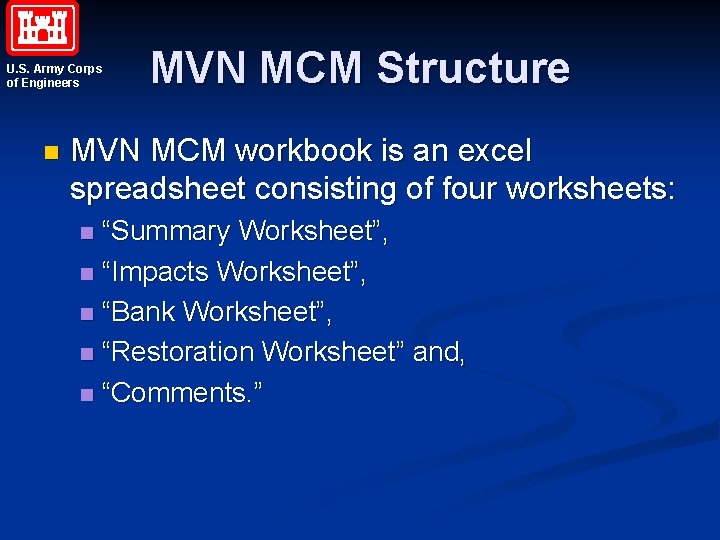
U. S. Army Corps of Engineers n MVN MCM Structure MVN MCM workbook is an excel spreadsheet consisting of four worksheets: “Summary Worksheet”, n “Impacts Worksheet”, n “Bank Worksheet”, n “Restoration Worksheet” and, n “Comments. ” n
U. S. Army Corps of Engineers Summary Worksheet No data entry required on the Summary Worksheet n Information is pulled from the Impact, Bank, and Restoration Worksheets n
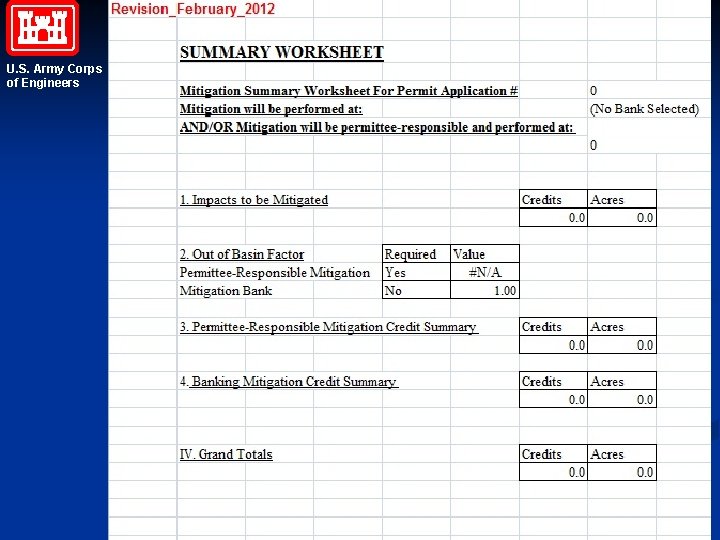
U. S. Army Corps of Engineers
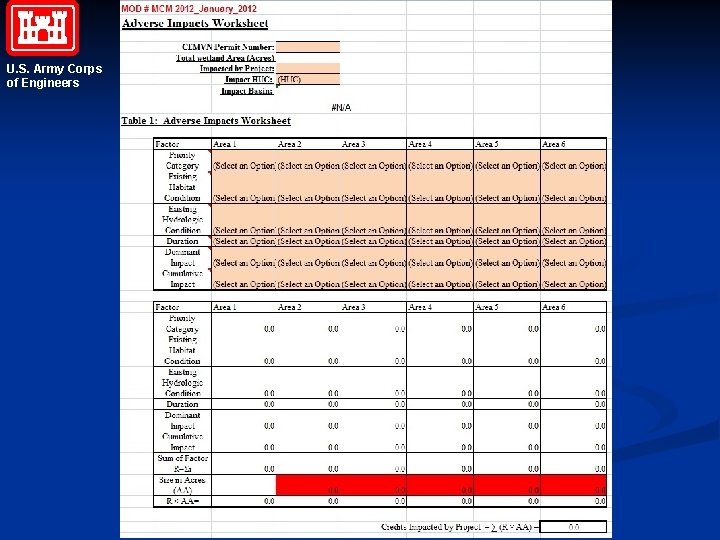
U. S. Army Corps of Engineers n n Impacts Worksheet See Guidebook for details on factors and their values or in Workbook, hold mouse over red triangle Enter Permit Number Enter total number of acres impacted and select Impact HUC at the top of sheet Enter acres impacted at the bottom of each area column used (Size in Acres (AA)), the total must equal to that entered at the top of Worksheet
U. S. Army Corps of Engineers
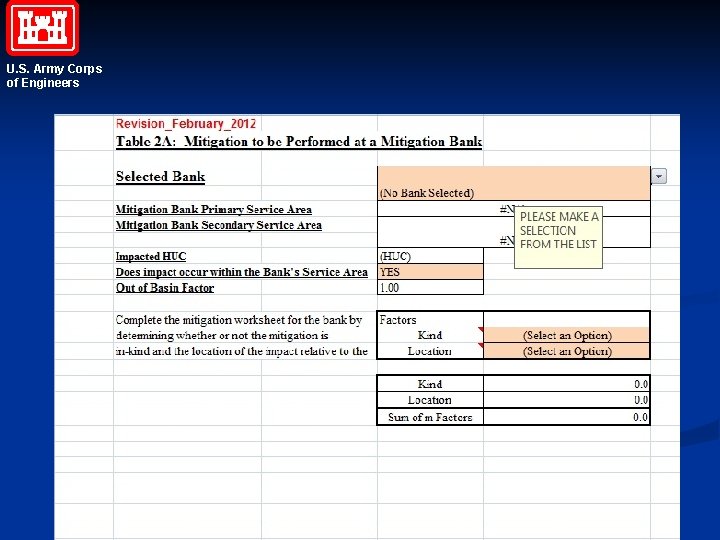
U. S. Army Corps of Engineers Bank Worksheet Select the Bank n Select Yes or No if the Impact occurs within the Bank’s Service Area n Select the Kind and Location Factors n *The user should always utilize RIBITS to determine the credit availability at a Mitigation Bank n
U. S. Army Corps of Engineers
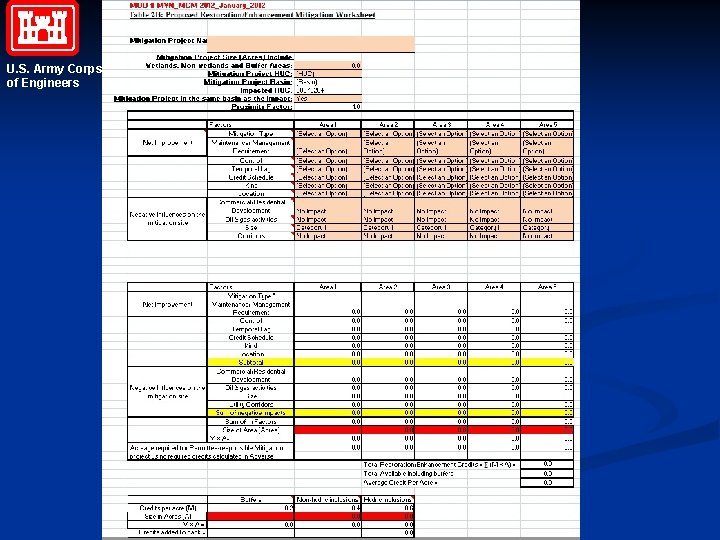
U. S. Army Corps of Engineers n n Restoration Worksheet Enter Mitigation Project Name Enter Mitigation Project Size including the acres for which the project will be requesting credit (roads, rights-of-way, drainage servitudes should not be included) Select HUC Similar to the Impacts Worksheet, the acres of each area must be entered at the bottom of each Area column, the total must equal the acreage entered at the top
U. S. Army Corps of Engineers
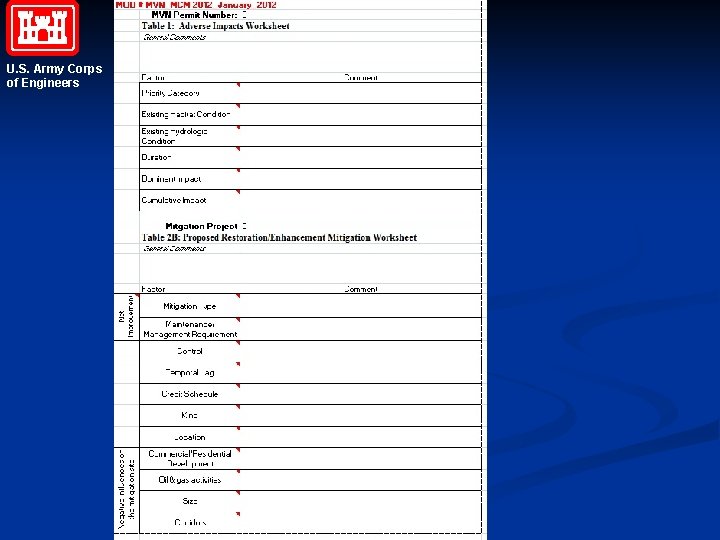
U. S. Army Corps of Engineers Comments Worksheet is provided for the user to justify selection of each factor. n A summary comment box is provided as well as space to provide text for each selection n
U. S. Army Corps of Engineers
U. S. Army Corps of Engineers n RIBITS Regulatory In-lieu fee and Bank Information Tracking System Nationalized compensatory mitigation database n Nationalized reporting and information repository n Permittees/Sponsors/Public has access Go to our Compensatory Mitigation Page n n www. mvn. usace. army. mil/ops/regulatory/Mit_program. asp or, n http: //geo. usace. army. mil/ribits/index. html
U. S. Army Corps of Engineers RIBITS NAVIGATION Notice the Filter on the bottom left – Select New Orleans District n You can click on “existing banks” to select a bank for which you would like to view credit availability or view other information available to the general public. n
U. S. Army Corps of Engineers n REGULATORY BRANCH Special Projects Team Policy Issues n Complex Permit Evaluations n Mitigation Banks n n Surveillance and Enforcement Section Enforcement n Jurisdictional Determinations n n Eastern, Central, and Western Evaluation Sections n Permit Evaluations
U. S. Army Corps of Engineers n n n KEY POINTS Section 10 of RHA – Navigable Waters (tidal) Section 404 of CWA – waters of the U. S. Section 10 covers structures and work within, under, and over navigable waters Section 404 covers deposition of fill within waters of the US Several types of permits – authorization dependant on impact MVN MCM 2012 utilized to calculate adverse impacts to wetlands
U. S. Army Corps of Engineers Key Points Department of the Army permit review process involves many facets in addition to wetlands n Sequencing: Avoid, Minimize, Compensate n
U. S. Army Corps of Engineers Section Chief’s E-mail Eastern ---Michael V. Farabee Central ----Martin S. Mayer Western---Ronnie W. Duke Surveillance & Enforcement---Robert A. Heffner Special Projects---James A. Barlow E-mail: FN. MI. LN@Usace. army. mil
U. S. Army Corps of Engineers n Questions? ? ? ? ? ? ? ? ? ? ? ? ?
- Slides: 68