
U 3 S 1 L 1 Complex Numbers
U 3 -S 1 -L 1 Complex Numbers Essential Questions: How do you classify numbers? How do you identify and graph complex numbers?
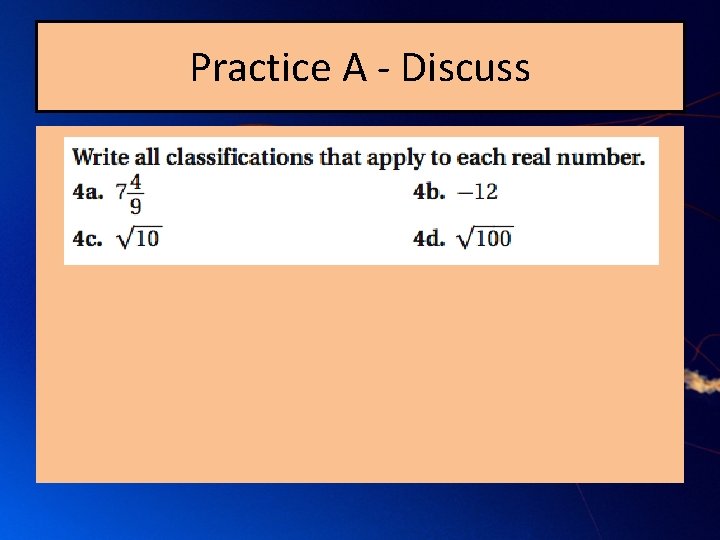
Practice A - Discuss
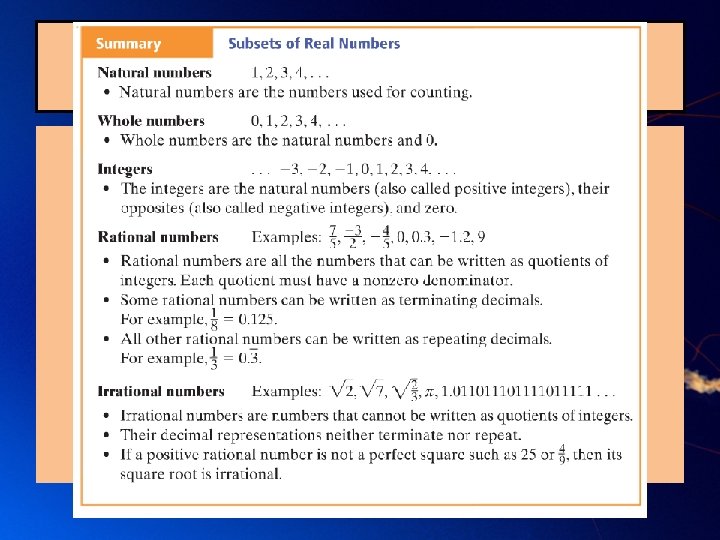
Real Numbers • The Real Number system contains all these types of numbers. • So when we said “All real numbers” as an answer to an inequality or domain and range, what did this mean about our values? Explain.
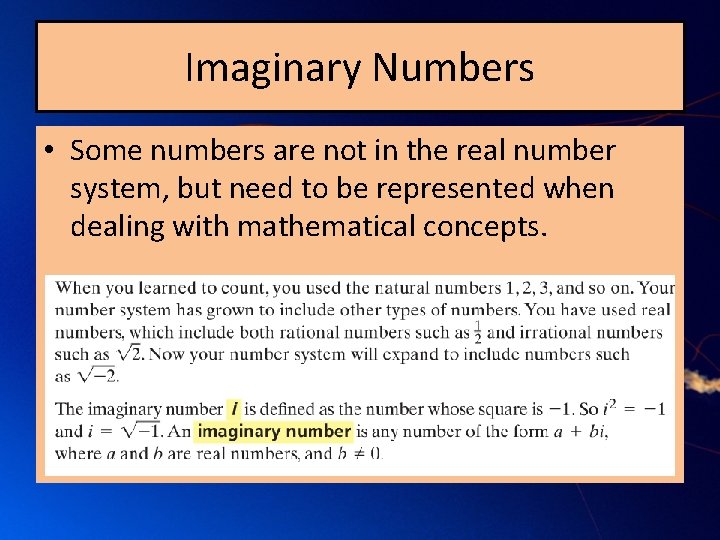
Imaginary Numbers • Some numbers are not in the real number system, but need to be represented when dealing with mathematical concepts.
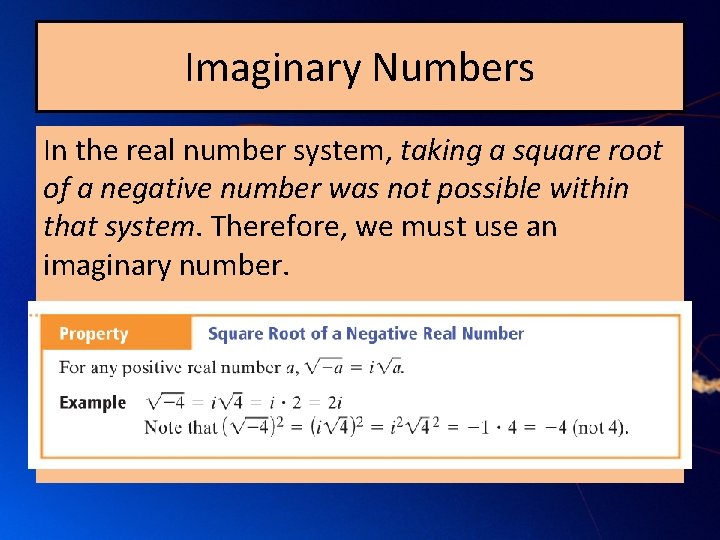
Imaginary Numbers In the real number system, taking a square root of a negative number was not possible within that system. Therefore, we must use an imaginary number.
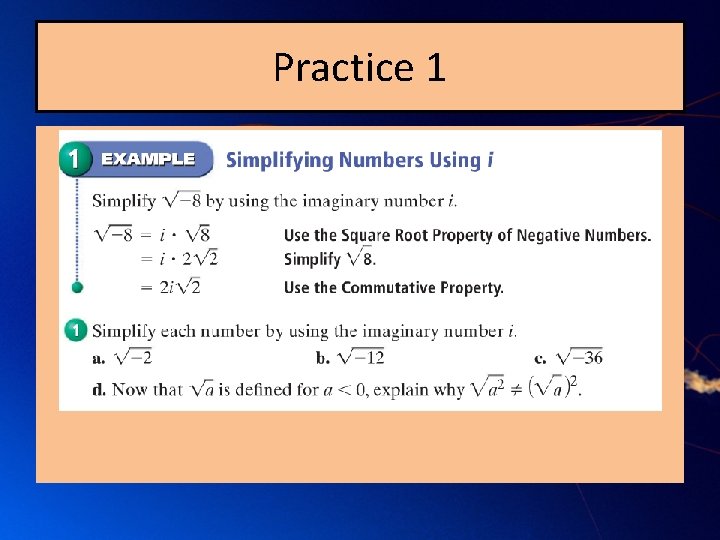
Practice 1
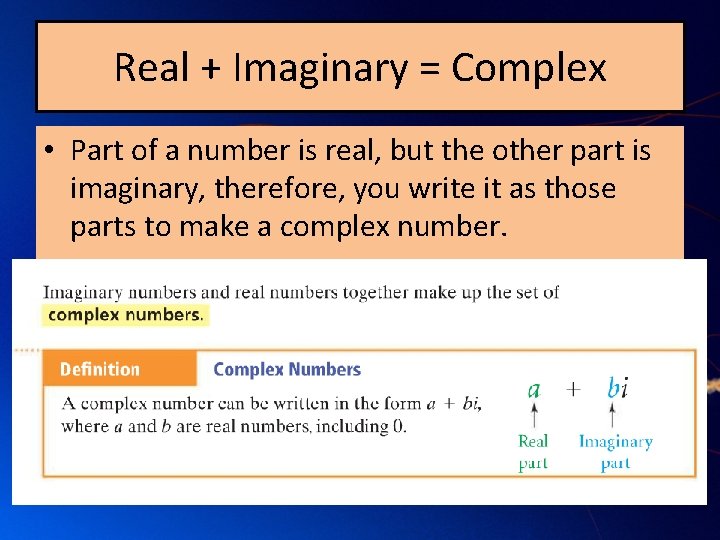
Real + Imaginary = Complex • Part of a number is real, but the other part is imaginary, therefore, you write it as those parts to make a complex number.
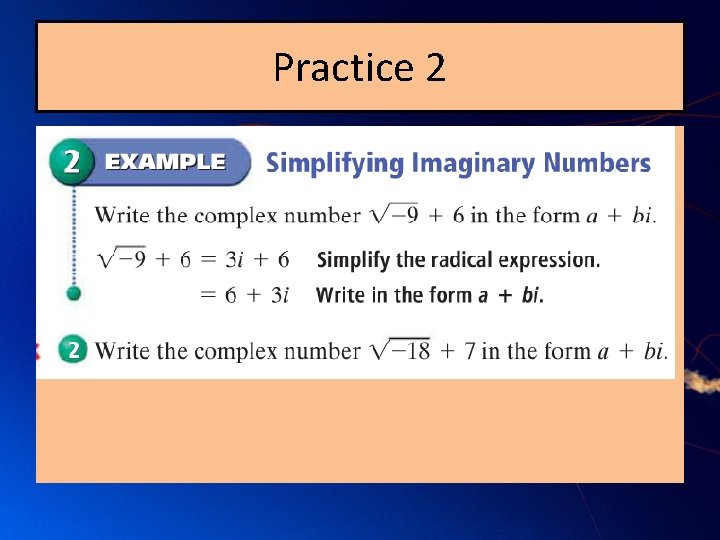
Practice 2
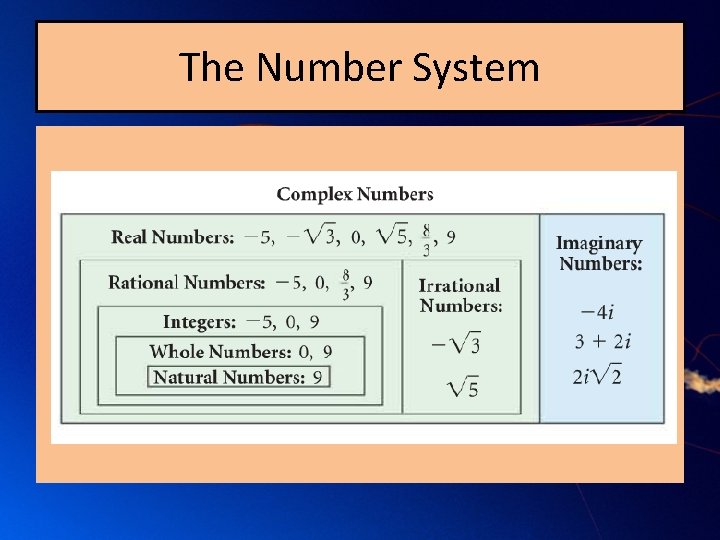
The Number System
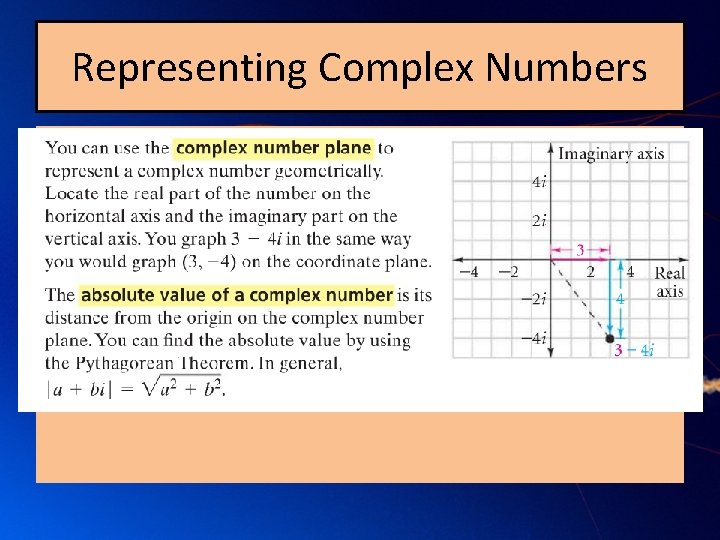
Representing Complex Numbers
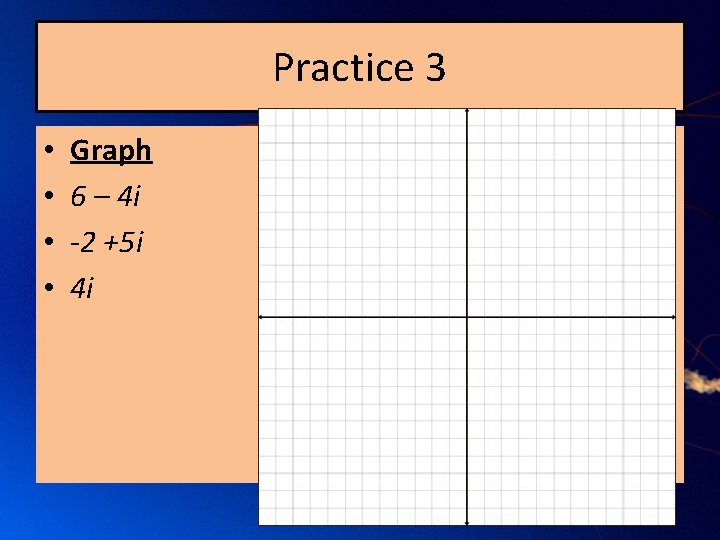
Practice 3 • • Graph 6 – 4 i -2 +5 i 4 i
Connecting Ideas • We have found real solutions “zeros” to all of our equations and graphs in Unit 2, especially rational roots for polynomial functions. • What do you think this will do to our graphs or answers? • What cases did we see “no solution” or “no zeros”? Do you think they could have other answers? What kinds?
Summary Answer the essential questions in complete sentences. How do you classify numbers? How do you identify and graph complex numbers? • STUDY QUESTIONS: Write 3 -5 study questions in the left column to help study and explain the notes.
- Slides: 14