
TYW Number Plate Recognition Automatic Number Plate Recognition

TYW Number Plate Recognition
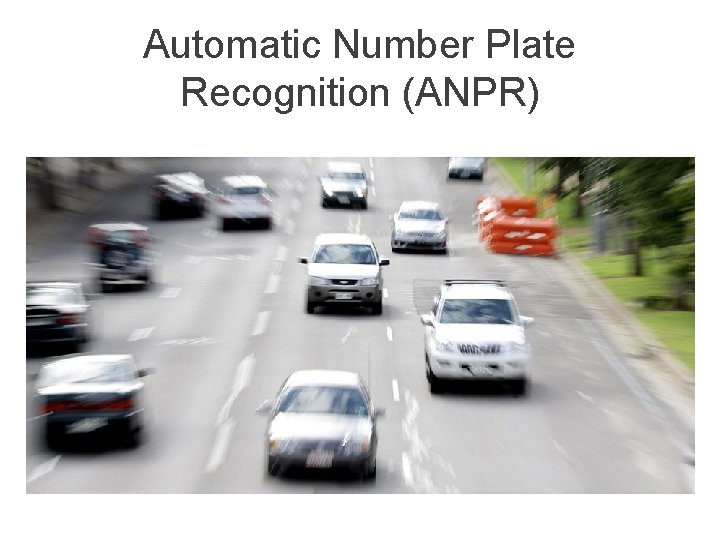
Automatic Number Plate Recognition (ANPR)
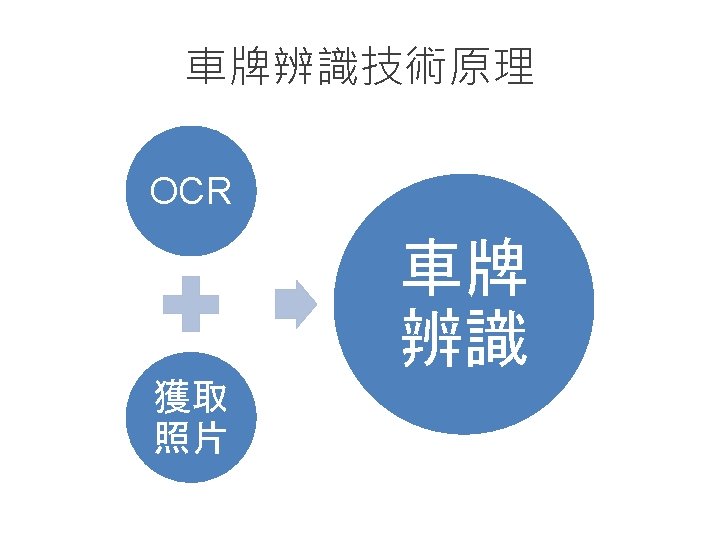
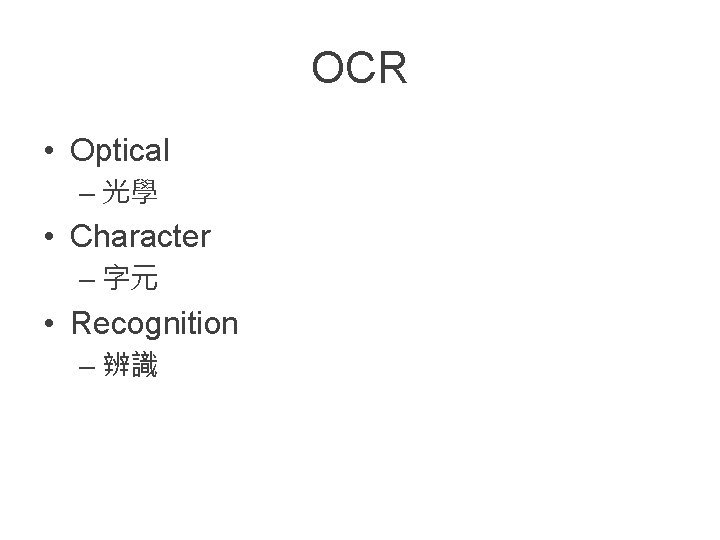
OCR • Optical – 光學 • Character – 字元 • Recognition – 辨識
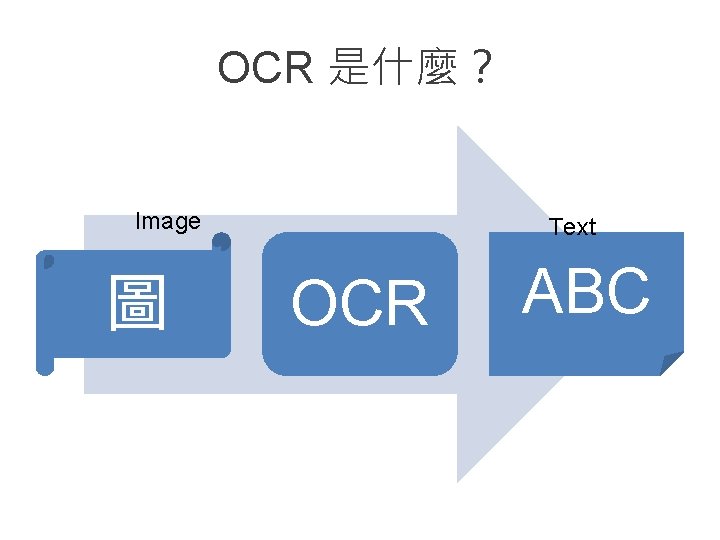
OCR 是什麼? Image 圖 Text OCR ABC
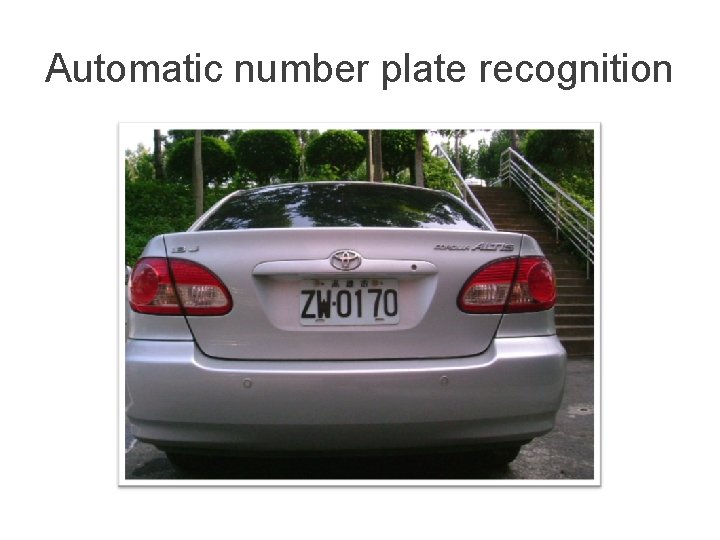
Automatic number plate recognition




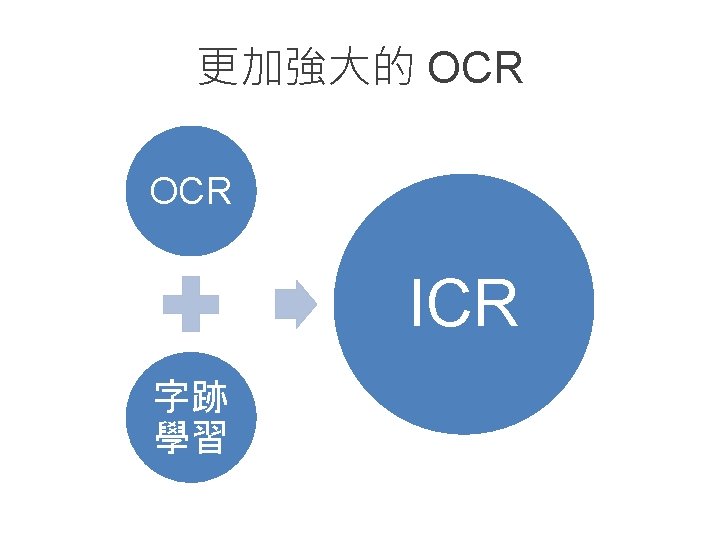
ICR • Intelligent – 智慧型 • Character – 字元 • Recognition – 辨識

Free Software: GNU Ocrad • • OCR 軟體 從圖片轉成英文 命令列程式 http: //www. gnu. org/software/ocrad/
Automatic number plate recognition • Material Source – http: //en. wikipedia. org/wiki/Automatic_number _plate_recognition
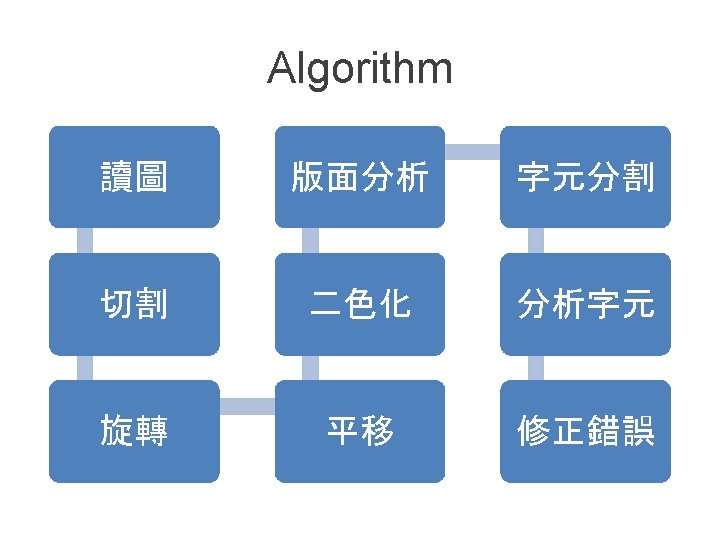
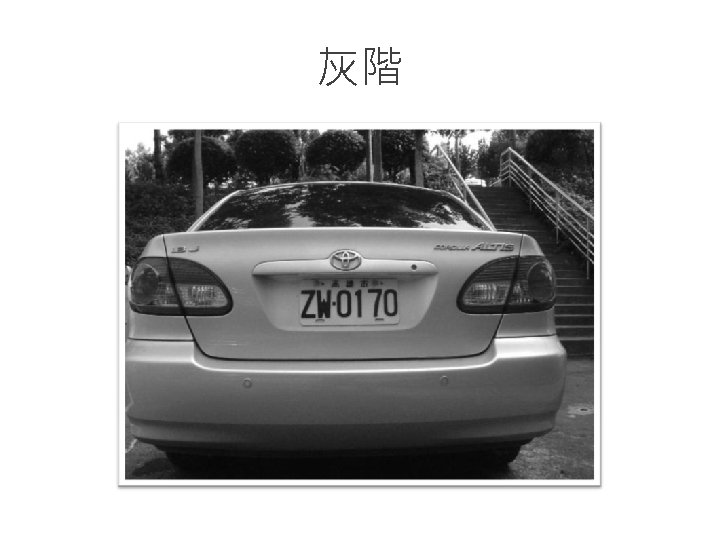
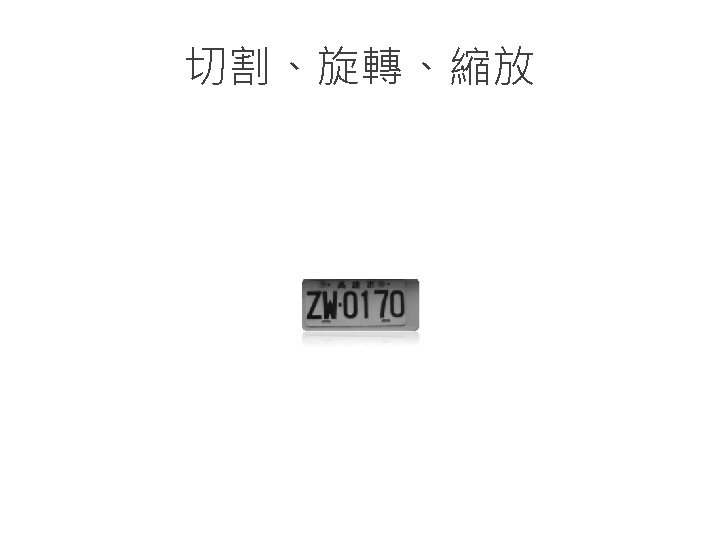
Algorithms • There are seven primary algorithms that the software requires for identifying a license plate – – – – Plate localization Plate orientation and sizing Normalization Character segmentation Optical character recognition. Syntactical/Geometrical analysis The averaging of the recognized value over multiple fields/images to produce a more reliable or confident result.
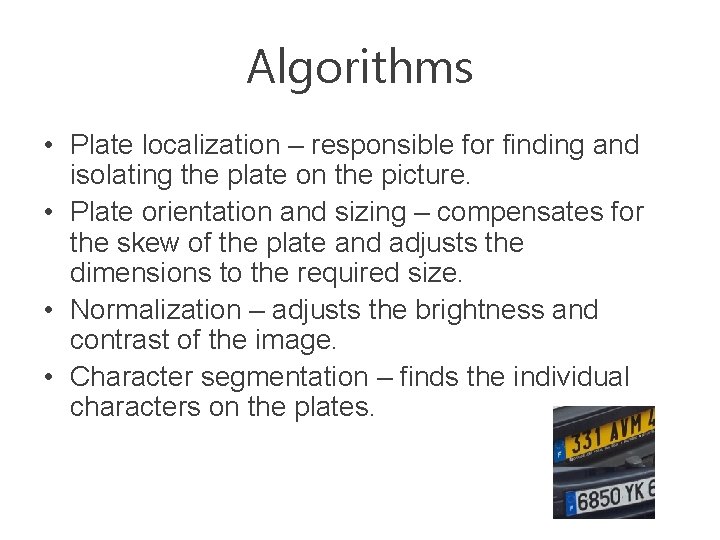
Algorithms • Plate localization – responsible for finding and isolating the plate on the picture. • Plate orientation and sizing – compensates for the skew of the plate and adjusts the dimensions to the required size. • Normalization – adjusts the brightness and contrast of the image. • Character segmentation – finds the individual characters on the plates.
Algorithms • Optical character recognition. • Syntactic/Geometric analysis – check characters and positions against country-specific rules. • The averaging of the recognized value over multiple fields/images to produce a more reliable or confident result. Especially since any single image may contain a reflected light flare, be partially obscured or other temporary effect.
Hardware • High-definition infrared digital camera(s) to illuminate and capture an image or a partial image of the number plate. – Some camera systems can take images at speeds of up to 240 km/h.

Open Free Source • http: //javaanpr. sourceforge. net/
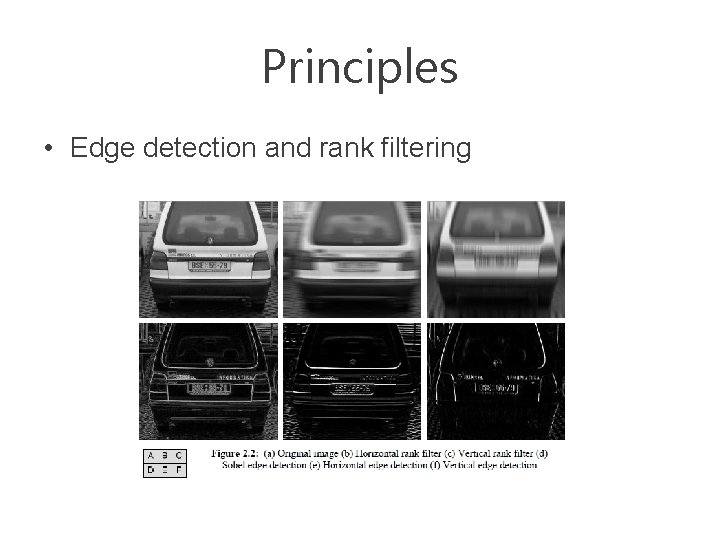
Principles • Edge detection and rank filtering
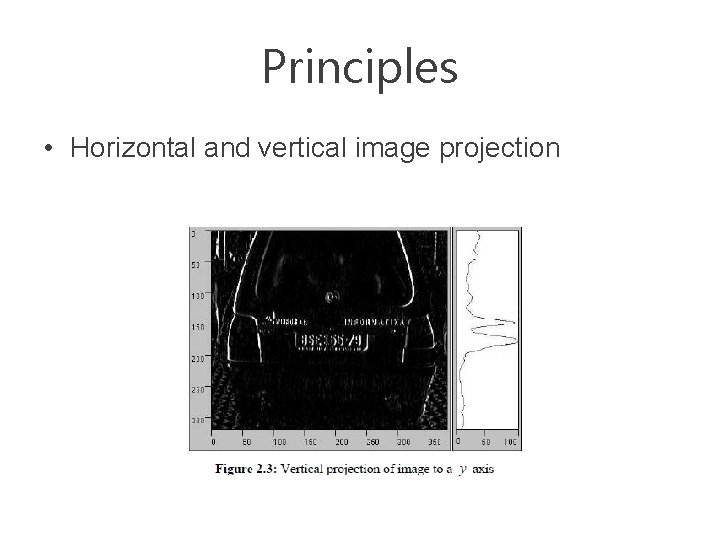
Principles • Horizontal and vertical image projection
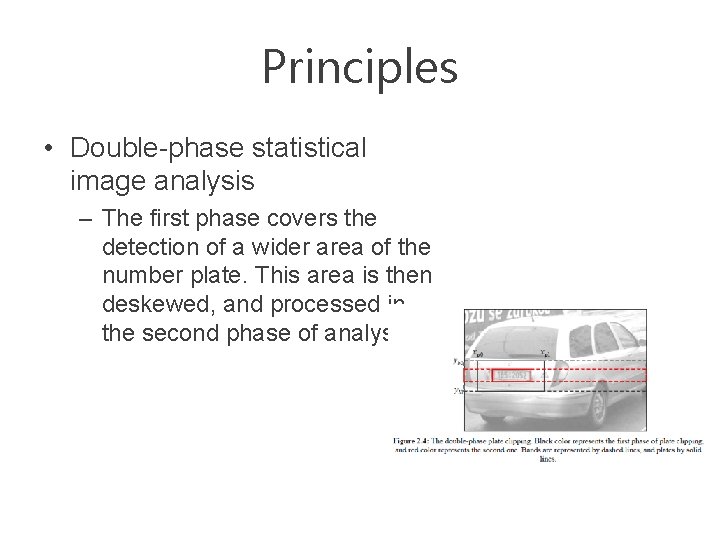
Principles • Double-phase statistical image analysis – The first phase covers the detection of a wider area of the number plate. This area is then deskewed, and processed in the second phase of analysis.
Principles • Double-phase statistical image analysis – The output of double-phase analysis is an exact area of the number plate. – These two phases are based on the same principle, but there are differences in coefficients, which are used to determine boundaries of clipped areas.
Principles • The detection of the number plate area consists of a “band clipping” and a “plate clipping”. • The band clipping is an operation, which is used to detect and clip the vertical area of the number plate (so-called band) by analysis of the vertical projection of the snapshot. • The plate clipping is a consequent operation, which is used to detect and clip the plate from the band (not from the whole snapshot) by a horizontal analysis of such band.
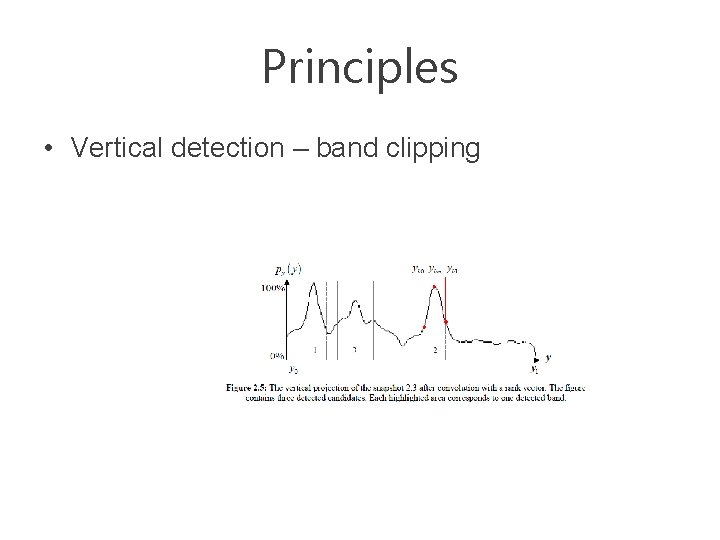
Principles • Vertical detection – band clipping
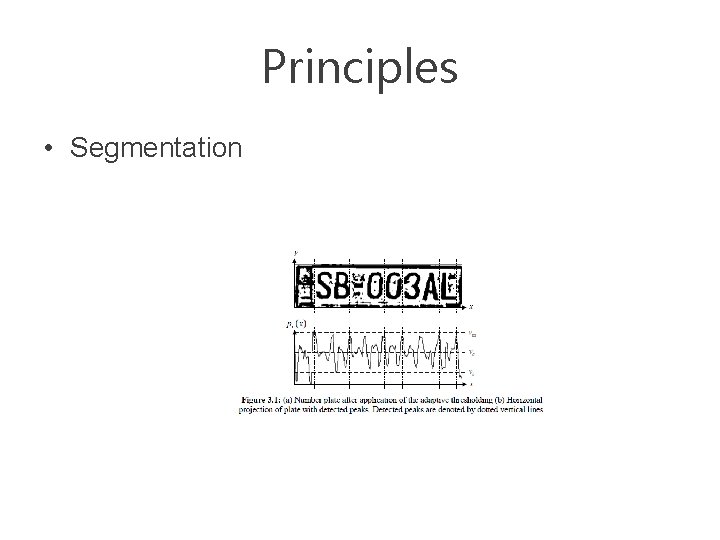
Principles • Segmentation
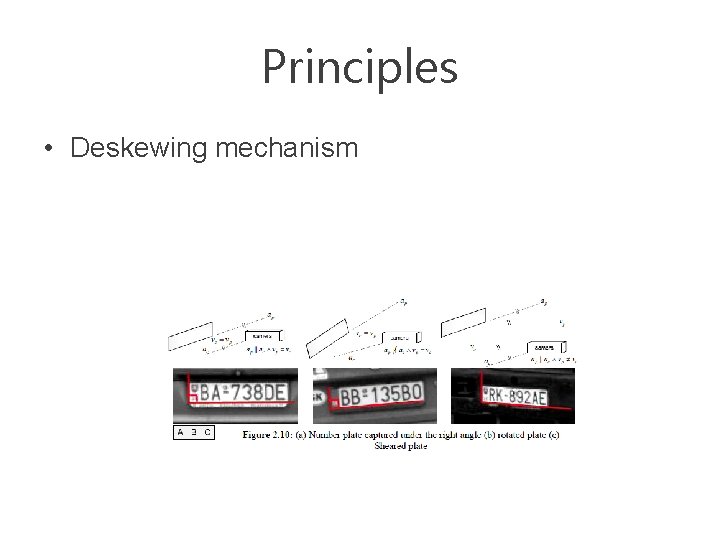
Principles • Deskewing mechanism
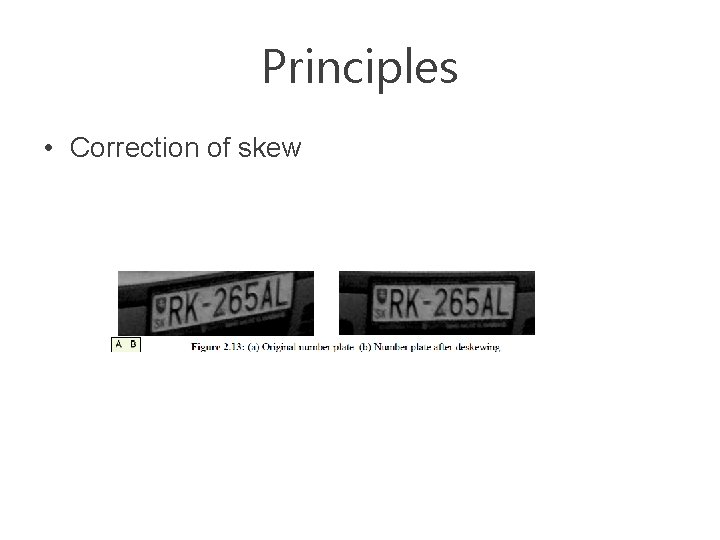
Principles • Correction of skew

Captcha


- Slides: 42