
Tyrannical Part of Speech Adjective Definition harsh oppressive
- Slides: 22
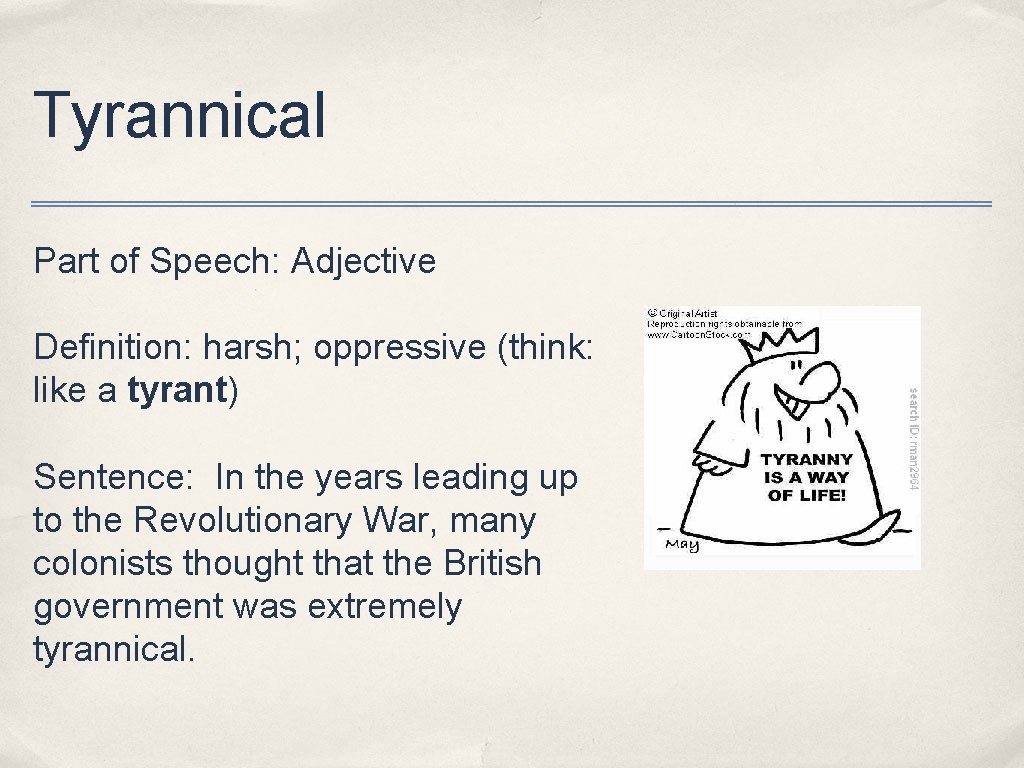
Tyrannical Part of Speech: Adjective Definition: harsh; oppressive (think: like a tyrant) Sentence: In the years leading up to the Revolutionary War, many colonists thought that the British government was extremely tyrannical.
The Road to Independence Date
The French and Indian War ✤ War between French and British ✤ Colonists fought for British, Native Americans fought with France ✤ The British won and received all land east of the Mississippi ✤ The colonists were not allowed to settle in the land they helped to win - west of Appalachians were off-limits (Proclamation of 1763) ✤ ✤ To avoid conflict with Native Americans Colonists were taxed to pay the war cost
Sugar Act ✤ Lowered tax on imported molasses ✤ Hurt the colonists’ sale of their own molasses
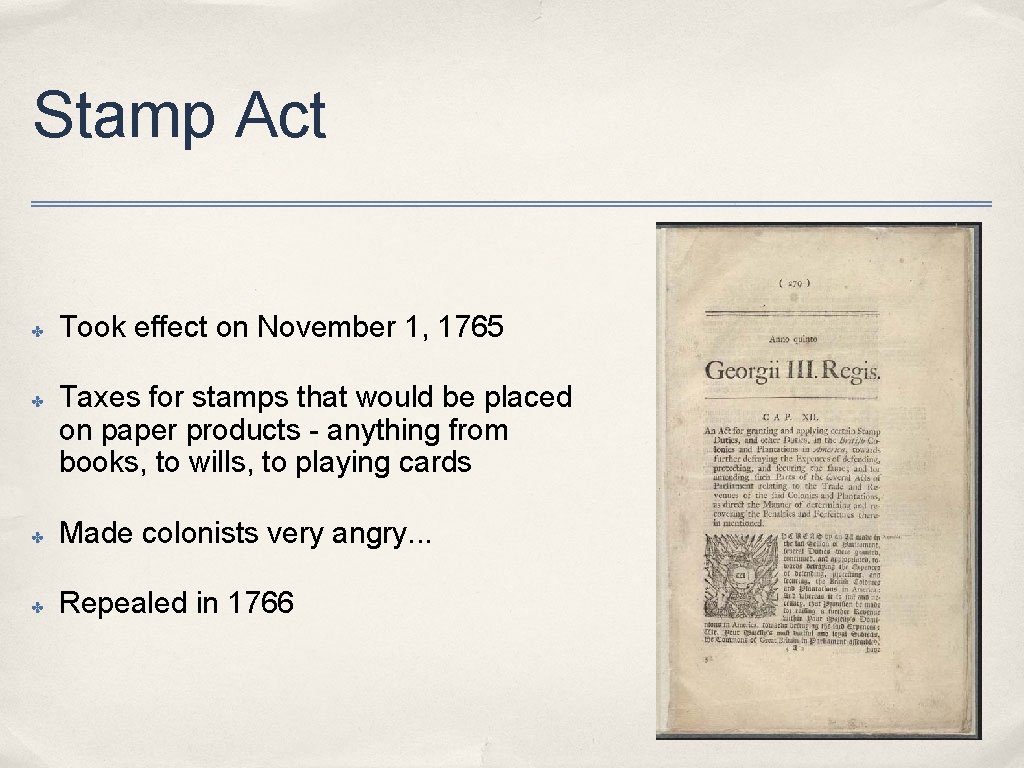
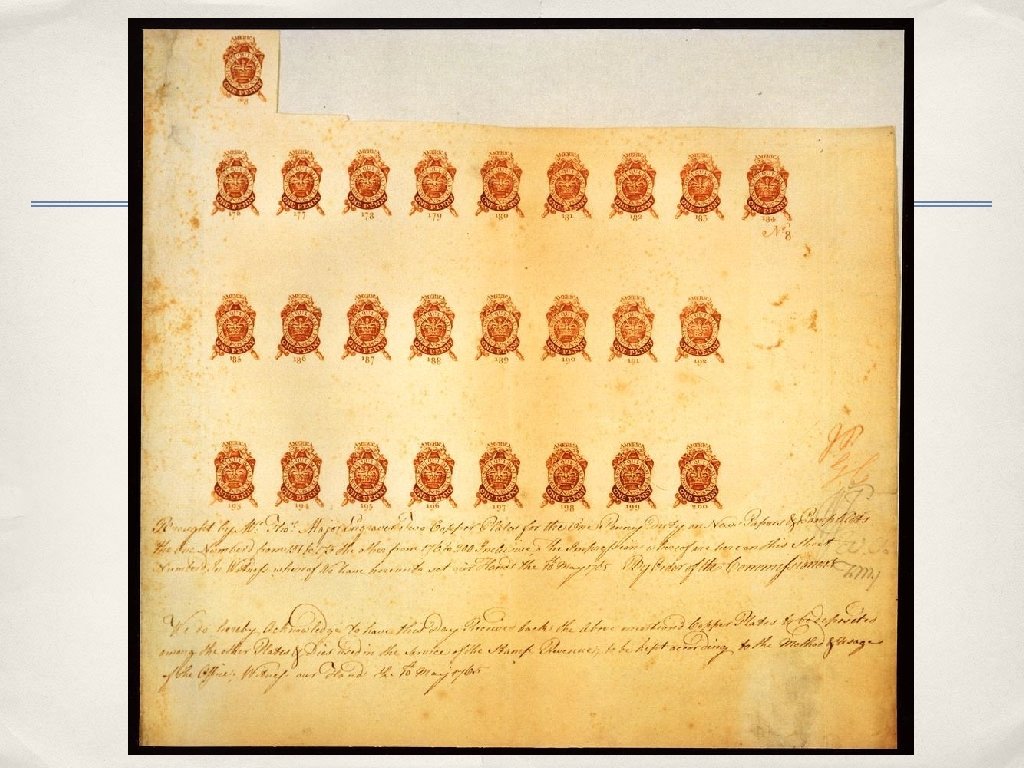
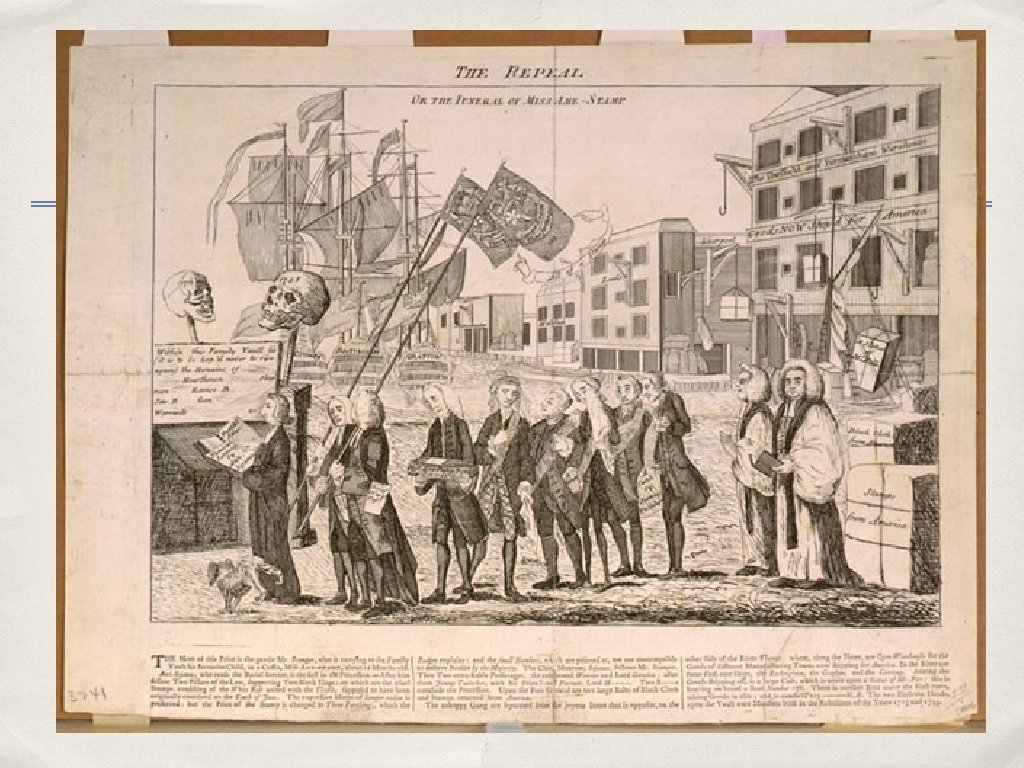
Stamp Act ✤ ✤ Took effect on November 1, 1765 Taxes for stamps that would be placed on paper products - anything from books, to wills, to playing cards ✤ Made colonists very angry. . . ✤ Repealed in 1766
Townsend Acts ✤ ✤ ✤ Taxes on imported goods such as glass, lead, paint, tea, etc. Most of these goods HAD to be imported (no production in the colonies) This led to protests. . .
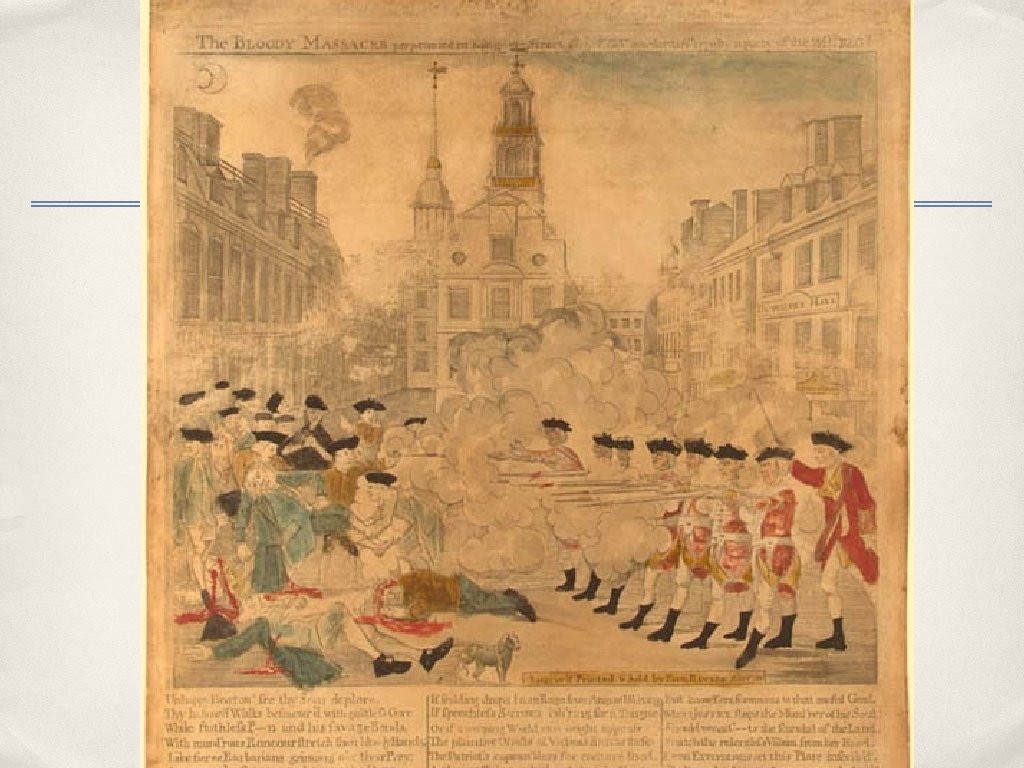
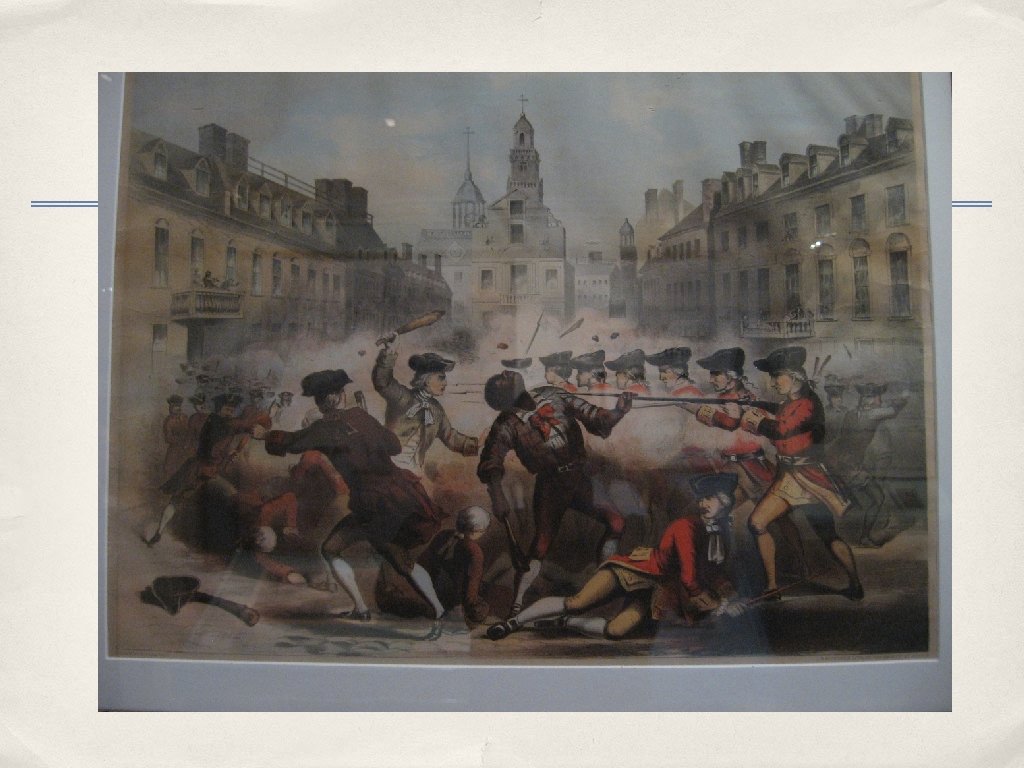
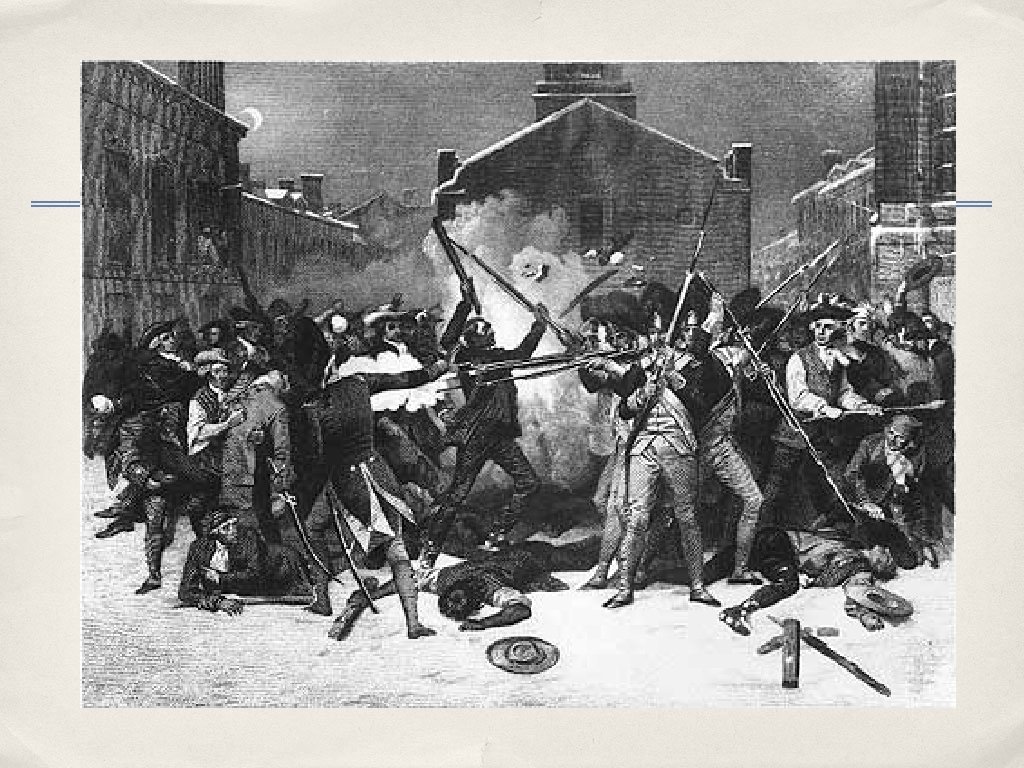
The Boston “Massacre” ✤ Encounter between British troops and citizens of Boston ✤ Colonists antagonized British soldiers ✤ Snowball -> soldier -> fired -> 5 colonists dead ✤ Propaganda
Tea Act ✤ ✤ 1773 Permitted the British East India Tea Company to sell their product at a lower price than the colonial tea companies ✤ The colonists boycotted. . . refused to unload the tea from the ships ✤ Led to the Boston Tea Party
Coercive/Intolerable Acts ✤ Closed down state legislatures ✤ Closed down Boston Harbor ✤ The Quartering Act
So. . . why would any colonist NOT want to fight? ✤ Remember, they were FROM Britain ✤ Tradition of loyalty to the British crown ✤ Family ties ✤ Hope for a peaceful negtotiation
Patrick Henry’s Speech ✤ This man’s goal was to PERSUADE colonists on the fence to FIGHT ✤ Virginia Convention of 1775 ✤ He constructed a speech that used powerful rhetorical devices to convince his audience. How?
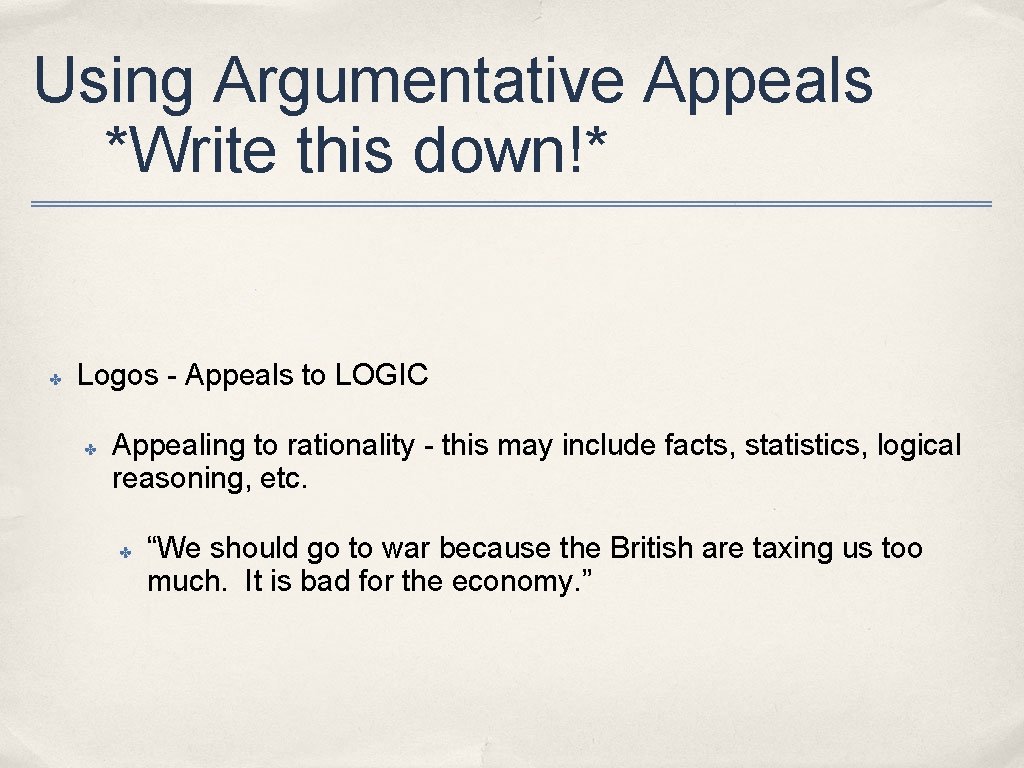
Using Argumentative Appeals *Write this down!* ✤ Logos - Appeals to LOGIC ✤ Appealing to rationality - this may include facts, statistics, logical reasoning, etc. ✤ “We should go to war because the British are taxing us too much. It is bad for the economy. ”
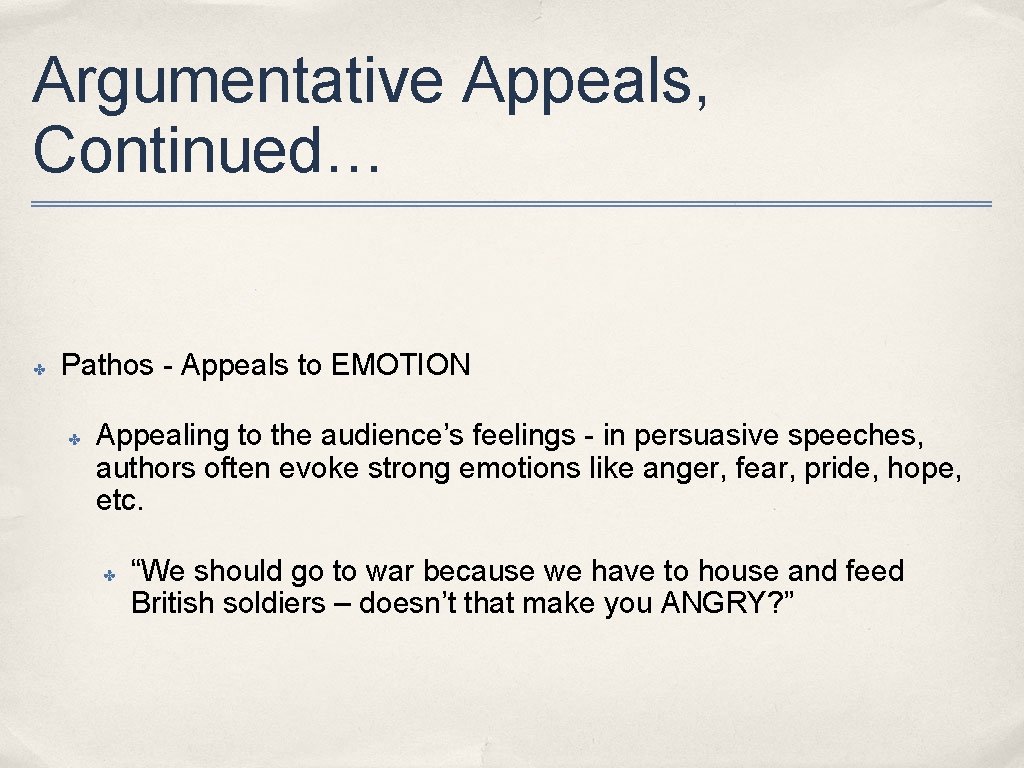
Argumentative Appeals, Continued… ✤ Pathos - Appeals to EMOTION ✤ Appealing to the audience’s feelings - in persuasive speeches, authors often evoke strong emotions like anger, fear, pride, hope, etc. ✤ “We should go to war because we have to house and feed British soldiers – doesn’t that make you ANGRY? ”
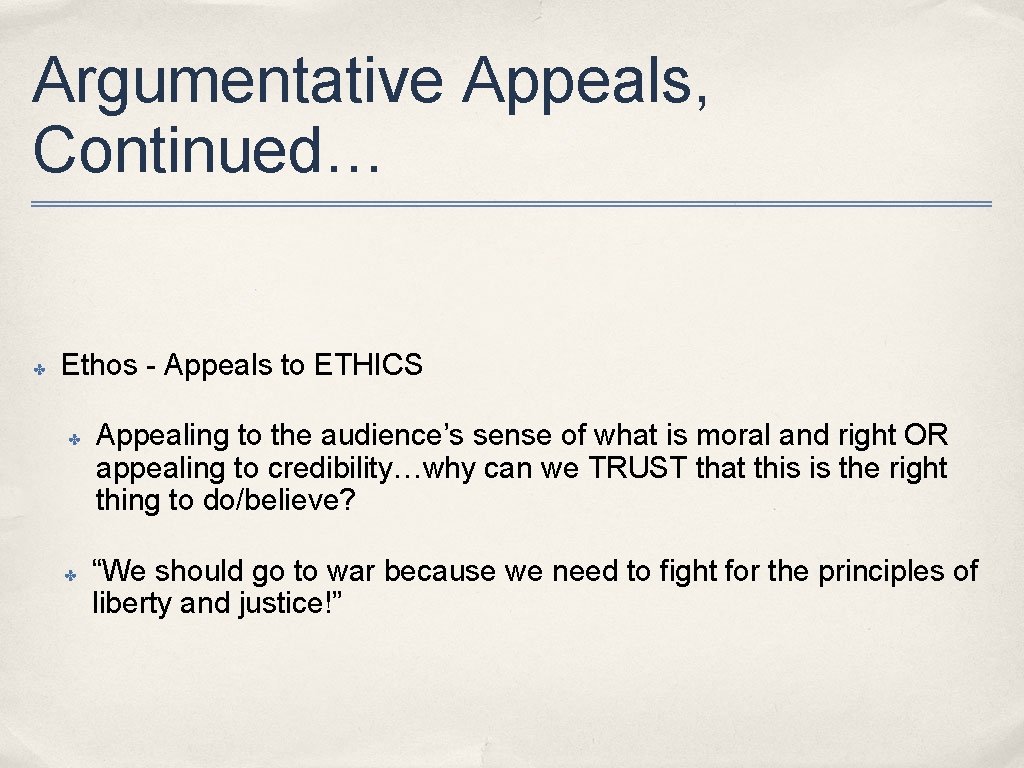
Argumentative Appeals, Continued… ✤ Ethos - Appeals to ETHICS ✤ ✤ Appealing to the audience’s sense of what is moral and right OR appealing to credibility…why can we TRUST that this is the right thing to do/believe? “We should go to war because we need to fight for the principles of liberty and justice!”
Let’s Practice. . . Logos (LOGIC) Ethos (ETHICS/ CREDIBILITY) Pathos (EMOTION)
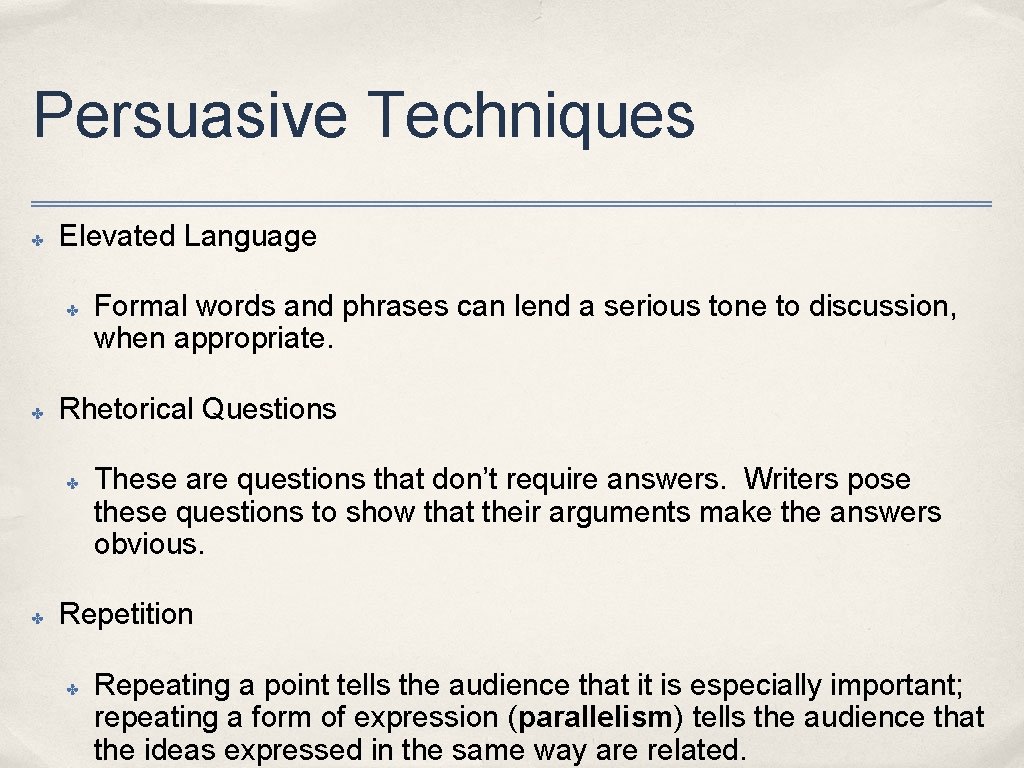
Persuasive Techniques ✤ Elevated Language ✤ ✤ Rhetorical Questions ✤ ✤ Formal words and phrases can lend a serious tone to discussion, when appropriate. These are questions that don’t require answers. Writers pose these questions to show that their arguments make the answers obvious. Repetition ✤ Repeating a point tells the audience that it is especially important; repeating a form of expression (parallelism) tells the audience that the ideas expressed in the same way are related.
Let’s Practice