
Typical Sections All graphics taken from Ch 3
- Slides: 31
Typical Sections All graphics taken from Ch 3 of HDM CTC 440
Objectives n Know what a typical section is and what may be included in a typical section
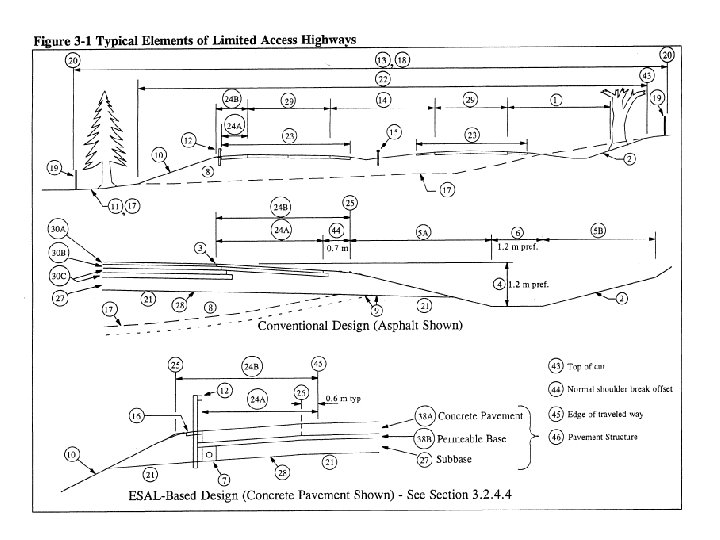
Typical Sections n n n Show the physical shape and highway elements to be used when the project is constructed Typical sections are generally included in a set of design plans Several sections may be needed to describe a project
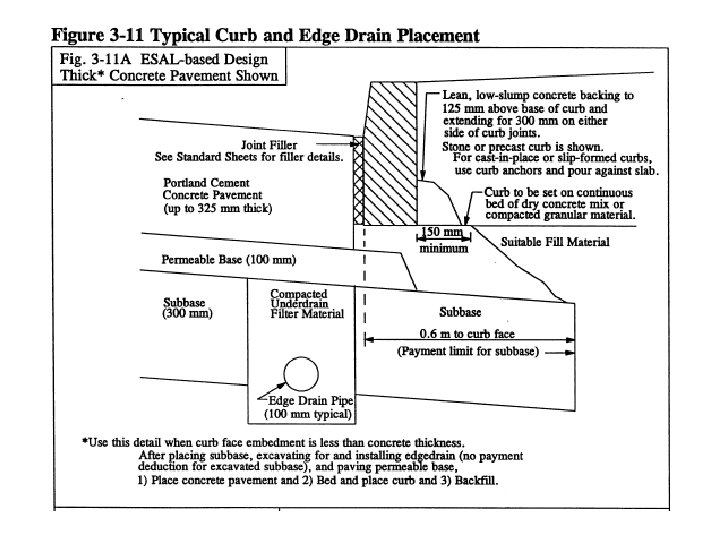
Typical Elements n n n Number and width of lanes/shoulders Thickness of pavement layers Item #’s Payment limits Cut/fill slopes Ditch/gutter/curb/sidewalk locations
Control Lines n n Show the typical section is located w/ respect to horizontal/vertical control HCL-horizontal control line TGL-theoretical grade line POR-point of rotation
Lane Width n Show typical lane widths
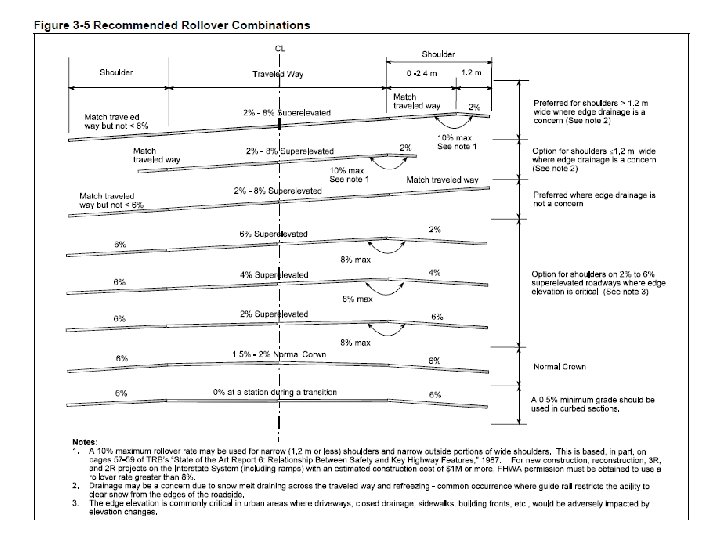
Cross slopes & superelevation n n Show typical pavt cross slope Show superelevated sections
Pavement Sections n n Show pavement materials Show thickness of various layers
Superpave n n n New Superpave (from 1999) Old design was the Marshall mix Superpave more complicated (refer to HDM Ch 3 and Pavement Design Manual)
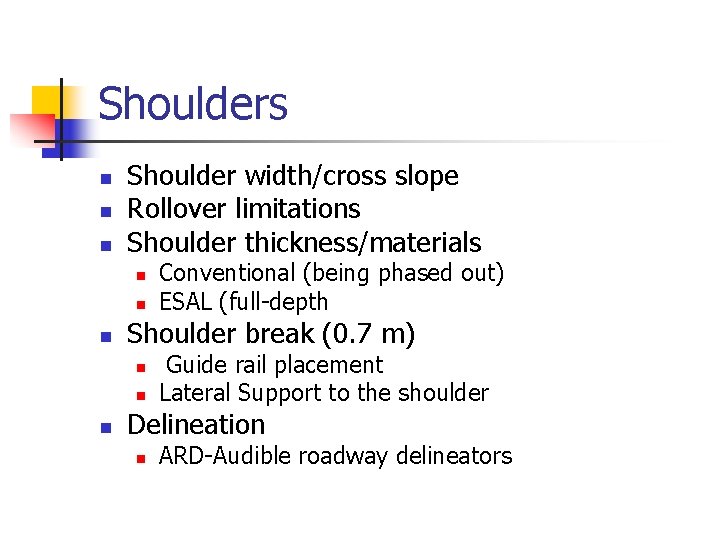
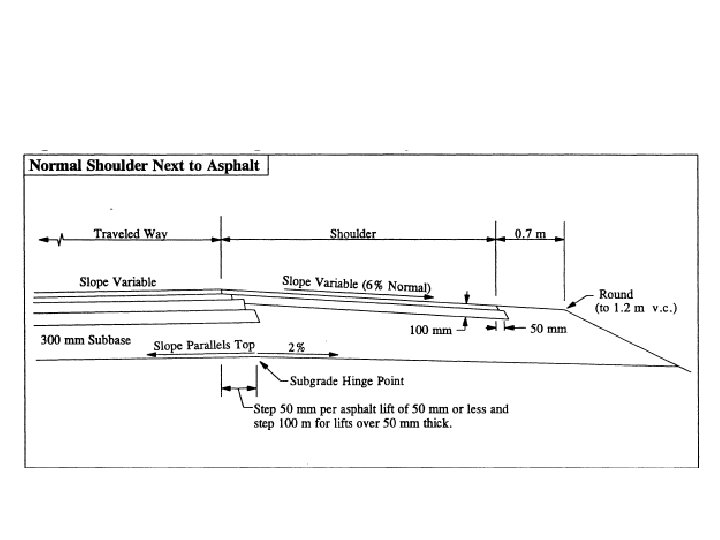
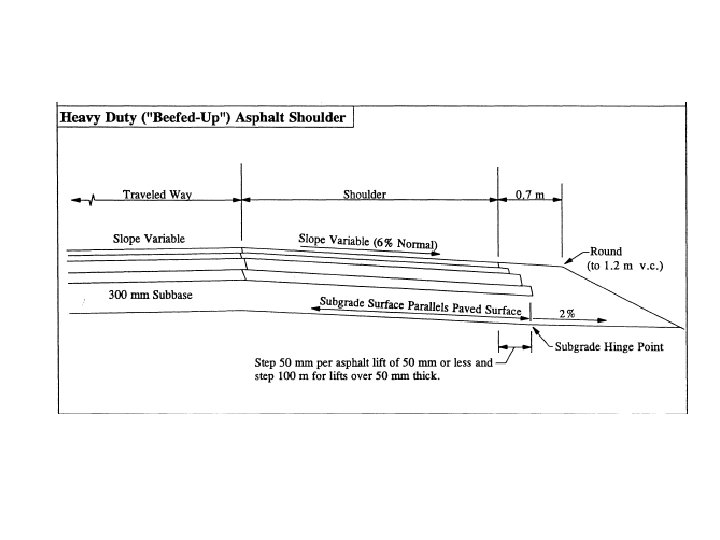
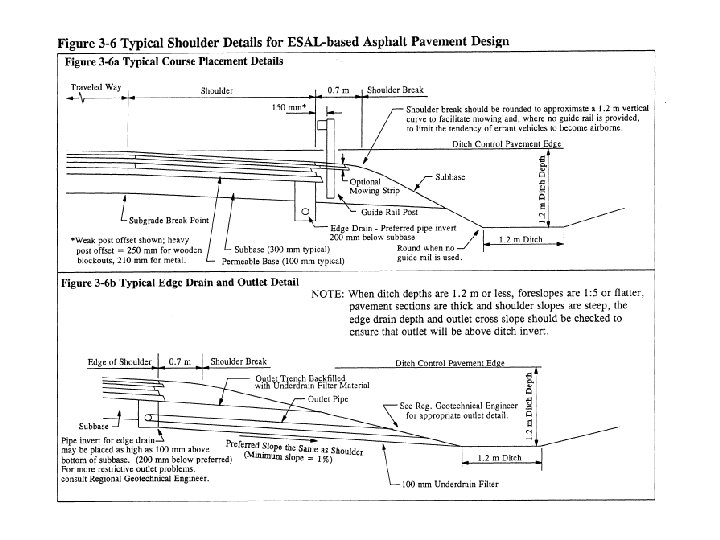
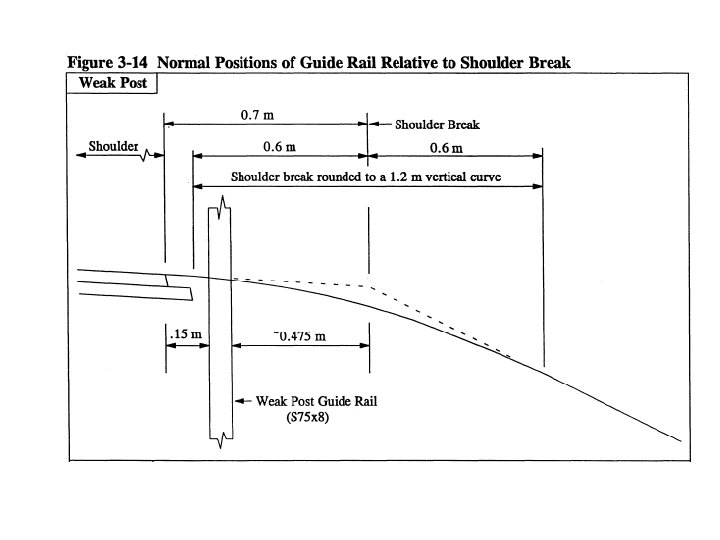
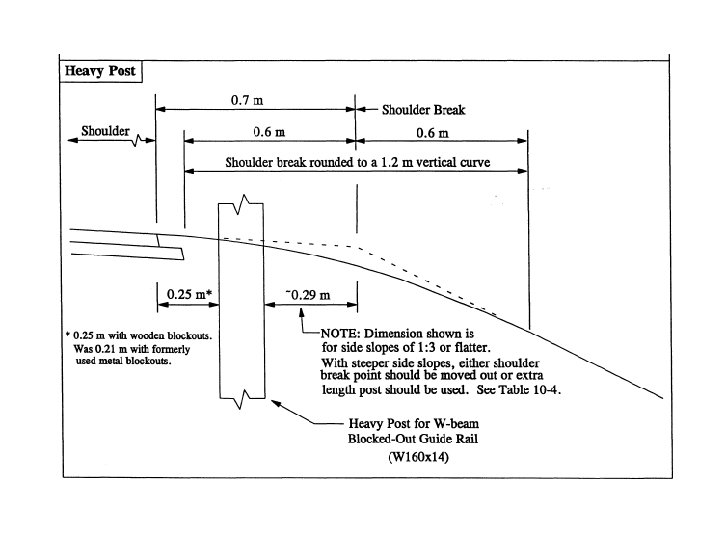
Shoulders n n n Shoulder width/cross slope Rollover limitations Shoulder thickness/materials n n n Shoulder break (0. 7 m) n n n Conventional (being phased out) ESAL (full-depth Guide rail placement Lateral Support to the shoulder Delineation n ARD-Audible roadway delineators
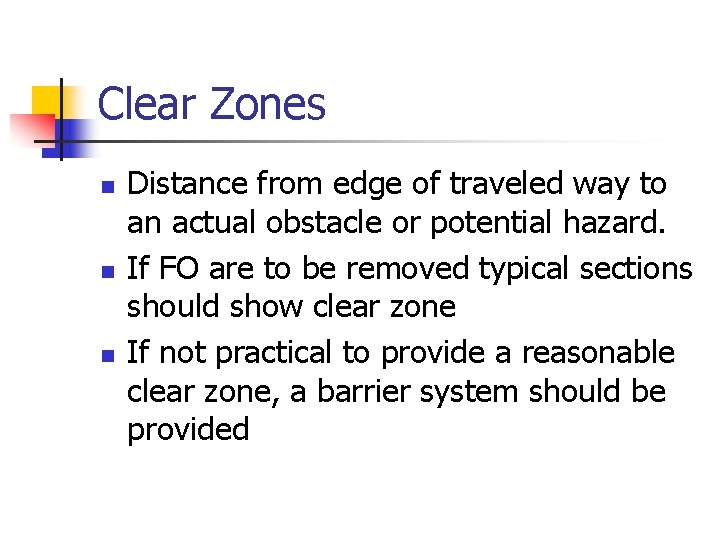
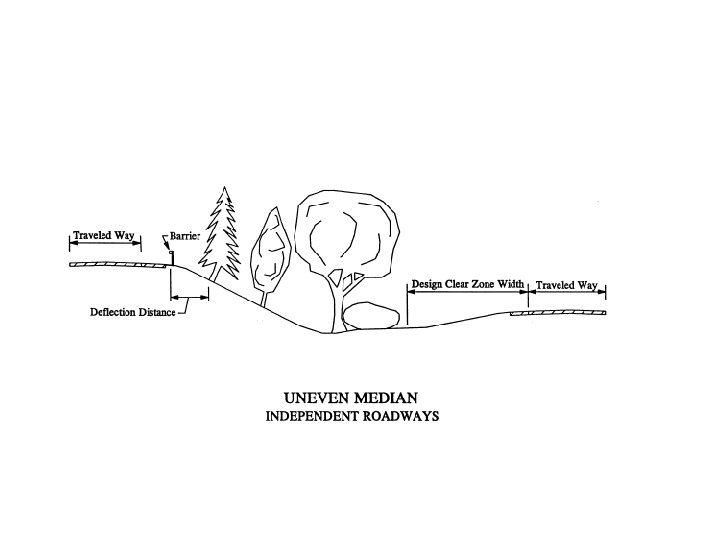
Clear Zones n n n Distance from edge of traveled way to an actual obstacle or potential hazard. If FO are to be removed typical sections should show clear zone If not practical to provide a reasonable clear zone, a barrier system should be provided
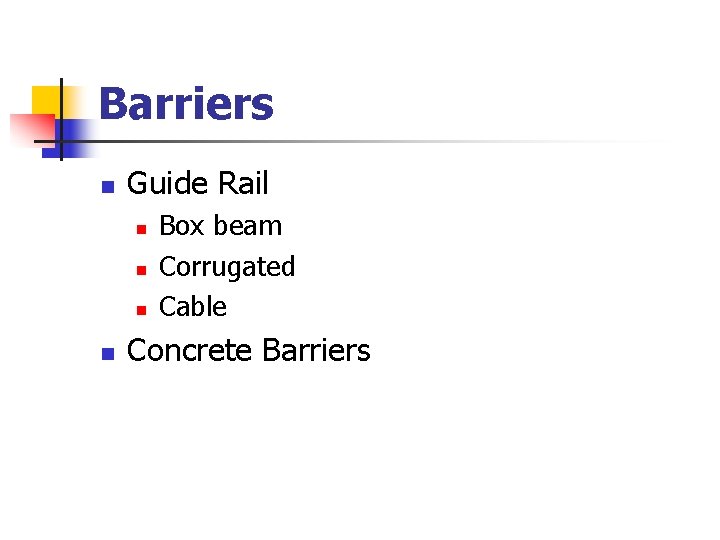
Barriers n Guide Rail n n Box beam Corrugated Cable Concrete Barriers
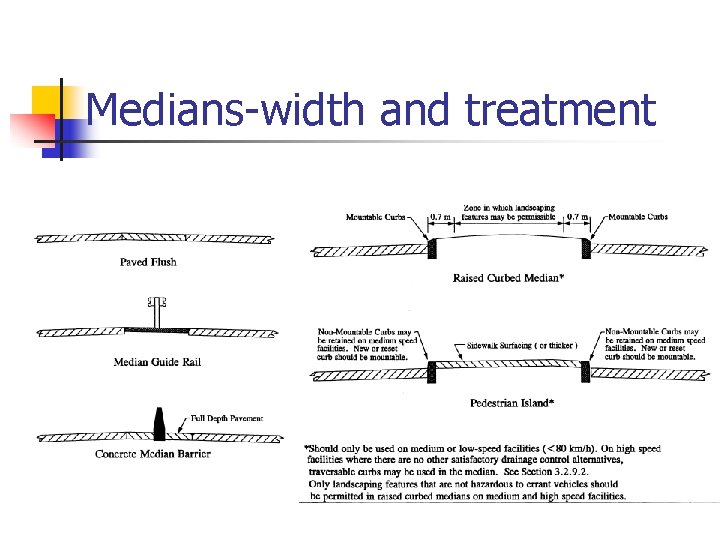
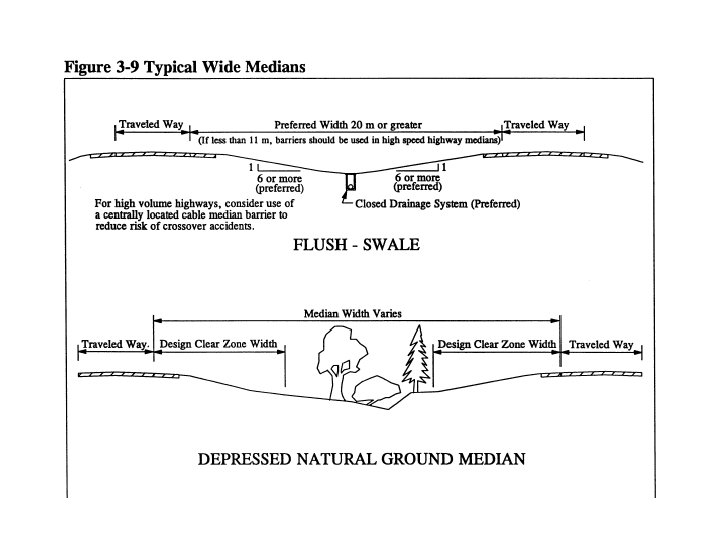
Medians-width and treatment
Curbs n Type n n n Non-mountable Mountable Traversable Combination curb-gutter Asphalt Stone
Gutters n n Collect runoff Use flattened and widened section for drives
Sidewalks n n n Set back as far as practicable (snow storage, pedestrian space) Thickness (100 mm or 150 mm@ drives) Materials n n n Concrete Asphalt (short-term) Bricks or pavers (historical/aesthetic)
Embankment (fill) slopes n n n For maintenance and safety--should be flat as possible 1: 3 max w/o guide rail 1: 2 w/ guide rail
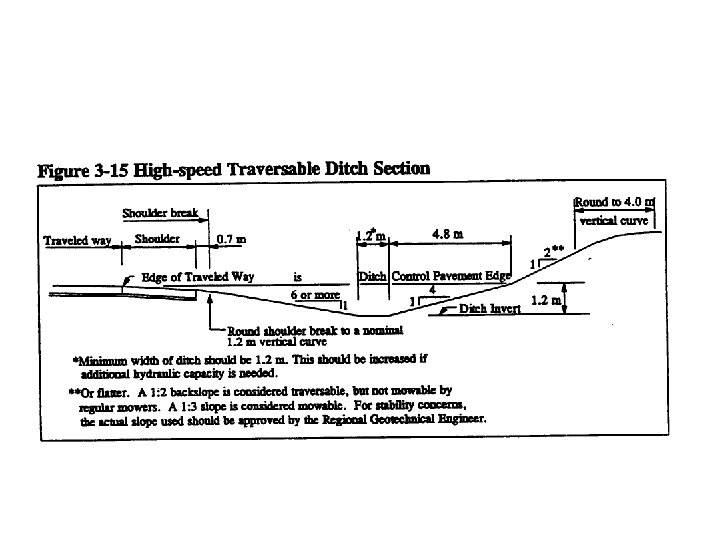
Ditches n n n Show ditch dimensions/slopes Should provide traversable ditches (1: 6 down; 1. 2 m-width; 1: 4 out) w/in clear zone If can’t provide traversable ditches consider guide rail (or use professional judgement—guide rails in themselves can potentially be hazardous)
ROW Width n Sometimes shown on typical sections
Modifications needing Typical Sections n n n Overlays Cracking & Seating Rubblizing Lane Additions and Widening Miscellaneous n n Edge drains Adding curbs to existing pavts.