
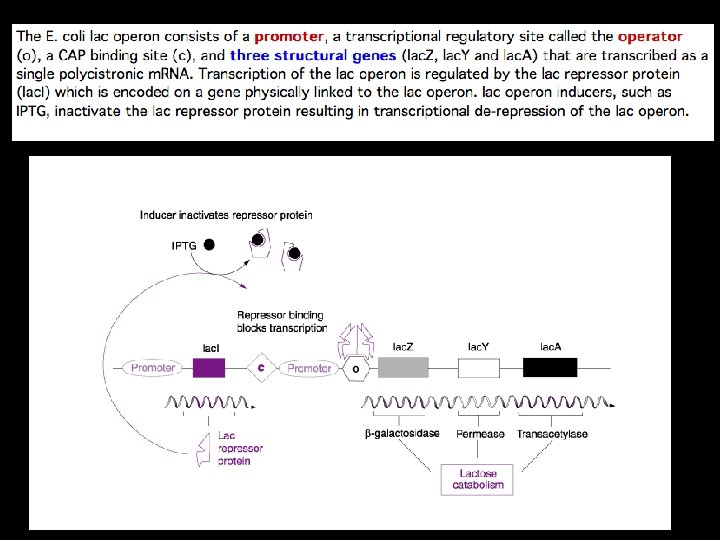
Typical Plasmid BlueWhite Selection Alpha complementation Trick omega
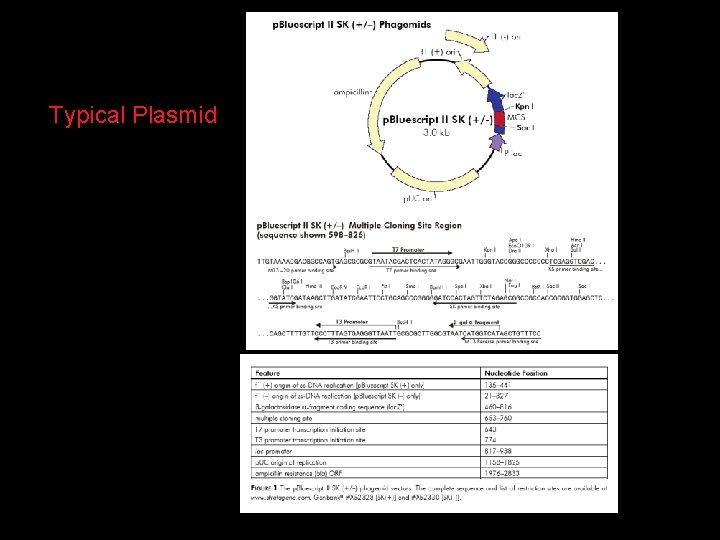
Typical Plasmid
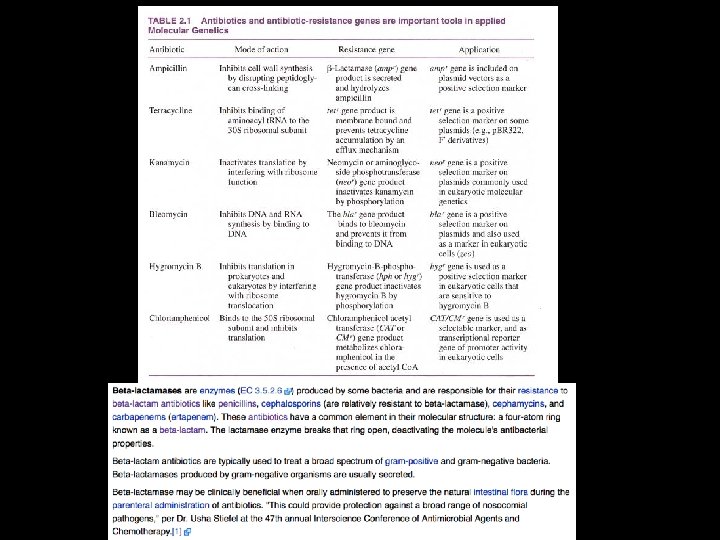
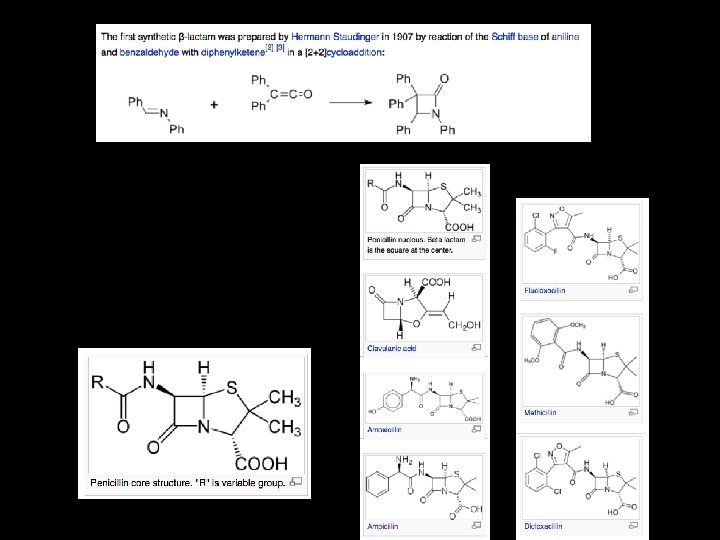
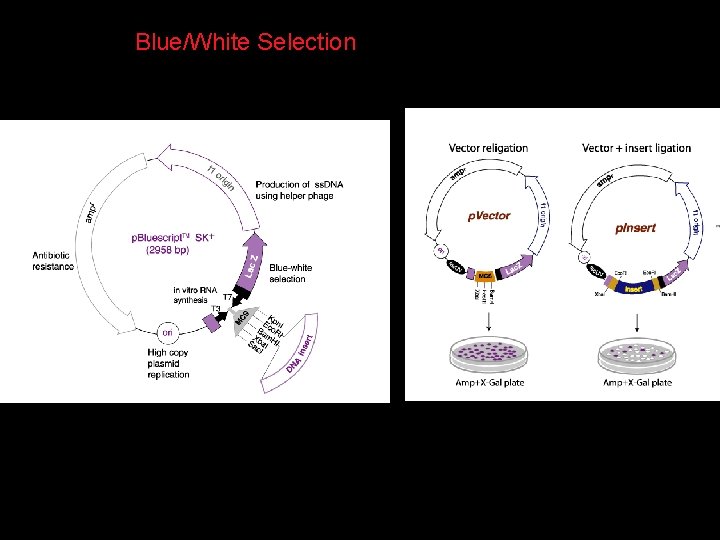
Blue/White Selection
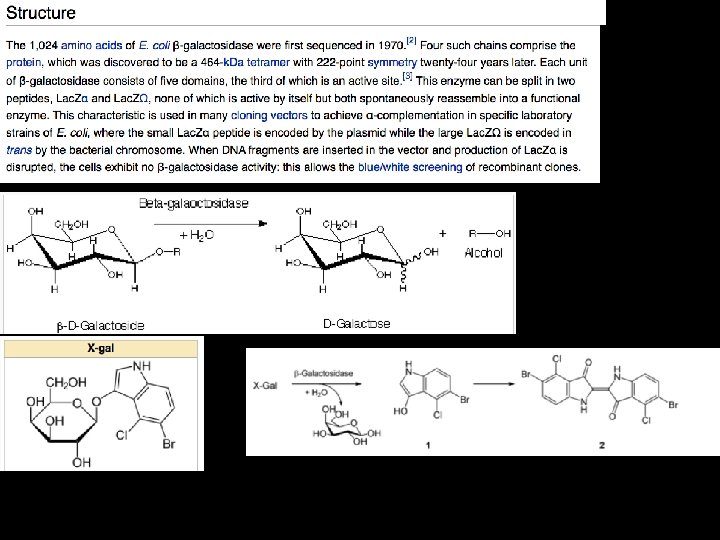
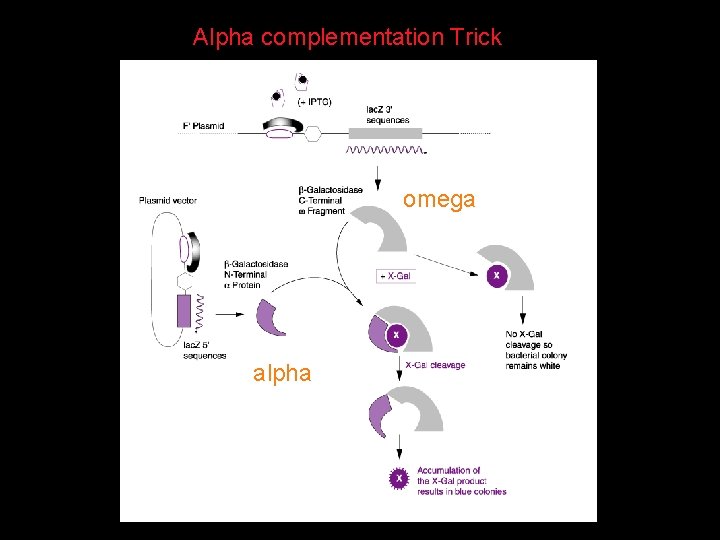
Alpha complementation Trick omega alpha
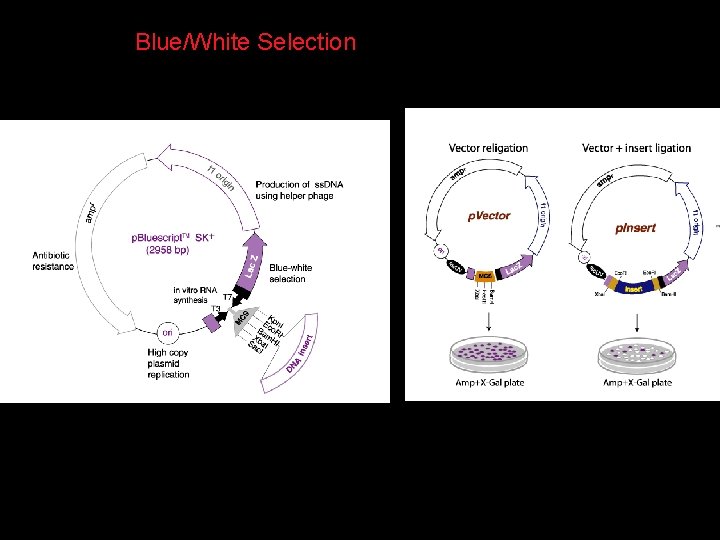
Blue/White Selection
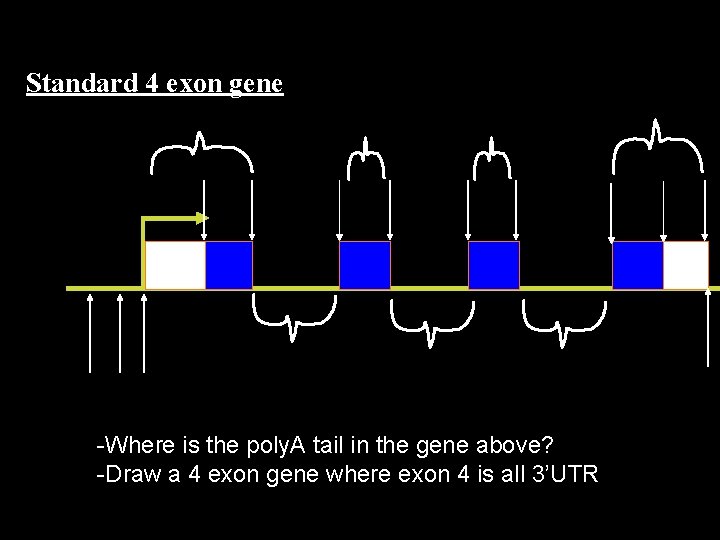
Standard 4 exon gene -Where is the poly. A tail in the gene above? -Draw a 4 exon gene where exon 4 is all 3’UTR
Chapter 11 Transcription and RNA Processing
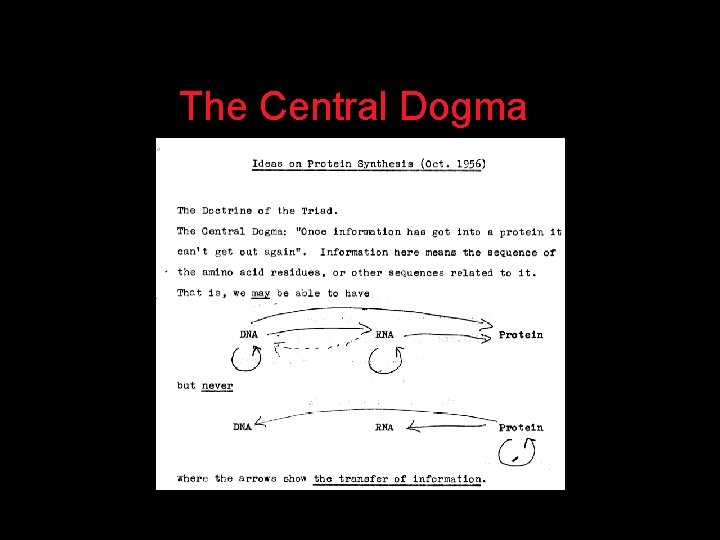
The Central Dogma
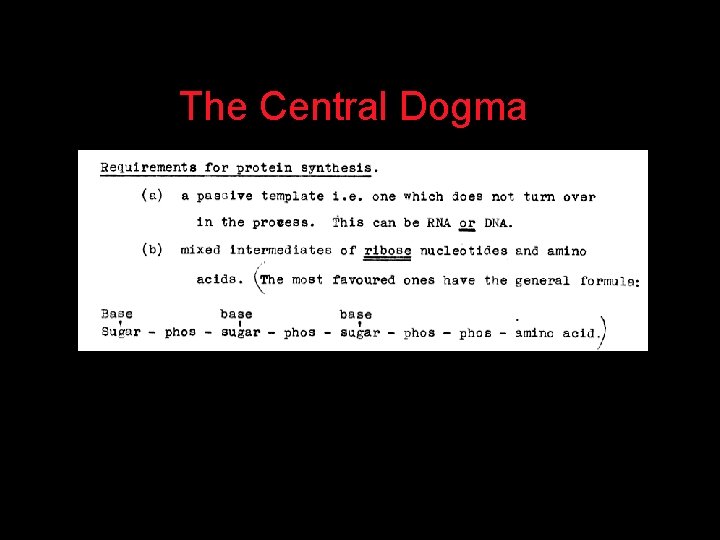
The Central Dogma
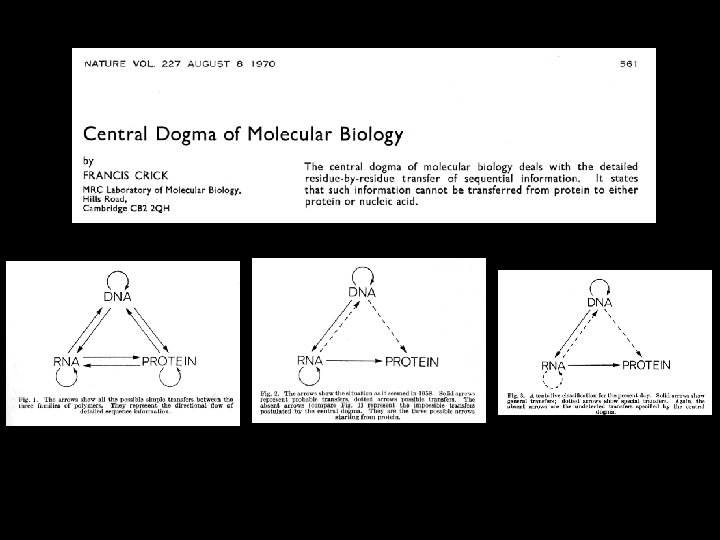
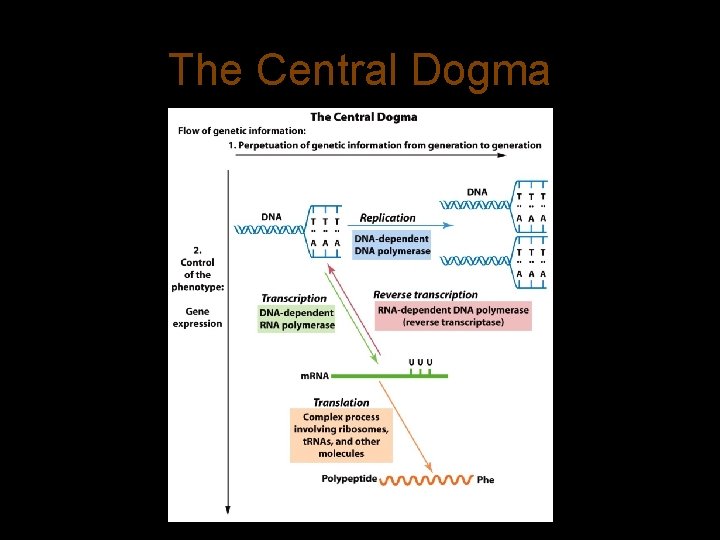
The Central Dogma
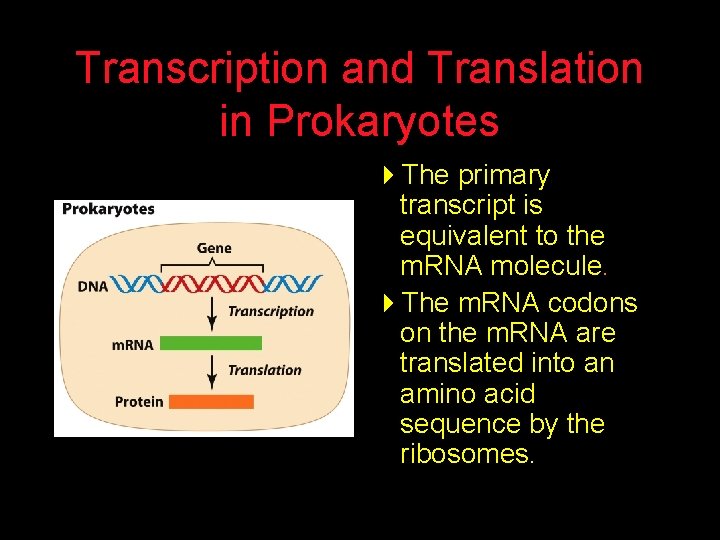
Transcription and Translation in Prokaryotes 4 The primary transcript is equivalent to the m. RNA molecule. 4 The m. RNA codons on the m. RNA are translated into an amino acid sequence by the ribosomes.
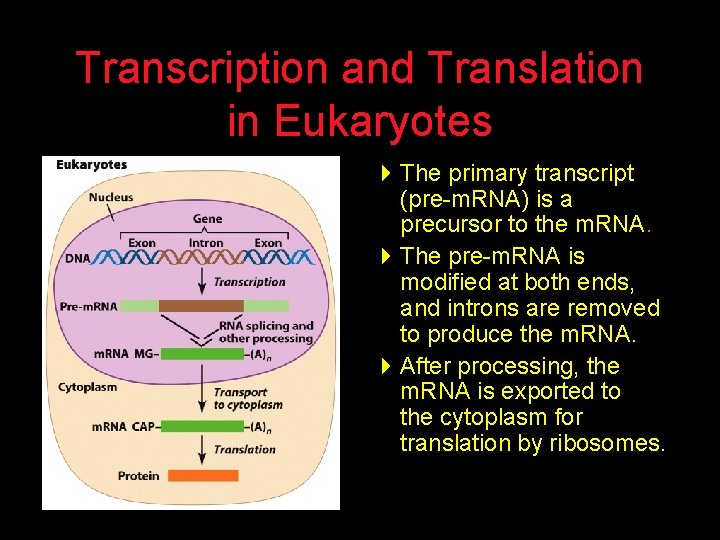
Transcription and Translation in Eukaryotes 4 The primary transcript (pre-m. RNA) is a precursor to the m. RNA. 4 The pre-m. RNA is modified at both ends, and introns are removed to produce the m. RNA. 4 After processing, the m. RNA is exported to the cytoplasm for translation by ribosomes.
Types of RNA Molecules 4 Messenger RNAs (m. RNAs)—intermediates that carry genetic information from DNA to the ribosomes. 4 Transfer RNAs (t. RNAs)—adaptors between amino acids and the codons in m. RNA. 4 Ribosomal RNAs (r. RNAs)—structural and catalytic components of ribosomes. 4 Small nuclear RNAs (sn. RNAs)—structural components of spliceosomes. 4 Micro RNAs (mi. RNAs)—short single-stranded RNAs that block expression of complementary m. RNAs.
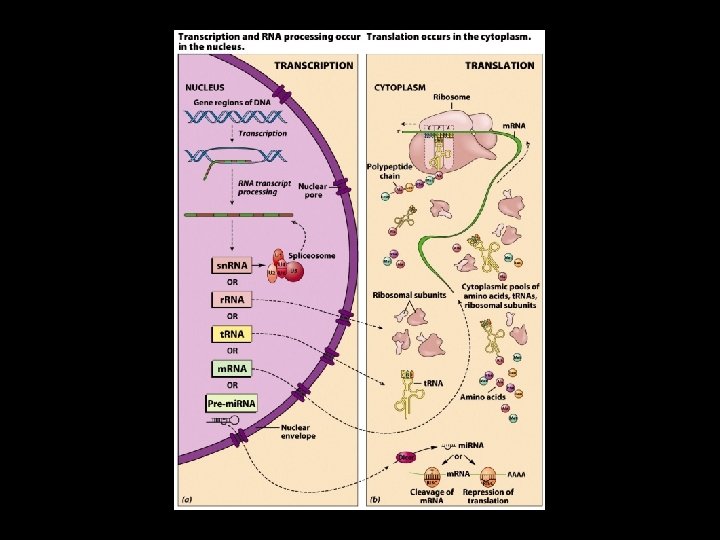
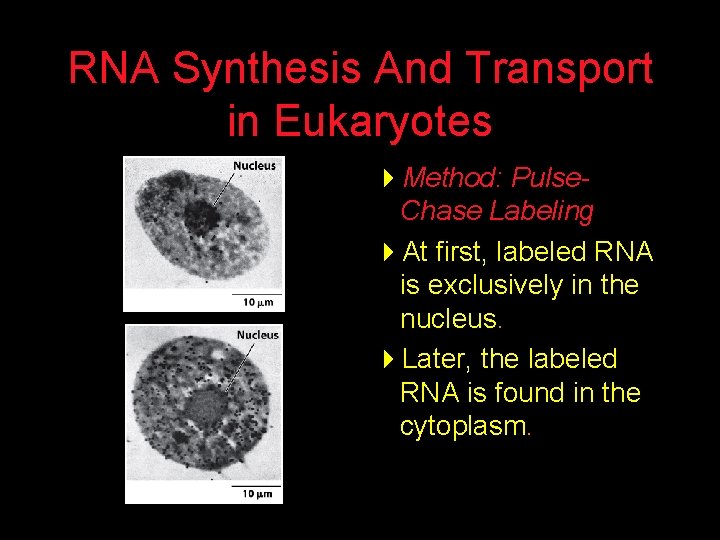
RNA Synthesis And Transport in Eukaryotes 4 Method: Pulse. Chase Labeling 4 At first, labeled RNA is exclusively in the nucleus. 4 Later, the labeled RNA is found in the cytoplasm.
General Features of RNA Synthesis 4 Similar to DNA Synthesis except – The precursors are ribonucleoside triphosphates ATP, GTP, CTP, UTP. – Only one strand of DNA is used as a template. – RNA chains can be initiated de novo (no primer required). 4 The RNA molecule will be complementary to the DNA template (antisense) strand identical (except that uridine replaces thymidine) to the DNA nontemplate (sense) strand. 4 RNA synthesis is catalyzed by RNA polymerases and proceeds in the 5’ 3’ direction.
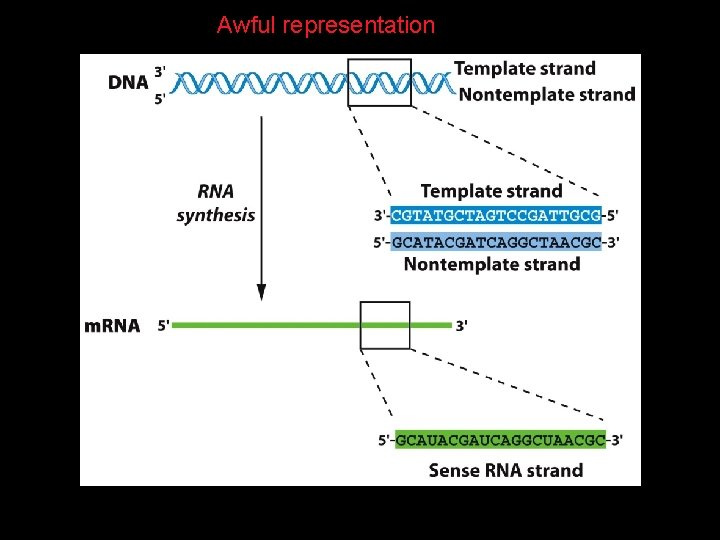
Awful representation
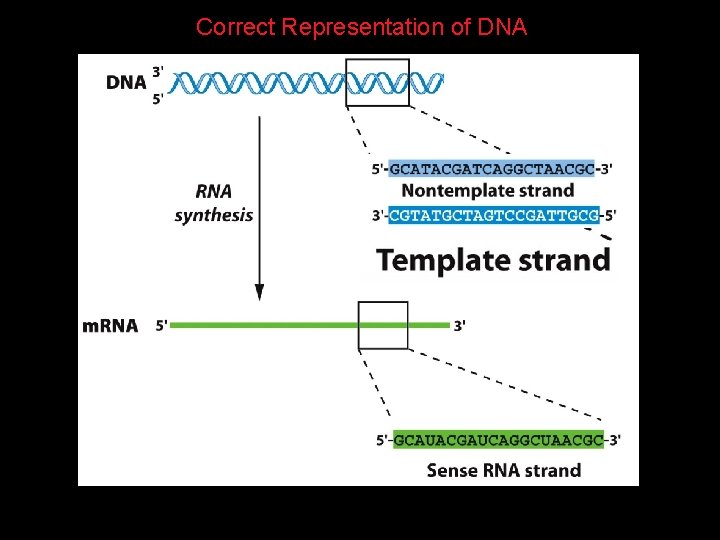
Correct Representation of DNA
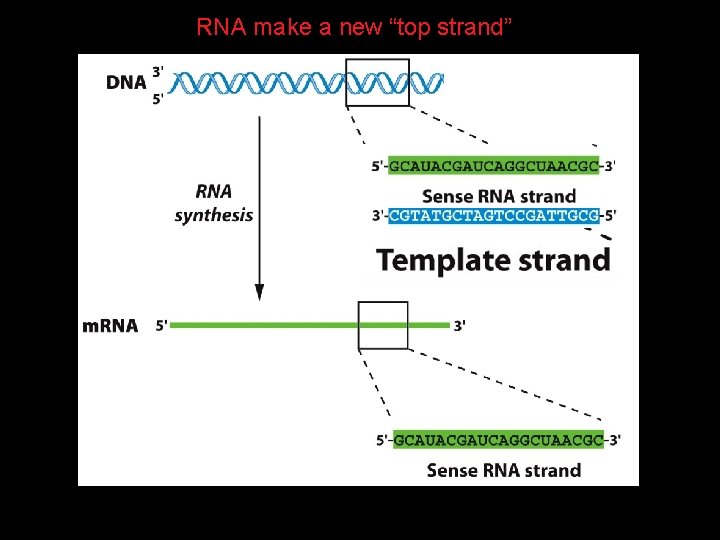
RNA make a new “top strand”
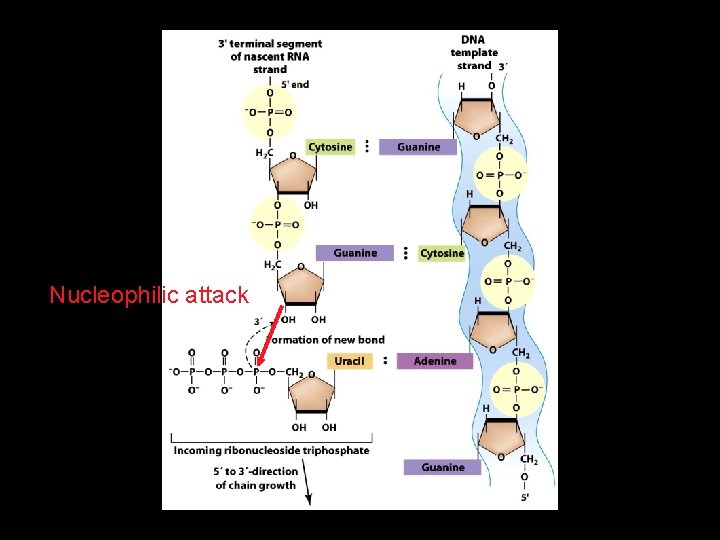
Nucleophilic attack
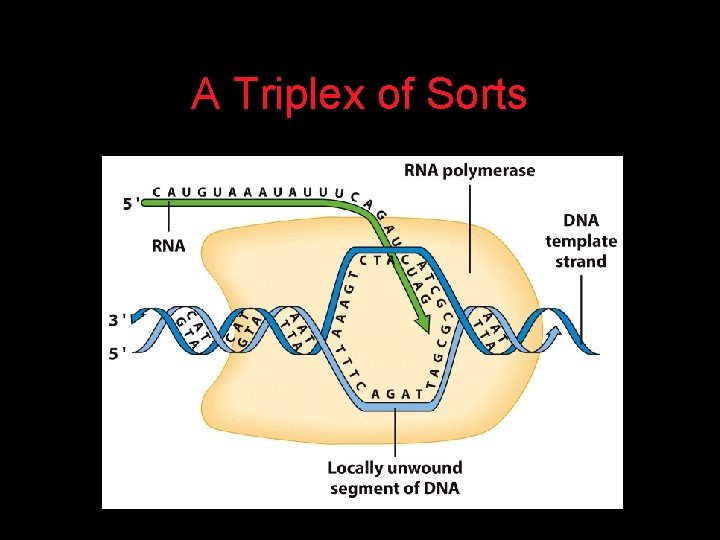
A Triplex of Sorts
Prokaryotes-transcription and translation occur at the same time Transcription—the first step in gene expression—transfers the genetic information stored in DNA—genes—into messenger RNA molecules that carry the information to the ribosomes—the sites of protein synthesis—in the cytoplasm.
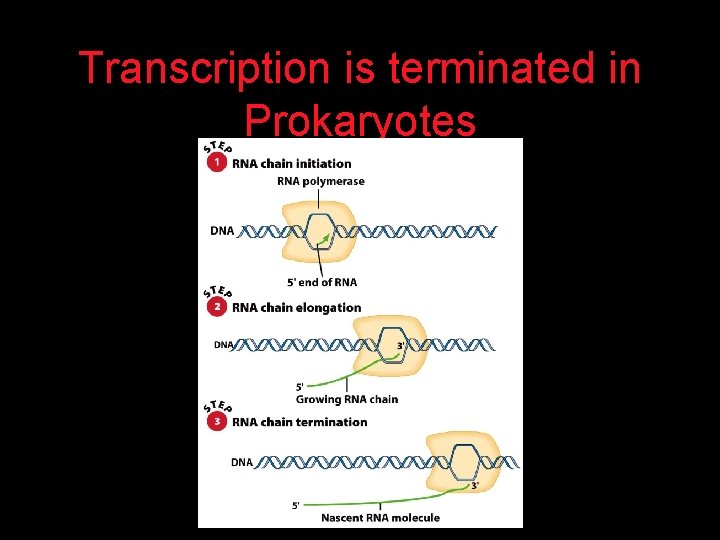
Transcription is terminated in Prokaryotes
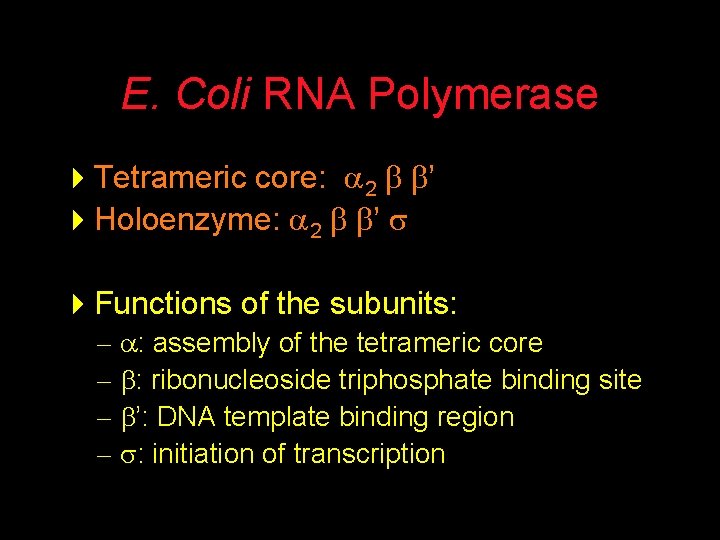
E. Coli RNA Polymerase 4 Tetrameric core: 2 ’ 4 Holoenzyme: 2 ’ 4 Functions of the subunits: – : assembly of the tetrameric core – : ribonucleoside triphosphate binding site – ’: DNA template binding region – : initiation of transcription
Initiation of RNA Chains 1. Binding of RNA polymerase holoenzyme to a promoter region in DNA 2. Localized unwinding of the two strands of DNA by RNA polymerase to provide a single -stranded template 3. Formation of phosphodiester bonds between the first few ribonucleotides in the nascent RNA chain

Numbering of a Transcription Unit 4 The transcript initiation site is +1. 4 Bases preceding the initiation site are given minus (–) prefixes and are referred to as upstream sequences. 4 Bases following the initiation site are given plus (+) prefixes and are referred to as downstream sequences.
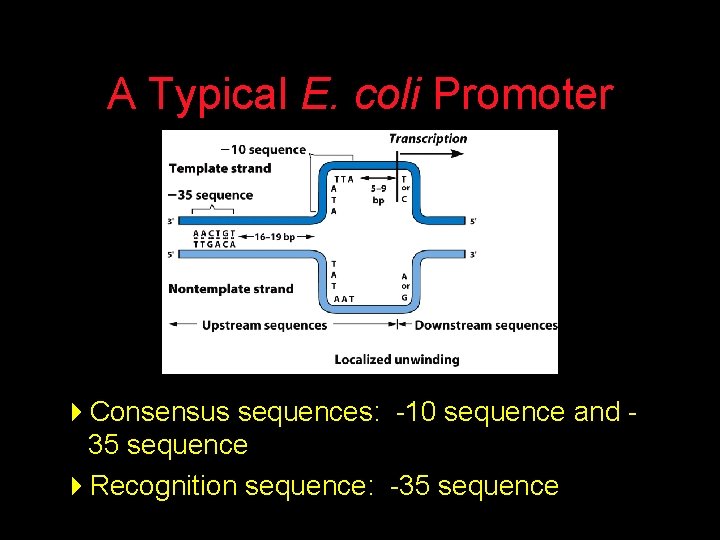
A Typical E. coli Promoter 4 Consensus sequences: -10 sequence and 35 sequence 4 Recognition sequence: -35 sequence
Termination Signals in E. coli 4 Rho-dependent terminators—require a protein factor ( ) 4 Rho-independent terminators—do not require
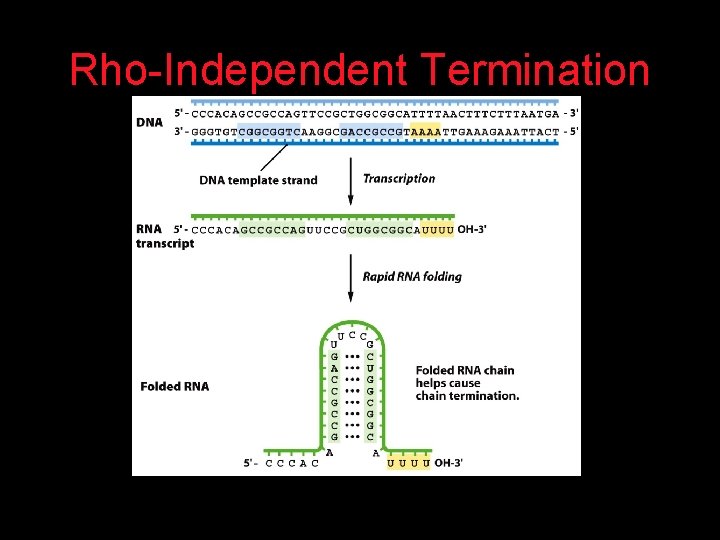
Rho-Independent Termination
Transcription and RNA Processing in Eukaryotes Three different enzymes catalyze transcription in eukaryotes, and the resulting RNA transcripts undergo three important modifications, including the excision of noncoding sequences called introns. The nucleotide sequenced of some RNA transcripts are modified posttranscriptionally by RNA editing.
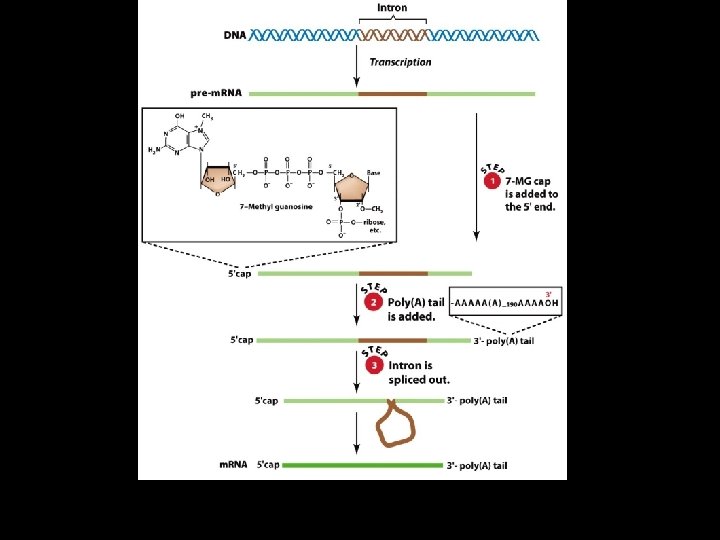
Modifications to Eukaryotic pre -m. RNAs 4 A 7 -Methyl guanosine cap is added to the 5’ end of the primary transcript by a 5’-5’ phosphate linkage. 4 A poly(A) tail (a 20 -200 nucleotide polyadenosine tract) is added to the 3’ end of the transcript. The 3’ end is generated by cleavage rather than by termination. 4 When present, intron sequences are spliced out of the transcript.
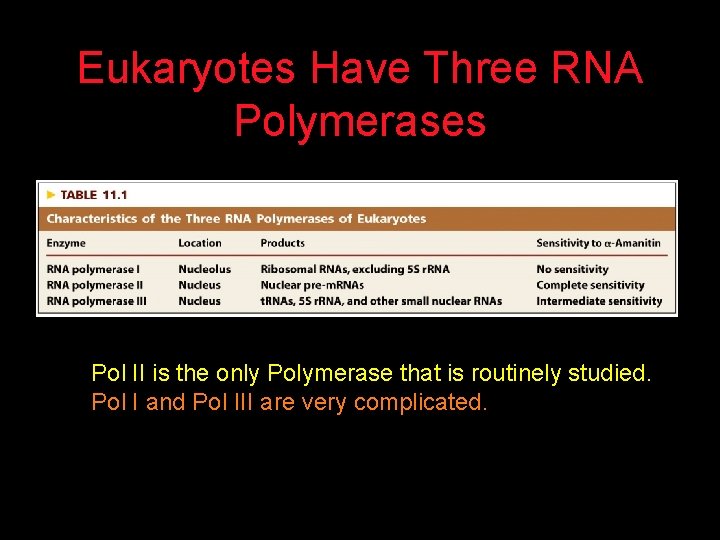
Eukaryotes Have Three RNA Polymerases Pol II is the only Polymerase that is routinely studied. Pol I and Pol III are very complicated.
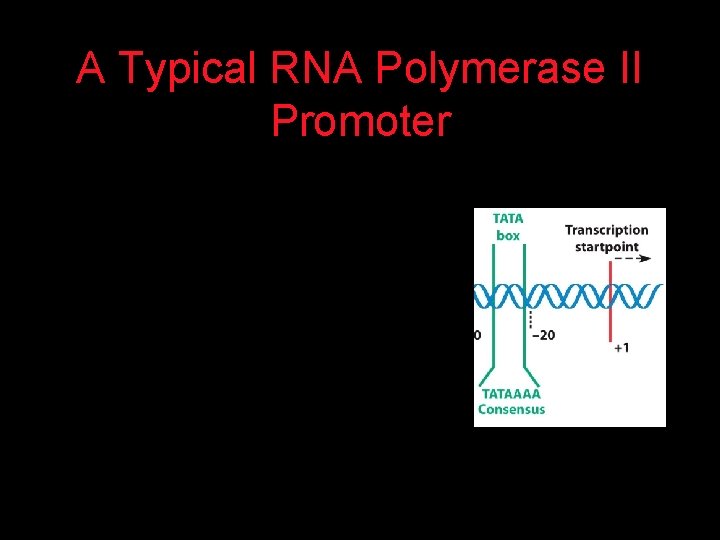
A Typical RNA Polymerase II Promoter
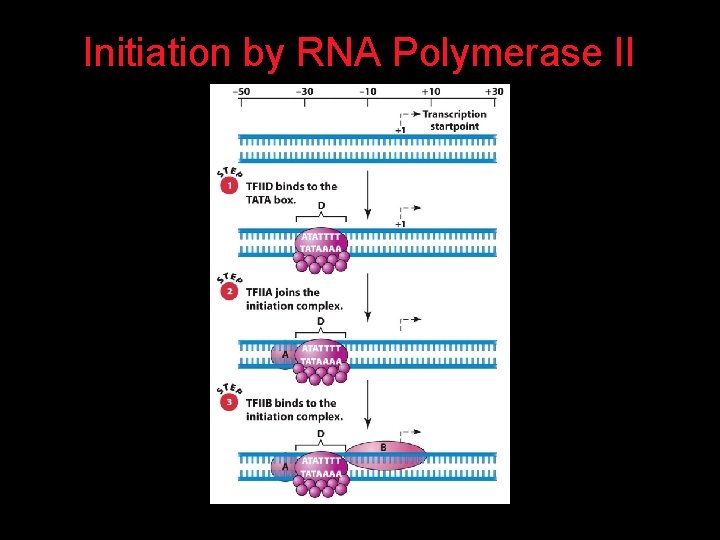
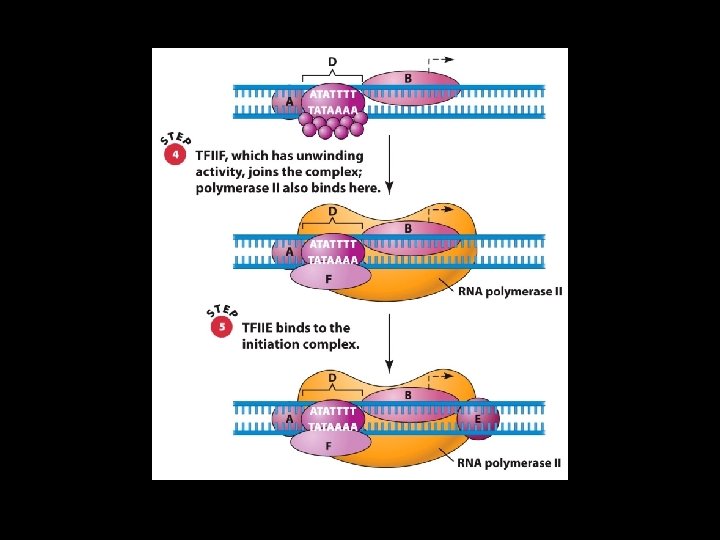
Initiation by RNA Polymerase II
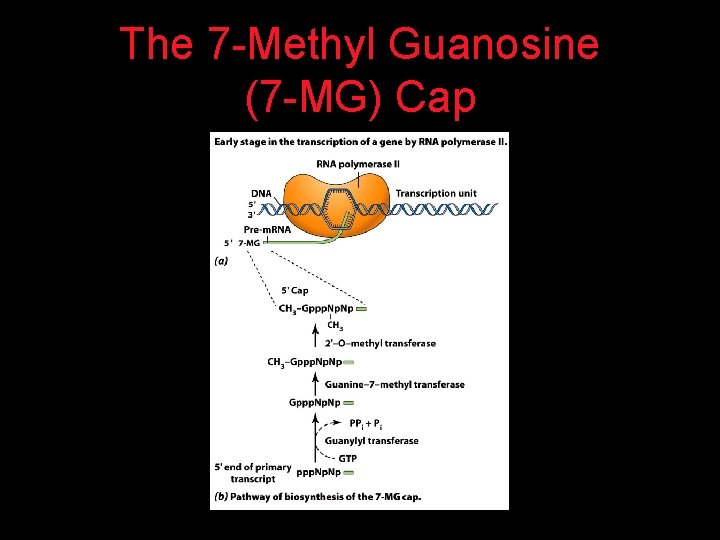
The 7 -Methyl Guanosine (7 -MG) Cap
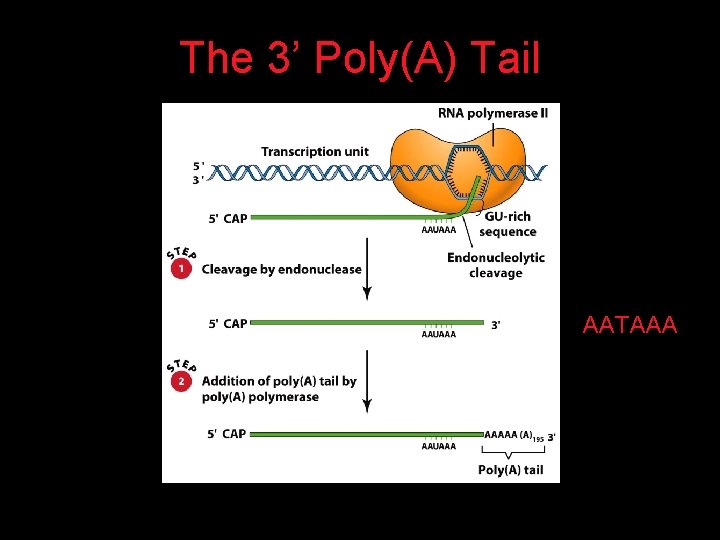
The 3’ Poly(A) Tail AATAAA
Interrupted Genes in Eukaryotes: Exons and Introns Most eukaryotic genes contain noncoding sequences called introns that interrupt the coding sequences, or exons. The introns are excised from the RNA transcripts prior to their transport to the cytoplasm.
Removal of Intron Sequences by RNA Splicing The noncoding introns are excised from gene transcripts by several different mechanisms.
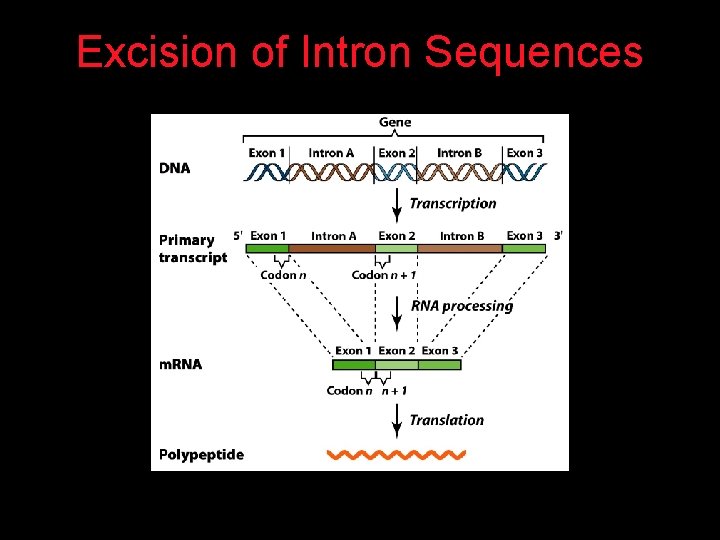
Excision of Intron Sequences
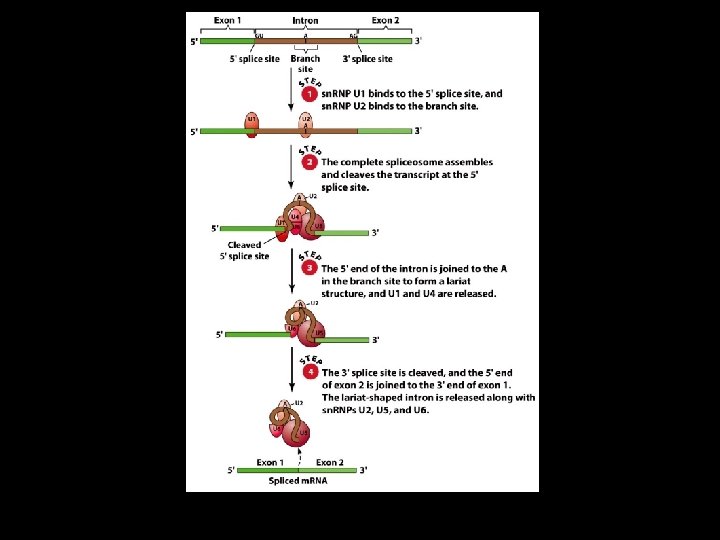
Splicing 4 Removal of introns must be very precise. 4 Conserved sequences for removal of the introns of nuclear m. RNA genes are minimal. – Dinucleotide sequences at the 5’ and 3’ ends of introns. – An A residue about 30 nucleotides upstream from the 3’ splice site is needed for lariat formation.
Types of Intron Excision 4 The introns of t. RNA precursors are excised by precise endonucleolytic cleavage and ligation reactions catalyzed by special splicing endonuclease and ligase activities. 4 The introns of nuclear pre-m. RNA (hn. RNA) transcripts are spliced out in two-step reactions carried out by spliceosomes.
The Spliceosome 4 Five sn. RNAs: U 1, U 2, U 4, U 5, and U 6 4 Some sn. RNAs associate with proteins to form sn. RNAs (small nuclear ribonucleoproteins)


- Slides: 51