
TYPICAL ADOLESCENT DEVELOPMENT EARLY ADOLESCENCE 10 13 Children



- Slides: 16
TYPICAL ADOLESCENT DEVELOPMENT
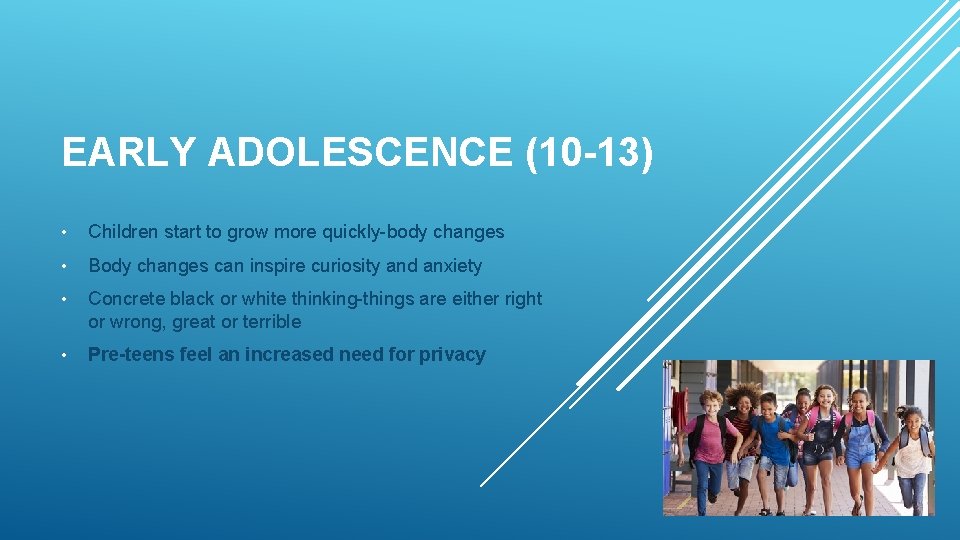
EARLY ADOLESCENCE (10 -13) • Children start to grow more quickly-body changes • Body changes can inspire curiosity and anxiety • Concrete black or white thinking-things are either right or wrong, great or terrible • Pre-teens feel an increased need for privacy
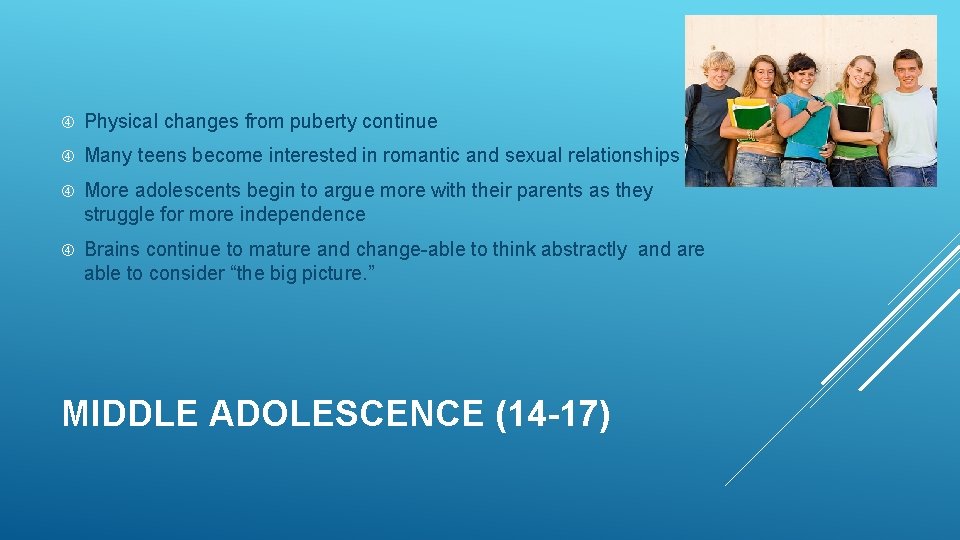
Physical changes from puberty continue Many teens become interested in romantic and sexual relationships More adolescents begin to argue more with their parents as they struggle for more independence Brains continue to mature and change-able to think abstractly and are able to consider “the big picture. ” MIDDLE ADOLESCENCE (14 -17)
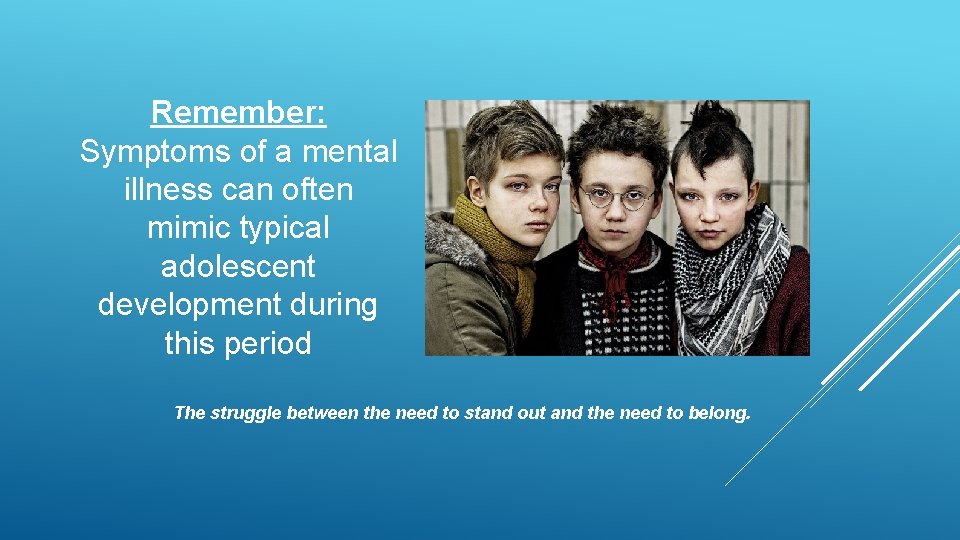
Remember: Symptoms of a mental illness can often mimic typical adolescent development during this period The struggle between the need to stand out and the need to belong.
Mental heath conditions account for 16% of the global burden of disease and injury in people aged 10 -19 ½ of all mental health conditions start by age 14 Globally, depression is the 4 th leading cause of illness WORLD HEALTH ORGANIZATION DATA
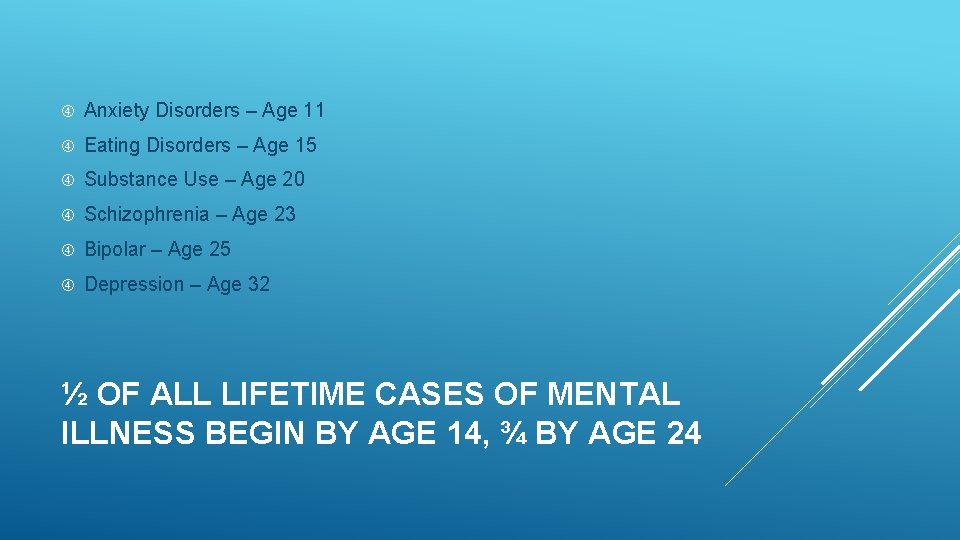
Anxiety Disorders – Age 11 Eating Disorders – Age 15 Substance Use – Age 20 Schizophrenia – Age 23 Bipolar – Age 25 Depression – Age 32 ½ OF ALL LIFETIME CASES OF MENTAL ILLNESS BEGIN BY AGE 14, ¾ BY AGE 24
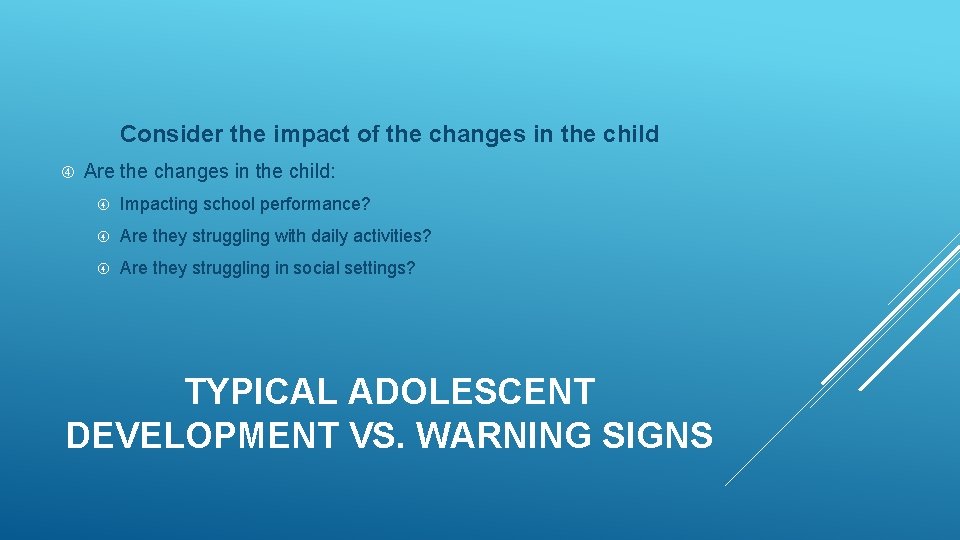
Consider the impact of the changes in the child Are the changes in the child: Impacting school performance? Are they struggling with daily activities? Are they struggling in social settings? TYPICAL ADOLESCENT DEVELOPMENT VS. WARNING SIGNS
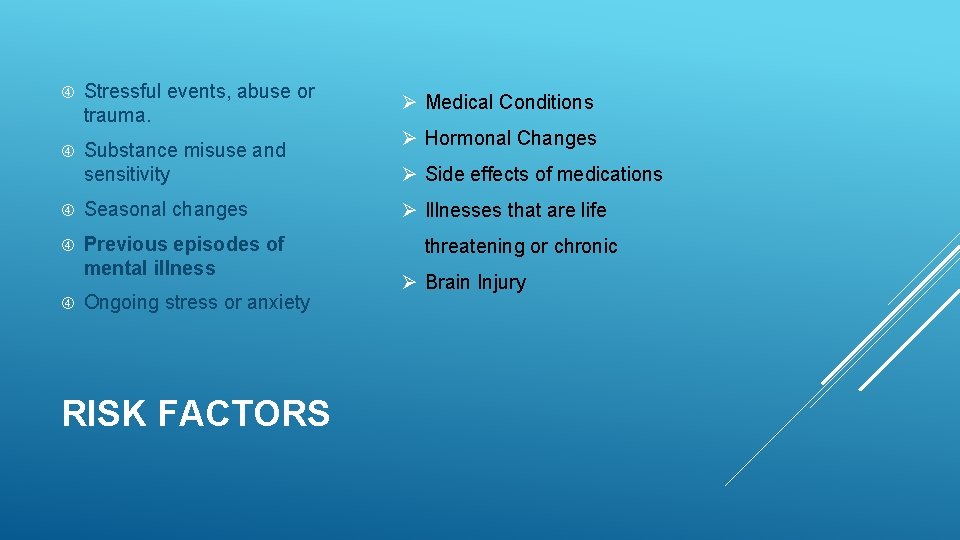
Stressful events, abuse or trauma. Substance misuse and sensitivity Seasonal changes Previous episodes of mental illness Ongoing stress or anxiety RISK FACTORS Ø Medical Conditions Ø Hormonal Changes Ø Side effects of medications Ø Illnesses that are life threatening or chronic Ø Brain Injury
WARNING SIGNS Of A Mental Health Crisis Information provided by NAMI Minnesota
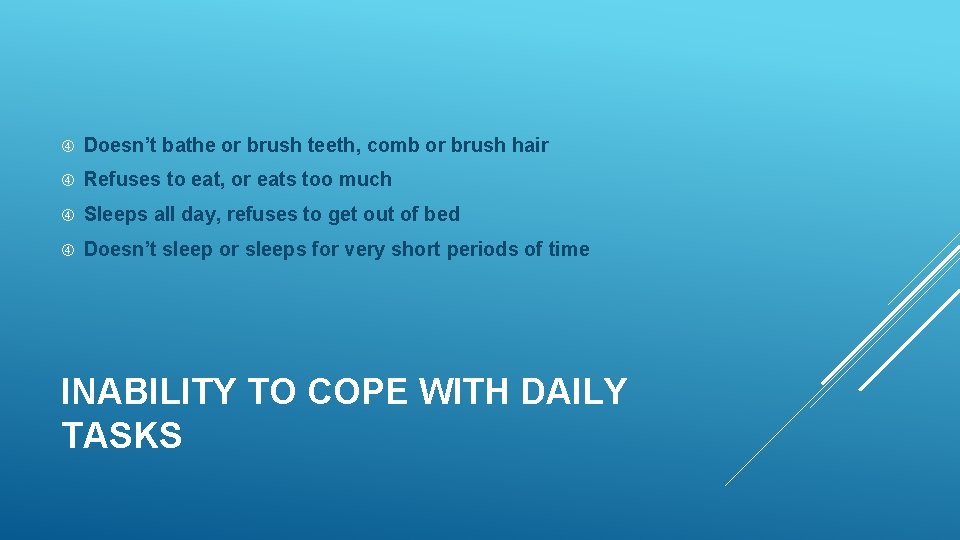
Doesn’t bathe or brush teeth, comb or brush hair Refuses to eat, or eats too much Sleeps all day, refuses to get out of bed Doesn’t sleep or sleeps for very short periods of time INABILITY TO COPE WITH DAILY TASKS
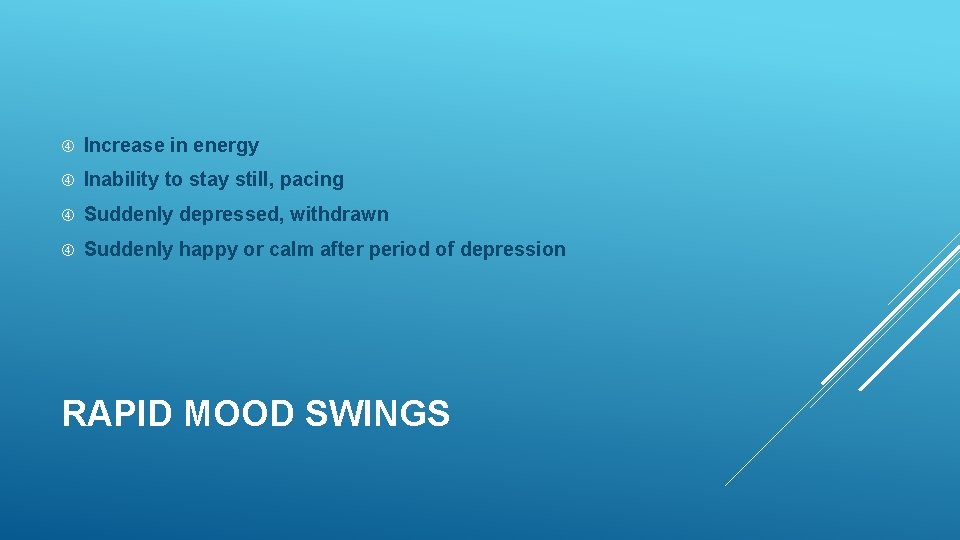
Increase in energy Inability to stay still, pacing Suddenly depressed, withdrawn Suddenly happy or calm after period of depression RAPID MOOD SWINGS
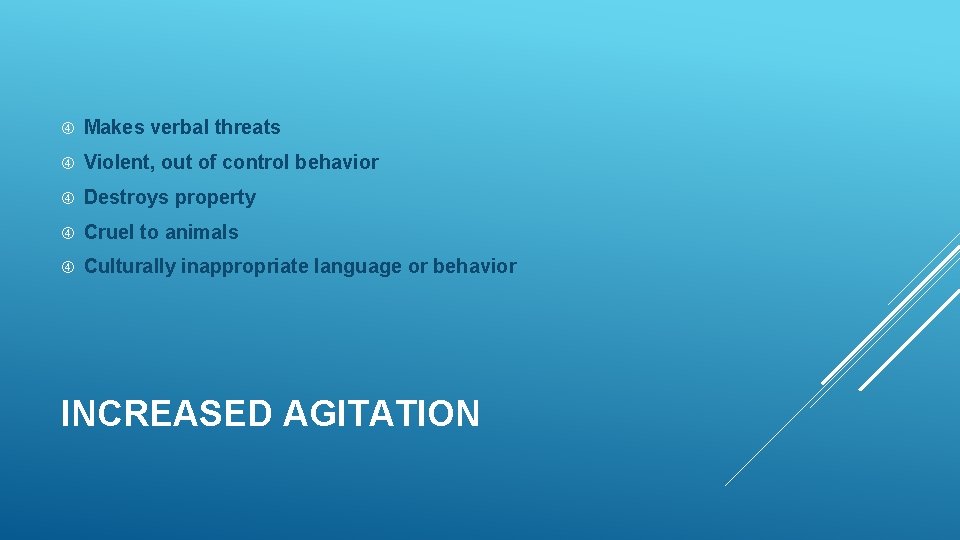
Makes verbal threats Violent, out of control behavior Destroys property Cruel to animals Culturally inappropriate language or behavior INCREASED AGITATION
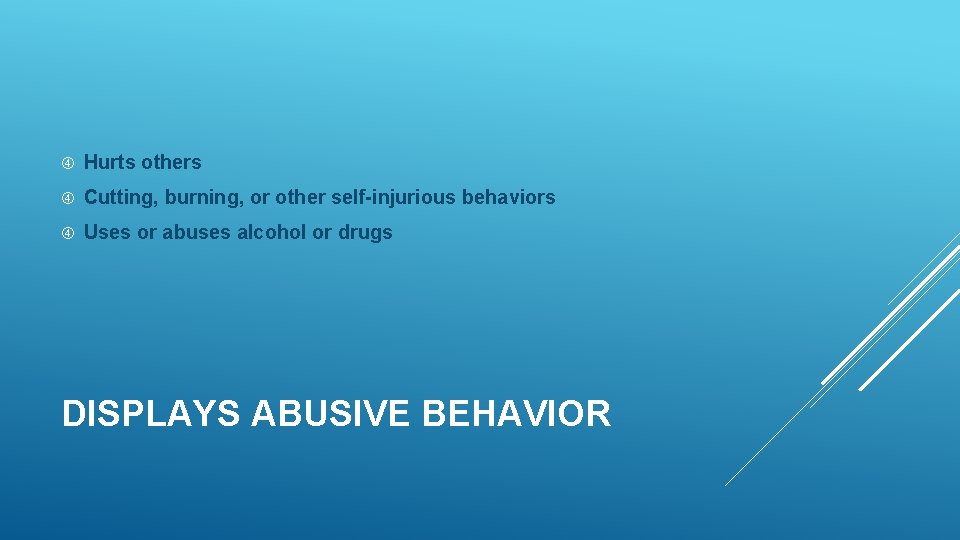
Hurts others Cutting, burning, or other self-injurious behaviors Uses or abuses alcohol or drugs DISPLAYS ABUSIVE BEHAVIOR
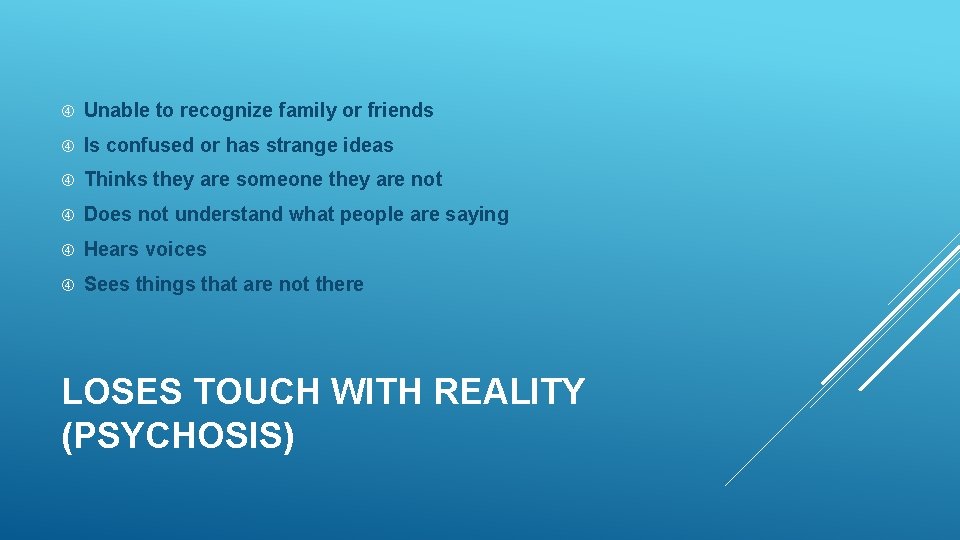
Unable to recognize family or friends Is confused or has strange ideas Thinks they are someone they are not Does not understand what people are saying Hears voices Sees things that are not there LOSES TOUCH WITH REALITY (PSYCHOSIS)
No or little interest in extracurricular activities Changes in friendships Stops attending school, stops doing homework ISOLATION FROM SCHOOL, FAMILY & FRIENDS
Facial expressions look different Increase in headaches, stomach aches Complains they don’t feel well UNEXPLAINED PHYSICAL SYMPTOMS