
TYPHOID Definition of Typhoid fever n Acute enteric


- Slides: 38
TYPHOID
Definition of Typhoid fever n Acute enteric infectious disease n caused by Salmonella typhi (S. Typhi). n prolonged fever, Relative bradycardia, apathetic facial expressions, roseola, splenomegaly, hepatomegaly, leukopenia. n intestinal perforation, intestinal hemorrhage
Etiology Serotype: D group of Salmonella Gram-negative rod non-spore flagella Culture characteristics
n Antigens: located in the cell capsule H (flagellar antigen). O (Somatic or cell wall antigen). Vi (polysaccharide virulence)
A schematic diagram of a single Salmonella typhi cell showing the locations of the H (flagellar), 0 (somatic), and Vi (K envelope) antigens.
n Endotoxin n Resistance: Live 2 -3 weeks in water. 1 -2 months in stool. Die out quickly in summer Resistance to drying and cooling
Source of infection Cases and chronic carriers Cases discharge from incubation, more in 2~4 weeks after onset, a few (about 2~5%) last longer than 3 months chronic carriers.
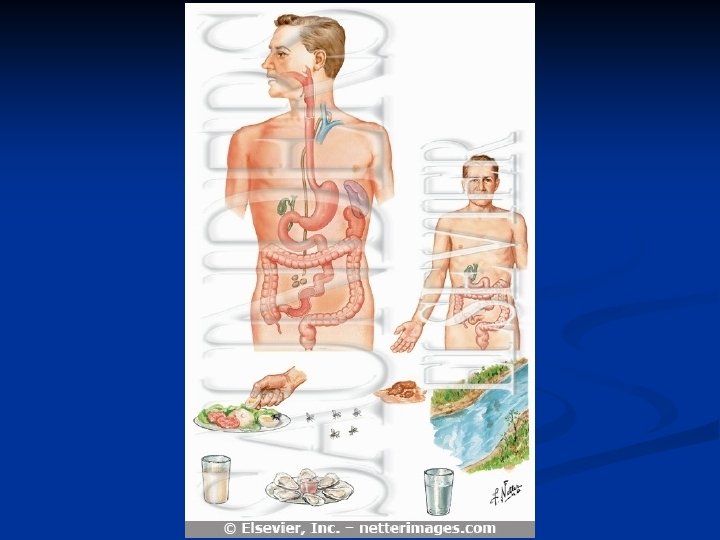
Transmission fecal-oral route close contact with patients or carriers contaminated water and food flies and cockroaches.
Pathogenesis n gastrointestinal tract hostpathogen interactions n The amount of bacilli infection (>105 baeteria).
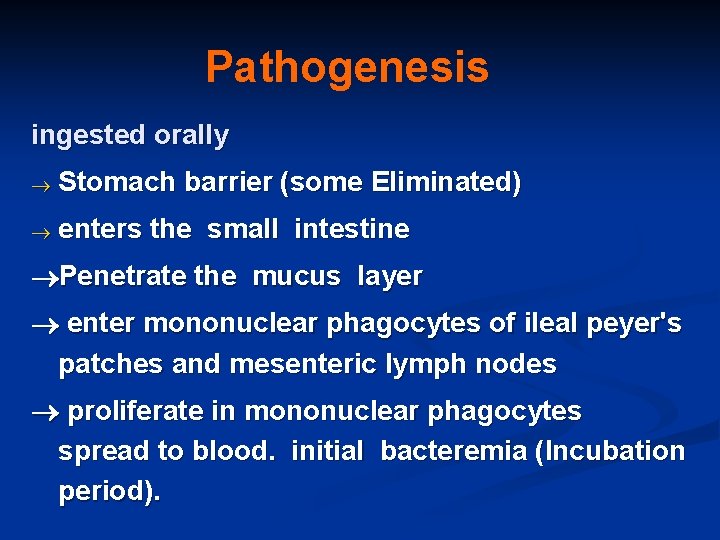
Pathogenesis ingested orally ® Stomach barrier (some Eliminated) ® enters the small intestine Penetrate the mucus layer enter mononuclear phagocytes of ileal peyer's patches and mesenteric lymph nodes proliferate in mononuclear phagocytes spread to blood. initial bacteremia (Incubation period).
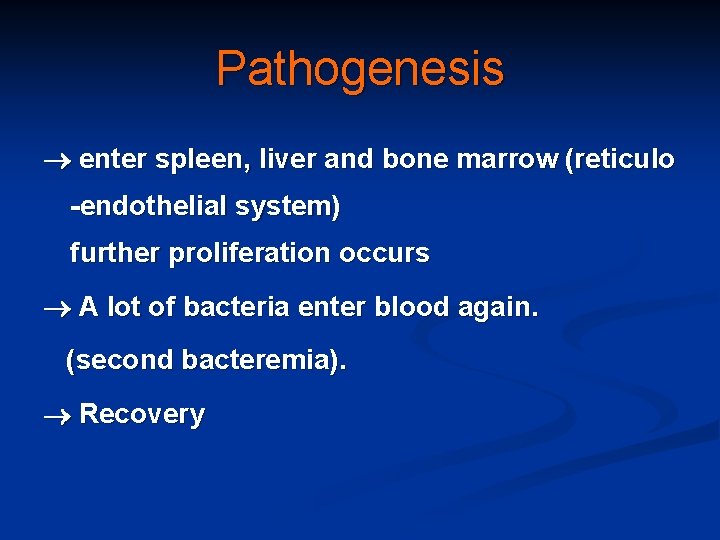
Pathogenesis enter spleen, liver and bone marrow (reticulo -endothelial system) further proliferation occurs A lot of bacteria enter blood again. (second bacteremia). Recovery
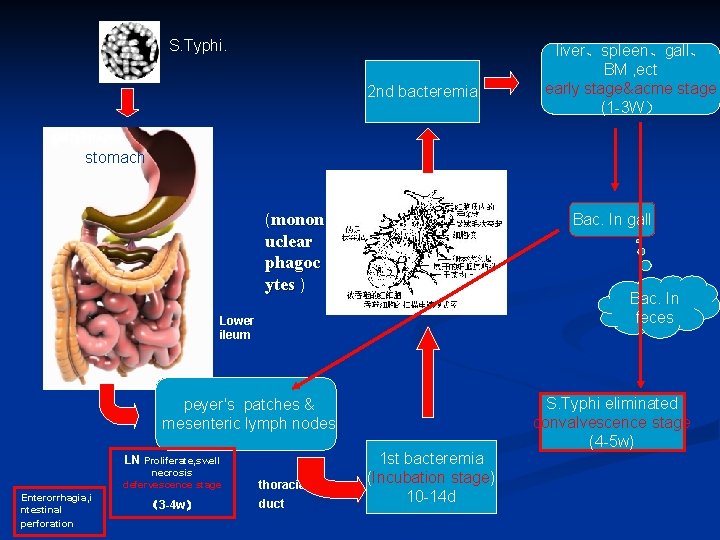
S. Typhi. 2 nd bacteremia liver、spleen、gall、 BM , ect early stage&acme stage (1 -3 W) stomach (monon Bac. In gall uclear phagoc ytes ) Bac. In feces Lower ileum peyer's patches & mesenteric lymph nodes LN Proliferate, swell necrosis defervescence stage Enterorrhagia, i ntestinal perforation (3 -4 w) thoracic duct 1 st bacteremia (Incubation stage) 10 -14 d S. Typhi eliminated convalvescence stage (4 -5 w)
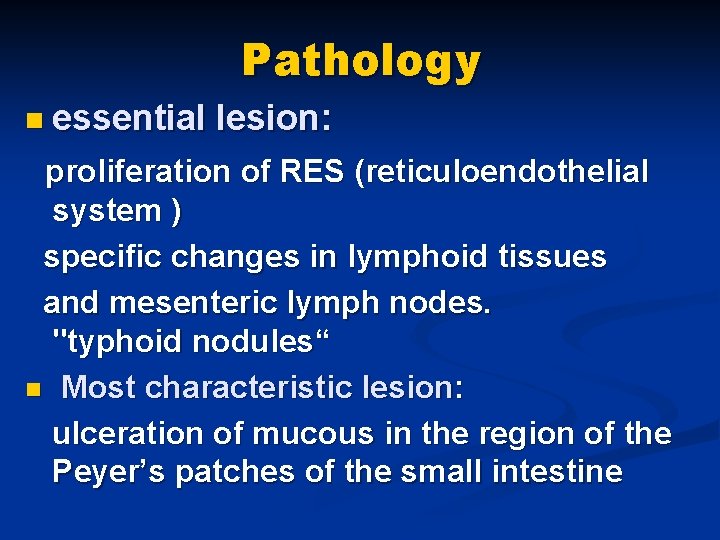
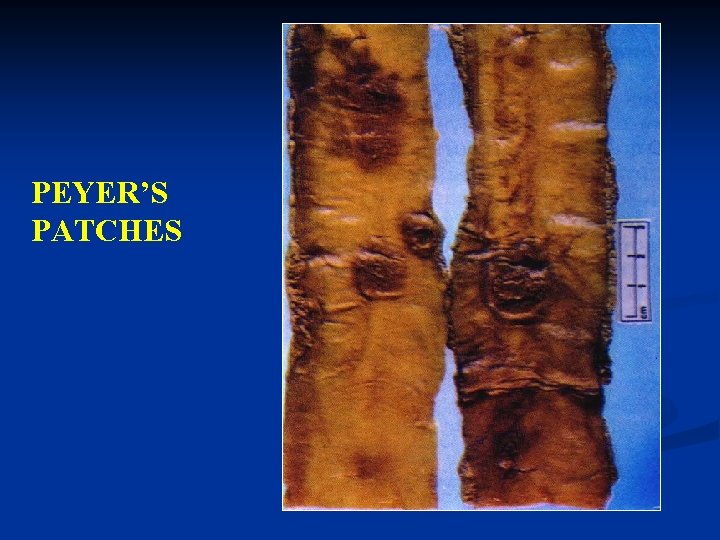
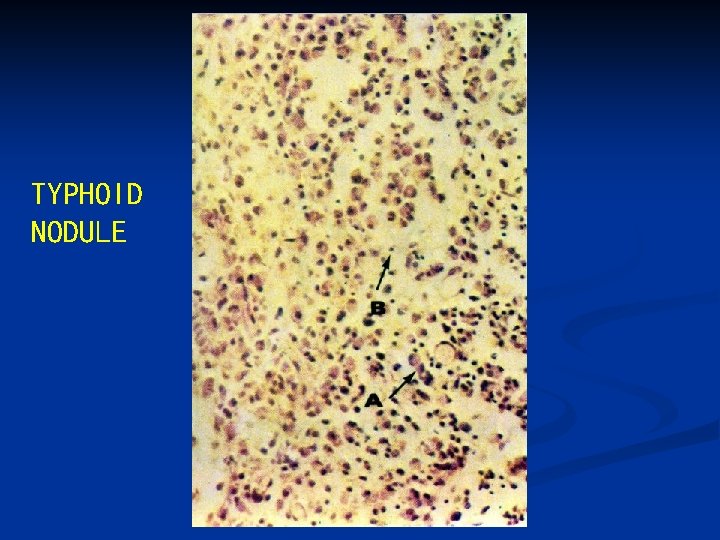
Pathology n essential lesion: proliferation of RES (reticuloendothelial system ) specific changes in lymphoid tissues and mesenteric lymph nodes. "typhoid nodules“ n Most characteristic lesion: ulceration of mucous in the region of the Peyer’s patches of the small intestine
PEYER’S PATCHES
TYPHOID NODULE
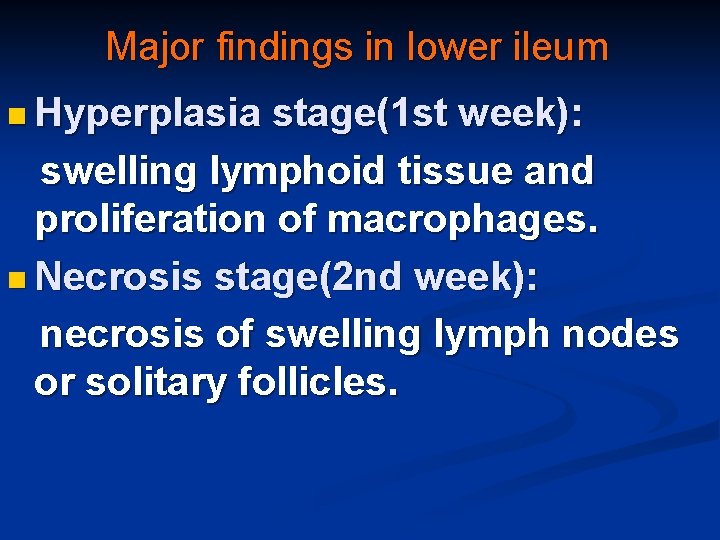
Major findings in lower ileum n Hyperplasia stage(1 st week): swelling lymphoid tissue and proliferation of macrophages. n Necrosis stage(2 nd week): necrosis of swelling lymph nodes or solitary follicles.
Major findings in lower ileum Ulceration stage(3 rd week): shedding of necrosis tissue and formation of ulcer ----- intestinal hemorrhage, perforation. n Stage of healing (from 4 th week): healing of ulcer, no cicatrices and no contraction n
Clinical manifestations Incubation period: 3~ 60 days(7~ 14). The initial period (early stage) n First week. n Insidious onset. n Fever up to 39~400 C in 5~7 days n chills、ailment、tired、sore throat、 cough , abdominal discomfort.
The fastigium satge n second and third weeks. n Sustained high fever、partly remittent fever or irregular fever. Last 10~ 14 days. n Gastro-intestinal symptoms: anorexia、 abdominal distension or pain、diarrhea or constipation n Neuropsychiatric manifestations: confusion、blunt respond even delirium and coma.
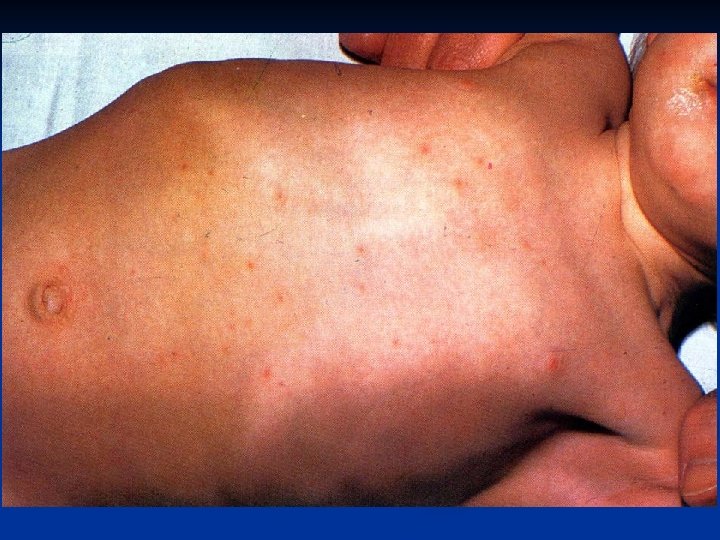
n Circulation system: relative bradycardia or dicrotic pulse. n splenomegaly、hepatomegaly toxic hepatitis. n roseola : 30%, maculopapular rash a faint pale color, slightly raised round or lenticular, fade on pressure 2 -4 mm in diameter, less than 10 in number on the trunk, disappear in 2 -3 days.
nfatal complications: intestinal hemorrhage intestinal perforation severe toxemia
defervescence stage fever and most symptoms resolve by the forth week of infection. n Fever come down, gradual improvement in all symptoms and signs, but still danger. n convalescence stage n the fifth week. disappearance of all symptoms, but can relapse
Clinical forms: n Mild infection symptom and signs mild good general condition temperature is 380 C
n Persistent infection: diseases continue than 5 weeks n Ambulatory infection: mild symptoms, early intestinal bleeding or perforation.
n Fulminate infection: rapid onset, severe toxemia and septicemia. High fever, chill, circulation failure, shock, delirium, coma, myocarditis, bleeding and other complications, DIC et all.
relapse n serum positive of S. typhi after 1~ 3 weeks. n Symptom and signs reappear n the bacilli have not been completely removed n Some cases relapse more than once
Laboratory findings Routine examinations: white blood cell count is normal or decreased. Leukocytopenia(specially eosinophilic leukocytopenia).
Bacteriological examinations: n Blood culture: the most common use 80~90% positive during the first 2 weeks of illness 50% in 3 rd week
n The bone marrow culture n Urine and stool cultures stool culture better in 3~4 weeks
�Serological tests Antigens: somatic antigen(O), flagella(H) antigen,
n "O" agglutinin antibody titer ≥ 1: 80 and "H" ≥ 1: 160 or "O" 4 times higher supports a diagnosis of typhoid fever n "O" rises alone, not "H", early of the disease. Only "H" positive, but "O" negative, often nonspecifically elevated by immunization or previous infections. n Antibody level maybe lower when have used antibiotics early.
Molecular biological tests: DNA probe or polymerase chain reaction (PCR)
Complications INTESTINAL HAEMORRAGE INTESTINAL PERFORATION TOXIC HEPATITIS TOXIC MYOCARDITIS BRONCHITIS, BROCHOPNEUMONIA
Other complications: n toxic encephalopathy. n Hemolytic uremic syndrome. n acute cholecystitis、 n meningitis、 n nephritis et al.
� Diagnosis n Epidemiology data n Typical symptoms and signs n Laboratory findings.