
Types Window Fixed or Picture Window Does not
- Slides: 12
Types Window
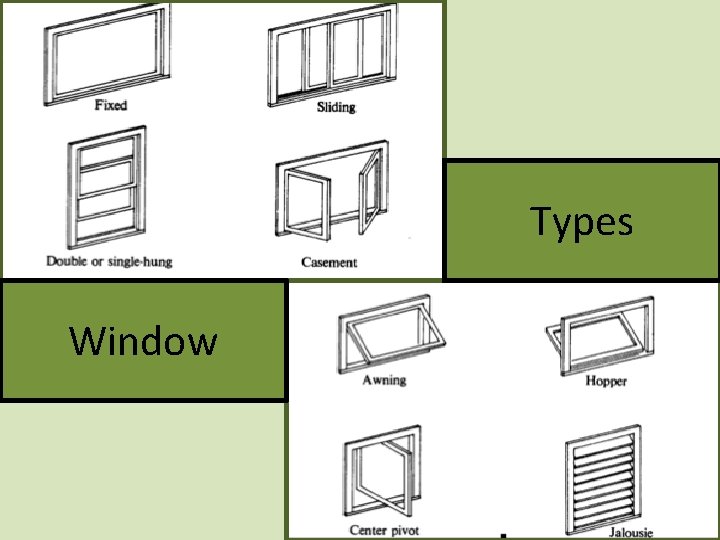
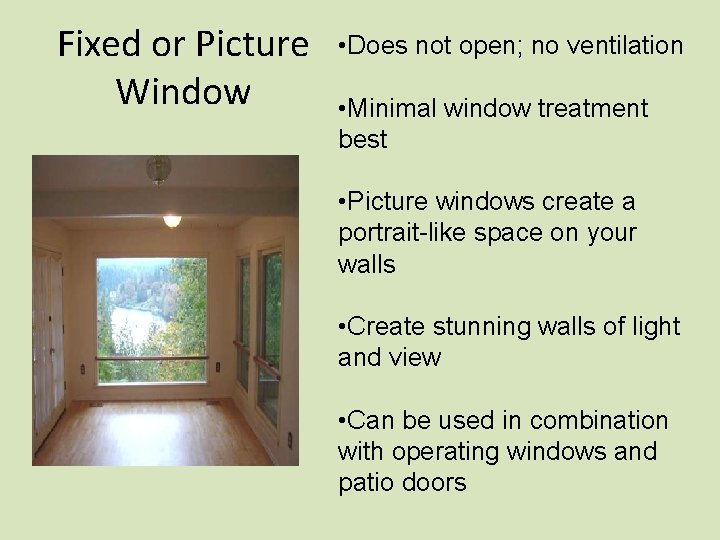
Fixed or Picture Window • Does not open; no ventilation • Minimal window treatment best • Picture windows create a portrait-like space on your walls • Create stunning walls of light and view • Can be used in combination with operating windows and patio doors
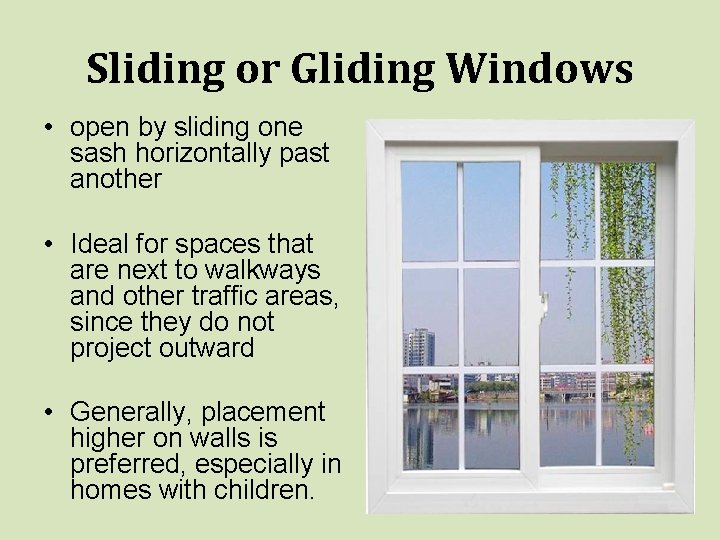
Sliding or Gliding Windows • open by sliding one sash horizontally past another • Ideal for spaces that are next to walkways and other traffic areas, since they do not project outward • Generally, placement higher on walls is preferred, especially in homes with children.
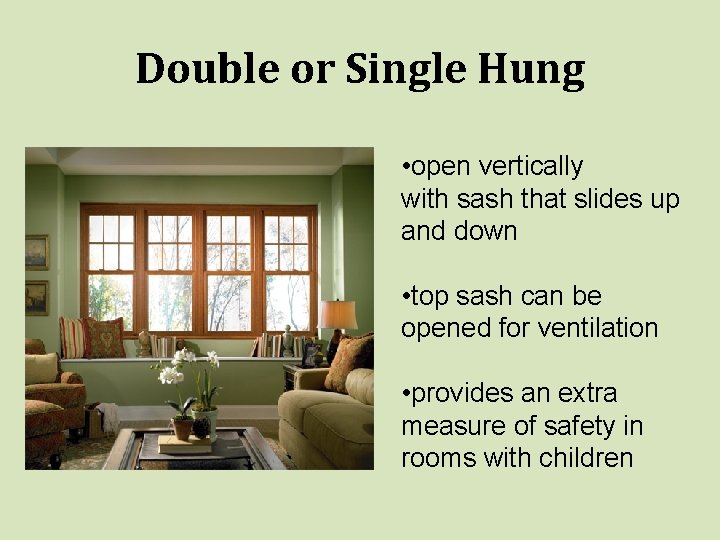
Double or Single Hung • open vertically with sash that slides up and down • top sash can be opened for ventilation • provides an extra measure of safety in rooms with children
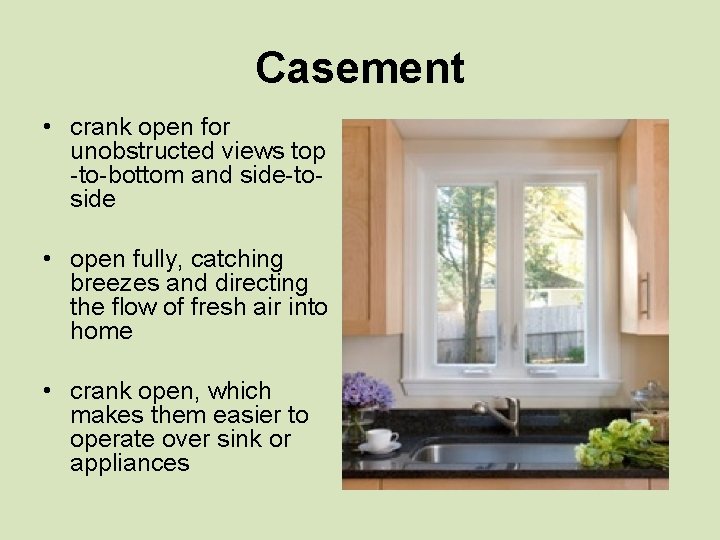
Casement • crank open for unobstructed views top -to-bottom and side-toside • open fully, catching breezes and directing the flow of fresh air into home • crank open, which makes them easier to operate over sink or appliances
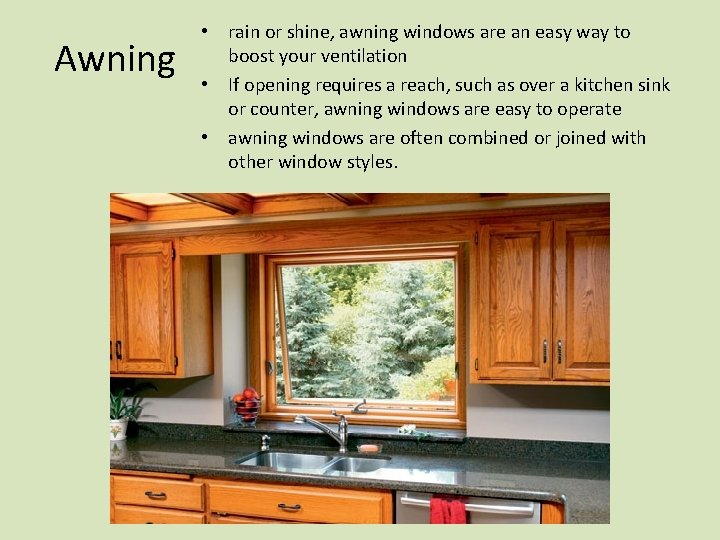
Awning • rain or shine, awning windows are an easy way to boost your ventilation • If opening requires a reach, such as over a kitchen sink or counter, awning windows are easy to operate • awning windows are often combined or joined with other window styles.
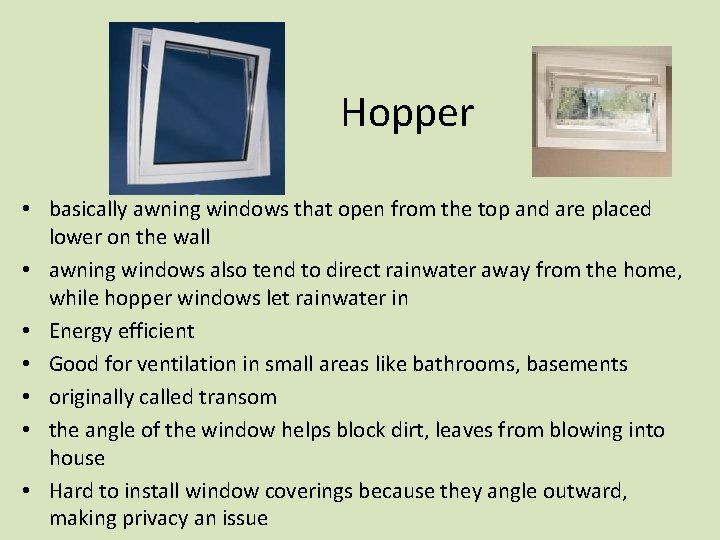
Hopper • basically awning windows that open from the top and are placed lower on the wall • awning windows also tend to direct rainwater away from the home, while hopper windows let rainwater in • Energy efficient • Good for ventilation in small areas like bathrooms, basements • originally called transom • the angle of the window helps block dirt, leaves from blowing into house • Hard to install window coverings because they angle outward, making privacy an issue
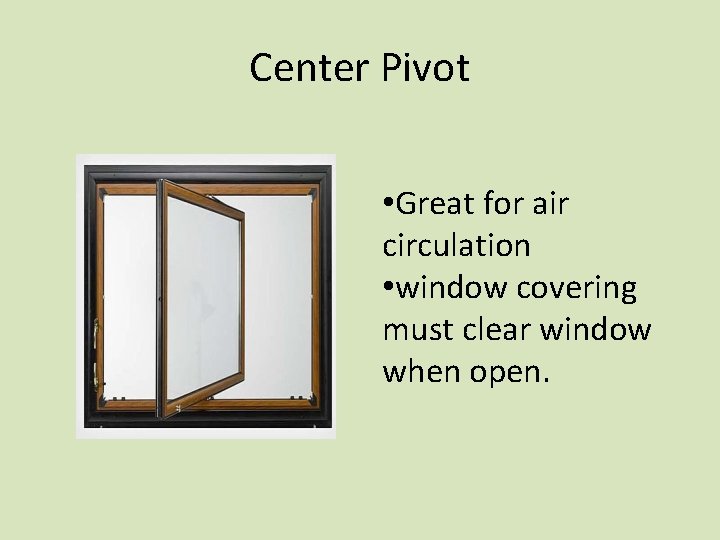
Center Pivot • Great for air circulation • window covering must clear window when open.
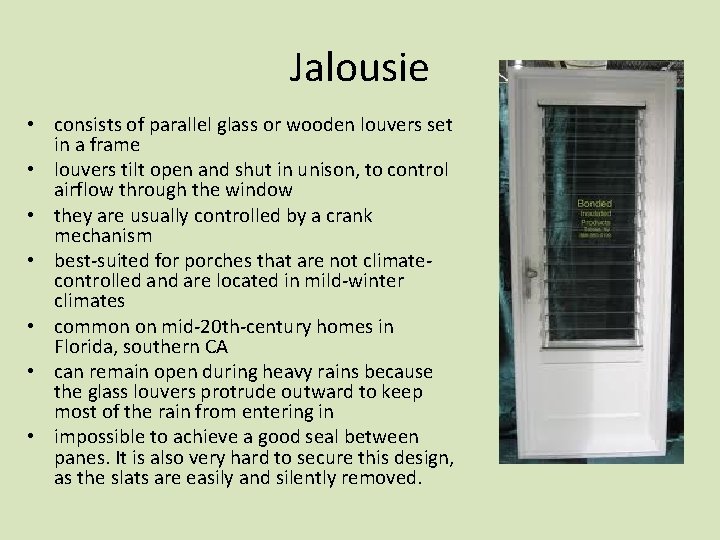
Jalousie • consists of parallel glass or wooden louvers set in a frame • louvers tilt open and shut in unison, to control airflow through the window • they are usually controlled by a crank mechanism • best-suited for porches that are not climatecontrolled and are located in mild-winter climates • common on mid-20 th-century homes in Florida, southern CA • can remain open during heavy rains because the glass louvers protrude outward to keep most of the rain from entering in • impossible to achieve a good seal between panes. It is also very hard to secure this design, as the slats are easily and silently removed.
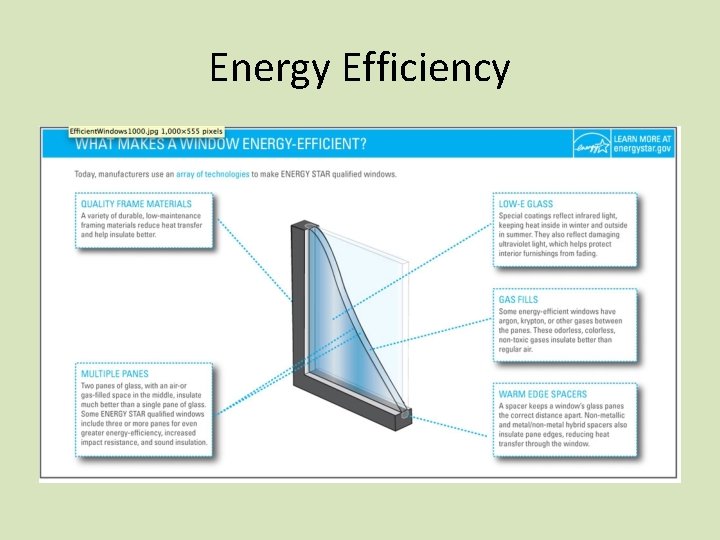
Energy Efficiency
Energy Star What is ENERGY STAR? • ENERGY STAR is the government-backed symbol for energy efficiency designed to save money and protect the environment through energy-efficient products and practices The ENERGY STAR label was established to: • reduce greenhouse gas emissions and other pollutants caused by the inefficient use of energy; • and make it easy for consumers to identify and purchase energy-efficient products that offer savings on energy bills
Energy Star Rating What makes it ENERGY STAR? • ENERGY STAR qualified, windows, doors, and skylights are manufactured by a qualified Energy Star Partner • are independently tested and certified by the NFRC ratings that meet strict energy efficiency guidelines set by the US Department of Energy