
TYPES OF WEATHER FRONTS Earth Science Hertema When
- Slides: 10
TYPES OF WEATHER FRONTS Earth Science - Hertema
When large masses of warm air and cold air meet, they do not mix. This forms fronts, which can last hundreds of miles. When fronts pass, weather changes. WEATHER FRONTS
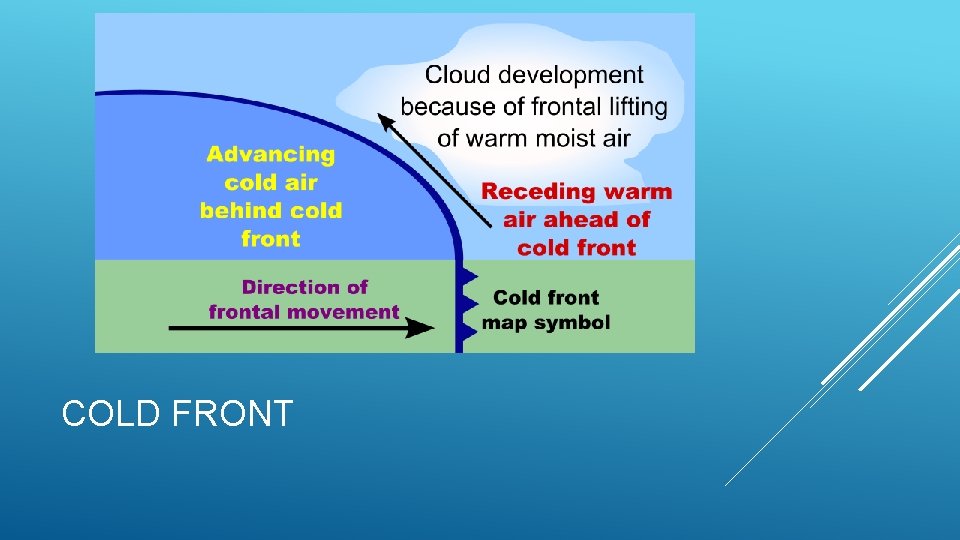
When a cold air mass pushes under a warm air mass, forcing the warm air to rise. Weather: Thunderstorms can form as the moisture in the warm air mass rises, cools, and condenses. As front moves through, cool, fair weather is likely to follow. COLD FRONT
COLD FRONT
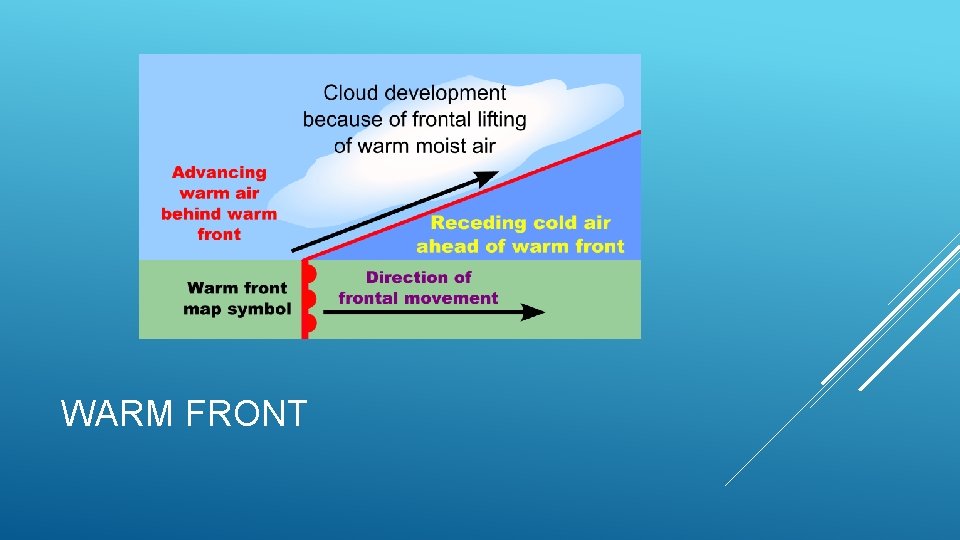
Forms when as moist, warm air mass slides up and over a cold air mass. Weather: As the warm air mass rises, it condenses into a broad area of clounds. Often brings a gentle rain or light snow, followed by warmer, milder weather. WARM FRONT
WARM FRONT
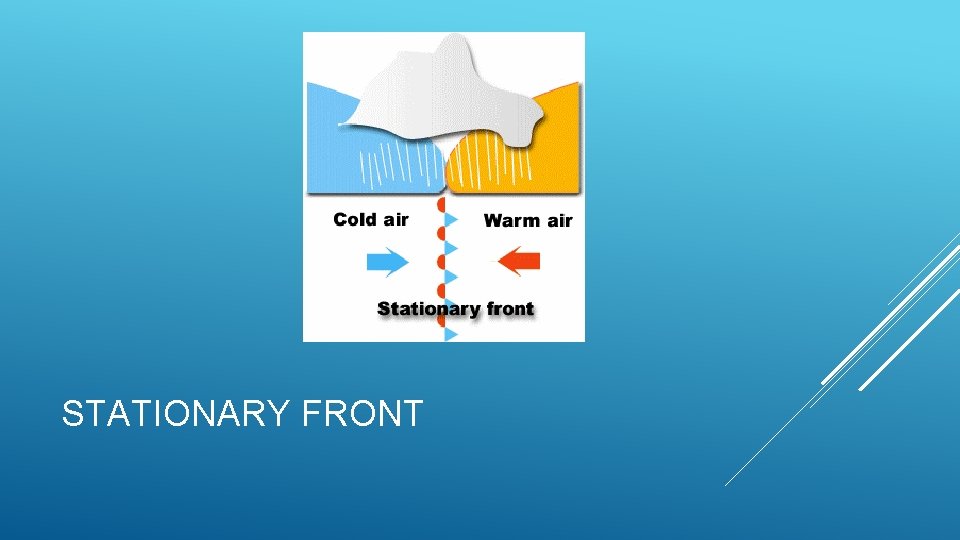
Forms when warm and cold air meet and neither air mass has the force to move the other. They remain stationary. Weather: Where the warm and cold air meet, clouds and fog form, and it may rain or snow. Can bring many days of clouds and precipitation. STATIONARY FRONT
STATIONARY FRONT
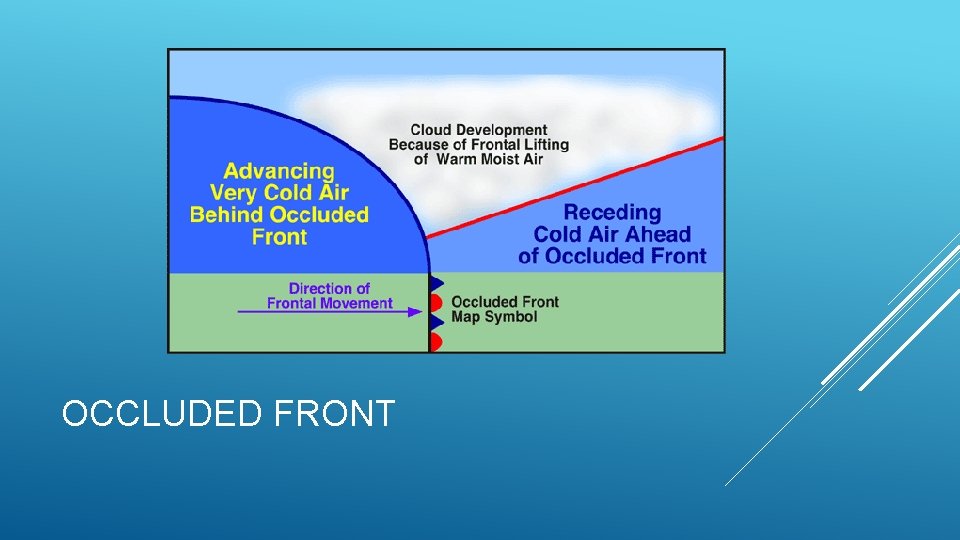
Forms when a warm air mass gets caught between 2 cold air masses. The warm air mass rises as the cool air masses push and meet in the middle. Weather: Temperature drops as the warm air mass is occluded or “cut off” from the ground and pushed upward. Can bring strong winds and heavy precipitation. OCCLUDED FRONT
OCCLUDED FRONT