
Types of Waves Wave Properties Review from Last








- Slides: 32
Types of Waves & Wave Properties
Review from Last Class
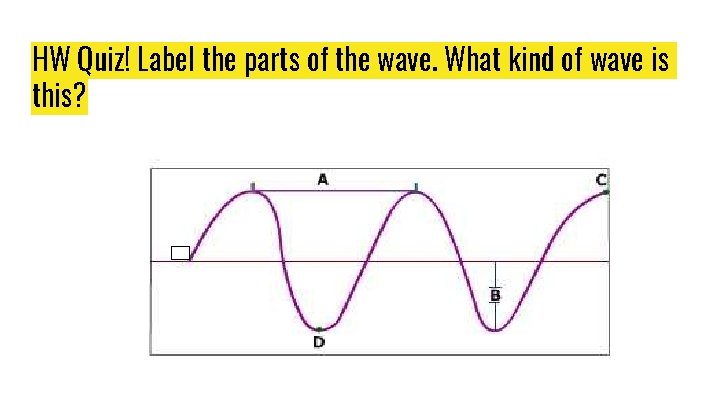
HW Quiz! Label the parts of the wave. What kind of wave is this?
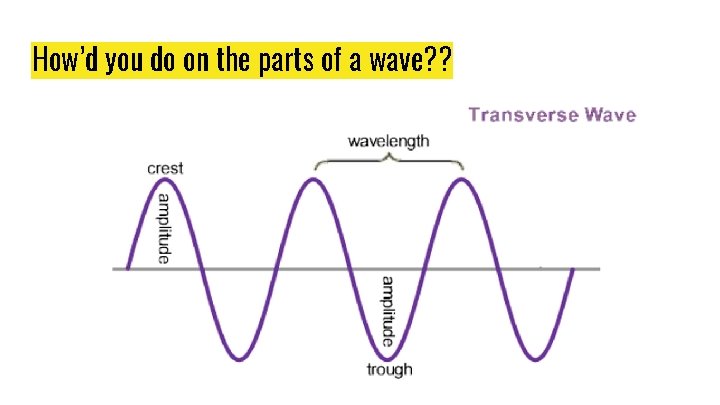
How’d you do on the parts of a wave? ?
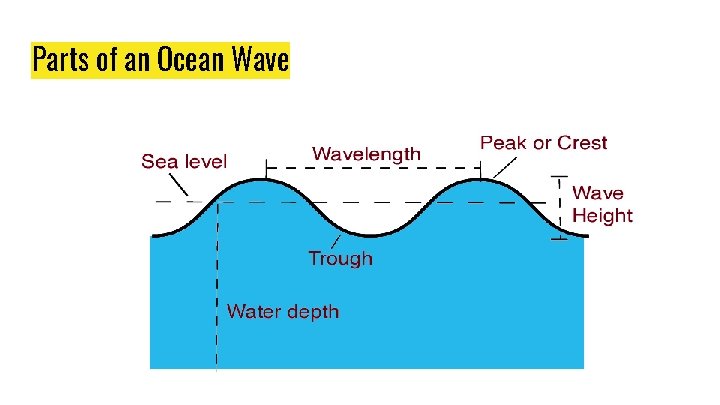
Parts of an Ocean Wave
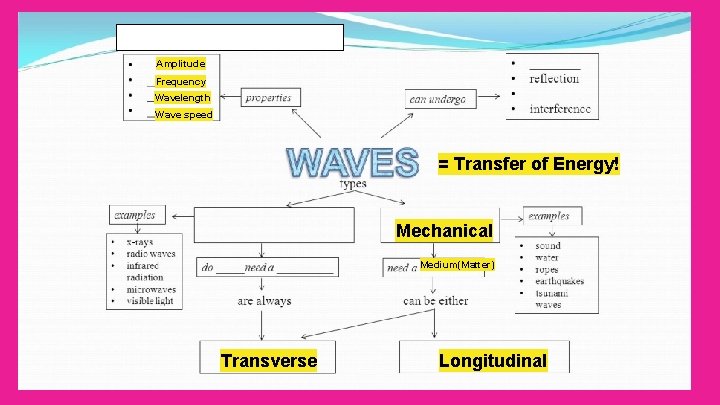
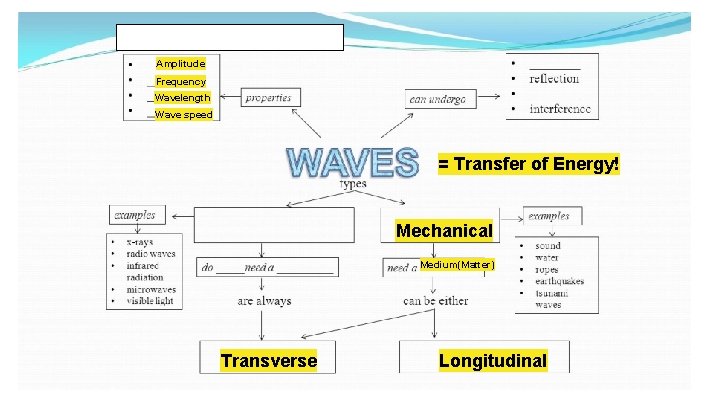
Amplitude Frequency Wavelength Wave speed = Transfer of Energy! Mechanical Medium(Matter) Transverse Longitudinal
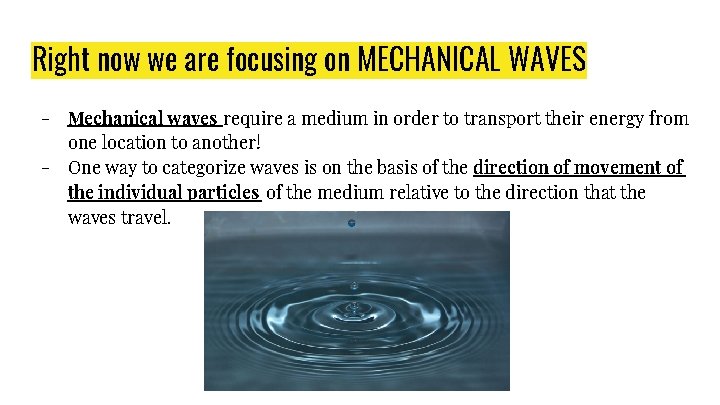
Right now we are focusing on MECHANICAL WAVES - Mechanical waves require a medium in order to transport their energy from one location to another! One way to categorize waves is on the basis of the direction of movement of the individual particles of the medium relative to the direction that the waves travel.
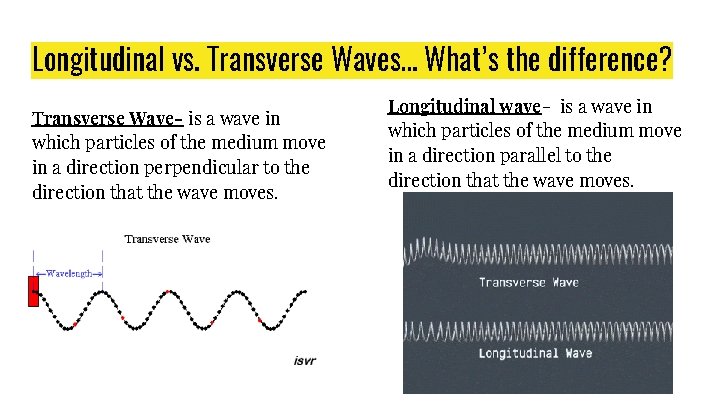
Longitudinal vs. Transverse Waves… What’s the difference? Transverse Wave- is a wave in which particles of the medium move in a direction perpendicular to the direction that the wave moves. Longitudinal wave- is a wave in which particles of the medium move in a direction parallel to the direction that the wave moves.
Practice trying to make Longitudinal & Transverse waves with the materials at your tables!
Human Wave. Let’s Make Some Waves!
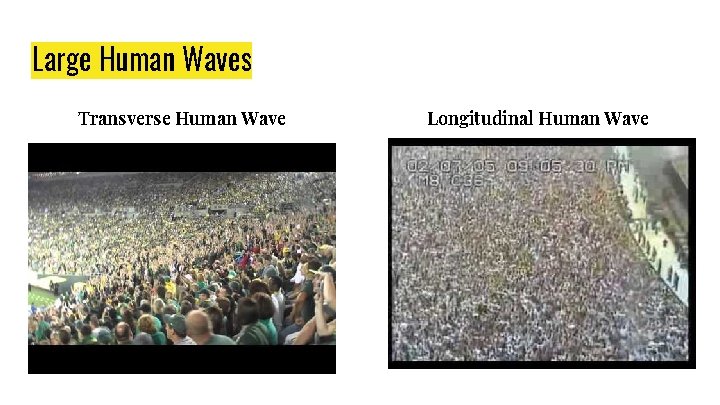
Large Human Waves Transverse Human Wave Longitudinal Human Wave
Wave Properties: Part 2
Amplitude Frequency Wavelength Wave speed = Transfer of Energy! Mechanical Medium(Matter) Transverse Longitudinal
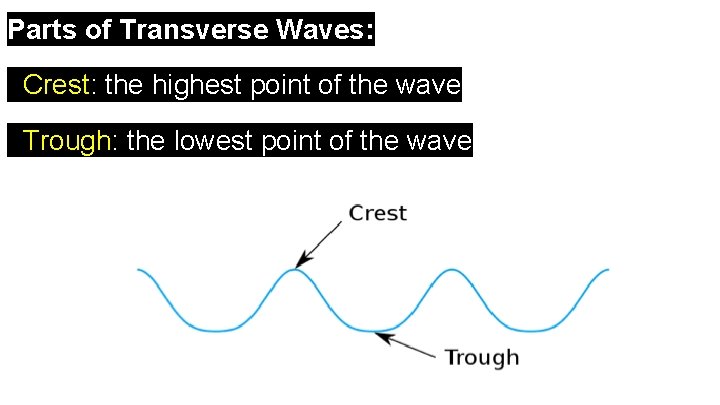
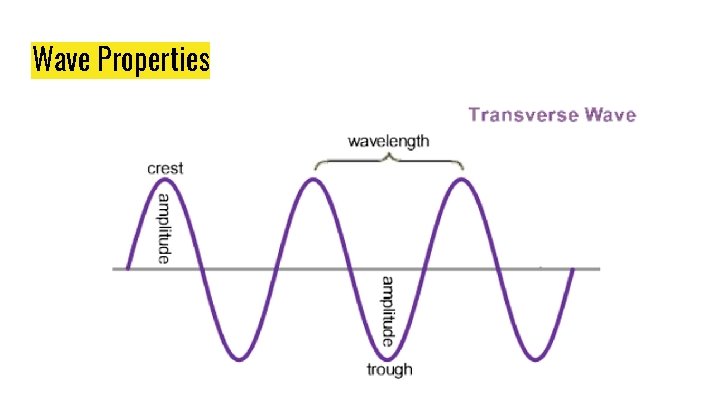
Parts of Transverse Waves: Crest: the highest point of the wave Trough: the lowest point of the wave
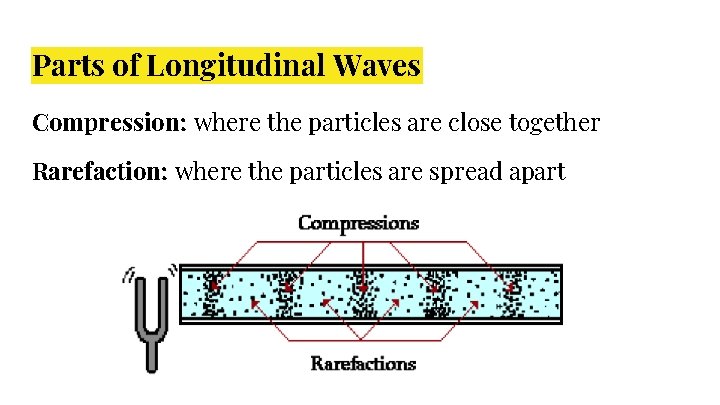
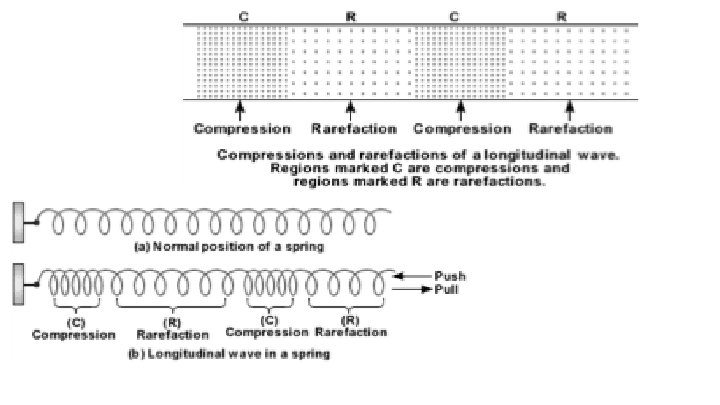
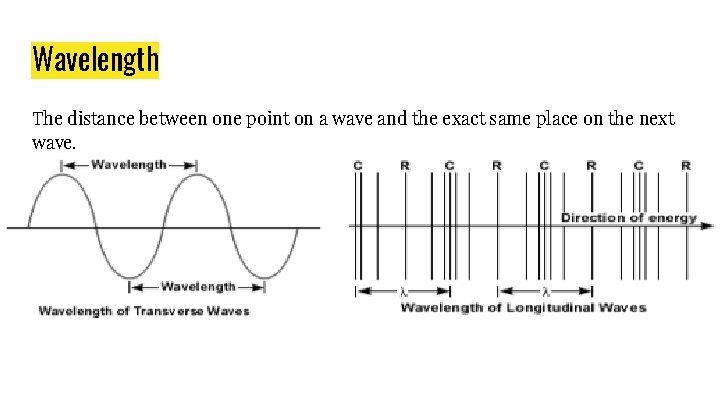
Parts of Longitudinal Waves Compression: where the particles are close together Rarefaction: where the particles are spread apart
Wave Properties
Wavelength The distance between one point on a wave and the exact same place on the next wave.
Frequency How many waves go past a point in one second; unit of measurement is hertz (Hz). The higher the frequency, the more energy in the wave. 10 waves going past in 1 second = 10 Hz 1, 000 waves go past in 1 second = 1, 000 Hz 1 million waves going past = 1 million Hz
Amplitude How far the medium moves from rest position (where it is when not moving). For transverse waves , this is measured from the crest or trough to the “Rest position” For Longitudinal waves use look at the compressions and rarefactions. - The closer together and further apart the particles are, the larger the amplitude!
Let’s see how all of these Properties of Waves Interact using a p. Het Lab
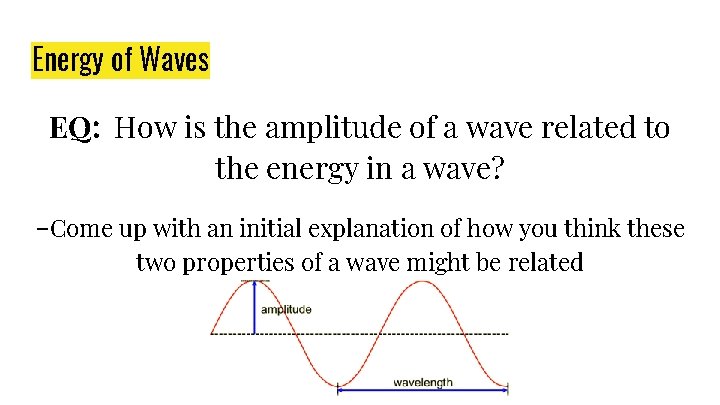
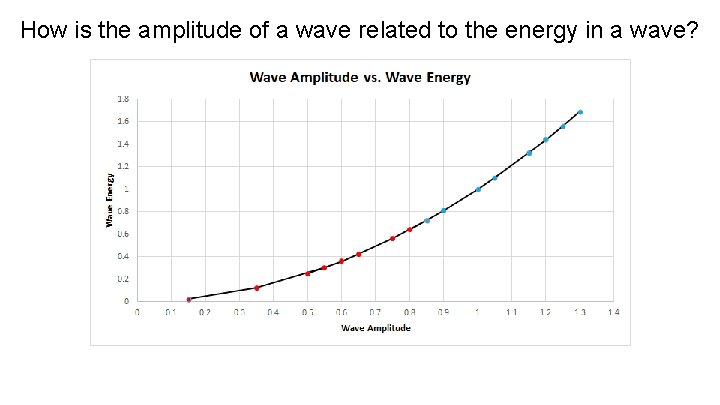
Energy of Waves EQ: How is the amplitude of a wave related to the energy in a wave? -Come up with an initial explanation of how you think these two properties of a wave might be related
What is Energy Anyways? ?
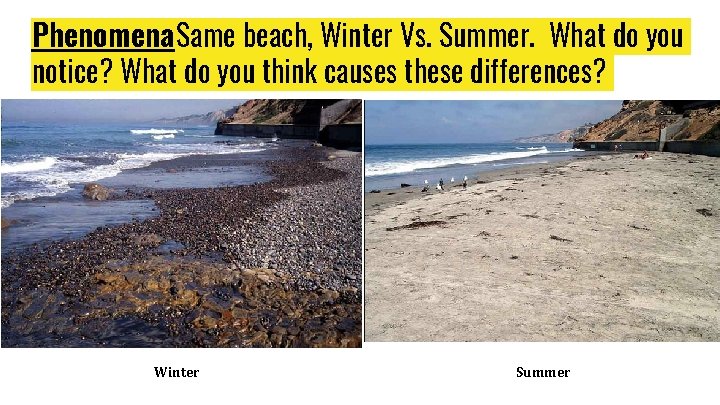
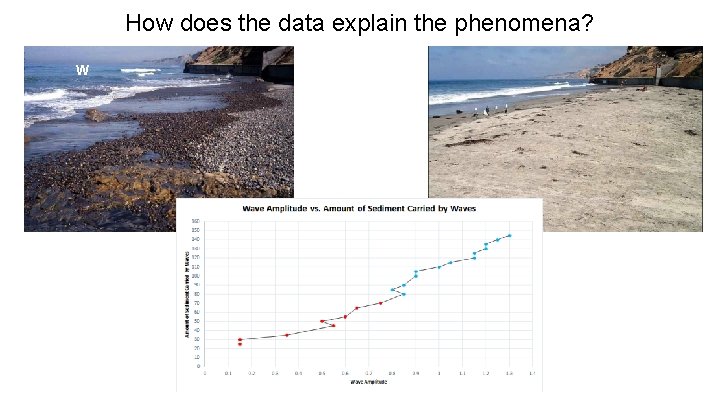
Phenomena: Same beach, Winter Vs. Summer. What do you notice? What do you think causes these differences? Winter Summer
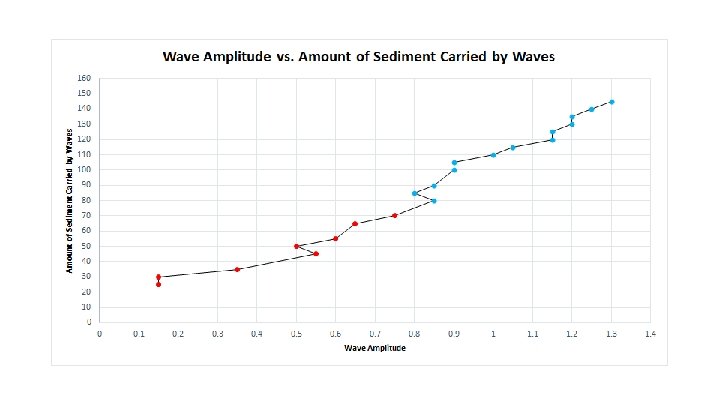
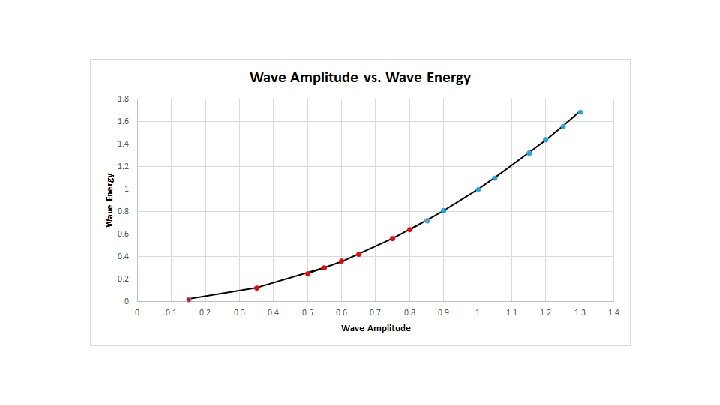
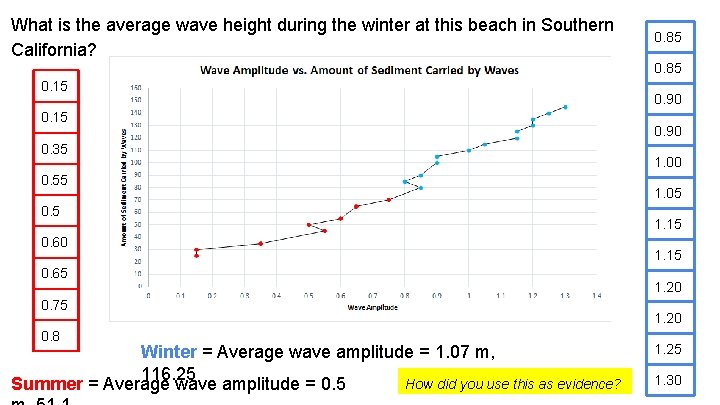
Let’s Look at Some Data! Use the information in the data table to complete the backside of your paper. Make sure to create your graphs on the same page so that you can easily compare them. Remeber TAILS! Make them beautiful!
What is the average wave height during the winter at this beach in Southern California? 0. 85 0. 15 0. 35 0. 60 0. 65 0. 75 0. 8 Winter = Average wave amplitude = 1. 07 m, 116. 25 How did you use this as evidence? Summer = Average wave amplitude = 0. 5 0. 90 1. 00 1. 05 1. 15 1. 20 1. 25 1. 30
How does the data explain the phenomena? W S
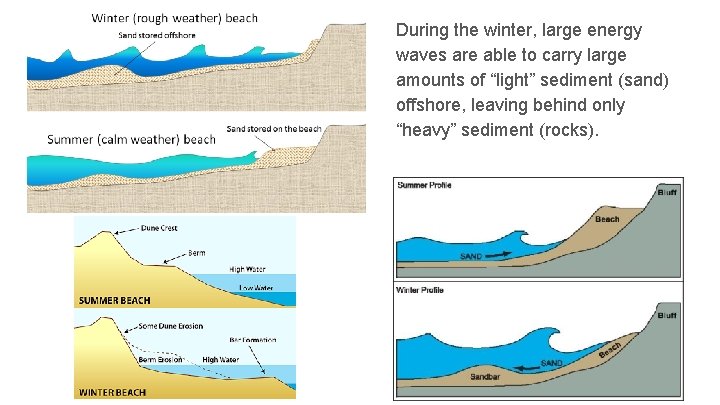
During the winter, large energy waves are able to carry large amounts of “light” sediment (sand) offshore, leaving behind only “heavy” sediment (rocks).
How is the amplitude of a wave related to the energy in a wave?