
Types of Waves Part 4 Types of Waves
- Slides: 11
Types of Waves Part 4
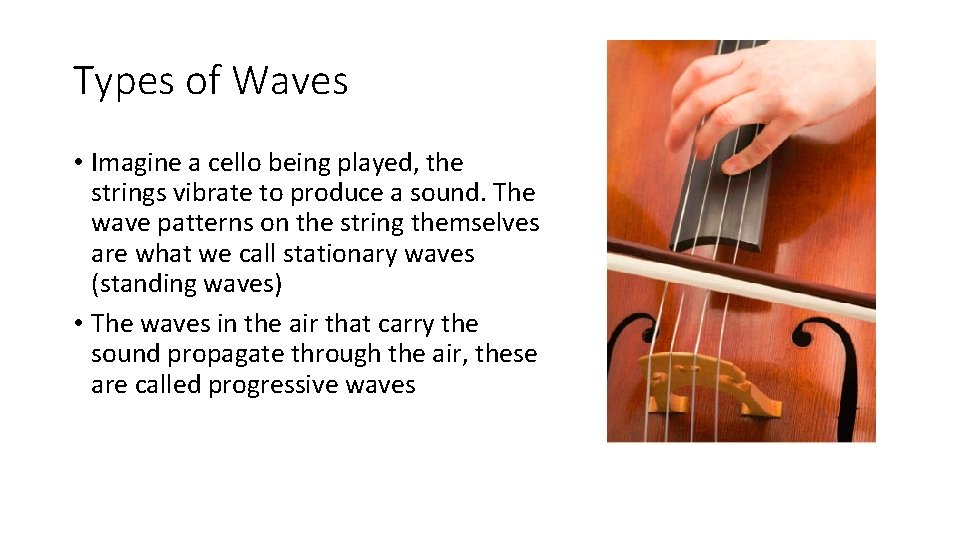
Types of Waves • Imagine a cello being played, the strings vibrate to produce a sound. The wave patterns on the string themselves are what we call stationary waves (standing waves) • The waves in the air that carry the sound propagate through the air, these are called progressive waves
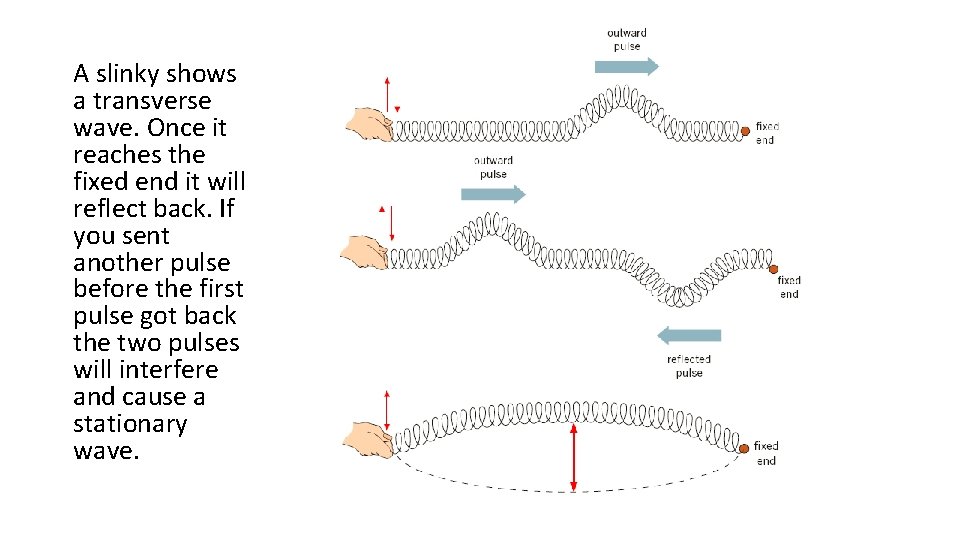
A slinky shows a transverse wave. Once it reaches the fixed end it will reflect back. If you sent another pulse before the first pulse got back the two pulses will interfere and cause a stationary wave.
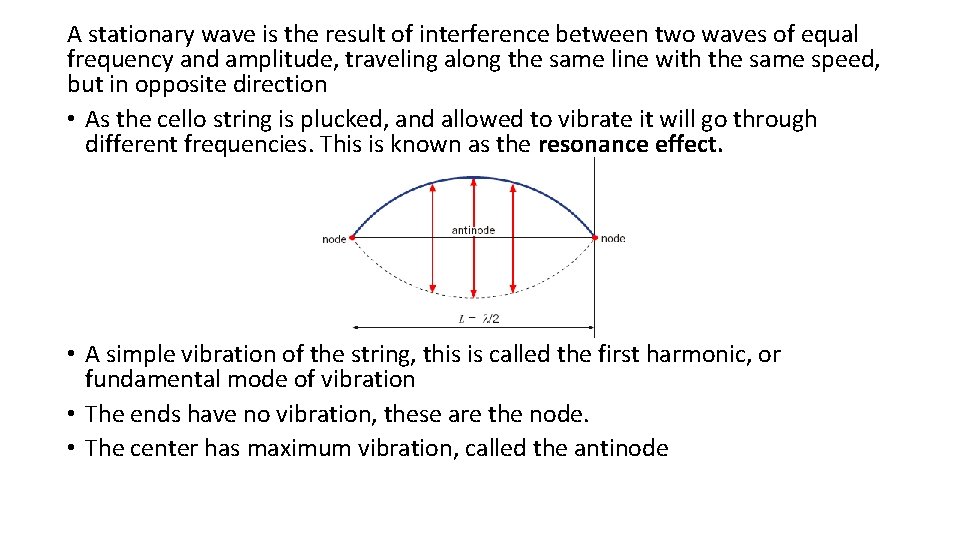
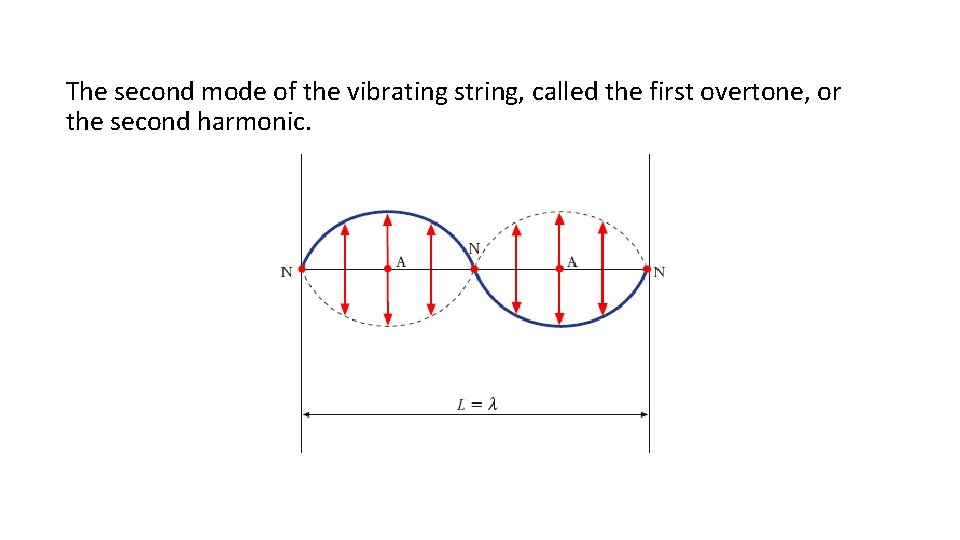
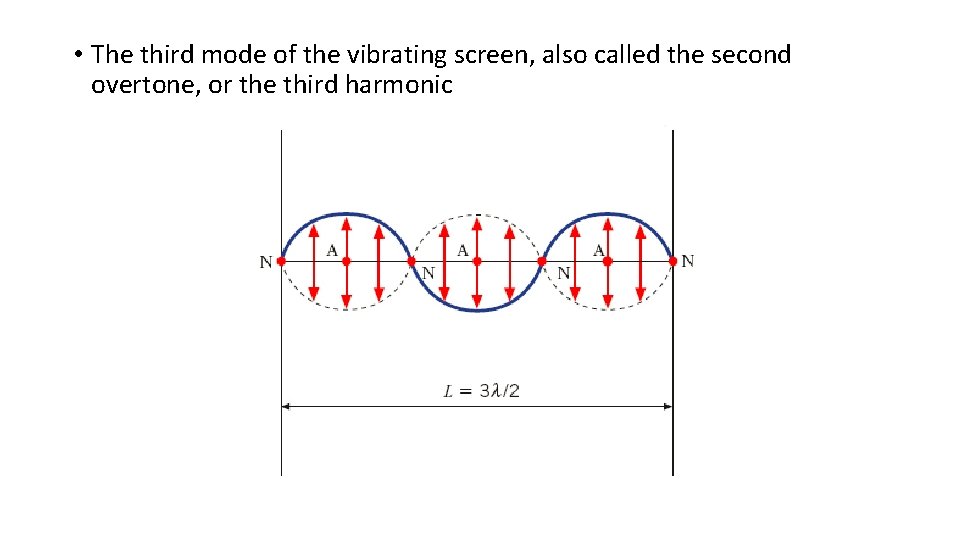
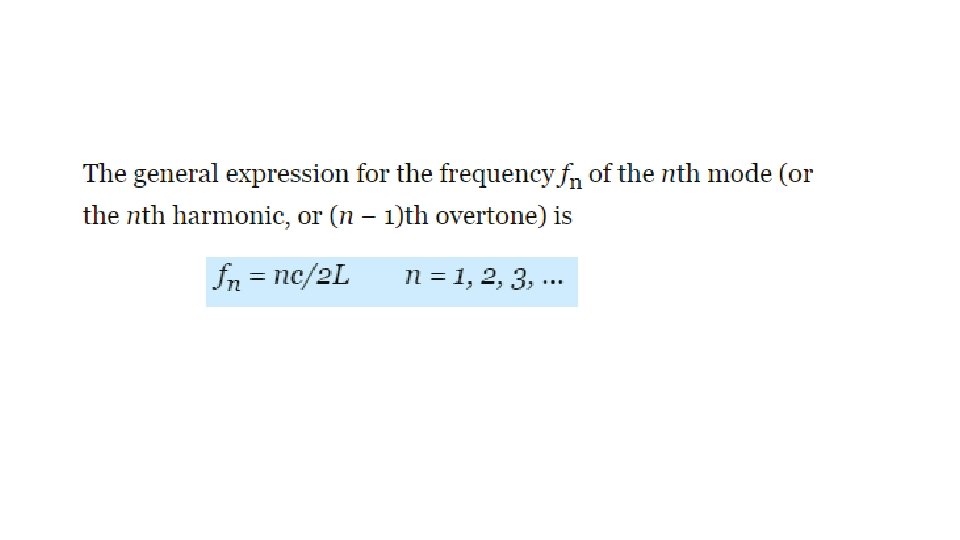
A stationary wave is the result of interference between two waves of equal frequency and amplitude, traveling along the same line with the same speed, but in opposite direction • As the cello string is plucked, and allowed to vibrate it will go through different frequencies. This is known as the resonance effect. • A simple vibration of the string, this is called the first harmonic, or fundamental mode of vibration • The ends have no vibration, these are the node. • The center has maximum vibration, called the antinode
The second mode of the vibrating string, called the first overtone, or the second harmonic.
• The third mode of the vibrating screen, also called the second overtone, or the third harmonic
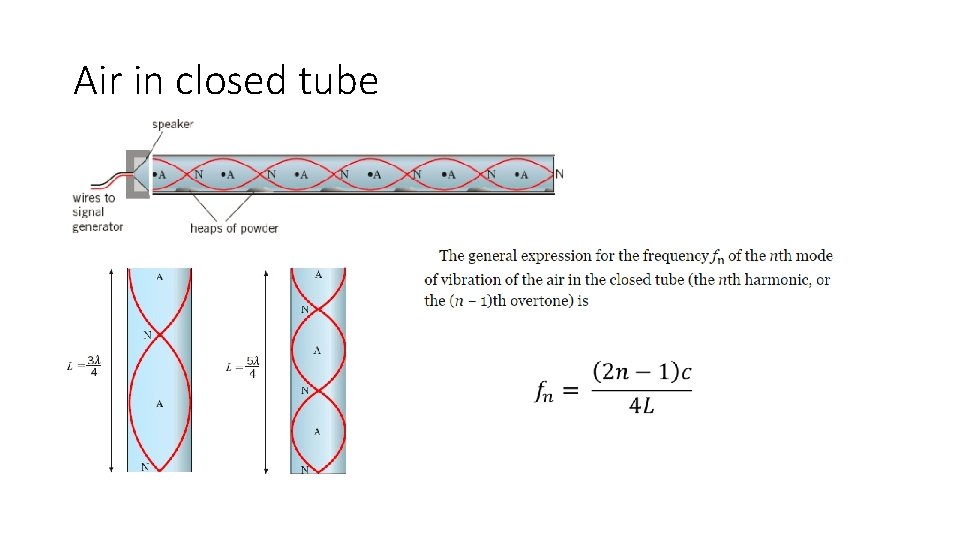
Air in closed tube
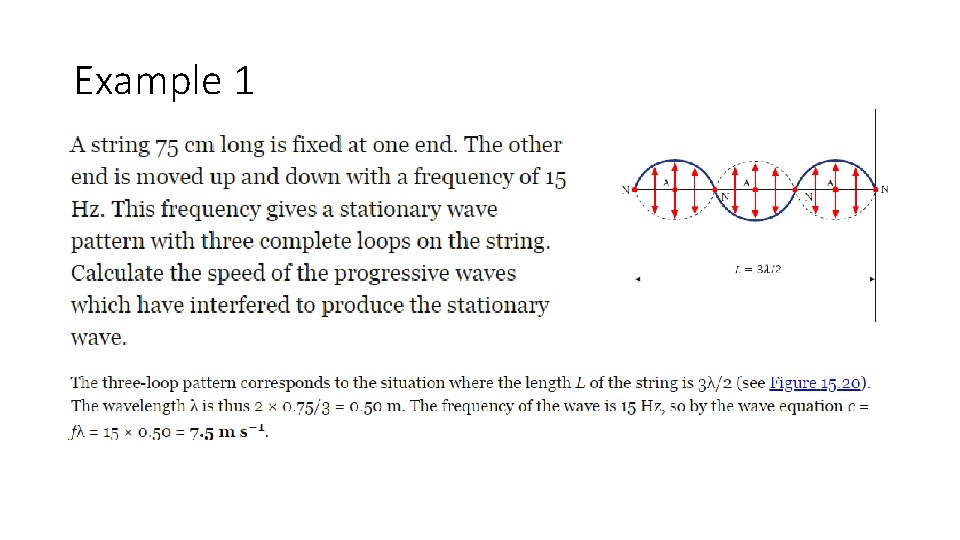
Example 1
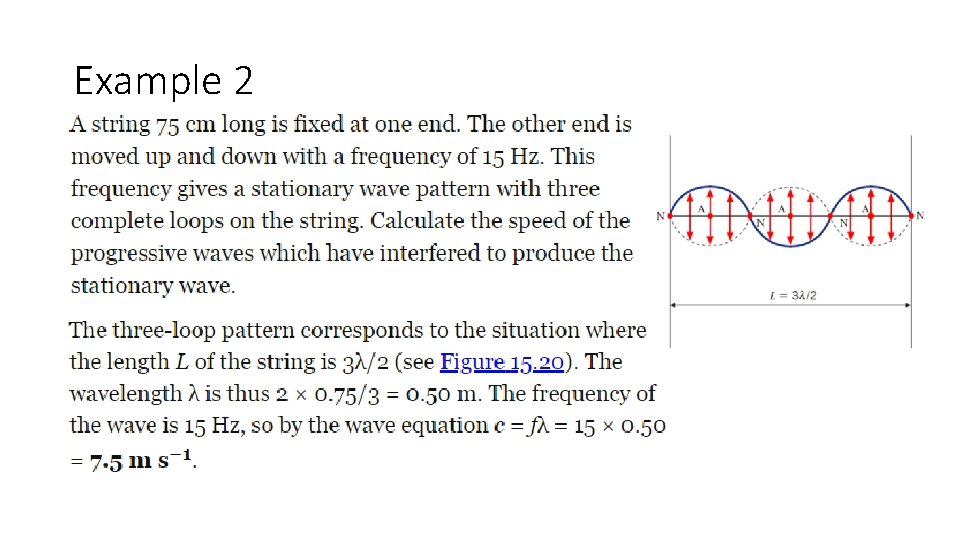
Example 2
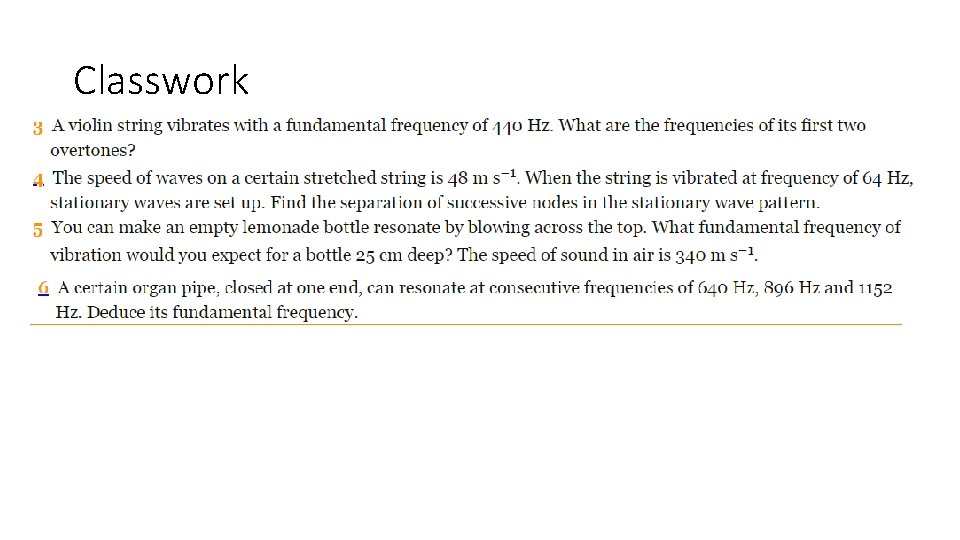
Classwork