
Types of Waves Mechanical A wave that travels

- Slides: 24
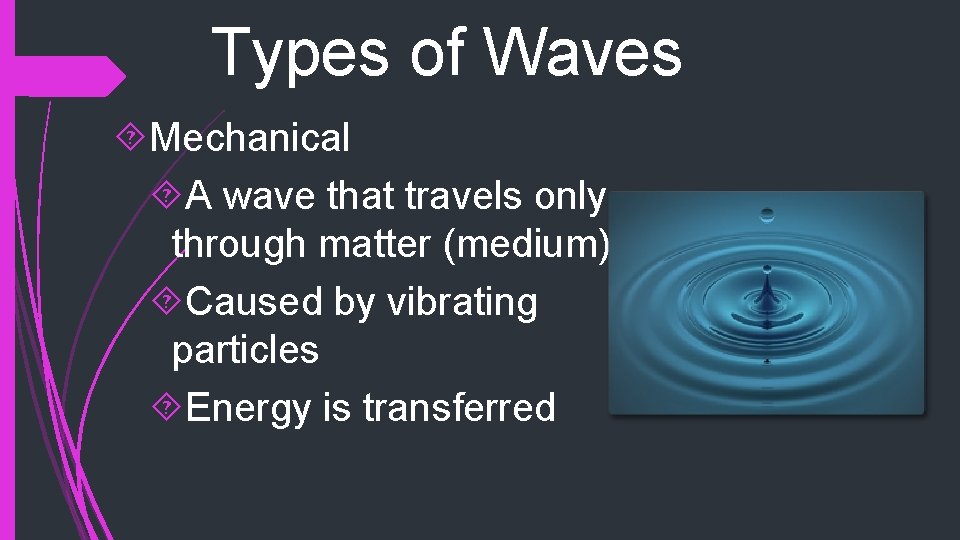
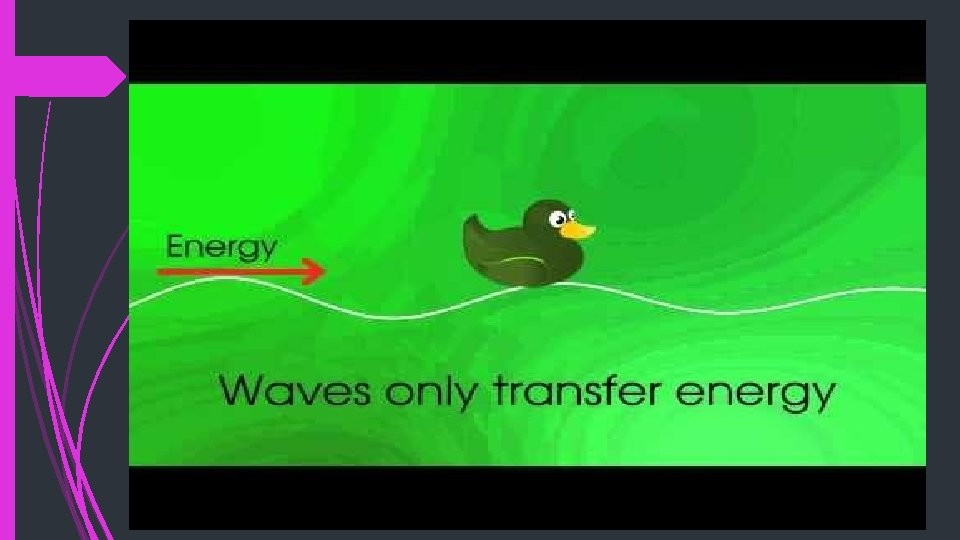
Types of Waves Mechanical A wave that travels only through matter (medium) Caused by vibrating particles Energy is transferred
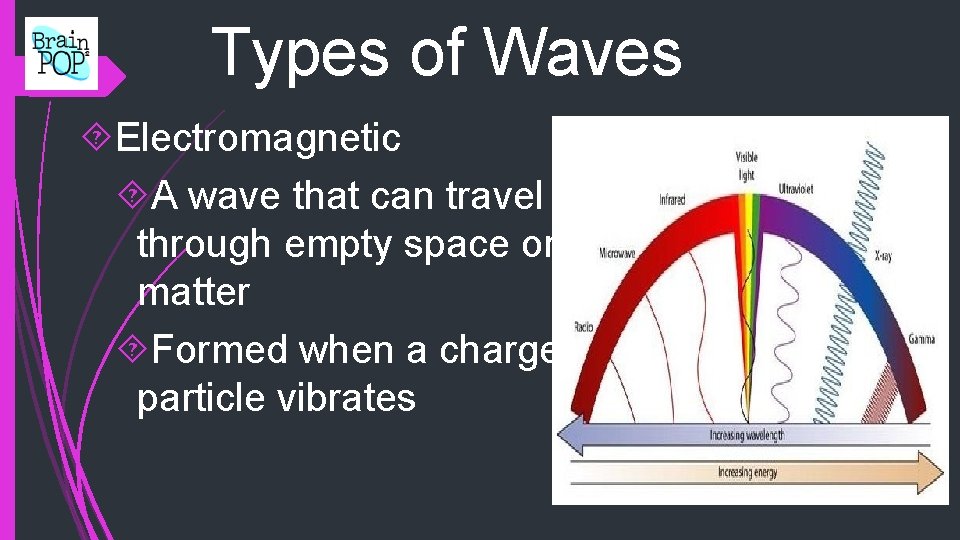
Types of Waves Electromagnetic A wave that can travel through empty space or matter Formed when a charged particle vibrates
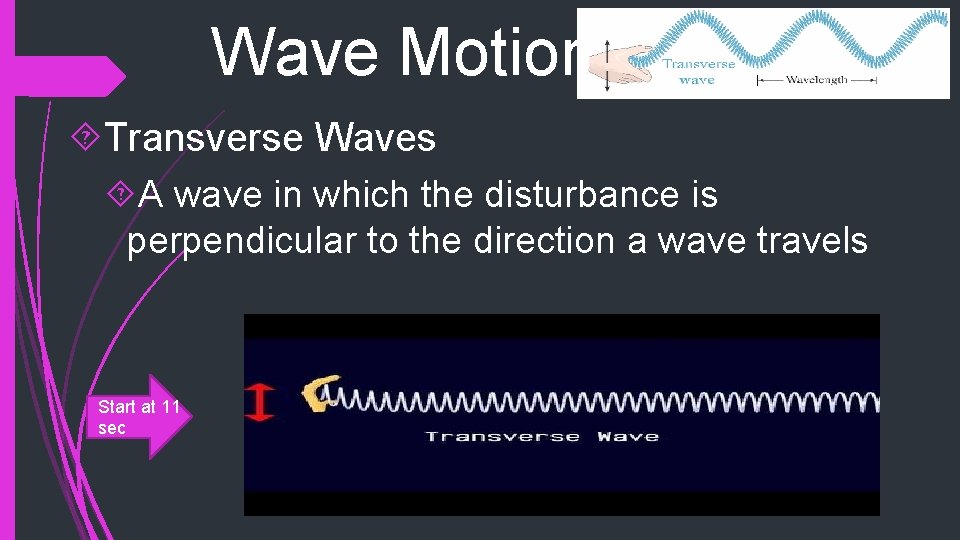
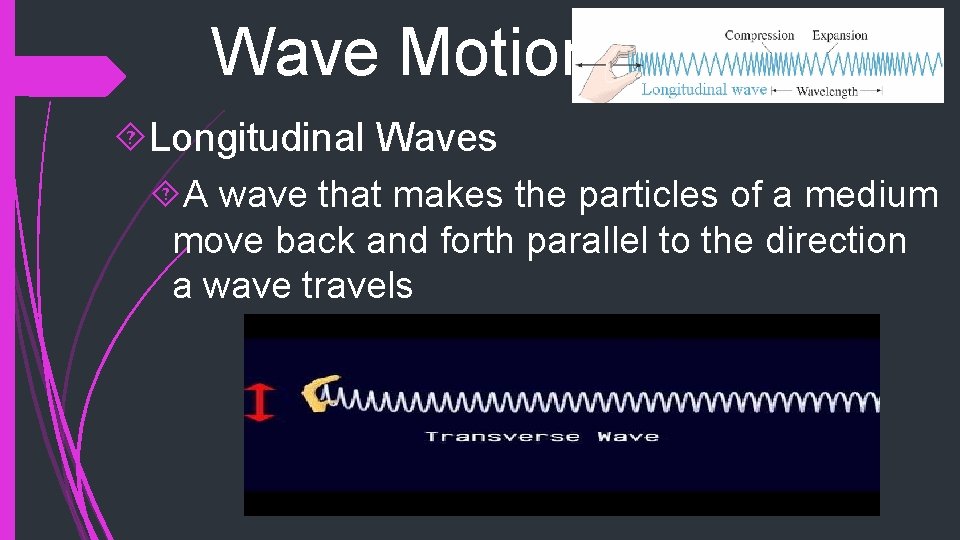
Wave Motions Transverse Waves A wave in which the disturbance is perpendicular to the direction a wave travels Start at 11 sec
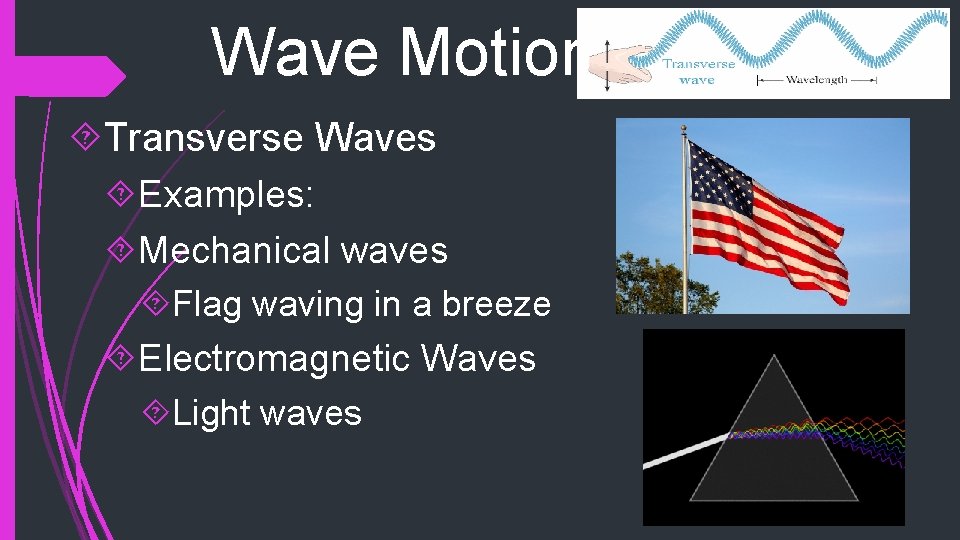
Wave Motions Transverse Waves Examples: Mechanical waves Flag waving in a breeze Electromagnetic Waves Light waves
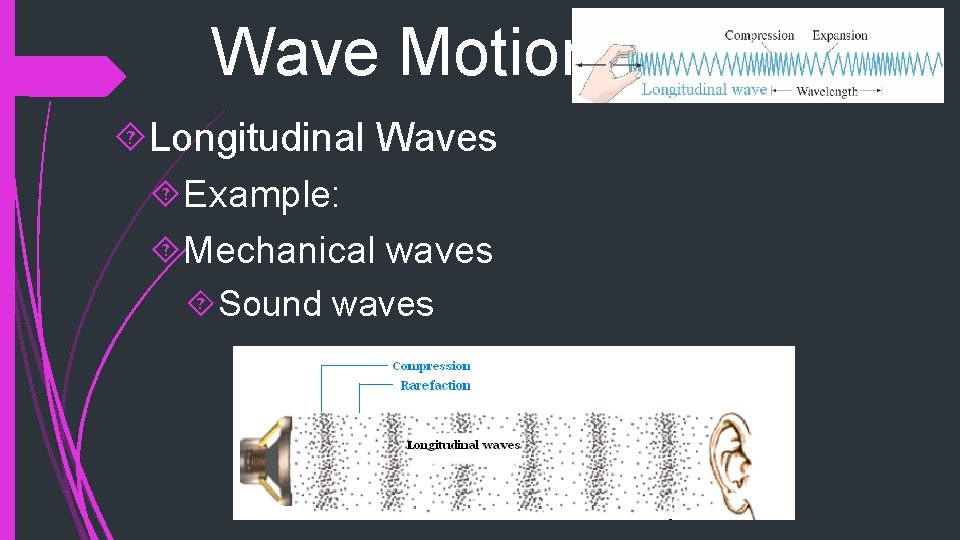
Wave Motions Longitudinal Waves A wave that makes the particles of a medium move back and forth parallel to the direction a wave travels
Wave Motions Longitudinal Waves Example: Mechanical waves Sound waves
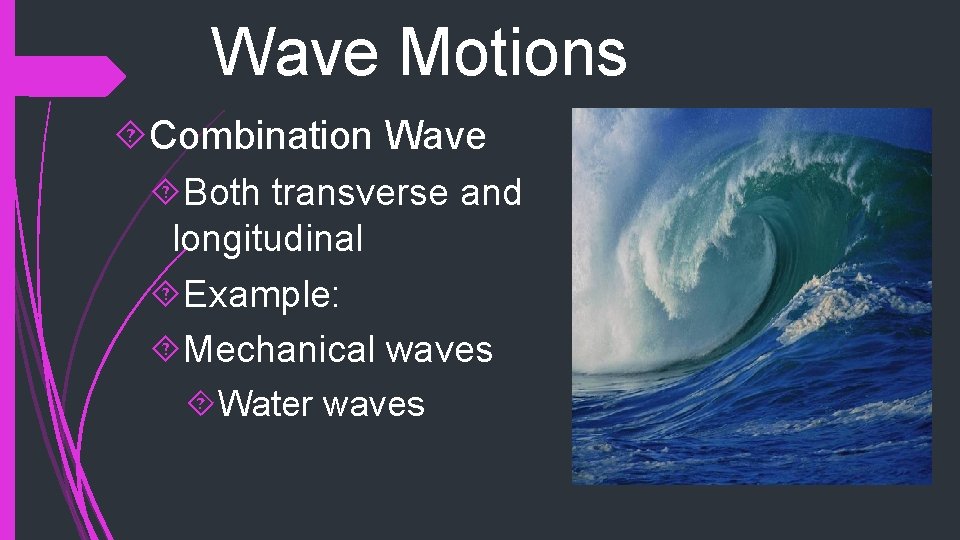
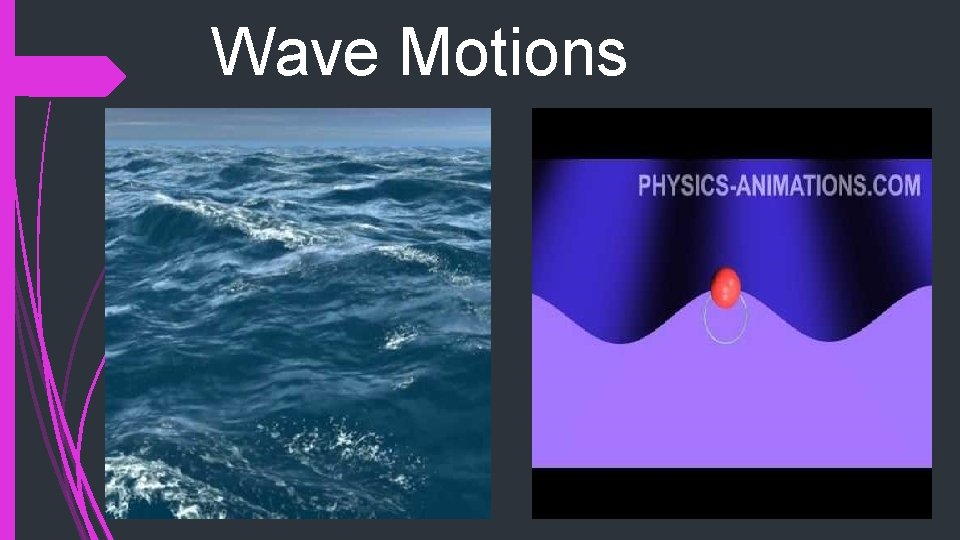
Wave Motions Combination Wave Both transverse and longitudinal Example: Mechanical waves Water waves
Wave Motions
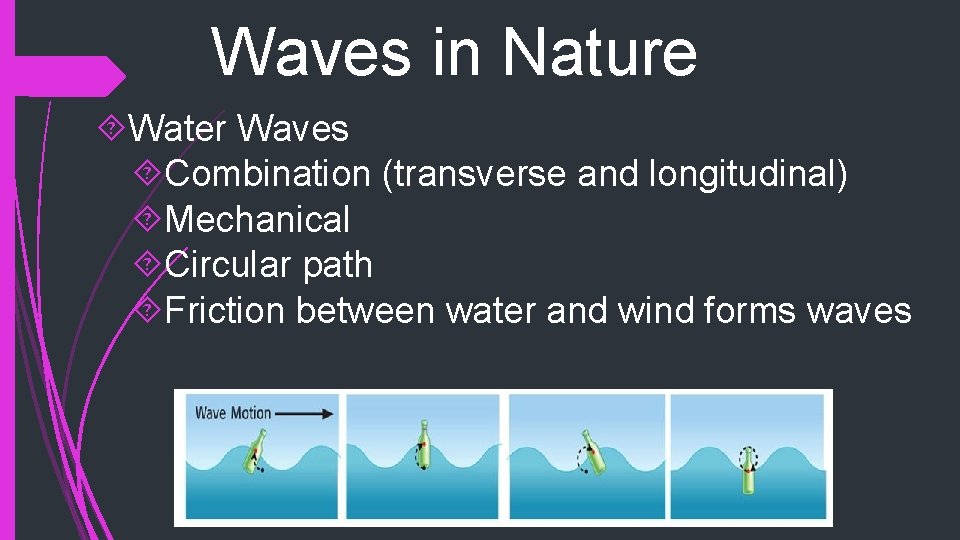
Waves in Nature Water Waves Combination (transverse and longitudinal) Mechanical Circular path Friction between water and wind forms waves
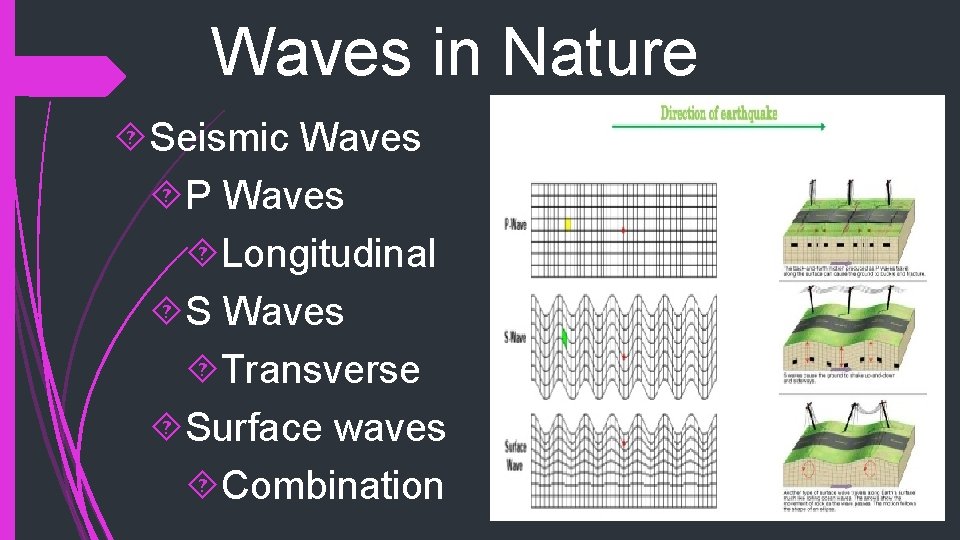
Waves in Nature Seismic Waves P Waves Longitudinal S Waves Transverse Surface waves Combination
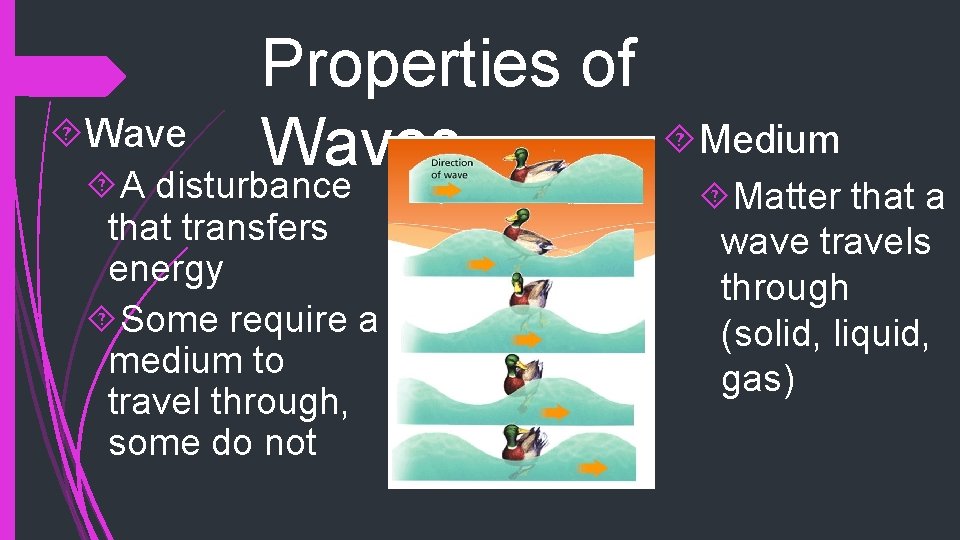
Properties of Waves Wave A disturbance that transfers energy Some require a medium to travel through, some do not Medium Matter that a wave travels through (solid, liquid, gas)
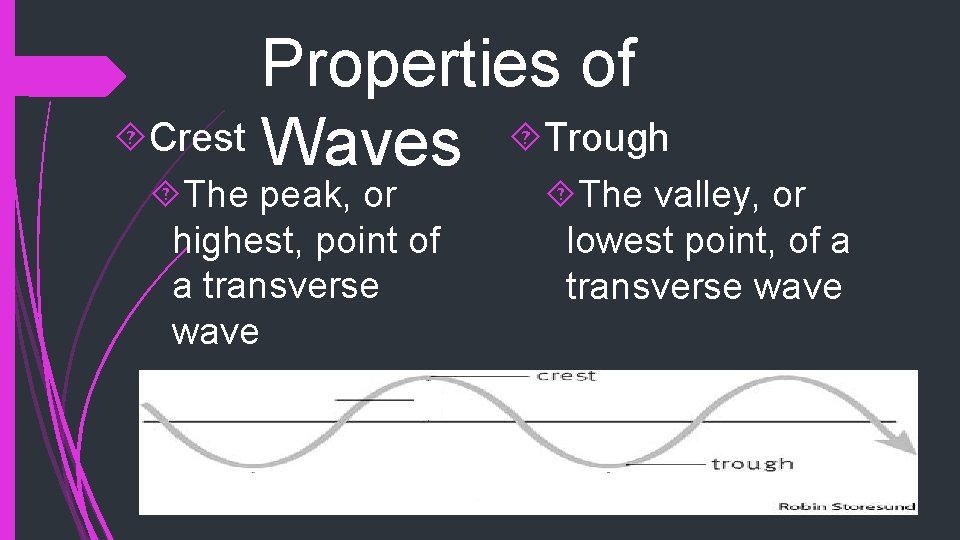
Properties of Crest Waves Trough The peak, or highest, point of a transverse wave The valley, or lowest point, of a transverse wave
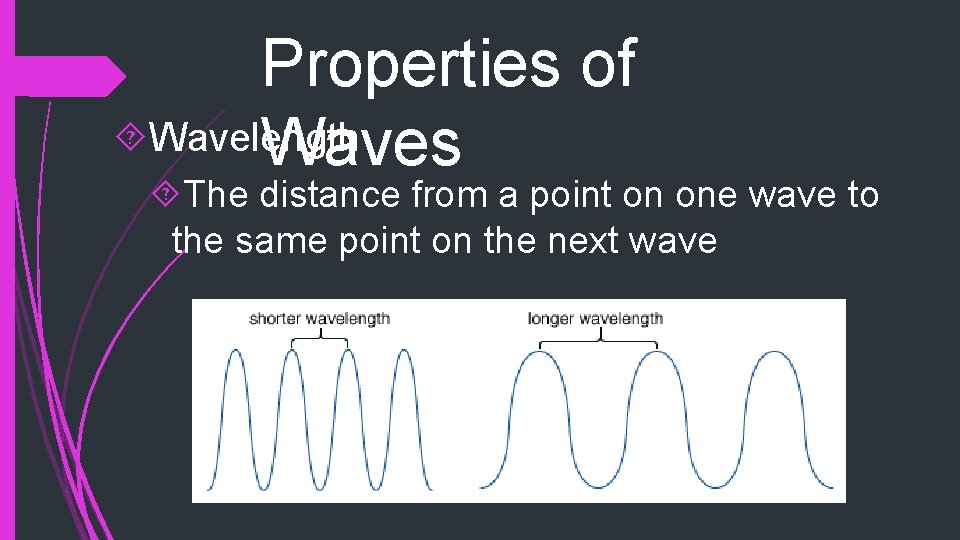
Properties of Wavelength Waves The distance from a point on one wave to the same point on the next wave
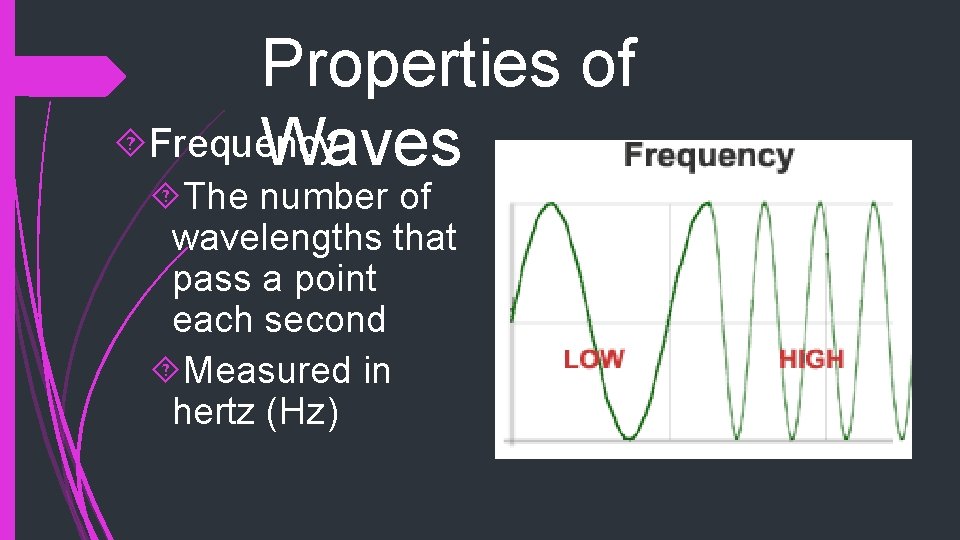
Properties of Frequency Waves The number of wavelengths that pass a point each second Measured in hertz (Hz)
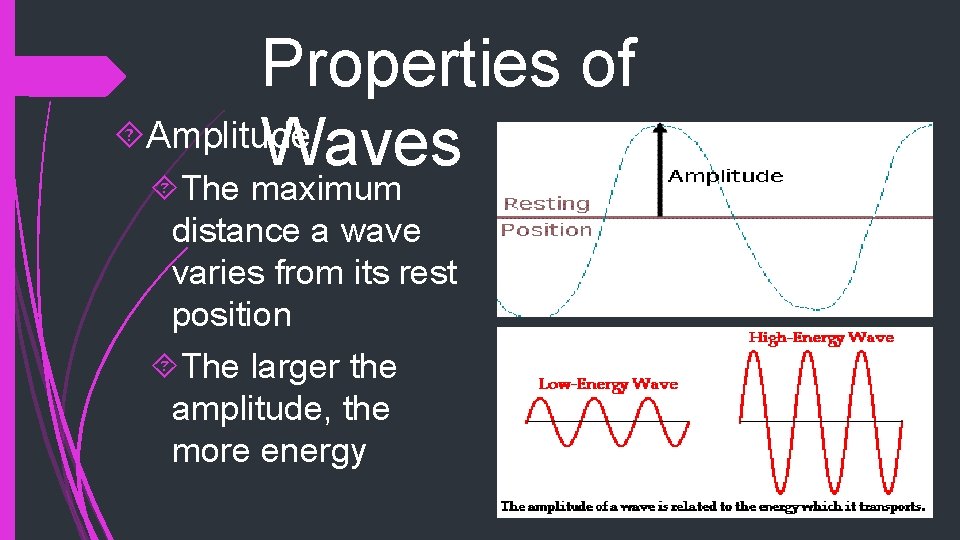
Properties of Amplitude Waves The maximum distance a wave varies from its rest position The larger the amplitude, the more energy
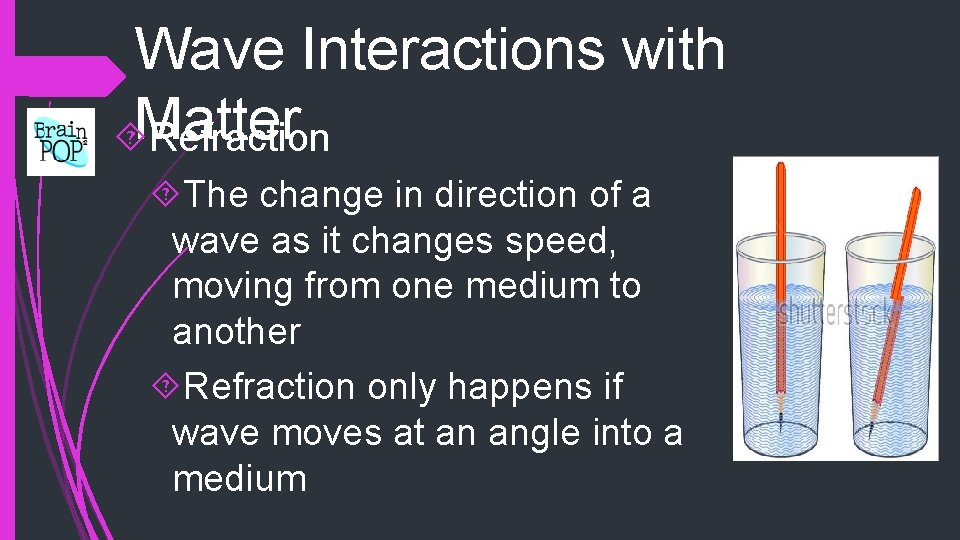
Wave Interactions with Matter Refraction The change in direction of a wave as it changes speed, moving from one medium to another Refraction only happens if wave moves at an angle into a medium
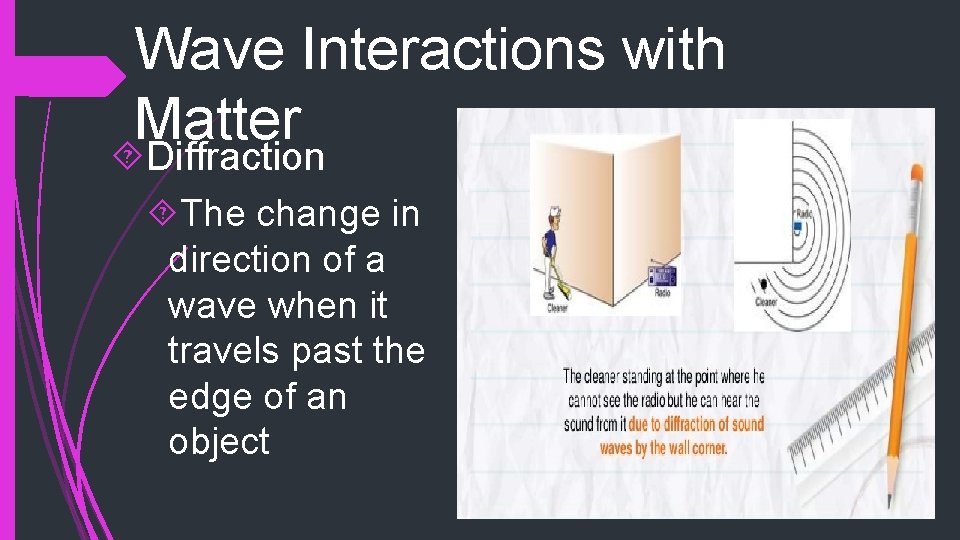
Wave Interactions with Matter Diffraction The change in direction of a wave when it travels past the edge of an object
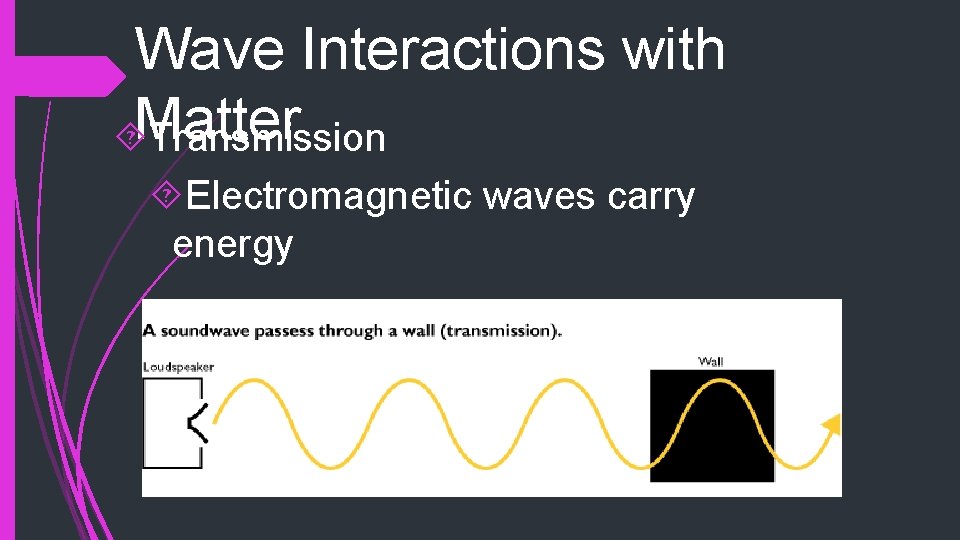
Wave Interactions with Matter Transmission Electromagnetic waves carry energy
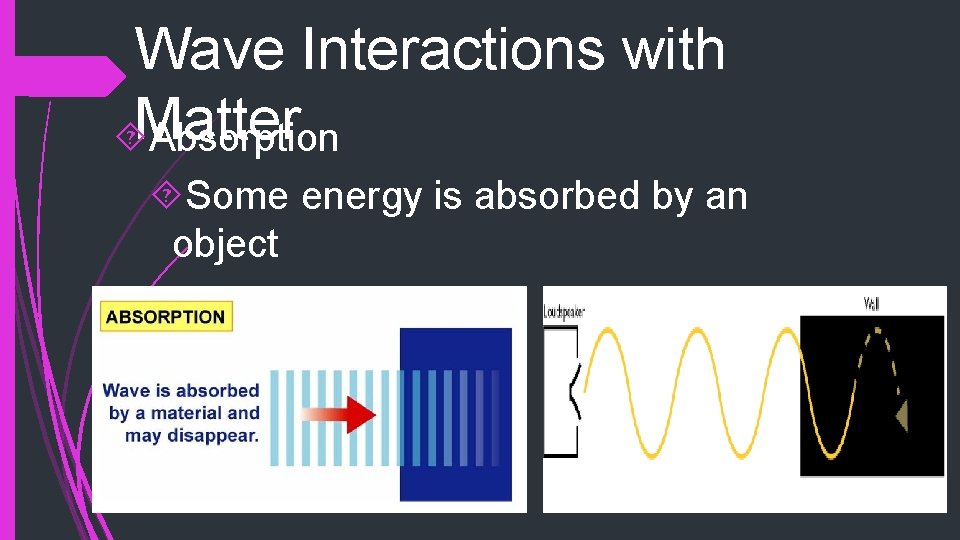
Wave Interactions with Matter Absorption Some energy is absorbed by an object
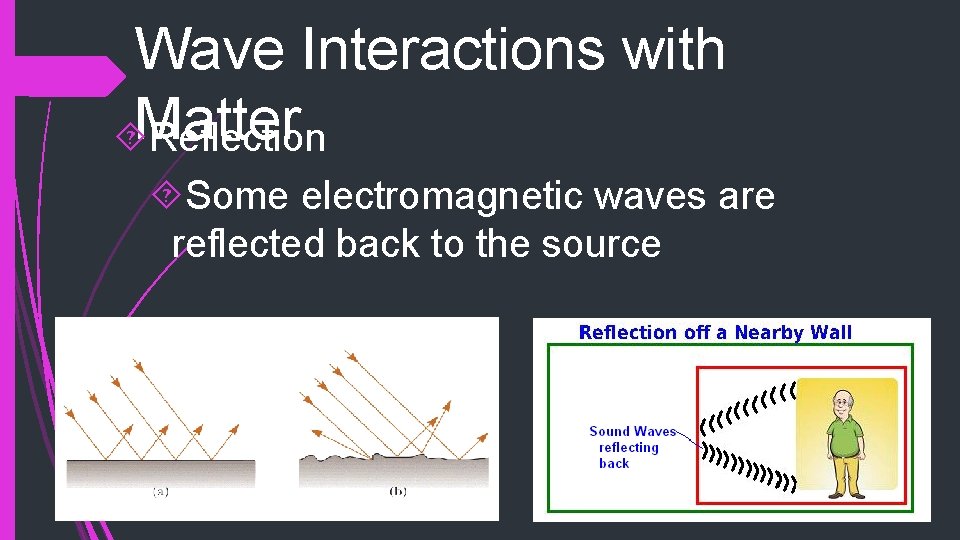
Wave Interactions with Matter Reflection Some electromagnetic waves are reflected back to the source
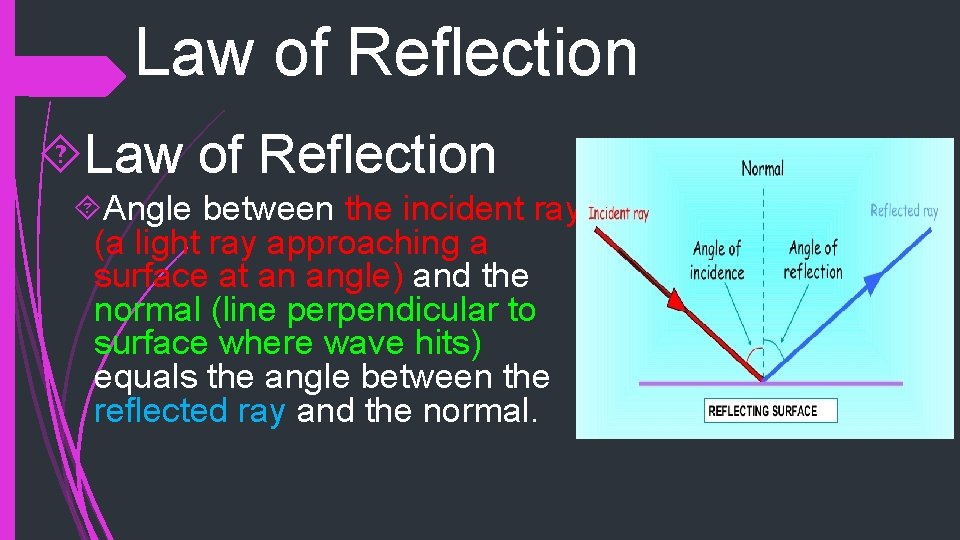
Law of Reflection Angle between the incident ray (a light ray approaching a surface at an angle) and the normal (line perpendicular to surface where wave hits) equals the angle between the reflected ray and the normal.