
Types of Technological SystemsInputs to Technology Systems Chapters

- Slides: 41
Types of Technological Systems/Inputs to Technology Systems Chapters 3 & 4
Level of Development n Obsolete technologies – Old and outdated technology Example: Rotary phone Manual ice cream maker/cranking method
Current Technologies n Today’s technology that help products and services to be created. – Example: back-up cameras use on cars
Emerging Technologies Also called high technology or high tech n These are brand new technologies n – Example: Driverless cars launched in Germany
Economic Structure for Technology Systems Profit-Centered Companies (Private) n Structure n – Research & Development ( nickname-R & D) n Designing services and developing all products and – Production n Developing and operating systems
Economic Structure for Technology Systems Continuation – Marketing (Promotion and Advertising) n Two major Activities – Industrial relations (positive company relations – Financial affairs (recordkeeping needed to manage system)
Economic Structure for Technology Systems n Government (Public)-NASA – Developmented by the government first: n Satellite technology n Internet technology n Jet Aircraft advancements n Corrosion-resistant coating (i. e. type used on the Statue of Liberty)
Number of People Involved in Technology Systems Individuals (i. e. inventors, scientists, chemist, etc. ) n Groups (i. e. research groups, engineering firms) n
Types of Technology Agriculture/Biotechnology n Communication/Information n Construction n Energy & Power n Manufacturing n Medical n Transportation n
Type of Technology Examples n Agriculture/Biotechnology – Cotton gin, tractor, laboratory methods of create more organic/healthier products n Communication/Information – Smartphones, laptops with fingerprint recognition, etc. n Construction – Cranes, bulldozer, etc.
Type of Technology Examples n Energy & Power – Solar calculators, natural gas for home/apartment, etc. n Manufacturing – Forklifts, lathe, etc. n Medical – Pharmaceuticals, laser treatments, etc.
Types of Technology Examples n Transportation – Subways, Bugatti, Eco-Friendly Metro Buses
Genetic Engineering n n Genetic engineering research scientists, or biotechnologists, manipulate and modify the genes, or hereditary makeup, of microorganisms, plants, and animals. They conduct research in a broad range of biological sciences including biochemistry, botany, embryology, and microbiology. Salary: median 65, 000 What are pros and cons of this career?
Chapter 4 -Inputs to Technology Systems n Scientists and Engineers – Scientist developing what is needed to create a product or processes – Engineers applies scientifc and technological knowledge in designing products, structures, and systems
Seven Inputs –Review Time n Finances n Information n Tools and Machines n People* n Energy n Materials. n
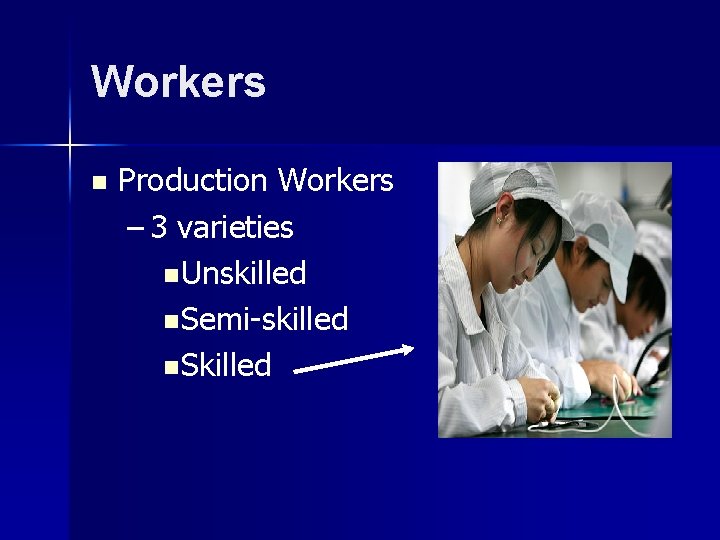
Workers n Production Workers – 3 varieties n Unskilled n Semi-skilled n Skilled
Technology Systems Participants Technicians are skilled workers in laboratories and product testing n Mechanics are skilled workers in service operations n Entrepreneurs are those who create businesses n
Technology Systems Participants Continuation Managers organize and direct the workers and others in these businesses. n Support Staff are non-managerial workers with other knowledge of the businesses. n
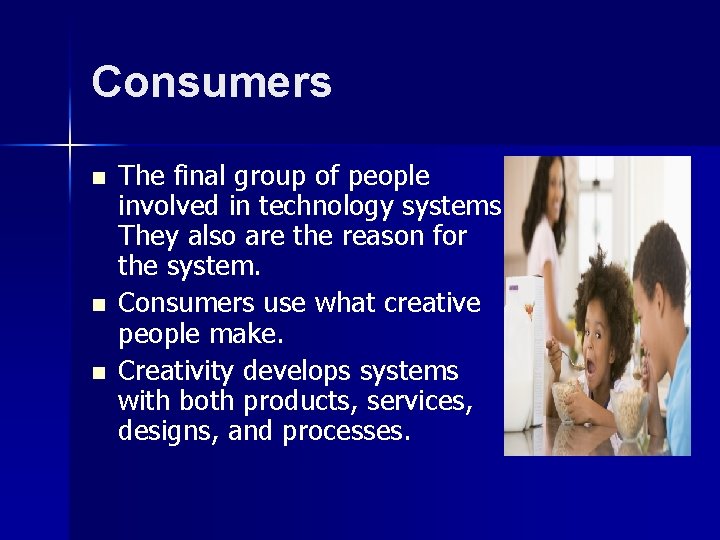
Consumers n n n The final group of people involved in technology systems. They also are the reason for the system. Consumers use what creative people make. Creativity develops systems with both products, services, designs, and processes.
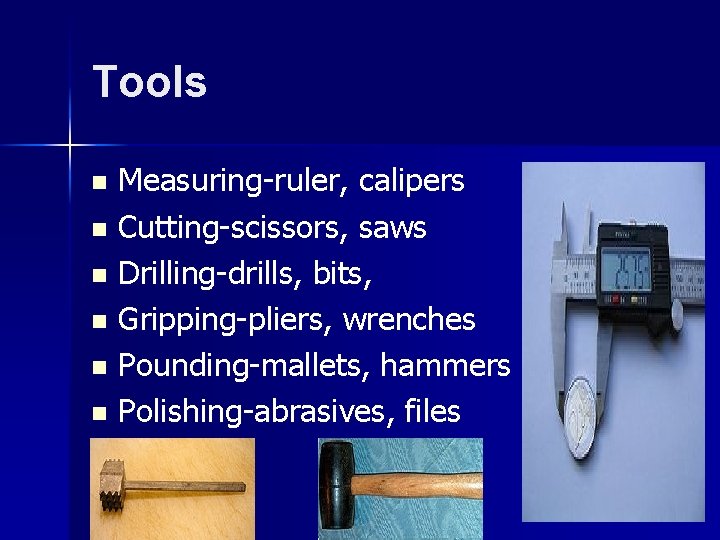
Tools Measuring-ruler, calipers n Cutting-scissors, saws n Drilling-drills, bits, n Gripping-pliers, wrenches n Pounding-mallets, hammers n Polishing-abrasives, files n
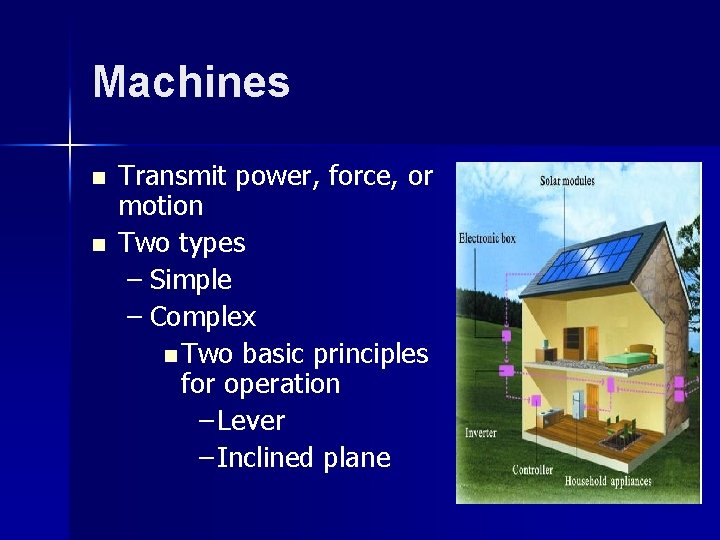
Machines n n Transmit power, force, or motion Two types – Simple – Complex n Two basic principles for operation – Lever – Inclined plane
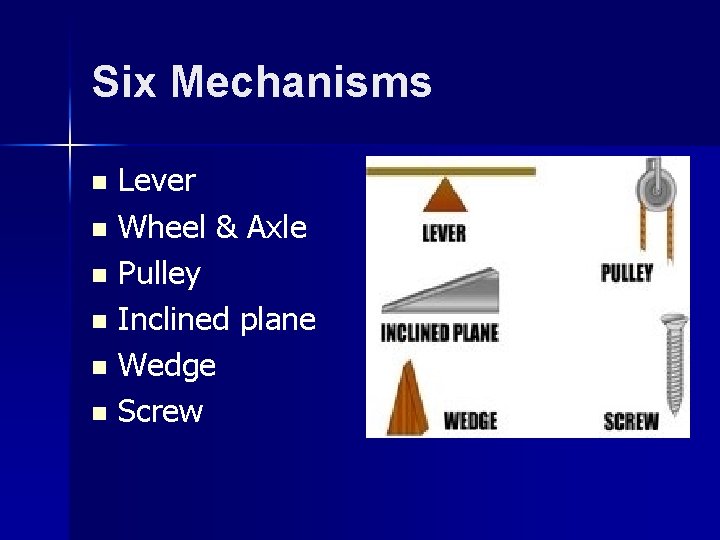
Six Mechanisms Lever n Wheel & Axle n Pulley n Inclined plane n Wedge n Screw n
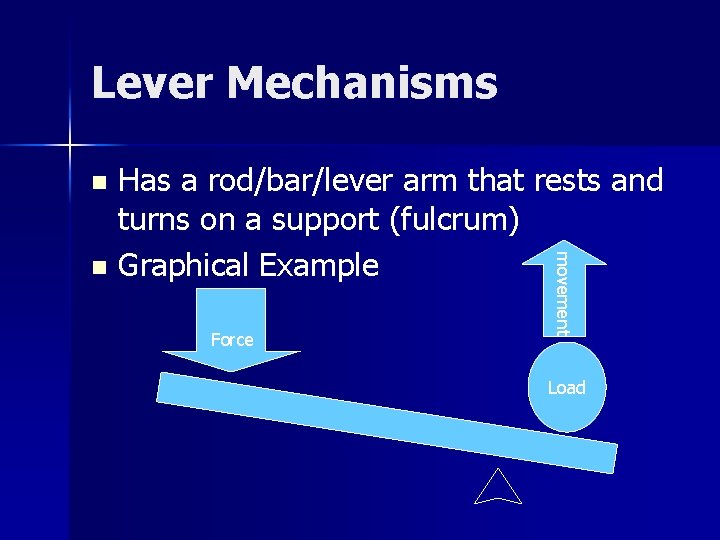
Lever Mechanisms Has a rod/bar/lever arm that rests and turns on a support (fulcrum) n Graphical Example n movement Force Load
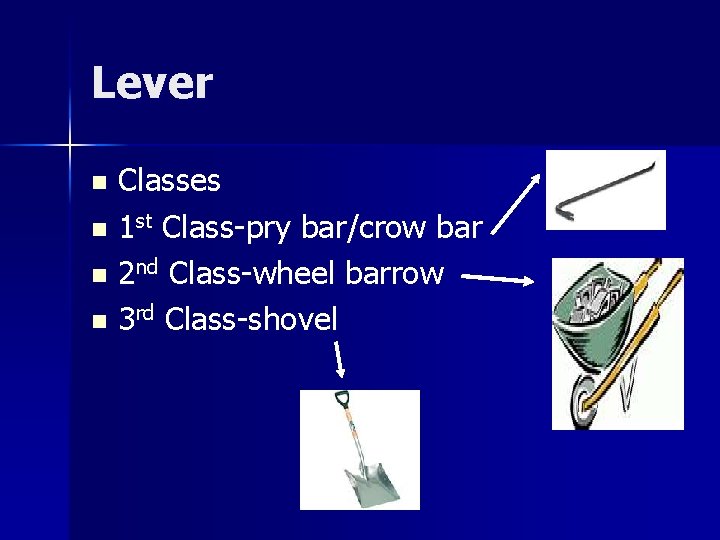
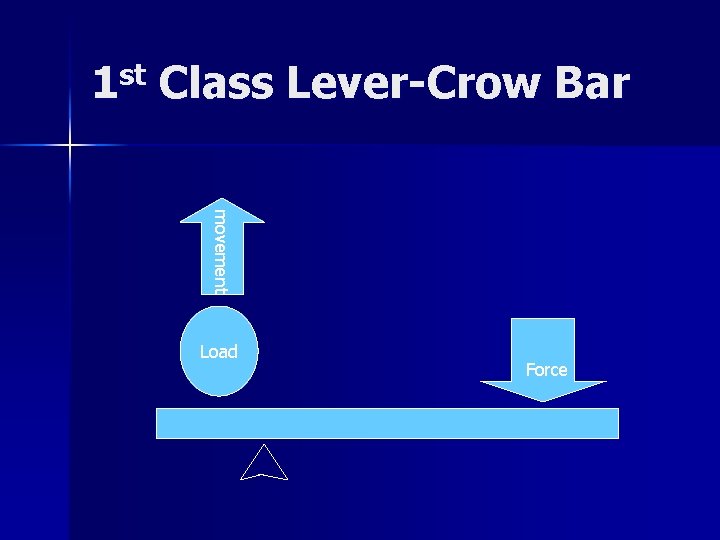
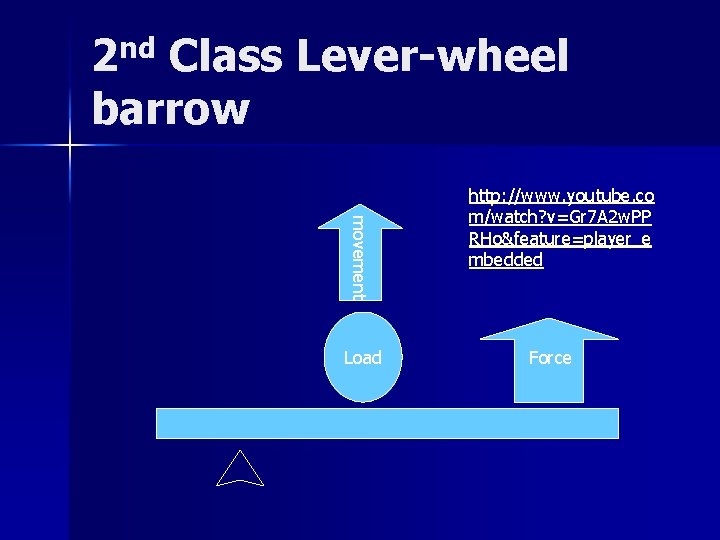
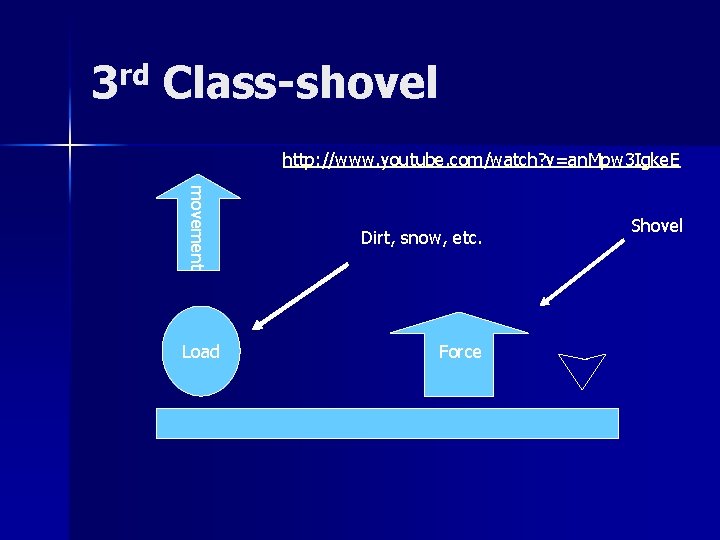
Lever Classes n 1 st Class-pry bar/crow bar n 2 nd Class-wheel barrow n 3 rd Class-shovel n
1 st Class Lever-Crow Bar movement Load Force
2 nd Class Lever-wheel barrow movement Load http: //www. youtube. co m/watch? v=Gr 7 A 2 w. PP RHo&feature=player_e mbedded Force
3 rd Class-shovel http: //www. youtube. com/watch? v=an. Mpw 3 Igke. E movement Load Dirt, snow, etc. Force Shovel
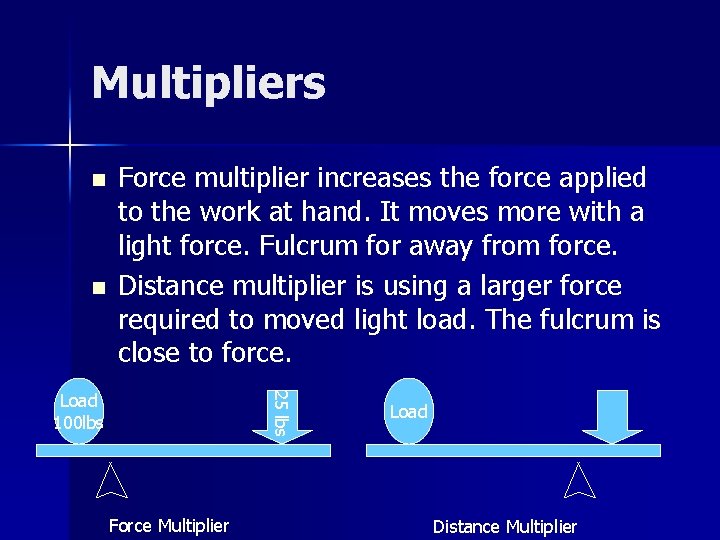
Multipliers n n Force multiplier increases the force applied to the work at hand. It moves more with a light force. Fulcrum for away from force. Distance multiplier is using a larger force required to moved light load. The fulcrum is close to force. 25 lbs Load 100 lbs Force Multiplier Load Distance Multiplier
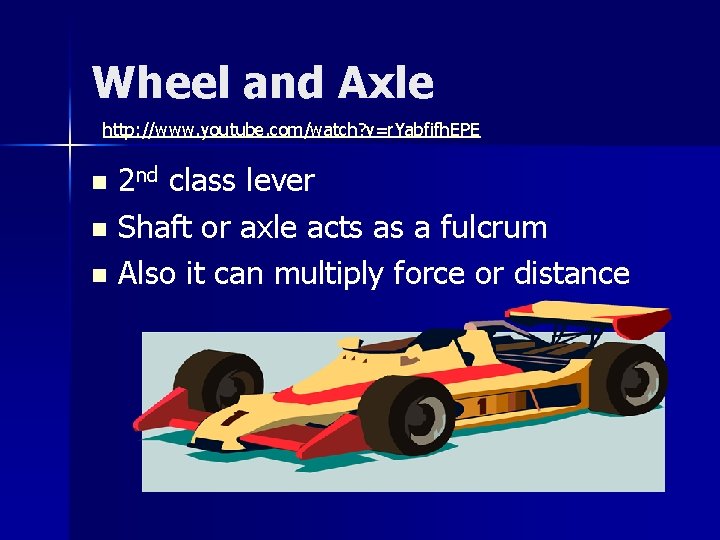
Wheel and Axle http: //www. youtube. com/watch? v=r. Yabfifh. EPE 2 nd class lever n Shaft or axle acts as a fulcrum n Also it can multiply force or distance n
Pulley Grooved wheels attached to an axle n Pulley serve three purposes: n – Direction change – Force multiplier – Distance multiplier http: //www. youtube. com/watch? v=d 8 yqa. Pn. Lq. Kw
Inclined Plane n Inclined plane application – Inclined plane used to roll on drag a load from over elevation to another – Ex. Roadway to the mountains/ramps to load a truck Video: http: //www. youtube. com/watch? v=CUXry 7 Oi. XM
Inclined Plane Applications n Wedge-used to split and separate materials and to grip parts – Example: doorstop assist in gripping the door and the floor.
Inclined Plane Applications n Screw- an inclined plane wrapped in a shaft. A screw is a force multiplier.
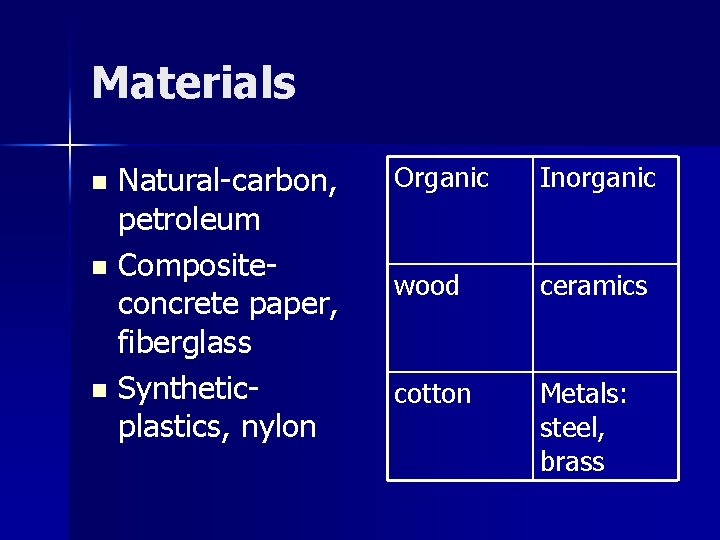
Materials Natural-carbon, petroleum n Compositeconcrete paper, fiberglass n Syntheticplastics, nylon n Organic Inorganic wood ceramics cotton Metals: steel, brass
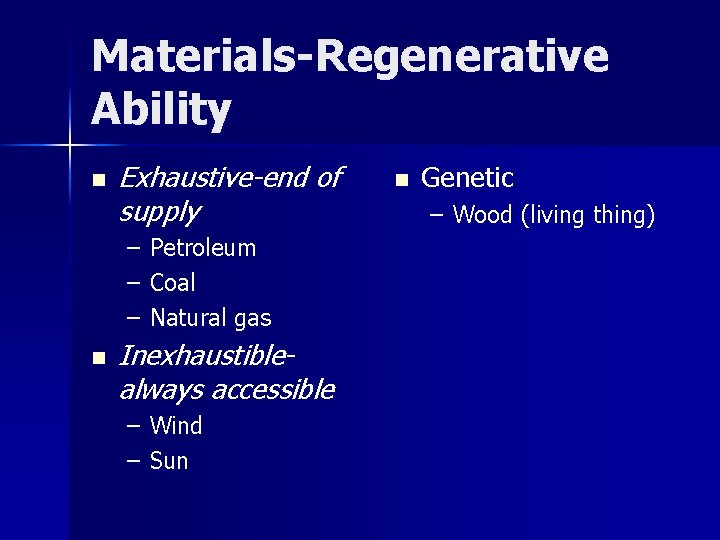
Materials-Regenerative Ability n Exhaustive-end of supply – – – n Petroleum Coal Natural gas Inexhaustiblealways accessible – Wind – Sun n Genetic – Wood (living thing)
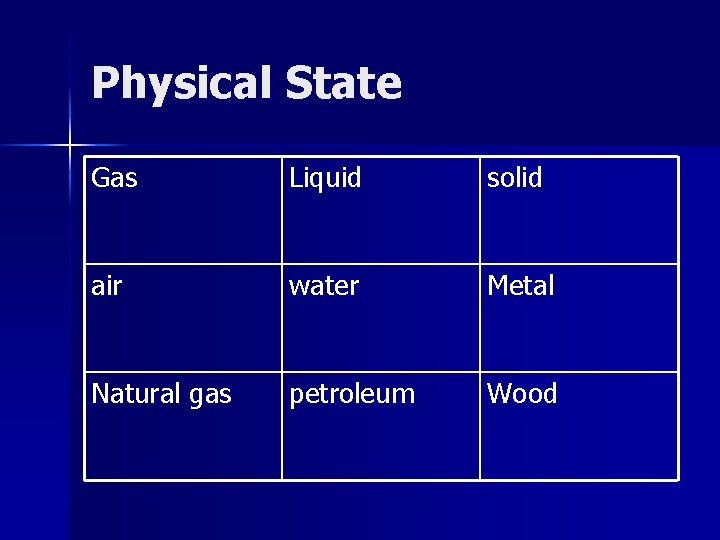
Physical State Gas Liquid solid air water Metal Natural gas petroleum Wood
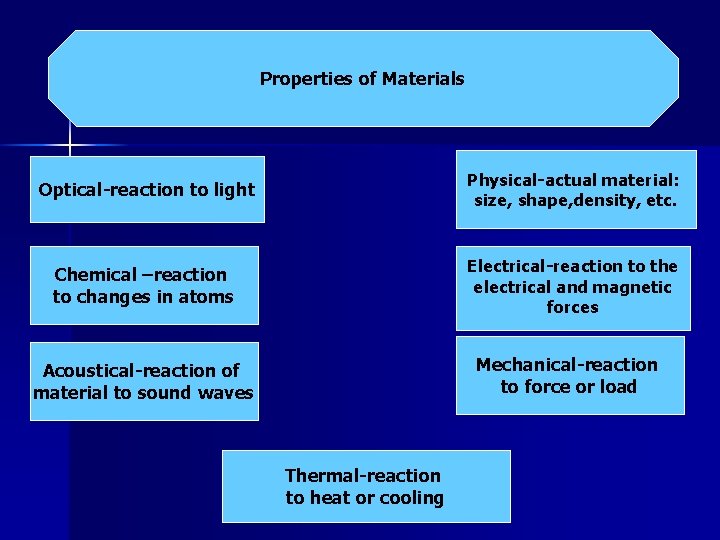
Properties of Materials Optical-reaction to light Physical-actual material: size, shape, density, etc. Chemical –reaction to changes in atoms Electrical-reaction to the electrical and magnetic forces Mechanical-reaction to force or load Acoustical-reaction of material to sound waves Thermal-reaction to heat or cooling
Information Data raw facts n Information-Scientific (Laws, Natural Phenomena n Technological (production, design, human-made products) n humanities n
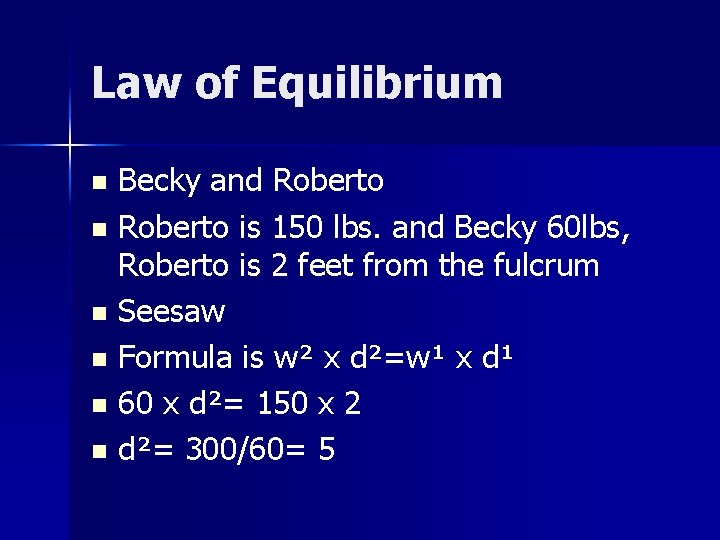
Law of Equilibrium Becky and Roberto n Roberto is 150 lbs. and Becky 60 lbs, Roberto is 2 feet from the fulcrum n Seesaw n Formula is w² x d²=w¹ x d¹ n 60 x d²= 150 x 2 n d²= 300/60= 5 n
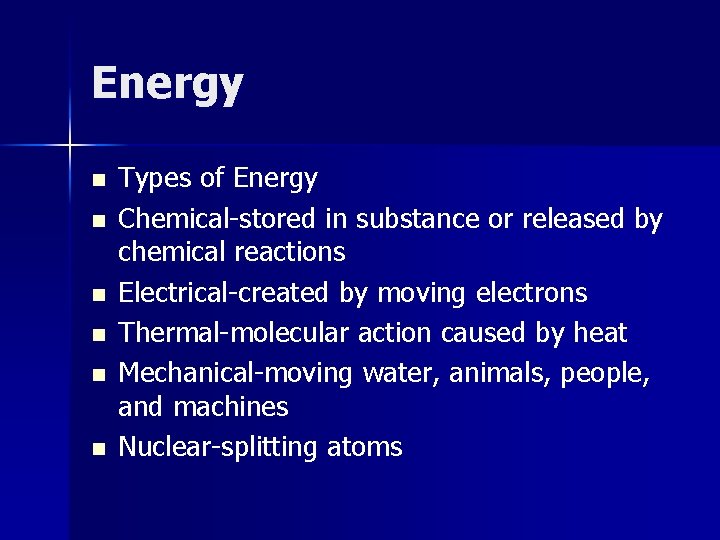
Energy n n n Types of Energy Chemical-stored in substance or released by chemical reactions Electrical-created by moving electrons Thermal-molecular action caused by heat Mechanical-moving water, animals, people, and machines Nuclear-splitting atoms
Finances Sole proprietorship n Partnership n Corporation n Financial operation n n Financing – Equity and Debt