
Types of Stages Why do we have different






- Slides: 31
Types of Stages
Why do we have different types of staging? Impact on audience performances design overall atmostphere
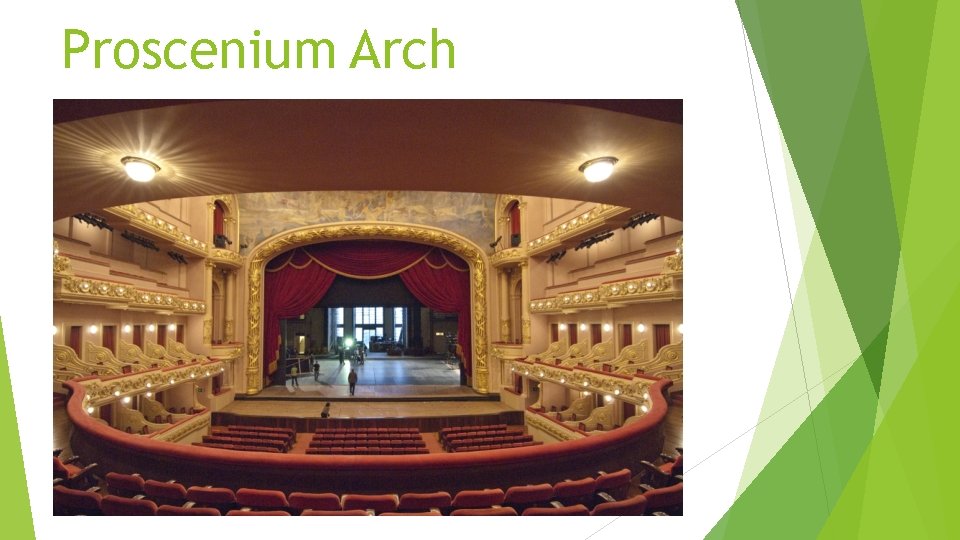
Proscenium Arch
Proscenium Arch Also called the “End On” stage Most common Has large offstage areas Audience position
History of the Proscenium Arch Did not exist in Greek & Roman Theatre’s were more like modern proscenium theatres Modern Halls Teatro Olimipco Teatro Farnese Orchestra Pit
Why use a Proscenium Arch Fourth wall Show requirements Type of show Actor’s perspective
Functions of the Proscenium Arch Creates a window Simplifies hiding objects from the audience Breaking the proscenium
Proscenium Theatre’s today Fallen out of favor Thrust Stage Extravagant
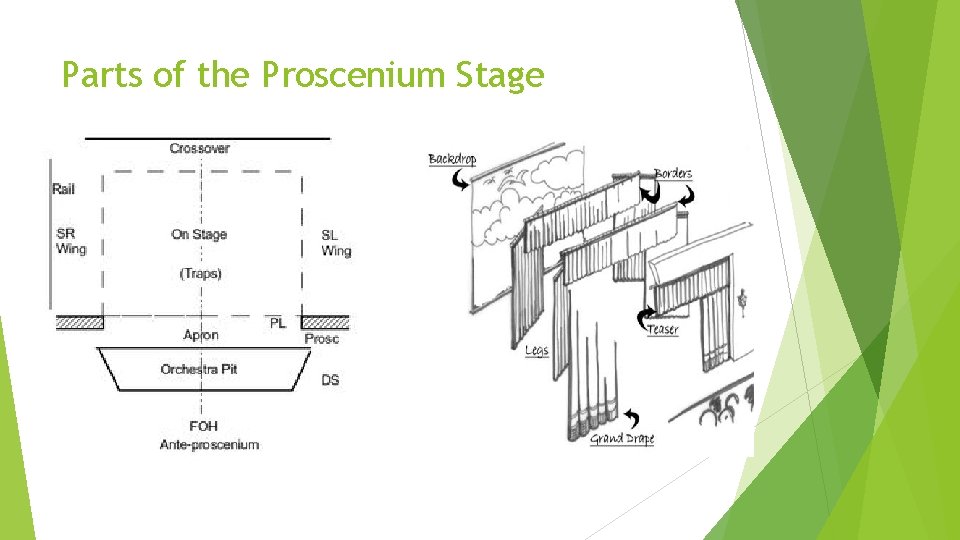
Parts of the Proscenium Stage
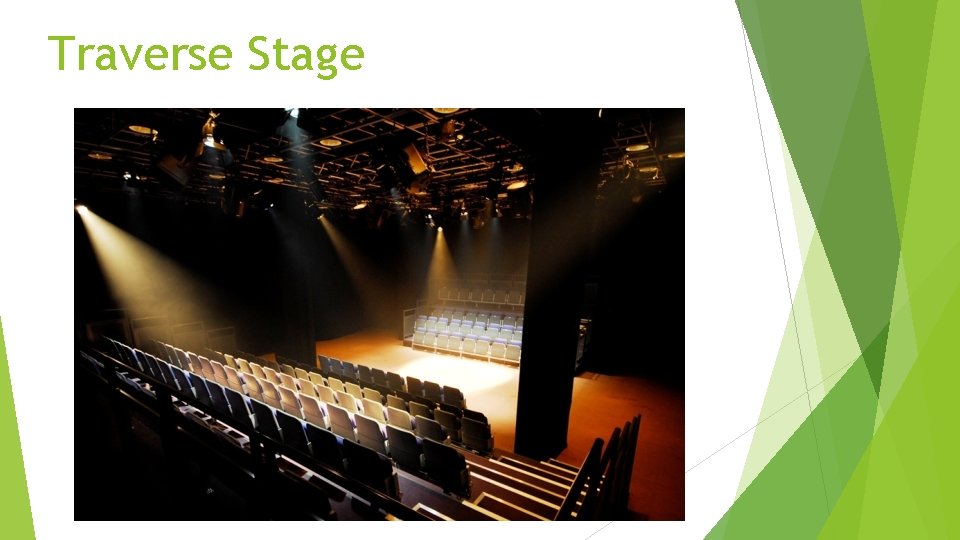
Traverse Stage
Traverse Stage Most unusual type of stage Various scenes Audience can see each other Alley stage Corridor stage
Disadvantages of the Traverse Stage Not very commonly used Lighting Set design Actor’s obligations
Advantages of the Traverse Stage Intimate Staging Minimalistic design Works best in plays that take place in multiple locations
Traverse Stage Parts
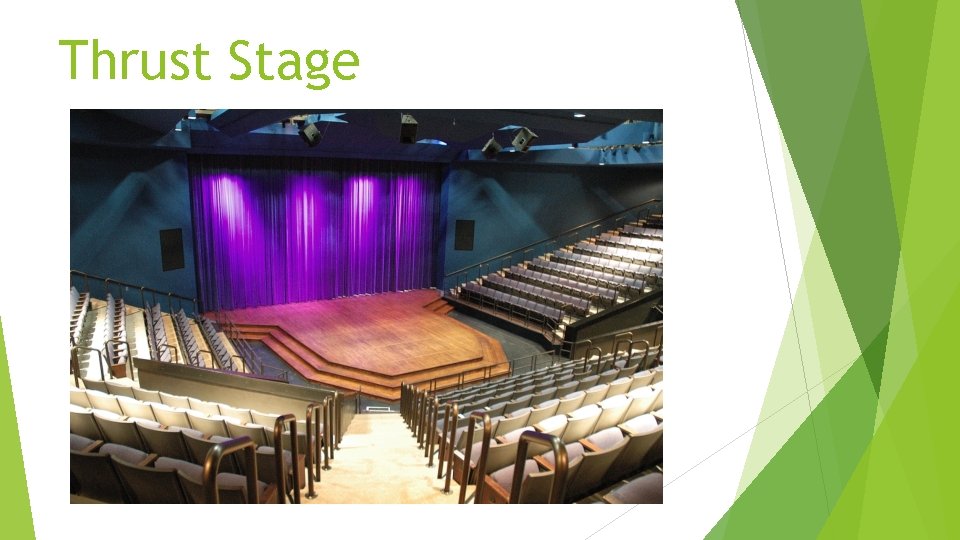
Thrust Stage
Thrust Stage Has several other nicknames Audience No is close to the stage real off stage area curtains/legs separating the audience from the stage
History of the Thrust Stage First appeared in Greek Theatre Pageant wagon Elizabethan Theatre Resurrected in 1953
Disadvantages of a Thrust Stage Set Design Lighting Design Actor’s difficulties Pressure on the audience
Advantages of a Thrust Stage Intimate Less 3 -D setting Scenery Effect Audiences can see the show multiple times
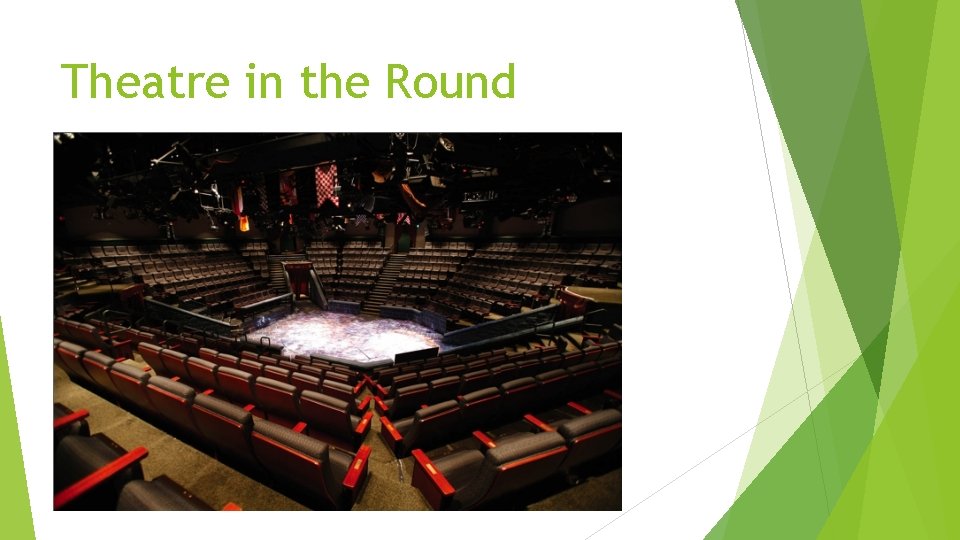
Theatre in the Round
Theatre in the Round Circus use Small Venues Not actually a round shape Audience interaction
History of Theatre in the Round Use at Columbia University Use at Brigham Young University Fair Oaks Playbox
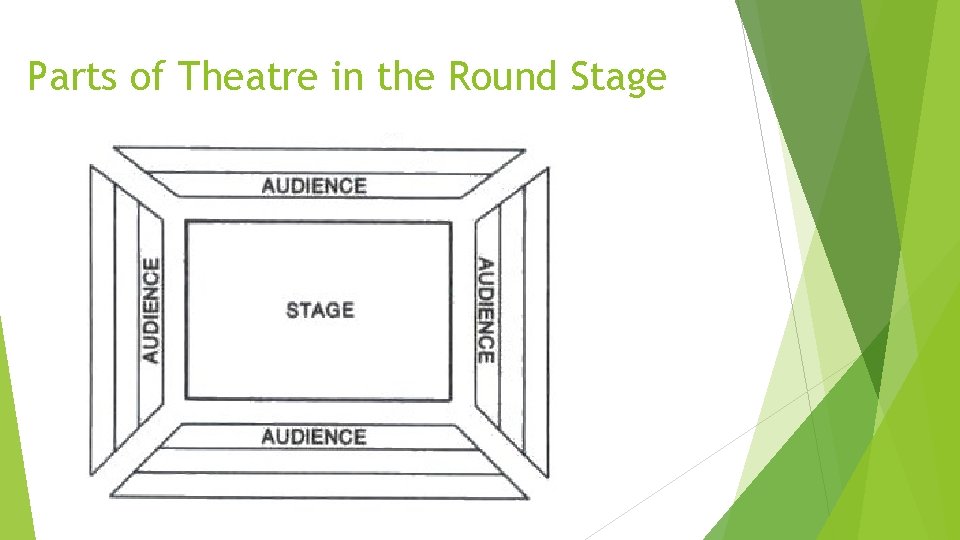
Configuration of Theatre in the Round Stages Center Stage Common shapes Entrances and Exits Off stage/Back stage area
Disadvantages of Theatre in the Round Actor adjustment Design problems
Advantages of Theatre in the Round Eliminates the fourth wall Engages the audience Design choices Challenges the actor
Parts of Theatre in the Round Stage
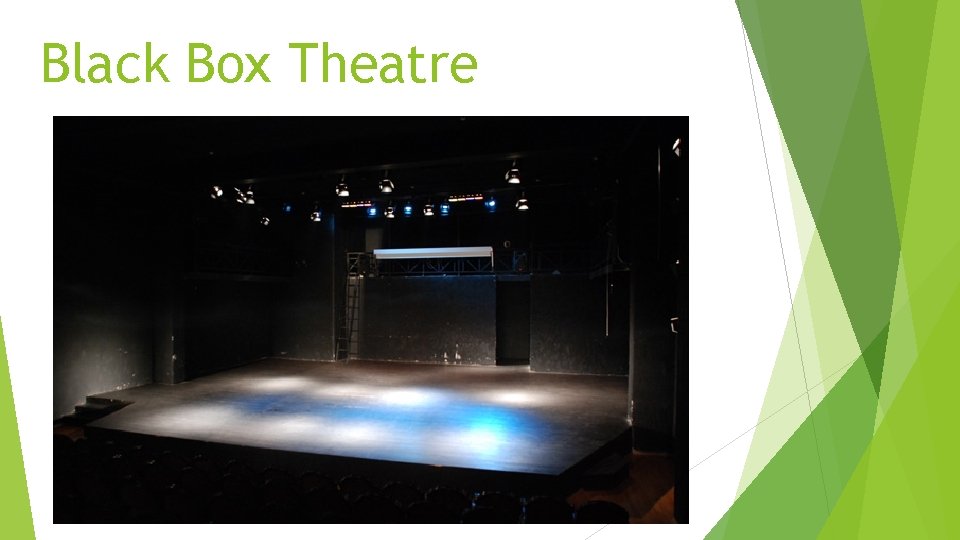
Black Box Theatre
Black Box Theatre Experimental Theatre Simple blank space Flexible space Relatively new innovation in theatre
History of the Black Box Theatre Surfaced during the 1960 s & 1970 s Appeal to nonprofit artists ”Pure Theatre”
Advantages of the Black Box Little to no set design Cost effective Easy to change
Uses of the Black Box College Theatres