
Types of Shots Great Works A The Shot
- Slides: 17
Types of Shots Great Works
A. The Shot u. A shot is a single frame of film. u The type of shot is determined by how much of the object, scene and/or character is in the frame. u The greater distance between the camera and the subject, the more emotionally neutral the audience; the closer, the more emotionally connected the audience becomes.
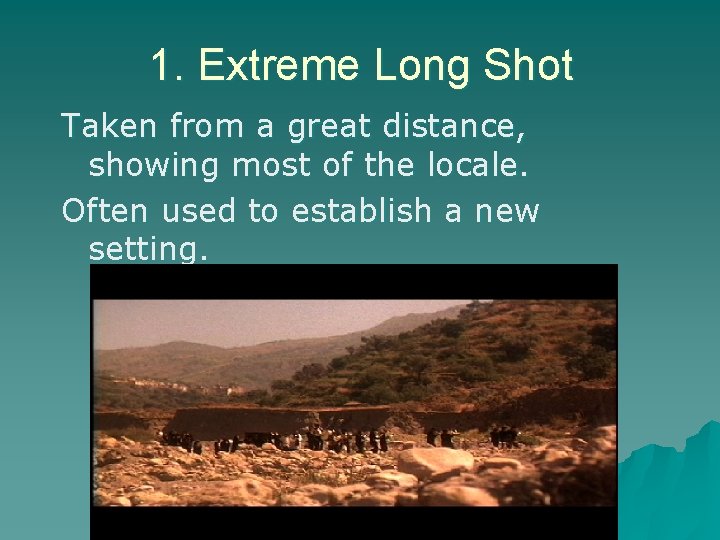
1. Extreme Long Shot Taken from a great distance, showing most of the locale. Often used to establish a new setting.
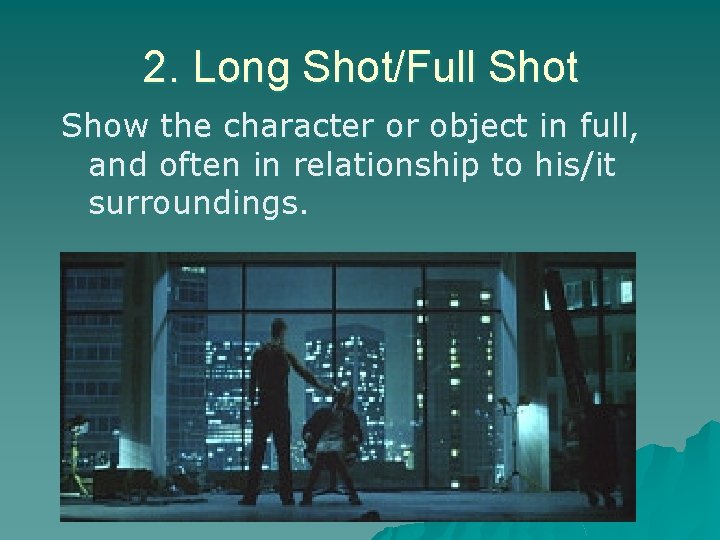
2. Long Shot/Full Shot Show the character or object in full, and often in relationship to his/it surroundings.
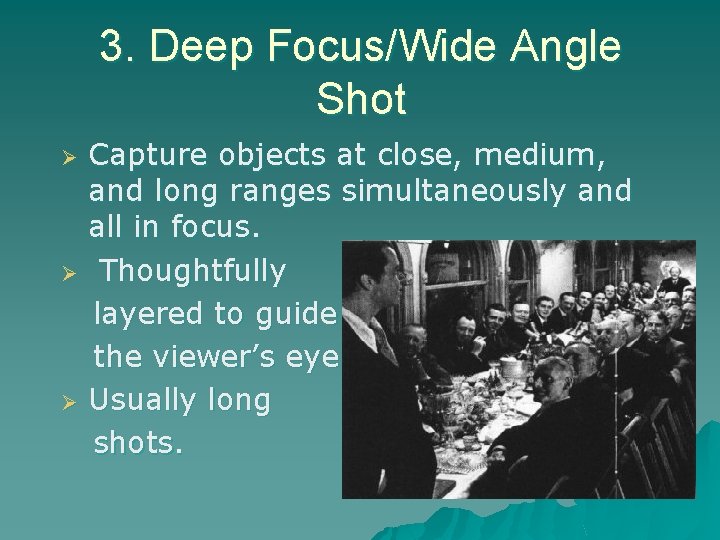
3. Deep Focus/Wide Angle Shot Ø Ø Ø Capture objects at close, medium, and long ranges simultaneously and all in focus. Thoughtfully layered to guide the viewer’s eye. Usually long shots.
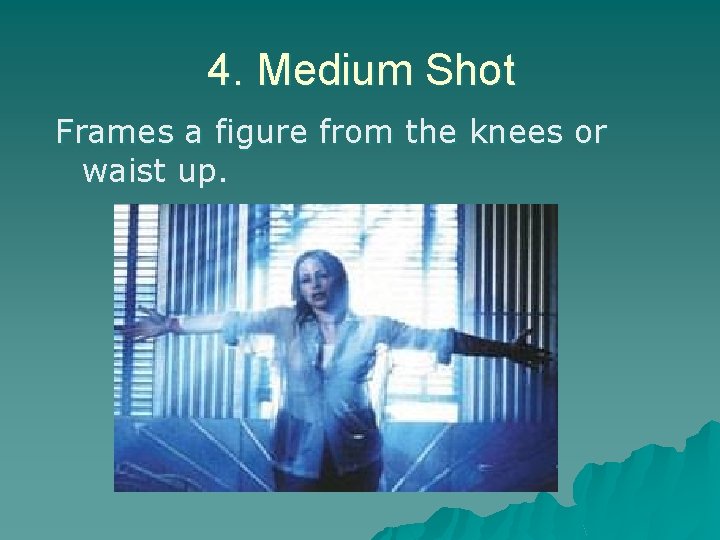
4. Medium Shot Frames a figure from the knees or waist up.
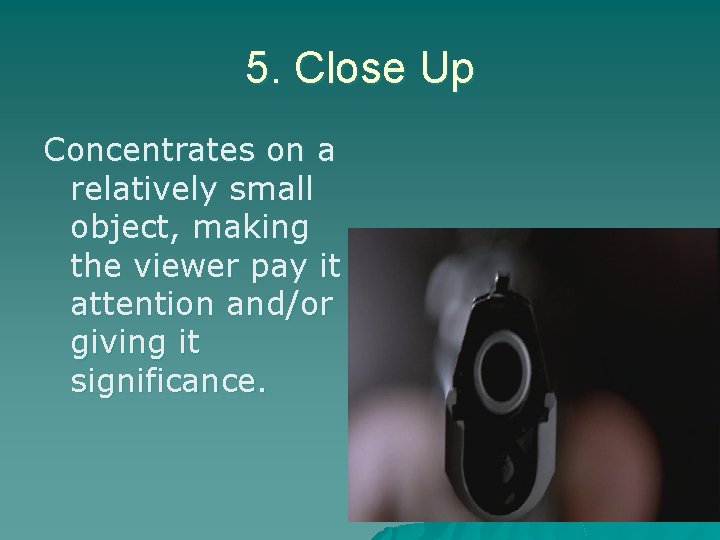
5. Close Up Concentrates on a relatively small object, making the viewer pay it attention and/or giving it significance.
B. Other, More Interpretive Shots
1. Pan The horizontal movement of the camera from left to right (or vice versa). Ø Usually used to keep the subject in the center of a frame. Ø Short for panorama. Ø
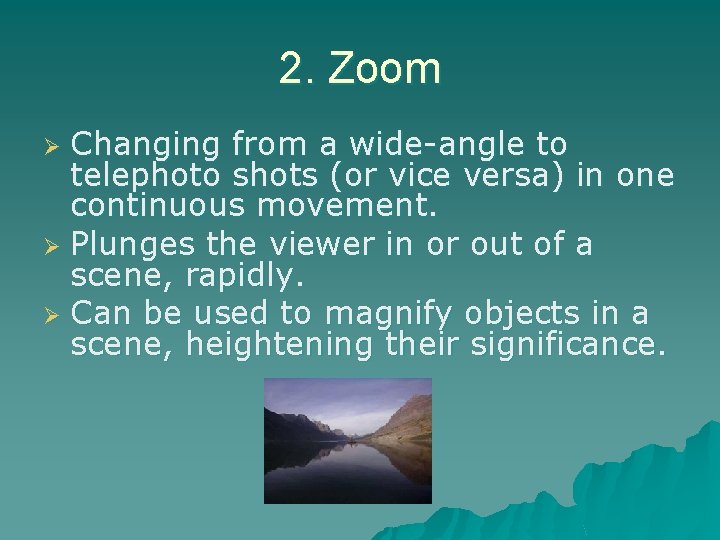
2. Zoom Changing from a wide-angle to telephoto shots (or vice versa) in one continuous movement. Ø Plunges the viewer in or out of a scene, rapidly. Ø Can be used to magnify objects in a scene, heightening their significance. Ø
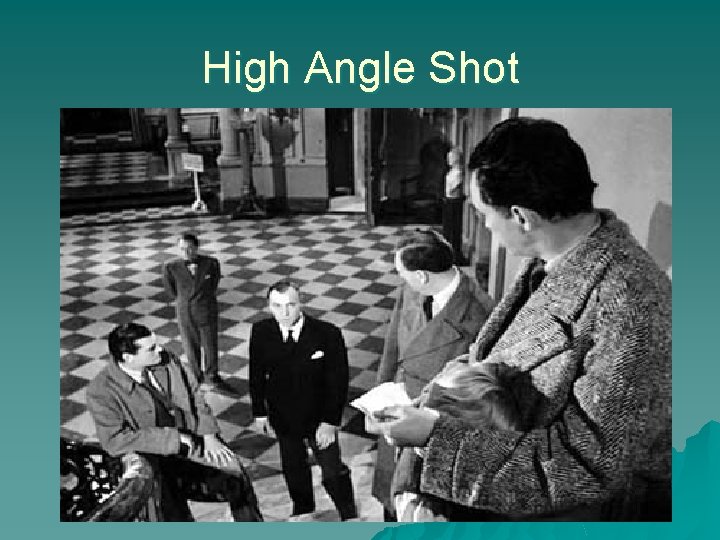
3. High Angle Shoots an object from above. Ø Gives viewer a sense of overview. Ø Slows down a scene. Ø Reduces the importance and power of the subject, making him/her seem harmless and insignificant. Ø Suggests entrapment. Ø
High Angle Shot
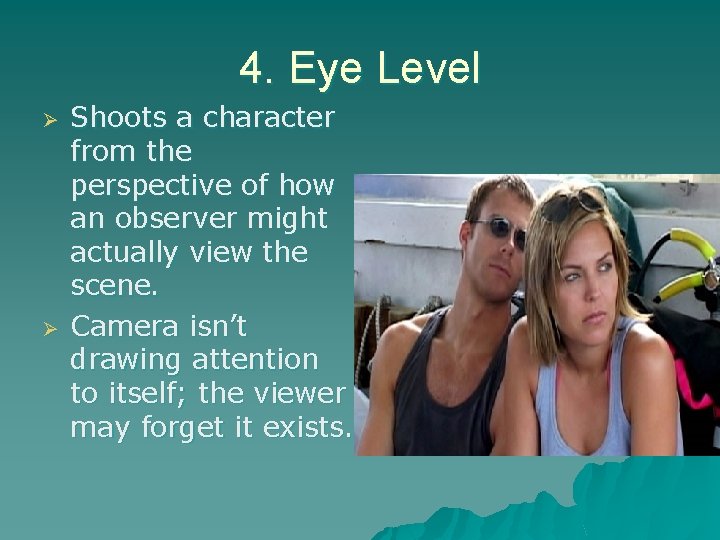
4. Eye Level Ø Ø Shoots a character from the perspective of how an observer might actually view the scene. Camera isn’t drawing attention to itself; the viewer may forget it exists.
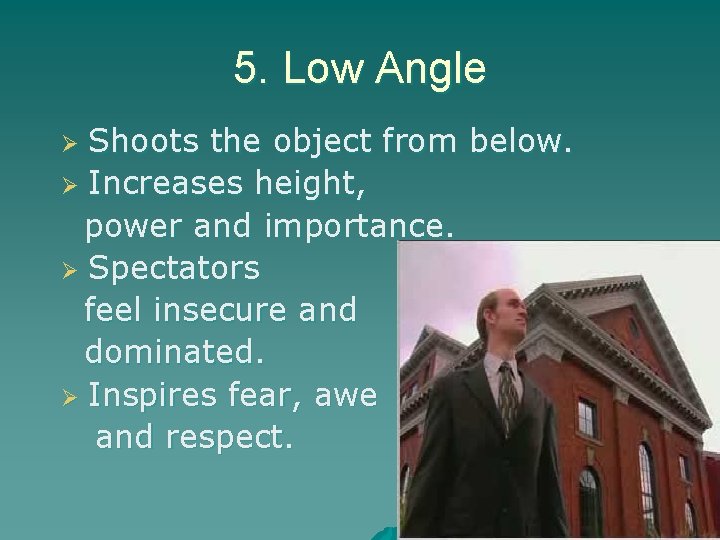
5. Low Angle Shoots the object from below. Ø Increases height, power and importance. Ø Spectators feel insecure and dominated. Ø Inspires fear, awe and respect. Ø
Watch: What shots can you see?
6. Handheld Shot Ø Ø Ø Taken with a moving camera. May be deliberately shaky to suggest documentary footage in an uncontrolled setting. Often used with point of view shots.
7. Point of View Shot Taken from the vantage point of a character in the film, showing what the character sees. Ø The viewer identifies with the character the most with this shot, since we are invited to become him. Ø