
Types of Sediment Sediments are lithified into sedimentary

- Slides: 10
Types of Sediment • Sediments are lithified into sedimentary rocks. • There are seven types of sediment: – Epiclastic or terrigenous (normal) – Pyroclastic – Orthochemical – Allochemical – Residual or pedogenic – Cosmogenic – Polygenetic.
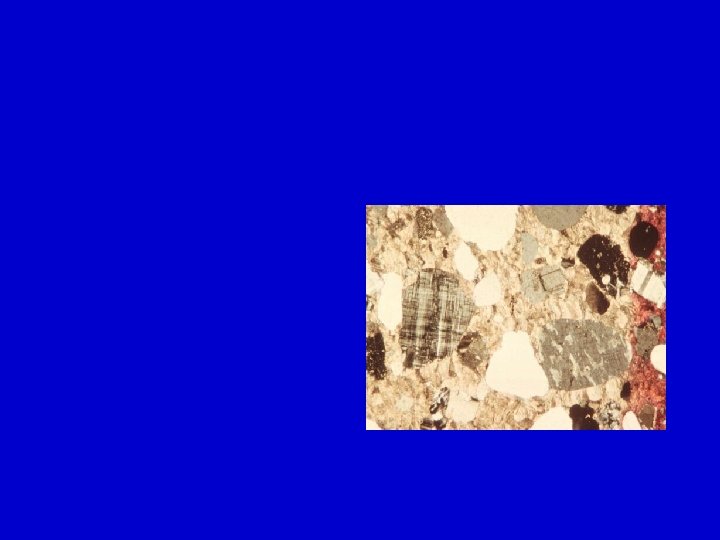
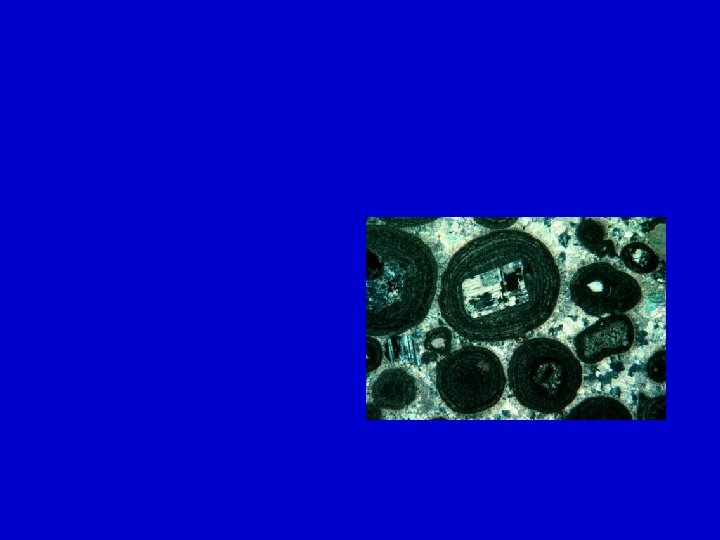
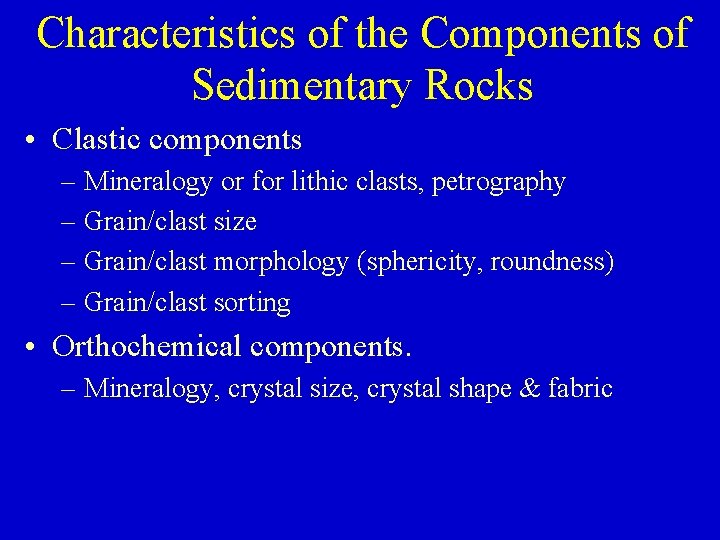
Characteristics of the Components of Sedimentary Rocks • Clastic components – Mineralogy or for lithic clasts, petrography – Grain/clast size – Grain/clast morphology (sphericity, roundness) – Grain/clast sorting • Orthochemical components. – Mineralogy, crystal size, crystal shape & fabric
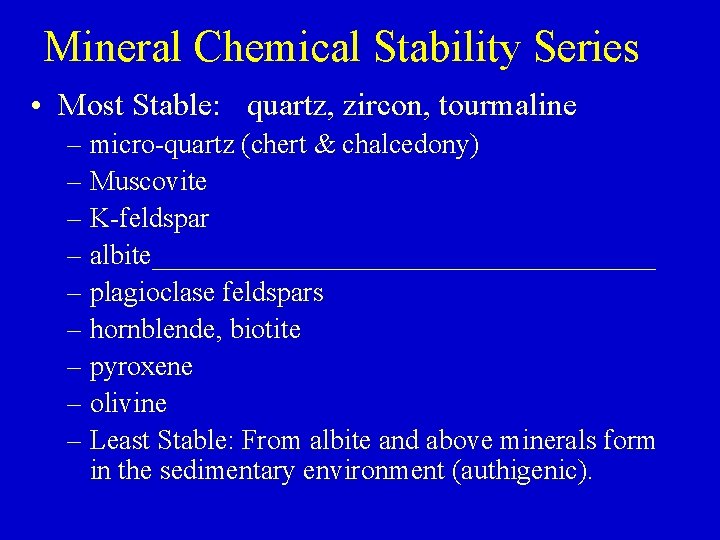
Mineral Chemical Stability Series • Most Stable: quartz, zircon, tourmaline – micro-quartz (chert & chalcedony) – Muscovite – K-feldspar – albite__________________ – plagioclase feldspars – hornblende, biotite – pyroxene – olivine – Least Stable: From albite and above minerals form in the sedimentary environment (authigenic).
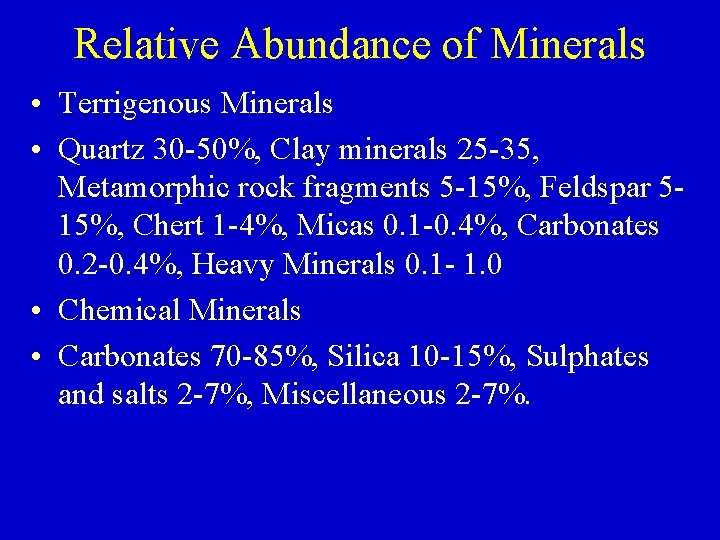
Relative Abundance of Minerals • Terrigenous Minerals • Quartz 30 -50%, Clay minerals 25 -35, Metamorphic rock fragments 5 -15%, Feldspar 515%, Chert 1 -4%, Micas 0. 1 -0. 4%, Carbonates 0. 2 -0. 4%, Heavy Minerals 0. 1 - 1. 0 • Chemical Minerals • Carbonates 70 -85%, Silica 10 -15%, Sulphates and salts 2 -7%, Miscellaneous 2 -7%.
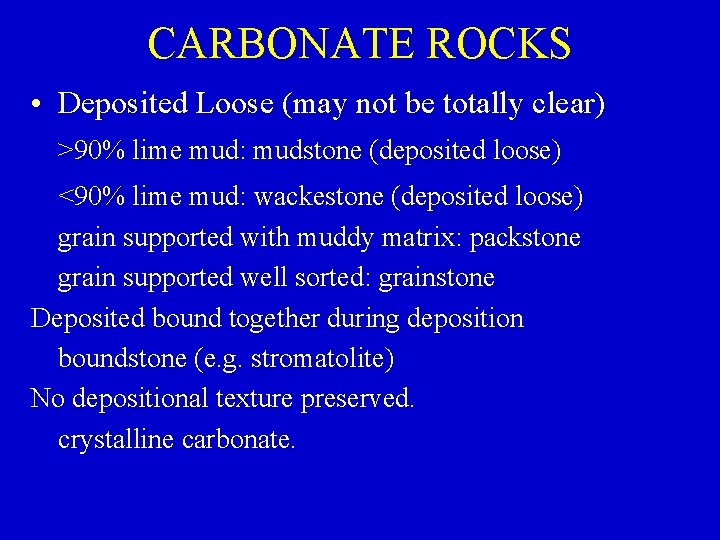
CARBONATE ROCKS • Deposited Loose (may not be totally clear) >90% lime mud: mudstone (deposited loose) <90% lime mud: wackestone (deposited loose) grain supported with muddy matrix: packstone grain supported well sorted: grainstone Deposited bound together during deposition boundstone (e. g. stromatolite) No depositional texture preserved. crystalline carbonate.
CARBONATE STAINING • Rocks and slides are stained using dilute acid and two dyes. • Calcite is red if Fe-free, purple if Fe-rich • Pure dolomite does not stain, Fe-dolomite stains blue.