
Types of Rock include Igneous Sedimentary and Metamorphic
- Slides: 51
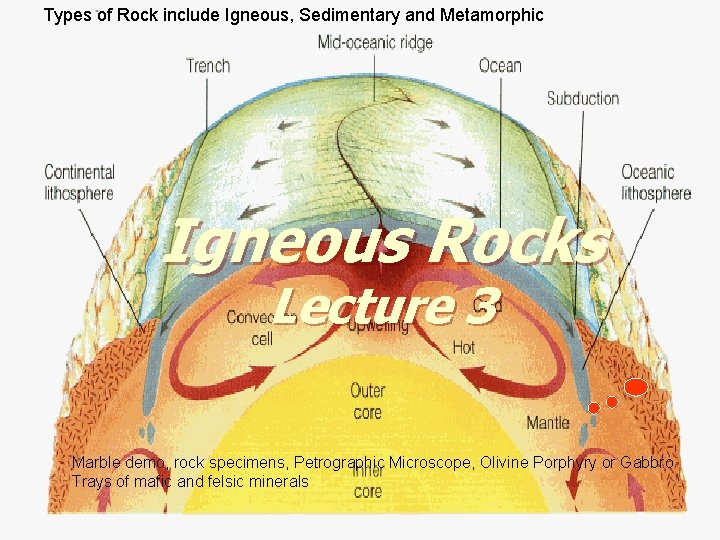
Types of Rock include Igneous, Sedimentary and Metamorphic Igneous Rocks Lecture 3 Marble demo, rock specimens, Petrographic Microscope, Olivine Porphyry or Gabbro Trays of mafic and felsic minerals
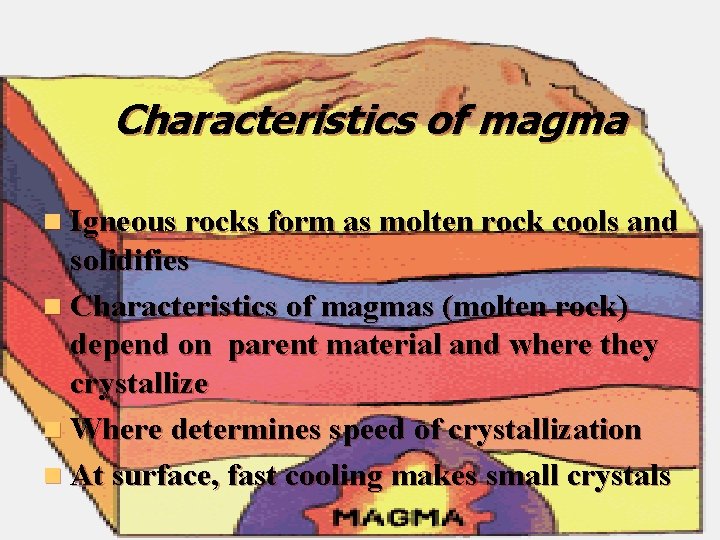
Characteristics of magma n Igneous rocks form as molten rock cools and solidifies n Characteristics of magmas (molten rock) depend on parent material and where they crystallize n Where determines speed of crystallization n At surface, fast cooling makes small crystals
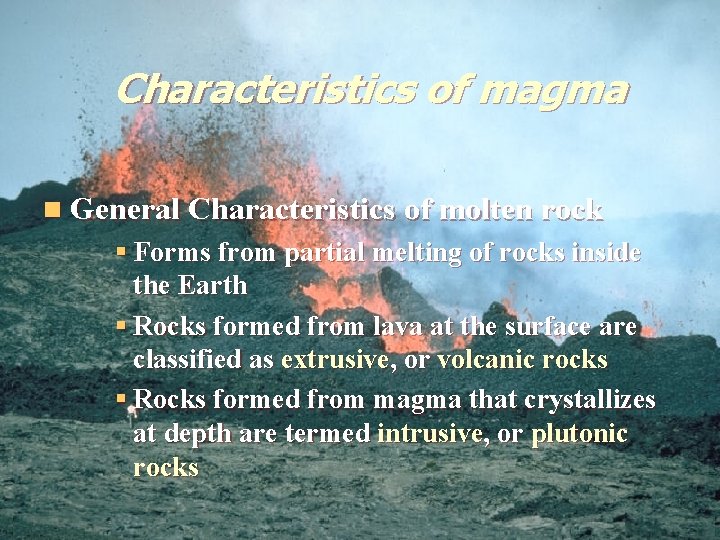
Characteristics of magma n General Characteristics of molten rock § Forms from partial melting of rocks inside the Earth § Rocks formed from lava at the surface are classified as extrusive, or volcanic rocks § Rocks formed from magma that crystallizes at depth are termed intrusive, or plutonic rocks
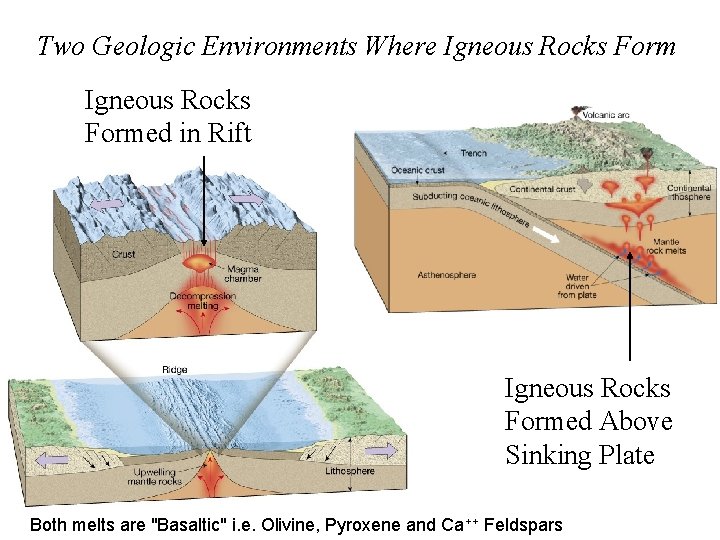
Two Geologic Environments Where Igneous Rocks Formed in Rift Igneous Rocks Formed Above Sinking Plate Both melts are "Basaltic" i. e. Olivine, Pyroxene and Ca++ Feldspars
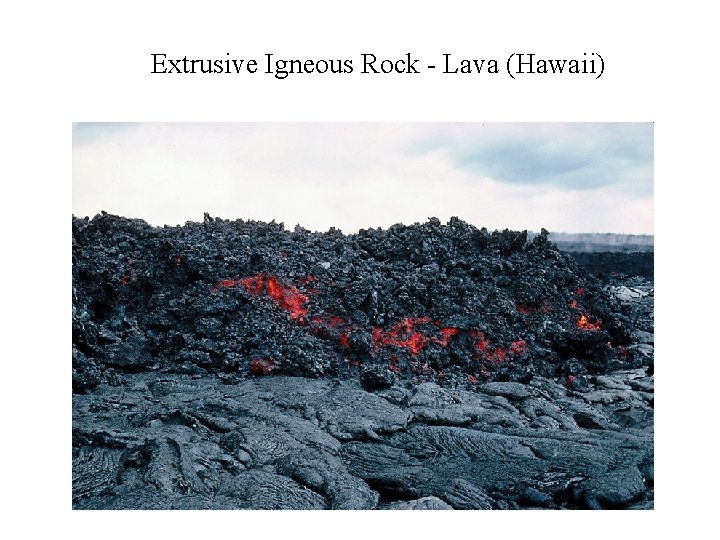
Extrusive Igneous Rock - Lava (Hawaii)
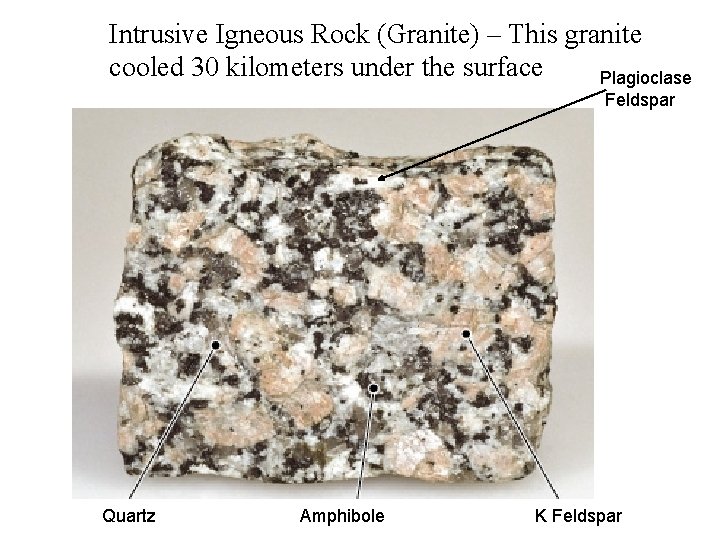
Intrusive Igneous Rock (Granite) – This granite cooled 30 kilometers under the surface Plagioclase Feldspar Quartz Amphibole K Feldspar
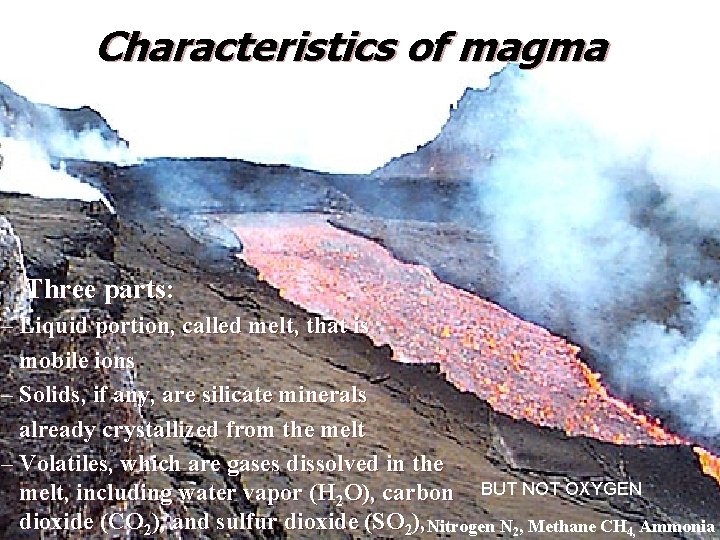
Characteristics of magma Three parts: – Liquid portion, called melt, that is mobile ions – Solids, if any, are silicate minerals already crystallized from the melt – Volatiles, which are gases dissolved in the melt, including water vapor (H 2 O), carbon BUT NOT OXYGEN dioxide (CO 2), and sulfur dioxide (SO 2), Nitrogen N 2, Methane CH 4, Ammonia
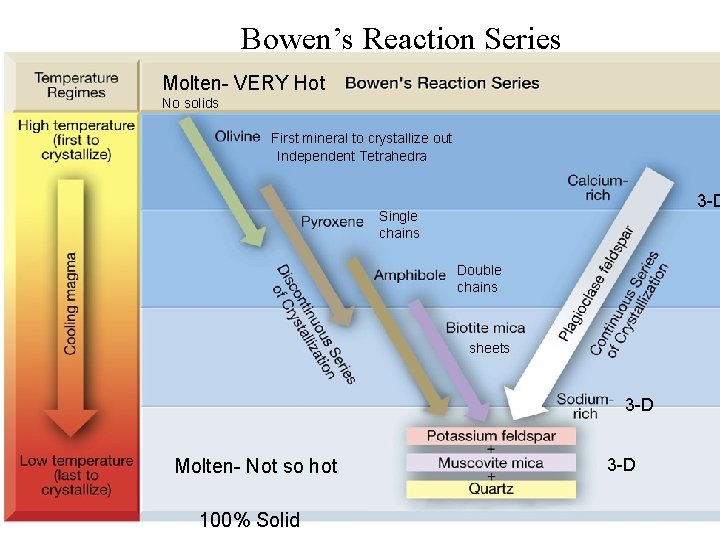
Norman L. Bowen Characteristics of magma n Crystallization of magma § Cooling of magma results in the systematic arrangement of ions into orderly patterns § The silicate minerals resulting from crystallization form in a predictable order Rock-forming minerals crystallize with increasing complexity as the magma cools. The most complex 3 -D minerals crystallize last. The hottest magmas can only crystallize Olivine (Independent Tetrahedra), but as the magma cools, more complex minerals can form.
Bowen’s Reaction Series Molten- VERY Hot No solids First mineral to crystallize out Independent Tetrahedra 3 -D Single chains Double chains sheets 3 -D Molten- Not so hot 100% Solid 3 -D
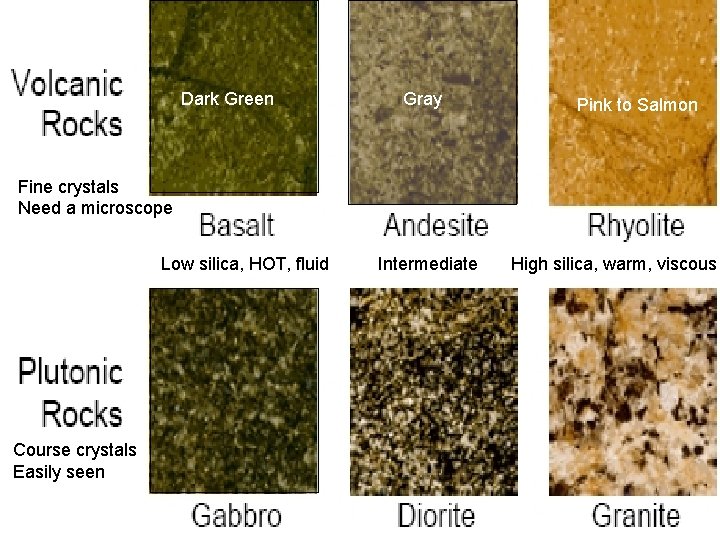
Dark Green Gray Pink to Salmon Fine crystals Need a microscope Low silica, HOT, fluid Course crystals Easily seen Intermediate High silica, warm, viscous
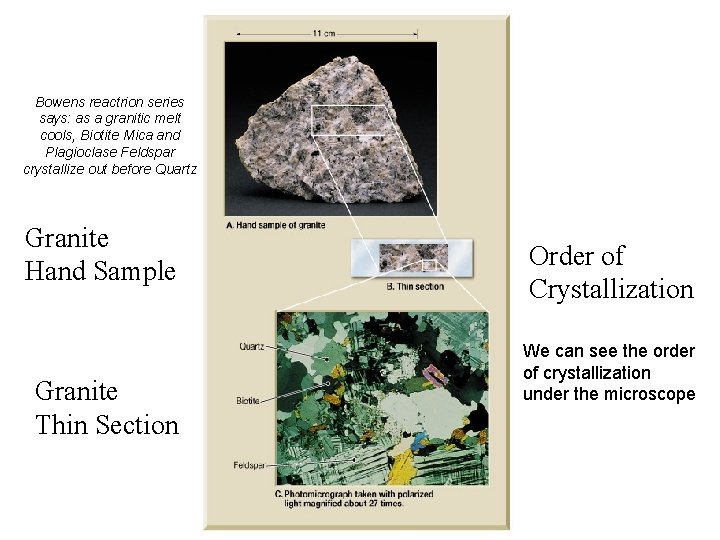
Bowens reactrion series says: as a granitic melt cools, Biotite Mica and Plagioclase Feldspar crystallize out before Quartz Granite Hand Sample Granite Thin Section Order of Crystallization We can see the order of crystallization under the microscope
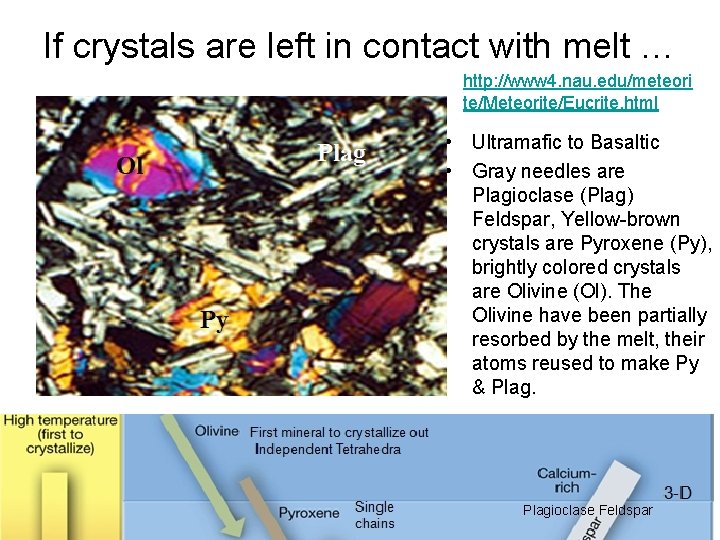
If crystals are left in contact with melt … http: //www 4. nau. edu/meteori te/Meteorite/Eucrite. html • Ultramafic to Basaltic • Gray needles are Plagioclase (Plag) Feldspar, Yellow-brown crystals are Pyroxene (Py), brightly colored crystals are Olivine (Ol). The Olivine have been partially resorbed by the melt, their atoms reused to make Py & Plagioclase Feldspar
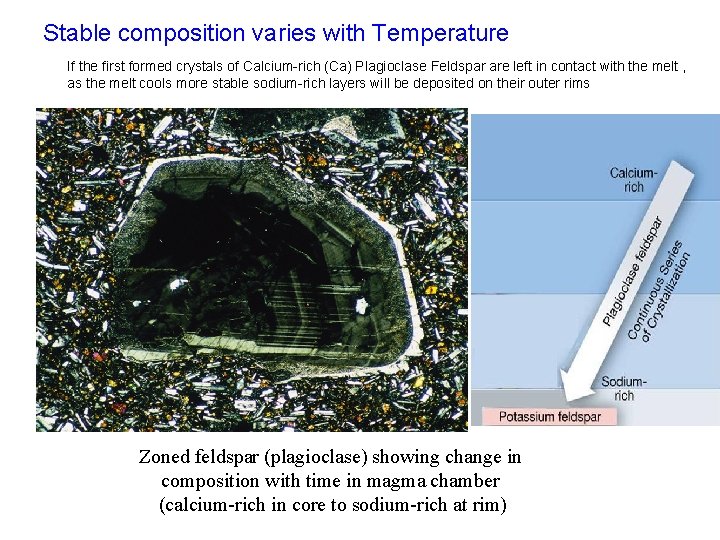
Stable composition varies with Temperature If the first formed crystals of Calcium-rich (Ca) Plagioclase Feldspar are left in contact with the melt , as the melt cools more stable sodium-rich layers will be deposited on their outer rims Zoned feldspar (plagioclase) showing change in composition with time in magma chamber (calcium-rich in core to sodium-rich at rim)
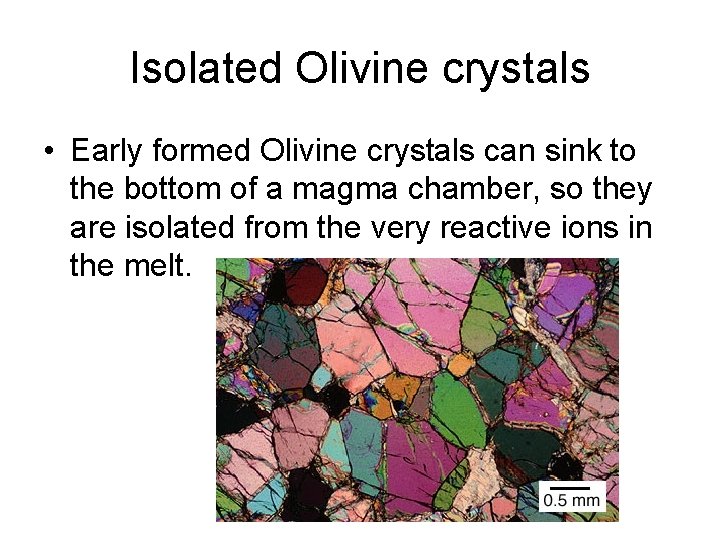
Isolated Olivine crystals • Early formed Olivine crystals can sink to the bottom of a magma chamber, so they are isolated from the very reactive ions in the melt.
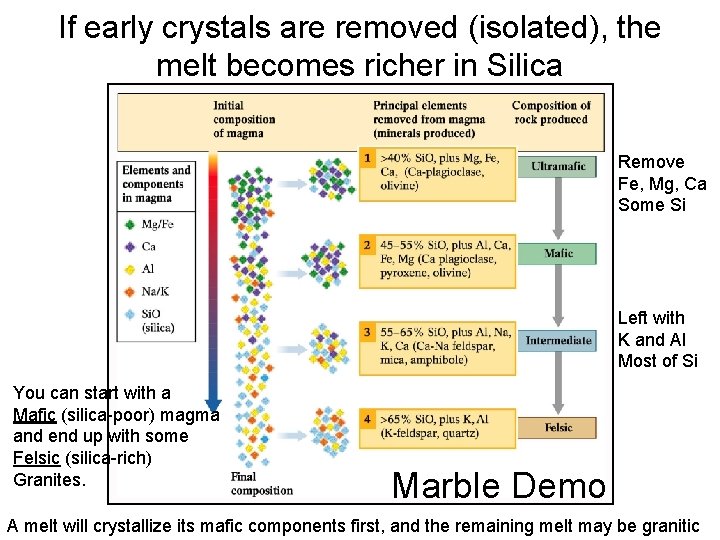
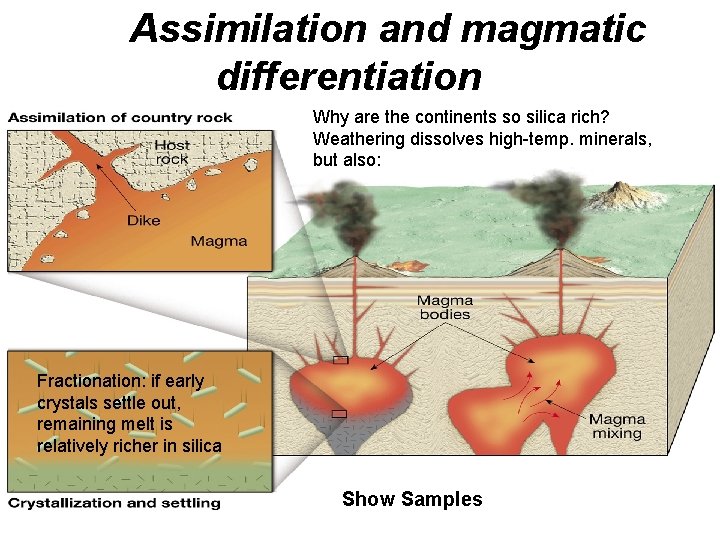
If early crystals are removed (isolated), the melt becomes richer in Silica Remove Fe, Mg, Ca Some Si Left with K and Al Most of Si You can start with a Mafic (silica-poor) magma and end up with some Felsic (silica-rich) Granites. Marble Demo A melt will crystallize its mafic components first, and the remaining melt may be granitic
Classifying Igneous Rocks n Igneous rocks are typically classified by both: – Texture – Mineral composition n Texture in igneous rocks is determined by the size and arrangement of mineral grains
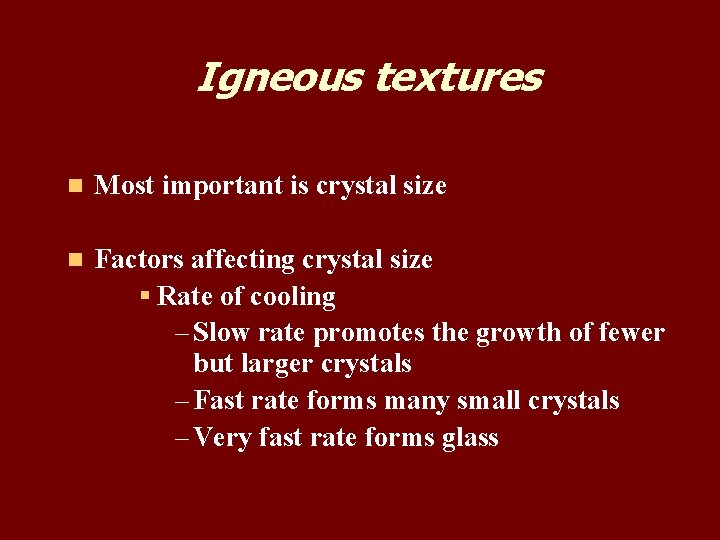
Igneous textures n Most important is crystal size n Factors affecting crystal size § Rate of cooling – Slow rate promotes the growth of fewer but larger crystals – Fast rate forms many small crystals – Very fast rate forms glass
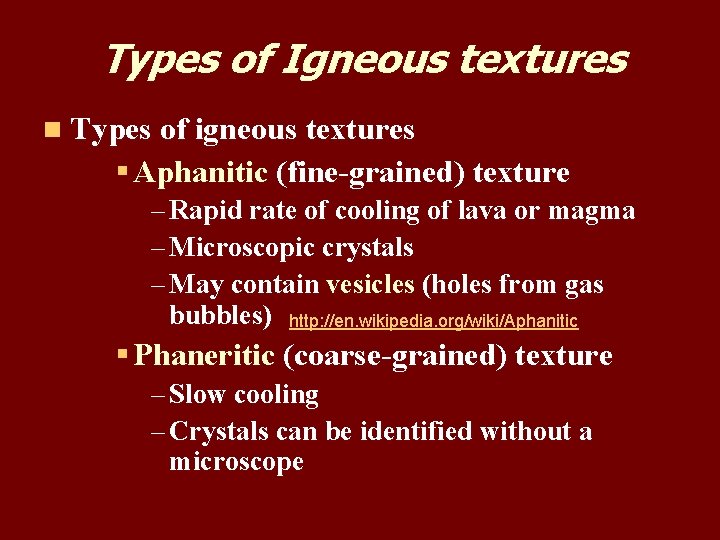
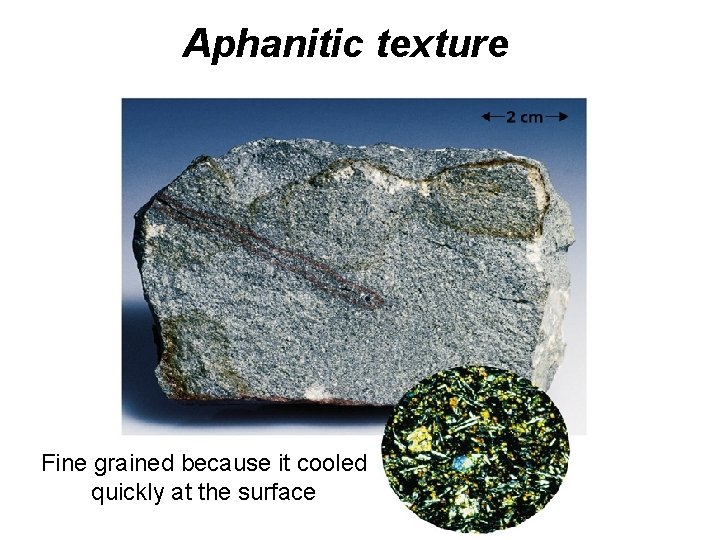
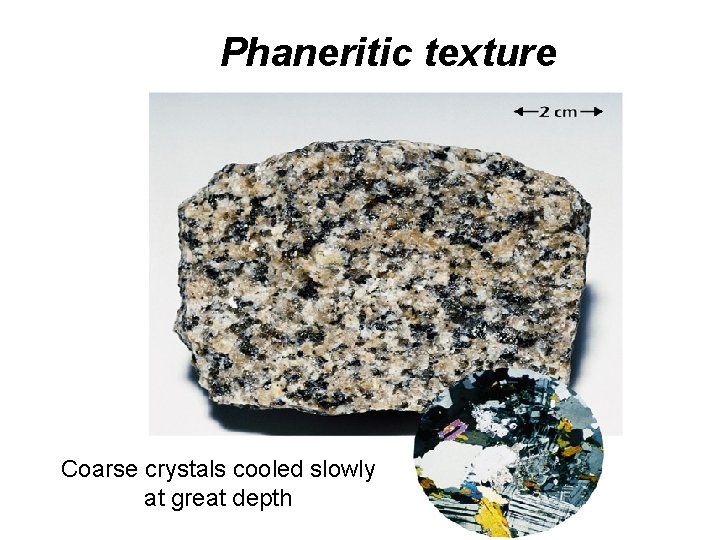
Types of Igneous textures n Types of igneous textures § Aphanitic (fine-grained) texture – Rapid rate of cooling of lava or magma – Microscopic crystals – May contain vesicles (holes from gas bubbles) http: //en. wikipedia. org/wiki/Aphanitic § Phaneritic (coarse-grained) texture – Slow cooling – Crystals can be identified without a microscope
Aphanitic texture Fine grained because it cooled quickly at the surface
Phaneritic texture Coarse crystals cooled slowly at great depth
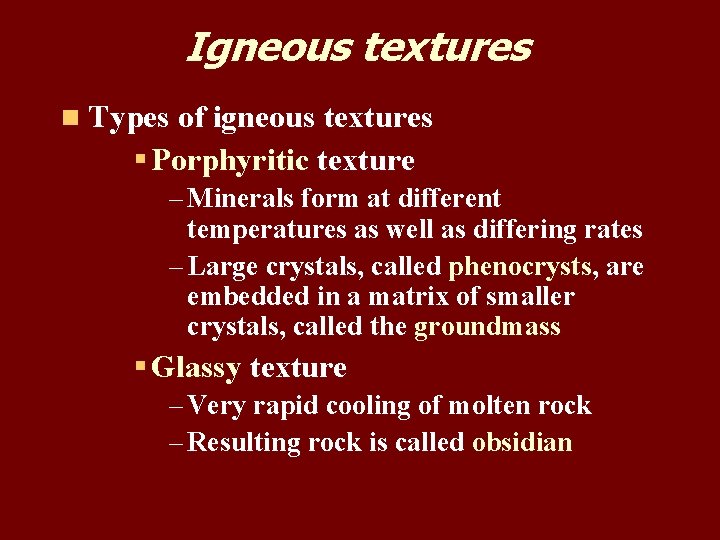
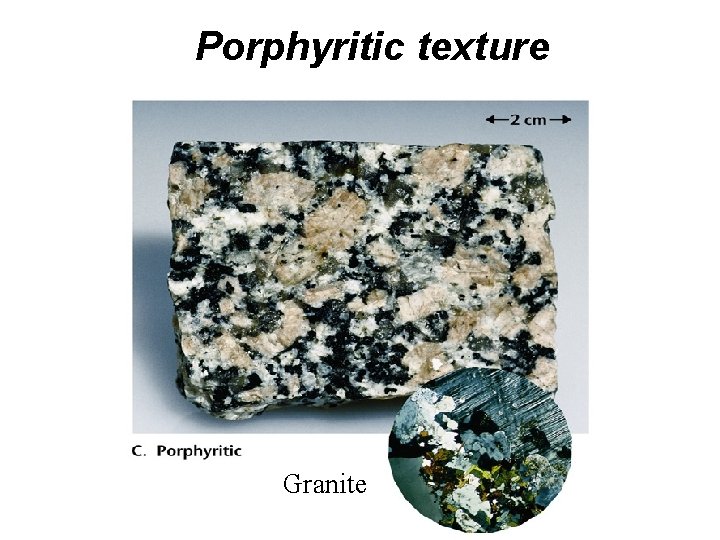
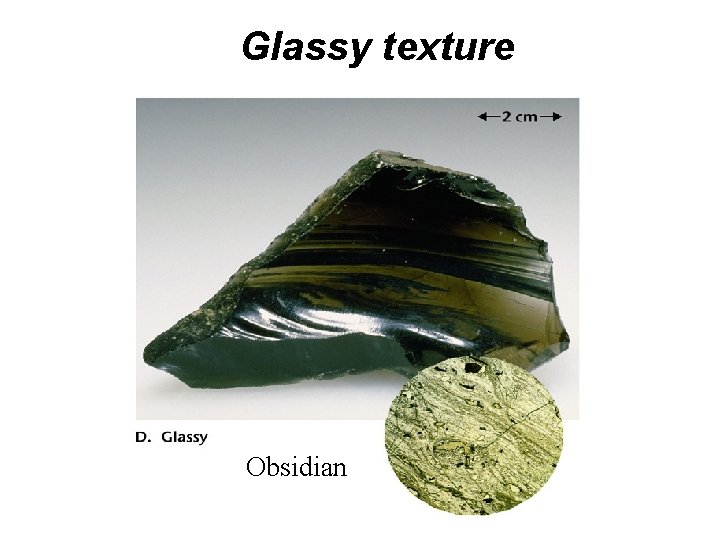
Igneous textures n Types of igneous textures § Porphyritic texture – Minerals form at different temperatures as well as differing rates – Large crystals, called phenocrysts, are embedded in a matrix of smaller crystals, called the groundmass § Glassy texture – Very rapid cooling of molten rock – Resulting rock is called obsidian
Porphyritic texture Granite
Glassy texture Obsidian
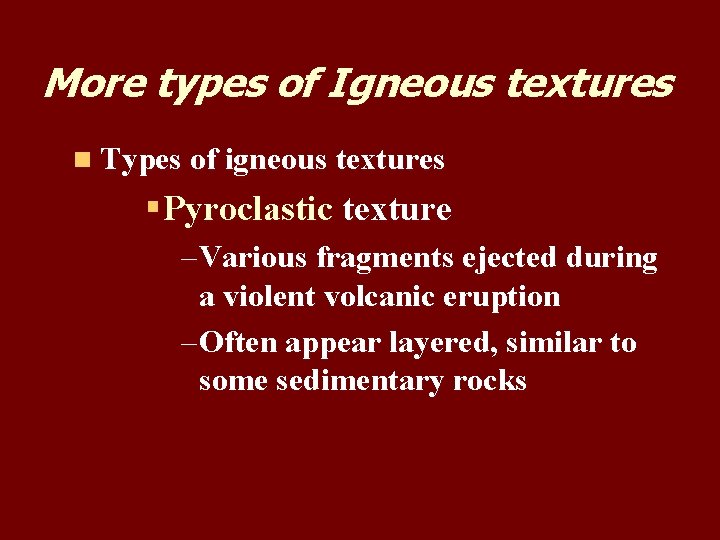
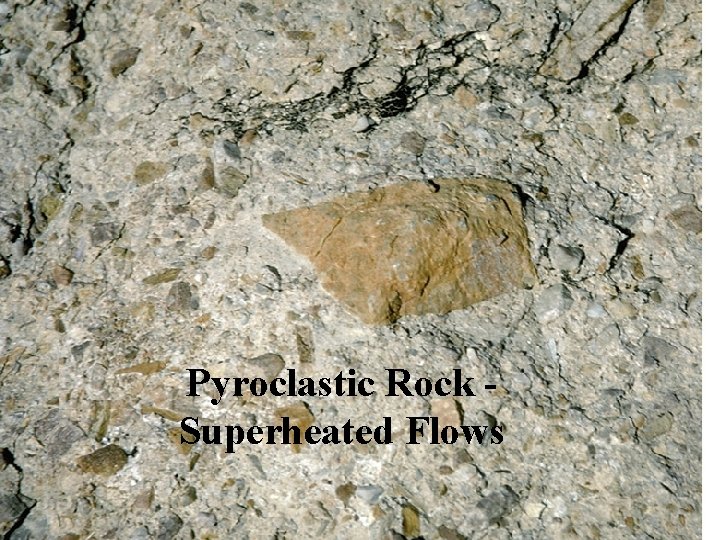
More types of Igneous textures n Types of igneous textures § Pyroclastic texture – Various fragments ejected during a violent volcanic eruption – Often appear layered, similar to some sedimentary rocks
Pyroclastic Rock Superheated Flows
Naming igneous rocks – pyroclastic rocks Composed of fragments ejected during a volcanic eruption Varieties Tuff – ash-sized fragments < 2 mm Volcanic breccia – particles larger than ash
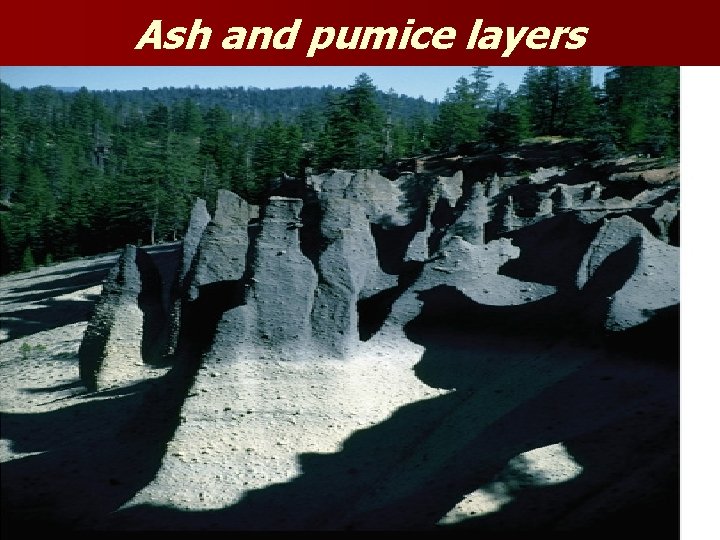
Ash and pumice layers
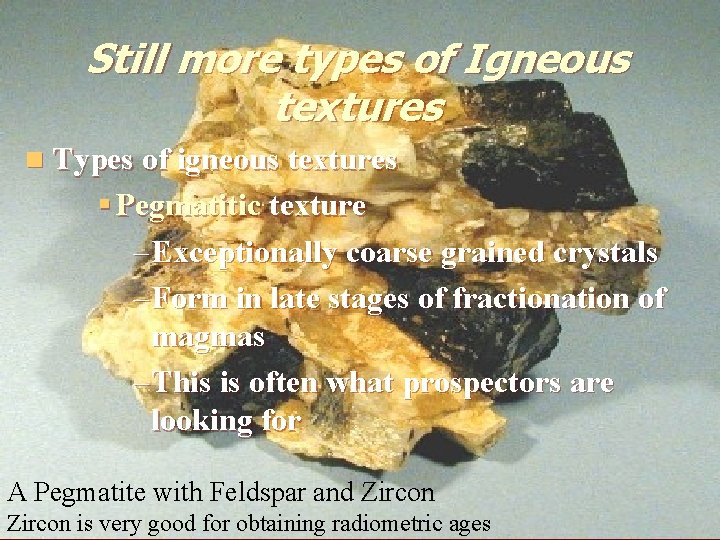
Still more types of Igneous textures n Types of igneous textures § Pegmatitic texture – Exceptionally coarse grained crystals – Form in late stages of fractionation of magmas – This is often what prospectors are looking for A Pegmatite with Feldspar and Zircon is very good for obtaining radiometric ages
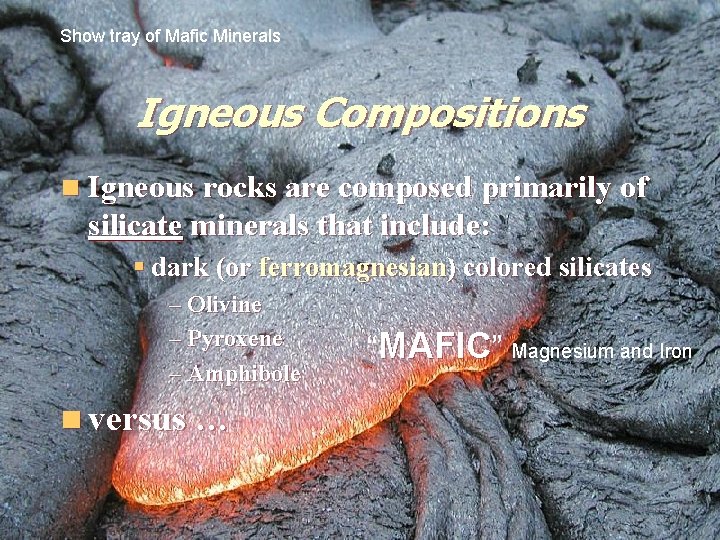
Show tray of Mafic Minerals Igneous Compositions n Igneous rocks are composed primarily of silicate minerals that include: § dark (or ferromagnesian) colored silicates – Olivine – Pyroxene – Amphibole n versus … “MAFIC” Magnesium and Iron
Show tray of Felsic Minerals Igneous Compositions n Igneous rocks also contain light colored silicate minerals that include: – Quartz – Muscovite mica – Feldspars “FELSIC” Feldspar and Silica
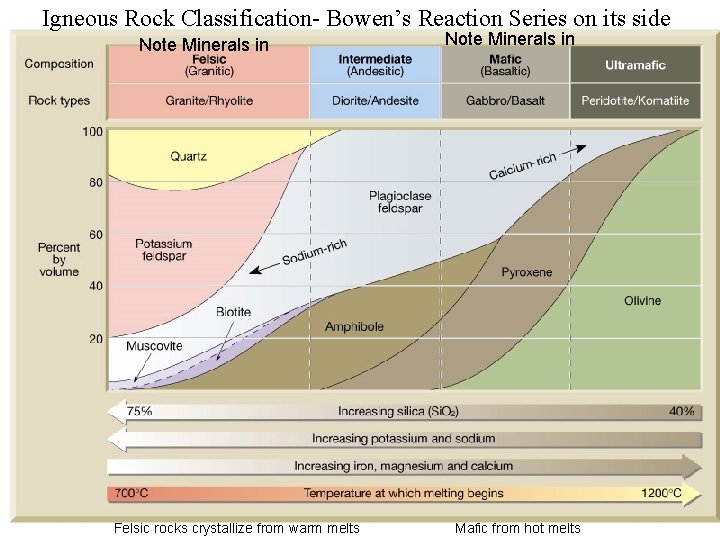
Igneous Rock Classification- Bowen’s Reaction Series on its side Note Minerals in Felsic rocks crystallize from warm melts Note Minerals in Mafic from hot melts
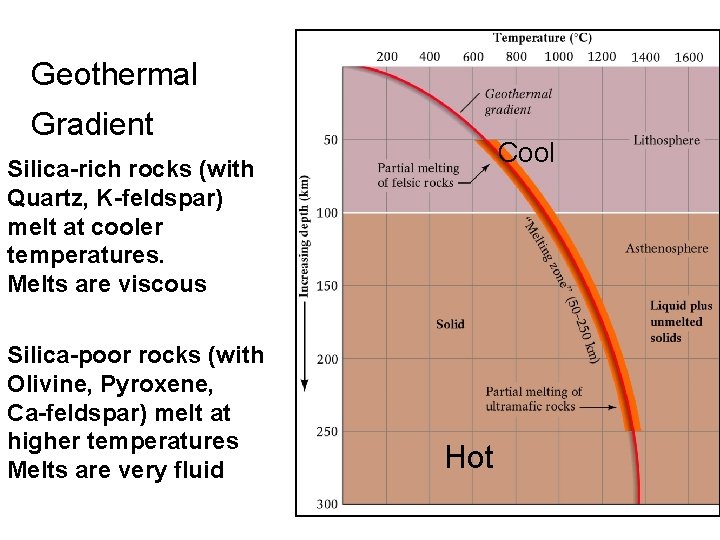
Geothermal Gradient Cool Silica-rich rocks (with Quartz, K-feldspar) melt at cooler temperatures. Melts are viscous Silica-poor rocks (with Olivine, Pyroxene, Ca-feldspar) melt at higher temperatures Melts are very fluid Hot
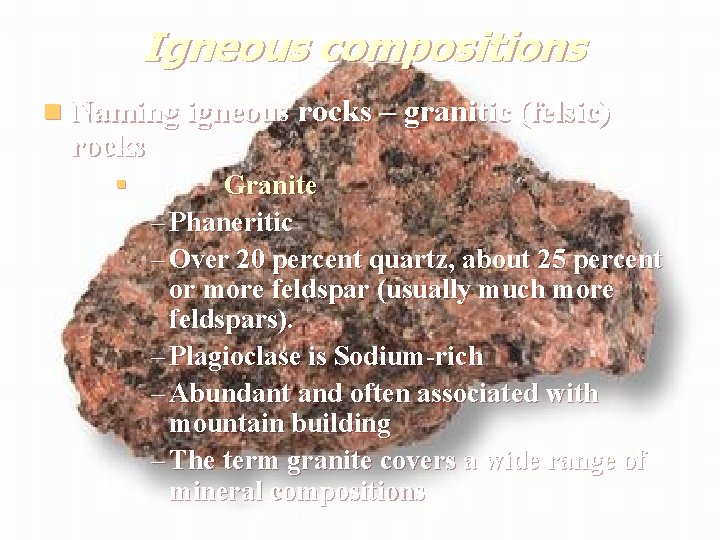
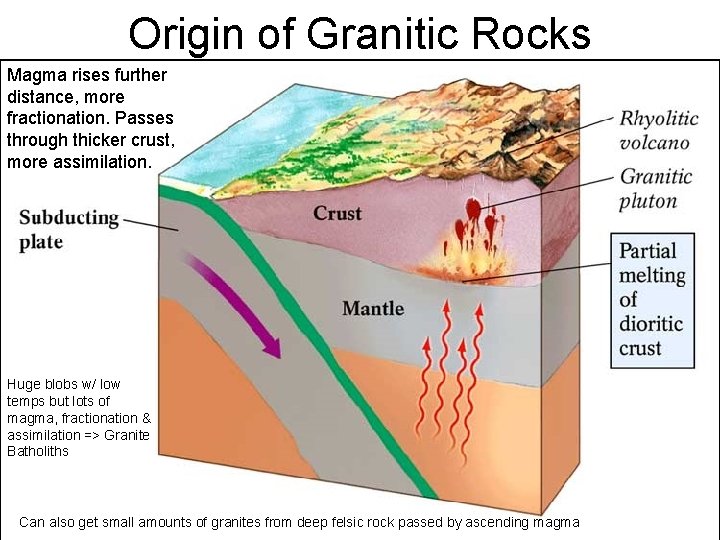
Igneous compositions n Naming igneous rocks – granitic (felsic) rocks § Granite – Phaneritic – Over 20 percent quartz, about 25 percent or more feldspar (usually much more feldspars). – Plagioclase is Sodium-rich – Abundant and often associated with mountain building – The term granite covers a wide range of mineral compositions
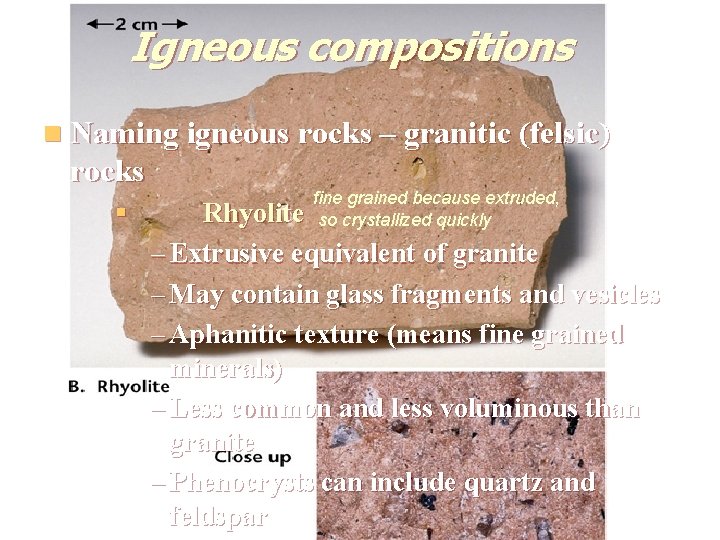
Igneous compositions n Naming igneous rocks – granitic (felsic) rocks § fine grained because extruded, so crystallized quickly Rhyolite – Extrusive equivalent of granite – May contain glass fragments and vesicles – Aphanitic texture (means fine grained minerals) – Less common and less voluminous than granite – Phenocrysts can include quartz and feldspar
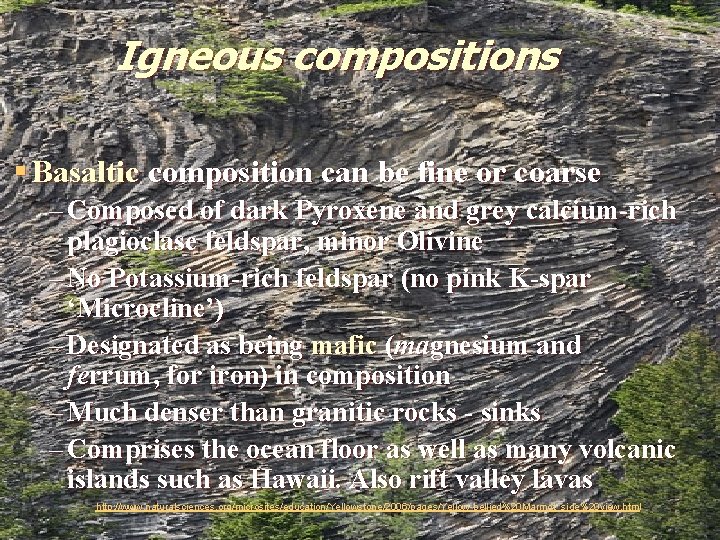
Igneous compositions § Basaltic composition can be fine or coarse – Composed of dark Pyroxene and grey calcium-rich plagioclase feldspar, minor Olivine – No Potassium-rich feldspar (no pink K-spar ‘Microcline’) – Designated as being mafic (magnesium and ferrum, for iron) in composition – Much denser than granitic rocks - sinks – Comprises the ocean floor as well as many volcanic islands such as Hawaii. Also rift valley lavas http: //www. naturalsciences. org/microsites/education/Yellowstone/2006/pages/Yellow-bellied%20 Marmot_side%20 view. html
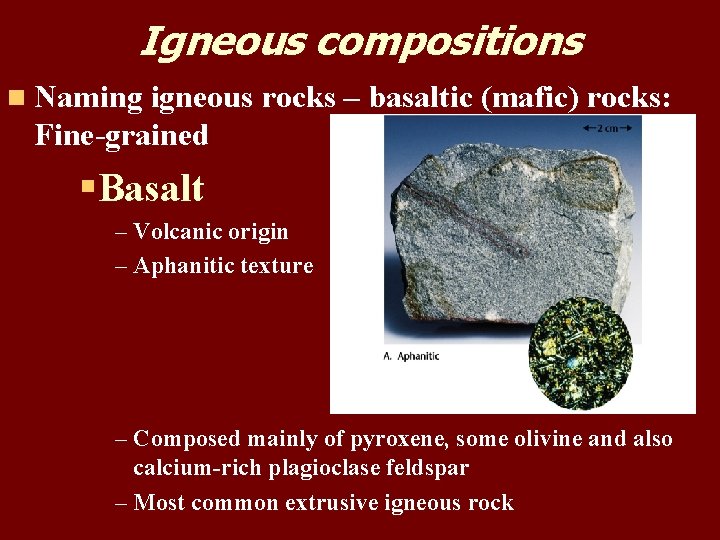
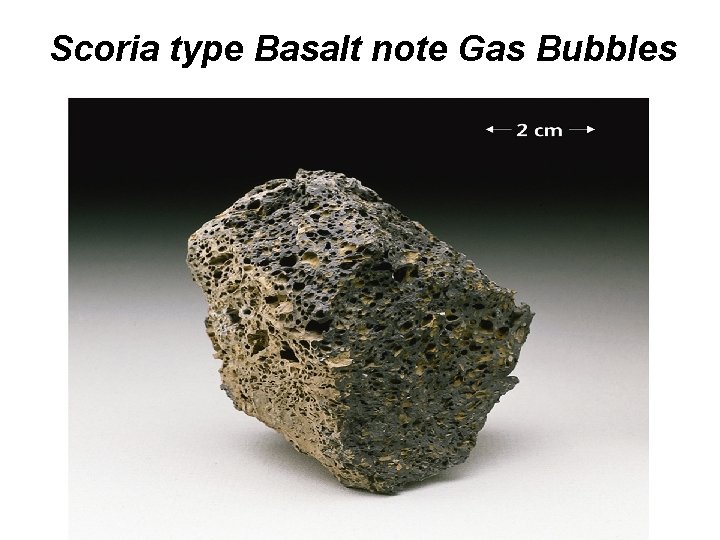
Igneous compositions n Naming igneous rocks – basaltic (mafic) rocks: Fine-grained §Basalt – Volcanic origin – Aphanitic texture – Composed mainly of pyroxene, some olivine and also calcium-rich plagioclase feldspar – Most common extrusive igneous rock
Scoria type Basalt note Gas Bubbles
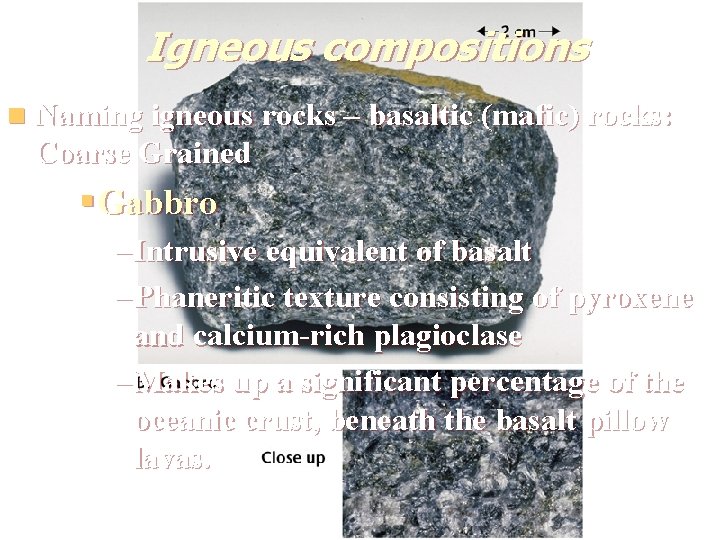
Igneous compositions n Naming igneous rocks – basaltic (mafic) rocks: Coarse Grained § Gabbro – Intrusive equivalent of basalt – Phaneritic texture consisting of pyroxene and calcium-rich plagioclase – Makes up a significant percentage of the oceanic crust, beneath the basalt pillow lavas.
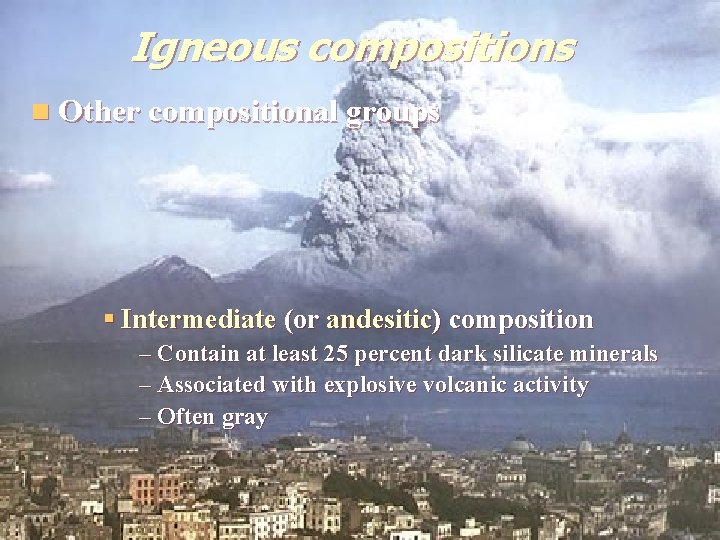
Igneous compositions n Other compositional groups § Intermediate (or andesitic) composition – Contain at least 25 percent dark silicate minerals – Associated with explosive volcanic activity – Often gray
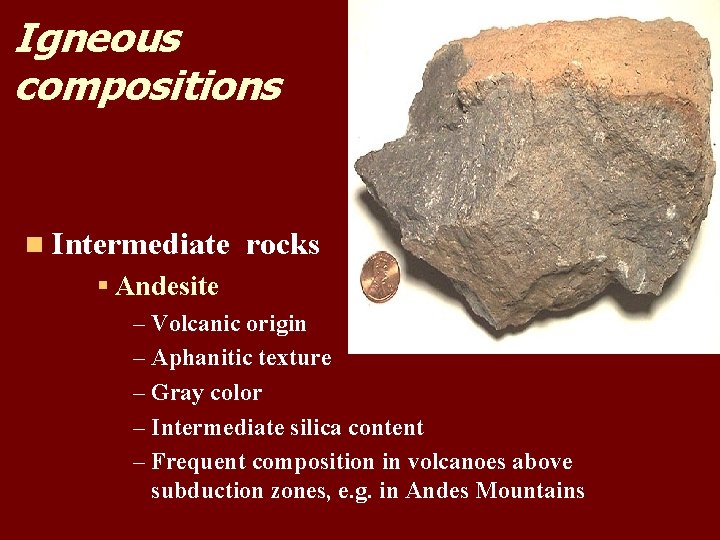
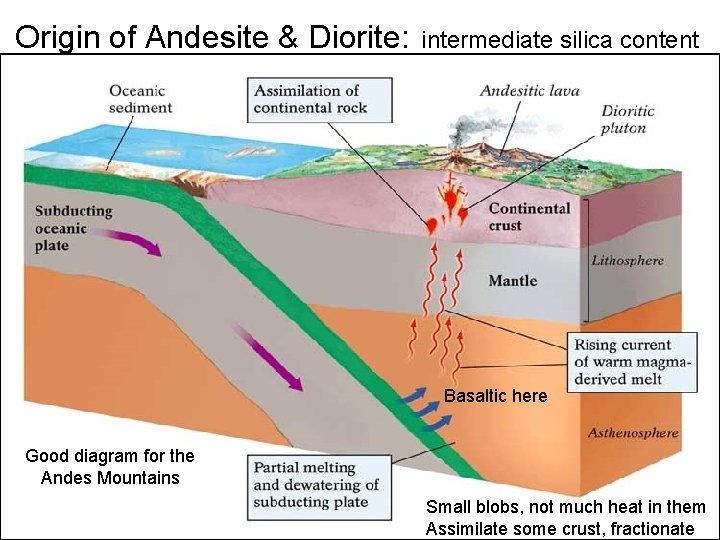
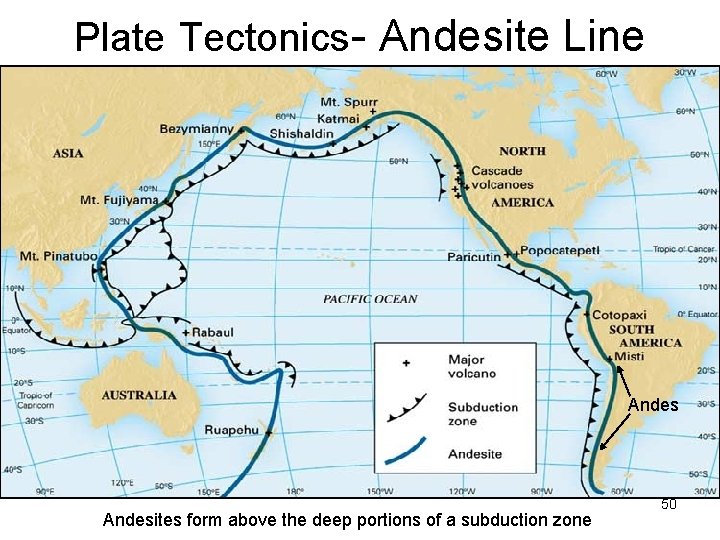
Igneous compositions n Intermediate rocks § Andesite – Volcanic origin – Aphanitic texture – Gray color – Intermediate silica content – Frequent composition in volcanoes above subduction zones, e. g. in Andes Mountains
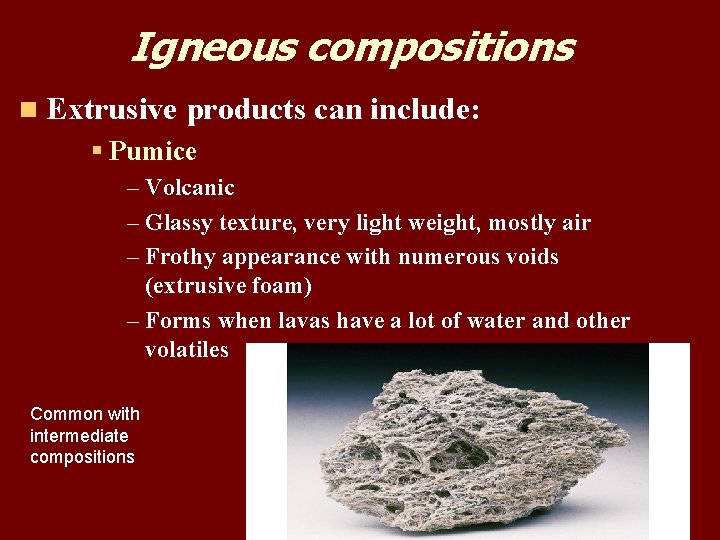
Igneous compositions n Extrusive products can include: § Pumice – Volcanic – Glassy texture, very light weight, mostly air – Frothy appearance with numerous voids (extrusive foam) – Forms when lavas have a lot of water and other volatiles Common with intermediate compositions
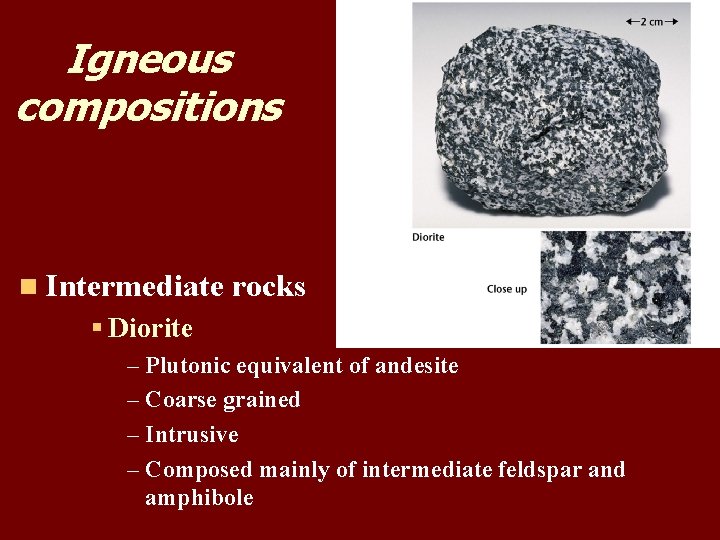
Igneous compositions n Intermediate rocks § Diorite – Plutonic equivalent of andesite – Coarse grained – Intrusive – Composed mainly of intermediate feldspar and amphibole
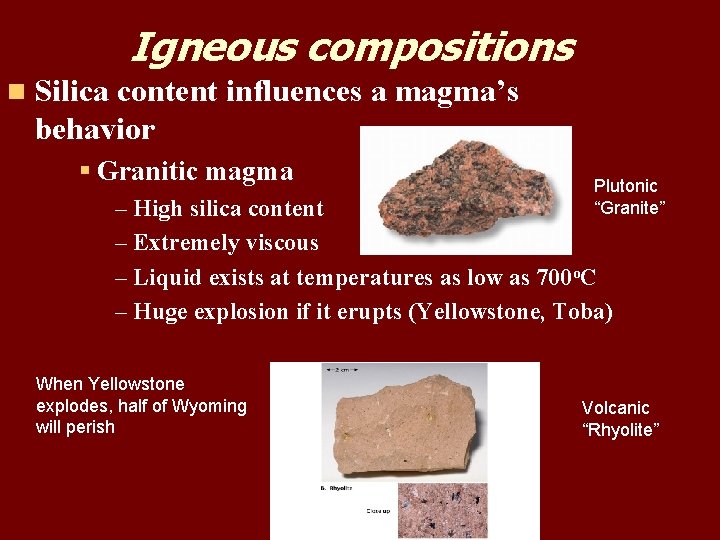
Igneous compositions n Silica content influences a magma’s behavior § Granitic magma Plutonic “Granite” – High silica content – Extremely viscous – Liquid exists at temperatures as low as 700 o. C – Huge explosion if it erupts (Yellowstone, Toba) When Yellowstone explodes, half of Wyoming will perish Volcanic “Rhyolite”
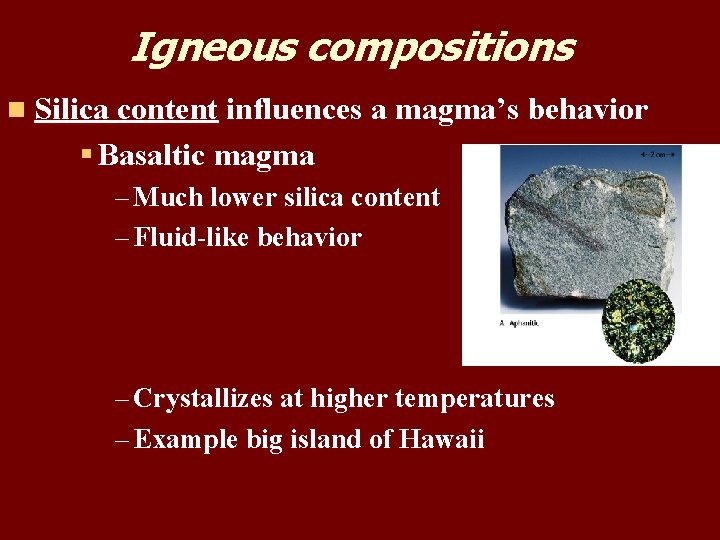
Igneous compositions n Silica content influences a magma’s behavior § Basaltic magma – Much lower silica content – Fluid-like behavior – Crystallizes at higher temperatures – Example big island of Hawaii
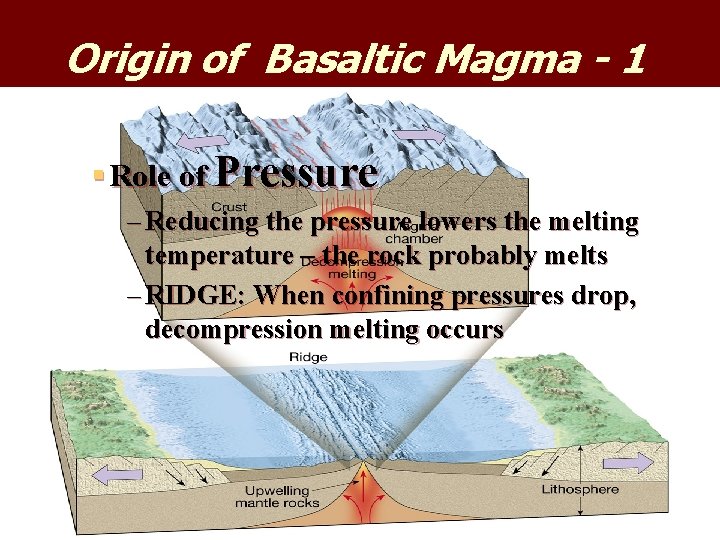
Origin of Basaltic Magma - 1 § Role of Pressure – Reducing the pressure lowers the melting temperature – the rock probably melts – RIDGE: When confining pressures drop, decompression melting occurs
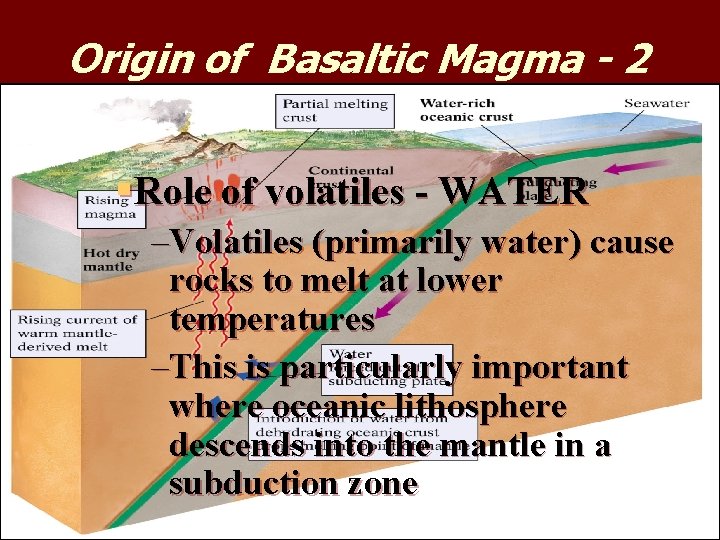
Origin of Basaltic Magma - 2 §Role of volatiles - WATER –Volatiles (primarily water) cause rocks to melt at lower temperatures –This is particularly important where oceanic lithosphere descends into the mantle in a subduction zone
Assimilation and magmatic differentiation Why are the continents so silica rich? Weathering dissolves high-temp. minerals, but also: Fractionation: if early crystals settle out, remaining melt is relatively richer in silica Show Samples
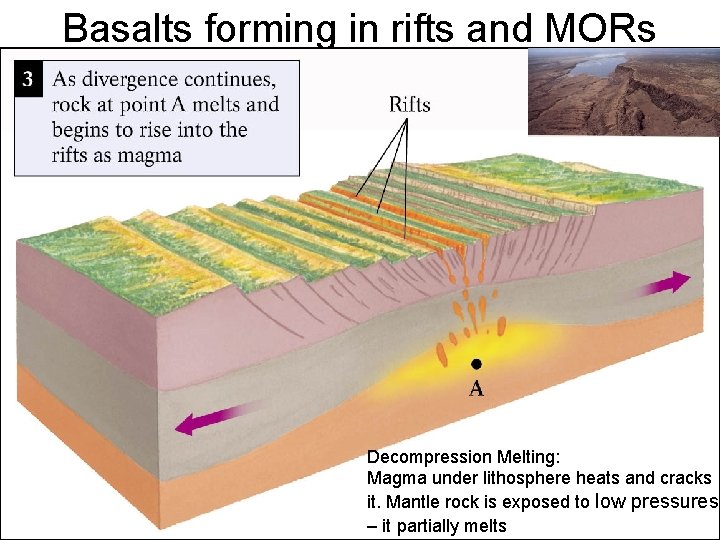
Basalts forming in rifts and MORs Decompression Melting: Magma under lithosphere heats and cracks it. Mantle rock is exposed to low pressures – it partially melts
Origin of Andesite & Diorite: intermediate silica content Basaltic here Good diagram for the Andes Mountains Small blobs, not much heat in them Assimilate some crust, fractionate
Plate Tectonics- Andesite Line Andesites form above the deep portions of a subduction zone 50
Origin of Granitic Rocks Magma rises further distance, more fractionation. Passes through thicker crust, more assimilation. Huge blobs w/ low temps but lots of magma, fractionation & assimilation => Granite Batholiths Can also get small amounts of granites from deep felsic rock passed by ascending magma