
Types of Reproduction L O To understand about
Types of Reproduction L. O: To understand about sexual and asexual reproduction MUST: Recognise the difference between sexual and asexual reproduction and give examples SHOULD: Recognise where meiosis and mitosis are involved in reproduction COULD: Explain the genetic differences between sexually and asexually produced offspring
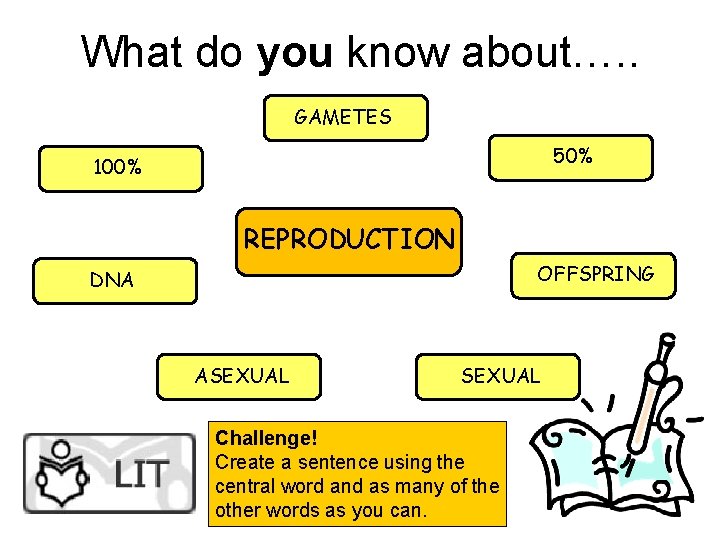
What do you know about…. . GAMETES 50% 100% REPRODUCTION OFFSPRING DNA ASEXUAL Challenge! Create a sentence using the central word and as many of the other words as you can.
What do we know about…. 1. Share your answer with your partner. 2. Link your sentences together. 3. Find a new partner to share and link with.
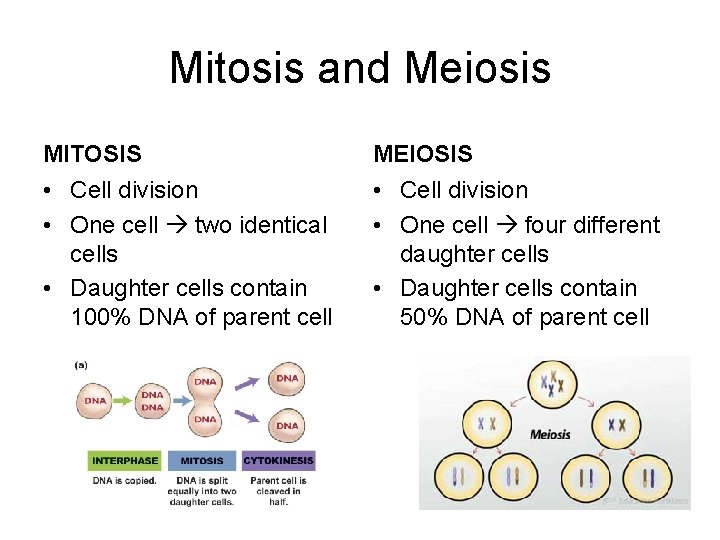
Mitosis and Meiosis MITOSIS MEIOSIS • Cell division • One cell two identical cells • Daughter cells contain 100% DNA of parent cell • Cell division • One cell four different daughter cells • Daughter cells contain 50% DNA of parent cell
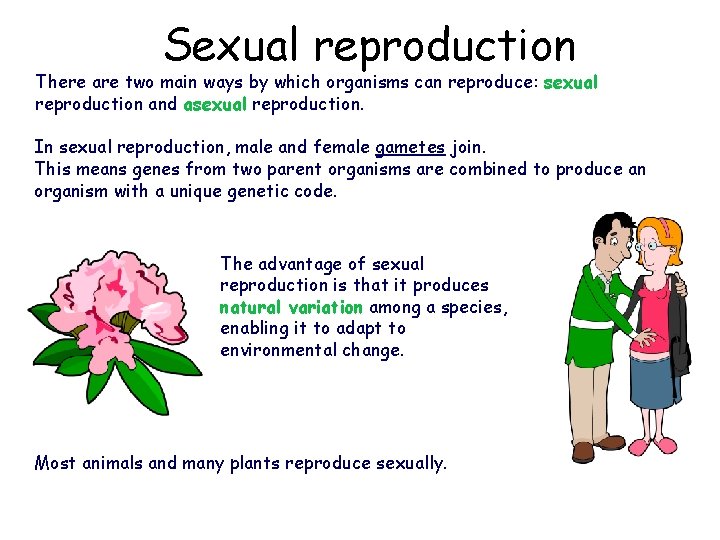
Sexual reproduction There are two main ways by which organisms can reproduce: sexual reproduction and asexual reproduction. In sexual reproduction, male and female gametes join. This means genes from two parent organisms are combined to produce an organism with a unique genetic code. The advantage of sexual reproduction is that it produces natural variation among a species, enabling it to adapt to environmental change. Most animals and many plants reproduce sexually.
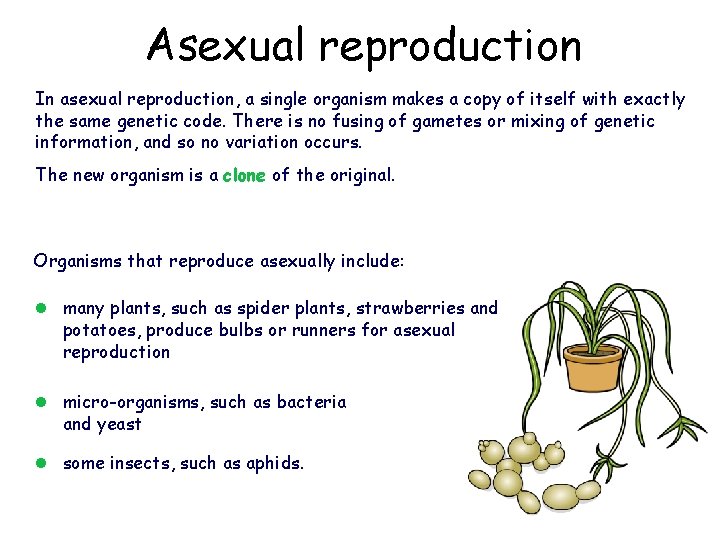
Asexual reproduction In asexual reproduction, a single organism makes a copy of itself with exactly the same genetic code. There is no fusing of gametes or mixing of genetic information, and so no variation occurs. The new organism is a clone of the original. Organisms that reproduce asexually include: l many plants, such as spider plants, strawberries and potatoes, produce bulbs or runners for asexual reproduction l micro-organisms, such as bacteria and yeast l some insects, such as aphids.
Tasks • ALL: Card sort. • Choose either: – LOW LEVEL (Grade 4/5) – MID LEVEL (Grade 6/7) – HIGH LEVEL (Grade 8/9)
Self Review Check the answers to your card sort.
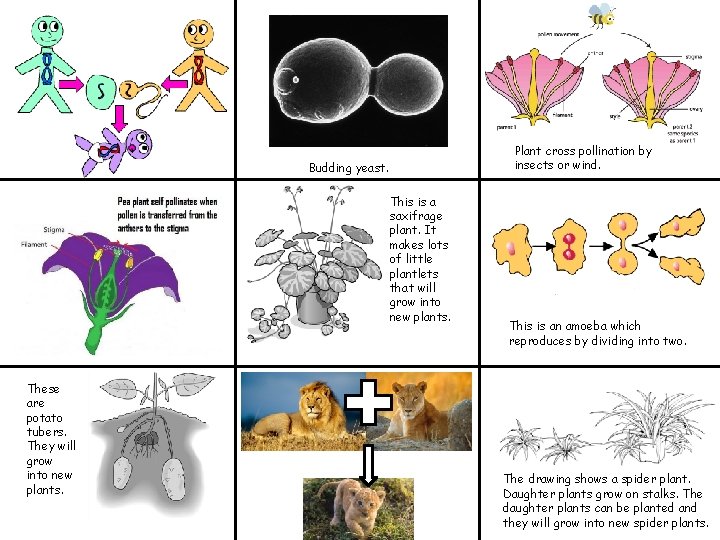
Plant cross pollination by insects or wind. Budding yeast. This is a saxifrage plant. It makes lots of little plantlets that will grow into new plants. These are potato tubers. They will grow into new plants. This is an amoeba which reproduces by dividing into two. The drawing shows a spider plant. Daughter plants grow on stalks. The daughter plants can be planted and they will grow into new spider plants.
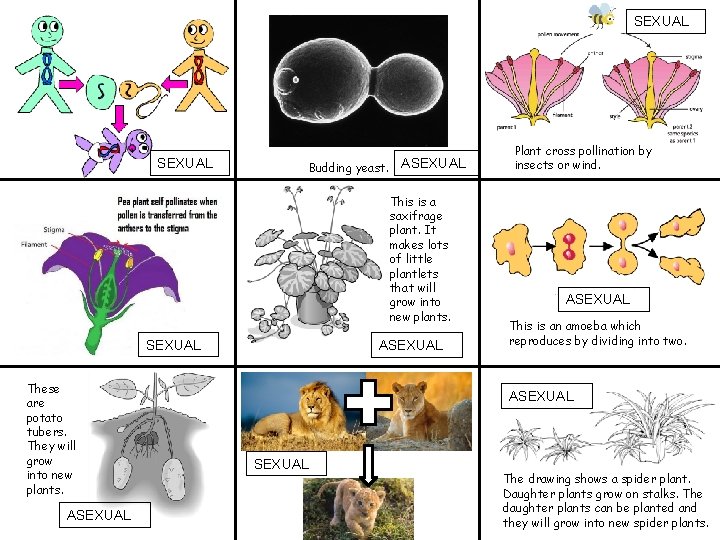
SEXUAL Budding yeast. ASEXUAL This is a saxifrage plant. It makes lots of little plantlets that will grow into new plants. SEXUAL These are potato tubers. They will grow into new plants. ASEXUAL Plant cross pollination by insects or wind. ASEXUAL This is an amoeba which reproduces by dividing into two. ASEXUAL The drawing shows a spider plant. Daughter plants grow on stalks. The daughter plants can be planted and they will grow into new spider plants.
Group Review Collect an answer sheet and check your answers to the levelled activity.
Types of Reproduction WALT: Understand about sexual and asexual reproduction MUST: Recognise the difference between sexual and asexual reproduction and give examples SHOULD: Recognise where meiosis and mitosis are involved in reproduction COULD: Explain the genetic differences between sexually and asexually produced offspring
Exit Ticket Name_________ Ø I feel about the progress I made today. Ø At the start of the lesson I could…. Ø From what I’ve learnt today I can now…. . Ø I know I can do this because……. Ø I still need help with……. .
- Slides: 13