
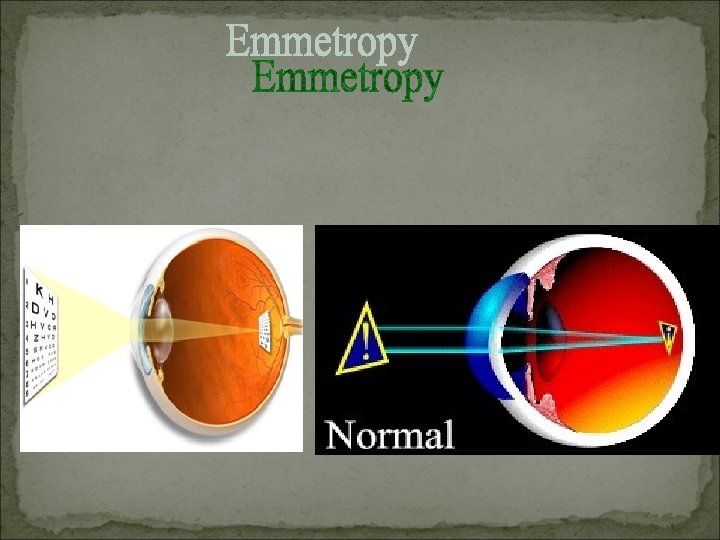
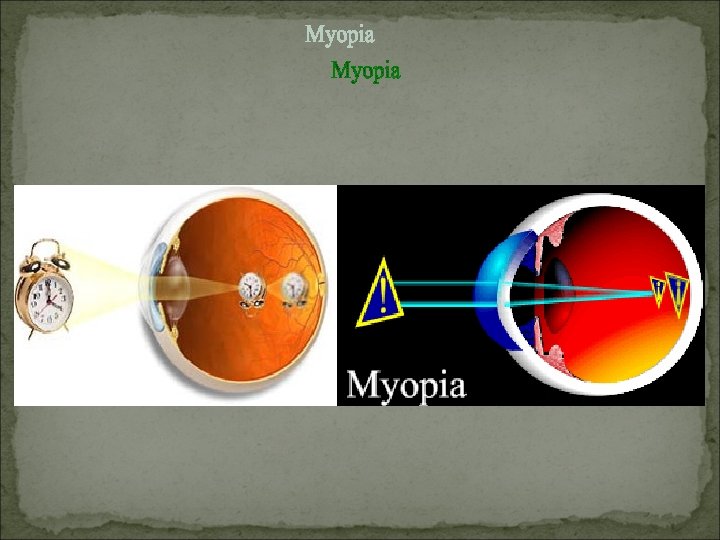
Types of refraction Clinical classification of myopia Principle

- Slides: 28
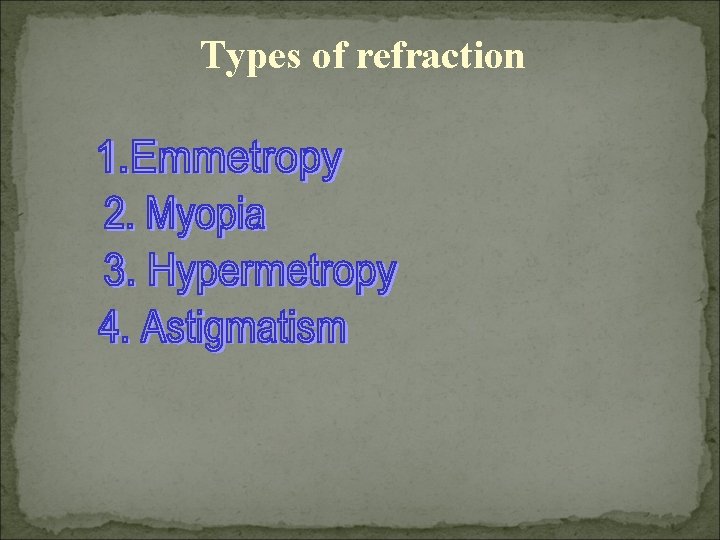
Types of refraction
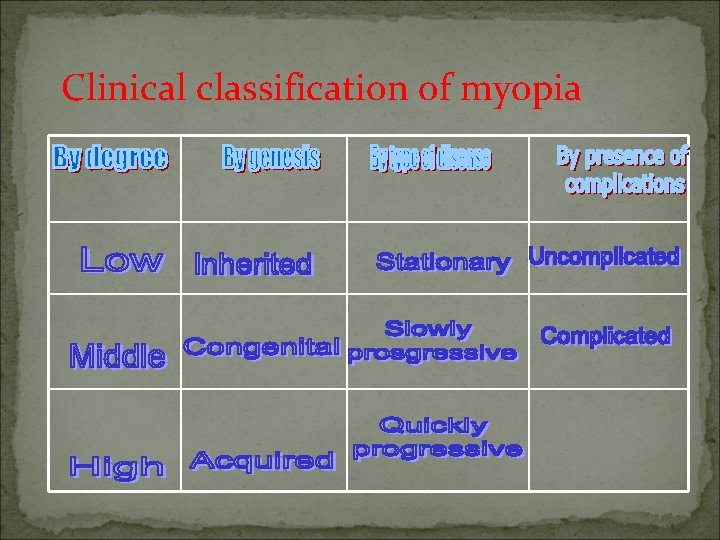
Clinical classification of myopia
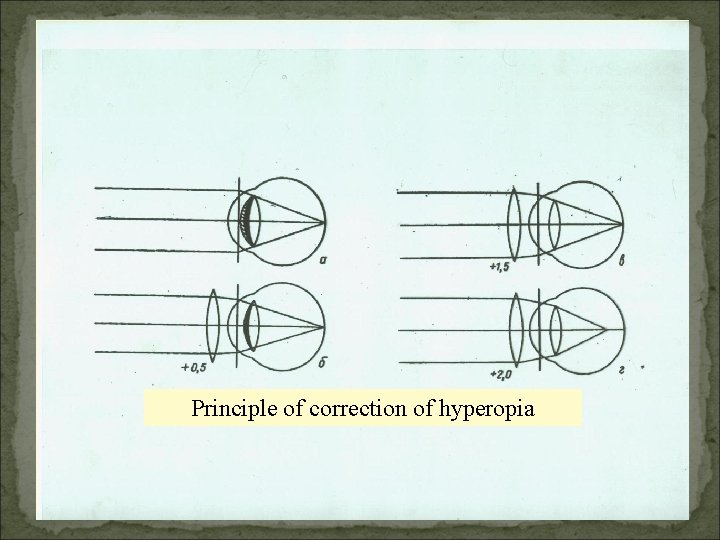
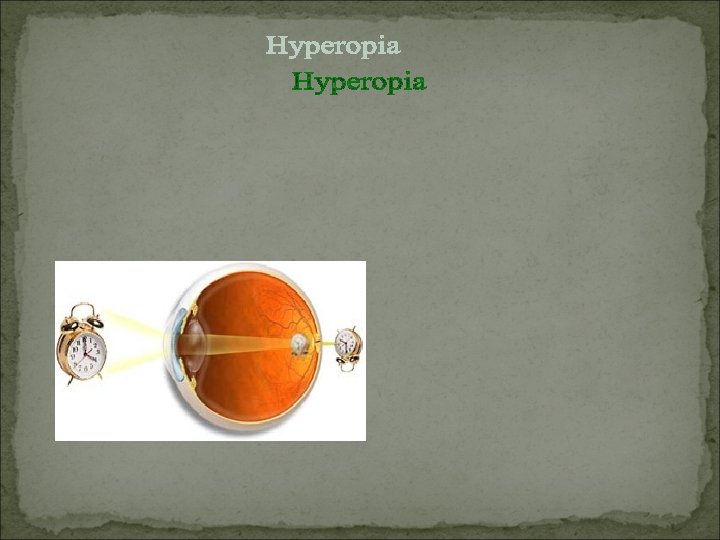
Principle of correction of hyperopia
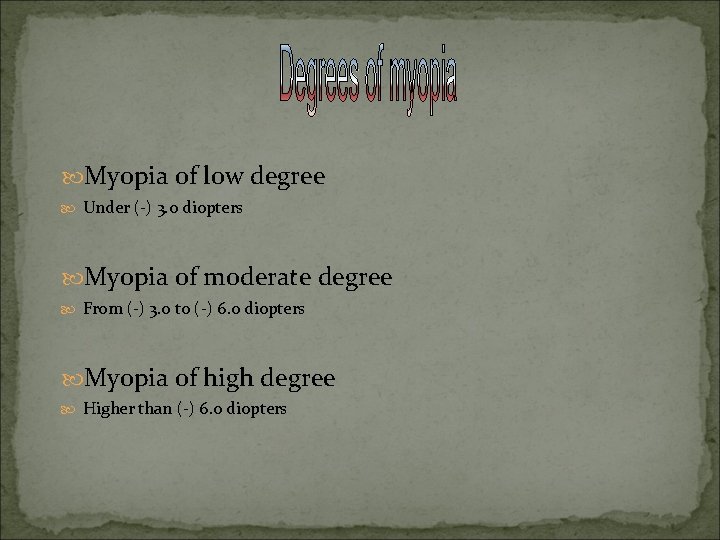
Myopia of low degree Under (-) 3. 0 diopters Myopia of moderate degree From (-) 3. 0 to (-) 6. 0 diopters Myopia of high degree Higher than (-) 6. 0 diopters
Hyperopia of low degree Under (+) 2 diopters Hyperopia of moderate degree From (+)2 to (+) 5 diopters Hyperopia of high degree Higher than (+) 5 diopters
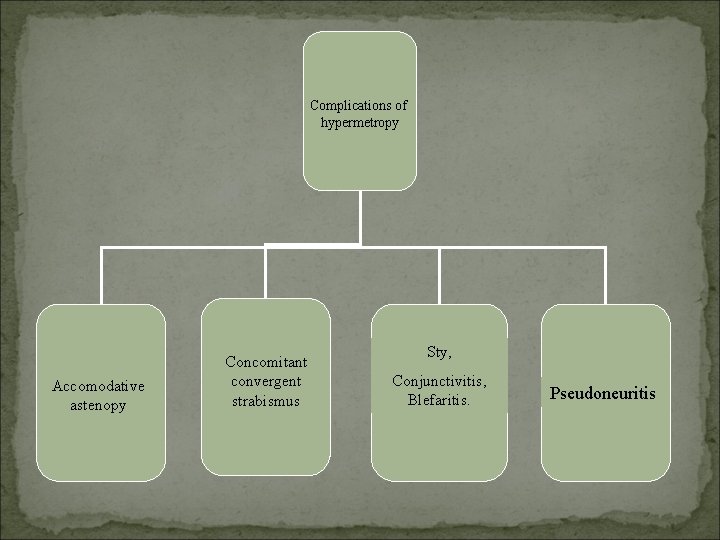
Complications of hypermetropy Accomodative astenopy Concomitant convergent strabismus Sty, Conjunctivitis, Blefaritis. Pseudoneuritis
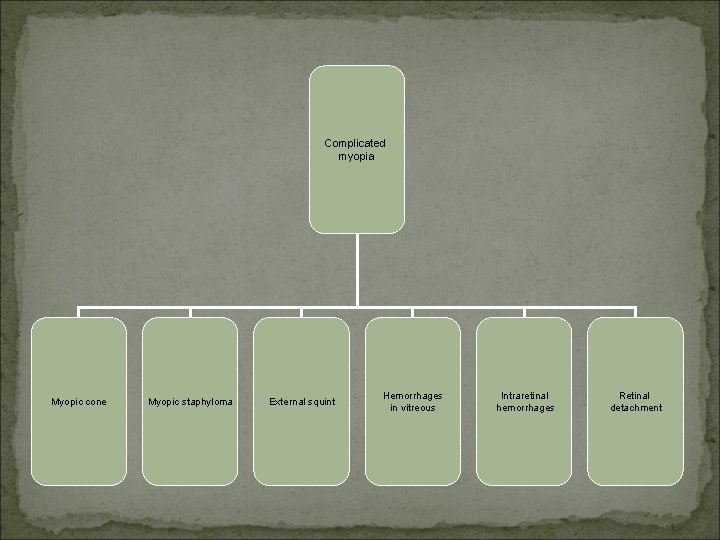
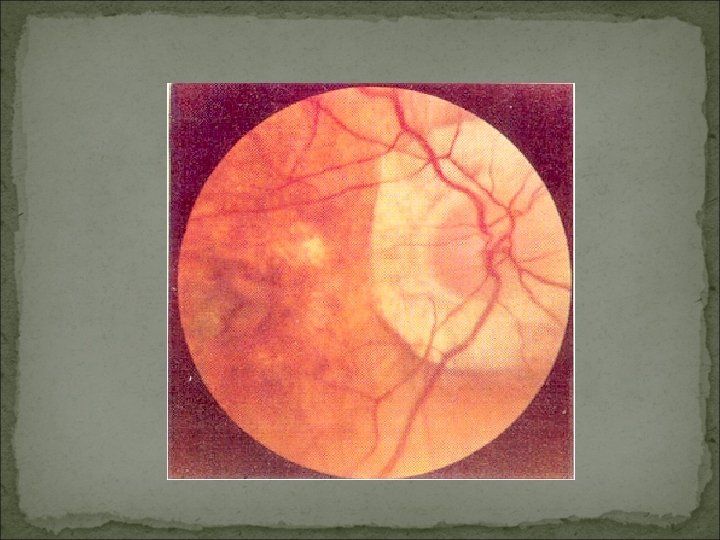
Complicated myopia Myopic cone Myopic staphyloma External squint Hemorrhages in vitreous Intraretinal hemorrhages Retinal detachment
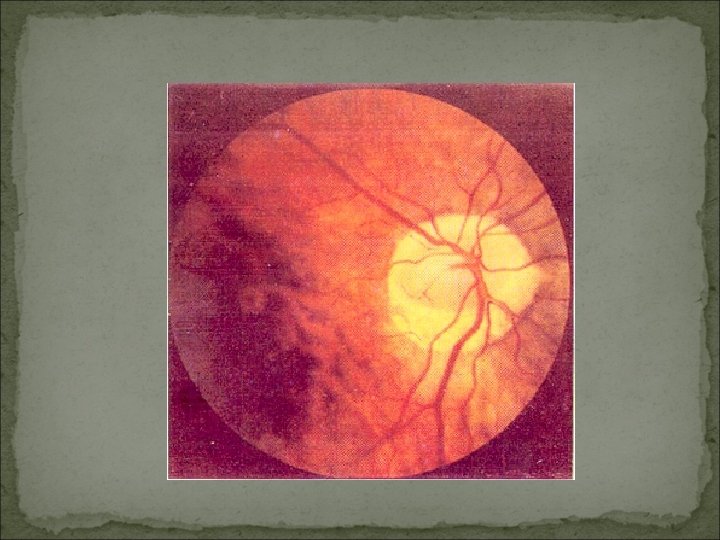
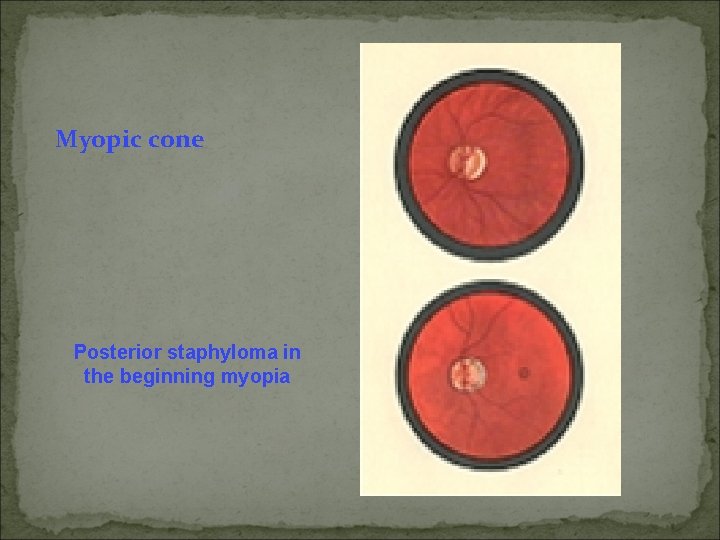
Myopic cone Posterior staphyloma in the beginning myopia
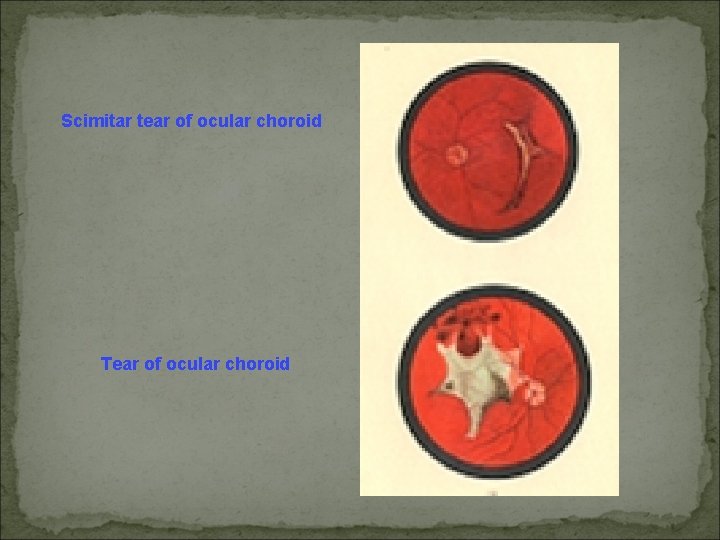
Scimitar tear of ocular choroid Tear of ocular choroid
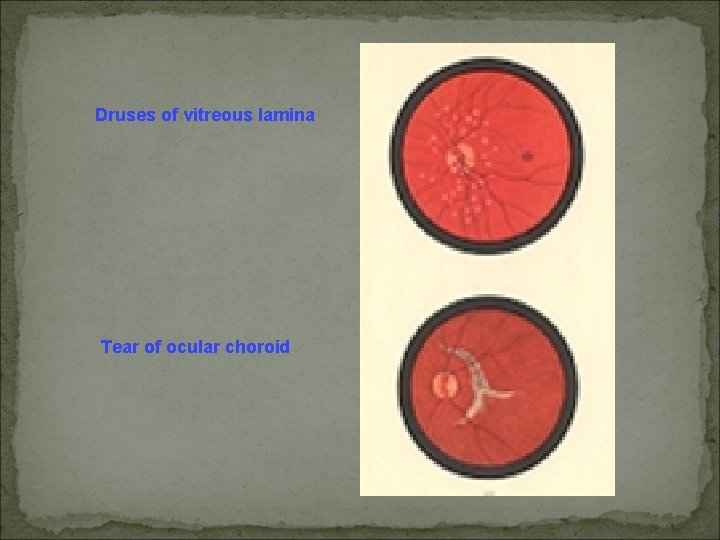
Druses of vitreous lamina Tear of ocular choroid
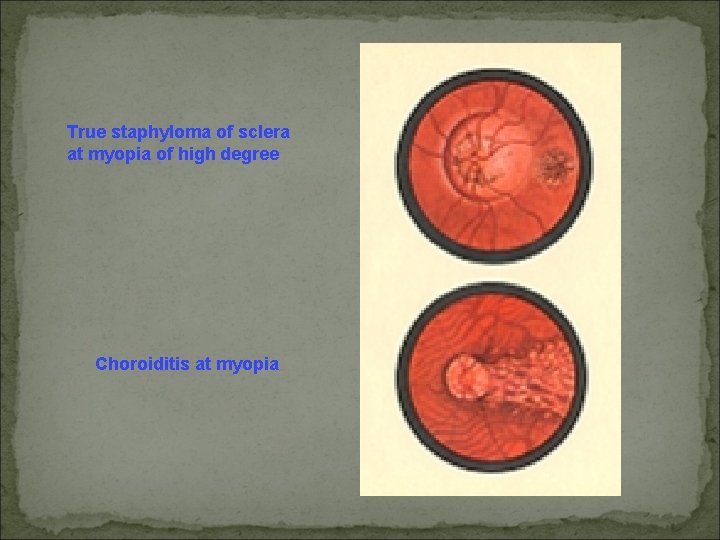
True staphyloma of sclera at myopia of high degree Choroiditis at myopia
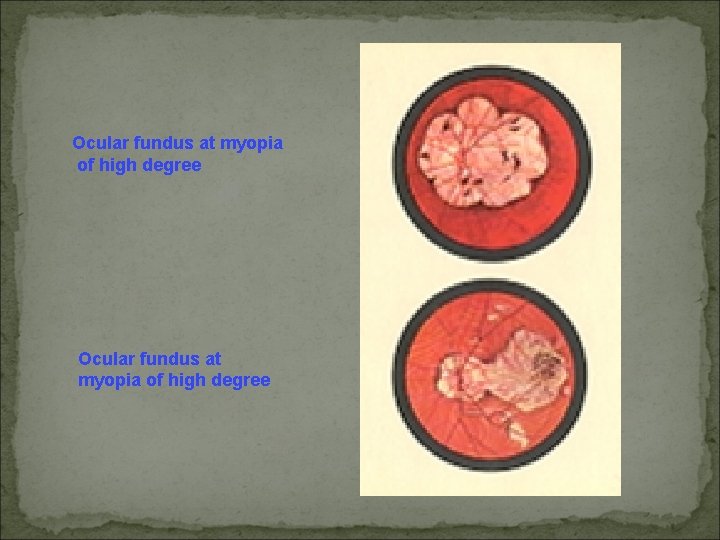
Ocular fundus at myopia of high degree
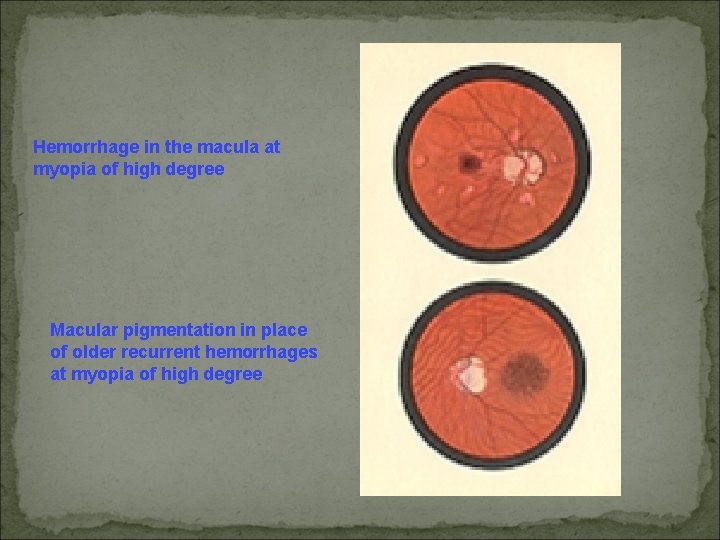
Hemorrhage in the macula at myopia of high degree Macular pigmentation in place of older recurrent hemorrhages at myopia of high degree
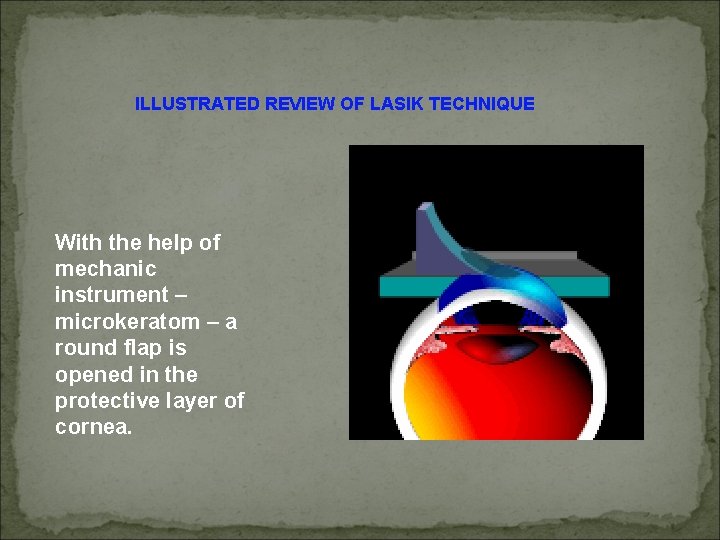
ILLUSTRATED REVIEW OF LASIK TECHNIQUE With the help of mechanic instrument – microkeratom – a round flap is opened in the protective layer of cornea.
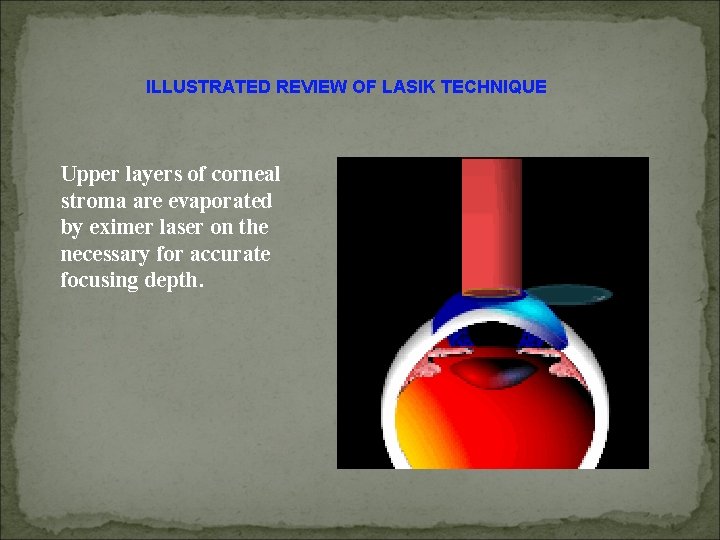
ILLUSTRATED REVIEW OF LASIK TECHNIQUE Upper layers of corneal stroma are evaporated by eximer laser on the necessary for accurate focusing depth.
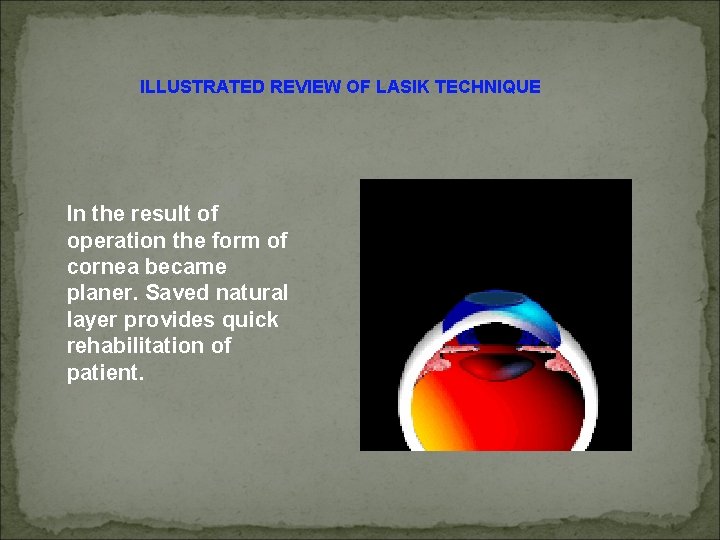
ILLUSTRATED REVIEW OF LASIK TECHNIQUE In the result of operation the form of cornea became planer. Saved natural layer provides quick rehabilitation of patient.
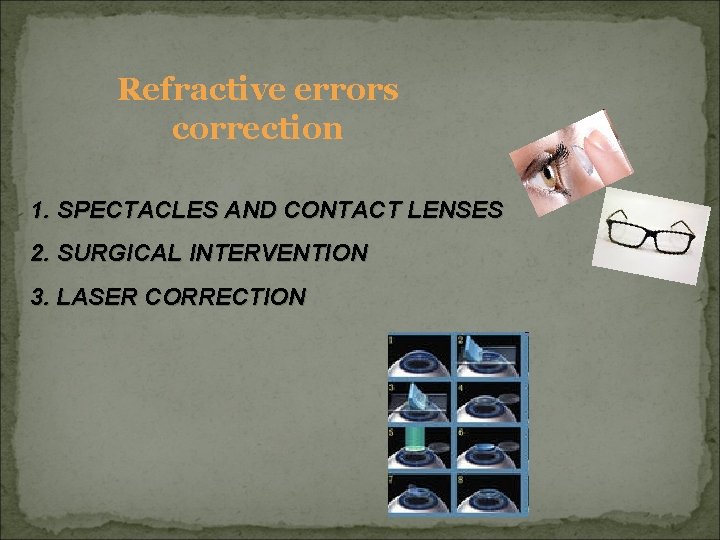
Refractive errors correction 1. SPECTACLES AND CONTACT LENSES 2. SURGICAL INTERVENTION 3. LASER CORRECTION
LASIC ADVANTAGES SHORT VISION RECOVERY PERIOD POSSIBILITY TO MAKE SURGERY ON BOTH EYES SIMULTANEOUSLY STABLE POSITIVE RESULT
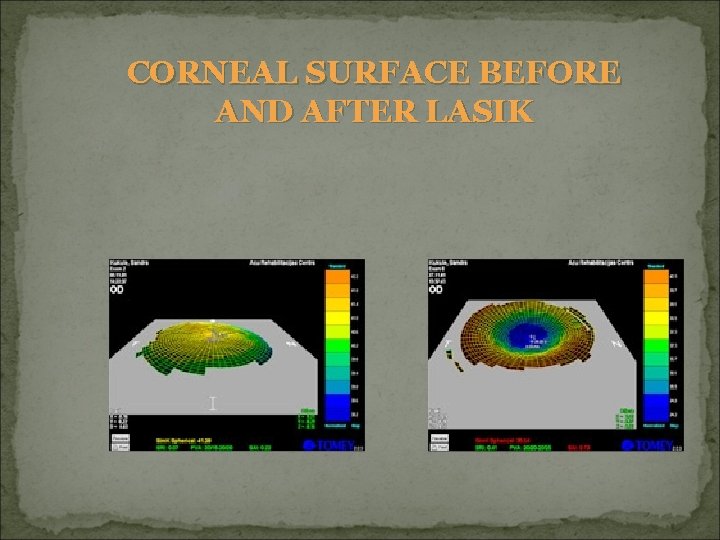
CORNEAL SURFACE BEFORE AND AFTER LASIK
RADIAL KERATOTOMY ADVANTAGES: POSSIBILITY TO CORRECT MYOPIA UP TO 5 DIOPTERS DISADVANTAGES: LONG REHABILITATION PERIOD RISK OF DEVELOPMENT OF WRONG ASTIGMATISM
LASER OPHTHALMOLOGY Many scientists made attempts to use light beam in ocular diseases. The first to realize this idea was Myer-Schwickerath in 1947. This date may be considered as the beginning of clinical use of photocoagulation in ophthalmology. Meyer-Schwickerath used xenon lamp of high pressur as a powerful source of light.
Thank you for attention!