
Types of Reactions Synthesis reactions occur when two
- Slides: 7
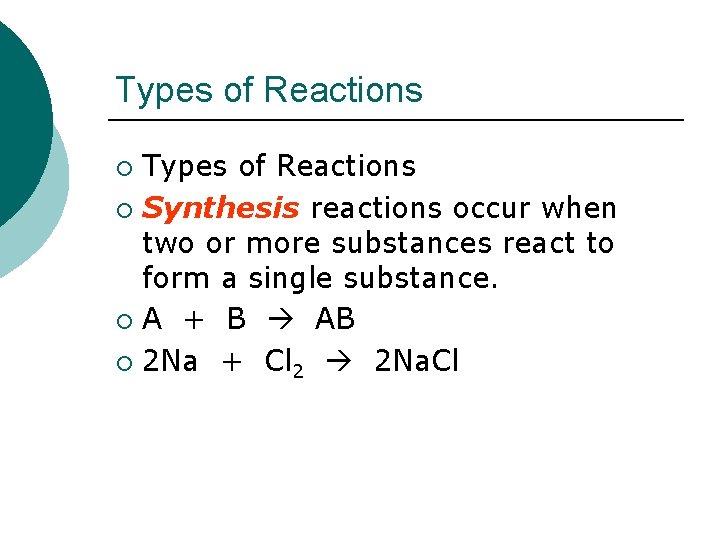
Types of Reactions ¡ Synthesis reactions occur when two or more substances react to form a single substance. ¡ A + B AB ¡ 2 Na + Cl 2 2 Na. Cl ¡
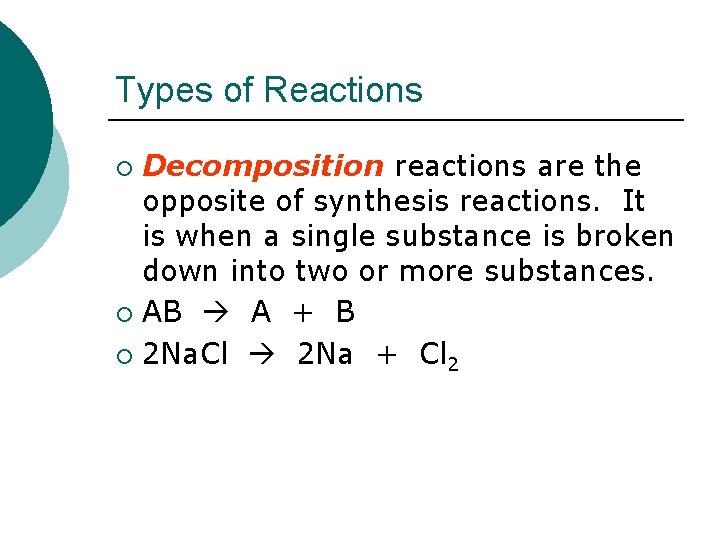
Types of Reactions Decomposition reactions are the opposite of synthesis reactions. It is when a single substance is broken down into two or more substances. ¡ AB A + B ¡ 2 Na. Cl 2 Na + Cl 2 ¡
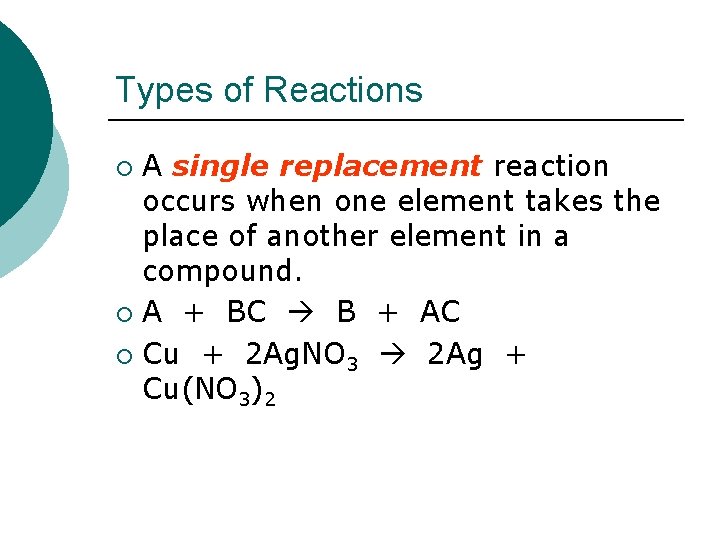
Types of Reactions A single replacement reaction occurs when one element takes the place of another element in a compound. ¡ A + BC B + AC ¡ Cu + 2 Ag. NO 3 2 Ag + Cu(NO 3)2 ¡
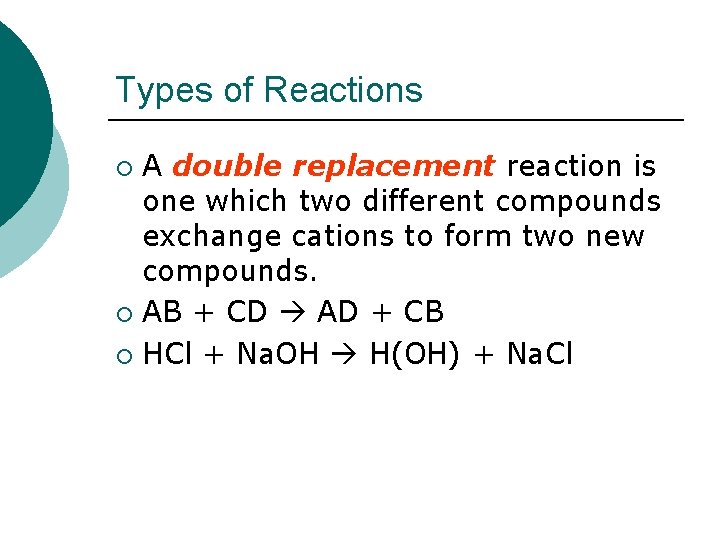
Types of Reactions A double replacement reaction is one which two different compounds exchange cations to form two new compounds. ¡ AB + CD AD + CB ¡ HCl + Na. OH H(OH) + Na. Cl ¡
Types of Reactions A combustion reaction is one in which a substance reacts rapidly with oxygen, often producing heat and light. ¡ Note in a combustion reaction the reactants are always C and H in the presence of O 2 and the products are always water and CO 2. ¡
Types of Reactions Sometimes, reactions occur due to electron transfer. ¡ Oxidation is the losing of electrons. ¡ Reduction is the gaining of electrons. ¡ OIL RIG! ¡ Look at a synthesis reaction between calcium and oxygen. ¡
Types of Reactions Chemical energy is the energy stored in the chemical bonds of a substance. ¡ When bonds are broken or formed, energy is given off or taken in. ¡ When energy is released (lost), the reaction is exothermic. ¡ When energy is absorbed (gained), the reaction is endothermic. ¡