
Types of Reactions 7 2 Classifying Reactions reactions
- Slides: 16
Types of Reactions 7. 2
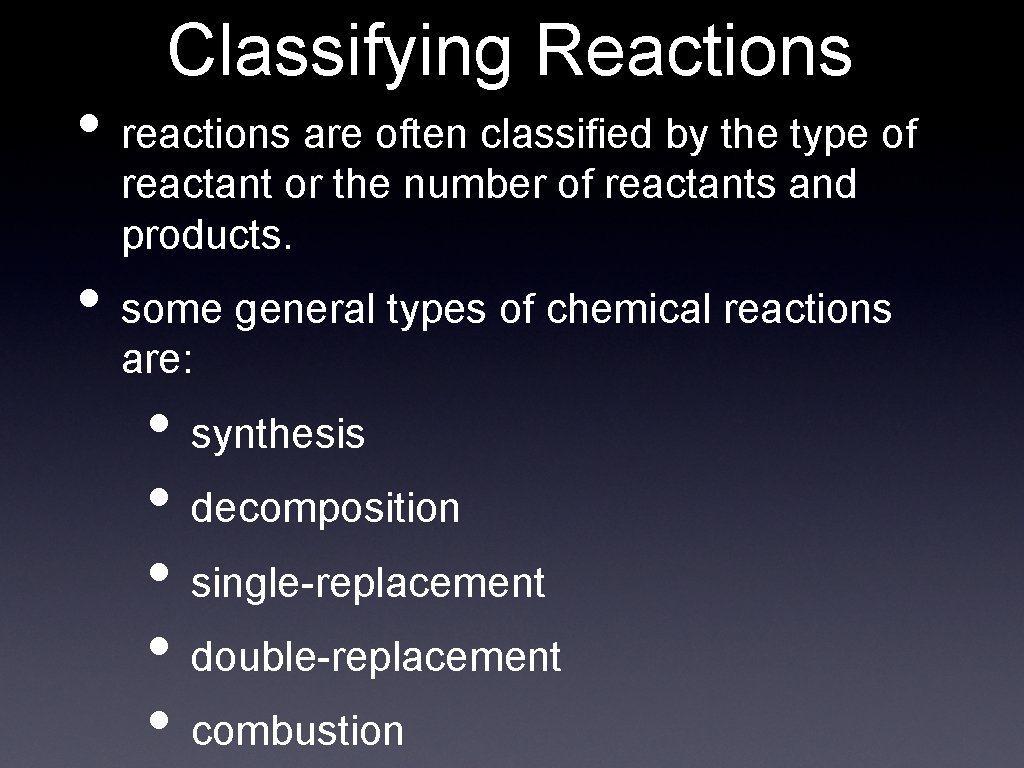
Classifying Reactions • reactions are often classified by the type of reactant or the number of reactants and products. • some general types of chemical reactions are: • synthesis • decomposition • single-replacement • double-replacement • combustion
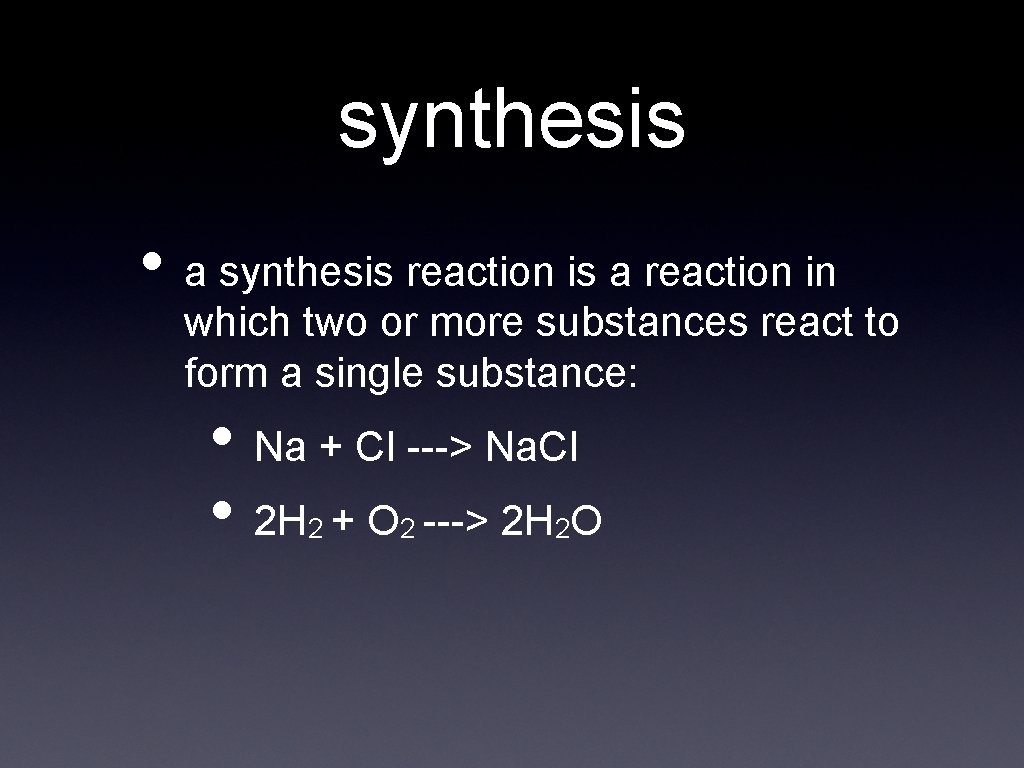
synthesis • a synthesis reaction is a reaction in which two or more substances react to form a single substance: • Na + Cl ---> Na. Cl • 2 H + O ---> 2 H O 2 2 2
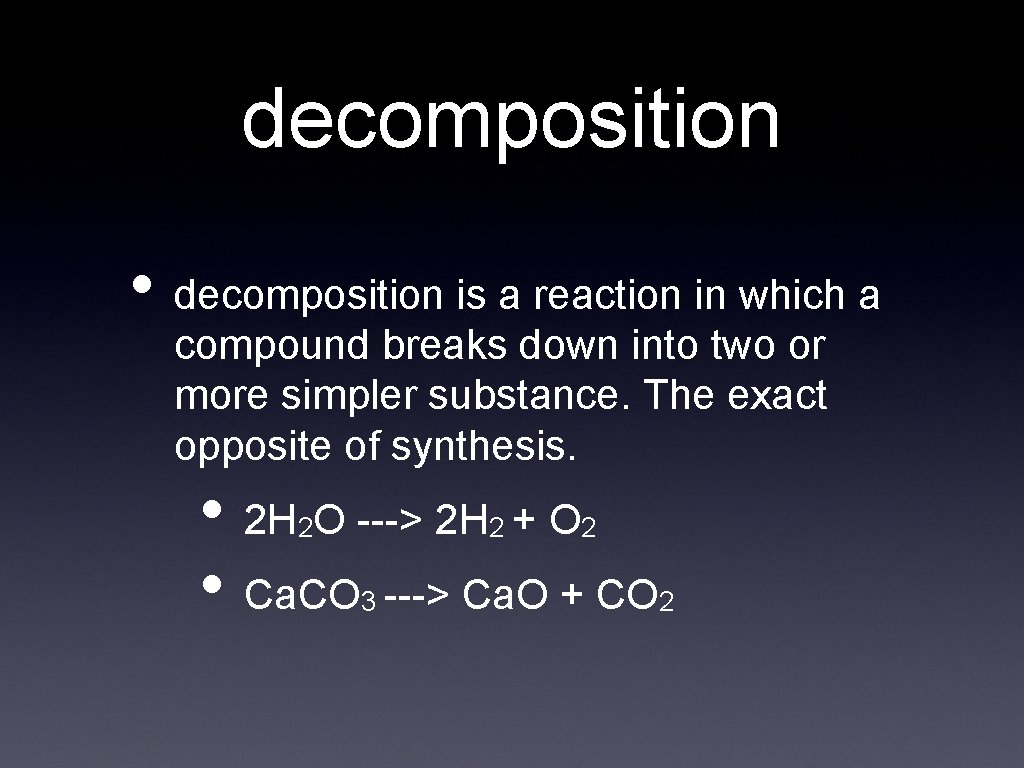
decomposition • decomposition is a reaction in which a compound breaks down into two or more simpler substance. The exact opposite of synthesis. • 2 H O ---> 2 H + O • Ca. CO ---> Ca. O + CO 2 2 3 2 2
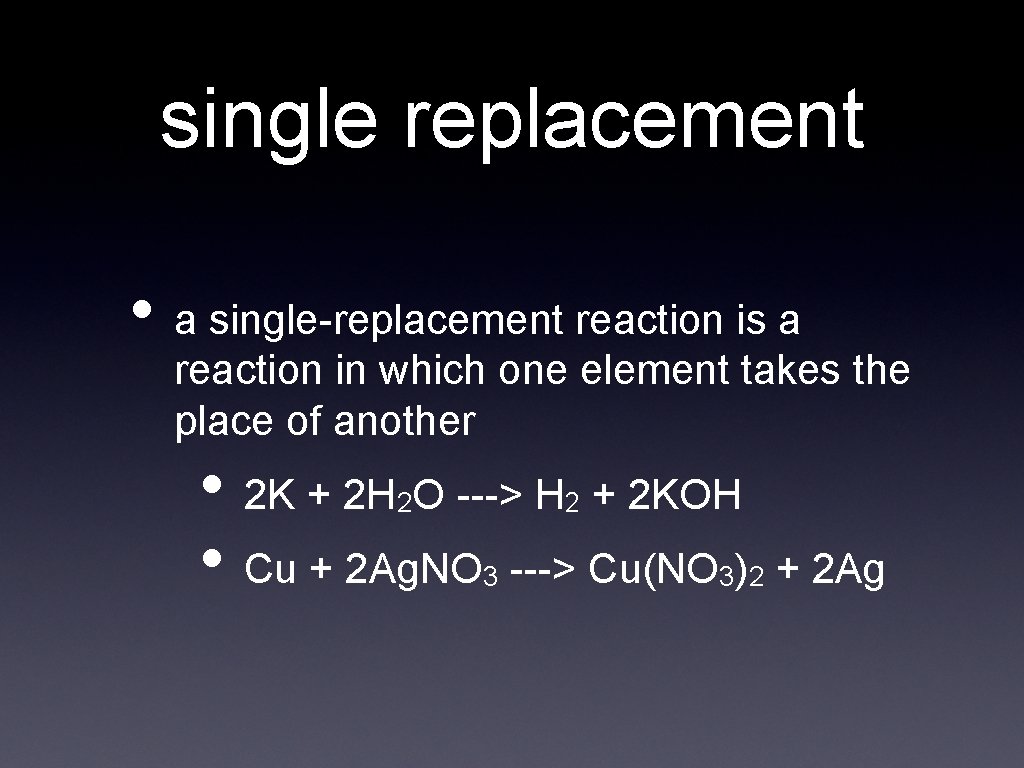
single replacement • a single-replacement reaction is a reaction in which one element takes the place of another • 2 K + 2 H O ---> H + 2 KOH • Cu + 2 Ag. NO ---> Cu(NO ) 2 2 3 3 2 + 2 Ag
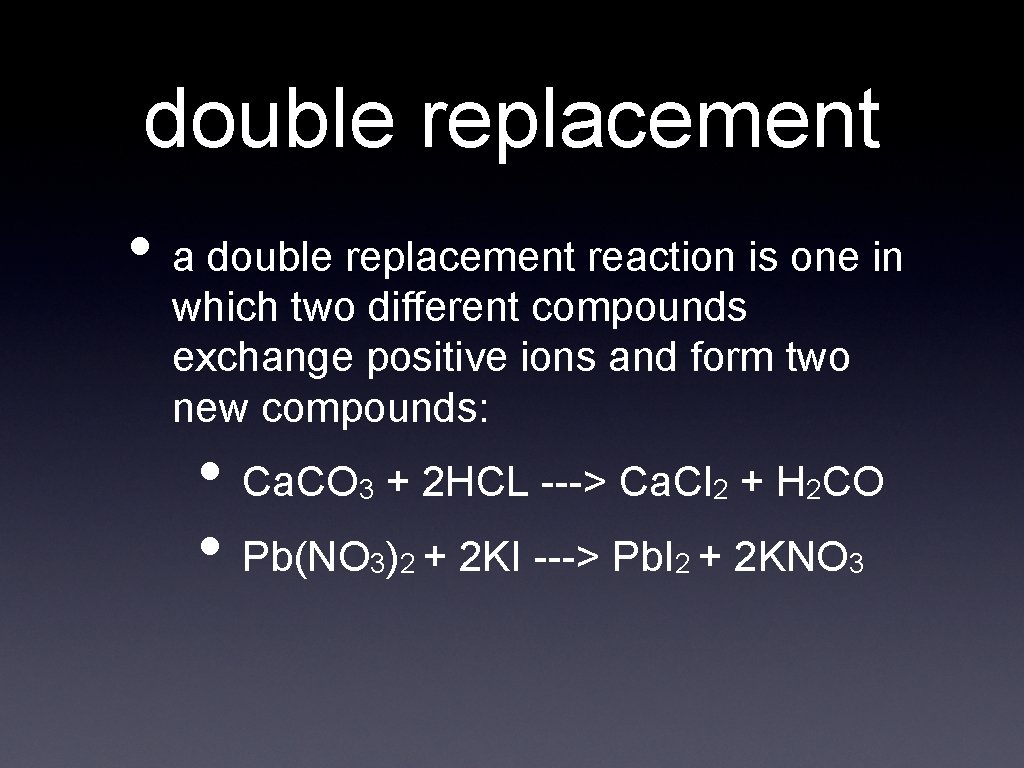
double replacement • a double replacement reaction is one in which two different compounds exchange positive ions and form two new compounds: • Ca. CO + 2 HCL ---> Ca. Cl + H CO • Pb(NO ) + 2 KI ---> Pb. I + 2 KNO 3 3 2 2 3
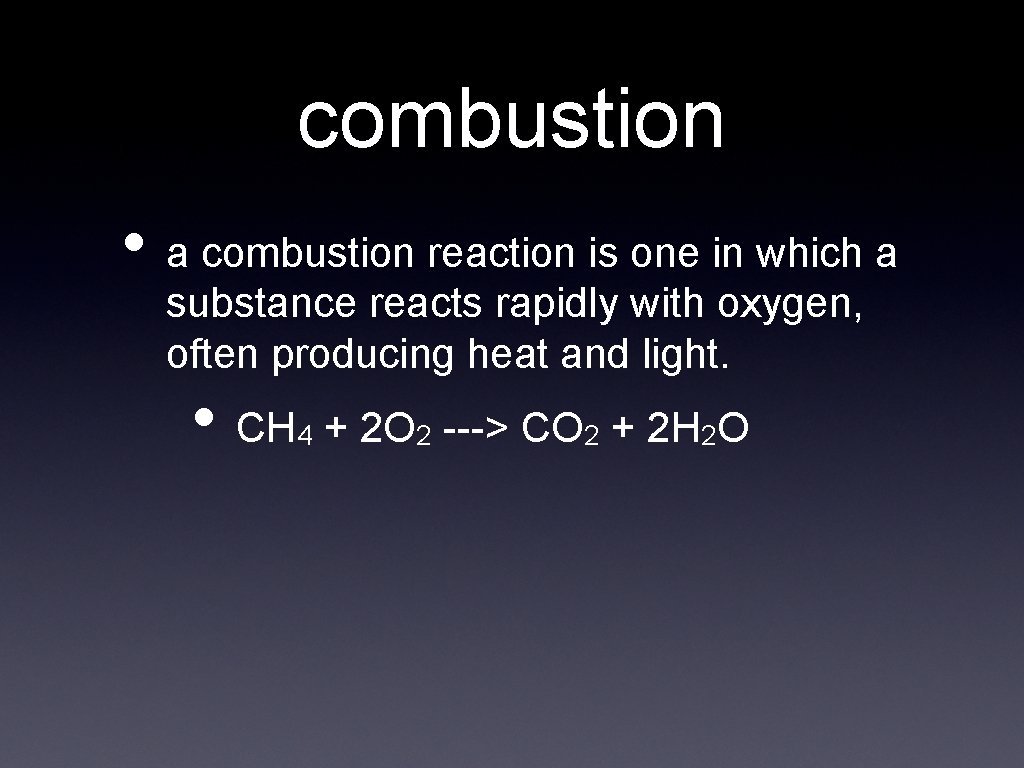
combustion • a combustion reaction is one in which a substance reacts rapidly with oxygen, often producing heat and light. • CH 4 + 2 O 2 ---> CO 2 + 2 H 2 O
Energy Changes in Reactions 7. 3
chemical bonds and energy • chemical energy is the energy stored in the chemical bonds of a substance. • chemical reactions involve the breaking of chemical bonds in the reactants and the formation of chemical bonds in the products.
breaking and forming bonds • breaking chemical bonds requires energy. • forming chemical bonds releases energy.
exothermic and endothermic reactions • during a chemical reaction, energy is either released or absorbed.
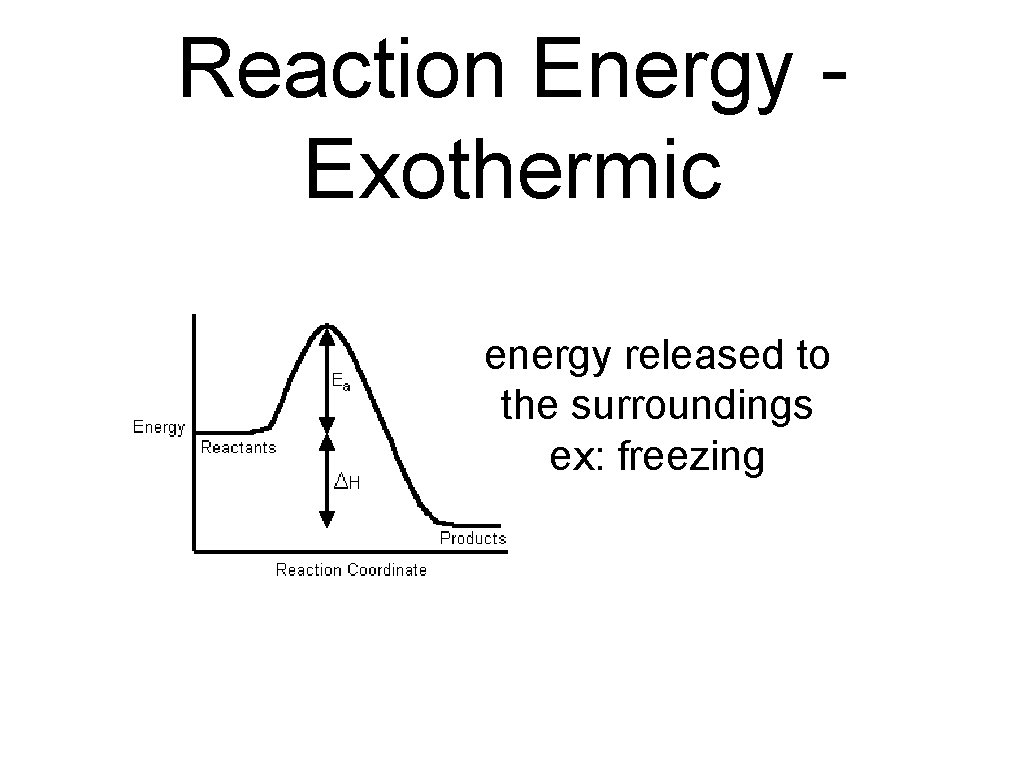
exothermic reactions • a chemical reaction that releases energy to its surroundings is called an exothermic reaction. • in exothermic reactions, the energy released as the products form is greater than the energy required to break the bonds in the reactants.
Reaction Energy Exothermic energy released to the surroundings ex: freezing
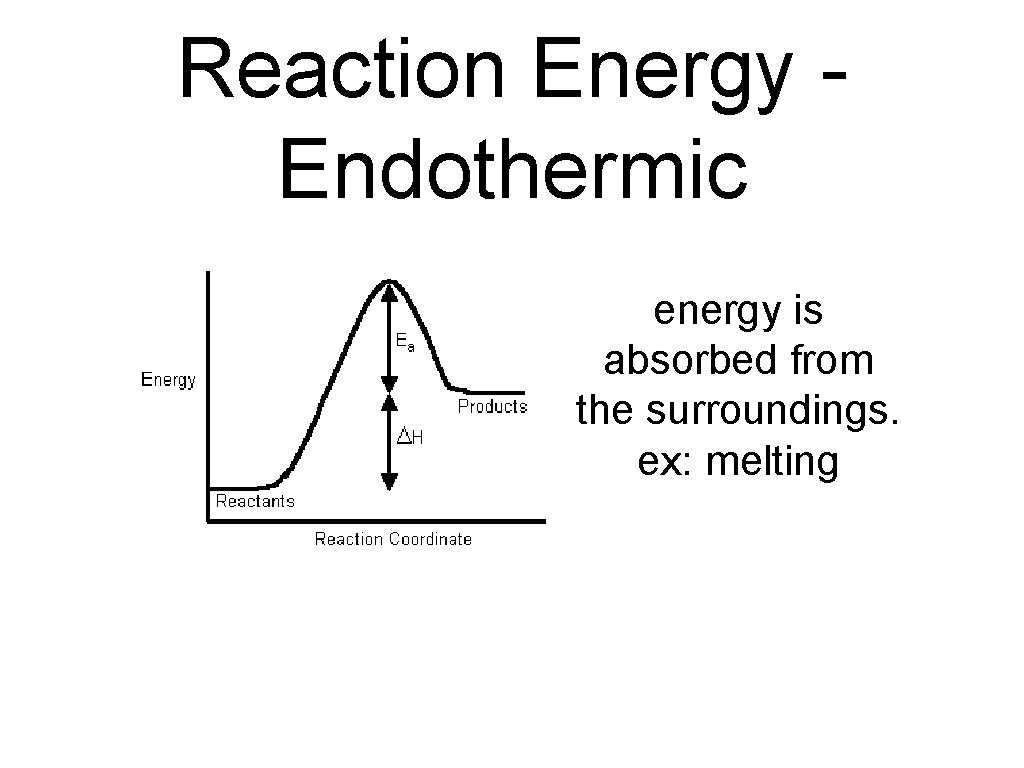
endothermic reactions • a chemical reaction that absorbs energy from its surroundings is called an endothermic reaction. • in an endothermic reaction, more energy is required to break the bonds in the reactants than is released by the formation of the products.
Reaction Energy Endothermic energy is absorbed from the surroundings. ex: melting
conservation of energy • in an exothermic reaction, the chemical energy of the reactants is converted into heat plus the chemical energy of the products. • in an endothermic reaction, heat plus the chemical energy of the reactants is converted into the chemical energy of the products.