
Types of Protein AS Level Biology Foundations in
Types of Protein AS Level Biology Foundations in Biology Biological Molecules
09 January 2022 Types of Protein Lesson Objectives: Learners should be able to demonstrate and apply their knowledge and understanding of: • The structure and function of globular proteins including a conjugated protein • The properties and functions of fibrous proteins
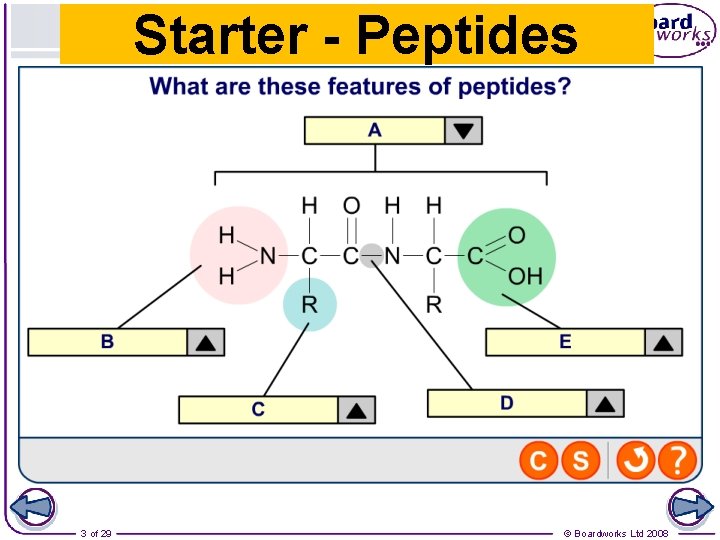
Starter - Peptides 3 of 29 © Boardworks Ltd 2008
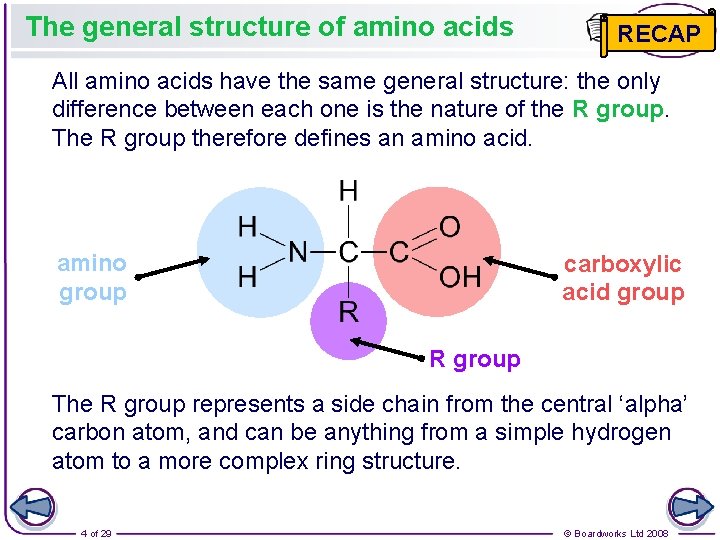
The general structure of amino acids RECAP All amino acids have the same general structure: the only difference between each one is the nature of the R group. The R group therefore defines an amino acid. amino group carboxylic acid group R group The R group represents a side chain from the central ‘alpha’ carbon atom, and can be anything from a simple hydrogen atom to a more complex ring structure. 4 of 29 © Boardworks Ltd 2008
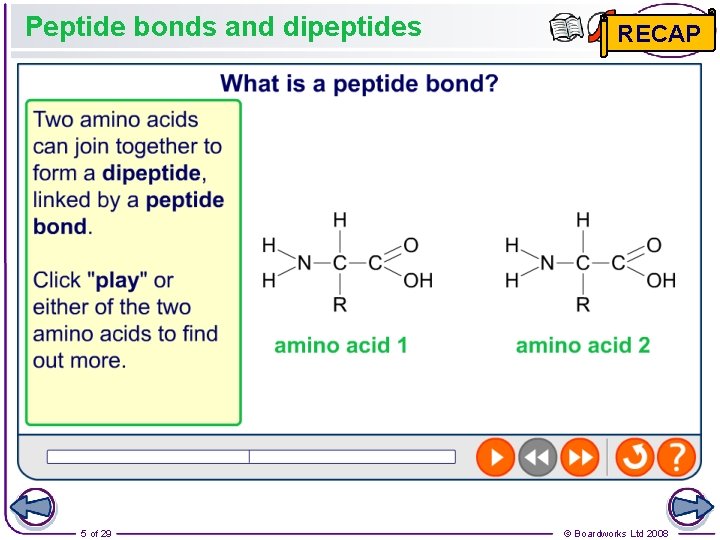
Peptide bonds and dipeptides 5 of 29 RECAP © Boardworks Ltd 2008
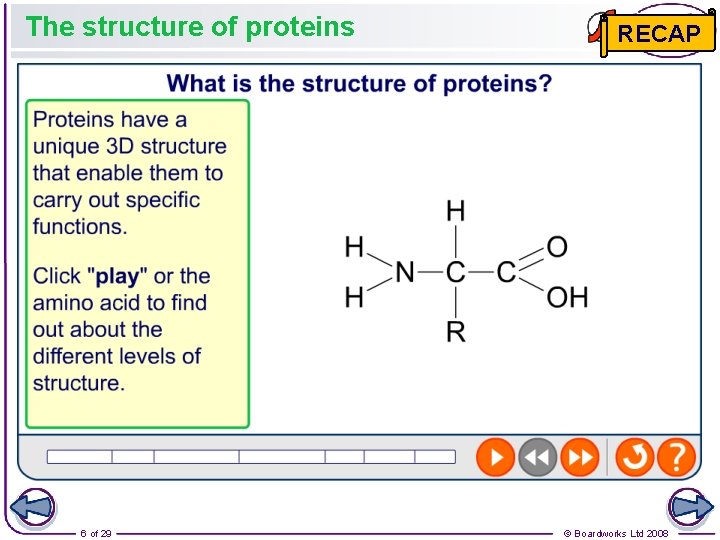
The structure of proteins 6 of 29 RECAP © Boardworks Ltd 2008
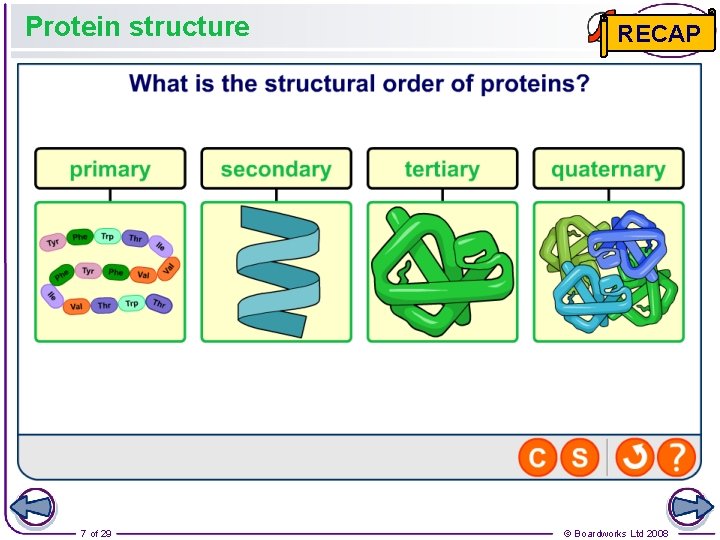
Protein structure 7 of 29 RECAP © Boardworks Ltd 2008
Types of Protein Globular Proteins • E. g. Insulin Conjugated Proteins • E. g Haemoglobin & Catalase Enzyme Fibrous Proteins • E. g. Keratin, Elastin and Collagen
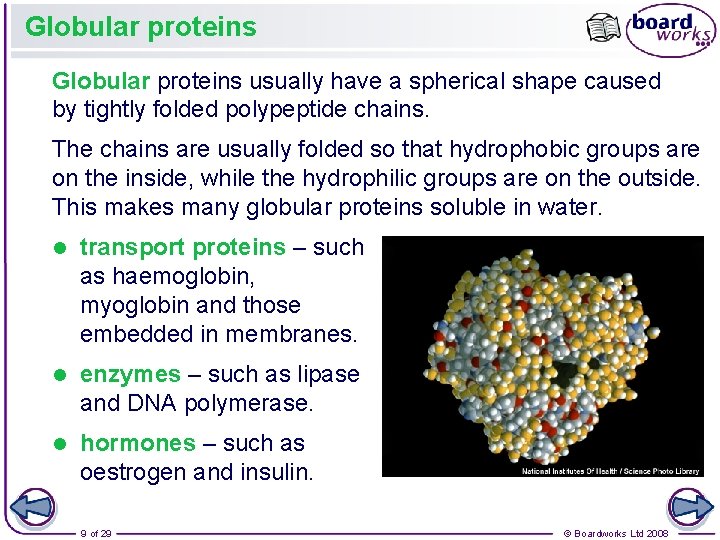
Globular proteins usually have a spherical shape caused by tightly folded polypeptide chains. The chains are usually folded so that hydrophobic groups are on the inside, while the hydrophilic groups are on the outside. This makes many globular proteins soluble in water. l transport proteins – such as haemoglobin, myoglobin and those embedded in membranes. l enzymes – such as lipase and DNA polymerase. l hormones – such as oestrogen and insulin. 9 of 29 © Boardworks Ltd 2008
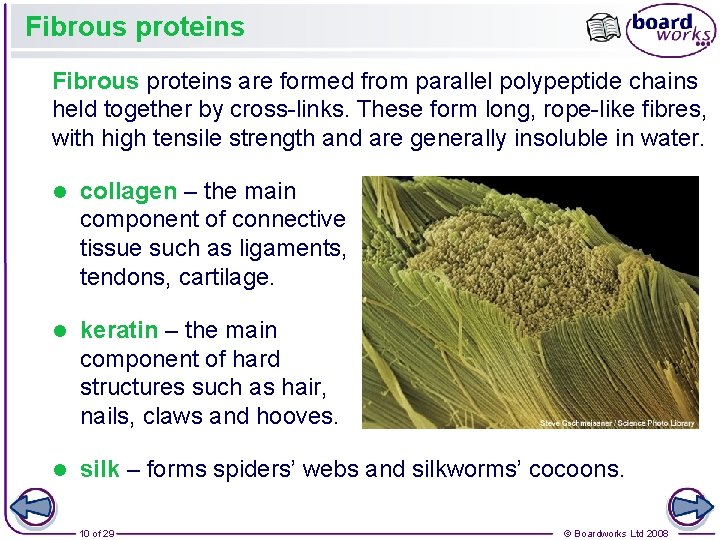
Fibrous proteins are formed from parallel polypeptide chains held together by cross-links. These form long, rope-like fibres, with high tensile strength and are generally insoluble in water. l collagen – the main component of connective tissue such as ligaments, tendons, cartilage. l keratin – the main component of hard structures such as hair, nails, claws and hooves. l silk – forms spiders’ webs and silkworms’ cocoons. 10 of 29 © Boardworks Ltd 2008
Task • Use the information to make notes on each type of protein: You must include: 1. The function of the protein 2. How structure relates to function 3. Details about the structure of the proteins 4. The level of protein structure 5. Specific groups or part of the protein
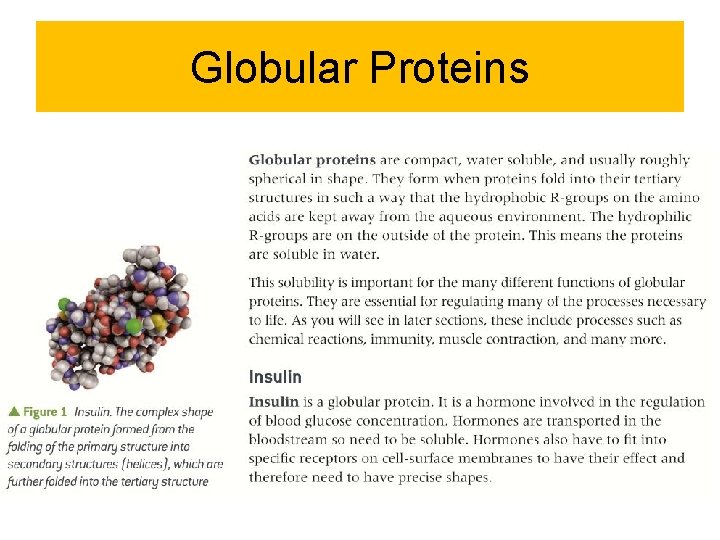
Globular Proteins
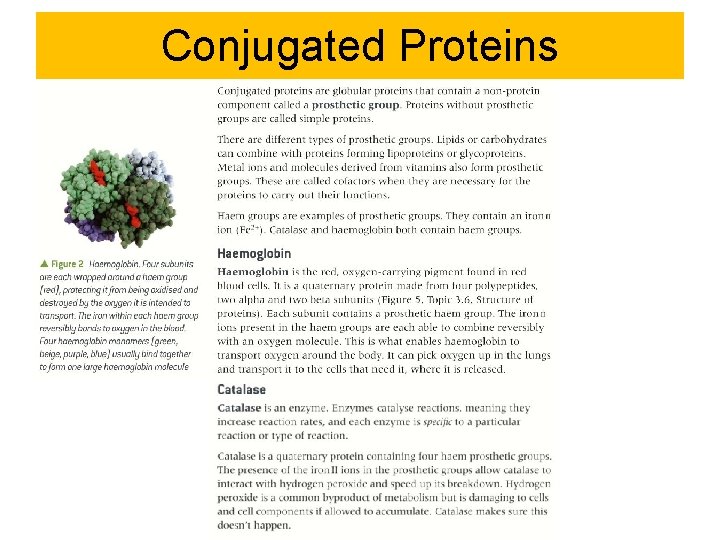
Conjugated Proteins
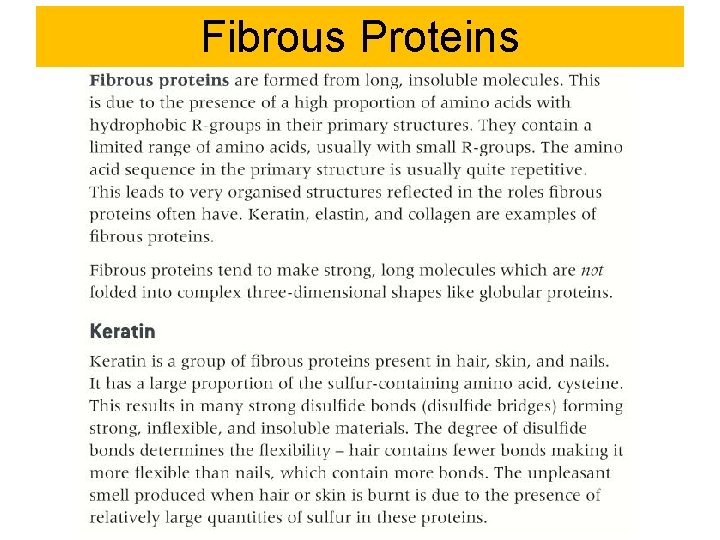
Fibrous Proteins
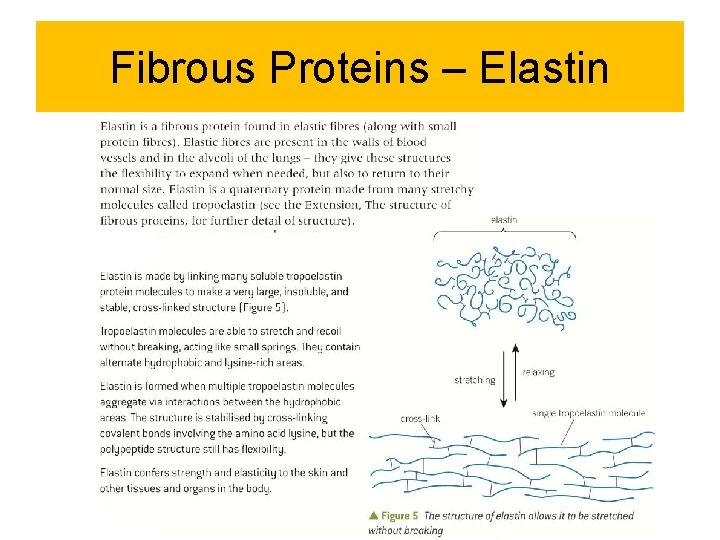
Fibrous Proteins – Elastin
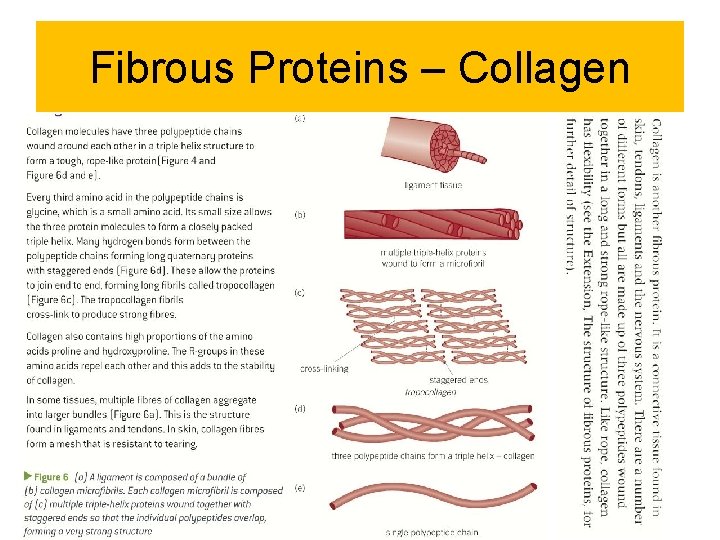
Fibrous Proteins – Collagen
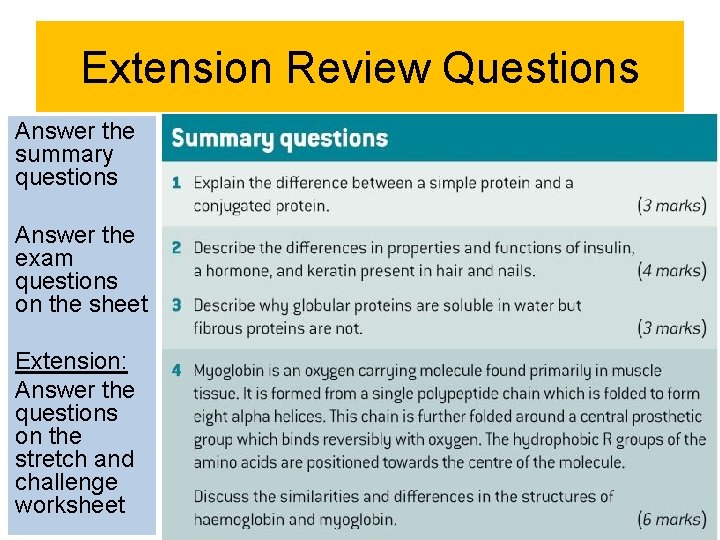
Extension Review Questions Answer the summary questions Answer the exam questions on the sheet Extension: Answer the questions on the stretch and challenge worksheet
09 January 2022 Types of Protein Back to the Objectives… Lesson Objectives: Learners should be able to demonstrate and apply their knowledge and understanding of: • The structure and function of globular proteins including a conjugated protein • The properties and functions of fibrous proteins
- Slides: 18