
TYPES OF PROJECTS AND HIERARCHY OF APPROVING AUTHORITIES

- Slides: 20
TYPES OF PROJECTS AND HIERARCHY OF APPROVING AUTHORITIES By: Shabnum Shaheen
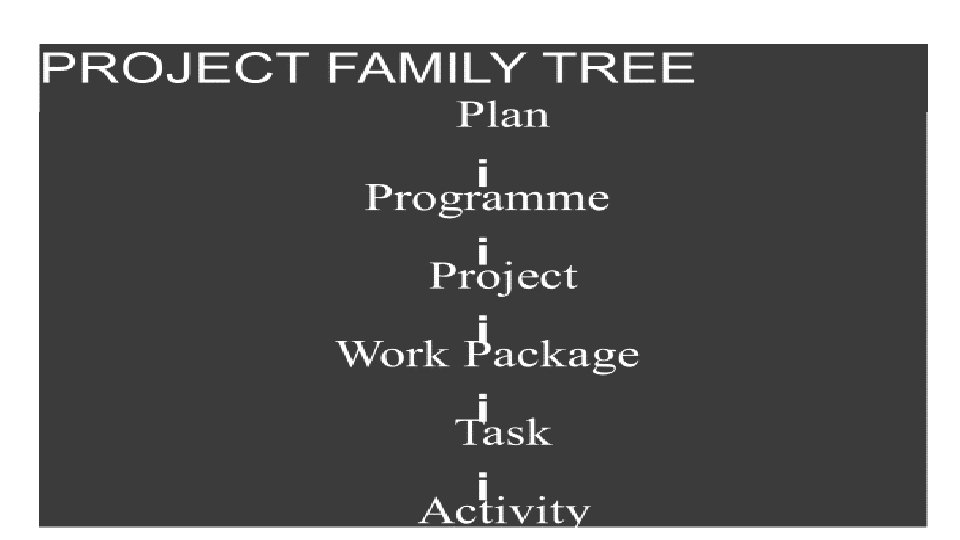
Why it is important to know different project types? Project objectives and strategic planning Identification of people Project sponsor Project team Methodology of the project Budgeting and planning Key indicators of success of project
Some Examples of Project types Long term projects Short term projects A project is considered to be short term if it could be concluded during a year and long term if it could take more than a year. Sequential projects Parallel projects When task should be done in a specific order ten it is sequential and when tasks can be done in any order then it is called parallel project.
Hierarchy of Approving authority The hierarchy of authority in an organization is designed to benefit the company and the employees. The company grows with the strength of a competent managerial staff, and employees look to management to provide career development. A hierarchy is also a method of maintaining managerial integrity.
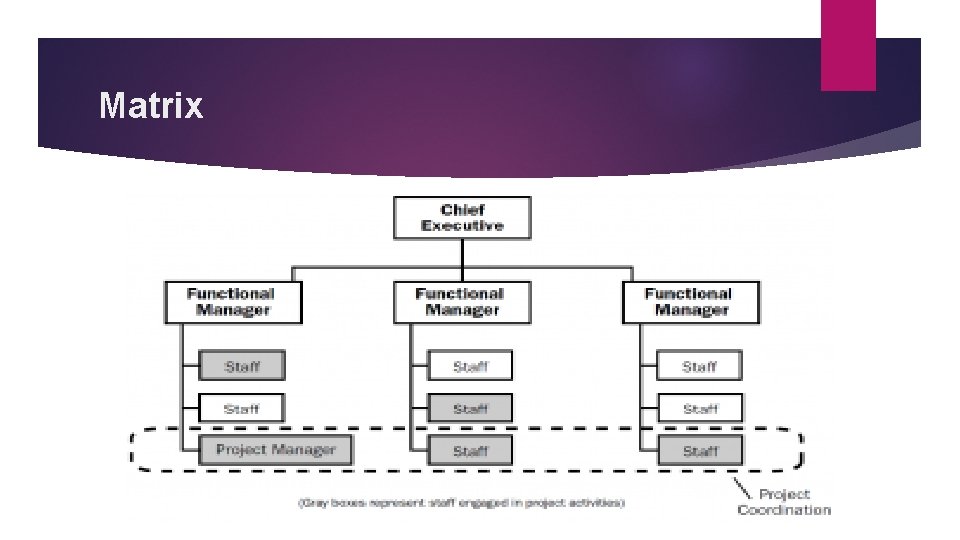
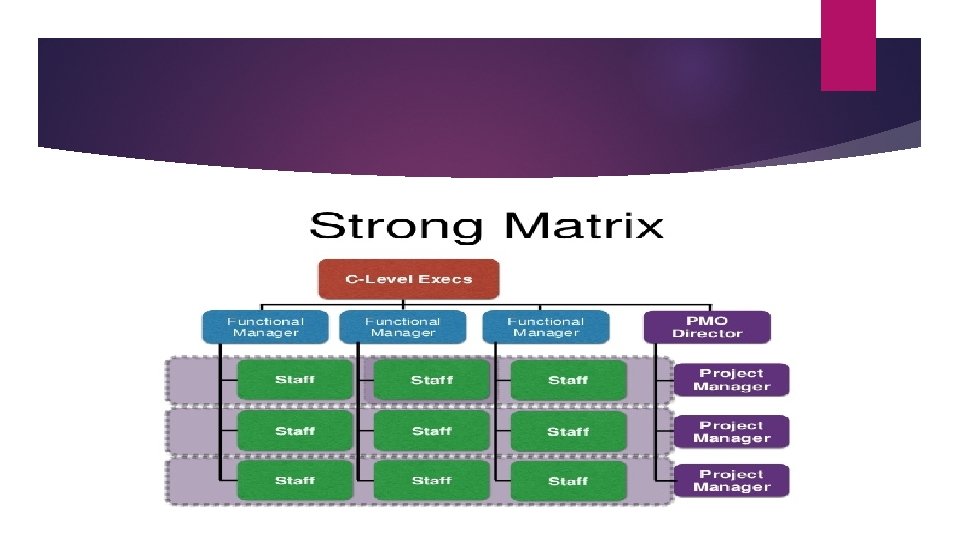
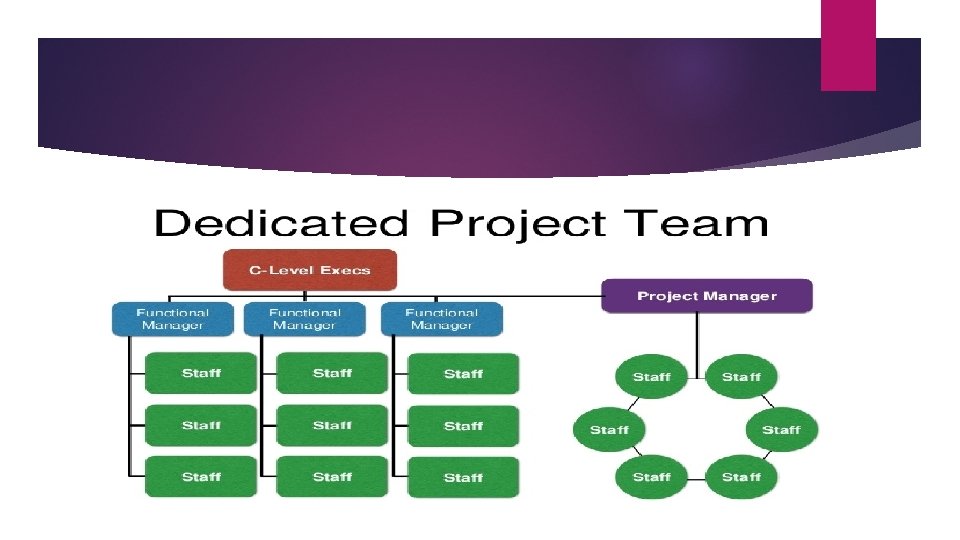
Types of Organizational Structure There are four types of organizational structures, each of which has their own unique set of influences on the management of the organization’s projects: Functional Project Matrix Composite
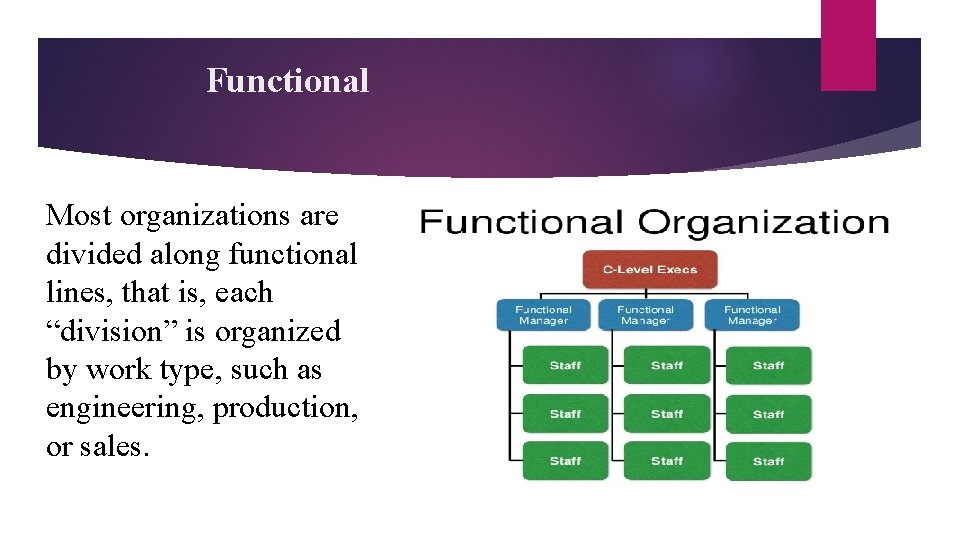
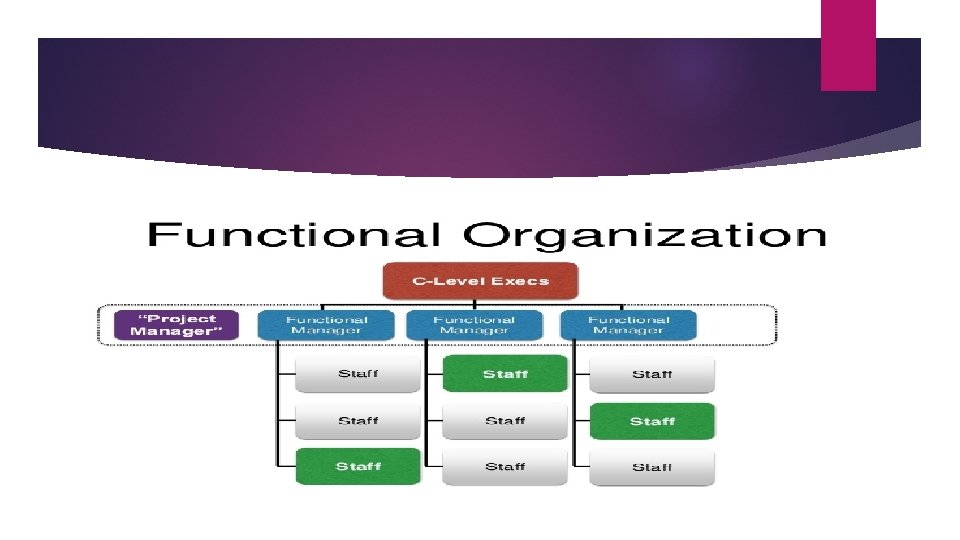
Functional Most organizations are divided along functional lines, that is, each “division” is organized by work type, such as engineering, production, or sales.
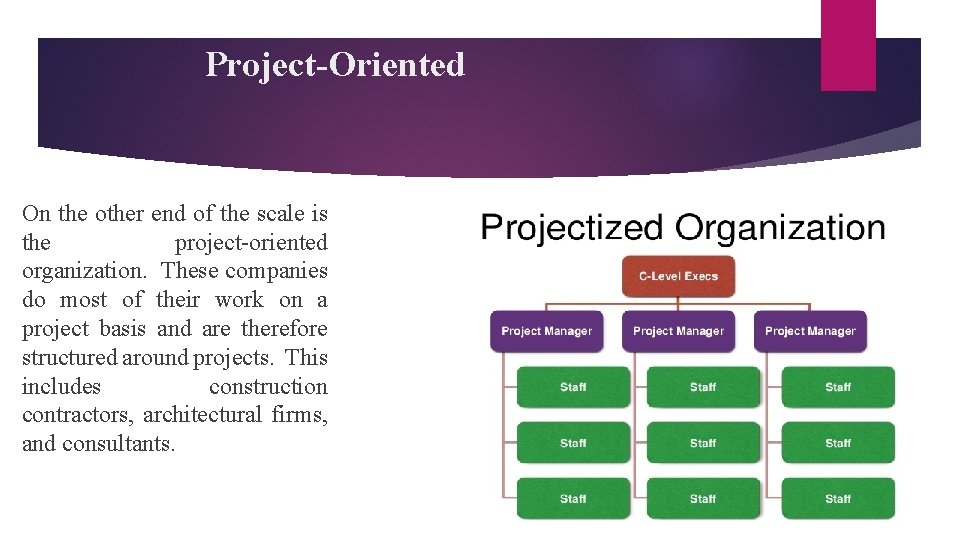
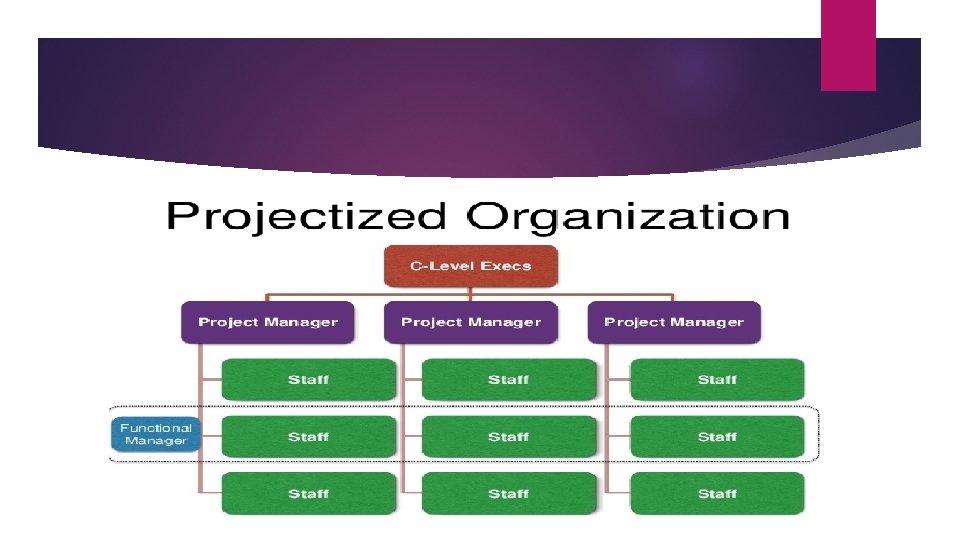
Project-Oriented On the other end of the scale is the project-oriented organization. These companies do most of their work on a project basis and are therefore structured around projects. This includes construction contractors, architectural firms, and consultants.
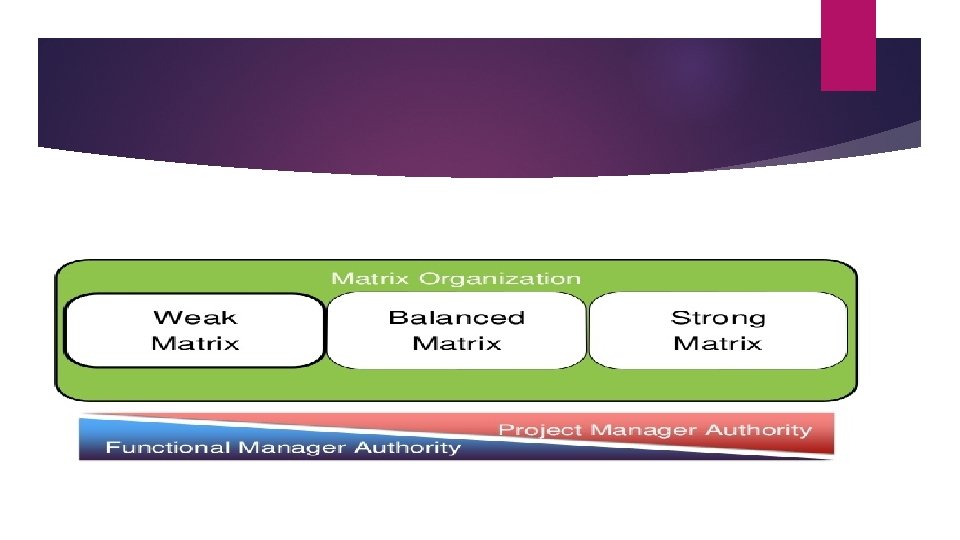
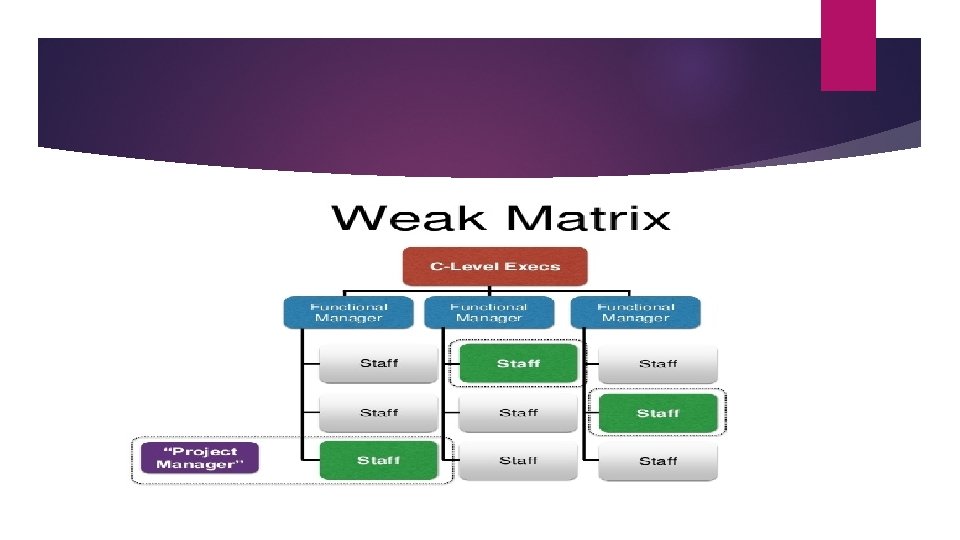
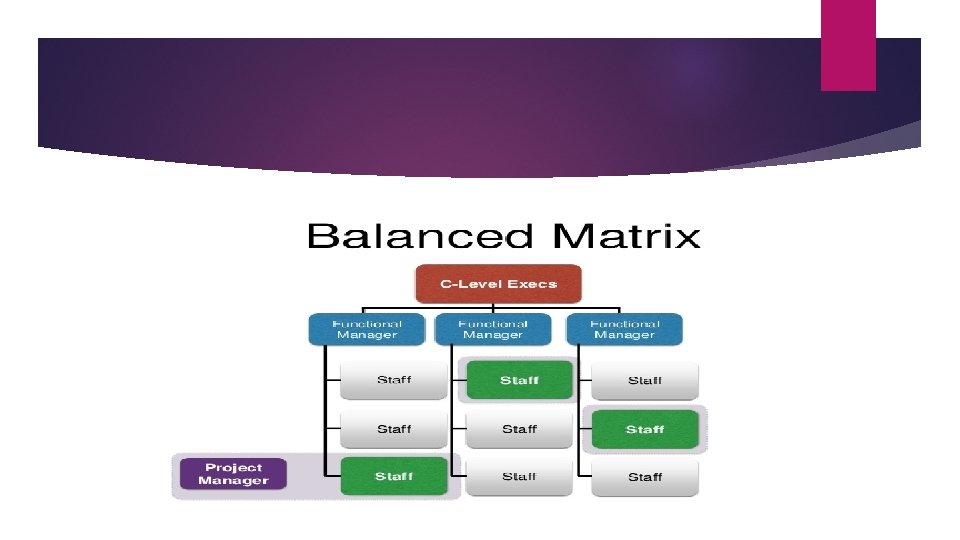
Matrix
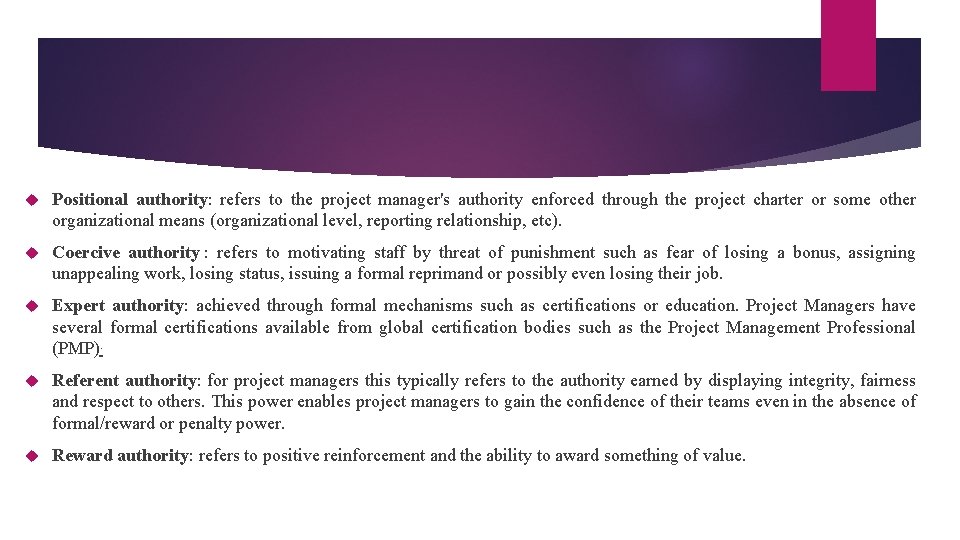
Positional authority: refers to the project manager's authority enforced through the project charter or some other organizational means (organizational level, reporting relationship, etc). Coercive authority : refers to motivating staff by threat of punishment such as fear of losing a bonus, assigning unappealing work, losing status, issuing a formal reprimand or possibly even losing their job. Expert authority: achieved through formal mechanisms such as certifications or education. Project Managers have several formal certifications available from global certification bodies such as the Project Management Professional (PMP). Referent authority: for project managers this typically refers to the authority earned by displaying integrity, fairness and respect to others. This power enables project managers to gain the confidence of their teams even in the absence of formal/reward or penalty power. Reward authority: refers to positive reinforcement and the ability to award something of value.