
Types of prejudice Objective Explore different types of
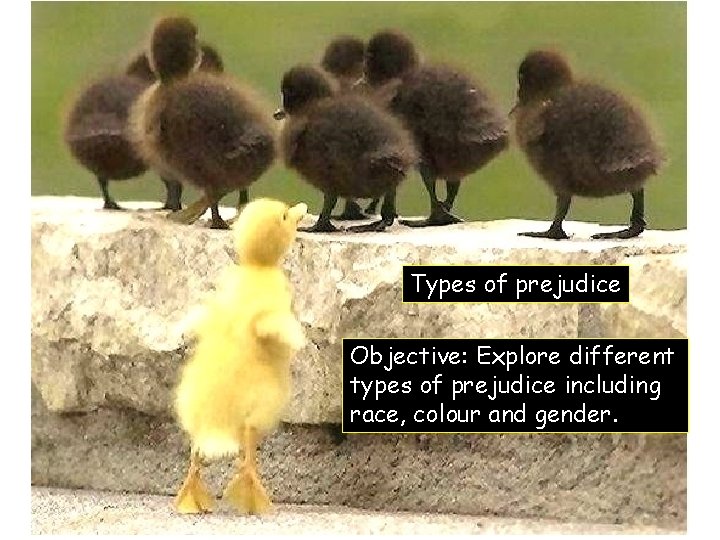
Types of prejudice Objective: Explore different types of prejudice including race, colour and gender.

Types of prejudice Race and colour A persons race usually refers to the ethnic or religious group they come from, their nationality or sometimes to the colour of their skin. People speak of ‘blacks’, ‘Asians’, ‘the Jewish race’ or ‘the German race’.
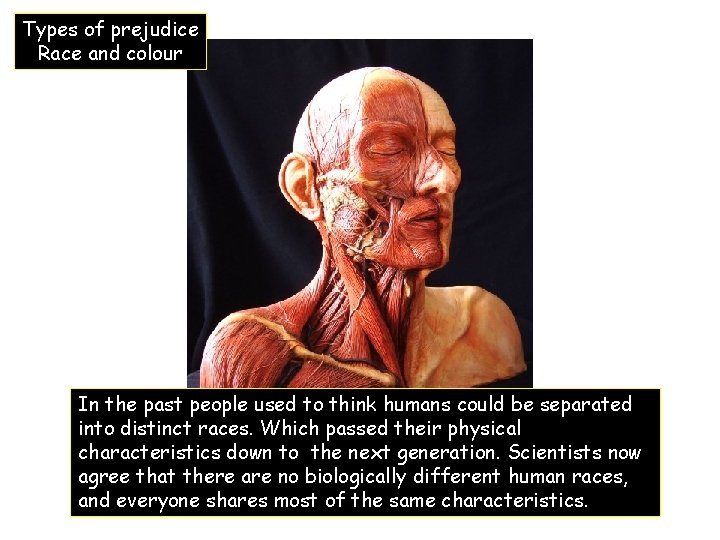
Types of prejudice Race and colour In the past people used to think humans could be separated into distinct races. Which passed their physical characteristics down to the next generation. Scientists now agree that there are no biologically different human races, and everyone shares most of the same characteristics.
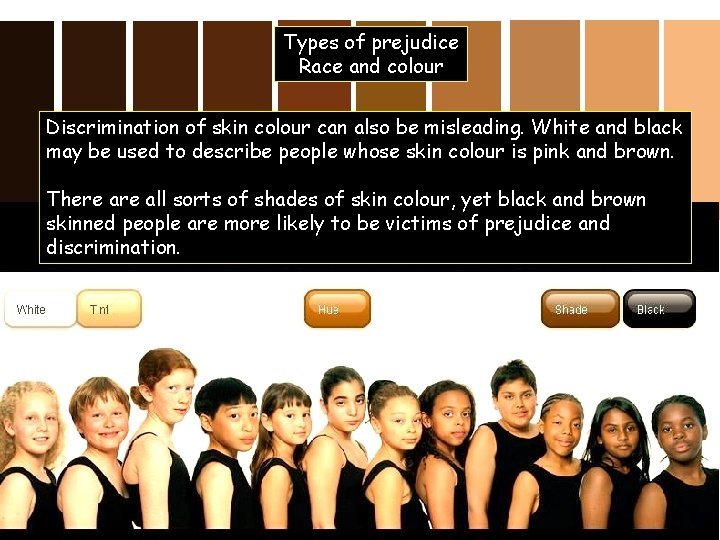
Types of prejudice Race and colour Discrimination of skin colour can also be misleading. White and black may be used to describe people whose skin colour is pink and brown. There all sorts of shades of skin colour, yet black and brown skinned people are more likely to be victims of prejudice and discrimination.
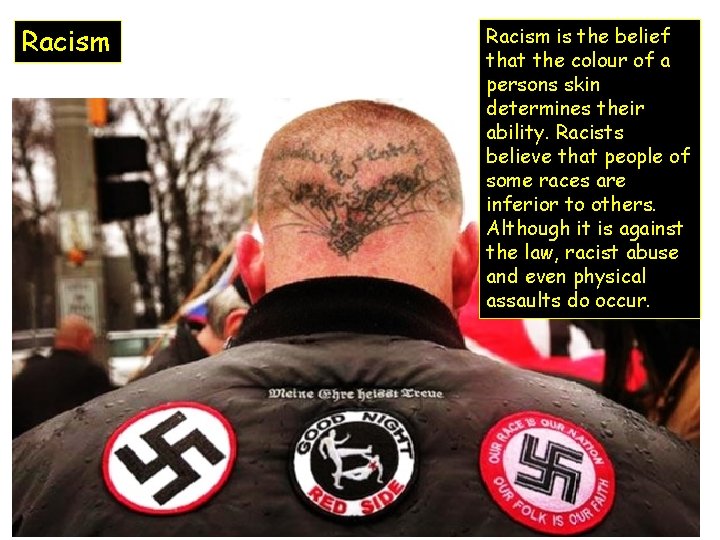
Racism is the belief that the colour of a persons skin determines their ability. Racists believe that people of some races are inferior to others. Although it is against the law, racist abuse and even physical assaults do occur.
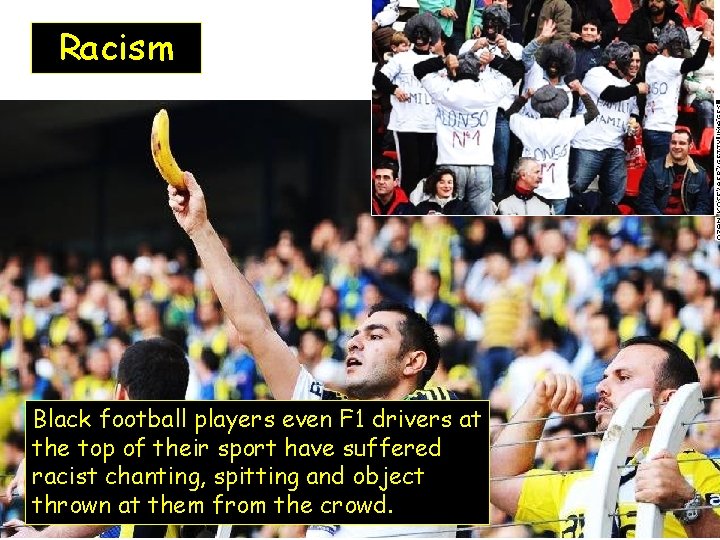
Racism Black football players even F 1 drivers at the top of their sport have suffered racist chanting, spitting and object thrown at them from the crowd.
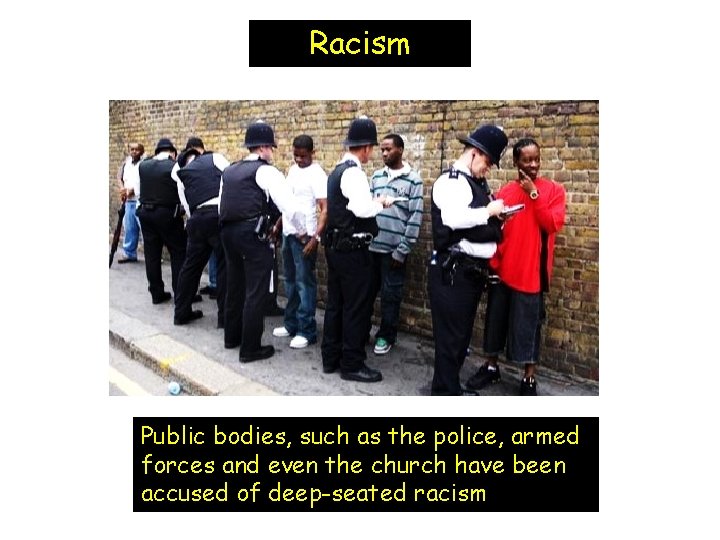
Racism Public bodies, such as the police, armed forces and even the church have been accused of deep-seated racism
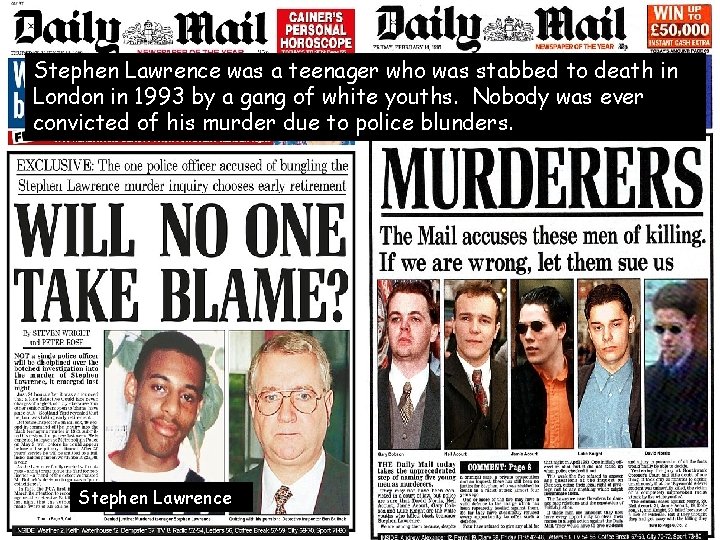
Stephen Lawrence was a teenager who was stabbed to death in London in 1993 by a gang of white youths. Nobody was ever convicted of his murder due to police blunders. Stephen Lawrence
Exercise 1 How did racism play a part in Stephen Lawrence's murder and in the subsequent action of the police? How would you feel if an authority that you trusted discriminated against you? What would you do?
Gender A persons gender can be determined by what sex the are, male or female, their sexual identity, the way they see themselves and relate to the world.
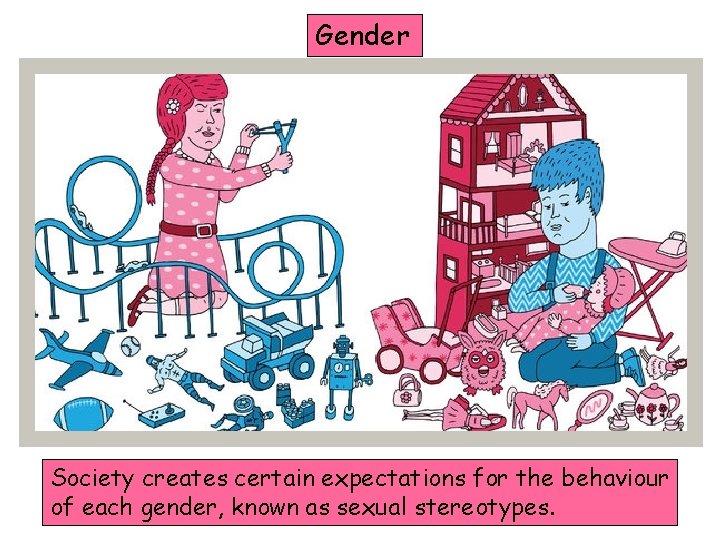
Gender Society creates certain expectations for the behaviour of each gender, known as sexual stereotypes.
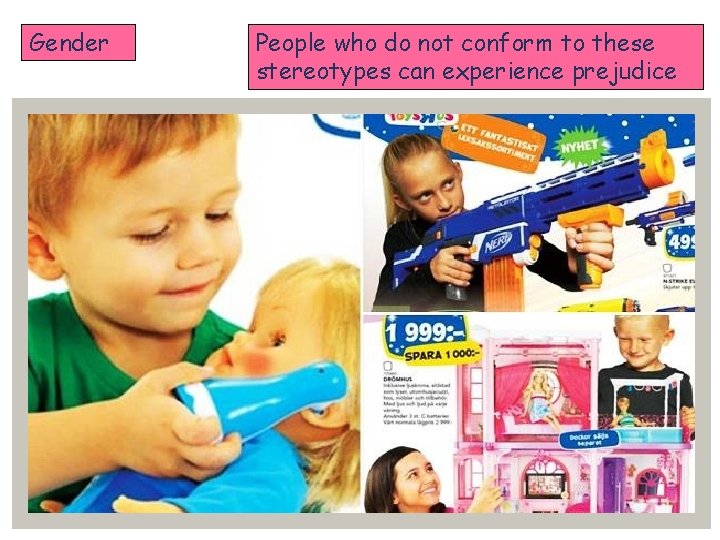
Gender People who do not conform to these stereotypes can experience prejudice
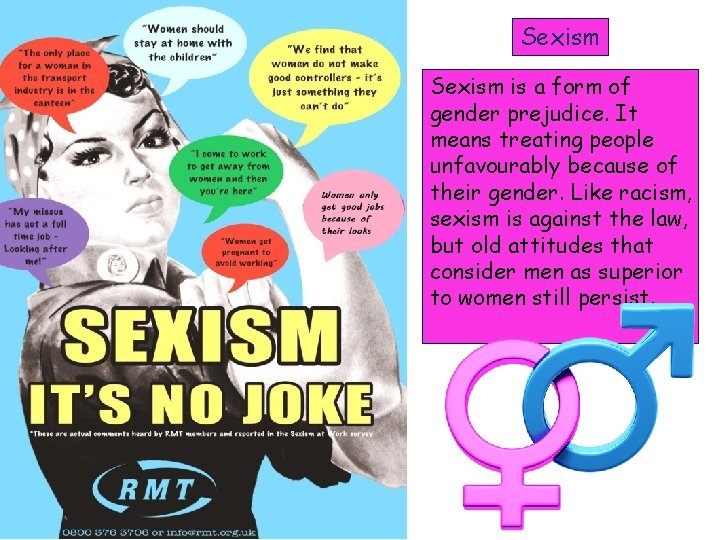
Sexism is a form of gender prejudice. It means treating people unfavourably because of their gender. Like racism, sexism is against the law, but old attitudes that consider men as superior to women still persist.
Sexism Stereotyped ideas, such as that women should look after the home and family, have helped to deny women equal opportunities in the workplace
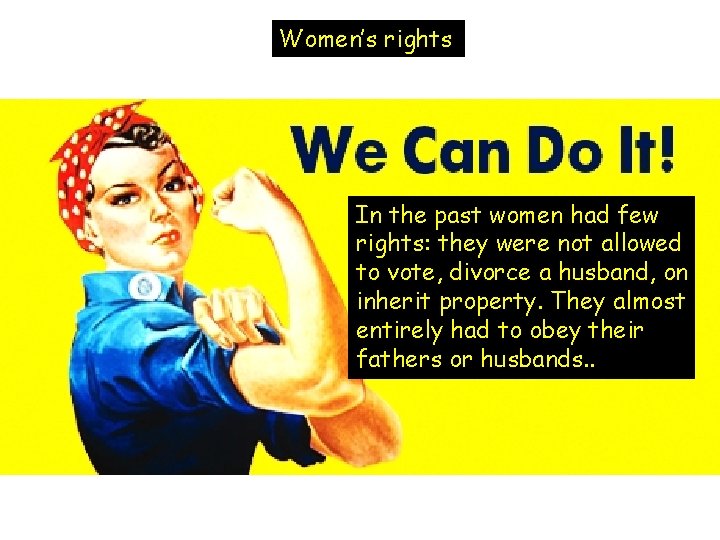
Women’s rights In the past women had few rights: they were not allowed to vote, divorce a husband, on inherit property. They almost entirely had to obey their fathers or husbands. .
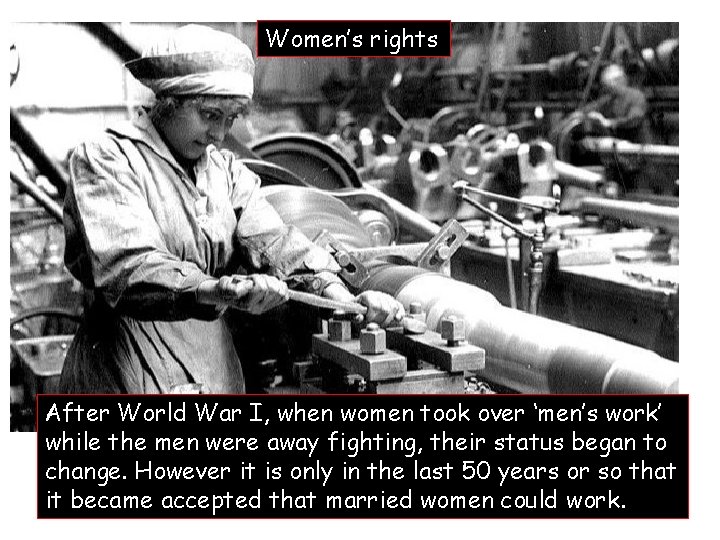
Women’s rights After World War I, when women took over ‘men’s work’ while the men were away fighting, their status began to change. However it is only in the last 50 years or so that it became accepted that married women could work.
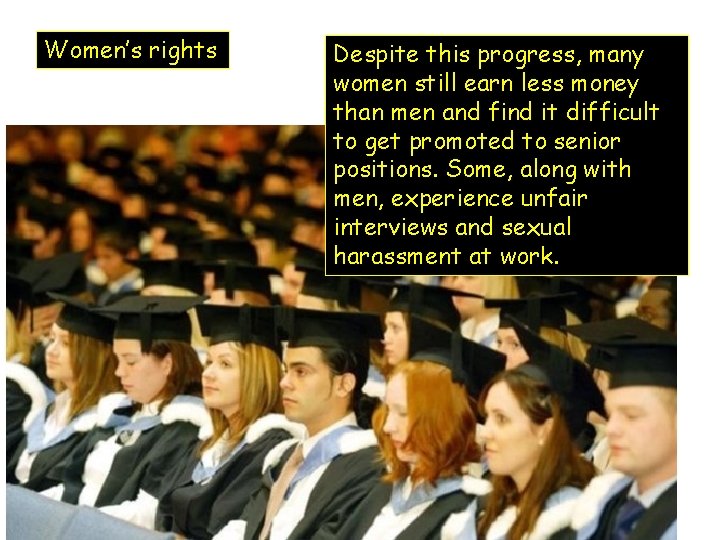
Women’s rights Despite this progress, many women still earn less money than men and find it difficult to get promoted to senior positions. Some, along with men, experience unfair interviews and sexual harassment at work.
Women's rights Religions teach that women and men are created equal by God. However, some religions think they should have different roles. This does not mean they value women less. Staying at home to bring up children in their faith is seen as more important that having a career and making money.
Exercise 2 Why do you think the right to vote was important to women? How might organisations like the army, police force and church may be institutionally racist?
Exercise 3 Please write a response to each of the following statements. ‘Anything boys can do girls can do better. ’ ‘Should Britain close her borders? . ’ ‘Mothers day just reinforces women traditional roles. ’
- Slides: 20