
TYPES OF POETRY POETRY STARTERS E Clark WHERE
- Slides: 13
TYPES OF POETRY/ POETRY STARTERS E. Clark
WHERE TO START ØSo, you’ve brainstormed, right? ØYou have a topic you might want to write about, or maybe you don’t. ØThere’s a piece of paper in front of you, a pen or pencil in your hand your mind just……. .
TYPES OF POETRY/ STARTERS ØHaving certain types of poems/ starter prompts to start a poem might help you write rather than just, “Well you have a topic, write a poem. ” Not everyone has natural poetic talent. ØThis Power. Point is meant to help you see different ways to write/ compose poems and help you feel less lost in this process.
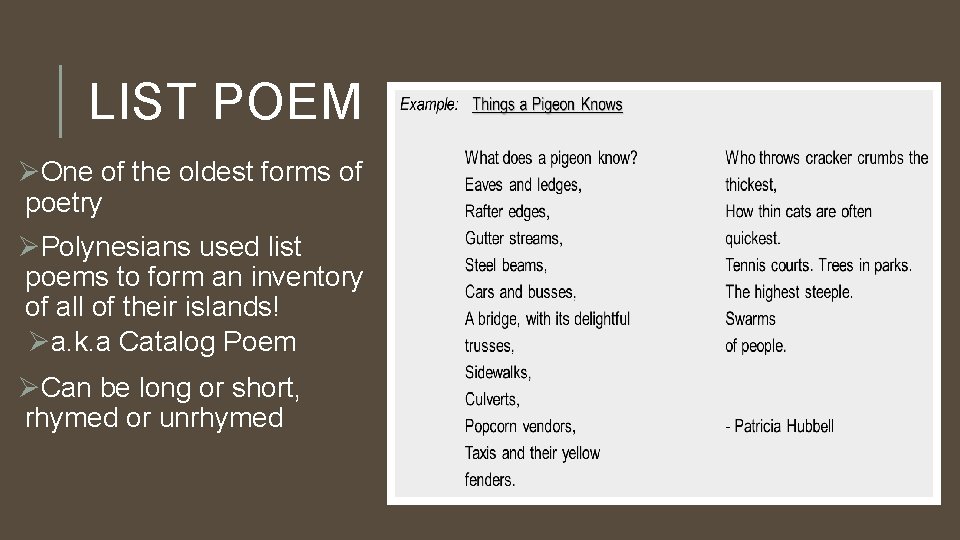
LIST POEM ØOne of the oldest forms of poetry ØPolynesians used list poems to form an inventory of all of their islands! Øa. k. a Catalog Poem ØCan be long or short, rhymed or unrhymed
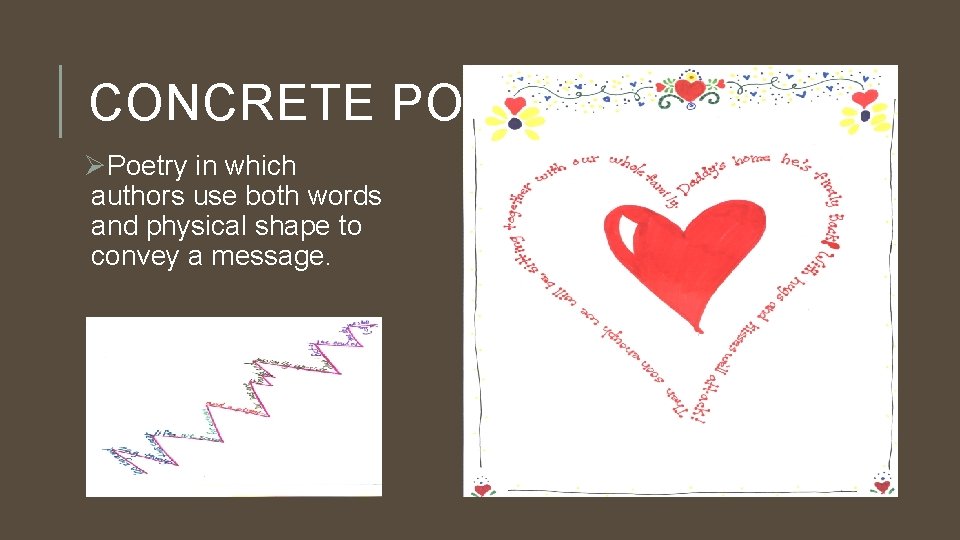
CONCRETE POETRY ØPoetry in which authors use both words and physical shape to convey a message.
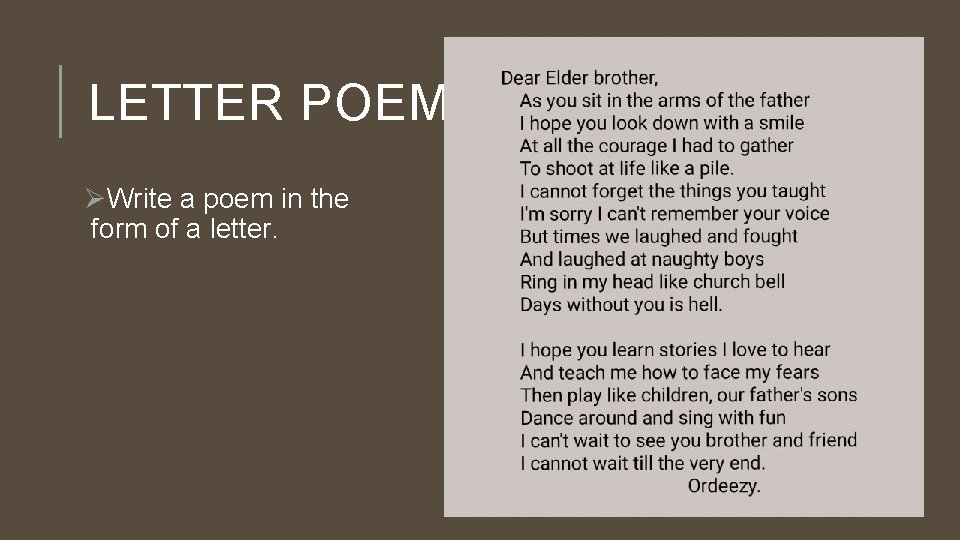
LETTER POEM ØWrite a poem in the form of a letter.
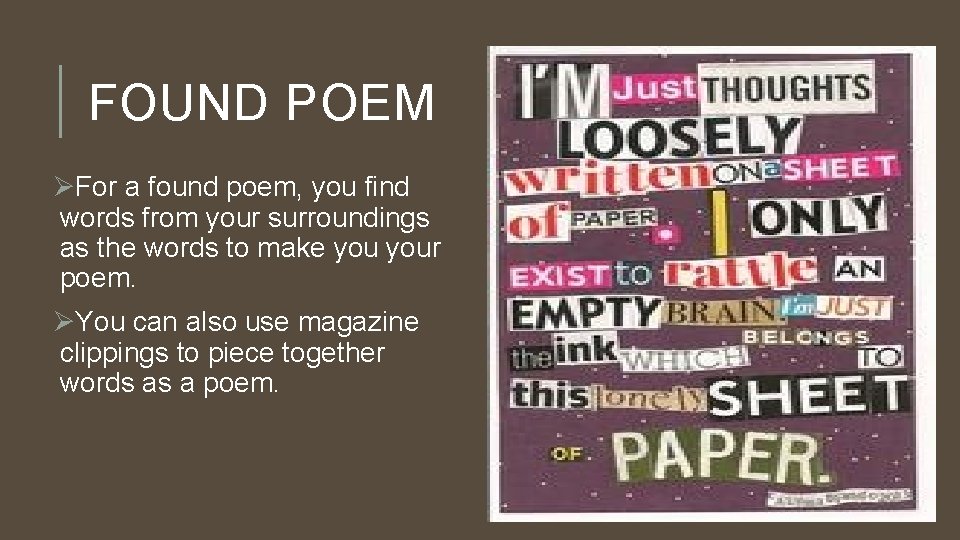
FOUND POEM ØFor a found poem, you find words from your surroundings as the words to make your poem. ØYou can also use magazine clippings to piece together words as a poem.
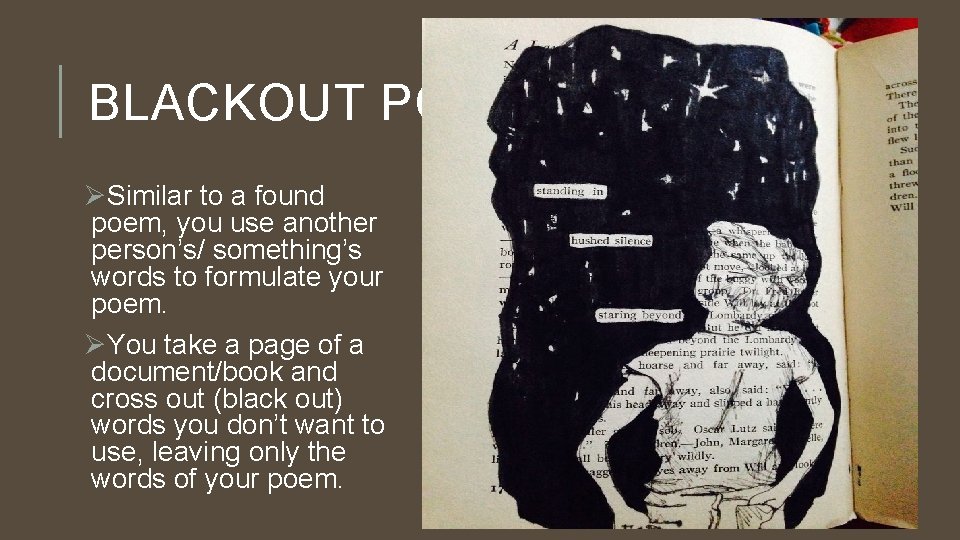
BLACKOUT POEM ØSimilar to a found poem, you use another person’s/ something’s words to formulate your poem. ØYou take a page of a document/book and cross out (black out) words you don’t want to use, leaving only the words of your poem.
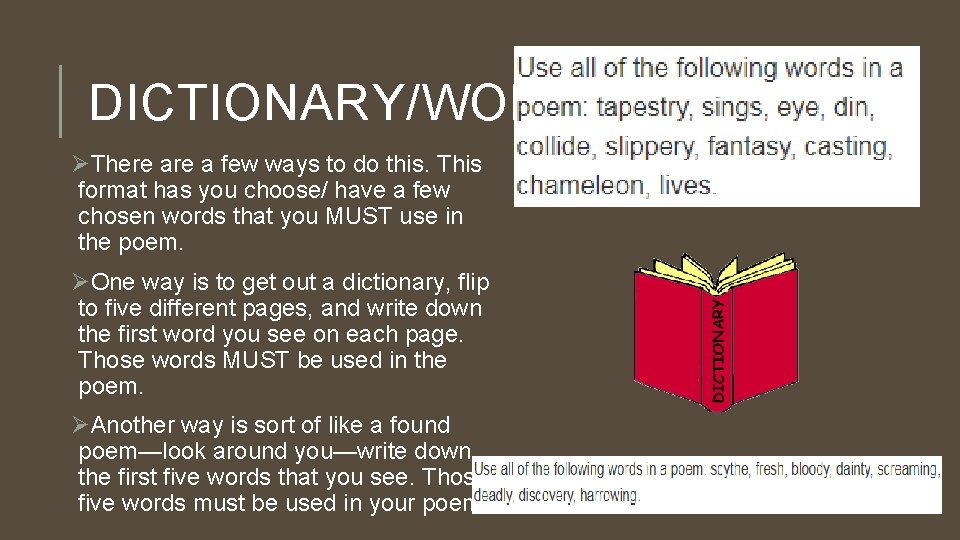
DICTIONARY/WORD USE ØThere a few ways to do this. This format has you choose/ have a few chosen words that you MUST use in the poem. ØOne way is to get out a dictionary, flip to five different pages, and write down the first word you see on each page. Those words MUST be used in the poem. ØAnother way is sort of like a found poem—look around you—write down the first five words that you see. Those five words must be used in your poem.
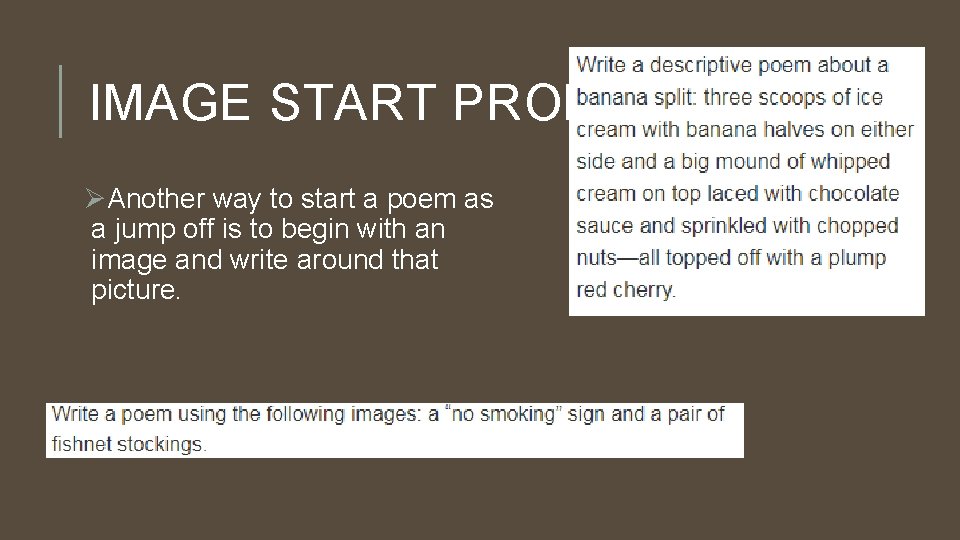
IMAGE START PROMPT ØAnother way to start a poem as a jump off is to begin with an image and write around that picture.
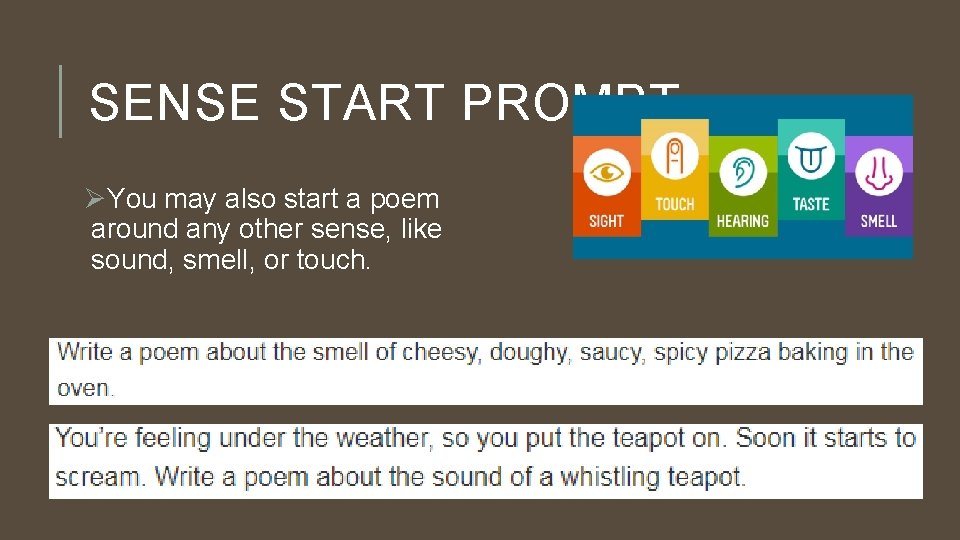
SENSE START PROMPT ØYou may also start a poem around any other sense, like sound, smell, or touch.
“IT IS” “IT IS NOT” POEM ØAnother way to write a poem if you are writing about a thing or a problem is to write all of the lines beginning with “it is” and tell your readers what your subject is not, and then in your last few lines, what IS it? ØYou can also do the opposite—go through and say what it IS, then what it is NOT.
IF YOUR POEM IS NOT ONE OF THESE… ØYour poetry is your poetry—do what you will with it!