
Types of Poetry Acrostic ballads limericks Haiku diamante
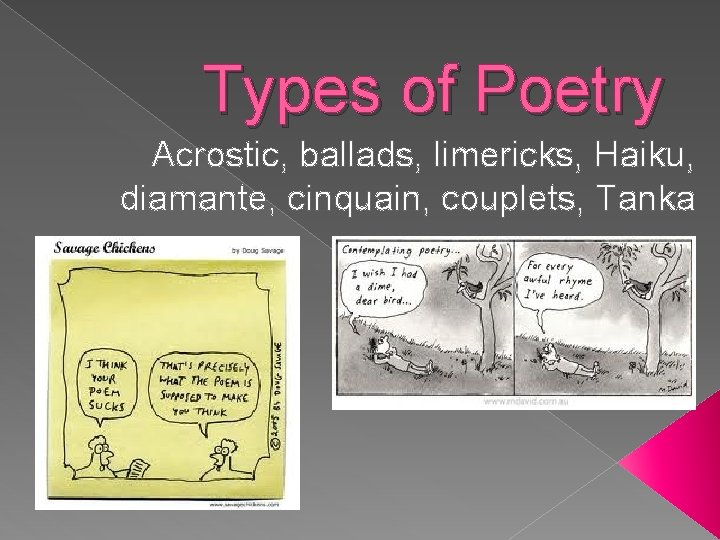
Types of Poetry Acrostic, ballads, limericks, Haiku, diamante, cinquain, couplets, Tanka
Types of Poetry - intro � Poetry comes in all different forms. � Some poetry rhymes, some does not. � Poetry uses many writing techniques such as similes, metaphors, alliteration, hyperbole, personification and imagery. � Over the next term, we will be studying the following different types of poetry:
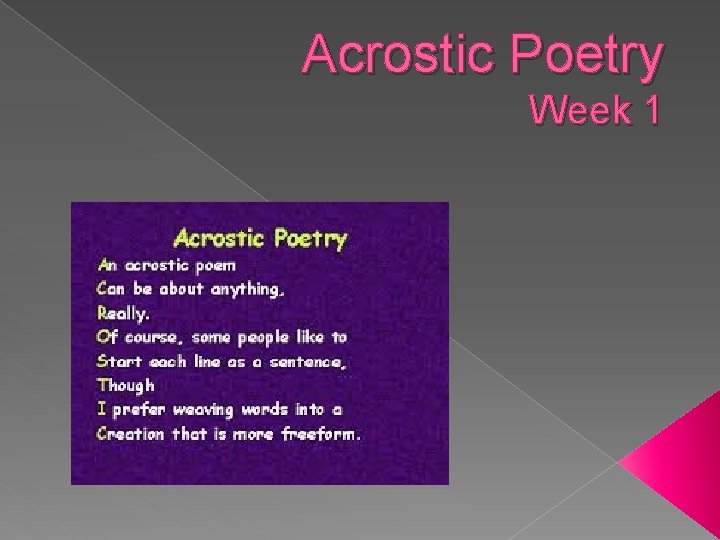
Acrostic Poems �The first letters of each line are aligned vertically to form a word. �The word often is the subject of the poem.

Acrostic Poem example L oves to play on the computer A lways humorous U nique in every way R unning, jumping, tumbling at gym E xceptionally bright L earner
Limericks �A limerick is a funny poem which contains 5 lines. � The last words of the first, second and fifth lines rhyme with each other. � The last words of the third and fourth line rhyme with each other. � Set rhythm pattern for each line.

Limerick example 1. There once was a girl named Cheryl (A) da DUM da da DUM 2. Who dreamed she was in great peril (A) da DUM da da DUM 3. She awoke with a fright B) da da DUM 4. When she discovered the sight (B) da da DUM 5. The “monster” was just a small squirrel. (A) da DUM da da DUM
Haiku poetry �A form of centuries old Japanese poetry that consists of seventeen syllables � Has nature as its subject or theme. � Very short and has a 5 -7 -5 syllable structure with 5 syllables in the first line, 7 syllables in the second line, and 5 syllables in the third line. � With just a couple of words, haiku poetry conveys emotion. It suggests that the reader look and listen to the world.

Haiku example � An old silent pond. . . A frog jumps into the pond, splash! Silence again. �I walk across sand And find myself blistering In the hot, hot heat
Diamante poems Think of a subject and its opposite and then follow the format - First line: one word (subject). - Second line: two adjectives describing the subject - Third line: three words ending in -ing telling about the subject - Fourth line: four words, the first two describe the subject and the last two describe its opposite - Fifth line: three words ending in -ing telling about the opposite - Sixth line: two adjectives describing the opposite - Seventh line: one word (opposite from the first line) �
Diamante poem example Autumn crisp, colourful blowing, falling, crunching pumpkins, Thanksgiving, flowers, Easter budding, blooming, awakening sunny, new spring
Cinquain poems � Pronounced sin-cane � Do not have a title – the first word usually announces the topic � 5 lines, each line with a set number of syllables � First line – 2 syllables, second line – 4 syllables, third line – 6 syllables, fourth line – 8 syllables, final line – 2 syllables.
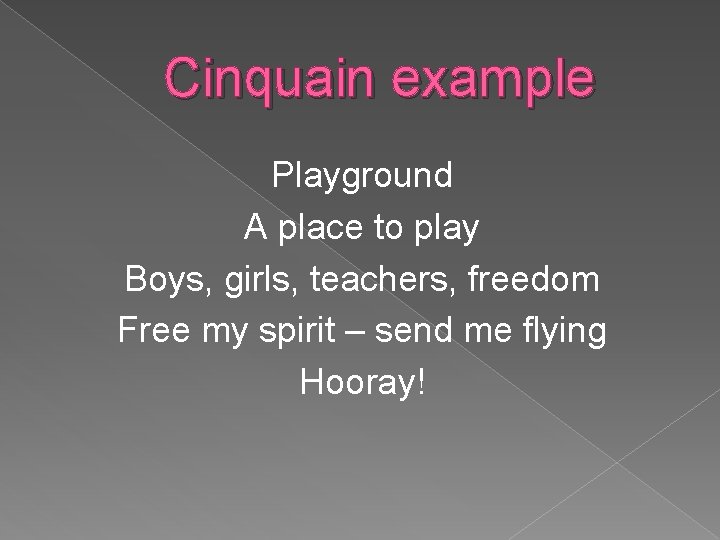
Cinquain example Playground A place to play Boys, girls, teachers, freedom Free my spirit – send me flying Hooray!
Tanka poems �A form of Japanese poetry � Consists � The of 31 syllables (5 -7 -7). themes for Tanka are love, nature, seasons, and friendships
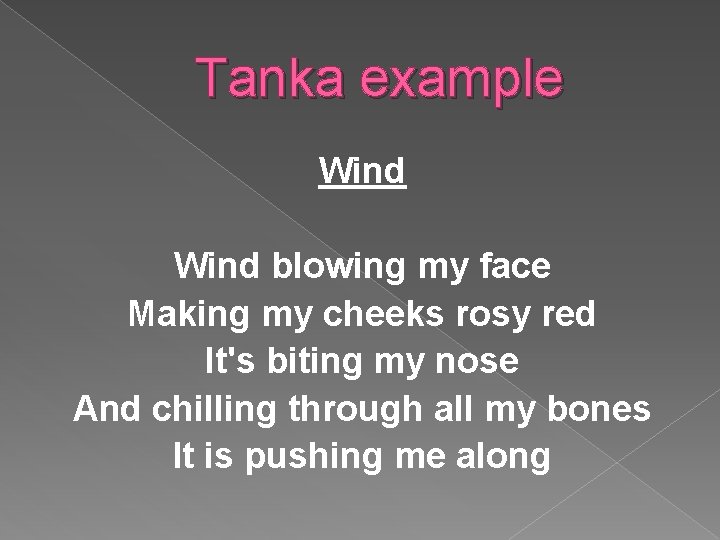
Tanka example Wind blowing my face Making my cheeks rosy red It's biting my nose And chilling through all my bones It is pushing me along
Acrostic Poetry Week 1
What is an acrostic poem? � An acrostic poem is very easy to write. � It can be about any subject. � This kind of poem can be written in different ways, but the simplest form is to put the letters that spell your subject down the side of your page. � When you have done this then you go back to each letter and think of a word, phrase or sentence that starts with that letter and describes your subject. It needs to be relevant to your topic.
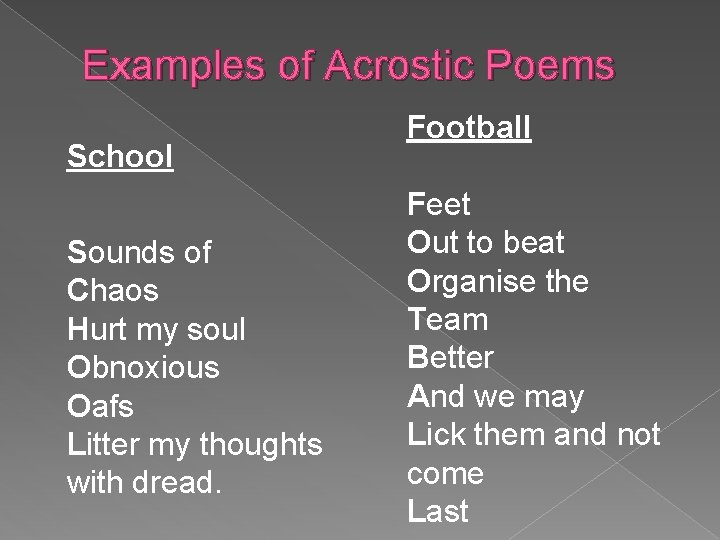
Examples of Acrostic Poems School Sounds of Chaos Hurt my soul Obnoxious Oafs Litter my thoughts with dread. Football Feet Out to beat Organise the Team Better And we may Lick them and not come Last
Easter Eggs � Write down words to describe your Easter egg… � Colour � Smell � Taste � Texture � Find the adjectives that begin with ‘Easter eggs’ � Write an acrostic poem
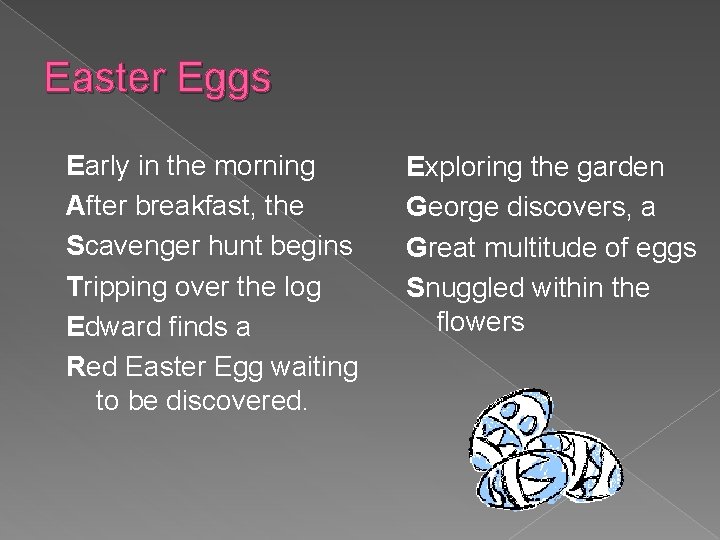
Easter Eggs Early in the morning After breakfast, the Scavenger hunt begins Tripping over the log Edward finds a Red Easter Egg waiting to be discovered. Exploring the garden George discovers, a Great multitude of eggs Snuggled within the flowers
‘Name’ Acrostic Poems Sandy She has soft eyes And light brown hair No-one sees her on the stair Dealing alone with her quiet sighs, Yet we know that there she cries. Chris Curious Headstrong, happily Resisting instruction. Inventive and Sweet
‘Name’ acrostic poems Task � Using your first name, write an acrostic poem about yourself. � First write a list of words that describe you and what you like to do � Match the words with the letters in your name and write a poem.
Acrostic Poems – Everything is not always what is seems to be!! � We get so used to reading across that we never bother to read down the page. � Read this poem carefully and try and find the hidden message.
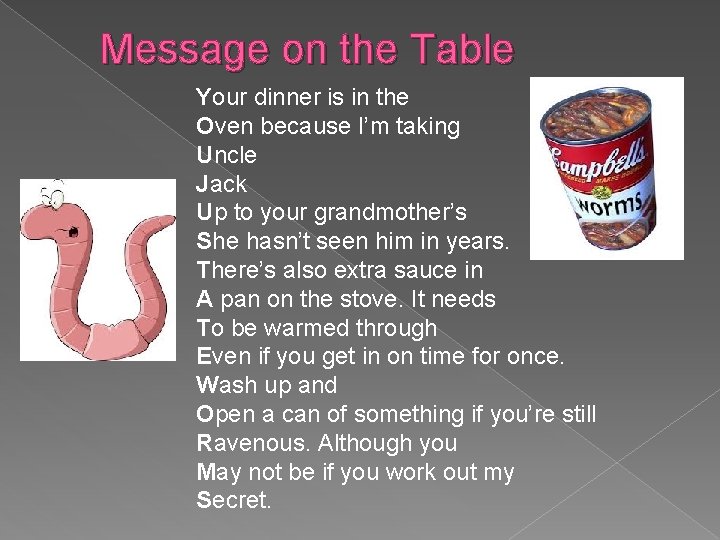
Message on the Table Your dinner is in the Oven because I’m taking Uncle Jack Up to your grandmother’s She hasn’t seen him in years. There’s also extra sauce in A pan on the stove. It needs To be warmed through Even if you get in on time for once. Wash up and Open a can of something if you’re still Ravenous. Although you May not be if you work out my Secret.
Task � Now it is your turn to write an acrostic poem with a hidden message inside. � It may help to think of your message first before trying to write the poem. � The greater the difference between what you appear to be saying and what the acrostic says the better.
- Slides: 24