
Types of Muscles and their Movement NCFE Sport
- Slides: 11
Types of Muscles and their Movement NCFE Sport
LSQ’s 1. 2. 3. 4. 5. Name a function of the skeleton? Give an example in the body of a ball and socket joint? What direction of movement does the hinge joint allow? Name a bone in your arm? Name a bone in your leg?
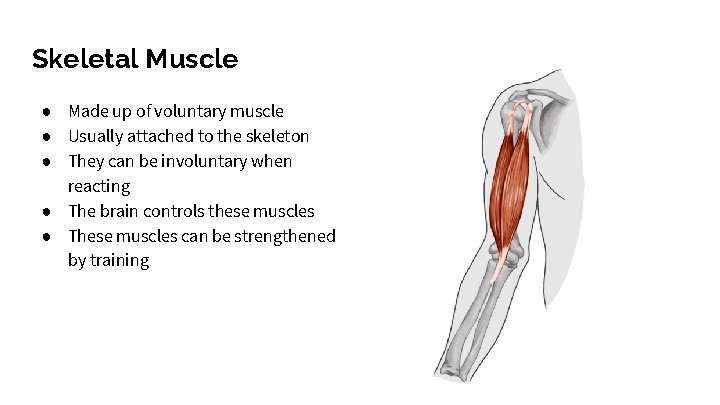
Skeletal Muscle ● Made up of voluntary muscle ● Usually attached to the skeleton ● They can be involuntary when reacting ● The brain controls these muscles ● These muscles can be strengthened by training
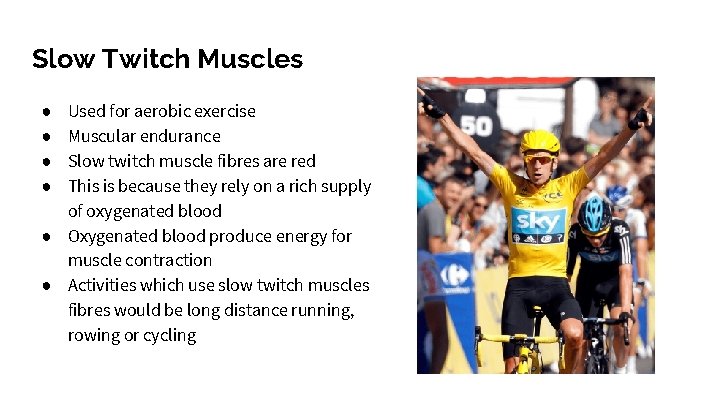
Slow Twitch Muscles Used for aerobic exercise Muscular endurance Slow twitch muscle fibres are red This is because they rely on a rich supply of oxygenated blood ● Oxygenated blood produce energy for muscle contraction ● Activities which use slow twitch muscles fibres would be long distance running, rowing or cycling ● ●
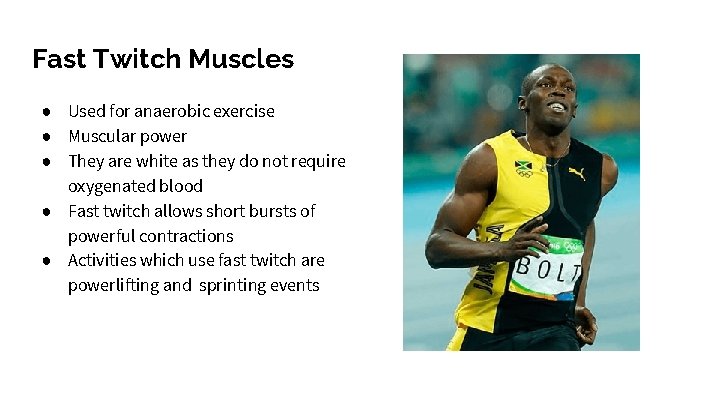
Fast Twitch Muscles ● Used for anaerobic exercise ● Muscular power ● They are white as they do not require oxygenated blood ● Fast twitch allows short bursts of powerful contractions ● Activities which use fast twitch are powerlifting and sprinting events
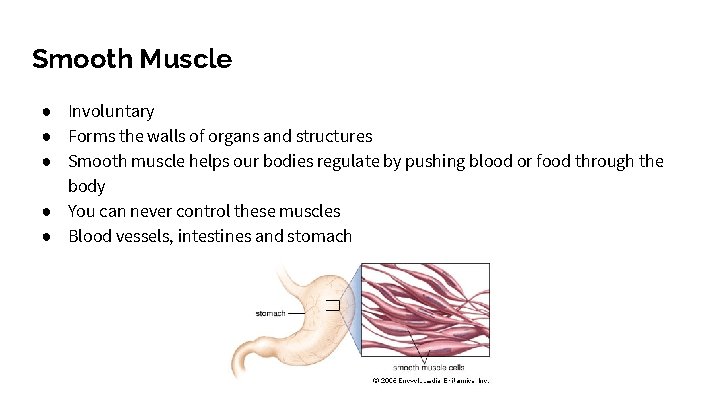
Smooth Muscle ● Involuntary ● Forms the walls of organs and structures ● Smooth muscle helps our bodies regulate by pushing blood or food through the body ● You can never control these muscles ● Blood vessels, intestines and stomach
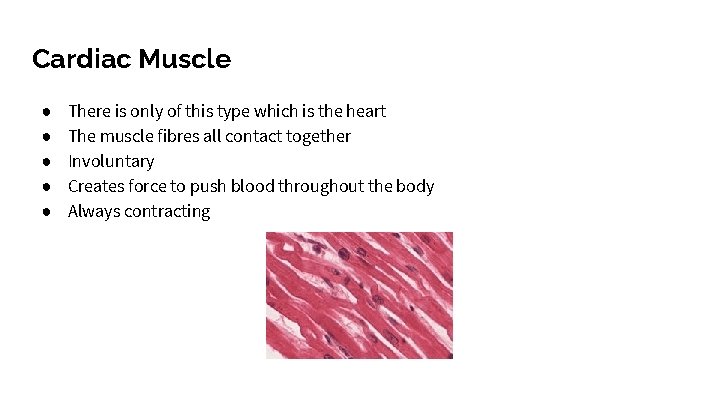
Cardiac Muscle ● ● ● There is only of this type which is the heart The muscle fibres all contact together Involuntary Creates force to push blood throughout the body Always contracting
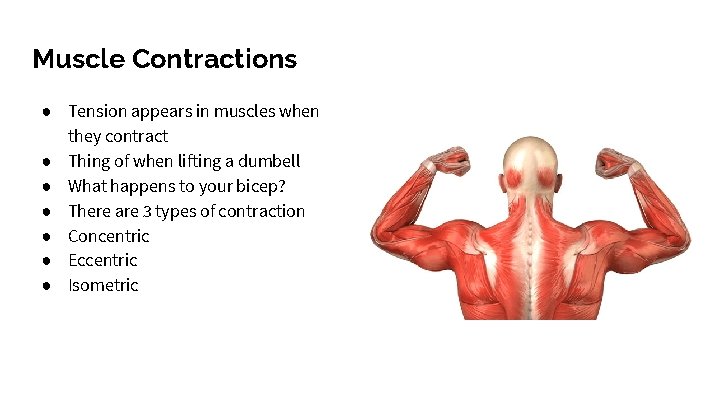
Muscle Contractions ● Tension appears in muscles when they contract ● Thing of when lifting a dumbell ● What happens to your bicep? ● There are 3 types of contraction ● Concentric ● Eccentric ● Isometric
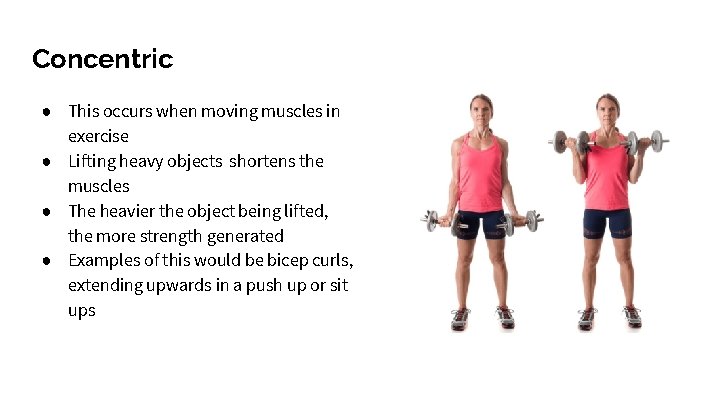
Concentric ● This occurs when moving muscles in exercise ● Lifting heavy objects shortens the muscles ● The heavier the object being lifted, the more strength generated ● Examples of this would be bicep curls, extending upwards in a push up or sit ups
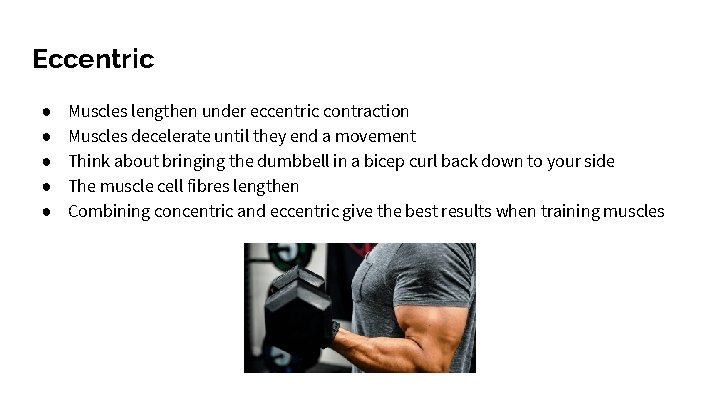
Eccentric ● ● ● Muscles lengthen under eccentric contraction Muscles decelerate until they end a movement Think about bringing the dumbbell in a bicep curl back down to your side The muscle cell fibres lengthen Combining concentric and eccentric give the best results when training muscles
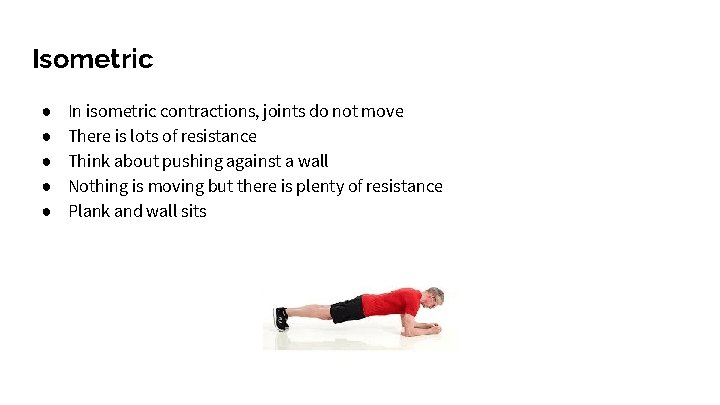
Isometric ● ● ● In isometric contractions, joints do not move There is lots of resistance Think about pushing against a wall Nothing is moving but there is plenty of resistance Plank and wall sits