
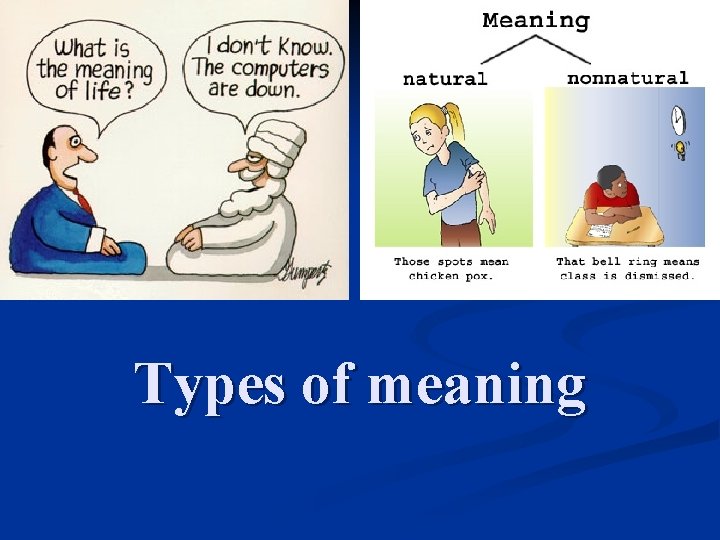
Types of meaning n Geoffrey Leech 1974 1981
- Slides: 14
Types of meaning
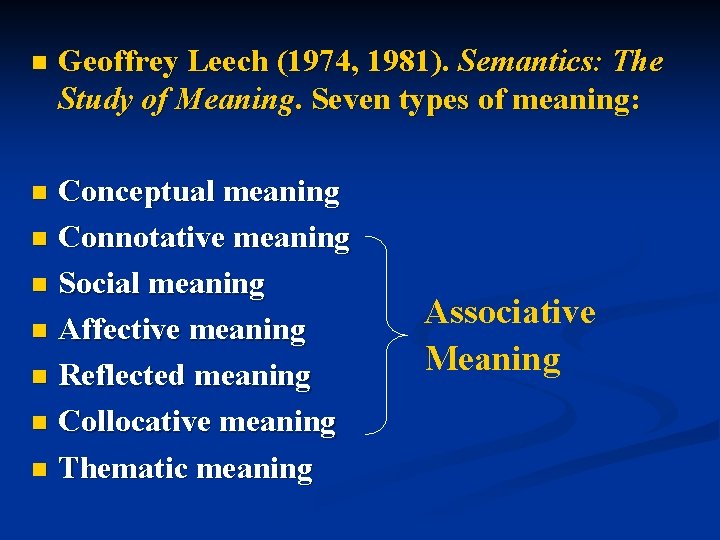
n Geoffrey Leech (1974, 1981). Semantics: The Study of Meaning. Seven types of meaning: Conceptual meaning n Connotative meaning n Social meaning n Affective meaning n Reflected meaning n Collocative meaning n Thematic meaning n Associative Meaning
1. Conceptual meaning Also called ‘denotative’ or ‘cognitive’ meaning. n Refers to logical, cognitive or denotative content. n Concerned with the relationship between a word and the thing it denotes, or refers to. n
2. Connotative meaning The communicative value an expression has by virtue of what it refers to, over and above its purely conceptual content. n A multitude of additional, non-criterial properties, including not only physical characteristics but also psychological and social properties, as well as typical features. n
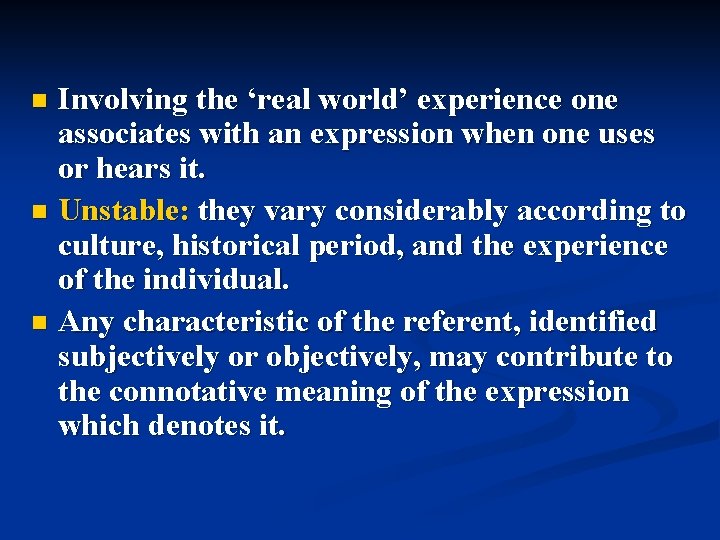
Involving the ‘real world’ experience one associates with an expression when one uses or hears it. n Unstable: they vary considerably according to culture, historical period, and the experience of the individual. n Any characteristic of the referent, identified subjectively or objectively, may contribute to the connotative meaning of the expression which denotes it. n
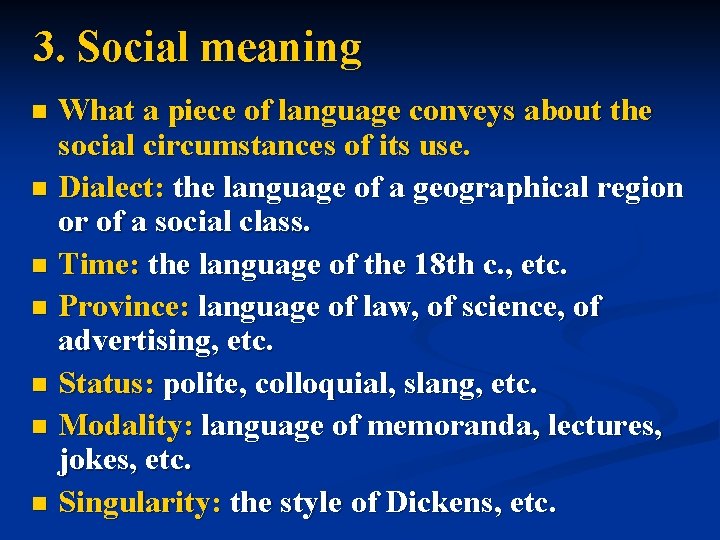
3. Social meaning What a piece of language conveys about the social circumstances of its use. n Dialect: the language of a geographical region or of a social class. n Time: the language of the 18 th c. , etc. n Province: language of law, of science, of advertising, etc. n Status: polite, colloquial, slang, etc. n Modality: language of memoranda, lectures, jokes, etc. n Singularity: the style of Dickens, etc. n
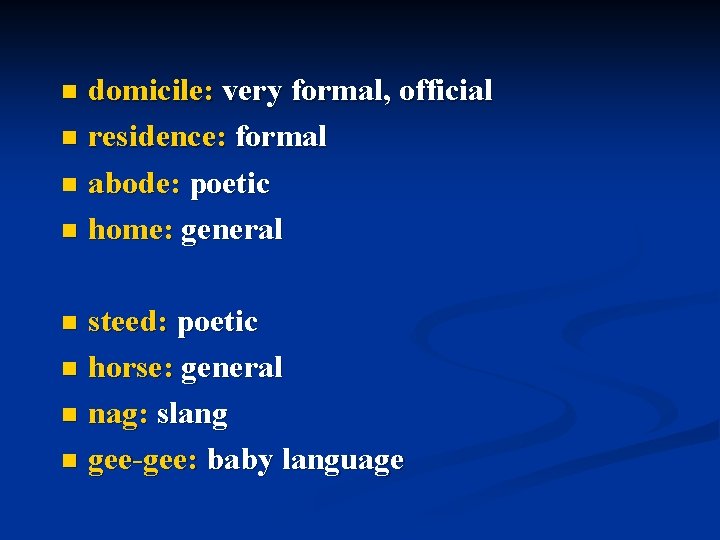
domicile: very formal, official n residence: formal n abode: poetic n home: general n steed: poetic n horse: general n nag: slang n gee-gee: baby language n
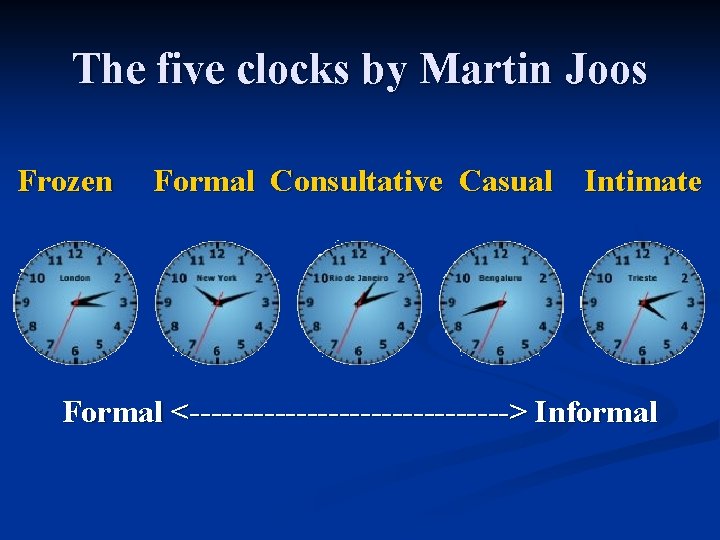
The five clocks by Martin Joos Frozen Formal Consultative Casual Intimate Formal <---------------> Informal
4. Affective meaning Reflecting the personal feelings of the speaker, including his attitude to the listener, or his attitude to something he is talking about. n You’re a vicious tyrant and a villainous reprobate, and I hate you for it! n I’m terribly sorry to interrupt, but I wonder if you would be so kind as to lower your voices a little. or n Will you belt up. n
‘Colorful’ meaning Commendatory n tough-minded n resolute, firm n shrewd n childlike n wiseman n man of usual talent portly, stout, solid, plum n slender, slim n n n Derogatory ruthless obstinate sly, crafty childish wiseguy freak fleshy, fat, tubby lean, skinny, lanky, weedy, scraggy
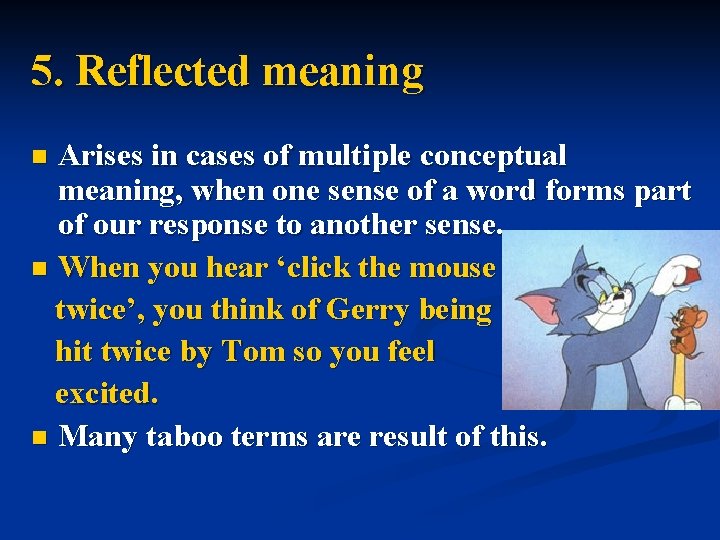
5. Reflected meaning Arises in cases of multiple conceptual meaning, when one sense of a word forms part of our response to another sense. n When you hear ‘click the mouse twice’, you think of Gerry being hit twice by Tom so you feel excited. n Many taboo terms are result of this. n
6. Collocative meaning The associations a word acquires on account of the meanings of words which tend to occur in its environment. n pretty: girl, boy, woman, flower, garden, colour, village, etc. n handsome: boy, man, car, vessel, overcoat, airliner, typewriter, etc. n
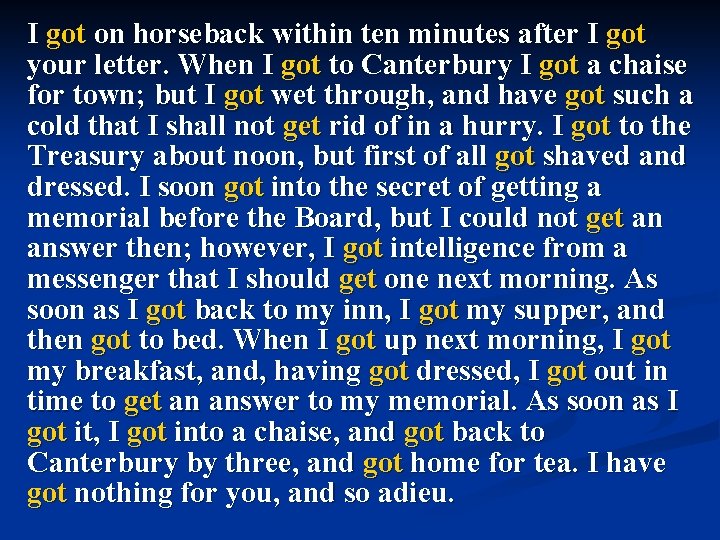
I got on horseback within ten minutes after I got your letter. When I got to Canterbury I got a chaise for town; but I got wet through, and have got such a cold that I shall not get rid of in a hurry. I got to the Treasury about noon, but first of all got shaved and dressed. I soon got into the secret of getting a memorial before the Board, but I could not get an answer then; however, I got intelligence from a messenger that I should get one next morning. As soon as I got back to my inn, I got my supper, and then got to bed. When I got up next morning, I got my breakfast, and, having got dressed, I got out in time to get an answer to my memorial. As soon as I got it, I got into a chaise, and got back to Canterbury by three, and got home for tea. I have got nothing for you, and so adieu.
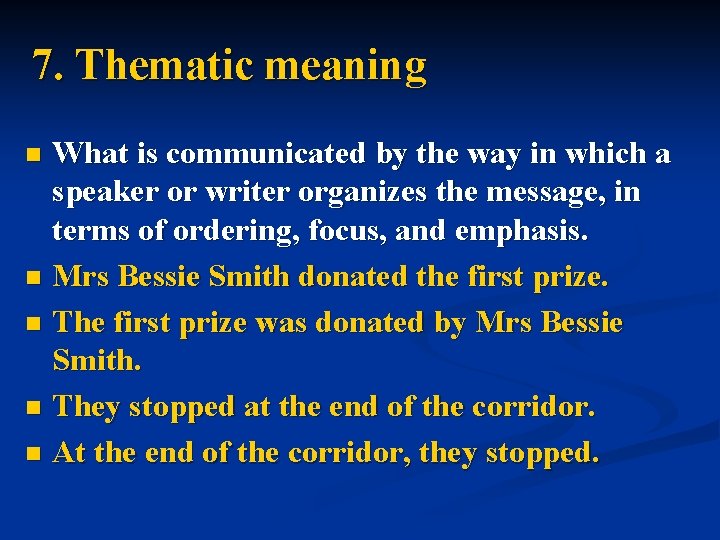
7. Thematic meaning What is communicated by the way in which a speaker or writer organizes the message, in terms of ordering, focus, and emphasis. n Mrs Bessie Smith donated the first prize. n The first prize was donated by Mrs Bessie Smith. n They stopped at the end of the corridor. n At the end of the corridor, they stopped. n