
Types of meaning 2 Register and connotations I


- Slides: 13
Types of meaning (2) Register and connotations
I. REGISTER • The way speakers use language differs from one situation to another according to the participants and the purpose of communication. • Speakers move from one register to another with ease. For example, a teacher talks to his student (Register 1), then addresses a teacher colleague (register 2). • Register refers to the levels of variations in formality (highly formal, neutral, informal, very informal), • The use determined by such factors as social occasion, context, purpose, and audience.
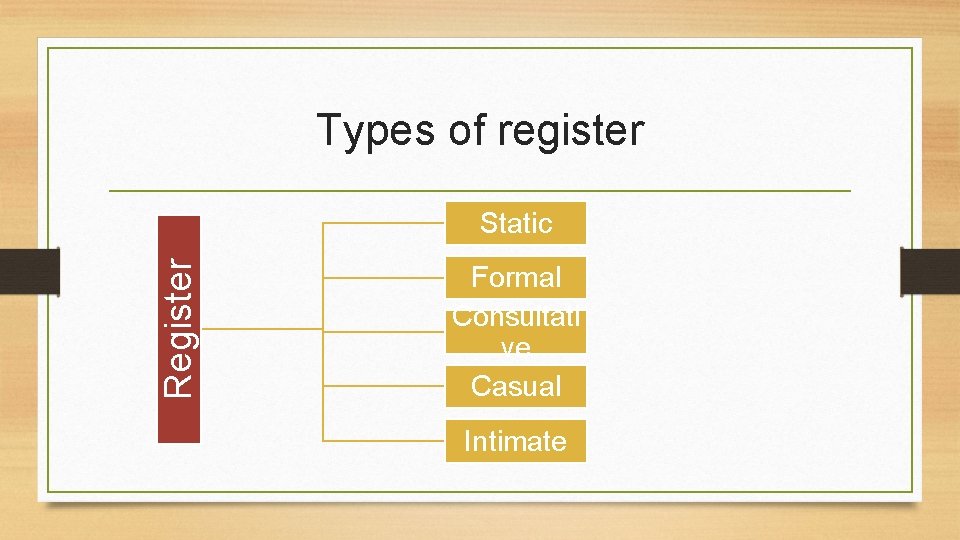
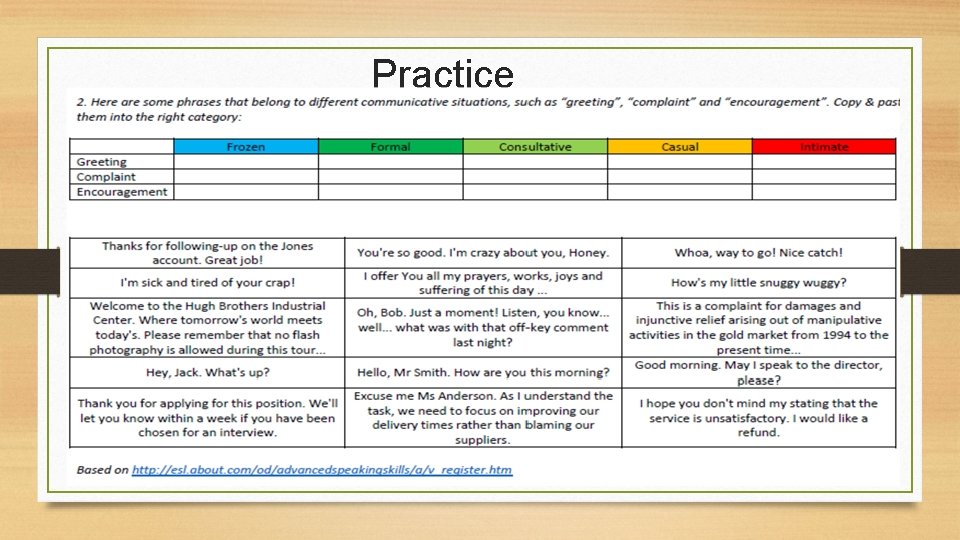
Types of register Register Static Formal Consultati ve Casual Intimate
Static/frozen register • Communication that is intended to remain unchanged. It is a type of language that is literally “frozen” in time and form. Examples include constitutions and pledges, literature and prayers. 1. Religious texts (Bible, Quran) 2. Magna Carta, American constitution 3. Romeo and Joliet
Formal register • This register is less rigid than the static register but still constrained • The speaker/ the writer uses complete sentences, avoids slang and may use technical or academic vocabulary, uses fewer contractions, but opts instead for complete words. • It is used in professional, academic, or legal settings where communication is expected to be respectful, uninterrupted, and restrained. • Examples may include: business and academic presentations, business letters, lectures and conference talks, research papers and laboratory reports
Consultative register • This register is often used in conversation when people are speaking with someone who has specialized knowledge (an expert) or who is offering advice. • The language used is more precise. The speaker is likely to address the expert by courtesy title such as “Doctor”, “Mr. ” or “Mrs. ”. • This register may be more casual if the relationship is friendly (a family doctor). • People take turns in conversation (they may pause or interrupt one another). • Examples may include a doctor-patient talk, a service/advice offered by a technician TV talk show hosting a family consultant, etc.
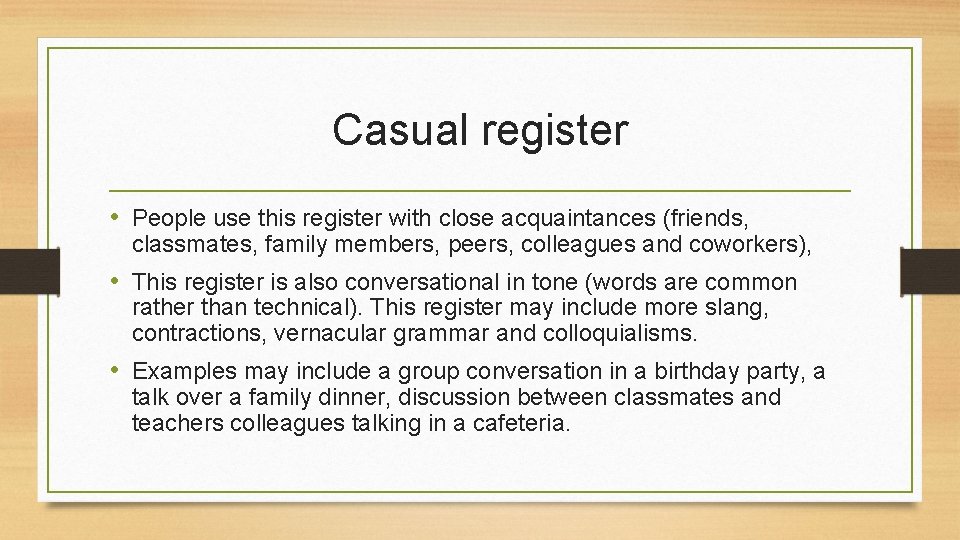
Casual register • People use this register with close acquaintances (friends, classmates, family members, peers, colleagues and coworkers), • This register is also conversational in tone (words are common rather than technical). This register may include more slang, contractions, vernacular grammar and colloquialisms. • Examples may include a group conversation in a birthday party, a talk over a family dinner, discussion between classmates and teachers colleagues talking in a cafeteria.
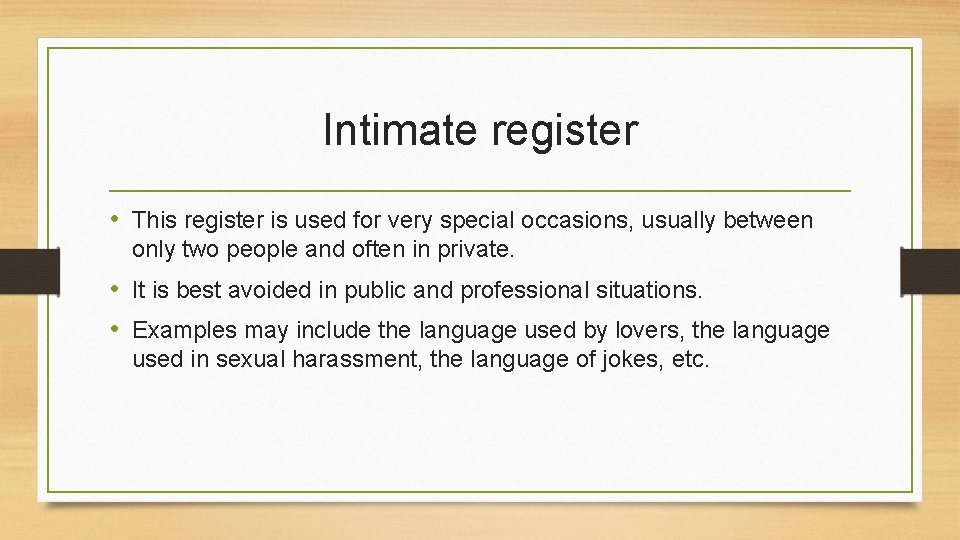
Intimate register • This register is used for very special occasions, usually between only two people and often in private. • It is best avoided in public and professional situations. • Examples may include the language used by lovers, the language used in sexual harassment, the language of jokes, etc.
Practice
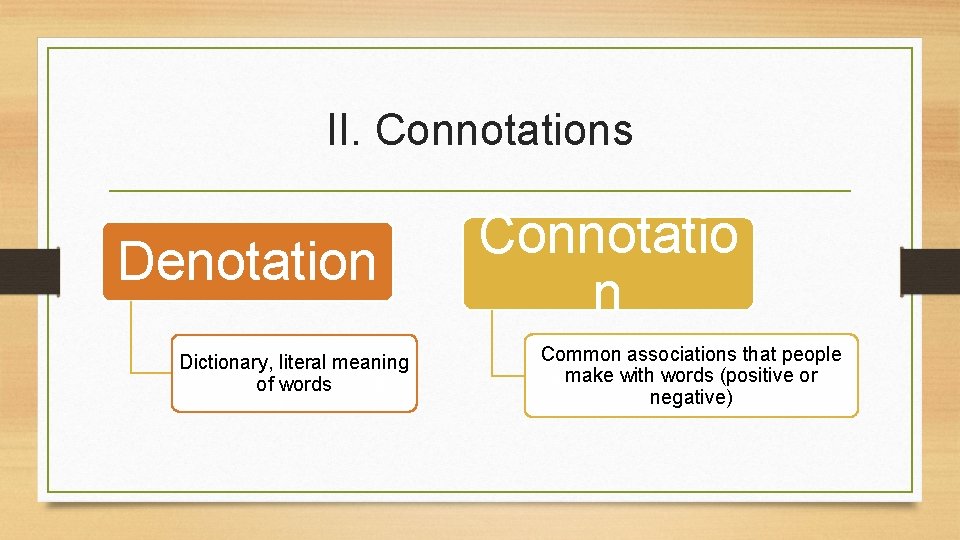
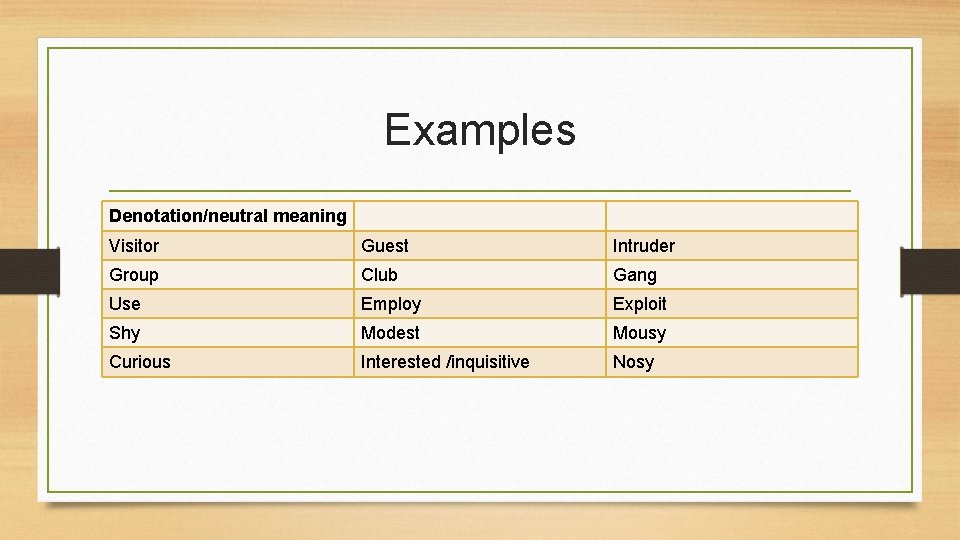
II. Connotations Denotation Dictionary, literal meaning of words Connotatio n Common associations that people make with words (positive or negative)
Examples Denotation/neutral meaning Visitor Guest Intruder Group Club Gang Use Employ Exploit Shy Modest Mousy Curious Interested /inquisitive Nosy
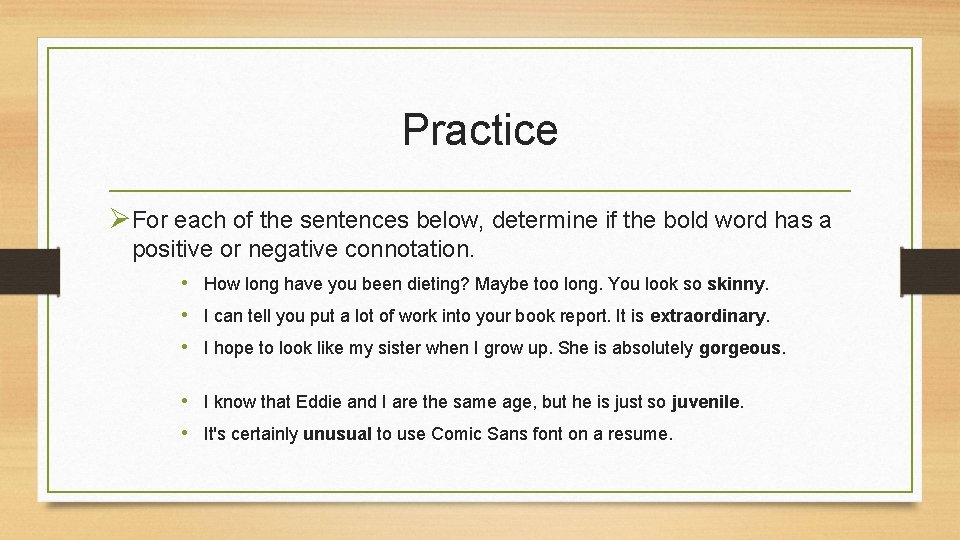
Practice ØFor each of the sentences below, determine if the bold word has a positive or negative connotation. • How long have you been dieting? Maybe too long. You look so skinny. • I can tell you put a lot of work into your book report. It is extraordinary. • I hope to look like my sister when I grow up. She is absolutely gorgeous. • I know that Eddie and I are the same age, but he is just so juvenile. • It's certainly unusual to use Comic Sans font on a resume.
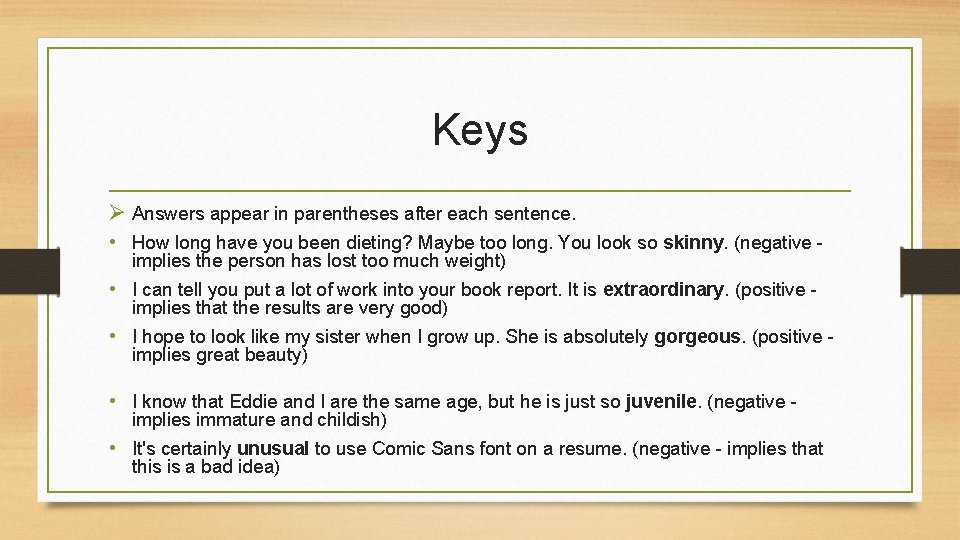
Keys Ø Answers appear in parentheses after each sentence. • How long have you been dieting? Maybe too long. You look so skinny. (negative implies the person has lost too much weight) • I can tell you put a lot of work into your book report. It is extraordinary. (positive implies that the results are very good) • I hope to look like my sister when I grow up. She is absolutely gorgeous. (positive implies great beauty) • I know that Eddie and I are the same age, but he is just so juvenile. (negative implies immature and childish) • It's certainly unusual to use Comic Sans font on a resume. (negative - implies that this is a bad idea)