
Types of Macromolecules 1 2 3 4 Carbohydrates
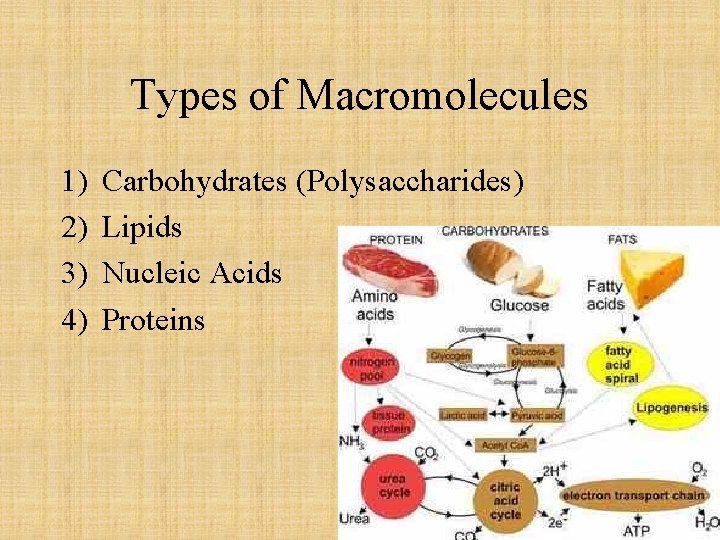
Types of Macromolecules 1) 2) 3) 4) Carbohydrates (Polysaccharides) Lipids Nucleic Acids Proteins
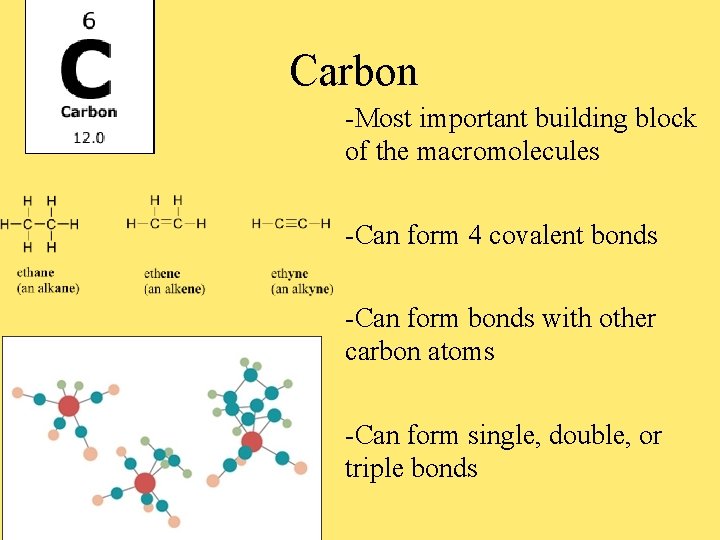
Carbon -Most important building block of the macromolecules -Can form 4 covalent bonds -Can form bonds with other carbon atoms -Can form single, double, or triple bonds
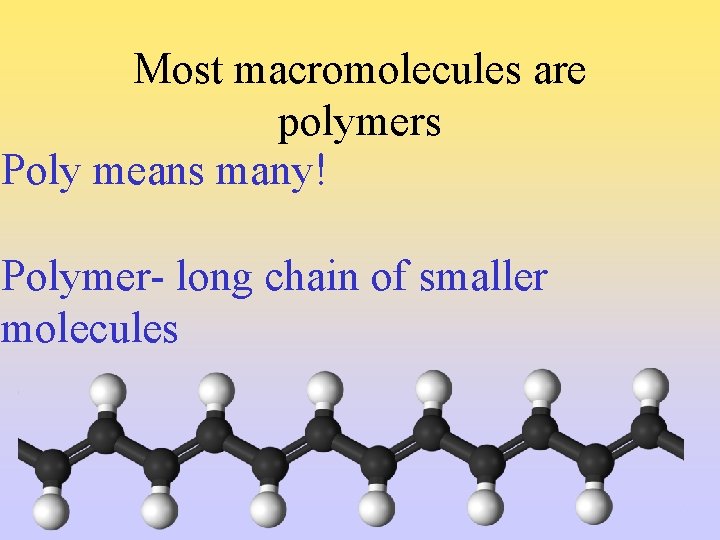
Most macromolecules are polymers Poly means many! Polymer- long chain of smaller molecules
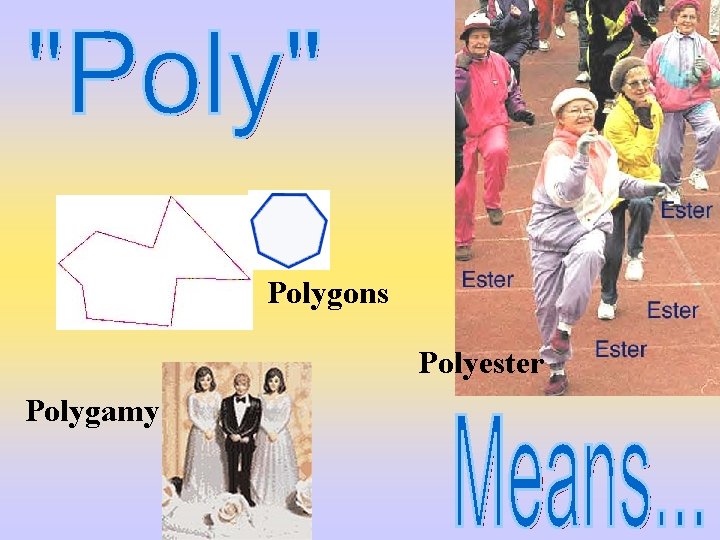
Polygons Polyester Polygamy
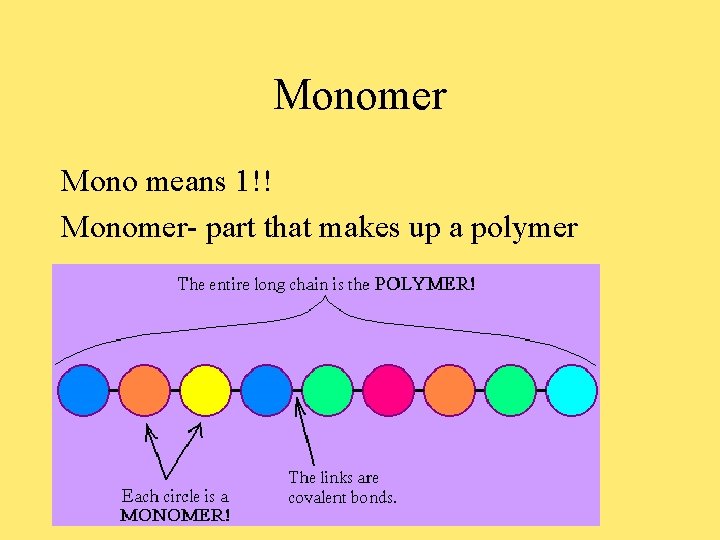
Monomer Mono means 1!! Monomer- part that makes up a polymer
What does “Mono” mean?
A Polymer Here are some analogies to better understand what polymers and monomers are…. EXAMPLE of POLYMER MONOMER A TRAIN ? A NECKLACE ? If the train is the whole polymer, what would be the small groups that make up the train? If the necklace is the polymer, what are the monomers that make up the necklace?
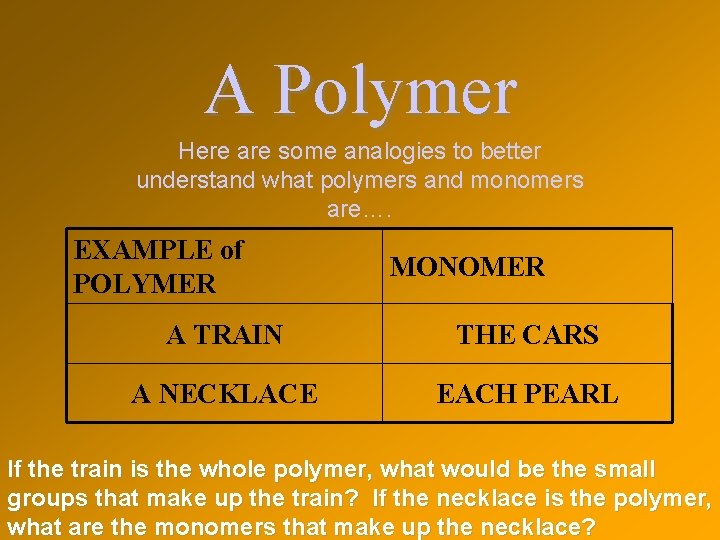
A Polymer Here are some analogies to better understand what polymers and monomers are…. EXAMPLE of POLYMER MONOMER A TRAIN THE CARS A NECKLACE EACH PEARL If the train is the whole polymer, what would be the small groups that make up the train? If the necklace is the polymer, what are the monomers that make up the necklace?
Three out of the 4 types of biochemical macromolecules can be found on food nutrition labels…
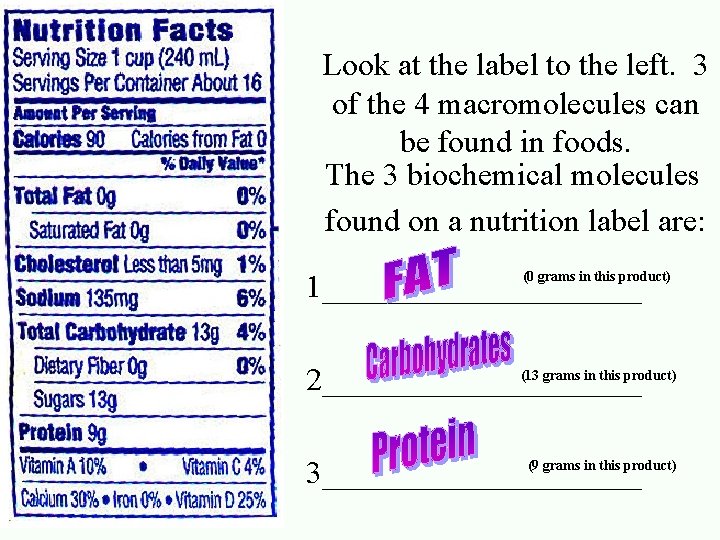
Look at the label to the left. 3 of the 4 macromolecules can be found in foods. The 3 biochemical molecules found on a nutrition label are: 1__________ (0 grams in this product) (13 grams in this product) 2__________ (9 grams in this product) 3__________
When studying these biochemical molecules, we are interested in finding out…. . • What types of atoms they have • what their monomers are. • what they do for living things. • and how they may help the body gain energy to sustain life.
Polysaccharides (Complex Carbohydrates) Also known as yummy SUGAR!
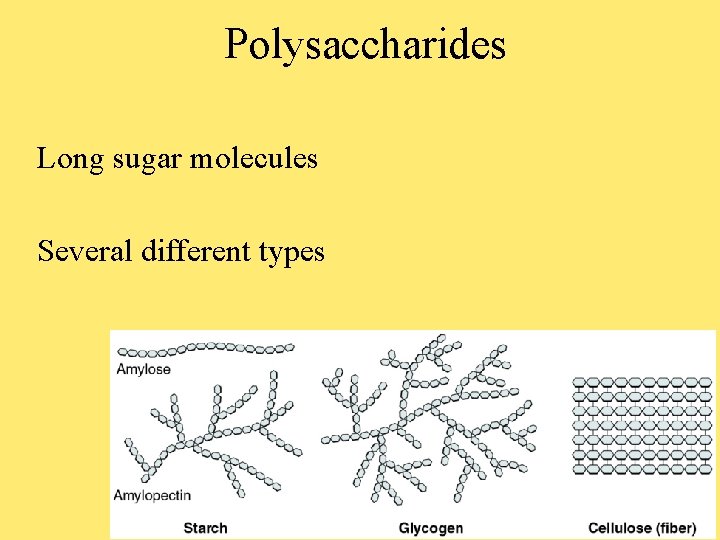
Polysaccharides Long sugar molecules Several different types
THINK: “CHO”
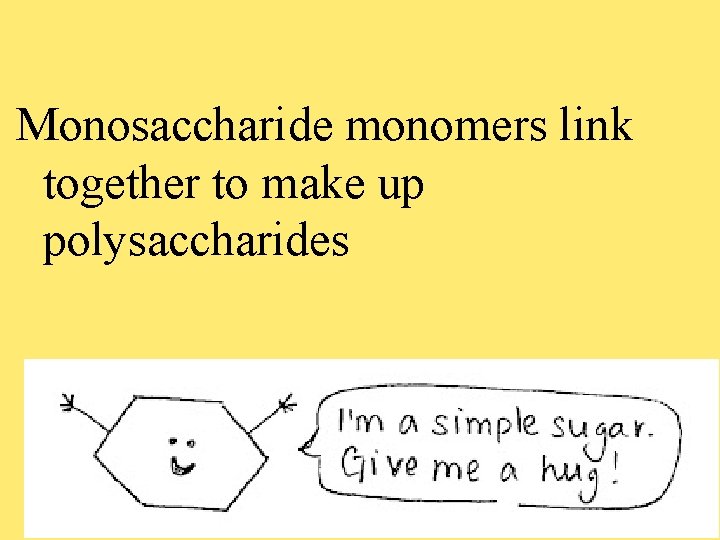
Monosaccharide monomers link together to make up polysaccharides
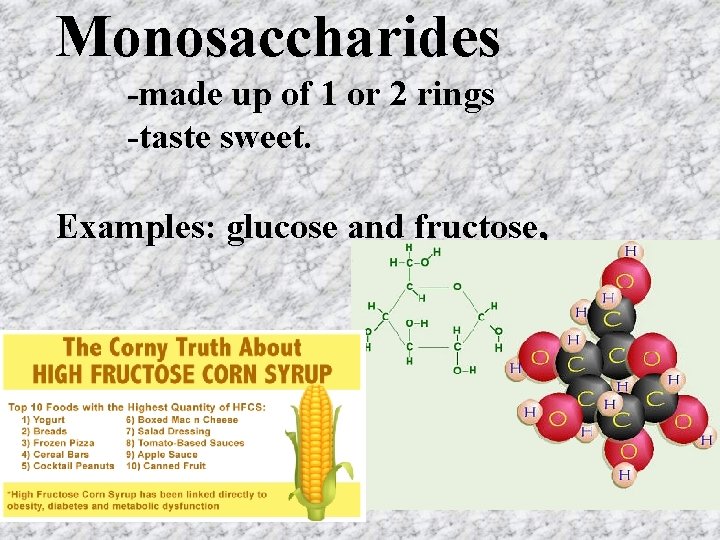
Monosaccharides -made up of 1 or 2 rings -taste sweet. Examples: glucose and fructose,
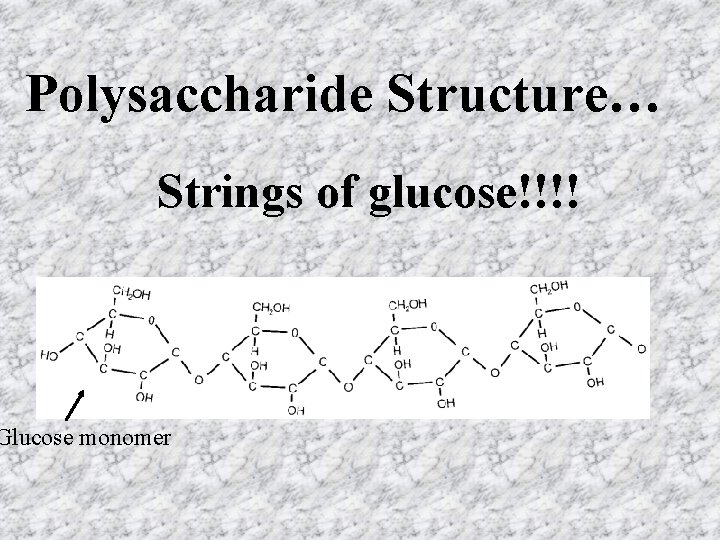
Polysaccharide Structure… Strings of glucose!!!! Glucose monomer
Polysaccharide Function Polysaccharides Starch- glucose storage in plants Cellulose- forms plant structure Glycogen- glucose storage in animals
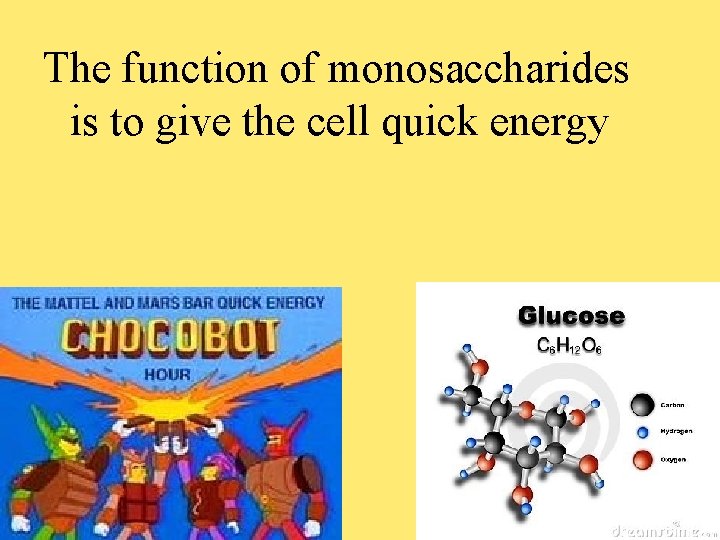
The function of monosaccharides is to give the cell quick energy
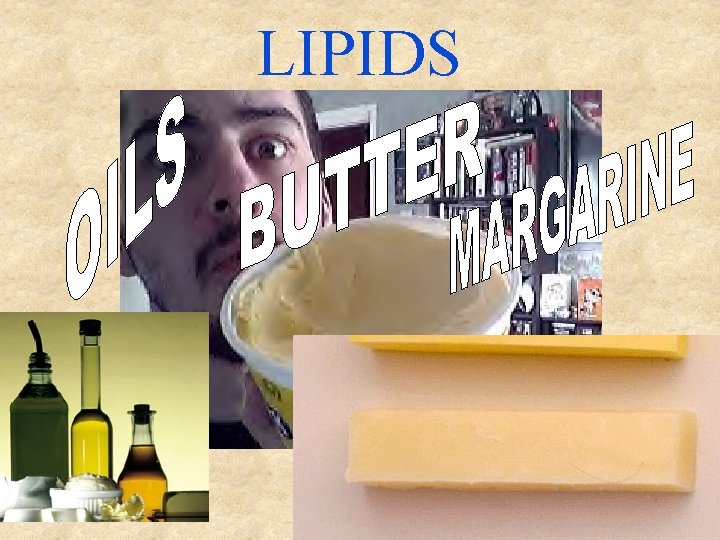
LIPIDS
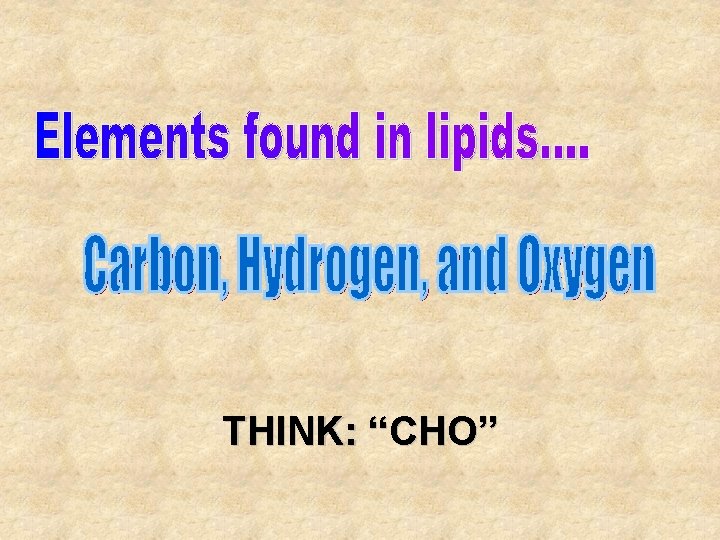
THINK: “CHO”
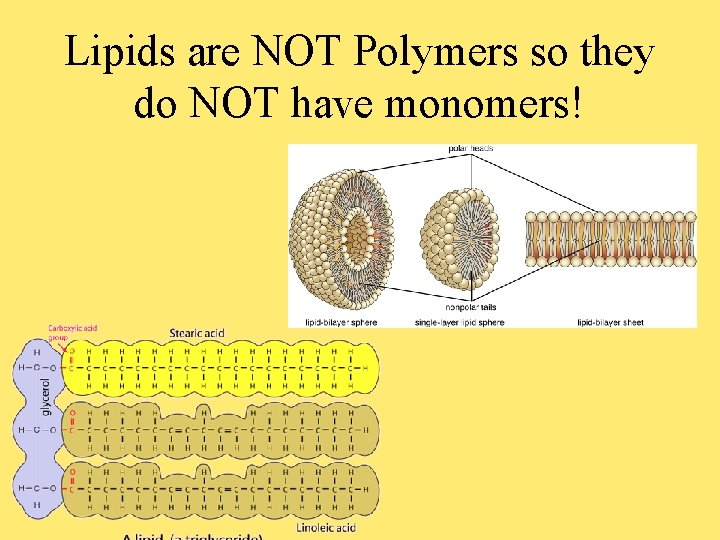
Lipids are NOT Polymers so they do NOT have monomers!
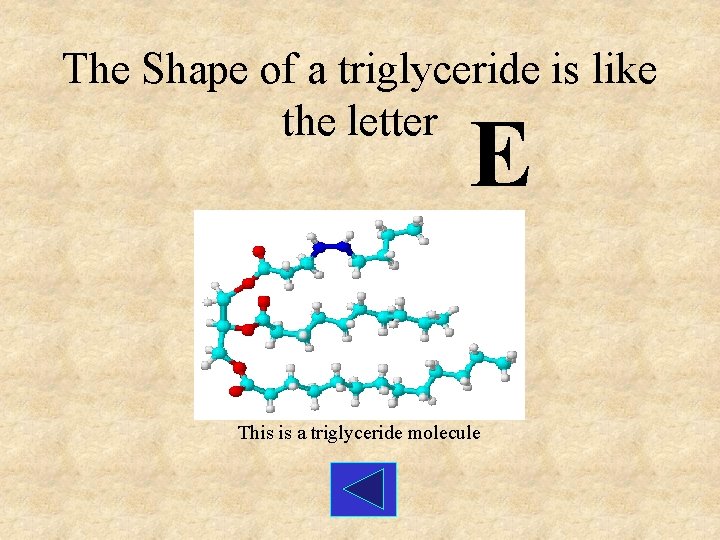
The Shape of a triglyceride is like the letter E This is a triglyceride molecule
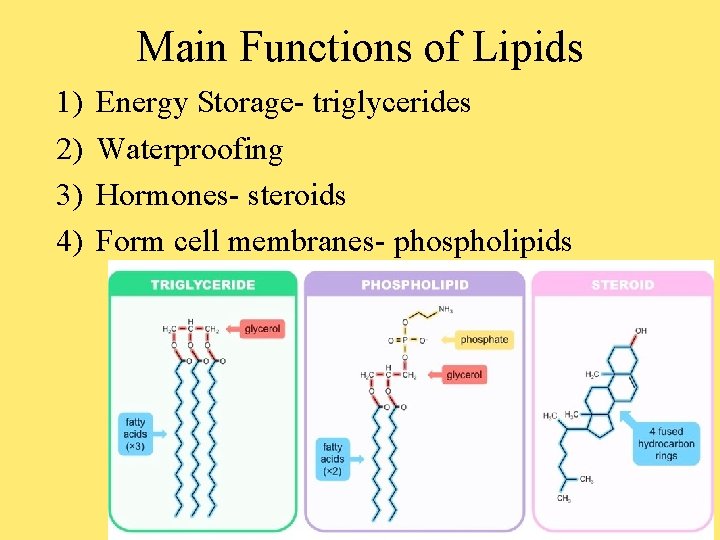
Main Functions of Lipids 1) 2) 3) 4) Energy Storage- triglycerides Waterproofing Hormones- steroids Form cell membranes- phospholipids
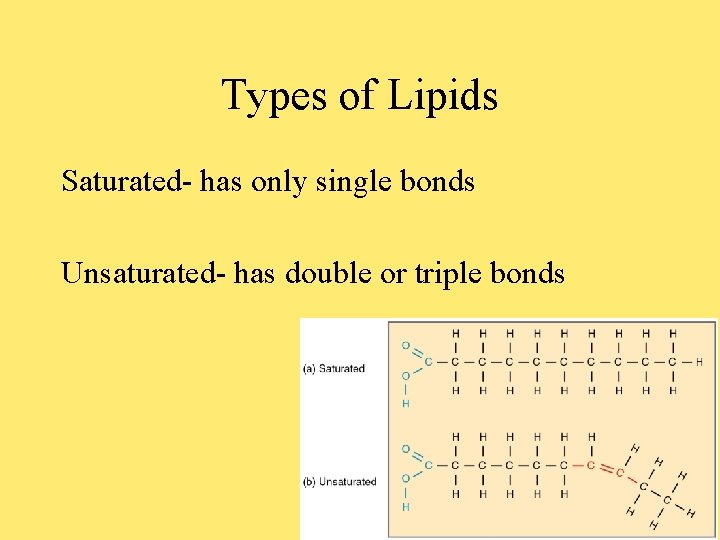
Types of Lipids Saturated- has only single bonds Unsaturated- has double or triple bonds
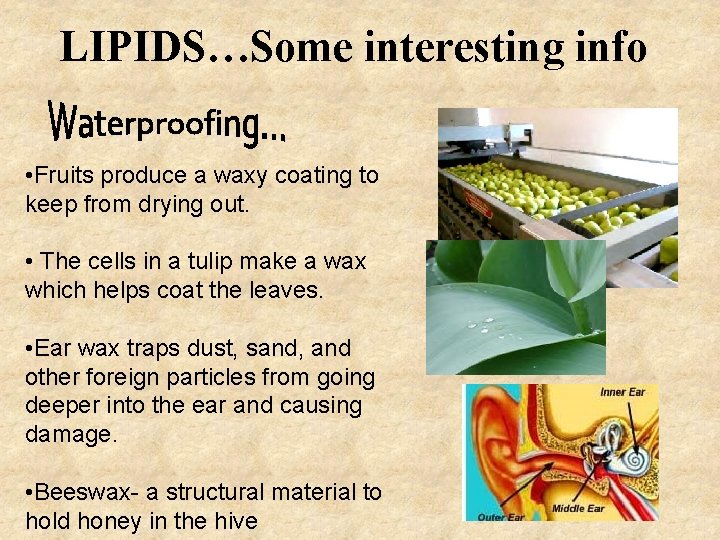
LIPIDS…Some interesting info • Fruits produce a waxy coating to keep from drying out. • The cells in a tulip make a wax which helps coat the leaves. • Ear wax traps dust, sand, and other foreign particles from going deeper into the ear and causing damage. • Beeswax- a structural material to hold honey in the hive
LIPIPS…Some interesting info There are many different types of steroids. They are all lipids. Their functions vary. Some common steroids are: SEX STEROIDS ANABOLIC STERIODS CHOLESTEROL Like testosterone and estrogen They increase muscle
NUCLEIC ACIDS
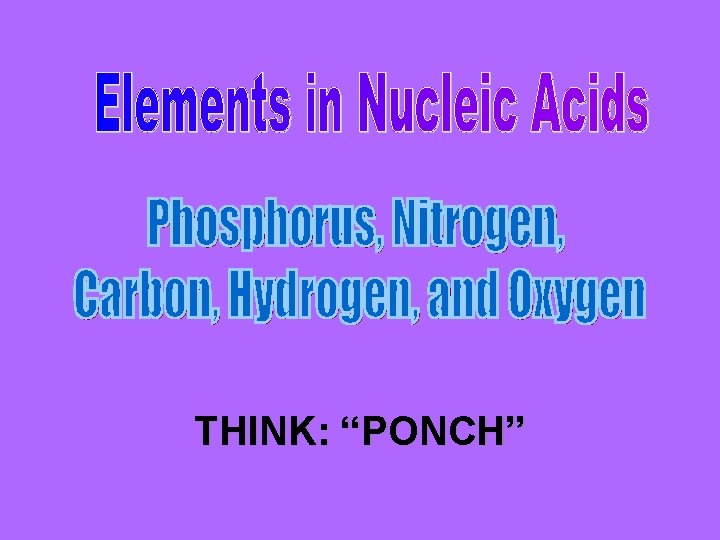
THINK: “PONCH”
NUCLEIC ACID The monomers that make up nucleic acids are called…
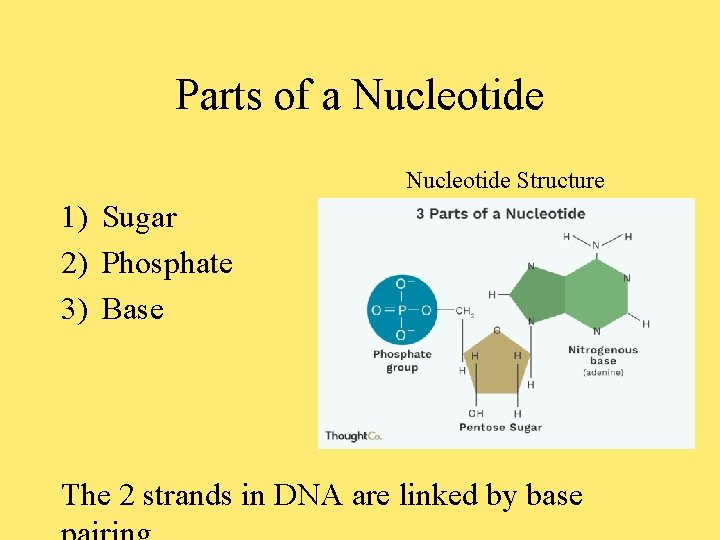
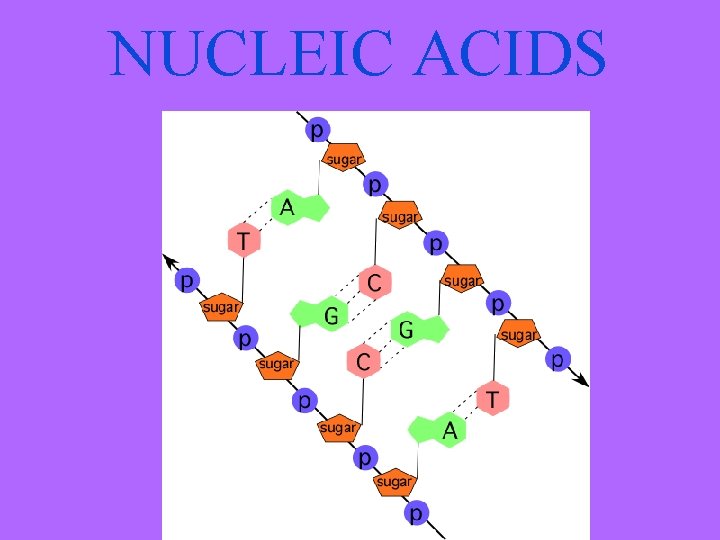
Parts of a Nucleotide Structure 1) Sugar 2) Phosphate 3) Base The 2 strands in DNA are linked by base
NUCLEIC ACIDS THERE ARE 2 TYPES OF NUCLEIC ACIDS DNA RNA
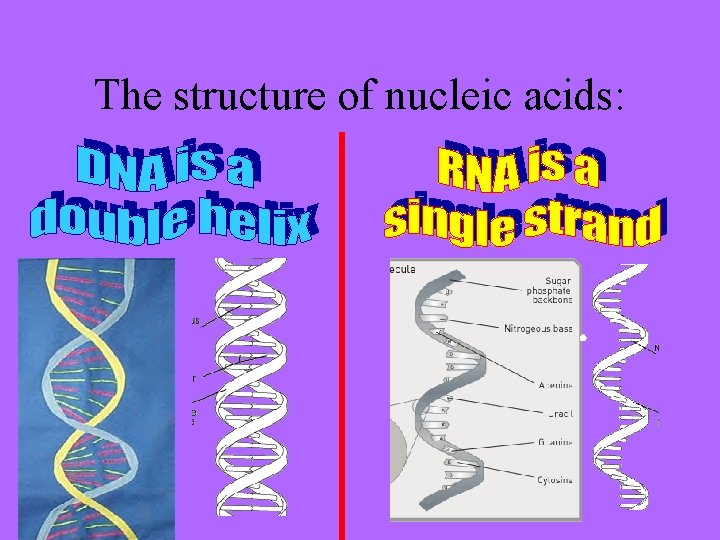
The structure of nucleic acids:
NUCLEIC ACIDS
Nucleic Acids DNA and RNA contain instructions for making protein
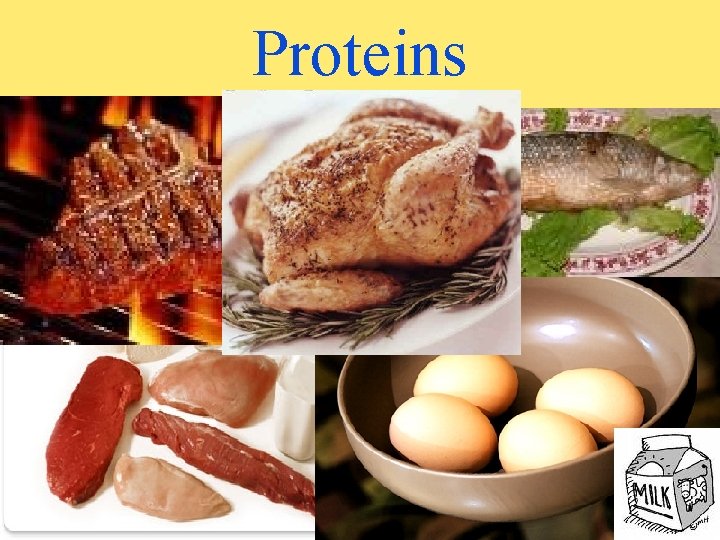
Proteins
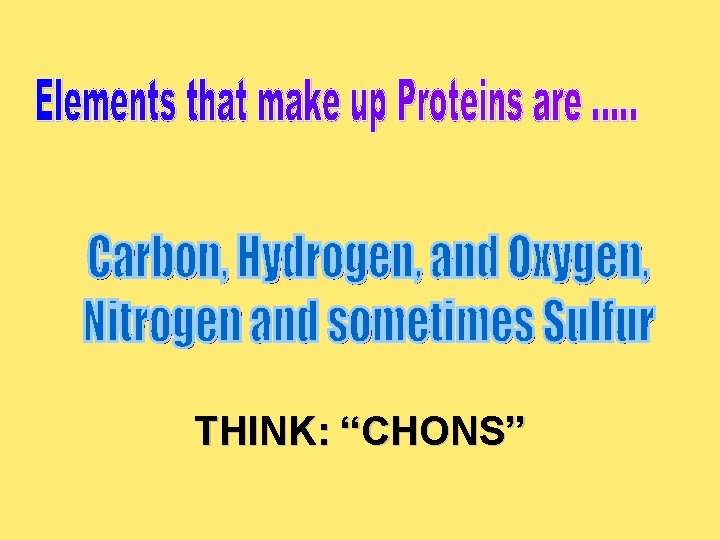
THINK: “CHONS”
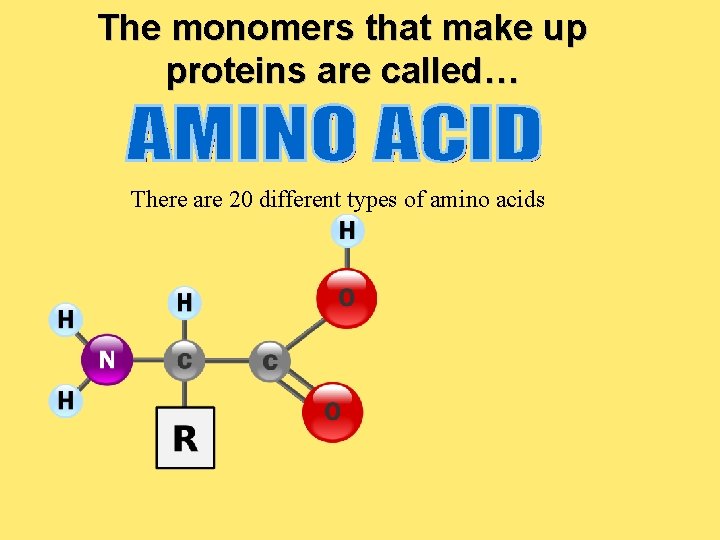
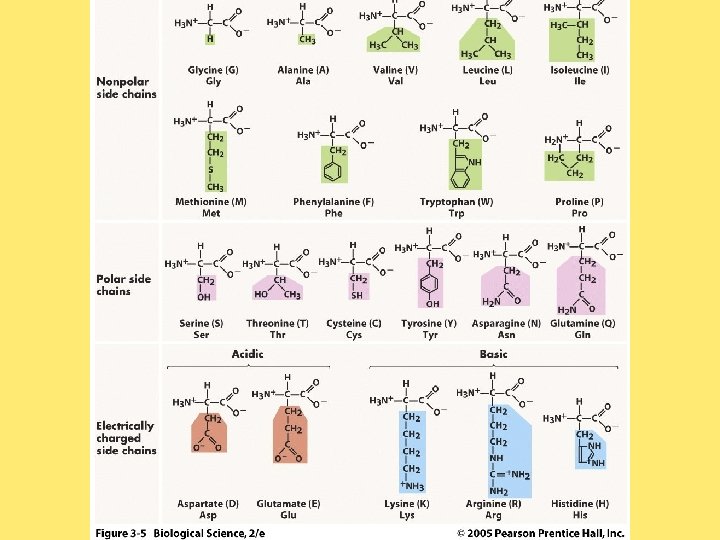
The monomers that make up proteins are called… There are 20 different types of amino acids
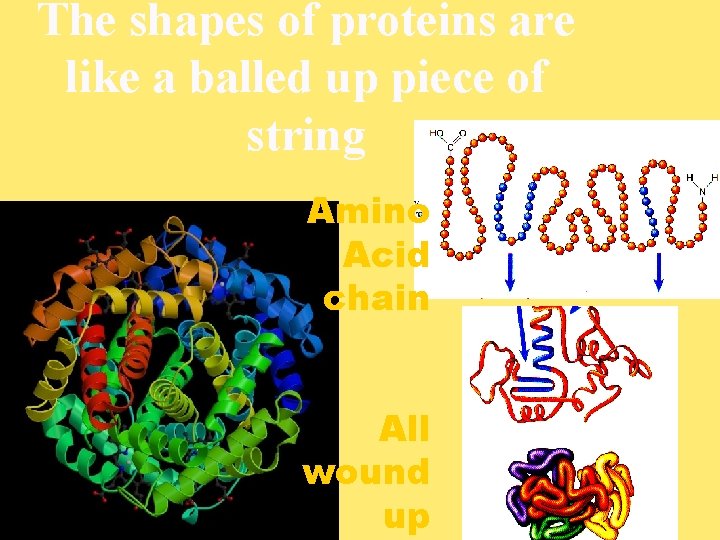
The shapes of proteins are like a balled up piece of string Amino Acid chain All wound up
PROTEINS They are the major structural molecules in living things for growth and repair : muscles, ligaments, tendons, bones, hair, skin, nails…IN FACT ALL CELL MEMBRANES have protein in them They make up antibodies in the immune system They make up enzymes for helping chemical reactions They makeup non-steriod hormones which THINK: Proteins= membranes, enzymes, antibodies, nonsteriod hormones, structural molecules, “MEANS”
EXAMPLE PROTEIN Carries oxygen in blood
• What elements are found in all of the Big 4 molecules? Which of the Big 4 has different elements and what are they? • Since Polysaccharides and Lipids have the same elements in them, how can you tell the difference? • Which molecule is in the shape of a hexagon? • Which molecule is in the shape of an E? • A polymer of amino acids makes what molecule?
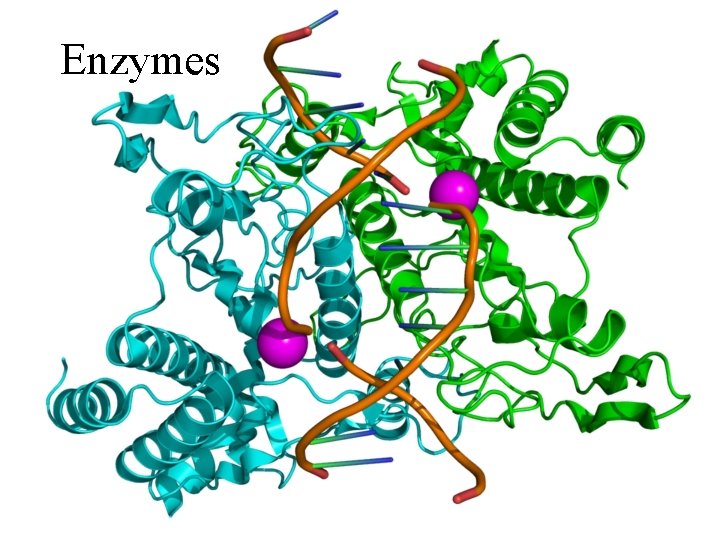
Enzymes
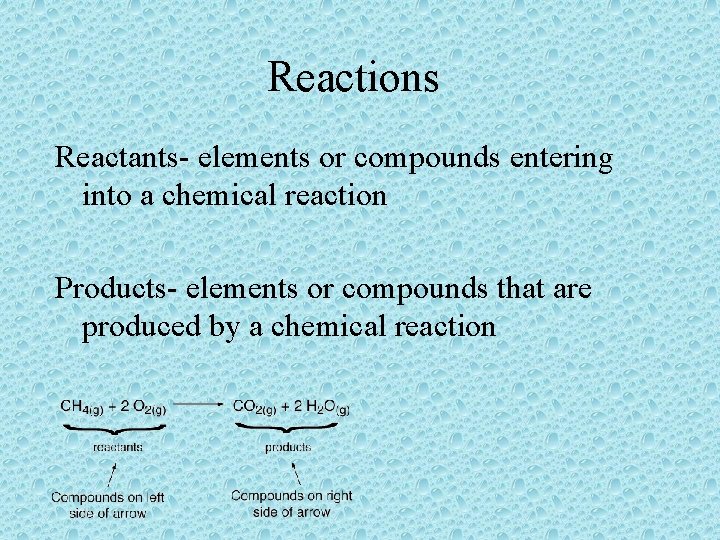
Reactions Reactants- elements or compounds entering into a chemical reaction Products- elements or compounds that are produced by a chemical reaction
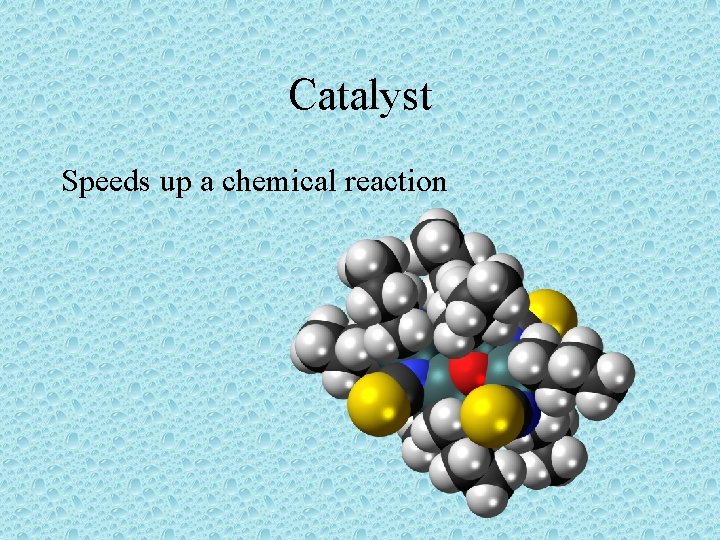
Catalyst Speeds up a chemical reaction
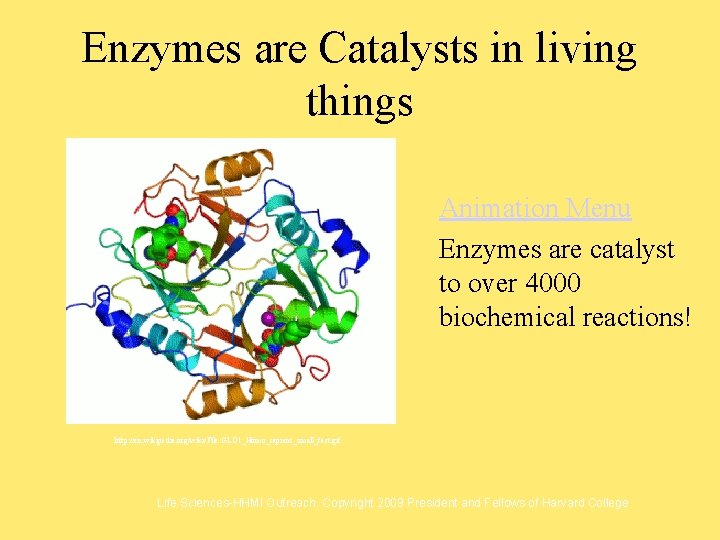
Enzymes are Catalysts in living things Animation Menu Enzymes are catalyst to over 4000 biochemical reactions! http: //en. wikipedia. org/wiki/File: GLO 1_Homo_sapiens_small_fast. gif Life Sciences-HHMI Outreach. Copyright 2009 President and Fellows of Harvard College
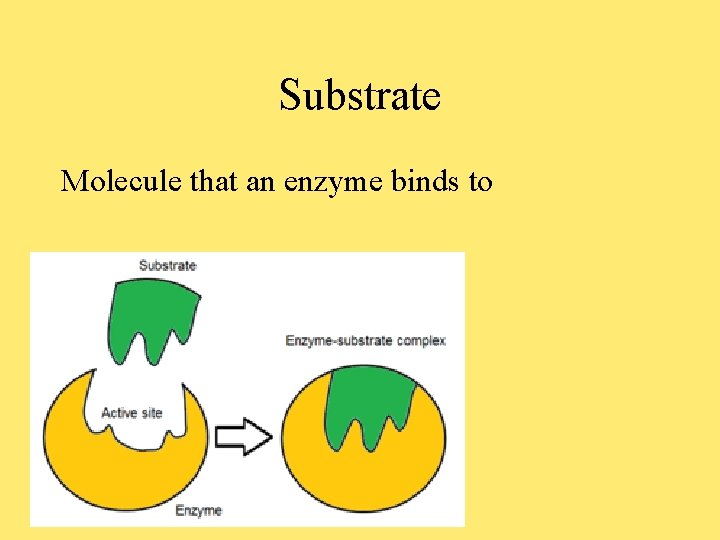
Substrate Molecule that an enzyme binds to
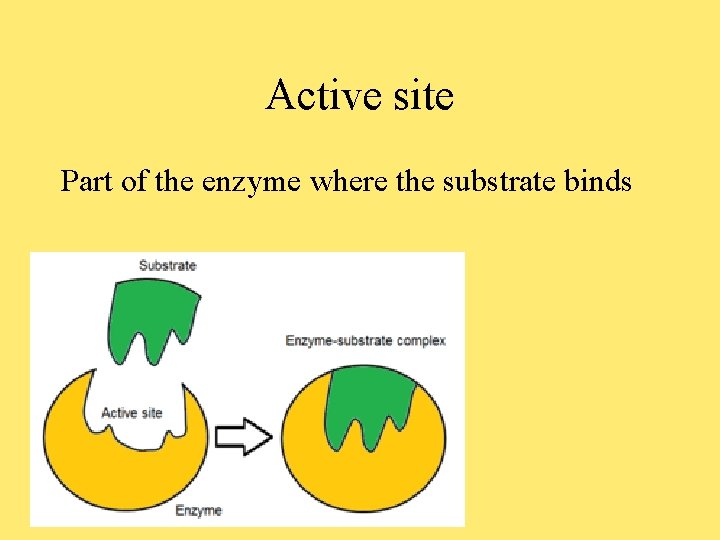
Active site Part of the enzyme where the substrate binds
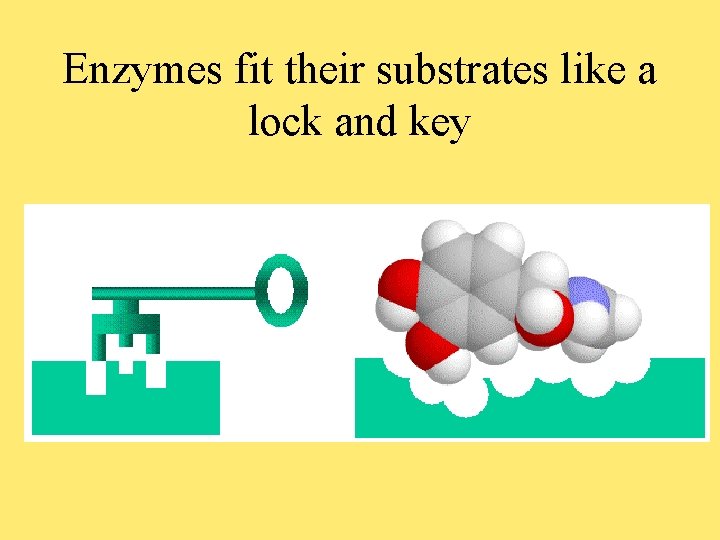
Enzymes fit their substrates like a lock and key
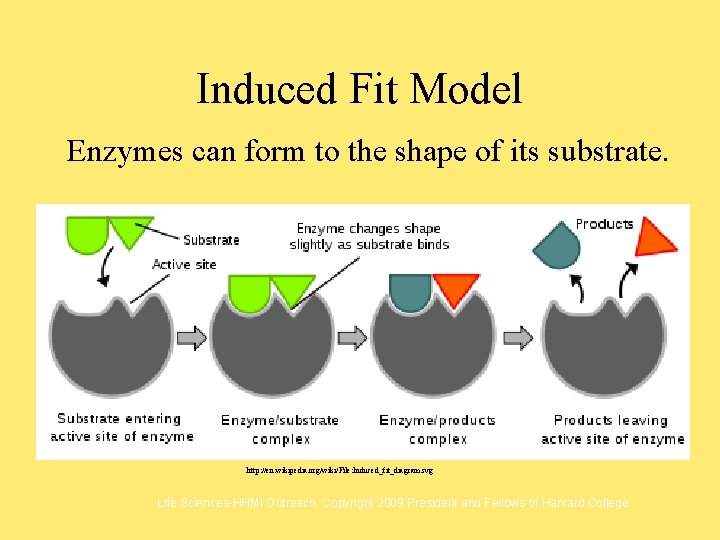
Induced Fit Model Enzymes can form to the shape of its substrate. http: //en. wikipedia. org/wiki/File: Induced_fit_diagram. svg Life Sciences-HHMI Outreach. Copyright 2009 President and Fellows of Harvard College
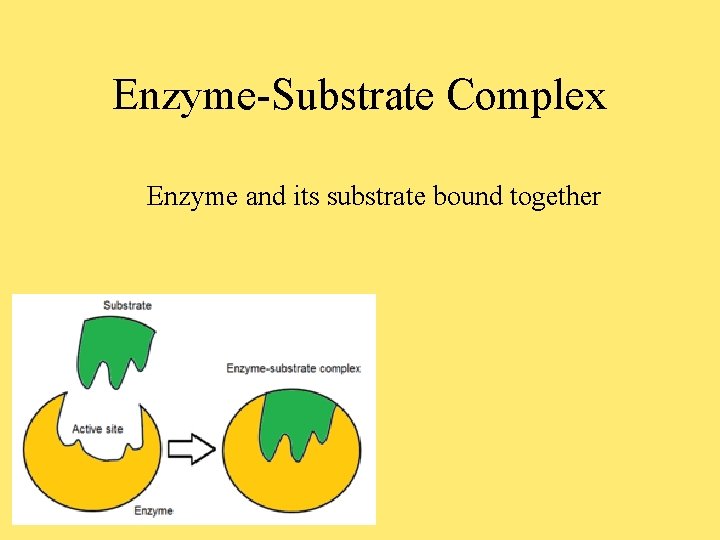
Enzyme-Substrate Complex Enzyme and its substrate bound together
Denaturing Enzymes When an enzyme is denatured it is damaged. Denaturing changes the shape. Without the correct shape enzymes won’t function properly. HOW are enzymes denatured? Temperature p. H Animation Menu Life Sciences-HHMI Outreach. Copyright 2009 President and Fellows of Harvard College
http: //upload. wikimedia. org/wikipedia/commons/thumb/6/6 f/Major_digestive_enzymes. png/750 px-Major_digestive_enzymes. png Life Sciences-HHMI Outreach. Copyright 2009 President and Fellows of Harvard College
- Slides: 55