
Types of Literature Genre the type of literature
- Slides: 54
Types of Literature
Genre – the type of literature, such as a novel or a short story
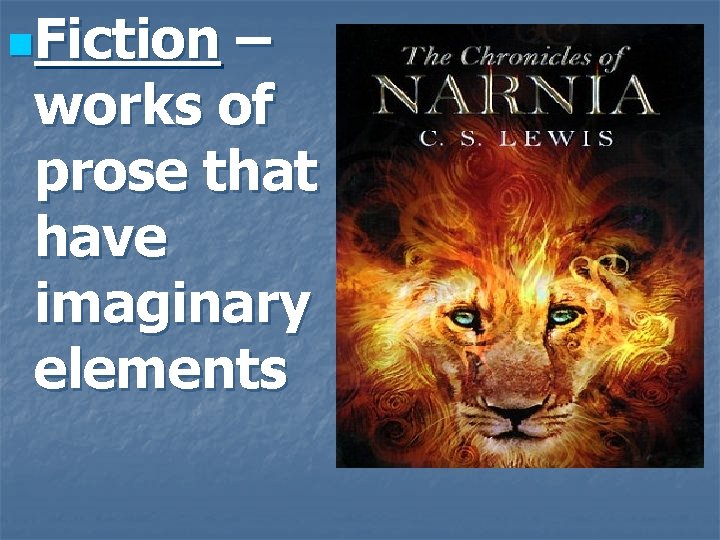
n. Fiction – works of prose that have imaginary elements
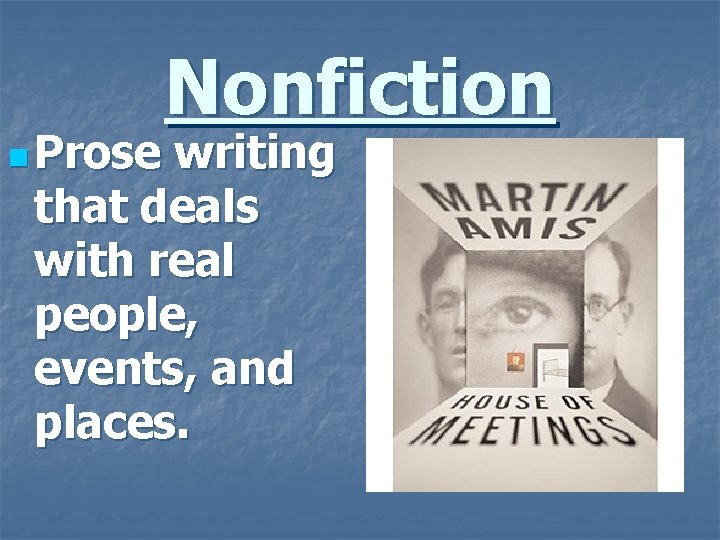
n Prose Nonfiction writing that deals with real people, events, and places.
Short Story n can usually be read in one sitting. Generally, a short story has one main conflict that involves the characters, keeps the story moving, and makes it interesting
Poetry n Type of literature in which words are chosen and arranged to create a certain effect.
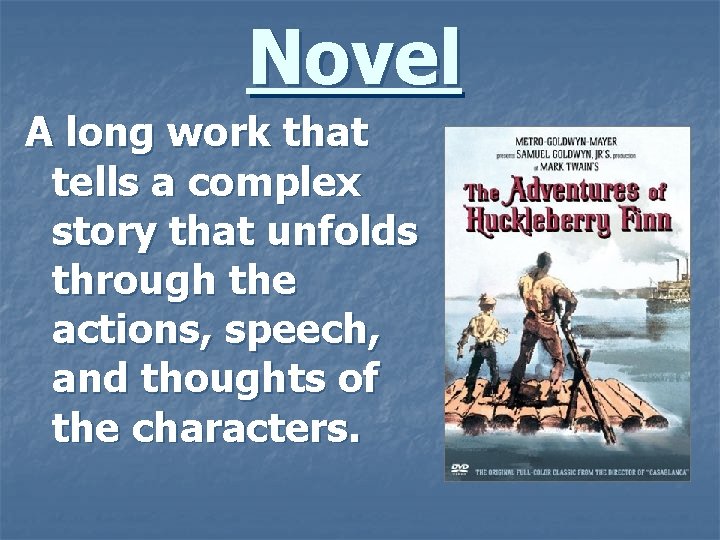
Novel A long work that tells a complex story that unfolds through the actions, speech, and thoughts of the characters.
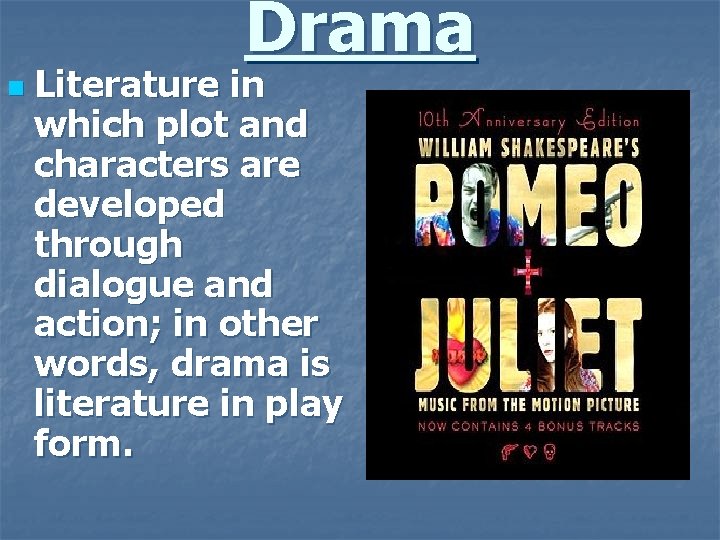
Drama n Literature in which plot and characters are developed through dialogue and action; in other words, drama is literature in play form.
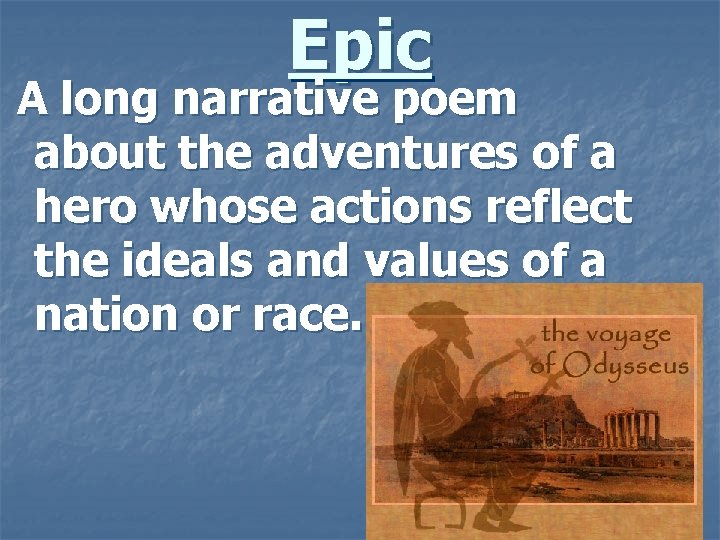
Epic A long narrative poem about the adventures of a hero whose actions reflect the ideals and values of a nation or race.
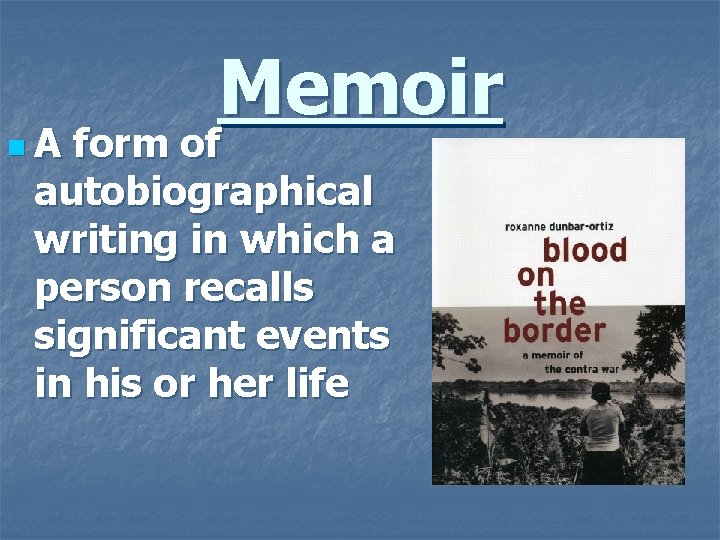
n. A Memoir form of autobiographical writing in which a person recalls significant events in his or her life
Narrative Nonfiction is writing that tells about real people, places, or events. n The information in narrative nonfiction is organized in chronological order. n Three types of narrative nonfiction are biography, autobiography, and certain kinds of essays. n
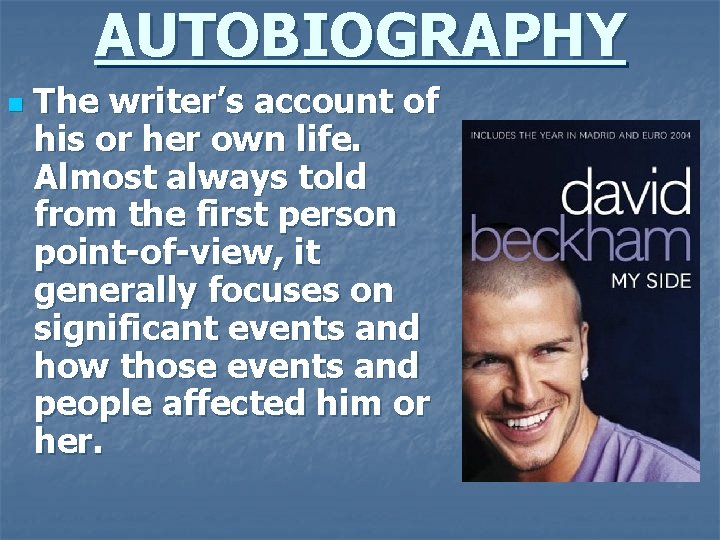
AUTOBIOGRAPHY n The writer’s account of his or her own life. Almost always told from the first person point-of-view, it generally focuses on significant events and how those events and people affected him or her.
BIOGRAPHY An account of a person’s life written by another person. n The writer usually reaches his or her subject to present accurate information, and ideally strives for a balances treatment, highlighting weaknesses as well as strengths, failures as well as achievements. n
ESSAY A brief work of nonfiction that deals with a single subject. n In a formal essay, ideas are developed systematically and impersonally. n An informal essay, which is less rigidly organized and more personal, often includes humor and anecdotes. n
n There are three common types of essays: n EXPOSITORY - essays present or explain information and ideas. n PERSUASIVE - essays present arguments and attempt to convince readers to adopt particular points of view. n PERSONAL - essays express writers’ thoughts and feelings about subjects.
Elements of Storytelling n Fiction, narrative nonfiction, poetry, or drama includes some or all of the following elements of storytelling:
PLOT n The sequence of events in a story.
CONFLICT n. A struggle between opposing forces. n The struggle may exist between people, between people and nature or society, or within a character.
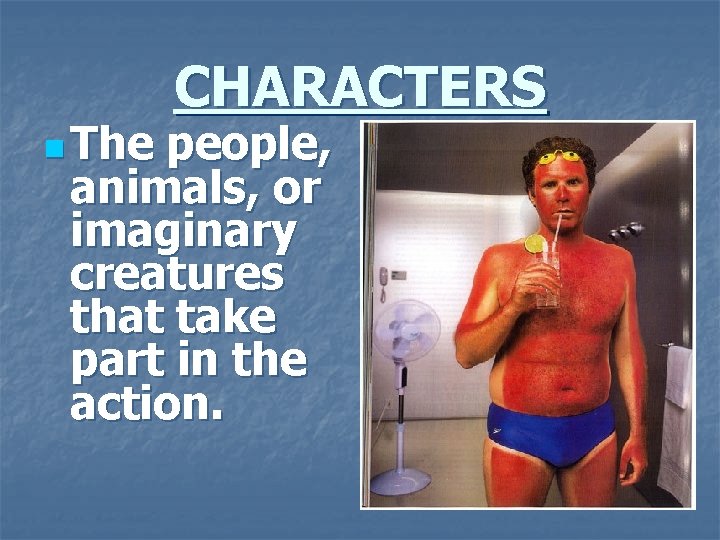
n The CHARACTERS people, animals, or imaginary creatures that take part in the action.
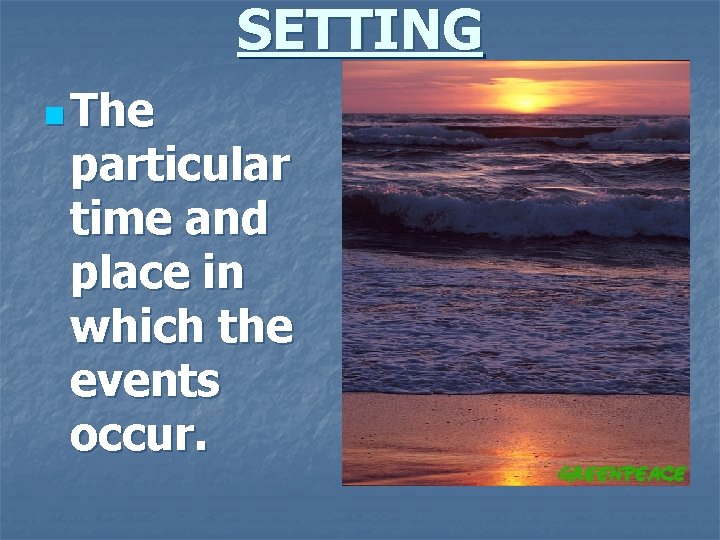
SETTING n The particular time and place in which the events occur.
THEME n Perception about life or human nature that the writer conveys to the reader. It is also known as the lesson learned throughout the story by the character(s) or even the reader.
POINT OF VIEW n Refers to the vantage point from which the story is told.
DIALOGUE n The written conversation between two or more characters.
SUSPENSE n The excitement or tension that readers feel as they get involved in the story and become eager to know the outcome.
FORESHADOWING n A writer’s use of hints or clues to indicate events that will occur later in the narrative.
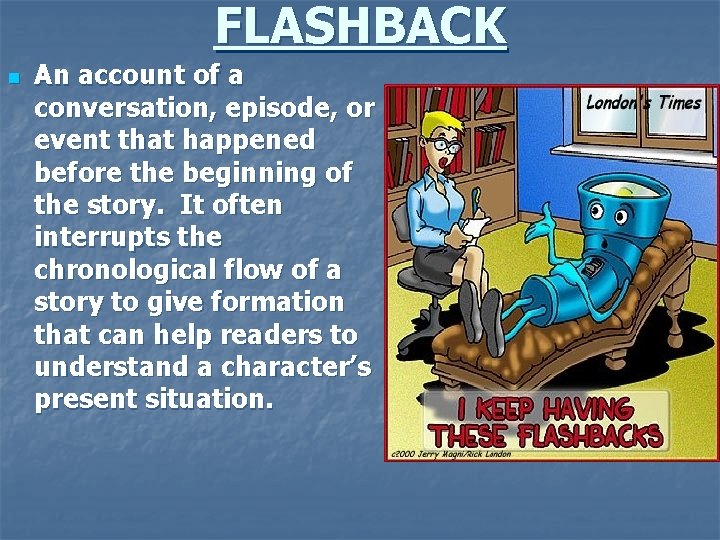
FLASHBACK n An account of a conversation, episode, or event that happened before the beginning of the story. It often interrupts the chronological flow of a story to give formation that can help readers to understand a character’s present situation.
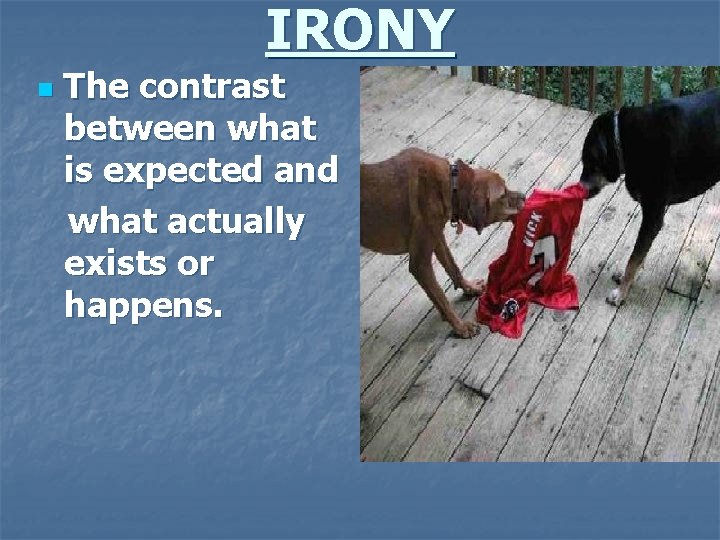
IRONY n The contrast between what is expected and what actually exists or happens.
CHARACTERIZATION Refers to the techniques used by writers to develop characters. A writer may use any or all of the following methods: a) physical description b) a character may reveal his/her own thoughts, feelings, or actions
c) the speech, thoughts, feelings, or actions of other Characters can be used to develop a character d) narrator can make direct comments about a character
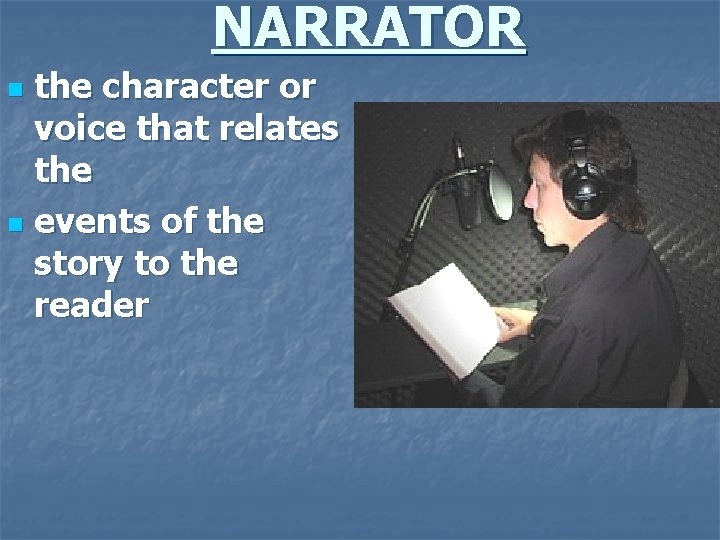
NARRATOR the character or voice that relates the n events of the story to the reader n
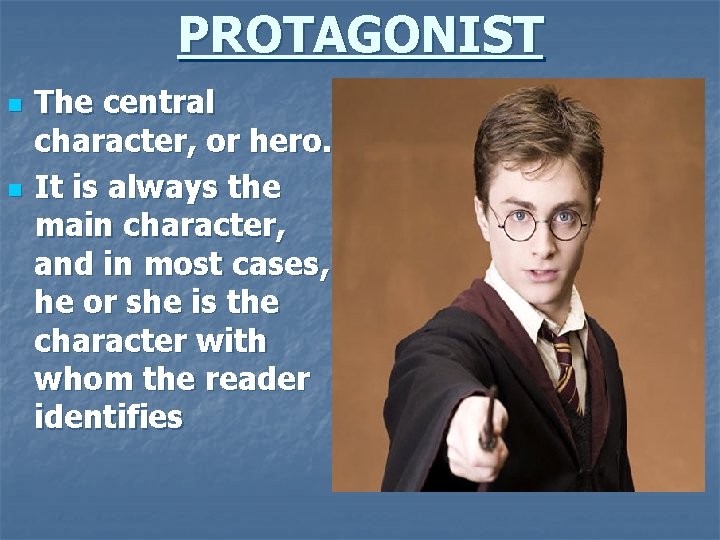
PROTAGONIST n n The central character, or hero. It is always the main character, and in most cases, he or she is the character with whom the reader identifies
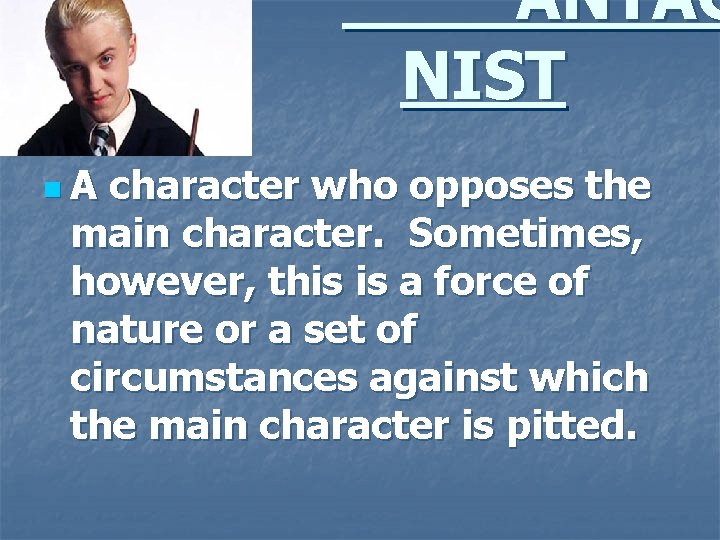
ANTAG NIST n. A character who opposes the main character. Sometimes, however, this is a force of nature or a set of circumstances against which the main character is pitted.
MOOD n The feeling, or atmosphere, that a writer creates for the reader. It is intended to shape the reader’s emotional response to a work.
TONE n. The attitude a writer has toward his/her subject.
n. A SYMBOL person, a place, an activity, or an object that stands for something beyond itself.
n. An ALLUSION indirect reference to another literary work, or to a famous person, place, or event.
IMAGERY n Consists of descriptive words and phrases that re -create sensory experiences for the reader.
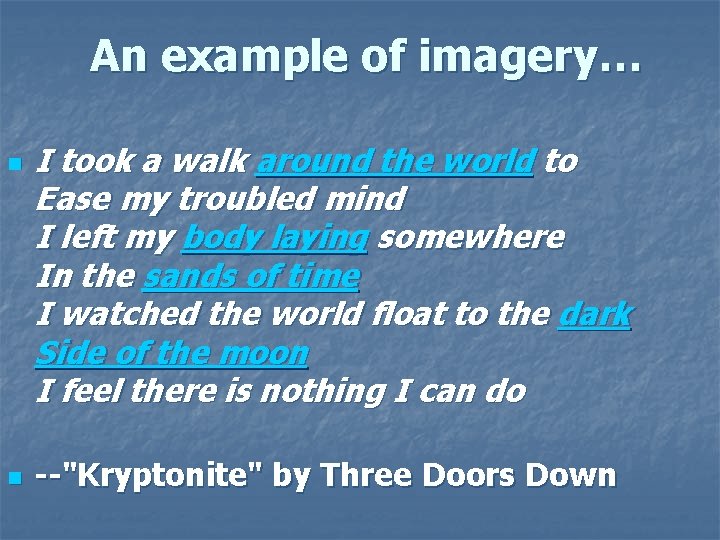
An example of imagery… n n I took a walk around the world to Ease my troubled mind I left my body laying somewhere In the sands of time I watched the world float to the dark Side of the moon I feel there is nothing I can do --"Kryptonite" by Three Doors Down
PLOT DEVELOPMENT n PLOT is the chain of related events that take place in a story. A plot is almost always built around a conflict. Most plots include these stages of development:
EXPOSITION ngives background information about characters, conflict, and setting
NARRATIVE HOOK n the point at which the author catches the reader’s attention – the reader becomes aware of the main character’s problem.
RISING ACTION n where the suspense builds because complications arise that make the conflict more difficult for the main character to resolve.
CLIMAX na turning point in the action when the reader’s interest reaches its highest point.
FALLING ACTION and RESOLUTION where the conflict ends and loose ends are tied up.
TYPES OF CONFLICT
EXTERNAL n conflicts involve a character pitted against an outside force, such as nature, a physical obstacle, or another character. A character may even find him/herself pitted against a supernatural force
INTERNAL n one that occurs inside the character; the character must choose between two courses of action.
TYPES OF IRONY
n Irony is the contrast between what is expected to happen and what actually exists or happens. There are three types of irony:
SITUATIONAL n the contrast between what a character or the reader expects to happen, and what actually happens.
VERBAL n when someone says one thing but means another. A common form of this irony is sarcasm.
DRAMATIC n the contrast between what a character knows and what the reader or audience knows.
POINT OF VIEW n Point of View refers to the vantage point from which a story is told. Point of view determines the overall tone of a story, how much the reader learns about the characters, and the reader’s opinion of the characters. Fill in the chart below with information about the three points of view that writers use most.
n First Person n Third Person Limited n Third Person Omniscient