
Types of Linear Plots can be told in
Types of Linear Plots can be told in: Chronological Order. Events told in the time order they actually happened. Flashback- When the character goes back to an event that happened earlier in time.
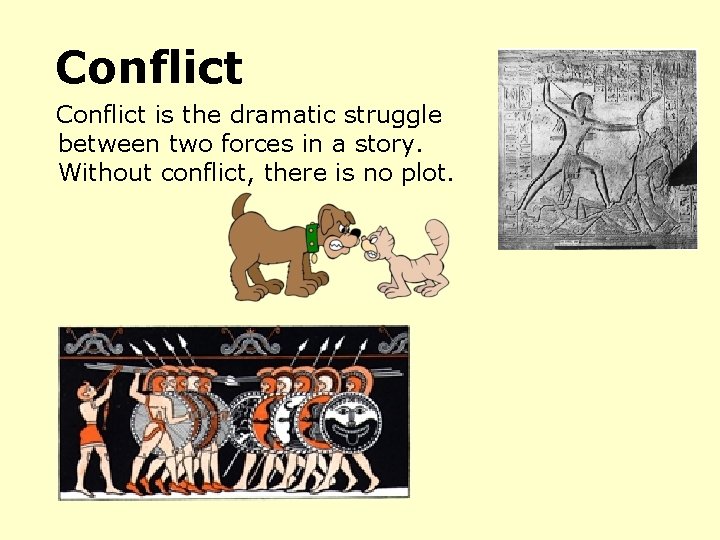
Conflict is the dramatic struggle between two forces in a story. Without conflict, there is no plot.
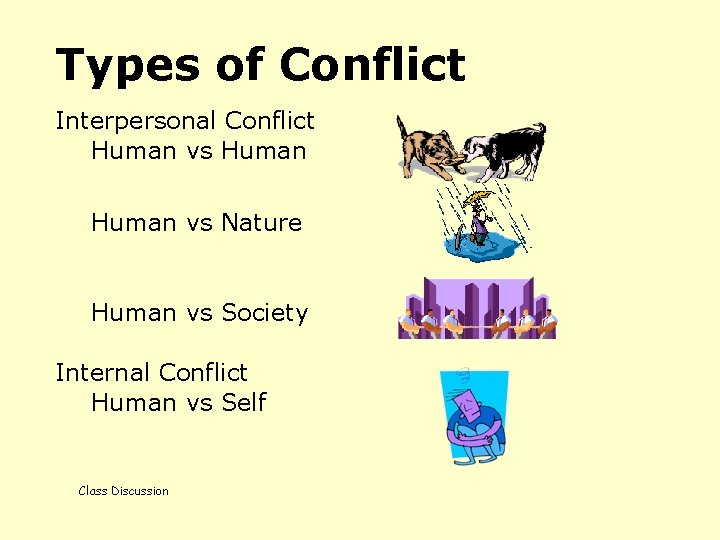
Types of Conflict Interpersonal Conflict Human vs Nature Human vs Society Internal Conflict Human vs Self Class Discussion
Characters • The people, animals, or other beings that take part in the stories events/plot. • Protagonist: The main character in a story • Antagonist: A character or force in conflict with the main character • Round Character: A fully developed character with many traits (strengths and weaknesses) • Flat Character: An underdeveloped character • Dynamic Character: A character who grows and changes throughout story • Static Character: A character who does not change in story
Shrek Characters • Protagonist: Shrek • Antagonist: Lord Farquaad (stands in his way…kills ogres and tries to keep Shrek and Fiona apart. • Shrek is a dynamic character because he changes throughout the story: he becomes “softer” and lets people into his life. • Shrek is round because we see his strengths and weaknesses: he seems like a real person! Class Discussion
Boy of the Painted Cave • Protagonist: _______ • Antagonist: _______ • Round Character(s): • Flat Character(s): • Dynamic Character: • Static Character: Whole Class Activity
Characterization Methods • Direct • Indirect – Author – what others description say about the stated character – what the – how others character says react – what the – implied character does Class Discussion
Setting • The time and place of a story’s events.
Theme • The message/lesson the story conveys • What are the big ideas? What lesson can be learned? – : Shrek: accepting oneself, true beauty is not external
Point of view: who is telling the story First person: a person inside the story is telling it Major: a main character is telling it Minor: a minor character is telling it Narrator: a person is relating what happened to others
Point of view Third person: a person outside of the story is telling it Omniscient: “All knowing” Limited omniscient: we follow around one or two characters knowing what they do and think
Other terms • tone: the author’s attitude toward the work (happy, sad, scary, suspenseful) • mood/atmosphere: the emotional effect created by a work – Edgar Allen Poe’s stories create a scary/intense/feeling in the reader… Class discussion
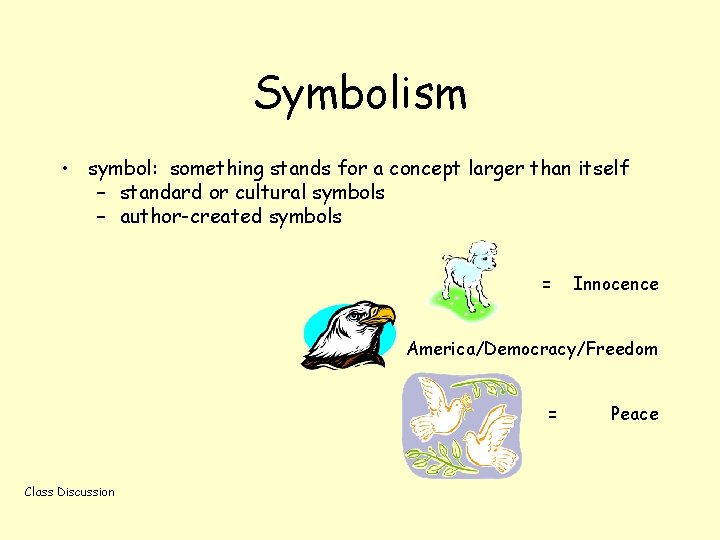
Symbolism • symbol: something stands for a concept larger than itself – standard or cultural symbols – author-created symbols = = America/Democracy/Freedom = Class Discussion Innocence Peace
More terms • Foreshadowing: hints or clues of what is to come • Imagery: painting pictures with words • Flashback: going back to past events • Style/Diction: the author’s manner of writing and word choice. – S. E. Hinton uses a lot of slang to make The Outsiders more realistic to teenage talk.
- Slides: 14