
Types of Joints And how they move Joints
- Slides: 19
Types of Joints And how they move
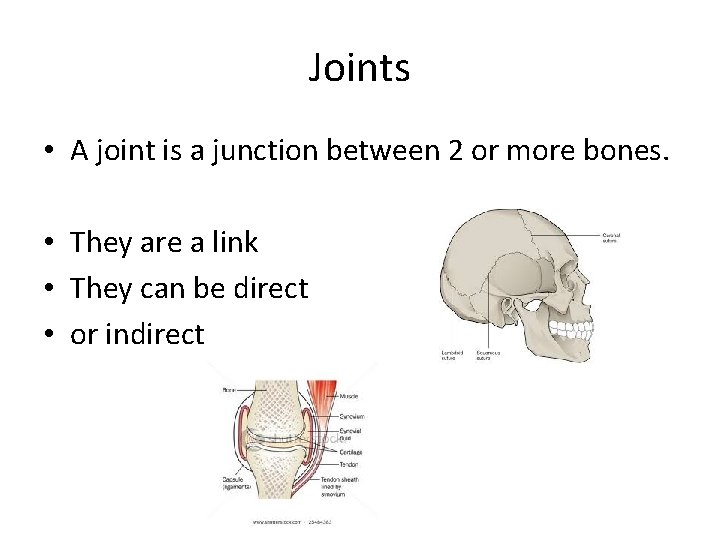
Joints • A joint is a junction between 2 or more bones. • They are a link • They can be direct • or indirect
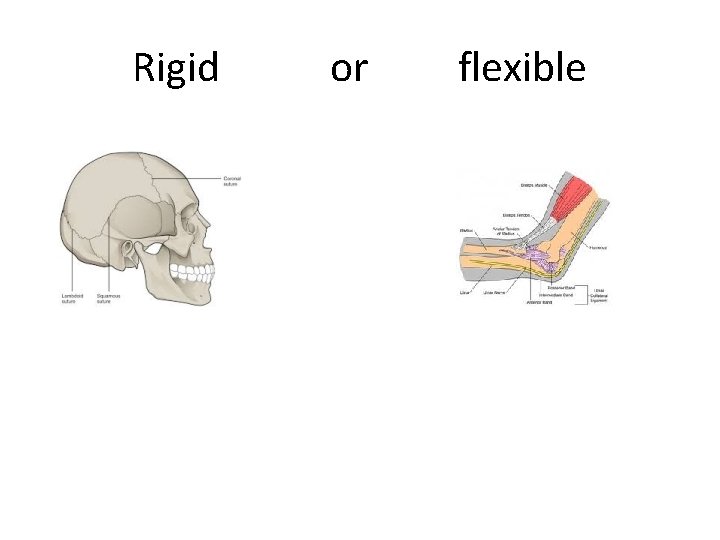
Rigid or flexible
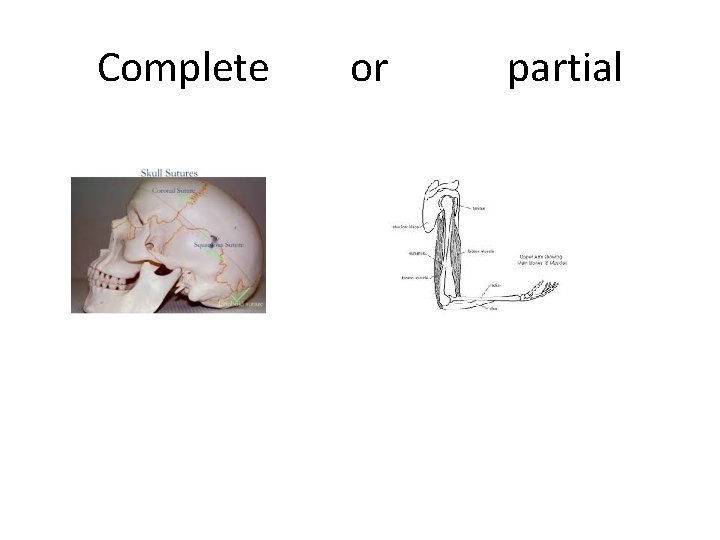
Complete or partial
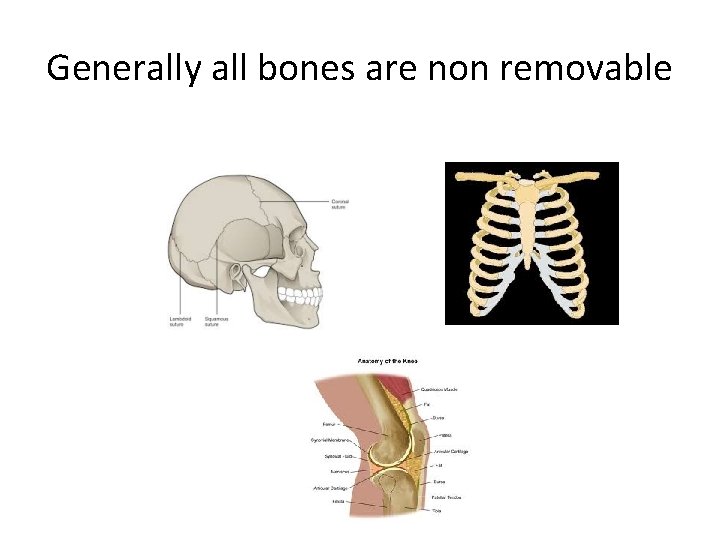
Generally all bones are non removable
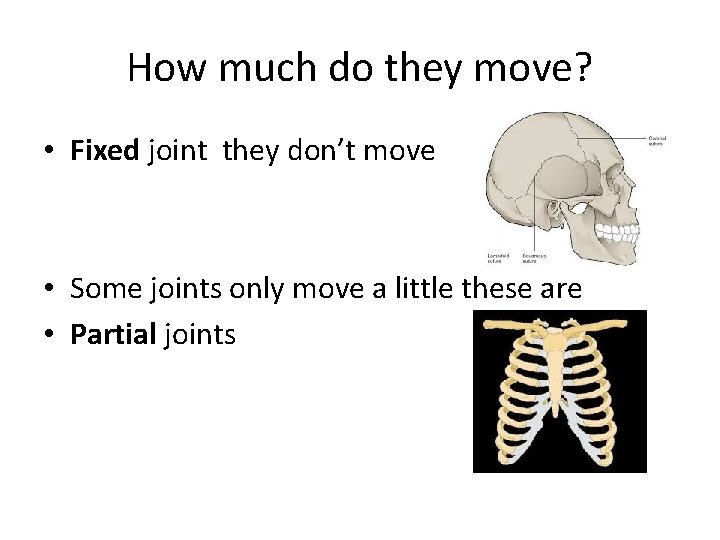
How much do they move? • Fixed joint they don’t move • Some joints only move a little these are • Partial joints
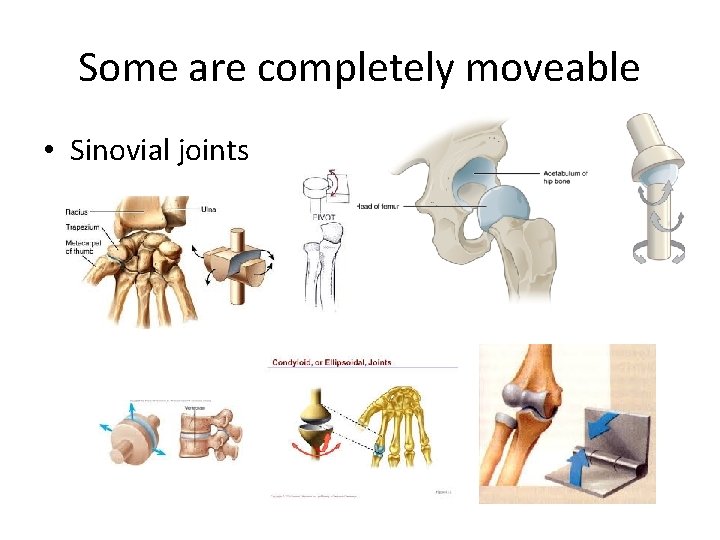
Some are completely moveable • Sinovial joints
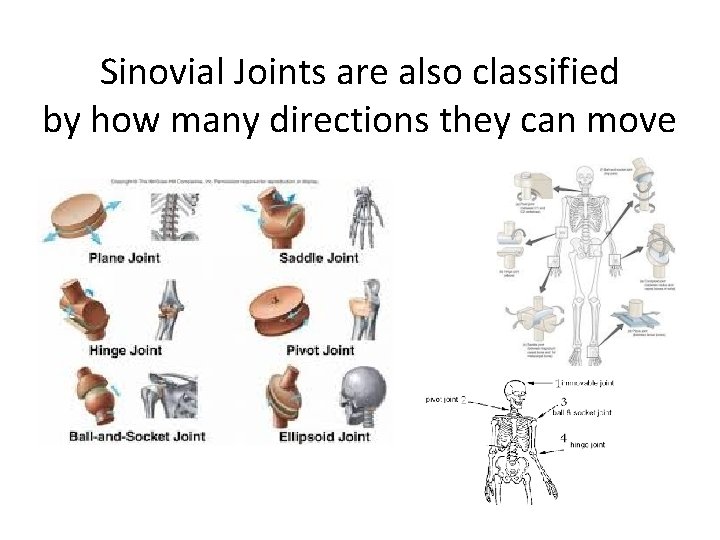
Sinovial Joints are also classified by how many directions they can move
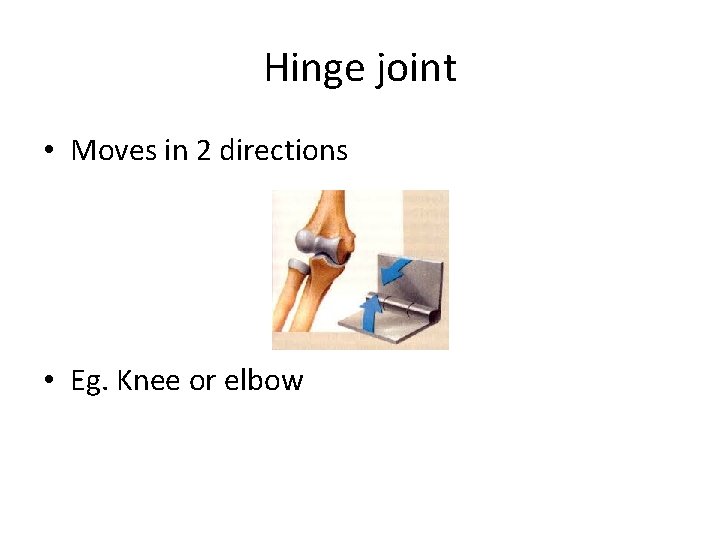
Hinge joint • Moves in 2 directions • Eg. Knee or elbow
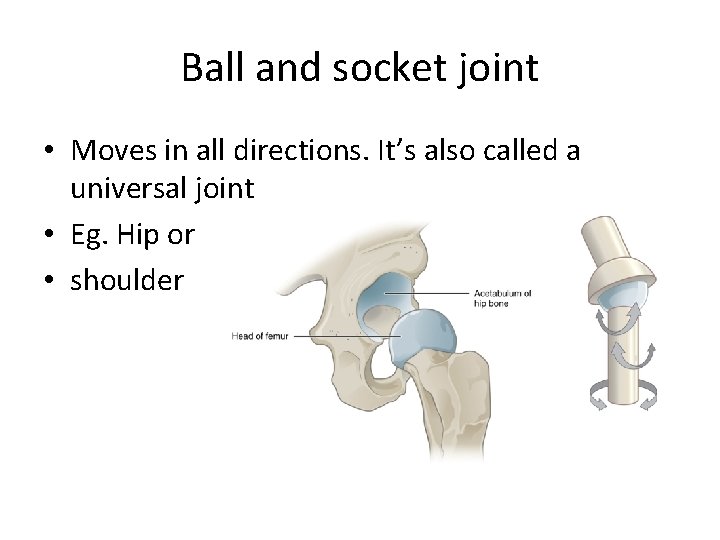
Ball and socket joint • Moves in all directions. It’s also called a universal joint • Eg. Hip or • shoulder
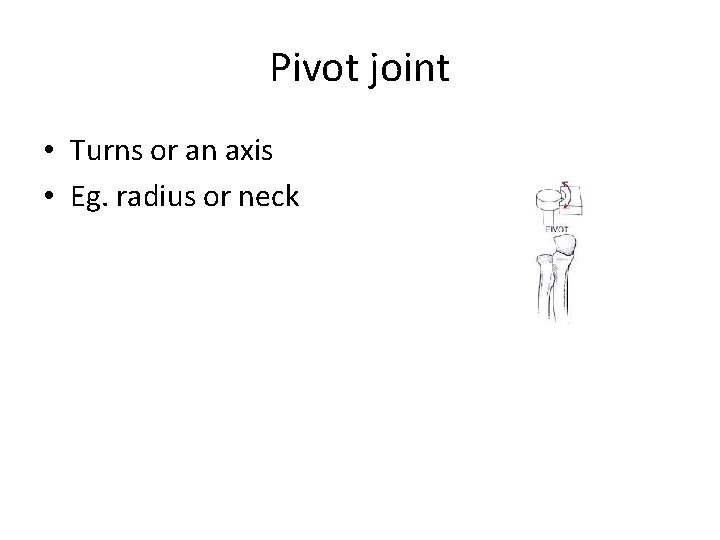
Pivot joint • Turns or an axis • Eg. radius or neck
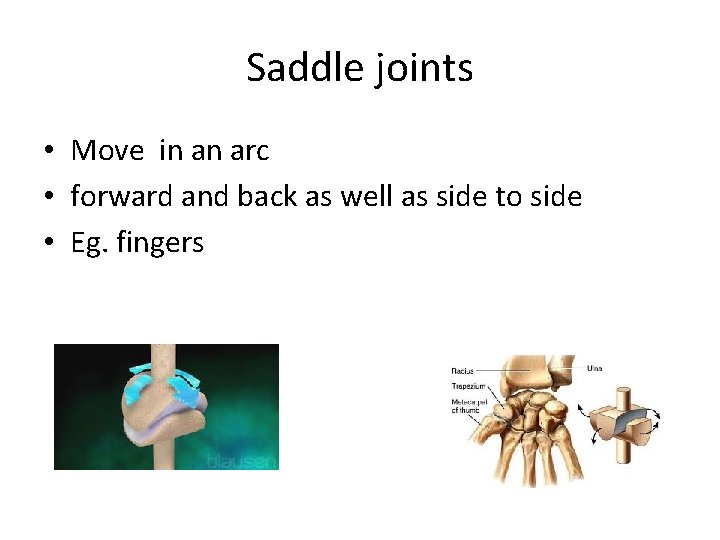
Saddle joints • Move in an arc • forward and back as well as side to side • Eg. fingers
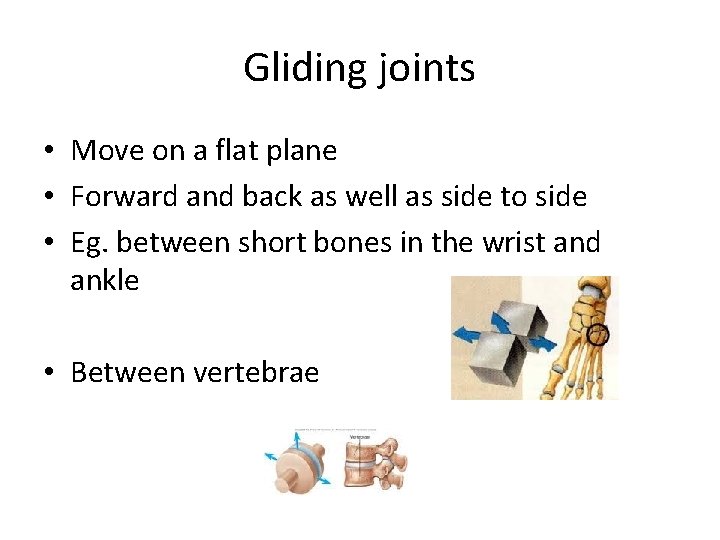
Gliding joints • Move on a flat plane • Forward and back as well as side to side • Eg. between short bones in the wrist and ankle • Between vertebrae
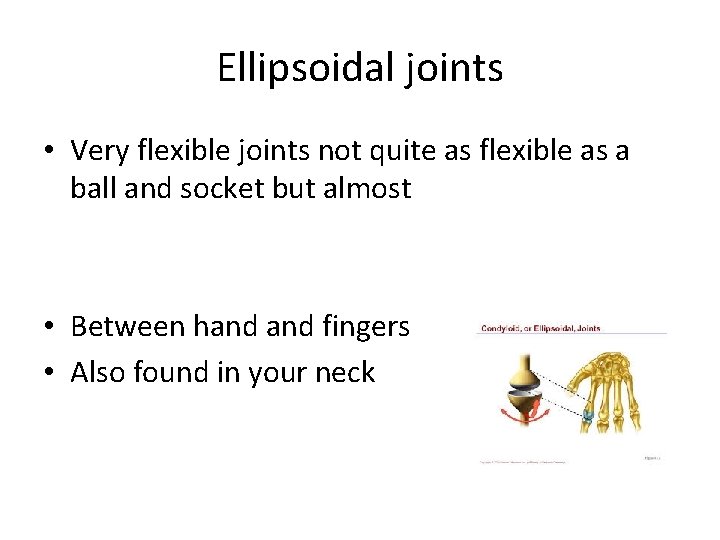
Ellipsoidal joints • Very flexible joints not quite as flexible as a ball and socket but almost • Between hand fingers • Also found in your neck
The relative of movement of the joint is also important • • • Muscles can only contract to move a joint. Another muscle moves it back. Muscle work in antagonistic (opposite) pairs Joints can flex or extend Joints can abduct or adduct Joints can rotate in two directions
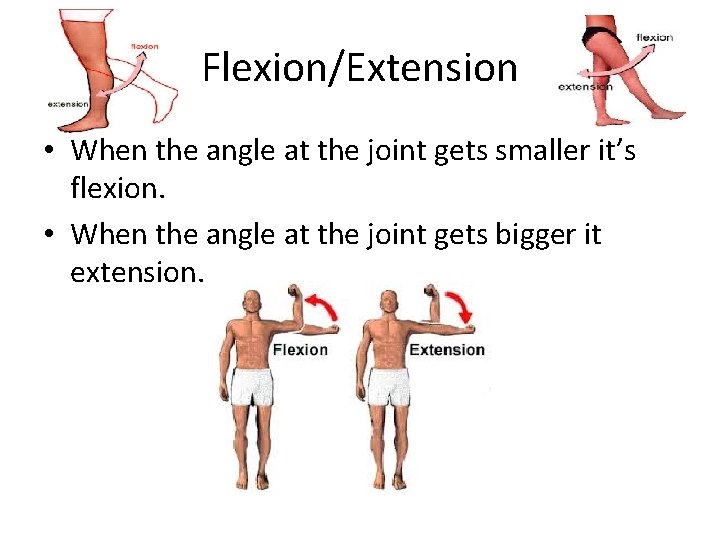
Flexion/Extension • When the angle at the joint gets smaller it’s flexion. • When the angle at the joint gets bigger it extension.
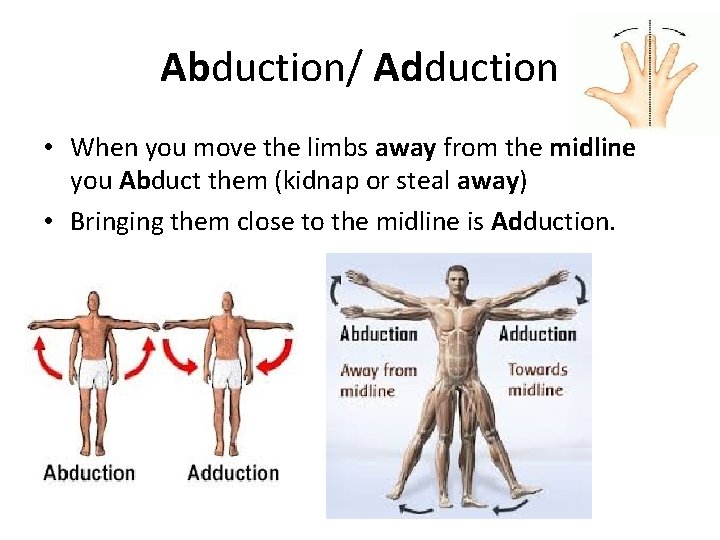
Abduction/ Adduction • When you move the limbs away from the midline you Abduct them (kidnap or steal away) • Bringing them close to the midline is Adduction.
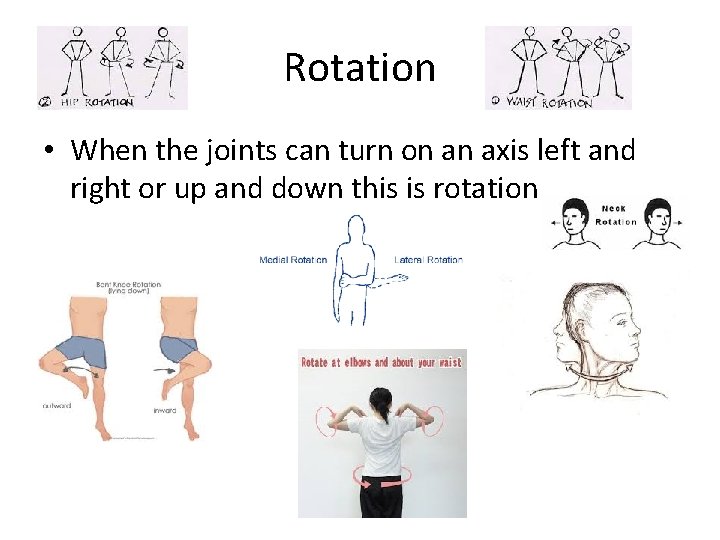
Rotation • When the joints can turn on an axis left and right or up and down this is rotation
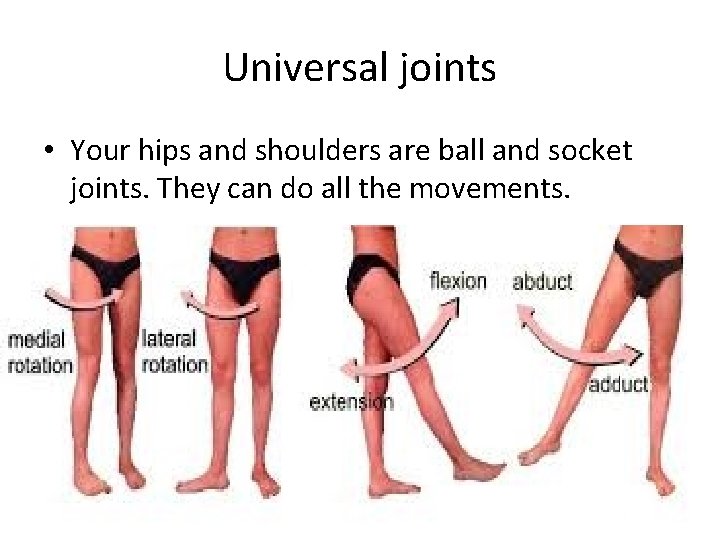
Universal joints • Your hips and shoulders are ball and socket joints. They can do all the movements.