
TYPES OF ISOLATION 1 Organic Isolation Must purify

- Slides: 25
TYPES OF ISOLATION
1. Organic Isolation Must purify DNA by removing contaminants. an organic mixture of phenol and chloroform. To avoid RNA contamination add RNAse, enzyme that degrades RNA.
1. Organic Isolation Cont…. . Phenol/Chloroform Biphasic Hydrophobic layer on bottom has cell debris. Hydrophilic layer on top has dissolved DNA Remove top layer, add cold ethanol, DNA precipitates out.
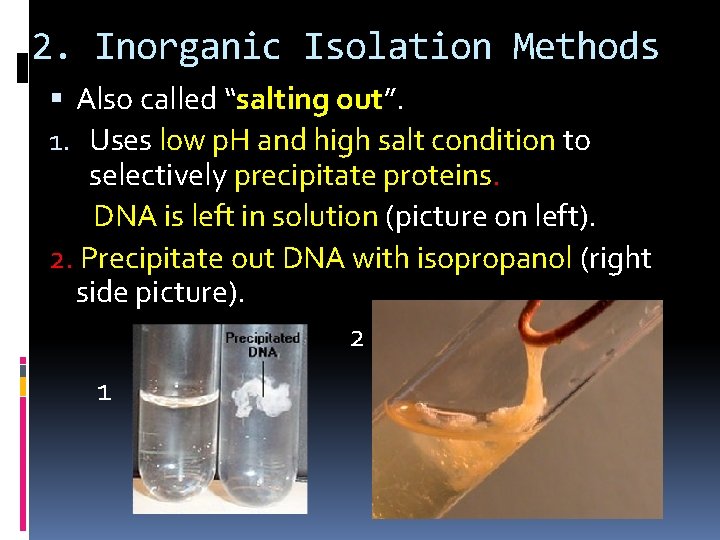
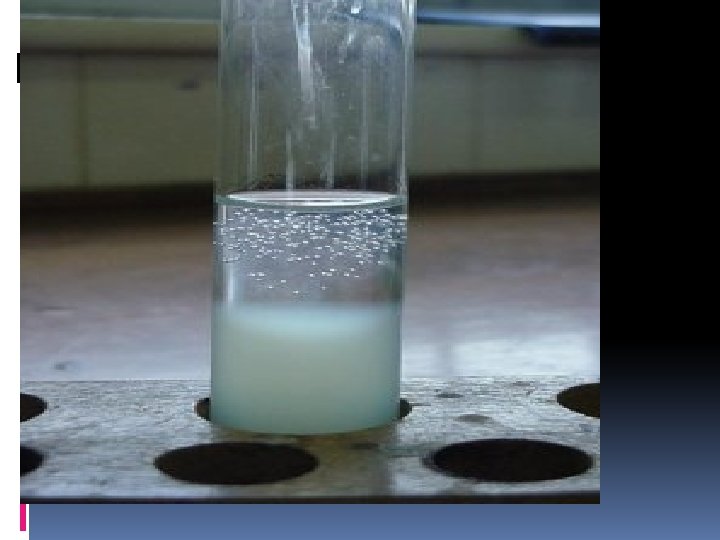
2. Inorganic Isolation Methods Also called “salting out”. 1. Uses low p. H and high salt condition to selectively precipitate proteins. DNA is left in solution (picture on left). 2. Precipitate out DNA with isopropanol (right side picture). 2 1
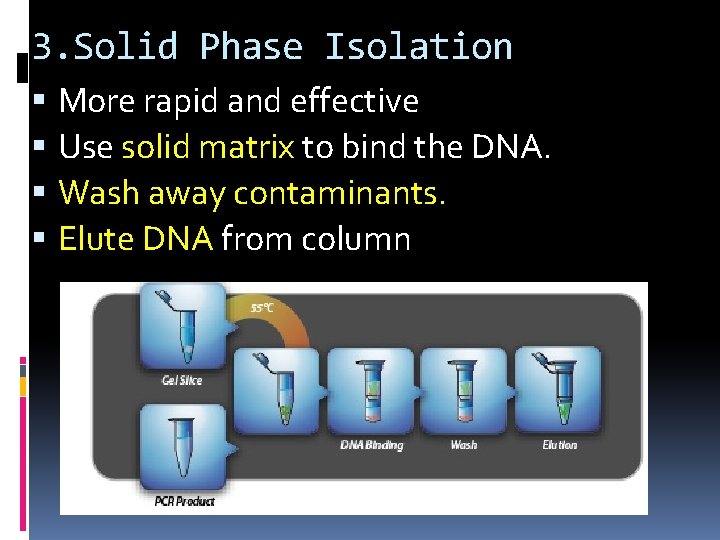
3. Solid Phase Isolation More rapid and effective Use solid matrix to bind the DNA. Wash away contaminants. Elute DNA from column
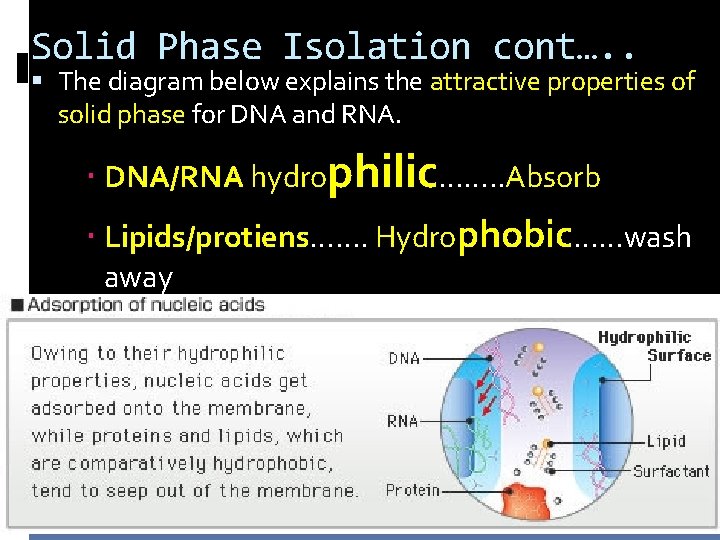
Solid Phase Isolation cont…. . The diagram below explains the attractive properties of solid phase for DNA and RNA. DNA/RNA hydrophilic……. . Absorb Lipids/protiens……. Hydrophobic……wash away
Isolation of Mitochondrial DNA is passed from generation to generation along the maternal lineage. Centrifugation to separate out Lyse Precipitate with cold ethanol.
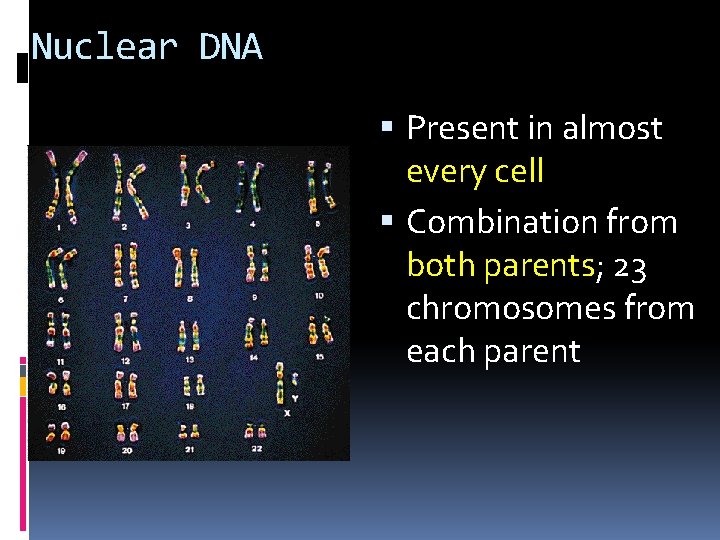
Nuclear DNA Present in almost every cell Combination from both parents; 23 chromosomes from each parent
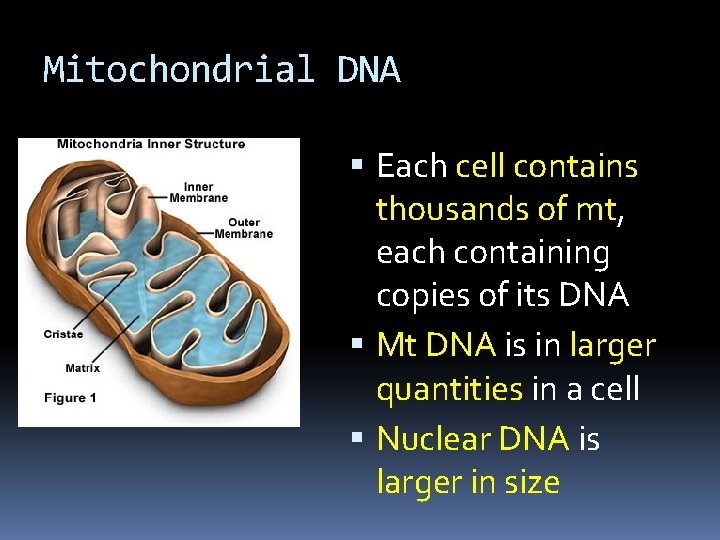
Mitochondrial DNA Each cell contains thousands of mt, each containing copies of its DNA Mt DNA is in larger quantities in a cell Nuclear DNA is larger in size
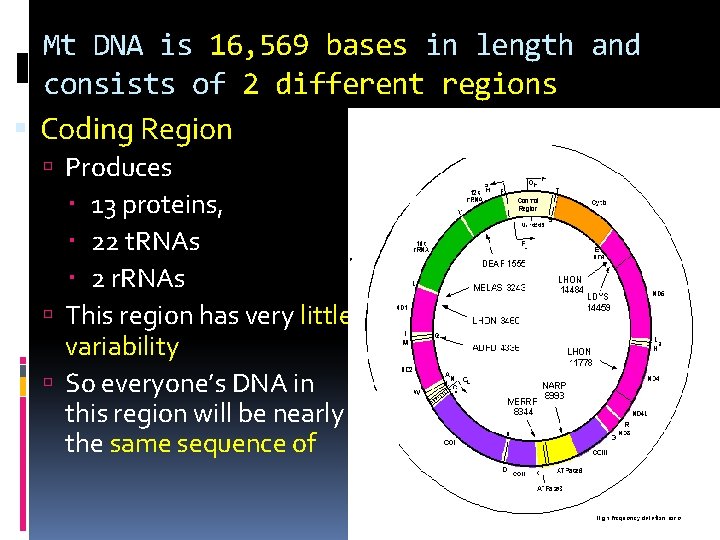
Mt DNA is 16, 569 bases in length and consists of 2 different regions Coding Region Produces 13 proteins, 22 t. RNAs 2 r. RNAs This region has very little variability So everyone’s DNA in this region will be nearly the same sequence of
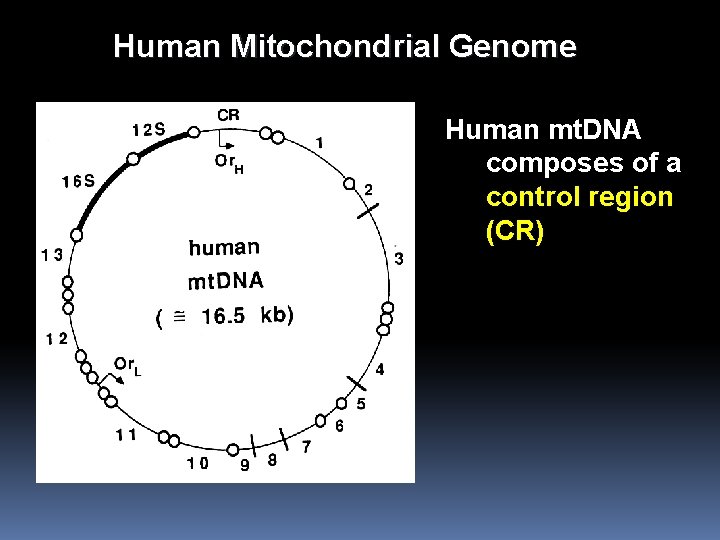
Human Mitochondrial Genome Human mt. DNA composes of a control region (CR)
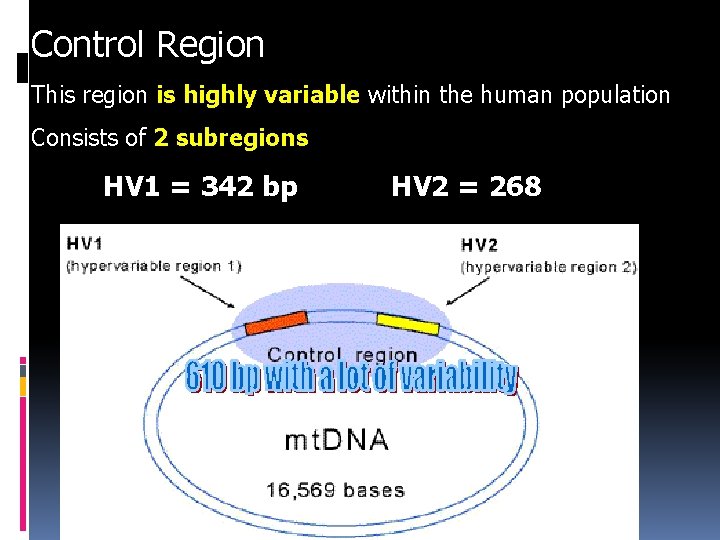
Control Region This region is highly variable within the human population Consists of 2 subregions HV 1 = 342 bp HV 2 = 268
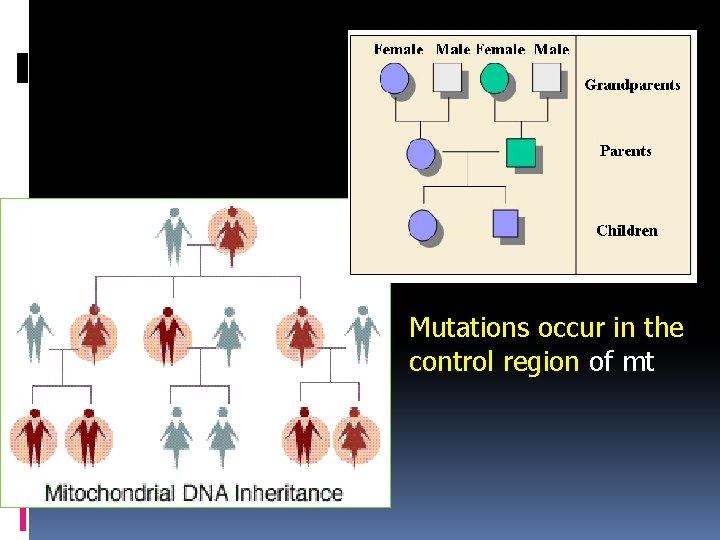
Mutations occur in the control region of mt
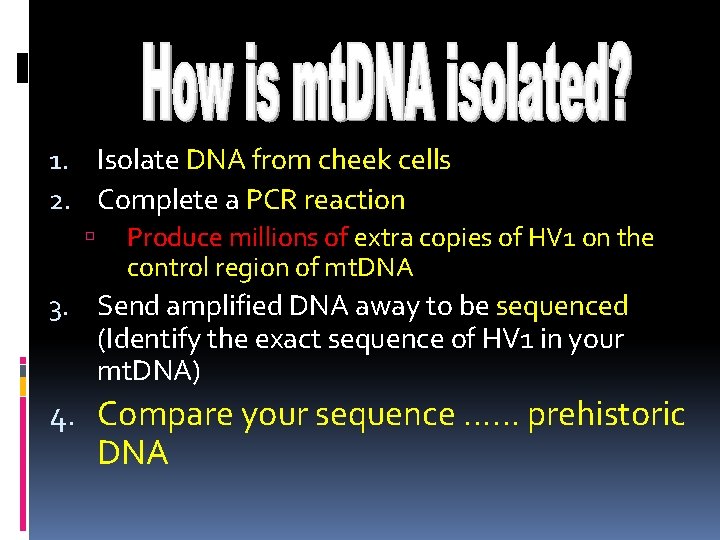
1. Isolate DNA from cheek cells 2. Complete a PCR reaction Produce millions of extra copies of HV 1 on the control region of mt. DNA 3. Send amplified DNA away to be sequenced (Identify the exact sequence of HV 1 in your mt. DNA) 4. Compare your sequence …… prehistoric DNA
Isolation of RNA Requires STRICT precautions to avoid sample degradation.
RNAses RNases are naturally occurring enzymes that degrade RNA Common laboratory contaminant (from bacterial and human sources) Also released from cellular compartments during isolation of RNA from biological samples Can be difficult to inactivate
RNAses cont…… RNAses are enzymes which are small proteins that can renature and become active. MUST be eliminated or inactivated BEFORE isolation. CRITICAL to have a separate RNAse free area of lab.
Protecting Against RNAse Wear gloves at all times Use RNase-free tubes and pipet tips Use dedicated, RNase-free, chemicals Pre-treat materials with extended heat (180 C for several hours), wash with DEPC-treated water (Di ethyl pyro carbonate) Supplement reactions with RNase inhibitors
Total RNA 80 -90% of total RNA is ribosomal RNA. 2. 5 -5% is messenger RNA
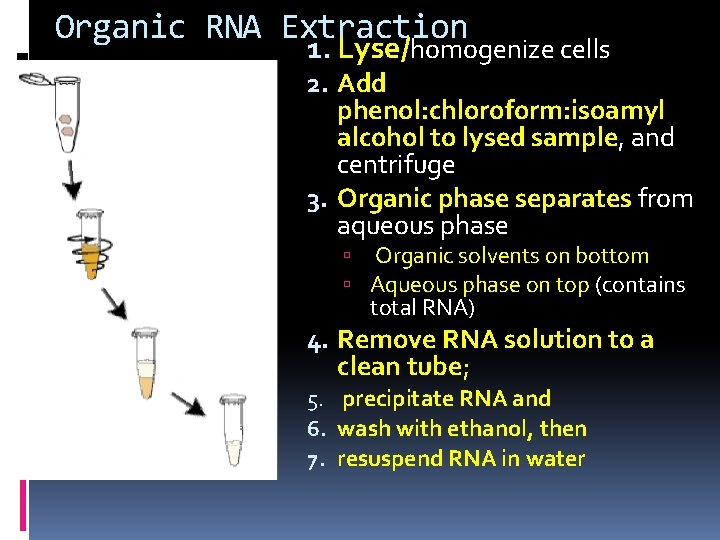
Organic RNA Extraction 1. Lyse/homogenize cells 2. Add phenol: chloroform: isoamyl alcohol to lysed sample, and centrifuge 3. Organic phase separates from aqueous phase Organic solvents on bottom Aqueous phase on top (contains total RNA) 4. Remove RNA solution to a clean tube; 5. precipitate RNA and 6. wash with ethanol, then 7. resuspend RNA in water
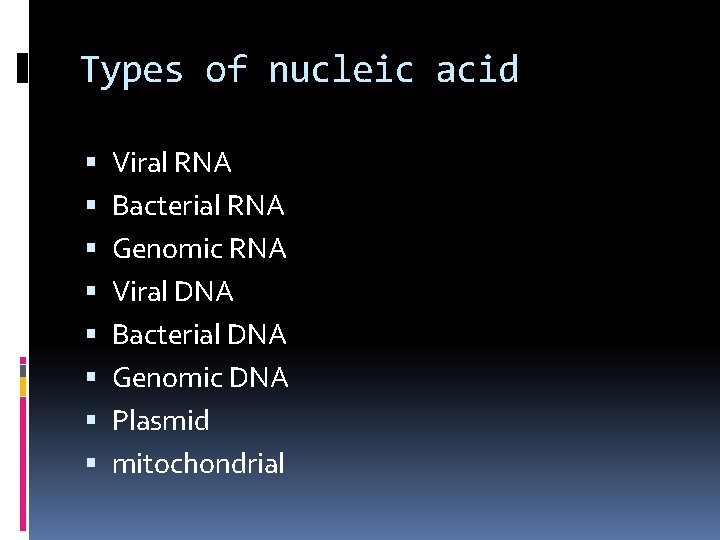
Types of nucleic acid Viral RNA Bacterial RNA Genomic RNA Viral DNA Bacterial DNA Genomic DNA Plasmid mitochondrial
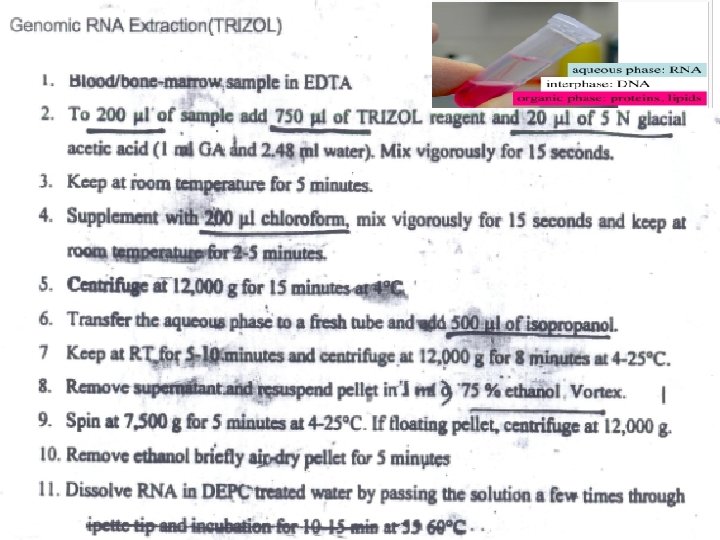
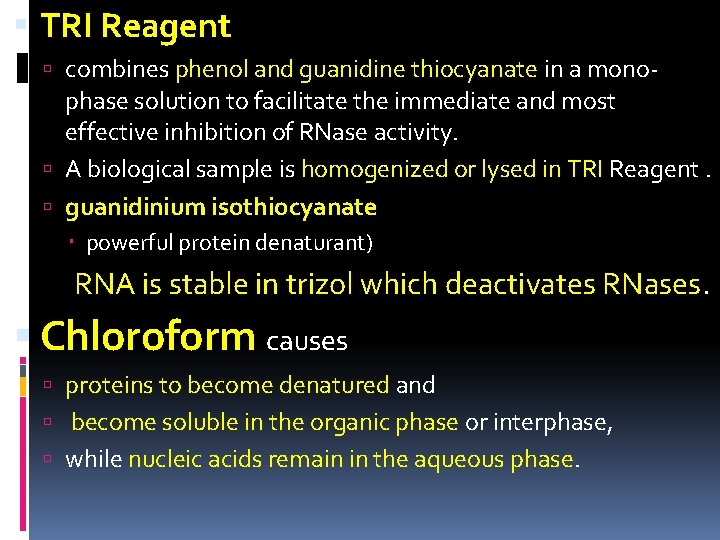
TRI Reagent combines phenol and guanidine thiocyanate in a mono- phase solution to facilitate the immediate and most effective inhibition of RNase activity. A biological sample is homogenized or lysed in TRI Reagent. guanidinium isothiocyanate powerful protein denaturant) RNA is stable in trizol which deactivates RNases. Chloroform causes proteins to become denatured and become soluble in the organic phase or interphase, while nucleic acids remain in the aqueous phase.
Isopropanol RNA is insoluble in isopropanol so it will aggregate together, giving a pellet upon centrifugation. This step also removes alcohol-soluble salt.