
Types of Interactions Among Living Things Ecological Organization
- Slides: 23
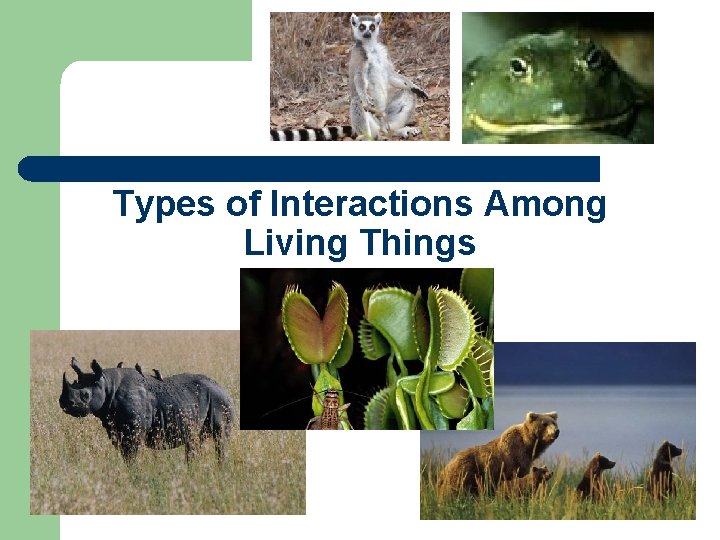
Types of Interactions Among Living Things
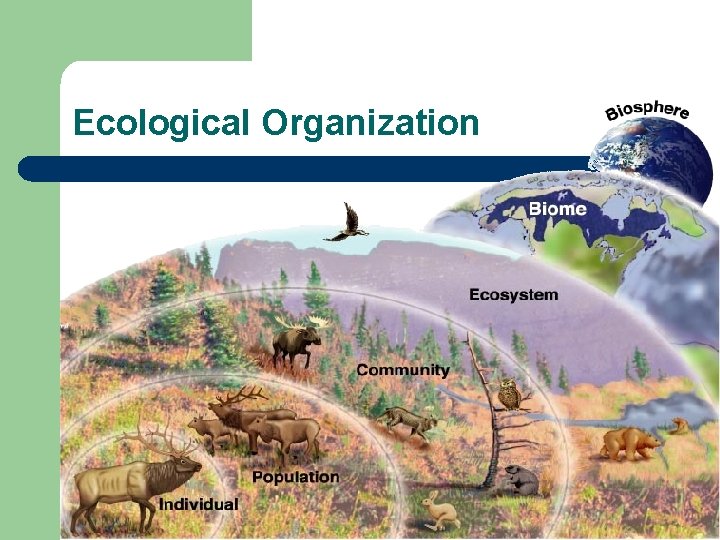
Ecological Organization
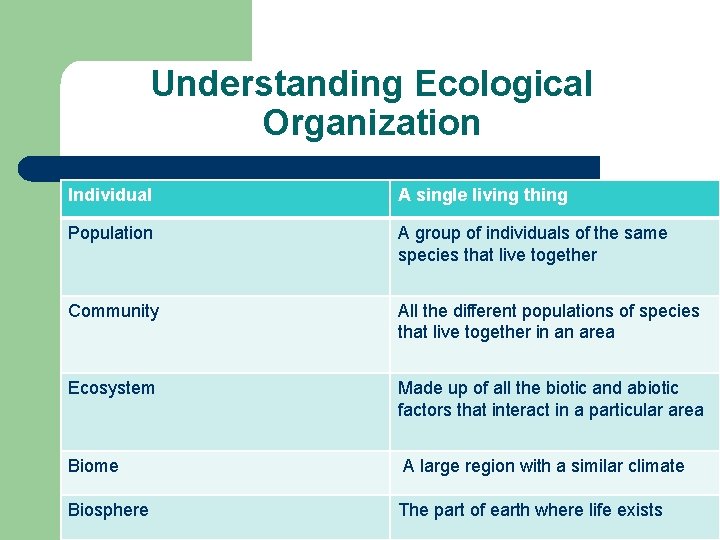
Understanding Ecological Organization Individual A single living thing Population A group of individuals of the same species that live together Community All the different populations of species that live together in an area Ecosystem Made up of all the biotic and abiotic factors that interact in a particular area Biome A large region with a similar climate Biosphere The part of earth where life exists
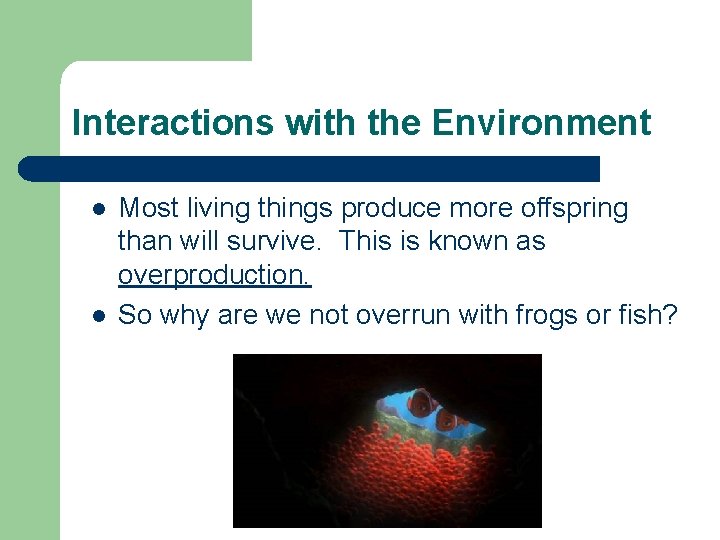
Interactions with the Environment l l Most living things produce more offspring than will survive. This is known as overproduction. So why are we not overrun with frogs or fish?
Limiting Factors l l Organisms interact with the biotic & abiotic factors in their environment. Populations cannot grow without stopping. Limiting factor – a resource that is so scarce that it limits the size of a population. Limits on the amount of: (examples) – – Food Water Living space Other resources
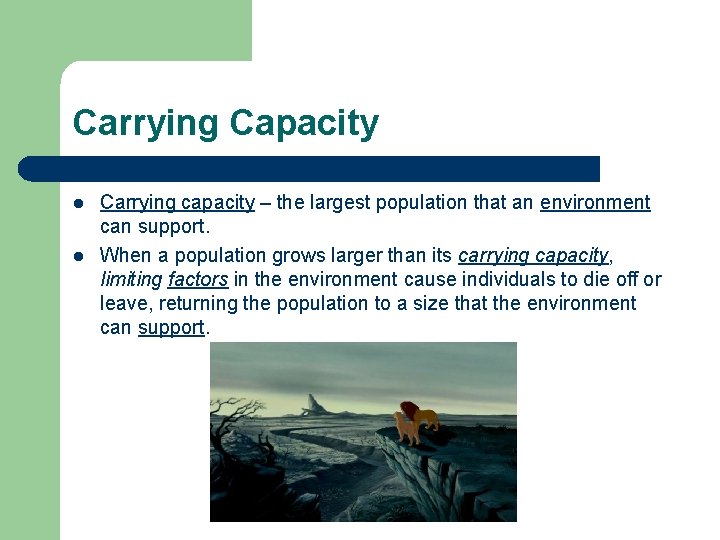
Carrying Capacity l l Carrying capacity – the largest population that an environment can support. When a population grows larger than its carrying capacity, limiting factors in the environment cause individuals to die off or leave, returning the population to a size that the environment can support.
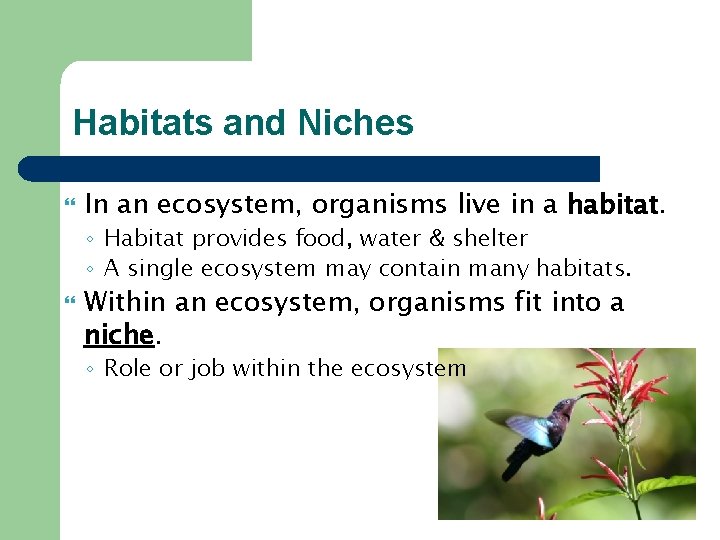
Habitats and Niches In an ecosystem, organisms live in a habitat. ◦ Habitat provides food, water & shelter ◦ A single ecosystem may contain many habitats. Within an ecosystem, organisms fit into a niche. ◦ Role or job within the ecosystem
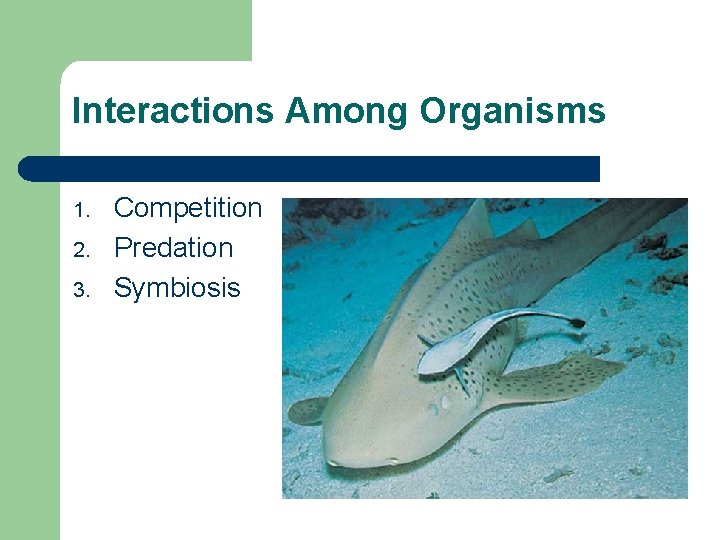
Interactions Among Organisms 1. 2. 3. Competition Predation Symbiosis
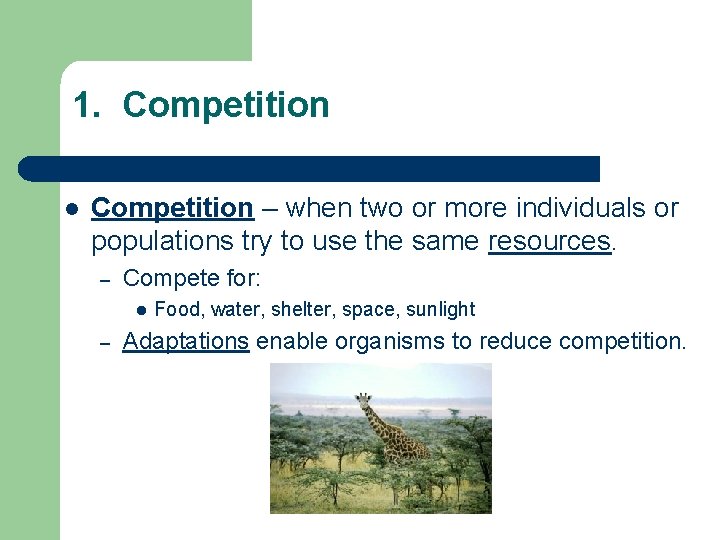
1. Competition l Competition – when two or more individuals or populations try to use the same resources. – Compete for: l – Food, water, shelter, space, sunlight Adaptations enable organisms to reduce competition.
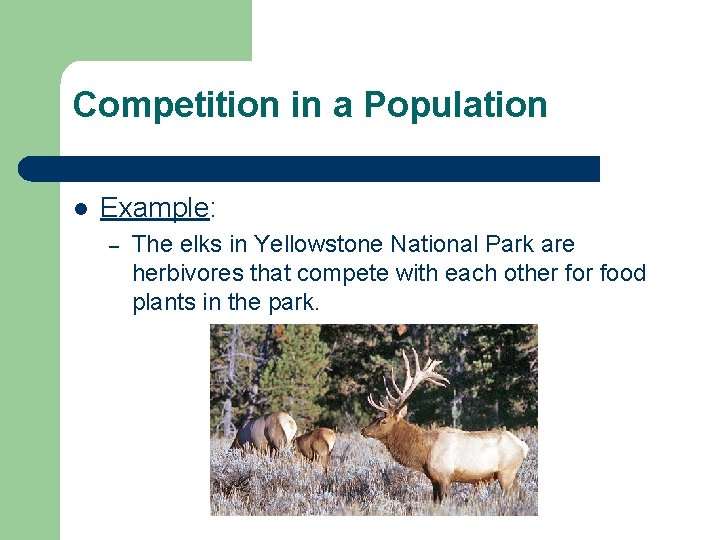
Competition in a Population l Example: – The elks in Yellowstone National Park are herbivores that compete with each other food plants in the park.
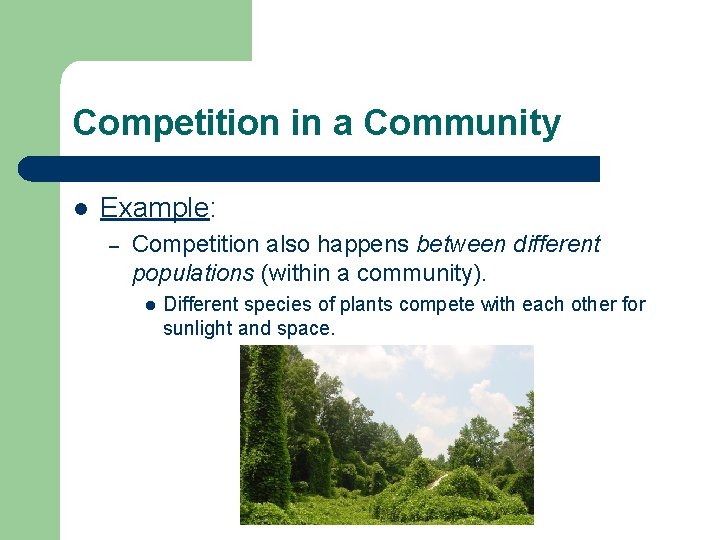
Competition in a Community l Example: – Competition also happens between different populations (within a community). l Different species of plants compete with each other for sunlight and space.
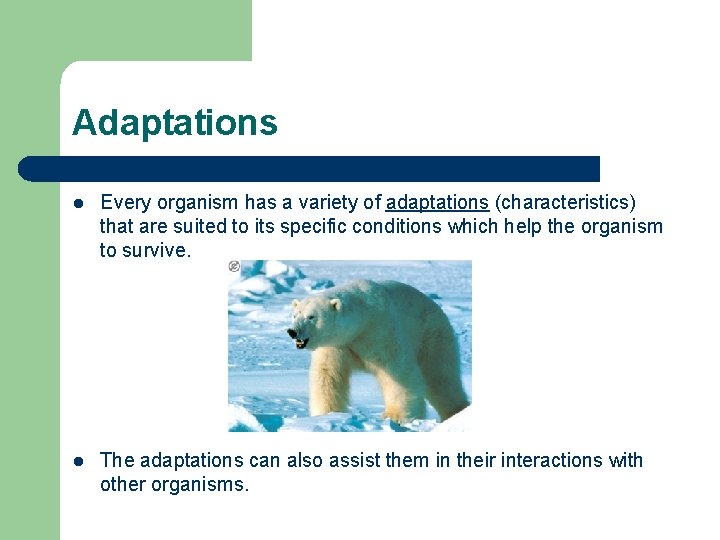
Adaptations l Every organism has a variety of adaptations (characteristics) that are suited to its specific conditions which help the organism to survive. l The adaptations can also assist them in their interactions with other organisms.
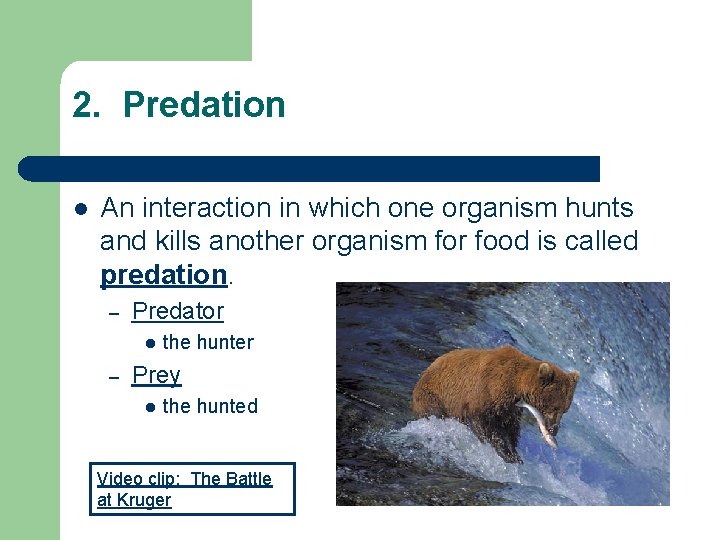
2. Predation l An interaction in which one organism hunts and kills another organism for food is called predation. – Predator l – the hunter Prey l the hunted Video clip: The Battle at Kruger
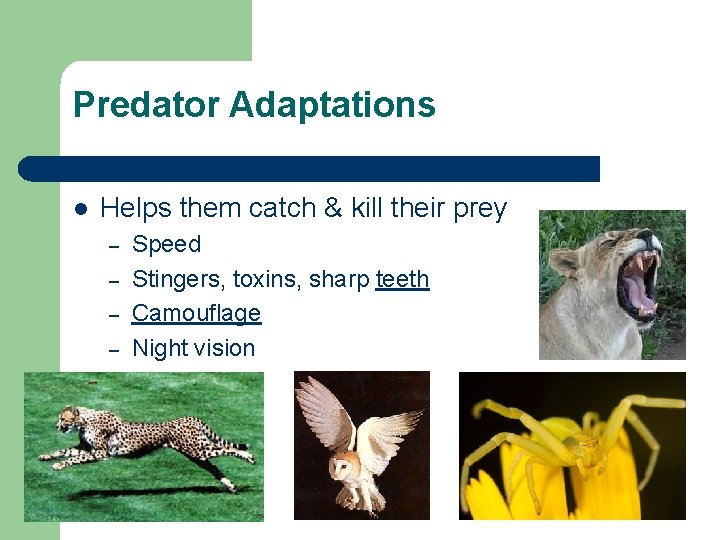
Predator Adaptations l Helps them catch & kill their prey – – Speed Stingers, toxins, sharp teeth Camouflage Night vision
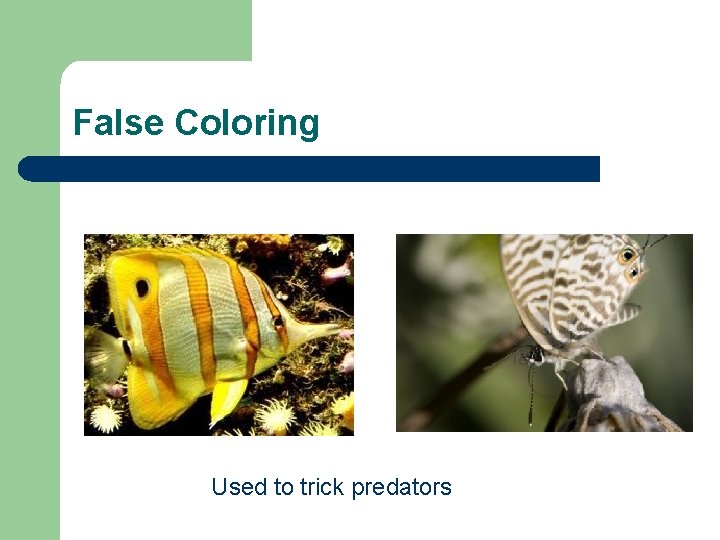
Prey Adaptations l Also known as “defense strategies” to avoid predation: Camouflage 2. Protective coverings 3. Warning coloring 4. Defensive chemicals 5. Mimicry 6. False coloring 1.
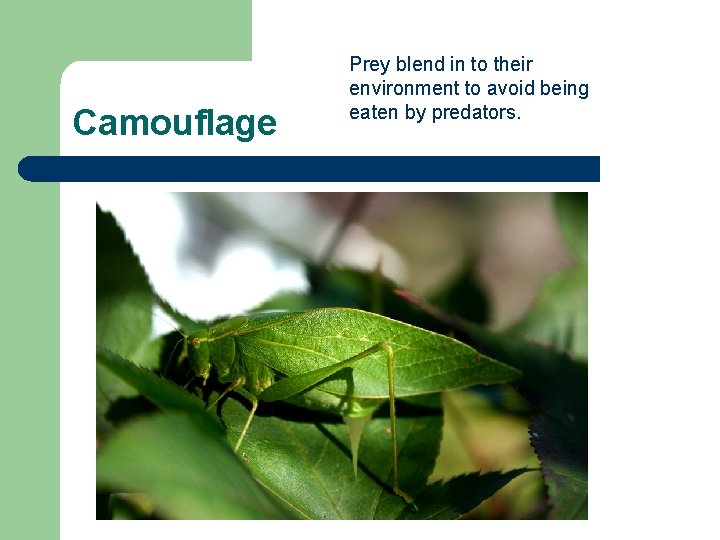
Camouflage Prey blend in to their environment to avoid being eaten by predators.
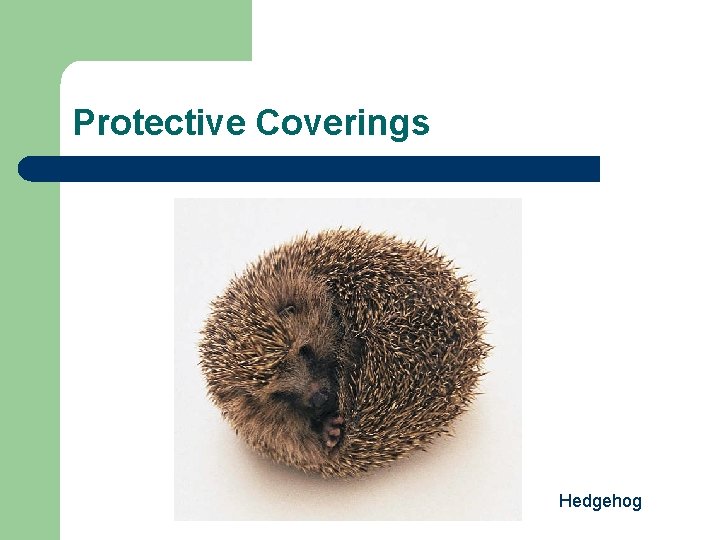
Protective Coverings Hedgehog
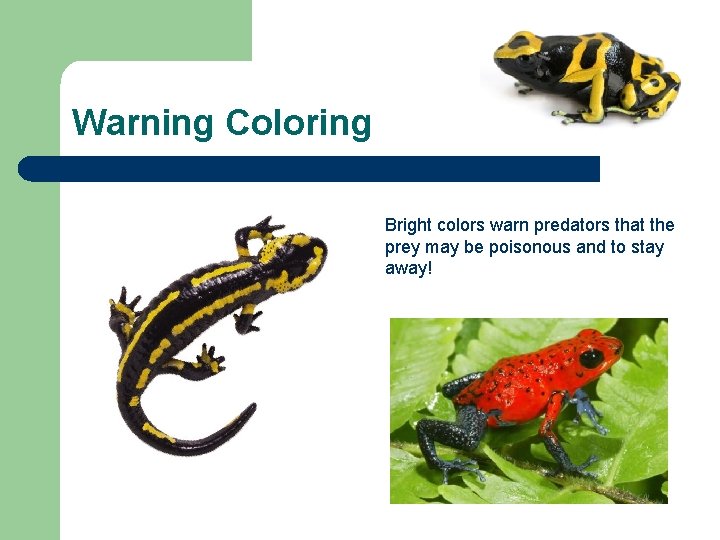
Warning Coloring Bright colors warn predators that the prey may be poisonous and to stay away!
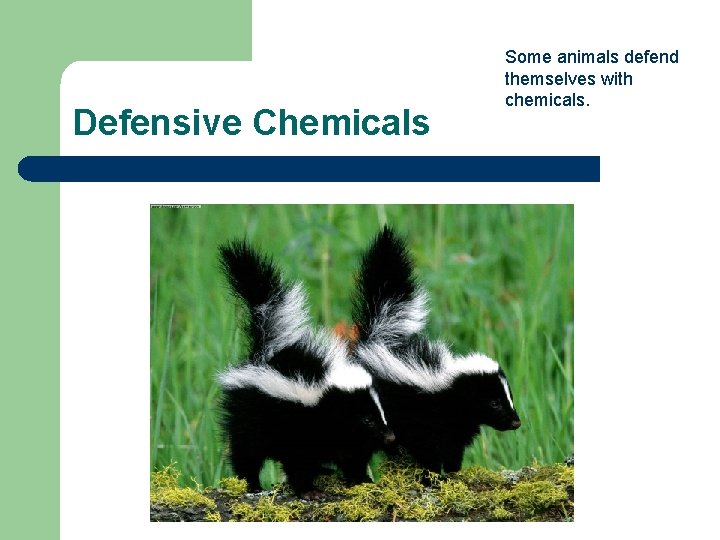
Defensive Chemicals Some animals defend themselves with chemicals.
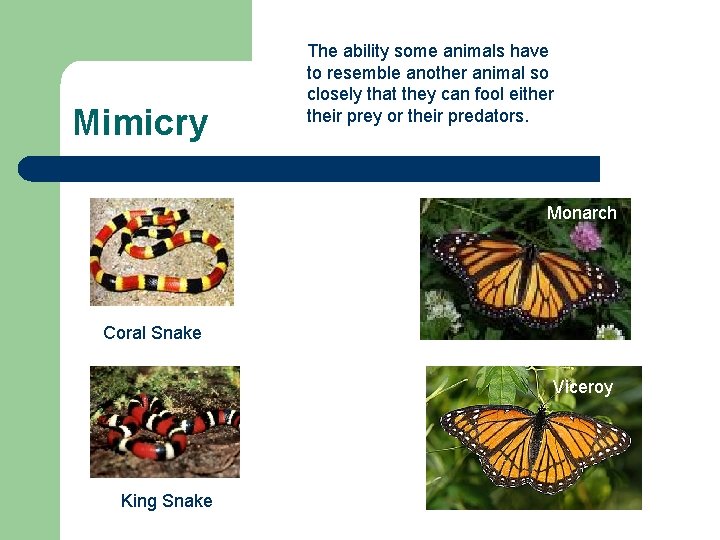
Mimicry The ability some animals have to resemble another animal so closely that they can fool either their prey or their predators. Monarch Coral Snake Viceroy King Snake
False Coloring Used to trick predators
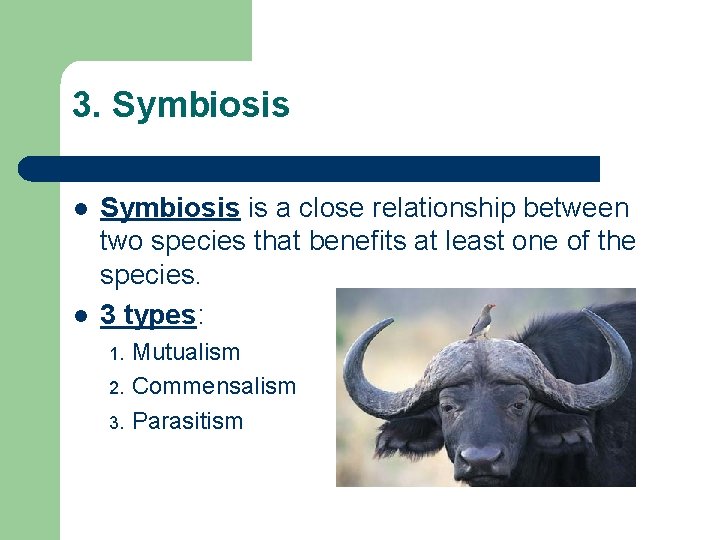
3. Symbiosis l l Symbiosis is a close relationship between two species that benefits at least one of the species. 3 types: Mutualism 2. Commensalism 3. Parasitism 1.
How Wolves change Rivers……. l Video clip