
Types of information Scholarly trade and popular sources
- Slides: 15
Types of information Scholarly, trade, and popular sources Primary and secondary sources
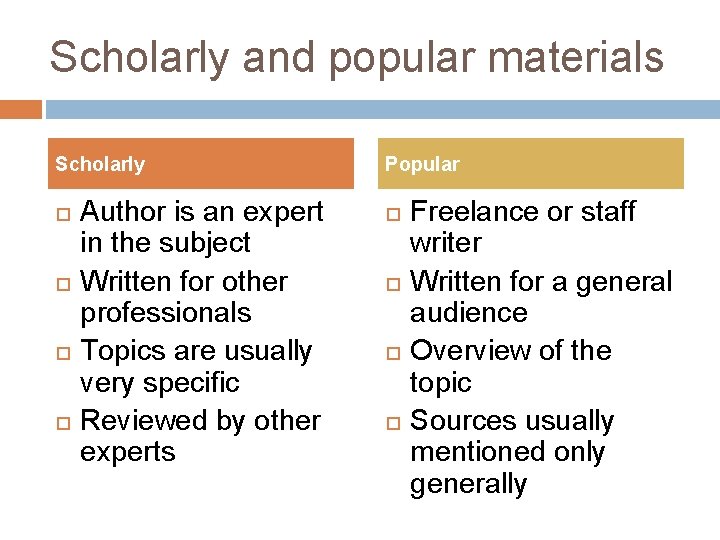
Scholarly and popular materials Scholarly Author is an expert in the subject Written for other professionals Topics are usually very specific Reviewed by other experts Popular Freelance or staff writer Written for a general audience Overview of the topic Sources usually mentioned only generally
Sometimes popular sources are entirely appropriate. Sometimes they are not.
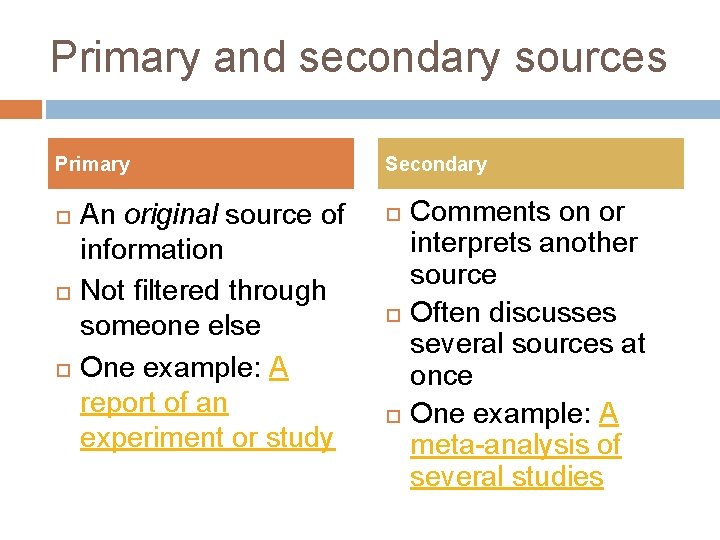
Primary and secondary sources Primary An original source of information Not filtered through someone else One example: A report of an experiment or study Secondary Comments on or interprets another source Often discusses several sources at once One example: A meta-analysis of several studies
It’s ALWAYS important to be aware of what kind of source you are using so you can use it well.
The EAR test Expertise Accuracy Reliability
Expertise What is the author’s background and/or credentials? Has he or she written or researched on this topic before? Is the author affiliated with an institution?
Accuracy Is it correct and complete? Have I found other sources that agree with this? How current is the material?
Reliability Does the publishing source have an agenda or bias? Are the sources of the information documented (cited)? Has this material been evaluated or endorsed by anyone?
Other considerations A site’s domain (. com, . edu, . org) doesn’t matter as much as it used to, but do still look Look for information about the group � “About Us” � “Philosophy” � “Mission Statement” Are links current and helpful? Are there ads? A lot of them?
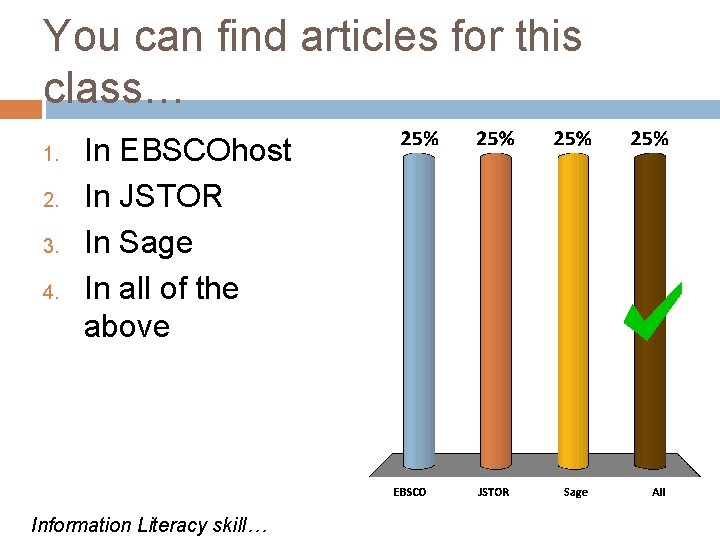
You can find articles for this class… 1. 2. 3. 4. In EBSCOhost In JSTOR In Sage In all of the above Information Literacy skill…
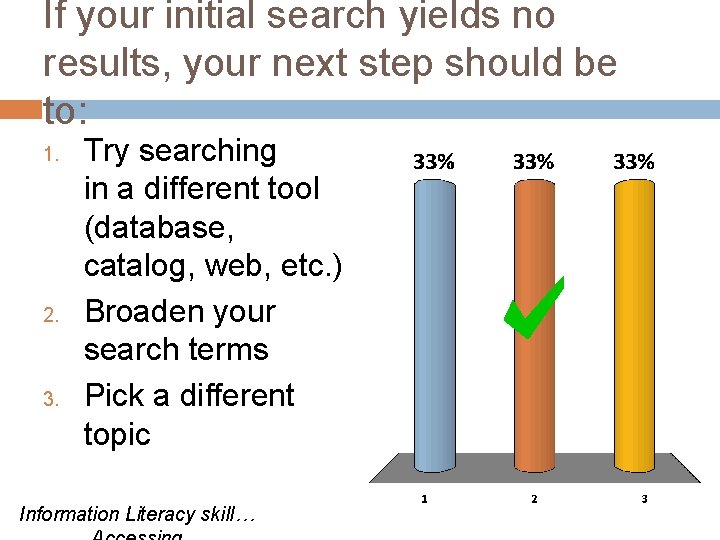
If your initial search yields no results, your next step should be to: 1. 2. 3. Try searching in a different tool (database, catalog, web, etc. ) Broaden your search terms Pick a different topic Information Literacy skill…
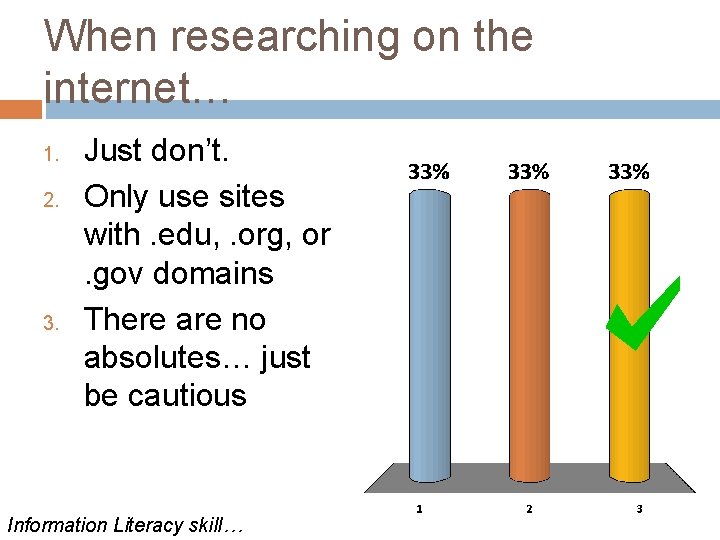
When researching on the internet… 1. 2. 3. Just don’t. Only use sites with. edu, . org, or. gov domains There are no absolutes… just be cautious Information Literacy skill…
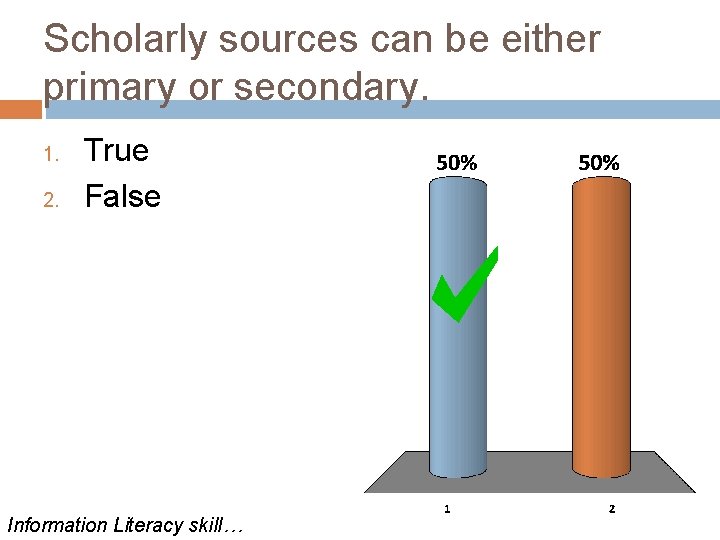
Scholarly sources can be either primary or secondary. 1. 2. True False Information Literacy skill…
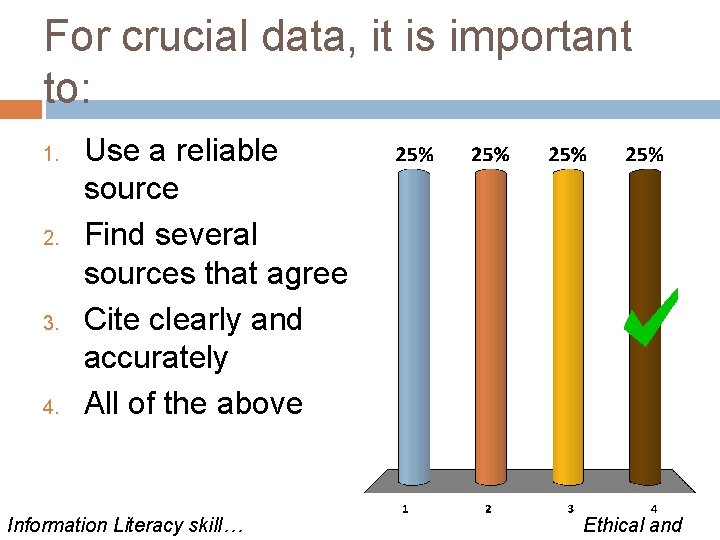
For crucial data, it is important to: 1. 2. 3. 4. Use a reliable source Find several sources that agree Cite clearly and accurately All of the above Information Literacy skill… Ethical and