
Types of hypersensitivity diseases The type of immune
- Slides: 20
Types of hypersensitivity diseases § The type of immune response and immunologic mechanisms that causes tissue injury § The nature and location of the antigen that is the target of this response.
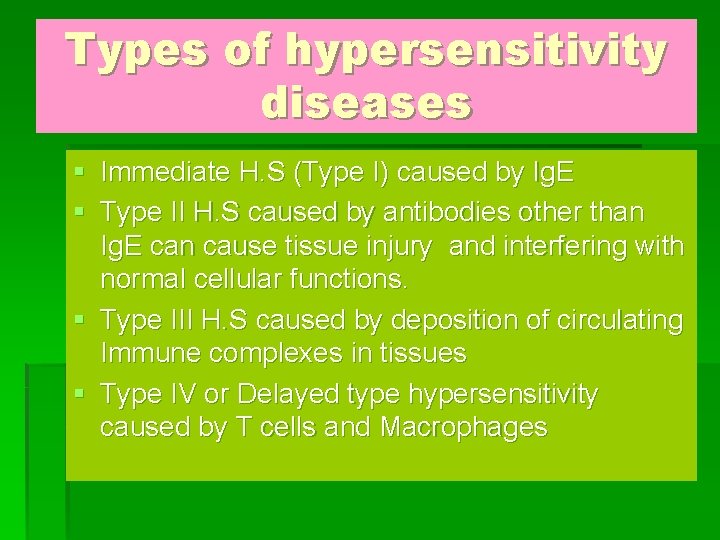
Types of hypersensitivity diseases § Immediate H. S (Type I) caused by Ig. E § Type II H. S caused by antibodies other than Ig. E can cause tissue injury and interfering with normal cellular functions. § Type III H. S caused by deposition of circulating Immune complexes in tissues § Type IV or Delayed type hypersensitivity caused by T cells and Macrophages
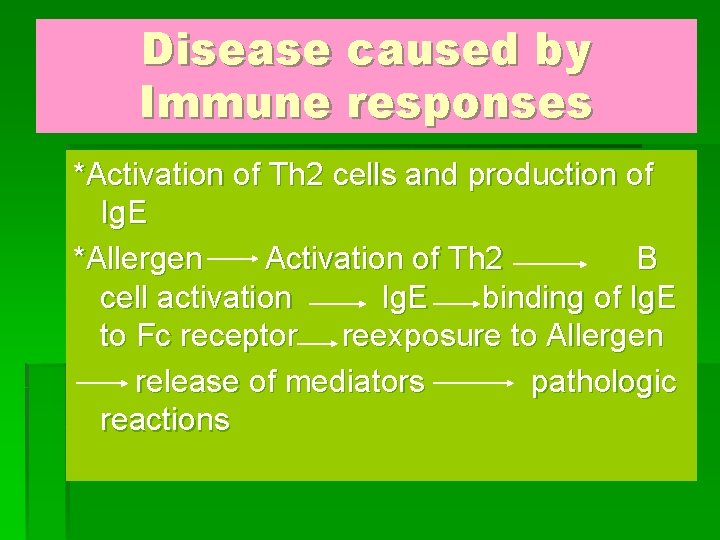
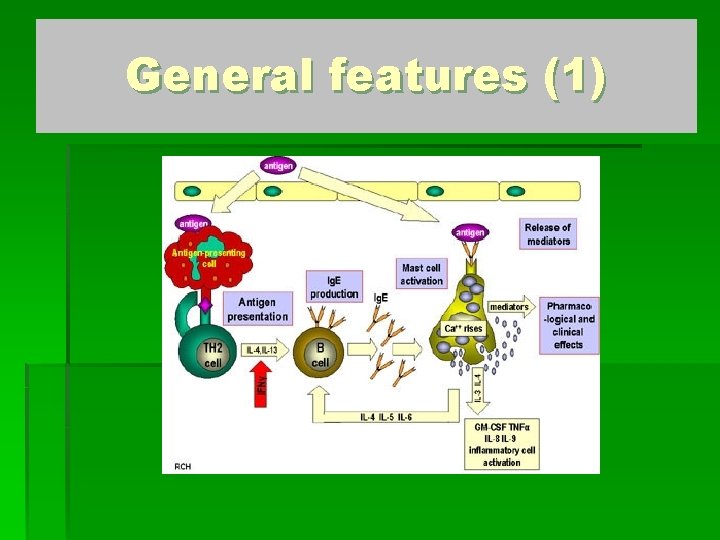
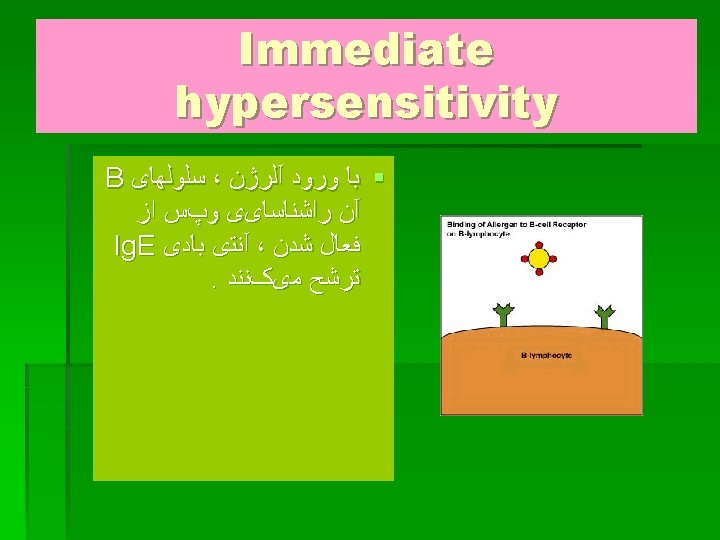
Disease caused by Immune responses *Activation of Th 2 cells and production of Ig. E *Allergen Activation of Th 2 B cell activation Ig. E binding of Ig. E to Fc receptor reexposure to Allergen release of mediators pathologic reactions
General features (1)
General features(2) § There is a strong genetic predisposition for the development of immediate hypersensitivity *high level of Ig. E synthesis often run in families • Class –II MHC alleles • One locus for atopy is on chromosome 5, near the site of gene cluster encoding the IL-3, IL-4, • IL-5, IL-9, IL-13 and IL-4 R
Allergens § Type I is dependent on the activation of Th 2 cells § The clinical and pathologic manifestations of Type I: increased vascular permeability, vasodilation, smooth muscle contraction, local inflammation
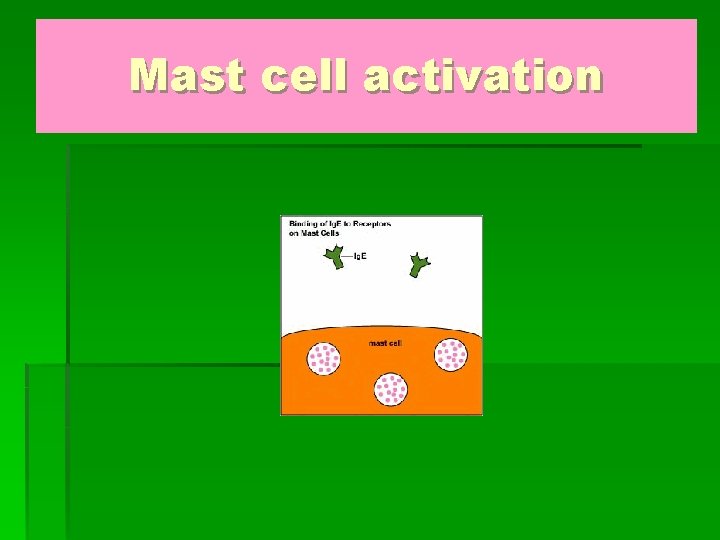
Mast cell activation
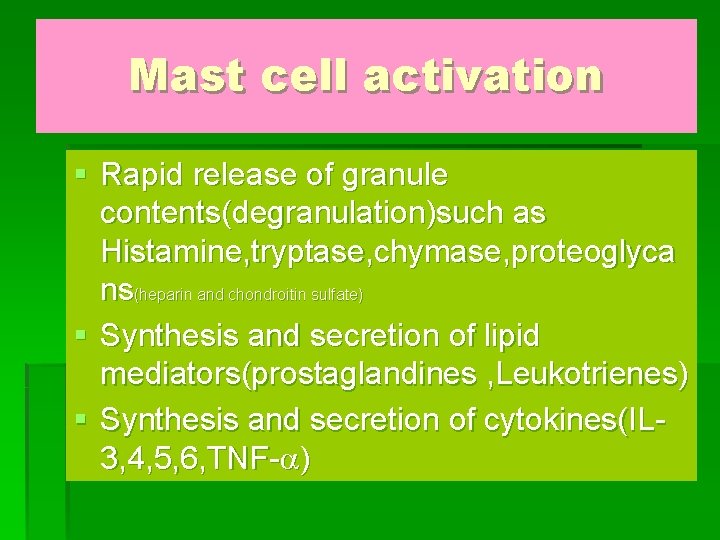
Mast cell activation § Rapid release of granule contents(degranulation)such as Histamine, tryptase, chymase, proteoglyca ns(heparin and chondroitin sulfate) § Synthesis and secretion of lipid mediators(prostaglandines , Leukotrienes) § Synthesis and secretion of cytokines(IL 3, 4, 5, 6, TNF- )
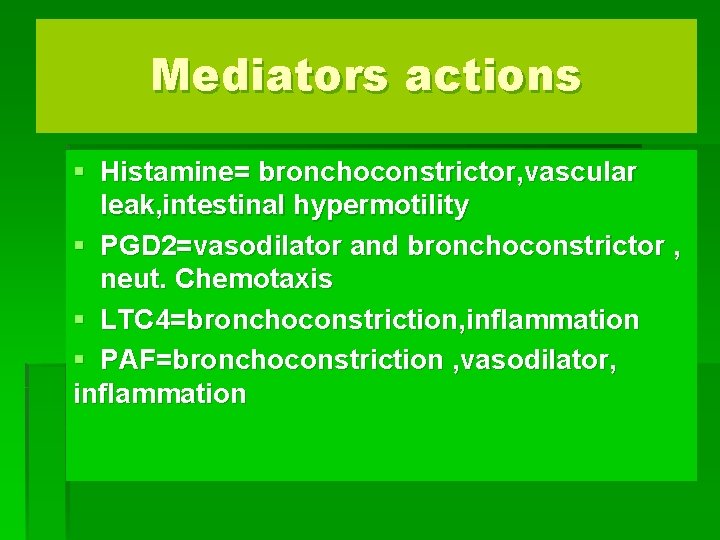
Mediators actions § Histamine= bronchoconstrictor, vascular leak, intestinal hypermotility § PGD 2=vasodilator and bronchoconstrictor , neut. Chemotaxis § LTC 4=bronchoconstriction, inflammation § PAF=bronchoconstriction , vasodilator, inflammation
Clinical and pathologic features § § Hay fever(allergic rhinitis) Increased peristalsis Bronchial asthma Anaphylaxis
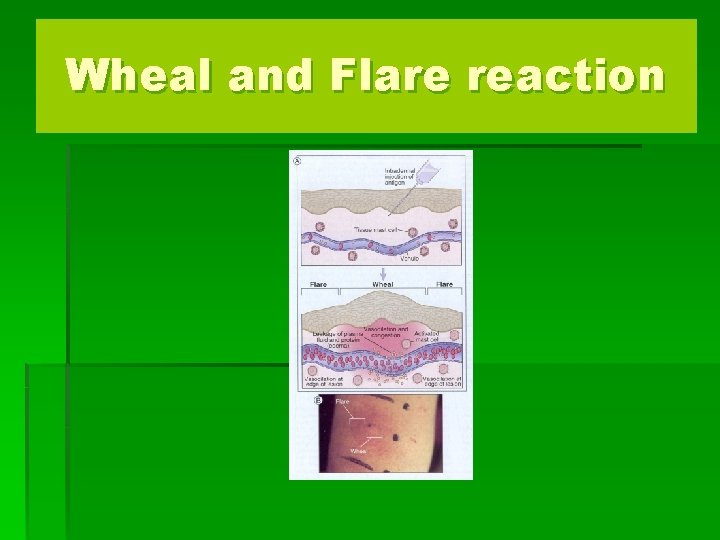
Wheal and Flare reaction
Therapy § § Inhibiting mast cell degranulation Antagonizing the effects of mediators Reducing inflammation Desensitization
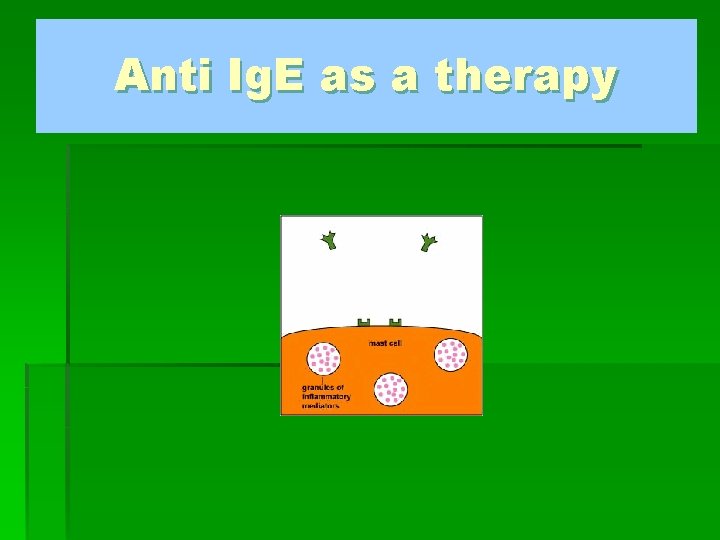
Anti Ig. E as a therapy
Drugs § § § Cromolyn sodium Theophyllin blocks phosphodiesterase epinephrin
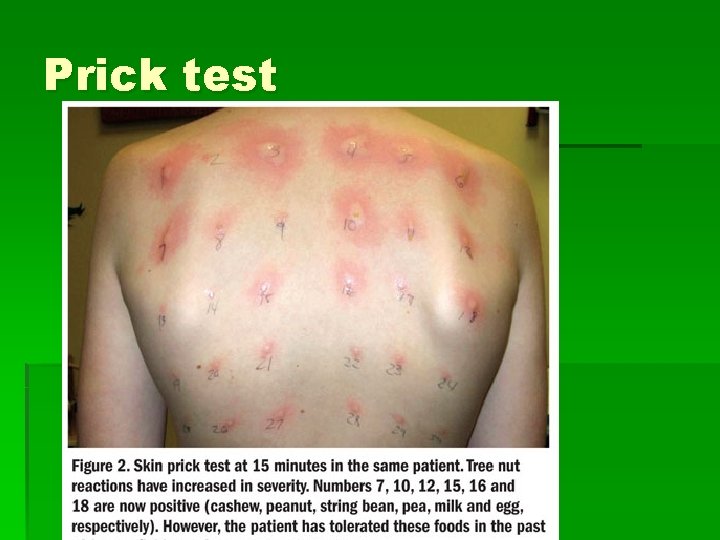
Prick test
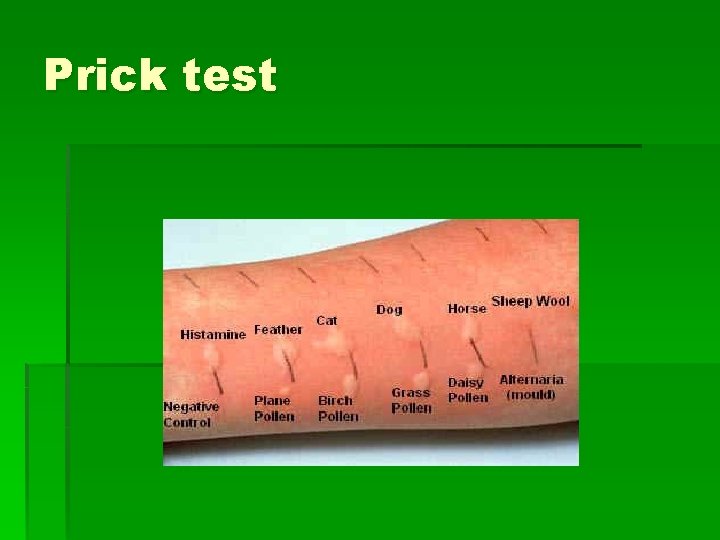
Prick test